
I’ve been reviewing history tours in big cities for years, and this one has a very specific strength: it links communist power to the actual streets you’ll walk in Bucharest. You’ll move through key sites tied to the violence of the era, the look of Ceausescu’s regime, and the shock of the 1989 collapse.
Two things I really like. First, the guides can be shockingly clear and human. Guests often mention Cristina (and also Stefan, Victor) for solid English and for storytelling that connects policy to daily life. Second, the route makes the city itself feel like the lesson, from monumental Palace of Parliament scale to smaller, easy-to-miss remnants of life under communism.
One consideration: it’s a walking tour with multiple stops and includes at least one major ticketed attraction (the Parliament building). If you’re tight on mobility or hate uneven outdoor walking, you’ll want comfortable shoes and a pace that works for you.
- Key things to know before you go
- A practical overview of Life Under Communism in Bucharest
- Who will like this tour most
- Walking route and timing: what 3 hours really feels like
- Stop-by-stop: what each location teaches you
- Catedrala Patriarhala: the shock at the beginning
- Palace of Parliament: when architecture becomes a political statement
- Manastirea Antim: religion under pressure, not in a museum box
- Old Town and Caru’ cu bere: culture, foreigners, and soft power
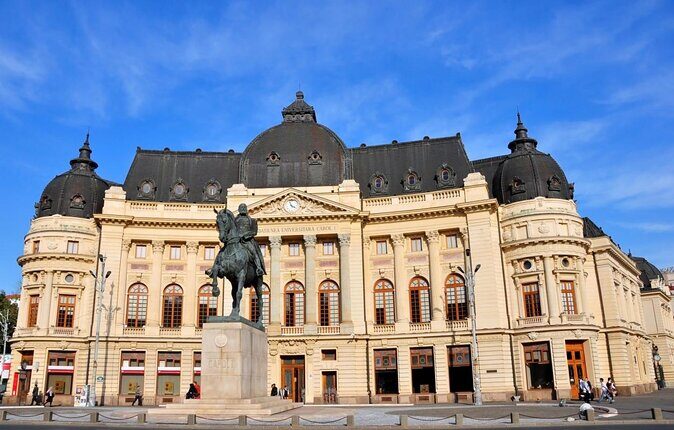
- Piaka Revolukiei (Revolution Square): the violent collapse
- Guides: clear English, and stories that feel personal
- Price and value: what you get for .33
- Logistics: tickets, transport, and meeting points
- Accessibility and pacing
- Weather, cancellations, and what to wear
- Cancellation policy: easy peace of mind
- After the tour: use Revolution Square as your hub
- Should you book this tour?
- FAQ
- How long is the Life under Communism tour in Bucharest?
- Where does the tour start and end?
- Is the tour available in English?
- Is admission included for all stops?
- Do I need to bring tickets or can I use a phone?
- How big is the group?
- Is food and drink included?
- What is the cancellation policy?
Key things to know before you go

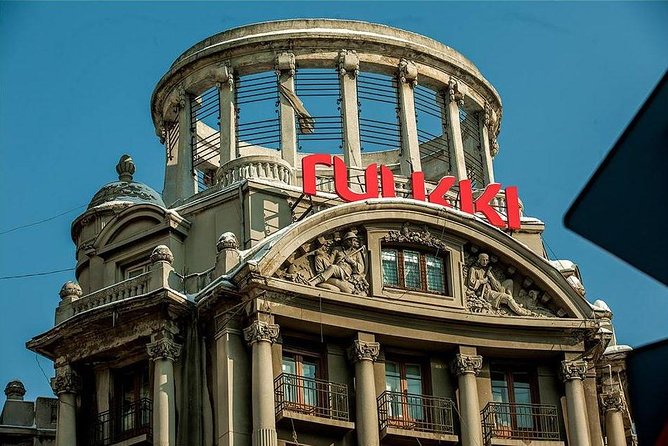
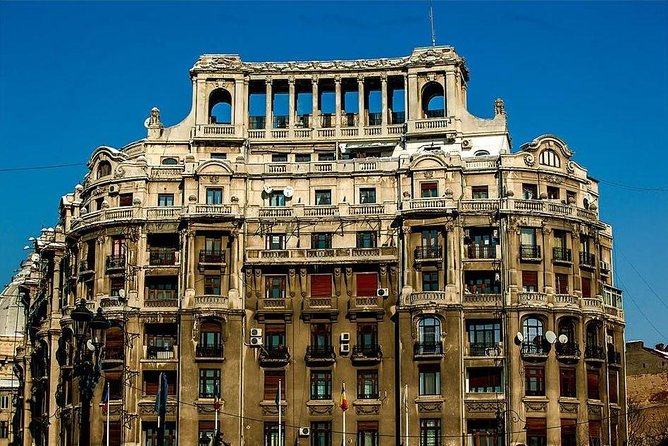
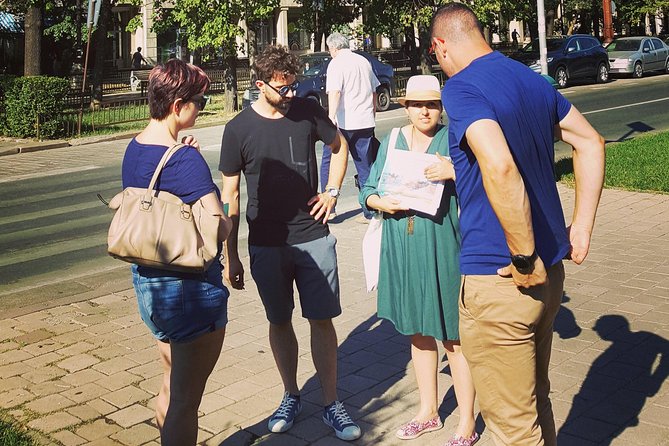
- Small group (max 20): you’ll usually get time for questions without feeling herded.
- English tour: this is offered in English, with guides praised for clarity.
- Free entries at several stops: many key locations are marked as free, but the Parliament stop is not.
- Outdoor walking route: expect weather on the street, and plan shoes for uneven sidewalks.
- Ends at Revolution Square: the tour’s finale has the right emotional punch after all the context.
- Guide-led context over slogans: guests describe it as balanced, not a one-note political lecture.
A practical overview of Life Under Communism in Bucharest
This is a 3-hour walking tour in central Bucharest, priced at $42.33 per person. It runs on a set route with a professional guide, and confirmation is received at booking. You’ll start at Aleea Dealul Mitropoliei 19, București 030167 and finish at Piața Revoluției (Revolution Square), which is a smart way to end because you can stay nearby afterward.
Booking tends to happen in advance (on average, about 25 days out), so if you’re traveling in peak season, it’s worth locking in a spot sooner rather than later. Also note the tour is mobile-ticket based, and it’s designed for most travelers. Service animals are allowed.
The key idea is not just to see “communism landmarks.” It’s to understand how power shaped buildings, religion, everyday life, and finally the moment it cracked in 1989.
Who will like this tour most
You’ll get the most out of this if you like history that’s tied to places. You’re also a good fit if you enjoy stories about daily life rather than only dates and leaders.
If you’re the type of traveler who wants to ask follow-up questions, this tour tends to help. Several guests mention that the guide stayed engaging and answered curiosities, including culture and practical city questions. If you’re curious but not a trivia machine, you’ll still find the explanations easy to follow.
And if you want a “first visit” history shot in Bucharest, this works well. It gives you a framework to interpret what you see later on your own.
Walking route and timing: what 3 hours really feels like
Most stops are short—think about 10 to 15 minutes at each main point—so you’re not stuck in one place for ages. That pacing matters. It keeps the tour moving, but it also means you’ll want to listen carefully when the guide explains what you’re seeing.
The day-to-day reality of Bucharest’s layout is part of the point. Communism-era buildings can look like just architecture until a guide puts them into context: why they were built, who benefited, what they replaced, and what they cost.
It’s also why comfortable shoes are a must. Even if you’re walking at a relaxed pace, you’ll be on your feet for a while. One guest specifically advised comfortable shoes as the tour is a walking format.
Stop-by-stop: what each location teaches you
Catedrala Patriarhala: the shock at the beginning
The tour begins at Catedrala Patriarhala, where the guide sets the tone by discussing the violent early days of communism. This is a good first stop because it challenges the idea that “communism just arrived.”
Instead, you get the idea that power often starts with control, pressure, and disruption. Starting with a church also primes you for the later theme of how religion and public life were affected.
This stop is listed with admission ticket free and a short time on site (about 10 minutes), so you’re really just getting the story framework to carry with you.
Palace of Parliament: when architecture becomes a political statement
Next is Palace of Parliament, and this is the big visual anchor of the tour. The guide focuses on the real story behind what many people describe as one of the world’s largest administrative buildings.
Here’s why this stop matters: you’re not just seeing a landmark. You’re seeing a government willing to spend huge effort, money, and human energy on what it wanted the world to notice.
One practical note: the tour lists this stop as admission ticket not included. So if you plan to enter the building, budget extra time and funds beyond the tour price. If you don’t plan to go inside, the external context the guide shares can still be useful—but most travelers will want the full effect.
Time on this stop is about 15 minutes, which is enough to orient you before you move on.
Manastirea Antim: religion under pressure, not in a museum box
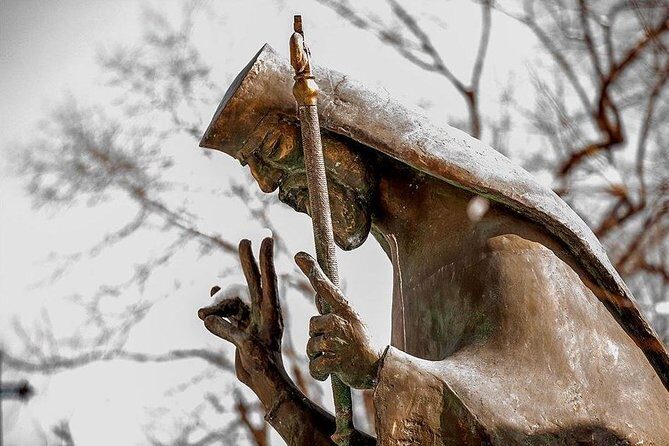
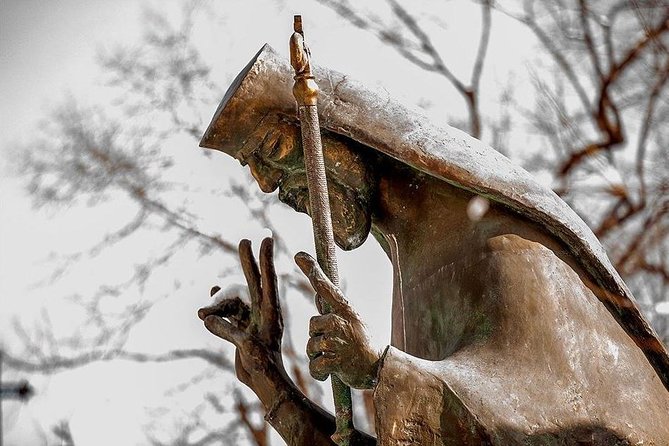
The tour heads to Manastirea Antim, a picturesque medieval monastery. The guide ties this beauty to a difficult theme: how religion was impacted during the communist period.
This pairing works well. A monastery doesn’t look like a political battlefield at first glance. But under communism, religion often became either regulated, restricted, or used in tightly controlled ways. In other words, the story isn’t only about faith—it’s also about who was allowed to gather, teach, and speak freely.
This stop is also listed as admission ticket free and about 10 minutes, so it’s a quick but meaningful contrast to the palace scale you just saw.
Old Town and Caru’ cu bere: culture, foreigners, and soft power
Next comes the Old Town, with a focus on Caru’ cu bere and its role in foreign policy under communism. This is an interesting twist because it treats a famous restaurant as more than a place to eat.
Under regimes like this, hospitality and public-facing culture can become tools. You can think of it as a stage where the regime tried to manage how outsiders saw Romania, including what they were shown and what they were encouraged to ignore.
Even if you don’t eat there during the tour, you’ll leave with a strong reason to go back later. Several travelers also mention food-related enjoyment from the day, including a small communist-themed snack offered by the guide in at least one account. You might not get a full meal covered by the tour, since food and drinks are listed as not included—but this is a great area to plan a post-tour bite in the historic setting.
Piaka Revolukiei (Revolution Square): the violent collapse
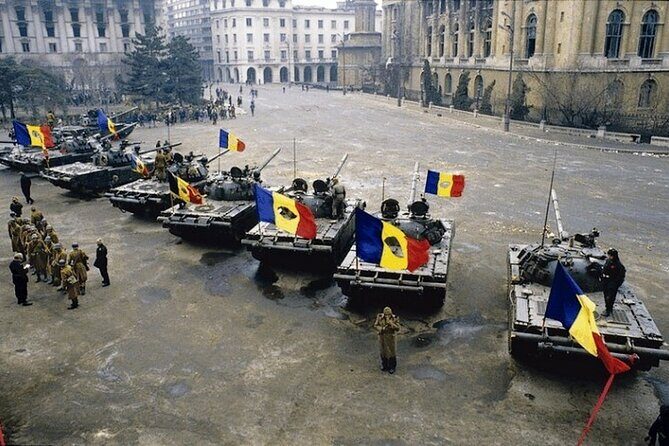
The tour ends at Revolution Square, where the guide discusses the violent collapse of communism and Ceausescu’s downfall. Starting with the violent beginning and ending with the violent end makes the arc feel complete.
This finale works best if you’ve been paying attention to the way the guide connected architecture, religion, and daily life. When you arrive at Revolution Square after all that context, it stops being just a photo spot and starts to feel like a turning point you can understand.
This stop is about 15 minutes and marked admission ticket free, so it’s a good wrap without extra logistics.
Guides: clear English, and stories that feel personal
The tour’s biggest strength, according to guest feedback, is the guide quality. Travelers repeatedly praise the clarity of English and the ability to keep explanations understandable without making the topic feel watered down.
Guests specifically mention Cristina as warm, inclusive, and very accommodating, including one account from a traveler who is hearing impaired and needed a slower pace and seating points during stops. Other guides like Stefan and Victor also receive strong mentions for knowledge and answering questions.
What I like about this is consistency. Great guides don’t just know facts. They know how to place you inside the era long enough to grasp the human side.
Price and value: what you get for $42.33
At $42.33 per person for roughly 3 hours, this tour sits in the “solid value” category for Bucharest. Why? Because you’re paying for a professional guide, a route that hits multiple high-signal locations, and an English-speaking explanation that saves you time compared with building this story yourself.
Also, several stops are listed as free entry, which improves value. The one major exception is the Palace of Parliament, where admission is not included, so your total cost could be higher depending on whether you plan to enter.
Still, even with that caveat, this tour often feels like a good deal because it gives you context that you can’t easily get from a quick guidebook read.
Logistics: tickets, transport, and meeting points
This is a group tour with a maximum of 20 travelers. That matters for comfort. You’ll be walking, and the smaller cap usually helps the group feel manageable.
There’s no hotel pickup or drop-off, so you’ll need to get yourself to the starting address. The tour is near public transportation, which helps if you’re using buses or metro lines.
You’ll also receive a confirmation at booking, and the tour uses a mobile ticket. If you’ve ever lost a printed ticket in transit, this is an easy win.
Accessibility and pacing
Most travelers can participate, and guests mention that some guides will actively accommodate a slower pace and seating needs. If you have walking challenges, plan on going at your own comfort level and tell the guide at the start about what works for you.
The tour is outdoors and involves walking between landmarks. That’s not a criticism; it’s how the route communicates its message. Just be realistic about your stamina.
Weather, cancellations, and what to wear
The tour notes that it operates in all weather conditions and asks you to dress appropriately. At the same time, it also states that it requires good weather, and if it’s canceled due to poor weather, you’ll be offered a different date or a full refund.
So what should you do? Bring a rain layer if rain is possible, and stick to comfortable shoes. Even in good weather, Bucharest sidewalks and curb transitions can add up over a few hours.
Cancellation policy: easy peace of mind
You get free cancellation up to 24 hours in advance for a full refund. If you cancel less than 24 hours before the experience starts, the amount paid is not refunded.
If weather is the reason for cancellation, you’re offered a different date or a full refund. Cut-off times are based on local experience time, so check your booking screen for the exact deadline.
After the tour: use Revolution Square as your hub
Because the tour ends at Revolution Square, you’re dropped right where you can keep exploring without backtracking. From there, it’s a natural jump-off point to wandering Old Town again, grabbing something to eat, or taking in nearby sights at your own pace.
This is also the moment when the “story framework” can pay off. You’ll likely notice more symbolism in what you pass next, because you’ve already trained your eye on what your guide explained.
Should you book this tour?
I’d book it if you want Bucharest history tied to the streets and buildings, and you care about a guide who can explain the era clearly in English. The strong guide reputation, the small-group setup, and the route that builds an arc from the early violence to the end in Revolution Square make this a strong “value per hour” choice.
I’d think twice if you’re only interested in architecture without the human story, or if you’re not up for walking in an urban environment. Also remember that Palace of Parliament admission is not included, so plan your expectations and budget.
If you’re balancing a couple of Bucharest tours, this one tends to win because it gives you context you’ll feel later as you explore.
Life under Communism
FAQ
How long is the Life under Communism tour in Bucharest?
It’s listed as approximately 3 hours.
Where does the tour start and end?
It starts at Aleea Dealul Mitropoliei 19, București 030167 and ends at Revolution Square (Piața Revoluției), București.
Is the tour available in English?
Yes, it’s offered in English.
Is admission included for all stops?
No. Several stops are marked admission ticket free, but the Palace of Parliament admission is not included.
Do I need to bring tickets or can I use a phone?
The tour includes a mobile ticket.
How big is the group?
The tour has a maximum of 20 travelers.
Is food and drink included?
Food and drinks are not included, unless specified.
What is the cancellation policy?
You can cancel up to 24 hours in advance for a full refund. Within 24 hours, it’s not refundable. Weather-related cancellations offer a different date or a full refund.