
I’m giving this Madrid Express Tour a big thumbs up for how quickly it helps you get oriented in central Madrid. You zip around in a 100% electric eco tuk tuk with a local guide, hitting major landmarks with pre-selected photo stops, and starting with no queues or waiting.
What I really like: the guides. In the past, travelers have raved about guides like Juan, Esther, Carlos, Lucia, Fernando, and Hector for clear English and practical city context, not just dates and trivia. The other win is pace and convenience: in a short window (about 1 to 4 hours), you can cover a lot of ground without wrestling with traffic like a bus does.
One thing to consider: the ride is fun, but the tuk tuk’s shape can limit easy views of taller facades. One traveler also flagged that very hot days may not be ideal, even though the tour runs in heat and the company provides weather gear for cold weather.
- Key things to know before you go
- Entering Madrid Fast: Where the Eco Tuk Tuk Starts
- Electric Tuk Tuk Comfort: Winter Blankets and Real-World Weather
- The Value Math: Why a Short Express Tour Can Be a Smart Spend
- Who This Tour Fits Best (and Who Might Prefer Something Else)
- Mercado de San Miguel: A 1916 Food Market With Modern Pull
- Atocha Station: Spain’s Busiest Rail Hub (and a Landmark for Transit-Lovers)
- Palacio de las Cortes: The Courthouse-Like Building With Lions and Iron History
- Cibeles and Neptune: Rival Gods, Real Madrid vs Atlético
- Prado Museum Area: Why People Treat This as a Big Deal
- San Jerónimo el Real: Royal Retreat, Weddings, and the Staircase Built for Ceremonies
- Puerta de Alcalá: A Neoclassical Arc With a Viking-Size Personality
- Cibeles Fountain Area: Real Madrid Photos Without Waiting for a Perfect Day
- Banco de España Exterior: A Monumental Bank Building You Can’t Just Walk Into
- Plaza de Santa Ana: A Classic Madrid Square in the Cortes Neighborhood
- Almudena Cathedral: Not Just a Cathedral, a Consecration Milestone
- Palacio Real (Palacio de Oriente): Royal Residence Architecture Without a Long Detour
- The Guide Factor: Why Travelers Mention Names Like Juan, Esther, and Carlos
- Practical Tips You’ll Thank Yourself For
- FAQ
- FAQ
- How long is the Madrid Express Tour?
- Where does the tour start and end?
- Is this tour private?
- What language is the tour offered in?
- What kind of vehicle do you use?
- Are blankets provided for cold or rainy weather?
- Are hotel pickup and drop-off included?
- Are there age or weight requirements?
- What is the cancellation policy?
- Can the route or stops be changed during the tour?
- Should You Book This Madrid Express Tour or Skip It?
Key things to know before you go
 1 / 8
1 / 8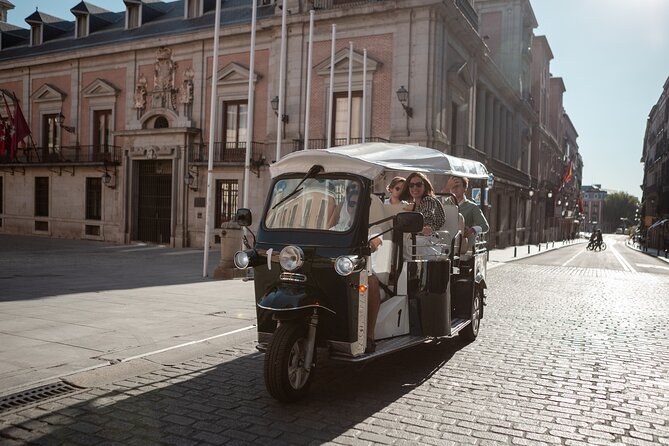 2 / 8
2 / 8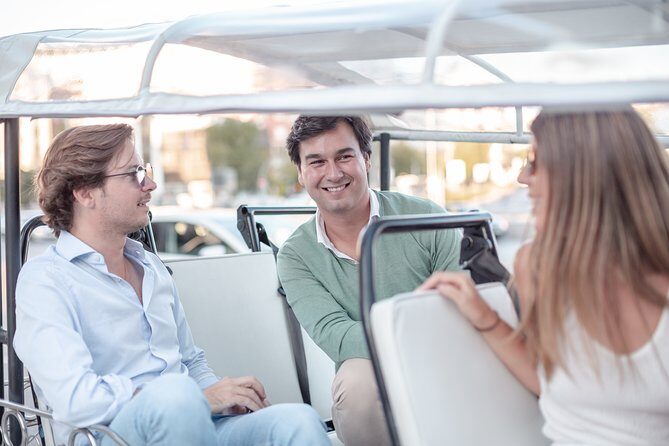 3 / 8
3 / 8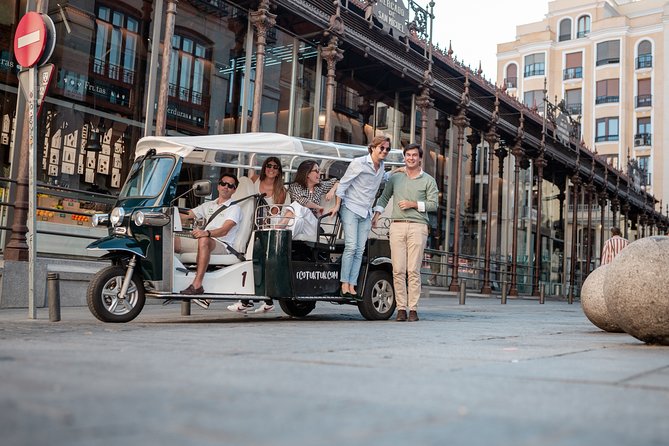 4 / 8
4 / 8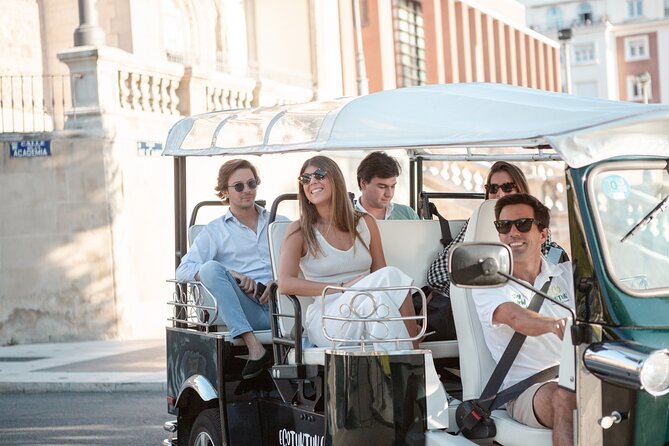 5 / 8
5 / 8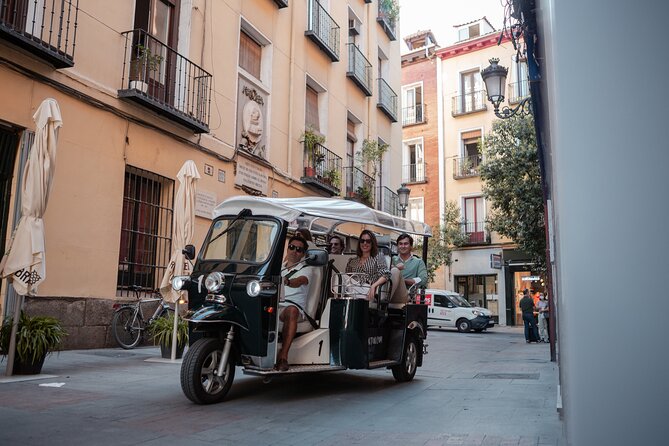 6 / 8
6 / 8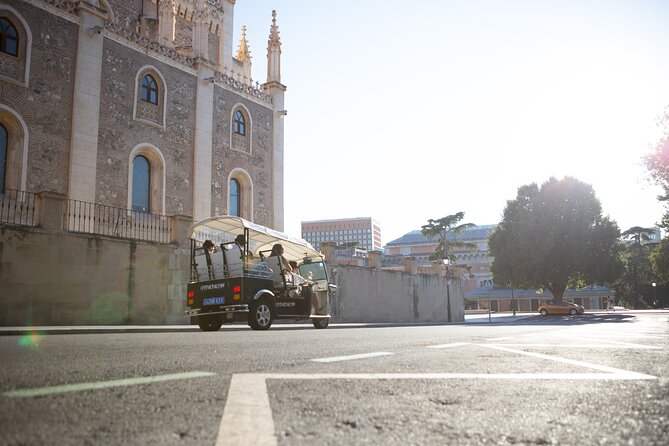 7 / 8
7 / 8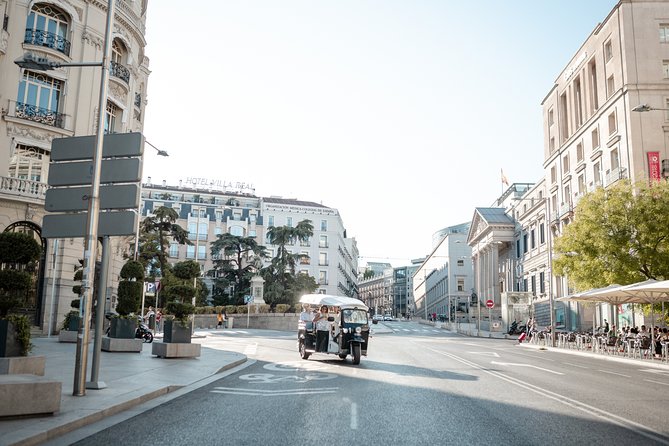 8 / 8
8 / 8- Private, group-only vehicle means you don’t get stuck behind other people’s schedules.
- No-queue start helps you use your time well on a first visit.
- Blankets and protective layers are provided in winter/rain/wind to keep you comfortable.
- Local guide stops at planned photo points, so you’re not constantly lost or guessing.
- Tuk tuks reserve privately, with a legal max of 4 passengers per tuk tuk.
Entering Madrid Fast: Where the Eco Tuk Tuk Starts
Your tour starts and ends at the same place: C. de Bailén, 4, Centro (28013 Madrid). Meeting can be a little confusing because the exact access is tied to a nearby underground bus station at Plaza de Oriente, right by the Royal Palace.
If you’re arriving and the address seems off on maps, you’re not alone. The company’s directions point you to search for Calle Bailén 4 or Puerta del Príncipe. Then use the stairs to access the station and follow the Eco Tuk Tuk signage. If you want extra peace of mind, the operator says you can contact them by phone or WhatsApp at +34 696 99 78 89.
This matters because the tour is time-sensitive. If you’re delayed, the experience may be reduced based on lost time, and it’s canceled if you’re more than 15 minutes late with no refund. So, build in a few extra minutes at the start—Madrid is busy, and pedestrian routes can be slow.
Electric Tuk Tuk Comfort: Winter Blankets and Real-World Weather
This is a practical sightseeing setup, not a luxury long-haul vehicle. The big selling point is that you’re in a 100% electric tuk tuk, so it feels lighter and smoother than older-style tour vehicles.
For colder weather, they provide blankets and protective layers against rain and wind. Travelers specifically mentioned the comfort of these plastic drapes and blankets during rain and cold. The tour also runs in rain or heat, and they only cancel under extreme conditions.
One small reality check: a traveler noted the ride can be harder on very hot days, and the top structure can limit how far you can comfortably see up at tall buildings. If you’re sensitive to heat or you want lots of upward-angled photos, you may prefer doing this early in the day, or choose a milder season.
The Value Math: Why a Short Express Tour Can Be a Smart Spend
At $28.67 per person (and often booked about 21 days in advance), the price makes sense if you’re optimizing for time. You’re paying for three things: a local guide, a private vehicle, and a route that hits central highlights efficiently.
You also get a structure that reduces decision fatigue. The tour includes pre-selected stops for photographing, and the company states you can’t modify stops on the day. That sounds strict, but it’s often what helps an express tour work. You aren’t bargaining with your itinerary while jet-lagged.
Is it pricey compared with a walk? Sure, but you’re not just paying for transport. You’re paying for guided context and for getting close to places where big buses struggle. Several travelers mentioned the tuk tuks can go where buses can’t, which is exactly where you get better angles, quicker arrivals, and less time wasted.
Who This Tour Fits Best (and Who Might Prefer Something Else)
This tour is a strong fit for:
- First-time visitors who want a fast overview without a big time commitment.
- Travelers who prefer asking questions while rolling through neighborhoods.
- Families and mixed-age groups, since the company notes the vehicles are suitable for older people and drivers can help them get on.
It may be less ideal if:
- You want a slow, lingering museum-and-stroll day. This is an express format with planned photo and sightseeing points.
- You expect to change the route on the fly. The tour doesn’t allow modifications, and photo stops are fixed.
Mercado de San Miguel: A 1916 Food Market With Modern Pull
The tour’s first stop on the route highlights a market with serious Madrid credibility. This food market was opened in May 1916, and it later became in May 2009 the first gastronomic market in Madrid.
What makes this stop feel authentic is the story behind it: during 2018, it went through a period of consolidation of much of its gastronomic content, and it’s tied to renowned chefs both in Spain and abroad. Even if you don’t plan to eat during the ride, the market is a perfect place to orient yourself to Madrid’s food culture.
If you’re hungry later, this is where you can make your own small plan. Grab tapas on your own time before or after, using the market as your anchor point.
Atocha Station: Spain’s Busiest Rail Hub (and a Landmark for Transit-Lovers)
Next up, you pass by Atocha Station, a huge rail complex near Plaza del Emperador Carlos V. It’s described as the busiest station in the country and also one of the main stations in Europe.
This stop works even if you’re not a train person. Madrid’s city energy shows up at places like this: commuters, travelers moving between lines, and the way the city funnels people through big arteries. It’s one of those “you feel the scale of the city” moments.
Palacio de las Cortes: The Courthouse-Like Building With Lions and Iron History
Your route continues past the Palace of the Spanish Courts, built on the site of a former convent of the Holy Spirit, which held Congress between 1834 and 1841.
The details here are the fun part. The main facade features an impressive staircase and a neoclassical porch with six columns in the Corinthian order. Flanking the entrance are emblematic lions made by the same sculptor, cast from iron taken from cannons captured during the war in Africa.
One note: the bronze door is said to open only on very marked occasions. So treat this as a “see it from outside and learn what you’re looking at” stop, not a building you’re guaranteed to enter.
Cibeles and Neptune: Rival Gods, Real Madrid vs Atlético
A big crowd favorite on the tour is the set-piece of Cibeles and Neptune. The city explains it as a sports rivalry in statue form: Atlético de Madrid fans celebrate victories at Cibeles, while Real Madrid fans do the same at Cibeles’ counterpart, Neptune.
The history behind the placement is also part of the payoff. The fountains were originally confronted on the side of Paseo del Prado, but both experienced restructuring and transfer processes at the end of the 19th century, eventually taking central positions in Plaza de Cibeles and Plaza de Cánovas del Castillo.
This is a smart photo stop because you get context fast. In a few minutes, you learn the geography of Madrid, the meaning of the statues, and you get a clear landmark for later exploring on your own.
Prado Museum Area: Why People Treat This as a Big Deal
Next, you’re taken past the area that leads into the Prado Museum story. It’s described as having one of the widest presences of European masters, and an art historian has called it the most important museum in the world for European painting.
You’ll hear the names that matter: Velázquez, El Greco, Goya (especially widely represented), plus artists like Titian, Rubens, and El Bosco. The description also points out major sets from painters such as Murillo, Ribera, Zurbarán, and even artists like Rafael and Veronese.
Even if you’re not going inside on this particular day, the tour gives you enough context to make a future visit more meaningful. You can connect what you see outside to what you’ll later care about inside.
San Jerónimo el Real: Royal Retreat, Weddings, and the Staircase Built for Ceremonies
The stop at San Jerónimo el Real—popularly known as Los Jerónimos—sits next to the Prado Museum. It’s late Gothic with Renaissance influences from the early 16th century, and the story ties it to Spanish kings.
This place matters because it shifted roles over centuries. It became tied to spiritual retreats for monarchs and was also used for royal investiture in the absence of a cathedral. The wedding of Alfonso XIII was also held here, and the notable stairway leading to the door was built in 1906.
So when you stand here, you’re not just looking at a church. You’re looking at the ceremonial geography of Spain’s monarchy.
Puerta de Alcalá: A Neoclassical Arc With a Viking-Size Personality
Then comes one of Madrid’s most recognizable monuments: the Puerta de Alcalá. This monumental door was built by mandate of Carlos III to replace an earlier 16th-century one, and it was inaugurated in 1778.
It’s designed by Francesco Sabatini and described as a granite neoclassical triumphal arch. The guide-style context in your tour explains why it’s historically important: it’s presented as the first such arch in Europe after the fall of the Roman Empire, and a precursor to later arches like the Arc de Triomphe in Paris and Berlin’s Brandenburg Gate.
The tour also calls out an interesting design difference: it has five openings instead of the usual three. Details like that are why a guided express tour beats a solo photo walk—someone tells you what to notice.
Cibeles Fountain Area: Real Madrid Photos Without Waiting for a Perfect Day
Back near Plaza de Cibeles, you get the classic photo moment with the Roman goddess Cibeles, symbols of land, agriculture, and fertility. The sculpture is described as a goddess on a car pulled by two lions, with sculptural details credited to Francisco Gutiérrez (for the goddess) and Roberto Michel (for the lions).
You’ll also get the sports connection again, because the fountain is an icon for Real Madrid’s celebrations. This stop is a great example of how Madrid blends art, myth, and modern life in the same square.
Banco de España Exterior: A Monumental Bank Building You Can’t Just Walk Into
Another stop brings you past the Banco de España building. It’s described as decorative and an award-winner at Spain’s National Exhibition of Fine Arts in 1884.
The description also notes the building was built to provide the National Bank with a seat fitting its functions, including coin and bill issuance across Spanish territory. One limitation: the interior is only visited by groups of educational centers and universities, and only exceptionally by certain non-profit cultural entities.
So treat this as an exterior-and-explanation stop. You’ll still get the story of why the building looks the way it does, which makes the facade feel less random.
Plaza de Santa Ana: A Classic Madrid Square in the Cortes Neighborhood
The tour includes Plaza de Santa Ana, an open space in the Cortes neighborhood of the Centro district. It dates from 1810 and has gone through multiple urbanization phases that changed its appearance over time.
This is a good “breather” moment in the route. Squares are where you feel the city’s rhythm. Even if you don’t sit down for long, it’s a useful checkpoint for understanding where you are in Madrid’s core.
Almudena Cathedral: Not Just a Cathedral, a Consecration Milestone
Next is the Almudena Cathedral, described as Madrid’s most important religious building. It was consecrated on June 15, 1993, by Pope John Paul II, and it’s described as the first consecrated cathedral outside Rome.
The tour also frames the Almudena Cathedral Museum, which gathers objects telling the story of the Madrid diocese across multiple rooms with items like mosaics and episcopal shields.
If you’re choosing only one major church stop in central Madrid, this is the kind that gives you historical weight plus a clear museum angle. (Inside access may still depend on timing, so don’t plan on it as a guaranteed entry unless you confirm on the day.)
Palacio Real (Palacio de Oriente): Royal Residence Architecture Without a Long Detour
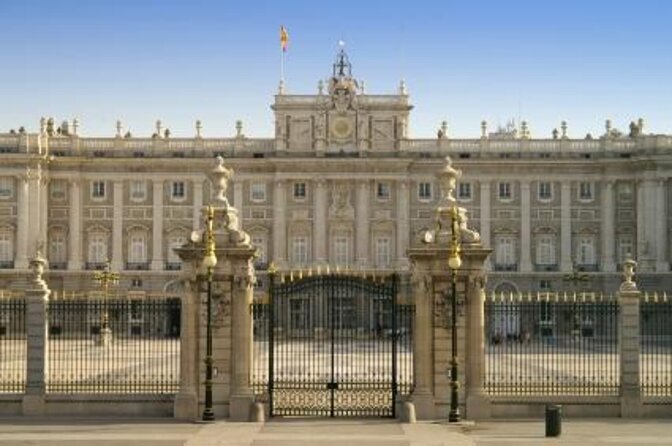
Finally, the route centers on the Royal Palace area—the Palacio de Oriente—with the tour starting right by it at Plaza de Oriente.
The palace construction began in 1738, with works lasting 17 years. Carlos III established habitual residence there in 1764. The palace is surrounded by the Campo del Moro and Sabatini gardens, with Campo del Moro stated as visitable during the day.
This tour may not be a full “go inside the palace” experience, but the exterior framing is useful. You’ll understand where it sits in the royal landscape, and you’ll know which streets and gardens connect to it.
The Guide Factor: Why Travelers Mention Names Like Juan, Esther, and Carlos
One theme shows up again and again: the guides make it work. Reviews mention people like Juan, Esther, Carlos, Lucia, Fernando, Pablo, Hector, Alex, and David for being friendly, professional, and knowledgeable.
You can also feel the difference between a standard narration and a real local guide. Travelers note that guides answer questions and share tips about neighborhoods as you pass through. That kind of guidance often turns into better self-guided choices later—where to eat, where to stroll, and what to prioritize.
And because you’re in a private tuk tuk for your group, you can ask questions without feeling like you’re interrupting a busload schedule.
Practical Tips You’ll Thank Yourself For
Here are the basics that will keep the tour smooth:
- Bring a light layer even in shoulder seasons. Winter gear is provided, but comfort matters.
- Wear shoes that handle tight city sidewalks and stairs around the meeting station.
- Plan to arrive early. The tour can be reduced or canceled if you’re late.
- Expect route rigidity. Stops are pre-arranged, and the stops can’t be modified.
Also double-check your expectations about pace. It’s a “see a lot in a short time” format, not a long sit-and-watch experience.
Madrid Express Tour with Local Guide in Eco Tuk Tuk Private
FAQ
FAQ
How long is the Madrid Express Tour?
It runs for about 1 to 4 hours, depending on the booked option.
Where does the tour start and end?
It starts at C. de Bailén, 4, Centro (28013 Madrid) and ends back at the same meeting point.
Is this tour private?
Yes. It’s a private tour/activity where only your group participates.
What language is the tour offered in?
It’s offered in English.
What kind of vehicle do you use?
You ride in a 100% electric and sustainable eco tuk tuk.
Are blankets provided for cold or rainy weather?
Yes. Blankets and protective layers against rain and wind are provided to avoid cold weather.
Are hotel pickup and drop-off included?
No. Hotel pickup and drop-off are not included.
Are there age or weight requirements?
The minimum age is two years old (babies not allowed), and there is a minimum weight required of 9 kg.
What is the cancellation policy?
You can cancel for a full refund up to 24 hours before the experience’s start time. Canceling within 24 hours does not get a refund.
Can the route or stops be changed during the tour?
No. The tour itinerary may vary only due to closed streets or demonstrations, but stops for photographs cannot be modified.
Should You Book This Madrid Express Tour or Skip It?
Book it if you want a fast, guided, low-stress way to get your bearings in central Madrid. The combination of guides, a no-queue start, and weather-friendly gear makes it a solid first-day move—especially if you’ve only got a day or two and you want to cover key sights without an all-day commitment.
Skip it if you’re chasing slow, in-depth museum time or if you’re very sensitive to heat and to the tuk tuk’s limited viewing angle from the top. Also, if your schedule is shaky, double-check the delay rules: more than 15 minutes late can mean cancellation with no refund.
For most first-timers, though, this is a practical way to connect the dots between Madrid’s squares, monuments, and stories—then go back later and explore at your own pace.