I love the way this night walk turns Munich’s old town into a story you can actually walk through, not just look at. You meet the costumed watchman and follow his rounds as he points out the corners most visitors miss once the streets quiet down.
Two things I especially like: the lantern-and-costume storytelling brings landmarks to life, and the route is packed with specific, memorable stops (towers, churchyards, the Stadttor area, and even prison and torture-room references). You also get short, human anecdotes from the watchman’s life, and he’ll steer you toward the odd details you’d never think to ask about.
One drawback to consider: this style is opinionated. He can be a bit sharp about modern habits and even questions your knowledge of local patron saints, so if you prefer a strictly neutral history lecture, you might find his humor a little too direct.
- Key things to know before you go
- Why Munich looks different after dark
- Meeting the night watchman (and why it matters)
- Marktplatz at evening hours: where the “rounds” start
- St. Peter’s Church tower tops and why they’re askew
- Churchyards, gravestones, and funeral customs you don’t see in postcards
- Altes Rathaus, Salzstraße, and the “complaining” old Stadttor
- Torture chamber and prison references: civic power after hours
- Alter Hof and Louis II’s reputation
- Following the city walls from the 12th century
- Gruftgasse and the Waller in Walchensee ring story
- Schäfflergasse: why wine beat beer in the Middle Ages
- Cathedral symbols and Frauenkirche tower legends
- Promenadeplatz and the old Salzstadel
- Salvatorkirche: host desecration and a love story
- Theatiner Church built after the heir was born
- End of the rounds: back into real Munich
- How the tour’s pace fits real travel days
- Price and value: 0 per group (up to 30)
- Who this tour is for (and who should skip it)
- Practical details that affect your night
- Should you book the Munich Night Watchman walk?
- FAQ
- FAQ
- How long is the Munich Night Watchman Walking Tour?
- Where does the tour start?
- Is food and drinks included in the tour price?
- Is transport included?
- What languages is the tour offered in?
- Is the tour wheelchair accessible?
- Can I cancel for a full refund?
- Is there an option to reserve now and pay later?
- More Walking Tours in Munich
- More Tours in Munich
- More Tour Reviews in Munich
Key things to know before you go
 1 / 10
 2 / 10
 3 / 10
 4 / 10
 5 / 10
 6 / 10
 7 / 10
 8 / 10
 9 / 10
 10 / 10
- 1.5 hours, at night: A compact route that fits well after dinner, but it is still a real walking tour.
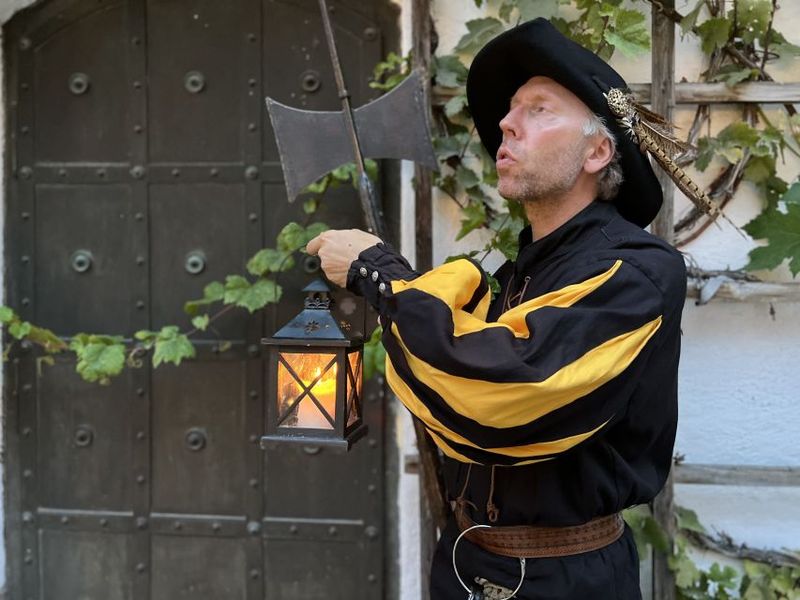
- Costumed night watchman guide: You’re not just getting facts; you’re getting character-driven storytelling by a live guide.
- Old-town alleyways and towers: The tour focuses on the tight maze of streets and big architectural silhouettes.
- Church, city walls, and civic buildings: You’ll hear why towers look the way they do and what the city’s structures were built to handle.
- Gravestones, prison, and eerie local tales: Expect spooky history like funeral customs, epitaphs, and prison references.
- Not included: Food and drinks are not part of the tour, and transport is also not included.
Why Munich looks different after dark
Munich at night has a calmer pace, and this tour uses that. When the streets quiet down, you’re walking through narrow lanes and darker corners the way the city’s legends suggest people once moved—watchful, practical, and a little wary.
The best part is that you’re not just looking at famous buildings. You’re hearing what they meant to daily life: order after hours, fear of sudden trouble, and the social rules that came with being a good citizen. It’s the kind of “history in motion” you feel right away.
You can also read our reviews of more walking tours in Munich

Meeting the night watchman (and why it matters)
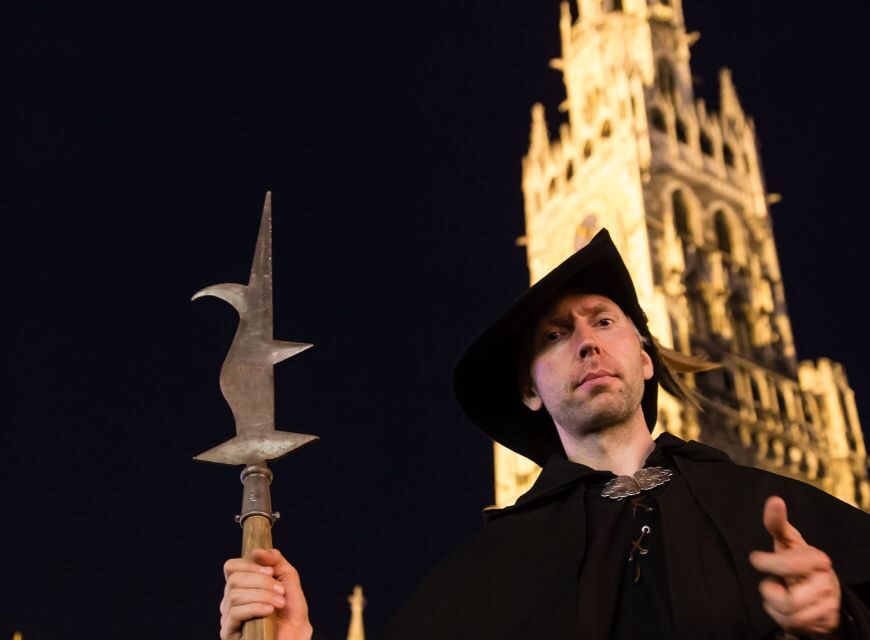
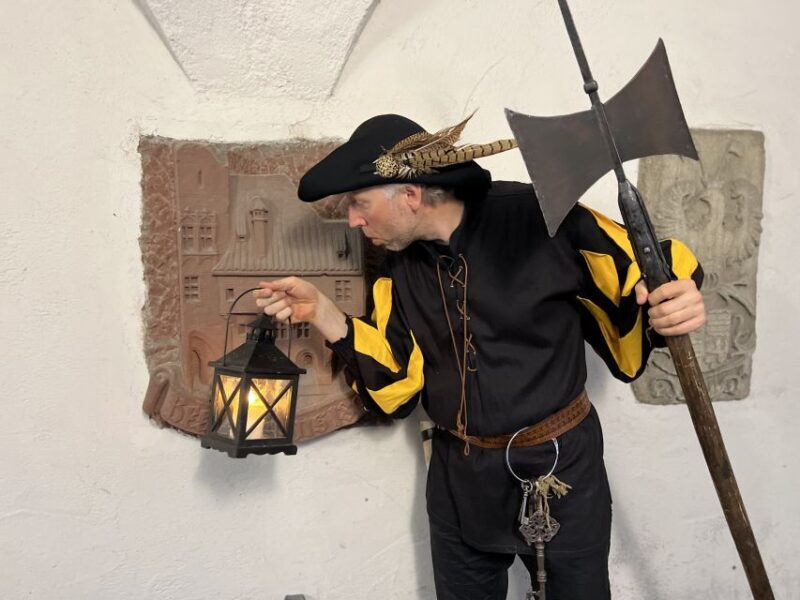
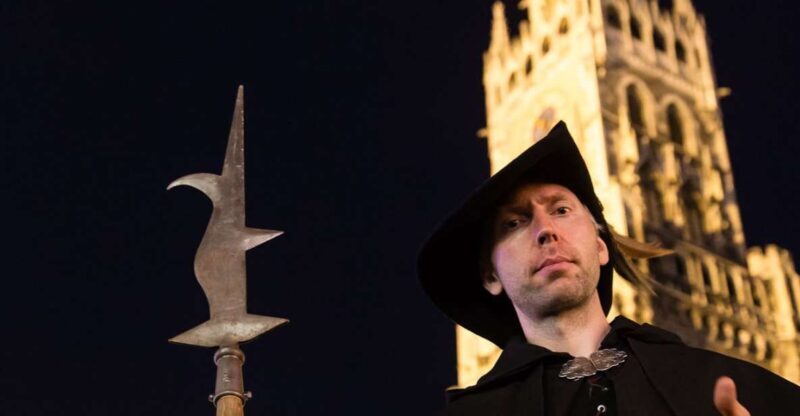
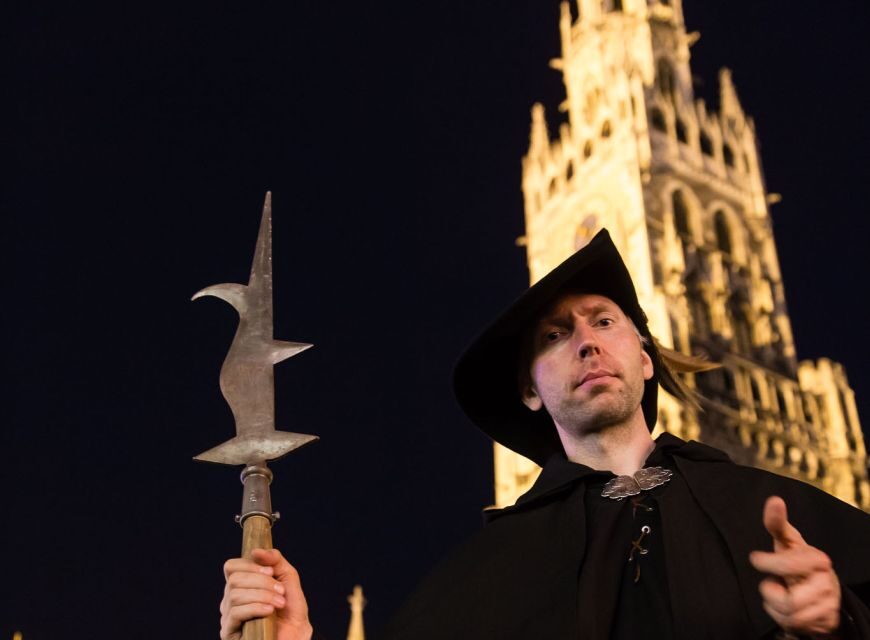
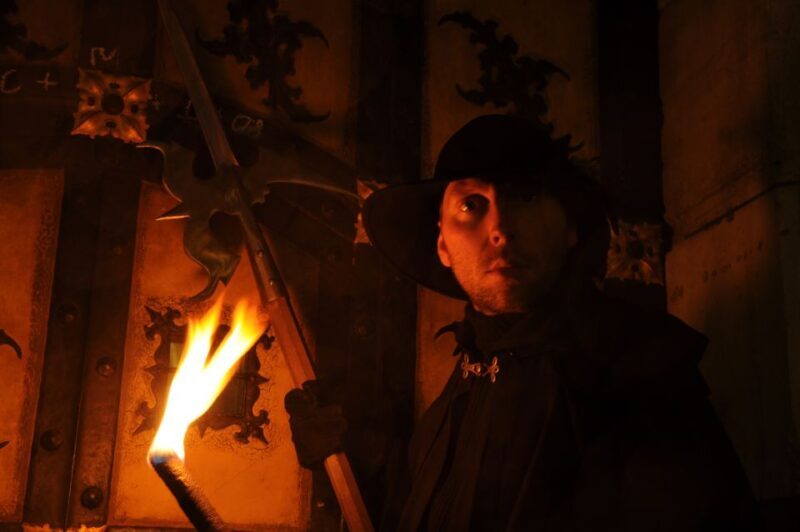
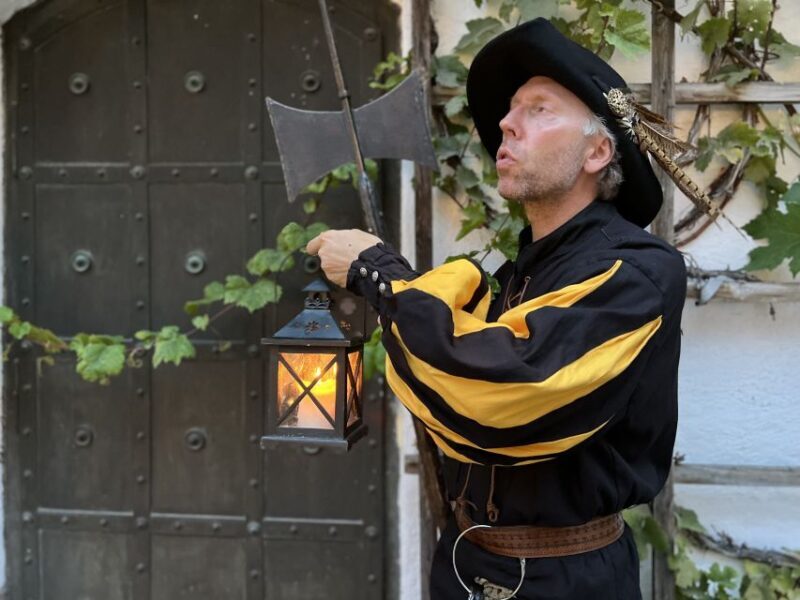
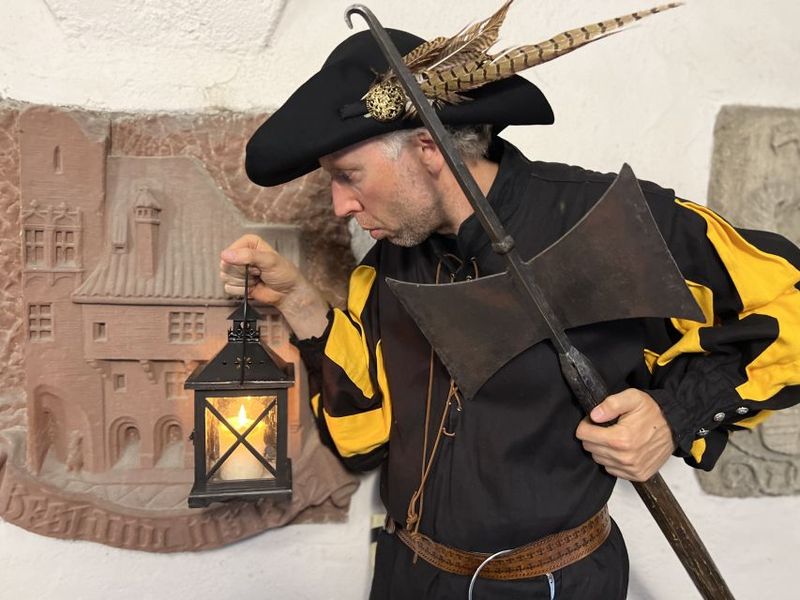
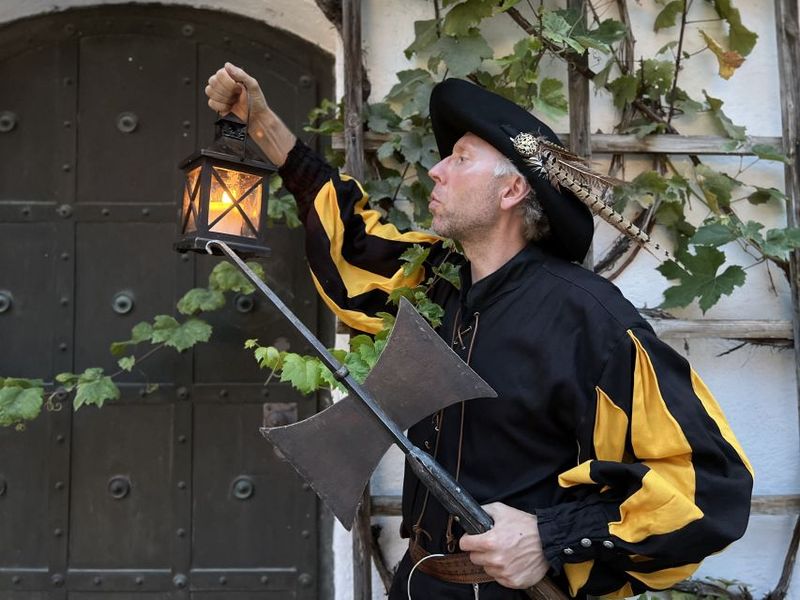
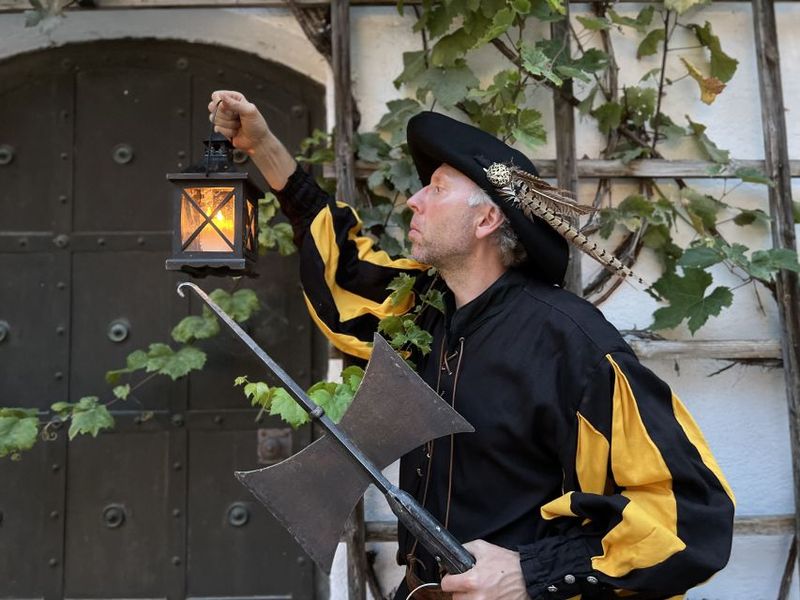
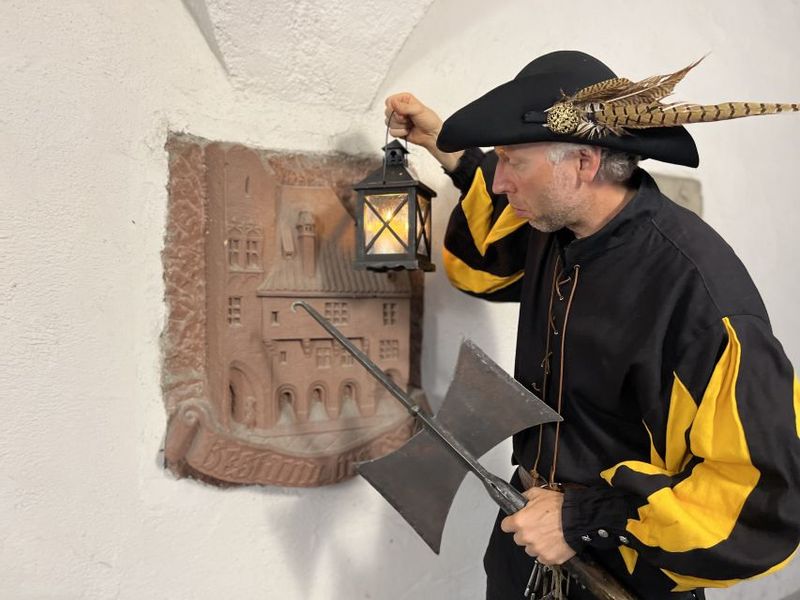
You join the tour late in the evening with a guide dressed as a traditional night watchman. That costume isn’t just for show. It sets the tone for the whole walk: this is a guided stroll through an imagined long-forgotten world where the watchman is responsible for peace and order.
The guide also acts like more than a modern walking tour host. He’s portrayed as someone who knows the city’s maze of alleyways, trusted with dark stories and secretive societies. In practice, that means you’ll spend your time listening, asking questions, and getting the kind of local-flavored answers that turn a landmark into a scene.
In traveler feedback, people have highlighted the guide’s authenticity and charm—one guest noted that Elsbeth was authentisch and strongly experience-oriented, with plenty of useful information delivered in an engaging way.
Marktplatz at evening hours: where the “rounds” start
The walk begins in the Marktplatz area, where the night watchman shepherds his people. This is a clever choice because Marktplatz is central and recognizable, but the story reframes it. Instead of a daytime square, it becomes a starting point for watchfulness and routine.
The tour’s tone also shifts your expectations. You hear that he scorns lively nightlife after 21:00 because law-abiding citizens are in bed by then. Even if you don’t share his strict schedule, it’s a fun way to make you notice the city’s rhythm—quiet streets, shuttered windows, and buildings that look more dramatic in low light.
St. Peter’s Church tower tops and why they’re askew
Next you head toward St. Peter’s Church. The big moment here is going up in your imagination (and looking at) the tower tops, which the guide explains are standing askew.
That detail matters because it’s not a generic “here’s a church” stop. It’s a prompt to look harder. You’ll be encouraged to connect what you see with why it happened, turning a quick exterior glance into a story you can remember later when you compare it to other European church silhouettes.
More Great Tours NearbyChurchyards, gravestones, and funeral customs you don’t see in postcards
On the south side near the old churchyard, the watchman leans into grim details from the gravestones. You’ll hear stories tied to funeral customs and epitaphs, including references to decomposing corpses and missing church pews.
This is one of the stops that can make or break the experience for you. If you like unusual local storytelling, it’s exactly the kind of “Munich, but not polished” moment that gives this tour personality. If you prefer light history, you might want to be mentally prepared for the darker side of how cities once handled death and remembrance.
You can also read our reviews of more evening experiences in Munich


Altes Rathaus, Salzstraße, and the “complaining” old Stadttor
At the Altes Rathaus tower on the historic Salzstraße, the tour gets vivid. The old Stadttor comes to life in the story and complains about its rebuilding in the 1970s.
This kind of narration is useful because it gives you a framework for understanding what changes cities go through. Buildings don’t only “stay historical”—they get rebuilt, repaired, reshaped, and that often leaves the city with new layers. You’ll walk away more alert to the fact that authenticity isn’t always frozen in time.
There’s also a strongly local layer: the guide questions visitors’ piety and introduces patron saints Onuphrius and Henry the Lion, who are said to protect people from sudden death. It’s theatrical, yes—but it also shows you how everyday fear and protection worked in an older worldview.
Torture chamber and prison references: civic power after hours
As you continue, you pass references to a torture chamber and prison, then move toward the Alter Hof. You don’t get a museum-style exhibit here, but you do get the story logic behind civic spaces built to control order.
This part is especially strong at night because the guide’s theme is consistent: someone has to keep the city functioning when most people are asleep. By the time you hear these references, you’re already in the right mindset to understand why these institutions existed.
Alter Hof and Louis II’s reputation
At the Alter Hof, the story connects to Louis II and his harsh reputation. You also learn about how the House of Wittelsbach came to Munich, plus where the name Zwingerstock comes from.
Why this helps you as a traveler: it links major powers (dynasties and rulers) to place names you’ll see around town later. Even if you’re not a “royal history” person, learning where the names come from gives you a map in your head that makes future sightseeing easier and less random.
Following the city walls from the 12th century
The tour then shifts from individual buildings to long lines of defense. You follow the city walls from the 12th century and head west from Wasserburg.
This is one of those segments that feels more immersive because you’re walking along the idea of boundaries—what kept people in, what kept threats out, and how a growing city adapted over centuries. Night makes it easier to picture the wall as a physical system, not just a background feature.
Gruftgasse and the Waller in Walchensee ring story
In Gruftgasse, you hear a spooky tale told by Alois: Waller in Walchensee, involving a young lady and her golden ring.
This kind of story is practical value, even when it sounds purely “legend.” A good local tale gives you a mental hook. You’ll remember the street shape and feel like you’ve visited a living piece of culture, not just a line on a walking route.
Schäfflergasse: why wine beat beer in the Middle Ages
Next comes Schäfflergasse, where you learn why wine—not beer—was the Middle Ages drink of choice.
That fact is the kind of detail that changes how you think about Munich. It reminds you that today’s beer identity isn’t the whole story of everyday life. You may not start the tour questioning drinking history, but you’ll leave with a new lens.
Cathedral symbols and Frauenkirche tower legends
Near the cathedral area, you’ll set your sights higher at the symbols of the city—the two towers. Then the narration turns specific and dramatic: the tour includes the rich widow’s epitaph and Fanny von Ickstatt’s unlucky fall from the north tower of the Frauenkirche.
This is a standout stop if you like stories that connect architecture to people’s lives. You’re not just admiring towers; you’re hearing how tower spaces shaped public attention, reputation, and fear in older eras.
Promenadeplatz and the old Salzstadel
At Promenadeplatz, the guide brings up the old Salzstadel (salt storage). You also pass Palais Porcia and Palais Holstein, with stories tied to sovereign lord Karl Albrecht building palaces for his mistress.
This is useful because it mixes “big name” politics with the lived geography of trade and city power. Salt is one of those topics that sounds dull until you remember how essential it was for preservation and commerce. Once you hear it as part of the city’s physical spaces, it lands differently.
Salvatorkirche: host desecration and a love story
At Salvatorkirche, the tour focuses on an enormous host desecration story, and also tells a love story involving Henriette Adelaide, consort of electoral prince Ferdinand Maria. The story continues at the Theatinerkreuzgang.
Again, this isn’t a casual “pretty church” stop. It’s narration that links faith, scandal, and family hopes in a way that old cities handled all at once.
Theatiner Church built after the heir was born
You hear that after 10 years, the long-sought heir to the throne was born. Following that, the Theatine Church was built.
This is valuable for travelers because it shows how buildings can be “time markers.” You stop seeing architecture as static scenery and start seeing it as an outcome of events—political hope, religious meaning, and the pressures that shaped public projects.
End of the rounds: back into real Munich
The tour wraps by letting the watchman’s “herd” loose into the night so you can continue your own rounds. Since the full duration is 1.5 hours, you’re not stuck for half a day. You get the drama, the street-level perspective, and the main stops without feeling like you’ve lost your evening.
If you want to keep the momentum going after the tour, you’ll likely enjoy wandering nearby areas with fresh questions in your head—like why a tower is shaped a certain way, or what a street name might hint at.
How the tour’s pace fits real travel days
Because this is a short, focused walk, it works well when you’re doing the classic Munich highlights but want something more atmospheric. It’s also a good option if you want a narrative tour instead of a museum day.
You’ll want to plan for the fact that food and drinks are not included, and transport is not included. So think about timing: eat before you start (or plan a snack after), and get to the meeting point without relying on tour-provided pickup.
Price and value: $530 per group (up to 30)
The price is $530 per group up to 30 for a 1.5-hour experience. That can look high at first glance, but the value changes depending on how you’re traveling.
- If you’re a larger group, the per-person cost drops fast, and you’re paying for a live, costumed, story-driven guide for your whole party.
- If you’re a solo traveler or a couple, the price can feel steep versus standard walking tours, especially since there’s no food included.
For best value, this tour tends to shine with friends, families, or anyone who can make a small group feel like a private-feeling night out. Also note that private group available is offered, which may appeal if you like a calmer pace and more targeted questions.
Who this tour is for (and who should skip it)
You’ll probably love this if you:
- Enjoy short tours that are heavy on stories
- Like spooky-but-civilized history (gravestones, legends, prison references)
- Prefer walking through city spaces where the guide helps you notice what matters
- Want a night viewpoint rather than daytime sightseeing
You might want to skip or adjust expectations if you:
- Want a strictly neutral, modern lecture style
- Don’t enjoy humor that can include gentle scolding or questions about patron saints
- Need included food or a tour that handles logistics for you (since food and drinks and transport are not included)
Practical details that affect your night
Here’s what you can rely on:
- Languages: German and English (live tour guide)
- Wheelchair accessible: Yes
- Duration: 1.5 hours
- Cancellation: Free cancellation up to 24 hours in advance for a full refund
- Reserve & pay later: Available
- Meeting point: May vary depending on the option you book
Wheelchair access is great, but you should still expect old-town reality. Historic areas often have uneven surfaces or tight turns, so if mobility is a concern, it’s smart to plan for slower movement and ask about route details when booking.
Should you book the Munich Night Watchman walk?
My take: book it if you want Munich in a different mood. This is the kind of tour that makes you feel the city has a past you can still sense in its streets, towers, and names. The costumed guide style, the specific landmarks (St. Peter’s, Altes Rathaus, Frauenkirche, and multiple palaces and churches), and the darkly fun stories add up to a memorable 1.5 hours.
Don’t book it if you’re looking for a museum-like program, food included, or a gentle, never-critical guide. Also, if you’re traveling solo and the group-price structure doesn’t work for you, compare alternatives.
Munich: Night Watchman Walking Tour
FAQ
FAQ
How long is the Munich Night Watchman Walking Tour?
The tour lasts 1.5 hours.
Where does the tour start?
The meeting point may vary depending on the option booked.
Is food and drinks included in the tour price?
No, food and drinks are not included.
Is transport included?
No, transport is not included.
What languages is the tour offered in?
The live tour guide speaks German and English.
Is the tour wheelchair accessible?
Yes, it is listed as wheelchair accessible.
Can I cancel for a full refund?
Yes. You can cancel up to 24 hours in advance for a full refund.
Is there an option to reserve now and pay later?
Yes. Reserve now & pay later is available, so you can book and pay nothing today.
You can check availability for your dates here: