
Porto on a tuk-tuk is a smart move when you want key sights without getting wrecked by hills and long walks. This guided Historical Center loop uses small vehicles for tight streets, with stops that range from medieval walls to big-photo viewpoints, plus a glass of Port wine along the way.
We especially like how the guides keep things practical and human. People mention guides like Natalia and Anna for clear, engaging explanations, and you’ll get a fast sense of how Porto is laid out. The second win: the route hits both famous landmarks and quieter corners you might not find on your own.
One thing to consider: entrance fees for monuments are not included, and traffic or weather can affect timing. Also, with small vehicle capacity, you’ll want to confirm how your group fits comfortably.
- Key points to know before you go
- Porto in 1 hour 50 minutes: the value of the “get your bearings fast” plan
- The group setup: private tour, multiple tuk-tuks, and why it can feel smooth
- Meeting point: where R. de Augusto Rosa 180 helps (and why you should arrive early)
- What’s included vs. what costs extra (so you don’t get surprised)
- The ride itself: why tuk-tuks feel better than you’d expect
- Stop by stop: what you’ll actually see and why it’s worth your time
- Carlos Alberto Theatre area (built 1910 over earlier ruins)
- Fernando’s Wall (Muralha Fernandina) secret-history energy
- Porto Cathedral: Romanesque roots, later updates
- The Cathedral area terrace and the pelourinho monument
- Paco Episcopal: a grand facade with layered centuries
- São Bento Railway Station: the tile storybook stop
- Praça Nova / blacksmith square origins: street names as history
- Fonte dos Leões: a French-cast copy with a Porto twist
- Two rococo church stops: Porto’s ornament flex
- Cordoaria Garden (João Chagas Garden): rope-makers to public space
- Torre dos Clérigos and the iconic bell tower feel
- Serra do Pilar viewpoint and the circular monastery story
- Palácio da Bolsa: neoclassical power and the Arabian Room lead-in
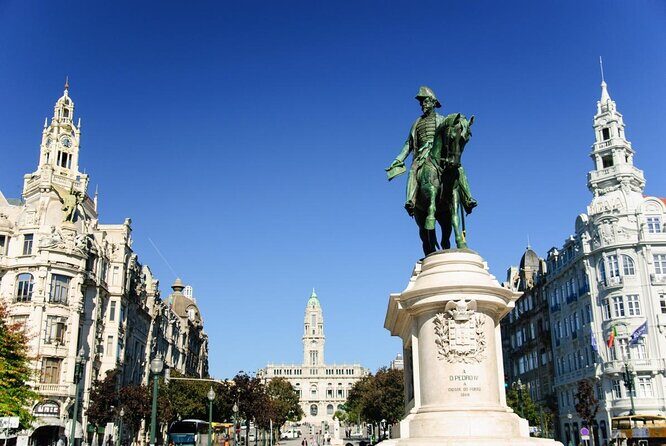
- D. Pedro statue and the constitutional charter connection
- Livraria Lello: Art Nouveau facade and that red-staircase vibe
- Mercado Ferreira Borges / Hard Club area: iron architecture in action
- Infante D. Henrique monument area: navigation pride in public space
- The Gothic church dubbed Church of Gold: Tree of Jesse and catacombs
- Alfândega Nova do Porto: the neoclassical shell that now hosts transport culture
- D. Luís I Bridge and the metro deck idea
- The 2003 metro bridge crossing: elegant engineering moment
- Guides and vibe: what makes people come away happy
- Weather, traffic, and timing: be flexible, especially near the end
- Cancellation policy: free refund if you plan ahead
- Who this tour suits best (and who should consider walking instead)
- Should you book Porto’s tuk-tuk historical center tour?
- FAQ
- FAQ
- How much does the Porto guided tour cost?
- How long is the tour?
- Is the tour offered in English?
- What’s included in the price?
- Are monument entrance tickets included?
- Is this a private tour?
- Where does the tour start and end?
- What is the cancellation policy?
- What if weather is bad?
Key points to know before you go
 1 / 8
1 / 8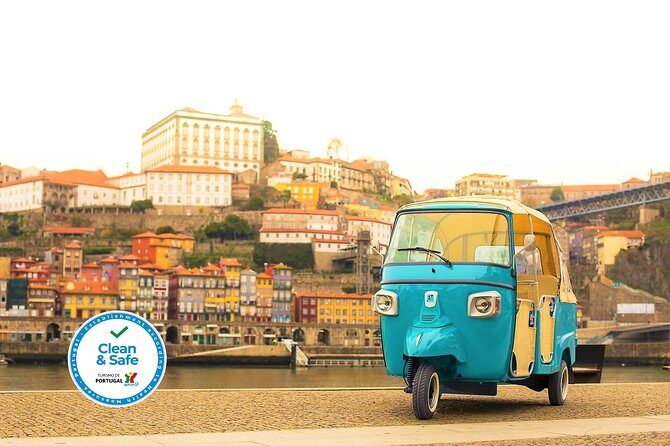 2 / 8
2 / 8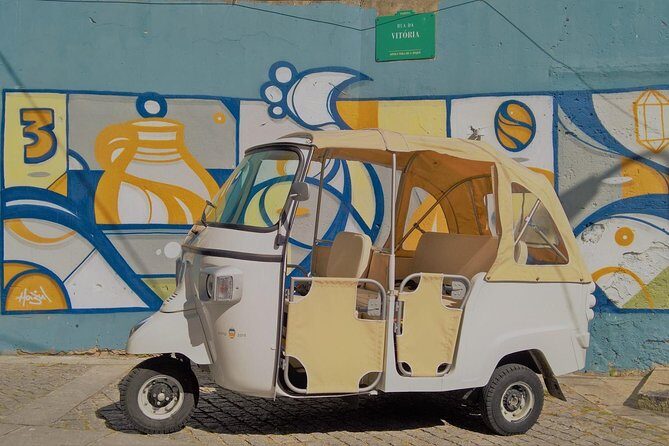 3 / 8
3 / 8 4 / 8
4 / 8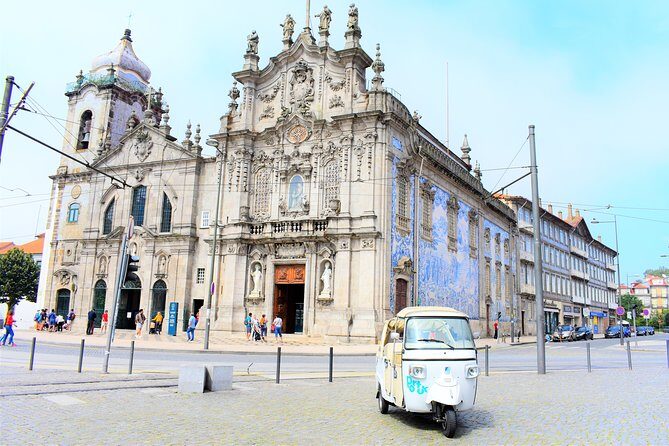 5 / 8
5 / 8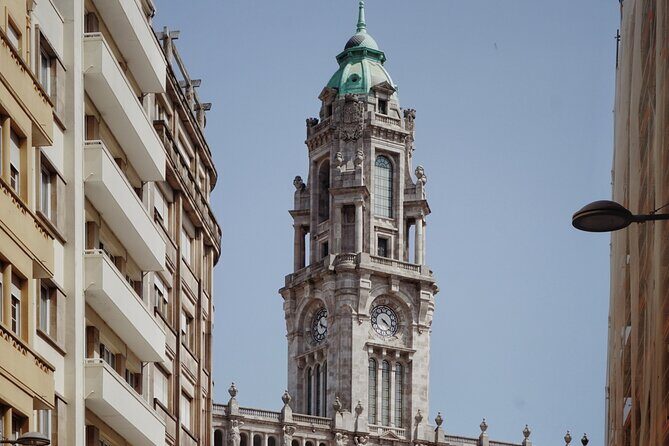 6 / 8
6 / 8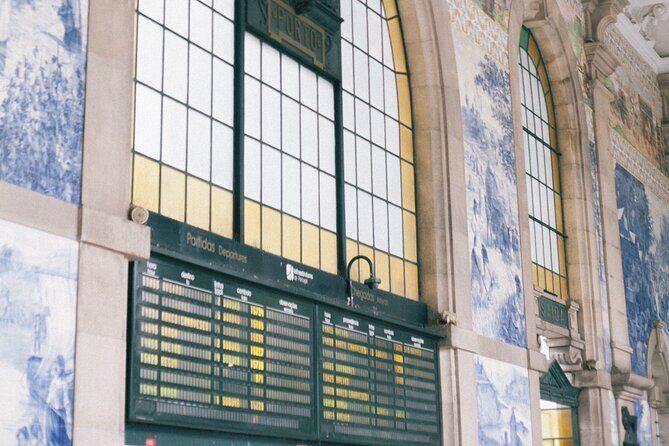 7 / 8
7 / 8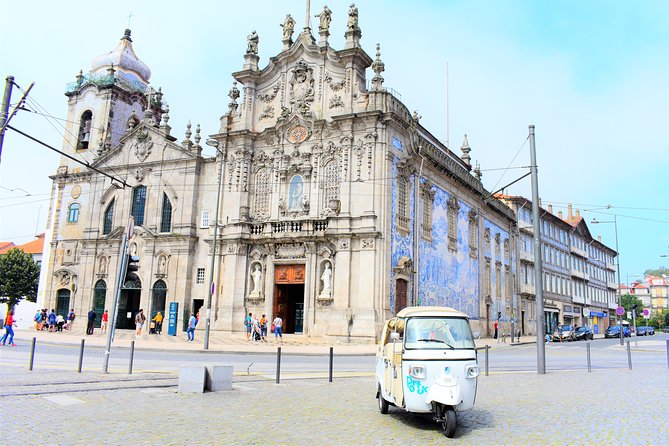 8 / 8
8 / 8- Tuk-tuk access for narrow cobbled lanes where cars and even some tour buses struggle
- Port wine glass included so you get a Porto moment without adding a stop
- English-speaking private tour for your group only, not a big shared cattle-car
- Good photo timing at viewpoints, especially around Serra do Pilar
- Most stops are walk-by or short stays, so read your pace expectations correctly
- Some monument entrances cost extra, so plan for a few paid tickets
Porto in 1 hour 50 minutes: the value of the “get your bearings fast” plan
If you’re short on time in Porto, you’re usually stuck with one of two choices: spend a whole day grinding between attractions, or accept a whirlwind sampler that leaves you wanting more. This tuk-tuk format aims for the sweet spot. You get an organized route, but you’re still moving in a way that feels like local street life instead of a rigid bus circuit.
And yes, the tuk-tuk part matters. Porto’s historic core has tight lanes and steep bits where you can waste time just trying to figure out where you’re going. Riding instead of walking helps you see more without treating your first day like a punishment.
The group setup: private tour, multiple tuk-tuks, and why it can feel smooth
This is listed as a private tour/activity, meaning only your group participates. That alone often improves the vibe: you can hear your guide better, and you’re less likely to feel squeezed.
Each tuk-tuk can carry 2, 3, or 4 adults (up to 75 kg each), and for larger groups they use multiple vehicles while still making the same stops at the same time. In other words, you’re not separated into chaos—you’re just split across vehicles.
One practical note from traveler feedback: for groups that push beyond ideal capacity, some people reported that seating/fit felt tight. If you’re traveling as a larger group, it’s worth contacting the provider before departure and confirming how many vehicles you’ll have.
Meeting point: where R. de Augusto Rosa 180 helps (and why you should arrive early)
You start at R. de Augusto Rosa 180, 4000-528 Porto and the tour ends back there. Since the tour begins on a set schedule, I’d treat this as a “show up a little early” situation, especially if you’re navigating Porto streets for the first time.
What’s included vs. what costs extra (so you don’t get surprised)
Included:
- Port wine glass
- Driver/guide
- Local guide
Not included:
- Monument entrances
So you can expect some of the most famous places to be viewed from outside or with only a brief stop unless you decide to pay ticketed entry separately. This keeps the tour moving, but it means your “time budget” depends on what you’re hoping to go inside.
The ride itself: why tuk-tuks feel better than you’d expect
Porto has a “visual feast” problem: there’s always something worth looking at—tilework, stone facades, church towers, bridges, little alley views. A tuk-tuk naturally slows you down just enough for the best angles. Travelers also highlight that tuk-tuks can access narrow, cobbled lanes, which makes the route feel more personal and less like you’re stuck behind traffic.
Also, if you’re on a rainy day or it’s windy, plan to bring a light rain layer. Several people mentioned bad weather but still found the experience worthwhile—because the ride protects you from some of the worst of the elements.
Stop by stop: what you’ll actually see and why it’s worth your time
Carlos Alberto Theatre area (built 1910 over earlier ruins)
One of your early stops frames Porto through its cultural story. This theater building dates to 1910, and it was built on top of the earlier Real Theatre ruins, which burned down in 1908. Even if you don’t go inside, the exterior details and the idea of resilience through rebuilding helps you understand how Porto’s identity keeps re-forming over time.
Fernando’s Wall (Muralha Fernandina) secret-history energy
You’ll also get a look at Muralha Fernandina do Porto, a major piece of military architecture built between 1368 and 1437. It runs about 3,000 steps and averages around 30 feet high. This is the kind of stop that’s easy to miss if you’re only chasing the biggest postcard sights—yet it’s one of the most “how old is this place?” moments you can pack into a short tour.
Porto Cathedral: Romanesque roots, later updates
At Catedral do Porto, you’re looking at construction from the 12th/13th centuries with Romanesque style, then additions and renewals through later centuries, reaching a final setting in the 20th century. That mix is actually a good lesson for Porto: the city didn’t get frozen at one moment. It kept growing, remodeling, and redefining itself.
The Cathedral area terrace and the pelourinho monument
Nearby is the Pelourinho context—what used to be surrounding the Cathedral, the Cabido house, and the Bishop’s Palace was demolished in 1940, then a paved terrace was built. A stone monument for local government was placed there (constructed 1945), reproducing a drawing from 1797. It’s not just “a stone.” It’s a reminder of how political changes shape the city’s physical layout.
Paco Episcopal: a grand facade with layered centuries
Paco Episcopal likely dates to the 13th century, with remodeling in 1737 attributed to plans by Nicolau Nasoni (depending on authors). The facade features an arch opening, pilasters, decorated fronton, and the bishop’s coat of arms. Even if you only pause briefly, it’s one of those buildings that makes you feel the scale of ecclesiastical power in past centuries.
São Bento Railway Station: the tile storybook stop
São Bento Railway Station is one of the most popular “how did they think of this?” sights in Porto for a reason. The lobby is covered with around 20,000 narrative tiles painted by Jorge Colaço. The station is also an early 20th-century structure with a glass and cast iron roof designed by Marques da Silva.
This is a great stop because you don’t need a ticket mindset to enjoy it. You can stand and absorb the tile scenes without it becoming a time sink.
Praça Nova / blacksmith square origins: street names as history
You’ll pass by squares tied to old Porto life. One area begins in the early 18th century: urbanization in 1718 created new streets and a larger square known as Praça Nova. Before that, it was shaped by medieval walls and palaces now gone.
Another layer: for centuries it was known as Praça dos Ferradores (Square of Blacksmiths). In the 18th century, the Palace of Viscondes de Balsemão rose on one side and later became a guesthouse that hosted King Charles Albert of Sardinia, exiled to Porto. That’s why the square carries its current name. These details help you “read” the city while you move.
Fonte dos Leões: a French-cast copy with a Porto twist
The Fountain of the Lions is a 19th-century structure built by a French company, and it’s a copy (mostly) of a fountain in Leicester, England. It’s a nice “Porto isn’t isolated” detail: ideas moved across borders, and local cities adapted them.
Two rococo church stops: Porto’s ornament flex
Porto’s interior artistry can be hard to squeeze into a short tour, but the route sets you up for it. You’ll get brief looks at two significant rococo-era church buildings:
- One has a classical facade dated to the 1850s and an altarpiece described as Porto rococo and nationally recognized as a monument.
- The other is from the second half of the 18th century, noted for carved interiors and national monument status, with a side facade covered in tiles in 1912, designed by Silvestre Silvestri, with figurative scenes tied to Our Lady.
You may not have time to go deep, but you’ll at least see the exterior character and get the “why Porto feels so different” clue.
Cordoaria Garden (João Chagas Garden): rope-makers to public space
This garden—best known as Cordoaria Garden or João Chagas Garden—links work history to public green space. It’s associated with centuries of rope-making activity, and in the 19th century the municipality turned an area into a public garden (project by German landscaper Emile David in 1865/1866).
It also includes statues and later additions like works connected to the Porto 2001 cultural year. Even a short pause here helps you catch your breath before the big-ticket sights.
Torre dos Clérigos and the iconic bell tower feel
The Clérigos Tower (Torre dos Clerigos) is one of Porto’s most recognizable silhouettes. The church is Baroque, and the tower can be spotted from multiple city points, which makes it a natural “you’re in Porto” marker.
Some travelers love towers because they’re visual wayfinding. You can often spot it later and feel your internal map getting better.
Serra do Pilar viewpoint and the circular monastery story
Mosteiro da Serra do Pilar is a World Cultural Heritage site and a standout stop for views. Construction began in 1538 and finished around 1670. The story behind it adds context: it started for Augustinian Friars, then the liberal army used it during the Civil War 1832–1834, and it later fell into disrepair until restoration efforts organized around the Lady of the Pilar brotherhood and friends group.
What you’re rewarded with is the panorama. From the grand terrace you can see Porto’s riverside stretching toward the Arrábida Bridge, plus the historic center with the Cathedral and D. Luís I bridge. On the other side you can look toward Fontainhas and the São João bridge.
This is also where several people say the viewpoint is the highlight—especially if you want your photos to feel like Porto, not just Porto’s street-level details.
Palácio da Bolsa: neoclassical power and the Arabian Room lead-in
Palácio da Bolsa (Stock Exchange Palace) is a major monument in the historical center. Designed in 1842 in a neoclassical style, it’s tied to the Commercial Association of Porto. The “big reason people talk about it” is the Arabian Room, though entrance isn’t included on this tour—so you’ll likely get exterior context unless you add tickets separately.
Still, even approaching it gives you a sense of how wealthy trading shaped the city’s architecture.
D. Pedro statue and the constitutional charter connection
You’ll also see a statue unveiled in October 1866 by Célestin Anatole Calmels and Joaquim da Costa Lima. It’s about D. Pedro—including a theme of his donation of his heart to Porto’s representatives and the arrival in Mindelo. For a quick tour, these small monuments can be surprisingly meaningful because they tie Porto to Portugal’s wider political timeline.
Livraria Lello: Art Nouveau facade and that red-staircase vibe
The tour includes the area around the library building, inaugurated 1906, famous for its Art Nouveau facade and neo-Gothic details. Inside, it’s known for painted plaster work that imitates wood and a dramatic staircase. A stained-glass skylight carries the library monogram and motto Decus in Labore.
Travelers also note it has long been considered among the world’s most beautiful libraries, and it’s the kind of stop you’ll remember even if you only glance at the exterior first.
Mercado Ferreira Borges / Hard Club area: iron architecture in action
The market building (from 1885) is an iron-architecture example built by city order to replace an older market. It didn’t last as a market forever and later became an entertainment venue where Hard Club is now located. It’s a neat stop because it shows how Porto reuses architecture instead of demolishing it.
Infante D. Henrique monument area: navigation pride in public space
You’ll pass Mercado Ferreira Borges and Palácio da Bolsa area. In the square there’s a small garden and an underground car park, plus a Monument to the Infante D. Henrique. It was completed 1900, started 1894, and commemorates the 5th centenary of the prince’s death, focusing on Portugal’s navigation and faith.
The Gothic church dubbed Church of Gold: Tree of Jesse and catacombs
Another major stop is the Gothic temple where construction began in the 14th century. It has a gilded Baroque interior from the 17th and 18th centuries, famously described as the Church of Gold. It’s noted for the Tree of Jesse and catacombs, and it’s designated a national monument since 1910 and a UNESCO World Heritage site since 1996.
Even without entering for a full visit, it’s worth knowing what you’re looking at: Porto saved a lot of its storytelling inside here.
Alfândega Nova do Porto: the neoclassical shell that now hosts transport culture
The tour also includes Alfândega Nova do Porto, a neoclassical building from the 19th century designed by engineer Jean F. G. Colson. It has two facades—one toward the Douro river and one toward the city. In 1987, the future Museum of Transport and Communications was planned for the building, with restoration and adaptation by architect Eduardo Souto Moura.
This stop is a reminder that Porto’s “old center” isn’t just medieval. It also has smart 19th-century engineering and later cultural repurposing.
D. Luís I Bridge and the metro deck idea
You’ll reach the D. Luís I Bridge, inaugurated in 1886. It has two overlapping iron decks, designed under engineer Teófilo Seyrig. It’s about 395 metres long, 8 metres wide, and the arch is described as the world’s biggest forged iron arch.
Today, the upper deck is used by the Metro of Porto, linking Porto Cathedral area to the Garden of Morro and Avenida da República in Vila Nova de Gaia.
The 2003 metro bridge crossing: elegant engineering moment
Finally, you’ll see the bridge inaugurated 30 March 2003, designed by engineer Adão da Fonseca. It replaced the upper deck lane of the D. Luís I Bridge now used by the metro line D. This bridge is about 371 metres long and 20 metres wide, with a Maillart-type arch design and a 280 m arch span described as a world record by experts, known for elegant engineering.
It’s a big finish for a tour that started with theater facades and medieval walls.
Guides and vibe: what makes people come away happy
One consistent theme from travelers: the guides’ energy and knowledge. Names that show up again and again include Victor, Natalia, Anna, Ana, Bernardo, Gabby, and Gonçalo. People mention that guides recommend restaurants, handle photo spots well, and don’t rush. That matters because the tour is short—if the guide is dull or hard to hear, you lose the value.
Also, you’ll often get quick guidance on where to stand for pictures. That’s not fluff. In Porto, angles are everything.
Weather, traffic, and timing: be flexible, especially near the end
Times are listed as approximate and subject to change due to local traffic conditions. One cancellation story also popped up: the company cited construction work related to the new metro lines causing safe operating issues for that day.
There’s also a good weather requirement. If poor weather forces cancellation, you’ll be offered a different date or a full refund. So if your trip dates are tight, consider booking early and keeping other plans flexible.
Cancellation policy: free refund if you plan ahead
You can cancel for a full refund up to 24 hours before the experience start time. If you cancel less than 24 hours before, you don’t get refunded. Changes made under 24 hours aren’t accepted.
Who this tour suits best (and who should consider walking instead)
This tour is ideal if:
- You’re in Porto for a short stay and want a strong overview fast
- You care about views and city layout, not just museum time
- You want a guide who can connect the dots between buildings, tiles, and bridges
- You’d rather trade sore feet for short walks and lots of riding
Consider walking instead if:
- You want deeper, inside-the-building experiences at each stop
- You prefer learning at your own pace without vehicle noise or brief stops
- You’re mostly chasing one or two ticketed monuments and don’t need an overview
Should you book Porto’s tuk-tuk historical center tour?
I’d book it if it’s your first or second day in Porto and you want the city’s geography to click quickly. The combination of Port wine, guides, and high-success photo moments like Miradouro da Serra do Pilar makes it a strong value for the time you spend.
I’d think twice if your group hates hearing lessons on the move, or if you’re hoping to do lots of paid monument interiors during the same outing. Entrance tickets aren’t included, and the stops can be brief.
Porto Guided Tour to the Historical Center on a Tuk Tuk
FAQ
FAQ
How much does the Porto guided tour cost?
The price is listed as $42.33 per person.
How long is the tour?
The duration is about 1 hour 50 minutes, approximately.
Is the tour offered in English?
Yes, it’s offered in English.
What’s included in the price?
Included are a Port wine glass, the driver/guide, and a local guide.
Are monument entrance tickets included?
No. Monument entrance tickets are not included.
Is this a private tour?
Yes. It’s a private tour/activity, so only your group participates.
Where does the tour start and end?
It starts at R. de Augusto Rosa 180, 4000-528 Porto, Portugal and ends back at the same meeting point.
What is the cancellation policy?
You can cancel for a full refund up to 24 hours in advance. If you cancel less than 24 hours before, you won’t receive a refund.
What if weather is bad?
The experience requires good weather. If it’s canceled due to poor weather, you’ll be offered a different date or a full refund.