
Berlin has a way of putting history right on the sidewalk. This private Third Reich / Hitler and World War II walking tour strings together many of the city’s most important Nazi-era locations and memorials, from the Topography of Terror to the Memorial to the Murdered Jews of Europe.
I like that it’s built as a true walking day with hotel pickup and drop-off, and most stops have free entry. You also get a dedicated guide who can explain the “how” and “why,” not just point at plaques.
One thing to consider: the subject matter is heavy. You’ll move through sites tied to persecution, mass murder, and state violence, so go in with a clear head (and dress for a lot of walking).
- Key things to know before you go
- A 3–4 Hour Private Walk Through Berlin’s Dark History
- Hotel Pickup and Drop-Off: Why This Matters in Berlin
- Price and Value: What 2.97 Actually Buys You
- The Guide Makes or Breaks It
- Stop 1: Soviet Memorial Tiergarten and the Battle of Berlin
- Stop 2: Detlev-Rohwedder-Haus and Wilhelmstraße’s Nazi Administration
- Stop 3: Topography of Terror on Former SS and Gestapo Grounds
- Stop 4: Bendlerblock German Resistance Memorial Center and the July 20 Plot
- Stop 5: Bebelplatz and the Book Burning Memorial
- Stop 6: Reichstag Building and the 1933 Reichstag Fire
- Stop 7: Memorial to the Murdered Jews of Europe (Holocaust Memorial)
- Stop 8: Führerbunker Above Ground and the Last Days of the Third Reich
- Stop 9: Anhalter Bahnhof and T4 Euthanasia Program Memorial
- Stop 10: Moltkebrücke and Soviet Crossings in 1945
- Stop 11: Wilhelmstraße Walk and the Heart of Nazi Power
- Pacing, Walking Steps, and Weather Reality
- Admissions, Tickets, and What You’ll Want to Plan
- Who Should Book This Tour
- Should You Book This Private Third Reich Tour
- FAQ
- How long is the private walking tour?
- Is hotel pickup and drop-off included?
- Is this tour only for my group?
- What language is the tour in?
- Are there any admission fees during the tour?
- Is food and drinks included?
- Does it operate in all weather?
- When will I get confirmation after booking?
- What is the cancellation policy?
Key things to know before you go
- Private, tailored pacing: it’s just your group, and guides often adjust to what you want to focus on
- Hotel pickup and drop-off included: you won’t lose time lining up transit
- Many free entry stops: several locations are listed as free, which helps your value
- A full arc of 1930s–1945 Berlin: Nazi power, repression, and the final collapse are all covered
- One ticket not included: the Reichstag Building admission is not included, so plan ahead
- Weather-ready: it runs in all weather, so you’ll want layers and sturdy shoes
A 3–4 Hour Private Walk Through Berlin’s Dark History
This is a 3–4 hour private tour designed for people who want more than headlines. You’ll cover a cluster of sites that connect the rise of Nazi power, the machinery of repression, and the aftermath of war and genocide. It’s also structured so you keep seeing the same themes from different angles: government buildings, prisons and secret police sites, and then memorials that force you to slow down.
Because it’s private, you can ask questions and get clearer context. Many guides featured in traveler feedback sound less like lecturers and more like teachers who help you build a timeline in your head.
Hotel Pickup and Drop-Off: Why This Matters in Berlin
Berlin is big, and walking days can get messy fast when you’re bouncing between neighborhoods. Here, hotel pickup and drop-off are included, and the tour is also noted as being near public transportation.
In plain terms: you spend more time learning and less time figuring out where to meet. If you’re traveling with family, or you simply don’t want to manage logistics mid-day, that convenience is a big part of the value.
Price and Value: What $192.97 Actually Buys You
At $192.97 per person, this isn’t the cheapest way to see Berlin. But you’re paying for several things that add up:
- A professional guide for the full tour window
- Private group format (you’re not diluted into strangers’ pacing)
- Pickup and drop-off included
- Many stops listed as free entry, which keeps your day from turning into a pile of ticket fees
The main “watch item” is that the Reichstag Building admission ticket is not included. So you’ll want to confirm how you’ll handle that portion ahead of time.
The Guide Makes or Breaks It
This tour lives or dies on interpretation. The best part, based on traveler feedback, is how guides are—and how clearly they explain what you’re seeing.
People repeatedly mention guides like Georgia, Jasper, Emma, Simon, and Jimmy as standout examples. Common praise includes:
- clear, organized explanations
- a pace that feels comfortable
- the ability to tailor the route to the group
- thoughtful follow-up tips for what to revisit later
There’s also one caution from a traveler who felt the guide had his own agenda in parts. That’s a reminder that guides are people, not robots. If you have must-see priorities, it’s worth stating them early—since the private setup gives room to adjust.
Stop 1: Soviet Memorial Tiergarten and the Battle of Berlin
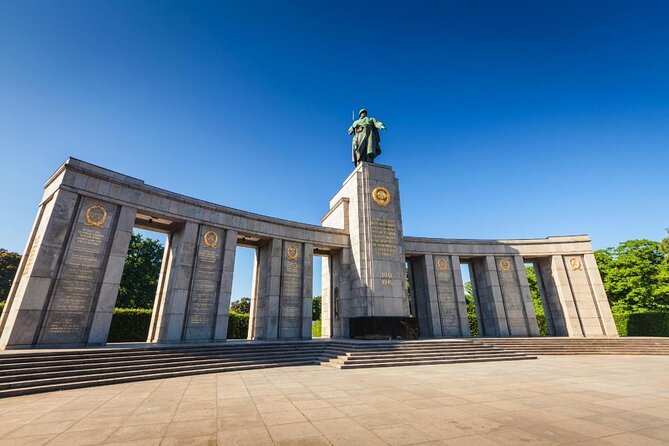
You start at the Soviet Memorial in Tiergarten, a site inaugurated in 1949. It commemorates Soviet soldiers who died during the Battle of Berlin in 1945. You’ll look at the memorial’s striking architecture—especially the large statue of a soldier holding a sword and a shield—and connect it to the broader endgame of World War II.
This opening stop is useful because it flips the frame. Berlin isn’t only the Nazi story here. It’s also the story of the war’s final brutality and the different forces that shaped what came after.
Stop 2: Detlev-Rohwedder-Haus and Wilhelmstraße’s Nazi Administration
Next, you head to an important building on Wilhelmstraße: the Detlev-Rohwedder-Haus. It’s tied to the Nazi-era power structure in a direct way—originally built in the 1930s as Reichsbank headquarters, later serving the Ministry of Aviation under Hermann Göring.
Your guide will help you understand why this kind of building matters: it wasn’t just politics in the abstract. It was where economic and political machinery connected to real decisions, real war planning, and real suffering.
After World War II, the building’s role shifted again, becoming part of the German Federal Treasury. That change of function adds an extra layer worth noticing: the same walls holding different meanings across time.
Stop 3: Topography of Terror on Former SS and Gestapo Grounds
The Topography of Terror stop is the kind of place where you feel the weight of the subject right away. The exhibition sits on the grounds of the former SS and Gestapo headquarters. You’ll spend time in both indoor and outdoor areas, walking through photographs, documents, and testimonies that cover the rise of the Nazi regime and the systematic repression that followed.
This is a key stop because it explains the methods of terror—how dissenters were targeted and how state violence reshaped everyday life. It also pushes you to think about why remembrance and education matter, not just as “culture,” but as a prevention tool for future atrocities.
Stop 4: Bendlerblock German Resistance Memorial Center and the July 20 Plot
At the German Resistance Memorial Center in Bendlerblock, the tone shifts—still serious, but focused on people who chose to resist. You’ll see exhibits about different resistance movements, with attention to figures like Claus von Stauffenberg, connected to the July 20, 1944 assassination attempt on Hitler.
This part matters because it widens the story. Berlin isn’t only victims and perpetrators; it also includes moral choices and the costs of standing up to tyranny. It’s a quieter stop, and it naturally gives your brain a moment to breathe and reflect.
Stop 5: Bebelplatz and the Book Burning Memorial
Bebelplatz is small, but it hits hard. You’ll learn about the book burning on May 10, 1933, when the Nazi regime destroyed thousands of books labeled “un-German.” The square’s architecture—near the State Opera House and Humboldt University—helps anchor the event in a real urban setting.
The underground memorial with empty bookshelves is the kind of detail that stays with you. It’s a simple visual that explains censorship without needing a long speech.
If you care about free expression, this stop connects totalitarianism to something still relevant today.
Stop 6: Reichstag Building and the 1933 Reichstag Fire
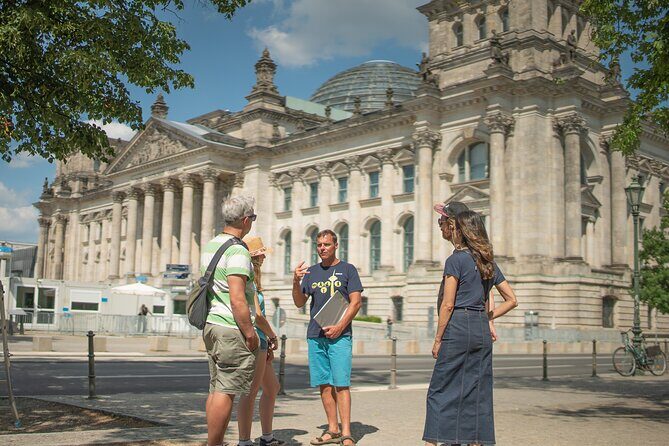
The Reichstag Building is an obvious Berlin landmark, but on this tour it’s treated as a political turning point. You’ll cover how the Reichstag became central during the rise of the Nazi regime, including the Reichstag Fire in 1933, which the Nazis exploited to consolidate power and suppress opposition.
You’ll also hear how the building was damaged during World War II and later restored as a symbol of democracy. The goal isn’t just “look at the building.” It’s understanding how the same physical space can represent different values depending on who controls it.
One practical detail: the Reichstag admission ticket is not included, so expect to sort that out separately.
Stop 7: Memorial to the Murdered Jews of Europe (Holocaust Memorial)
This is one of the most emotionally impactful stops on the route. The Memorial to the Murdered Jews of Europe consists of 2,711 concrete slabs in a grid, creating a disorienting walk. Your guide will explain the design choice and place it in historical context.
You’ll also learn about the purpose of the memorial—remembrance and reflection—and the importance of acknowledging the past to honor victims and lessons learned. Plan to slow down here. People often rush because they’re uncomfortable, but the whole point is that you feel the discomfort and stay with it.
Stop 8: Führerbunker Above Ground and the Last Days of the Third Reich
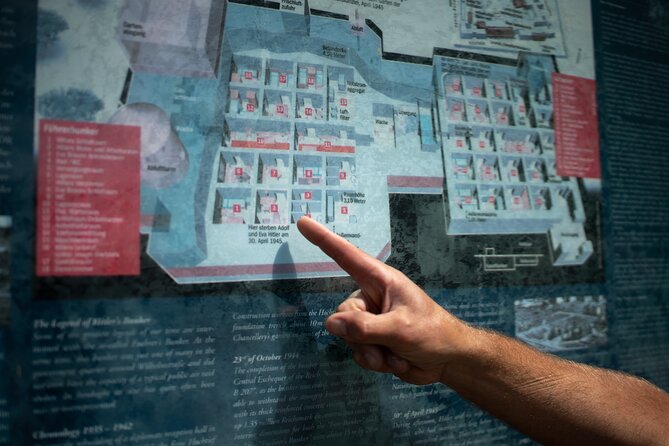
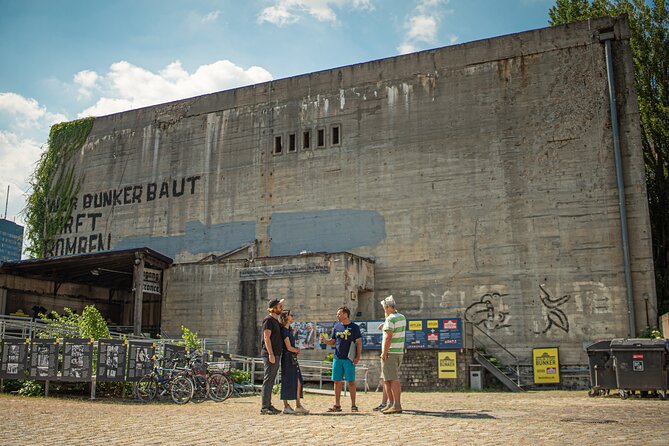
You then stand above the Führerbunker, the underground complex beneath the Reich Chancellery that served as Hitler’s last refuge. You’ll learn about the bunker’s layout and its significance in the final months of World War II as the Allies tightened their grip on Berlin.
Even though much of the original structure was destroyed after the war, this stop still gives you a sobering glimpse into the mindset at the end of the regime—when the consequences of totalitarian rule became unavoidable.
Stop 9: Anhalter Bahnhof and T4 Euthanasia Program Memorial
Two stops here add very different kinds of context.
At Anhalter Bahnhof, you’ll hear about its role as one of Berlin’s major railway terminals and how it connected to deportations during the Holocaust. The building becomes a reminder that genocide required logistics—routes, timetables, and human movement forced into the system.
Then you visit the T4 Memorial for victims of the Nazi euthanasia program at Tiergartenstraße 4. This covers a campaign aimed at exterminating people deemed unworthy of life, including those with disabilities and mental illness. Your guide will explain the ethical questions and the broader implications of such policies.
If you’re trying to understand the full scope of Nazi persecution, these two stops help show that it wasn’t only one form of cruelty.
Stop 10: Moltkebrücke and Soviet Crossings in 1945
At Moltkebrücke, the story turns toward the war’s final movements. You’ll cross the bridge as your guide explains its strategic role while Soviet forces moved into Berlin in April 1945.
This stop is useful because it ties the violence back to geography. You’re not only hearing about events—you’re physically moving through a route tied to those movements. It’s a “history as place” moment, and it helps you visualize how the city changed hands.
Stop 11: Wilhelmstraße Walk and the Heart of Nazi Power
You finish with more time on Wilhelmstraße, the avenue closely linked to Nazi administration. Your guide will point out key sites along the street, including buildings tied to ministries and wartime strategy.
This is where the city starts to feel like a system. Instead of random locations, you see how streets, institutions, and leadership spaces fit together. It’s also a reminder that propaganda and policy weren’t separate worlds—they lived side by side in everyday Berlin infrastructure.
Pacing, Walking Steps, and Weather Reality
This is a walking tour, and your legs will know it. Some travelers mention around 10,000 steps. The stops are short—often 10–20 minutes each—but the day adds up.
The tour also runs in all weather. So bring layers, a rain shell if needed, and shoes with grip. If it’s hot or icy, your guide will still keep things moving, but you’ll enjoy it more if you’re prepared.
Admissions, Tickets, and What You’ll Want to Plan
Most of the stops are listed as free entry, including major sites like Topography of Terror, Holocaust Memorial, and the memorials along the route. However, the Reichstag Building admission ticket is explicitly not included.
That means your planning should include:
- whether you already have a Reichstag ticket
- how you’ll handle any entry logistics for that stop
If you don’t plan, this is the moment when the tour can feel a bit less smooth.
Who Should Book This Tour
This tour fits best if you:
- love history and want it explained clearly
- prefer a private format where you can set the pace
- want a focused route through major Third Reich and WWII-era sites
- are okay with serious subject matter and memorial spaces
It’s also a good pick for families if your group can handle heavy themes. One traveler mentioned their guide made it especially meaningful for their kids, which is a good sign that some guides know how to calibrate the tone.
Should You Book This Private Third Reich Tour
My take: book it if you want a structured, guided day through Berlin’s most important WWII and Holocaust-related locations, with the comfort of hotel pickup and a guide who can turn sites into understanding.
Don’t book it (or think twice) if you:
- want a light, casual sightseeing day
- feel unsure about handling intense memorial and persecution-related content
- hate walking for several hours in any weather
If you do book, send your guide what you want most (Holocaust sites, resistance, final days of the war, architecture and power). The private setup gives you a real chance to get a tour that fits your interests instead of a cookie-cutter loop.
Private Walking Tour Berlin Third Reich Hitler and World War II
FAQ
How long is the private walking tour?
It runs about 3 to 4 hours.
Is hotel pickup and drop-off included?
Yes, hotel pickup and hotel drop-off are included.
Is this tour only for my group?
Yes. It’s listed as a private tour, so only your group participates.
What language is the tour in?
It’s offered in English.
Are there any admission fees during the tour?
Most stops are listed as free, but the Reichstag Building admission ticket is not included.
Is food and drinks included?
No. Food and drinks are not included.
Does it operate in all weather?
Yes, it operates in all weather conditions, so you should dress appropriately.
When will I get confirmation after booking?
You’ll receive confirmation at booking, unless you book within 2 days of travel, in which case confirmation is received within 48 hours subject to availability.
What is the cancellation policy?
You can cancel for a full refund up to 24 hours in advance of the start time. After that, the amount paid is not refunded.