There’s something special about learning history from someone who genuinely loves their subject. This walking tour through Split’s Old Town, led by a history professor, delivers exactly that kind of experience. We appreciate how the tour balances scholarly depth with genuine warmth—you’re not getting a dry recitation of facts, but rather a passionate educator who makes the past feel alive. The price point is remarkable too; at $24 per person for nearly two and a half hours with an expert guide, you’re getting significant value for what amounts to an intimate history lesson through one of Europe’s most compelling ancient sites.
The main consideration worth noting upfront is that the actual tour sometimes runs longer than the advertised 2 hours 20 minutes. Several travelers mentioned the experience stretched closer to three hours, which is wonderful if you have the time but worth planning for if your schedule is tight. This tour works best for anyone visiting Split for the first time who wants genuine historical context rather than a superficial overview, or for history buffs who crave deeper knowledge about the Roman Empire and Dalmatian culture.
- Why This Tour Stands Apart
- The Itinerary: A Journey Through 1,700 Years
- Riva Harbor and the Living Heart of Split
- Diocletian Palace Substructures: Underground Marvels
- The Peristyle: Where Emperors Were Divine
- The Vestibule and Imperial Grandeur
- Cathedral of Saint Domnius: Transformation and Continuity
- Temple of Jupiter and the Narrowest Street
- The Golden Gate: Where Emperors Entered
- Grgur Ninski and Good Luck
- Marmontova Ulica and Urban Development
- Prokurative and Neo-Renaissance Grandeur
- Fruit Square: Where History Becomes Personal
- What Travelers Love Most
- Practical Details That Matter
- Value Analysis
- Who Should Book This Tour
- Practical FAQ
- The Best Of Split!
- More Walking Tours in Split
- More Tours in Split
- More Tour Reviews in Split
Why This Tour Stands Apart

Walking tours of Split’s Old Town are abundant, but this one carries a distinct advantage: your guide is a trained historian with academic credentials. This isn’t just someone who’s memorized talking points. The difference becomes immediately clear as you move through the sites—you’re receiving interpretations grounded in scholarly knowledge rather than entertainment-focused narratives. One traveler captured this perfectly: “He is passionate about history and sharing all he knows. I thoroughly enjoyed this tour and strongly recommend it.”
What makes this particularly valuable is how the guide handles the complexity of Split’s layered history. You’re not simply looking at old ruins; you’re understanding how a Roman emperor’s palace became a living medieval city, which eventually transformed into the modern Croatian town you see today. That contextual framework helps everything click into place, and suddenly those ancient stones tell a coherent story rather than feeling like disconnected artifacts.
👉 See our pick of the 3 Best Shore Excursions In Split
The Itinerary: A Journey Through 1,700 Years
The tour begins at the Brass Gate (Porta Aenea) near the harbor, which is both symbolic and practical. You start where visitors have entered Split for centuries, immediately establishing the continuity of this place.
You can also read our reviews of more walking tours in Split

Riva Harbor and the Living Heart of Split
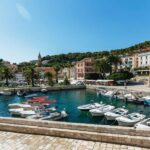
Your first stop sets the tone for understanding Split as more than a museum. The Riva promenade is where locals actually spend their time—drinking coffee, watching the sunset, conducting the business of daily life. This matters because it highlights something many visitors miss: Split isn’t a preserved historical park. Real people live here, work here, and socialize here. Understanding Diocletian’s Palace requires understanding that it became a functioning city, not a ruin you visit behind velvet ropes. The guide uses this opening to establish context for everything that follows.
Diocletian Palace Substructures: Underground Marvels
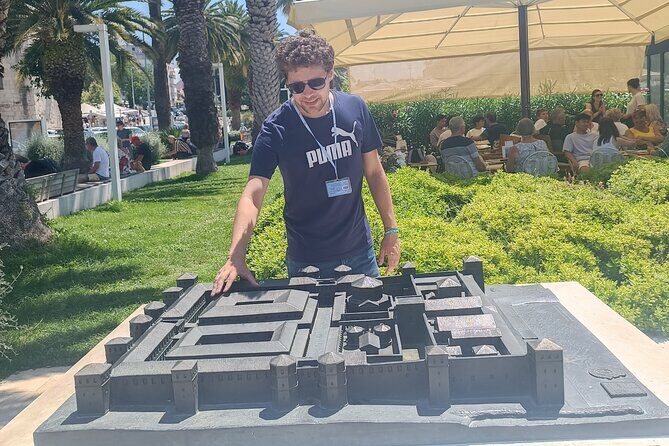
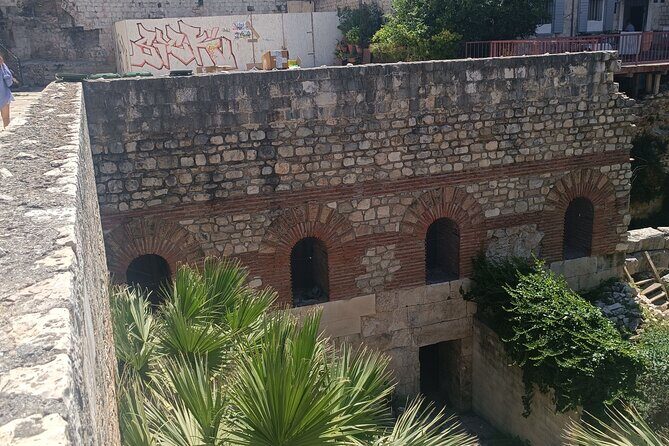
Next, you descend into what many consider the most impressive part of the entire palace—the basement halls. These substructures are among the world’s best-preserved examples of classical antiquity architecture, and there’s good reason UNESCO designated Split’s historic center a World Heritage site in 1979. What’s remarkable is that these underground chambers, built nearly 1,700 years ago, remain largely intact. You’re literally standing in spaces where Roman workers once moved goods and served the imperial household. The guide brings this to life with details about how these spaces functioned, transforming what could be a claustrophobic basement into a window into Roman logistics and daily life.
The Peristyle: Where Emperors Were Divine
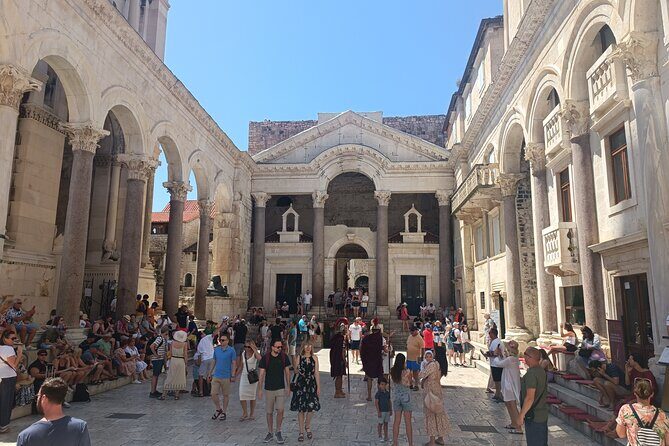
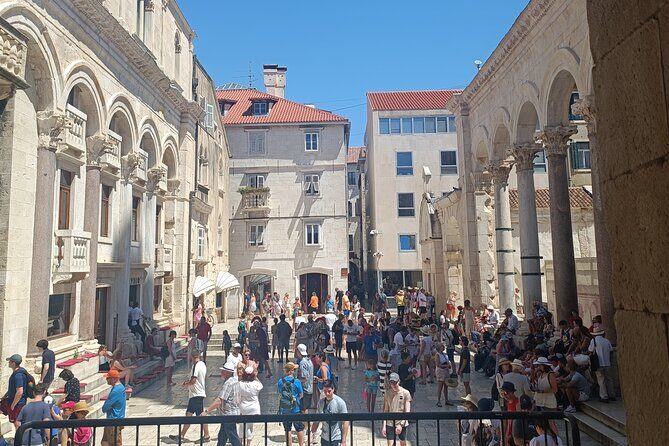
The Peristyle served as the central courtyard of the palace, and it’s here you begin grasping the sheer scale of Diocletian’s power. This wasn’t simply a home; it was a statement of divine authority. The guide explains how the emperor would appear under the central archway, and subjects would approach kneeling or prostrating themselves completely. Understanding this ceremonial function helps you see beyond the architectural beauty to the political and religious messaging embedded in every column and archway.
The Vestibule and Imperial Grandeur
The circular hall known as the Vestibule (or Rotonda) represents classical Roman architecture at its most ambitious. Seventeen meters high with a diameter of twelve meters, it originally featured a dome and was reserved only for important audiences—ambassadors, dignitaries, those deemed worthy of imperial attention. The guide’s expertise shines here in explaining how Roman architects achieved these proportions and what they symbolized about imperial power.
You can also read our reviews of more historical tours in Split



Cathedral of Saint Domnius: Transformation and Continuity
One of the tour’s clever aspects is visiting the cathedral from outside, which actually makes the historical narrative clearer. This structure has served multiple purposes—Roman temple, imperial mausoleum, and eventually a Christian cathedral. Rather than simply entering and looking around, the guide’s explanation of how and why these transformations occurred gives you a deeper understanding than you’d get wandering through on your own. If you want to enter (which requires a separate ticket), you’ll have the context to appreciate what you’re seeing.
Temple of Jupiter and the Narrowest Street
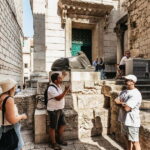
The Temple of Jupiter, converted into a baptistery dedicated to Saint John the Baptist, illustrates how medieval Christians repurposed Roman structures. But the real local flavor comes from the narrow passage between this temple and a medieval building—locals claim it’s the world’s narrowest street, and whether or not that’s technically true, the guide’s storytelling about local beliefs and the street’s name (“Let me pass street”) adds the human dimension to history.
The Golden Gate: Where Emperors Entered
The Golden Gate served as the main entrance for the emperor himself, which explains why it was elaborately decorated. Over centuries, it was sealed and stripped of its decorative elements, but modern restoration has brought it back to prominence. Understanding its original function—as a statement of imperial arrival and status—rather than just seeing it as a pretty gate, deepens your appreciation.
Grgur Ninski and Good Luck
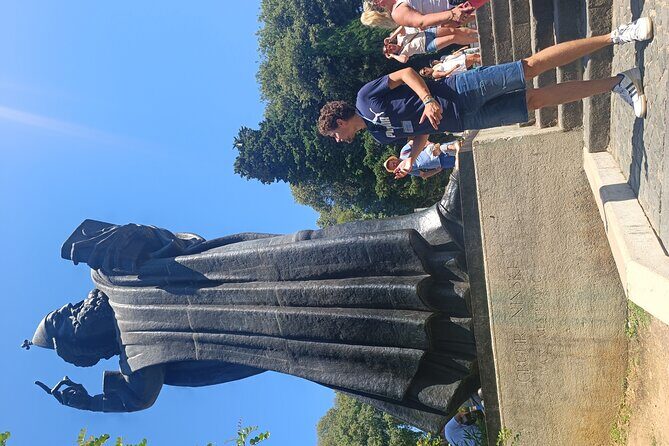
The 8.5-meter statue of Gregory of Nin (Grgur Ninski) is practically shiny on one foot from thousands of travelers rubbing it for good luck. The guide explains who this figure was and why he matters to Croatian history, transforming what could be a quirky photo opportunity into a meaningful cultural touchstone.
Marmontova Ulica and Urban Development
Named after Napoleon’s marshal Marmont, this street represents a fascinating historical irony—a military conqueror is remembered fondly because he modernized Dalmatian cities. The guide uses this to discuss how history is more complicated than simple narratives of conquest and resistance, and how infrastructure development can earn gratitude even from occupied populations.
Prokurative and Neo-Renaissance Grandeur
Republic Square, surrounded by elaborate neo-Renaissance buildings, represents Split’s 19th-century urban ambitions. The guide contextualizes this within the broader story of how Dalmatian cities modernized while maintaining their historical cores.
Fruit Square: Where History Becomes Personal
The final stop at Trg Brace Radic brings you to a small, charming square where fruit vendors once sold their produce. Here the guide discusses Marko Marulić, considered the father of Croatian literature, and uses this moment to weave in stories about Croatian gastronomy and culture. It’s a fitting conclusion—moving from imperial grandeur to the everyday commerce that actually sustained the city.
What Travelers Love Most
The reviews reveal consistent themes. One traveler noted, “Mario was a fantastic guide. We walked the entire city of Split and learned so much. After the tour, we went back to a few locations and paid the entry fee for a deeper look.” This suggests the tour provides both breadth and enough depth to make you want to explore further—the mark of excellent contextual education.
Another comment captures the personality factor: “Mario is an excellent guide who brings the city of Split to life. His knowledge of history with fun facts mixed in was a perfect combination.” The guides aren’t just knowledgeable; they’re engaging and genuinely interested in their audience. Multiple reviews mention humor and storytelling ability alongside historical expertise.
Travelers also appreciate the practical information beyond history. “He also shares tips for foodies, where to go, where not to go, which ATM/Banks to use and which ones not to use,” one visitor noted. You’re getting a local’s perspective on Split, not just a historical lecture.
Practical Details That Matter
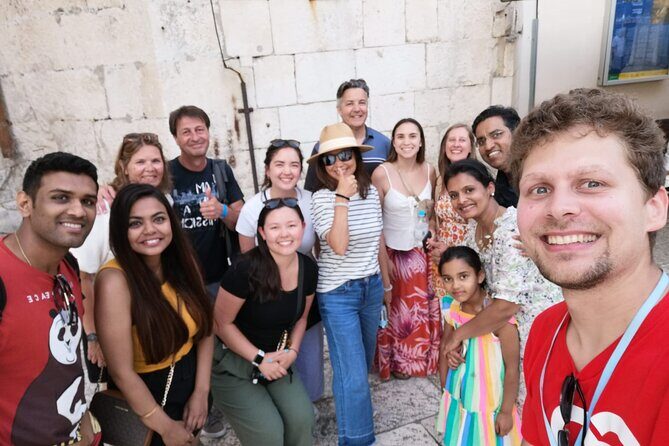
The tour accommodates up to 17 people, which is small enough that you’ll actually hear the guide and receive attention, but large enough to feel like a real tour rather than a private experience. Most reviews mention groups of 12-14 people, which seems to be the typical size. This is the sweet spot for walking tours—intimate but not exclusive.
The tour departs from the Brass Gate near the harbor, which is convenient and accessible via public transportation. The entire experience lasts approximately 2 hours 20 minutes according to the official description, though real-world feedback suggests it often runs longer. Plan for up to three hours to be safe, especially if your guide is particularly engaged with the group’s questions.
Mobile tickets mean you can book easily and receive confirmation immediately. The tour operates in English and runs regardless of weather (though it may be rescheduled if conditions are severe). Since this is a walking tour through an outdoor old town, you’ll want comfortable shoes and sun protection—there’s limited shade in some areas, though the guide is reportedly thoughtful about positioning the group strategically.
Value Analysis
At $24.19 per person, this tour costs less than a typical restaurant meal in Split, yet you’re receiving nearly two and a half hours of expert-level education from someone with genuine historical credentials. Most guided historical tours in European cities run $35-60 per person. You’re getting substantial value here, particularly if you’re visiting Split for the first time and want to understand what you’re seeing rather than simply photographing it.
The fact that admission to most sites is included in the tour price (with the exception of the Cathedral of Saint Domnius and Temple of Jupiter interiors, which have separate fees) makes this even more economical. You’re not paying for access to the sites themselves; you’re paying for the guide’s expertise and interpretation.
Who Should Book This Tour
This experience works beautifully for first-time visitors to Split who want genuine historical context rather than surface-level tourism. If you’re interested in Roman history, medieval European development, or Croatian culture, this tour will significantly enhance your understanding. History enthusiasts will find the scholarly approach refreshing—you’re learning from an actual academic, not someone who’s memorized a script.
It’s also excellent for couples or small groups who want a shared learning experience, and the small group size makes it comfortable for introverts who might feel overwhelmed by larger tours. The free cancellation policy (24 hours notice required) means you can book with confidence even if your plans might shift.
The tour works less well if you’re in a major hurry (plan for three hours rather than the advertised 2 hours 20 minutes) or if you prefer purely recreational sightseeing without educational depth. And if you’re traveling with young children who struggle with extended walking and listening, you might want to consider whether the pace and duration suit your family.
Split Walking Tour with Professor of History
Practical FAQ
How much time should I actually plan for this tour?
While officially listed as 2 hours 20 minutes, multiple travelers reported the tour running closer to three hours. Plan for three hours total to avoid being rushed, especially if your guide is particularly engaged with your group’s questions. The extra time almost always results in more information and better storytelling rather than wasted time.
What’s the maximum group size, and does it affect the experience?
The tour accommodates a maximum of 17 people, with typical groups running 12-14 participants. This size is ideal for a walking tour—small enough that everyone can hear the guide clearly and receive some individual attention, but large enough to feel like a proper group tour rather than a private experience.
Is this tour suitable for people who aren’t history enthusiasts?
Yes. While the guide is a history professor, reviews consistently mention that the tour is engaging and entertaining, not academic in a dry sense. The guide uses storytelling, humor, and local anecdotes alongside historical facts. Even if history isn’t your primary interest, you’ll likely enjoy the experience based on the guide’s personality and the vibrant atmosphere of Split’s Old Town.
Do I need to buy separate tickets for any sites during the tour?
Most sites included in the tour itinerary have free admission (Riva Harbor, Diocletian Palace Substructures, the Peristyle, the Vestibule, and the Golden Gate). The Cathedral of Saint Domnius and Temple of Jupiter are viewed from outside, but you can purchase separate admission if you want to enter. The tour guide provides detailed information regardless, so you can decide afterward if you want to pay for entry.
What’s the cancellation policy, and how flexible is booking?
You can cancel up to 24 hours before the tour for a full refund. This means you can book with confidence even if your plans are somewhat uncertain. If the tour is canceled due to poor weather (unlikely in Split but theoretically possible), you’ll be offered an alternative date or full refund.
Are there accessibility considerations I should know about?
The tour is described as suitable for most travelers and allows service animals. However, it’s a walking tour through an old town with uneven surfaces, stairs, and varied terrain. If you have mobility concerns, you’ll want to contact the tour operator directly to discuss specific accessibility features or limitations.
What should I bring or wear for this tour?
Comfortable walking shoes are essential, as you’ll be covering significant ground through Split’s Old Town. Sun protection (hat, sunscreen, sunglasses) is important since parts of the tour involve standing in open areas. While the guide is reportedly thoughtful about positioning the group in shade, you’ll still encounter sunny stretches. A light layer is useful if you’re sensitive to air conditioning or if weather cools down in the evening.
This walking tour delivers genuine value for anyone seeking to understand Split beyond its postcard appeal. You’re paying less than $25 for nearly three hours with a historian who actually loves this material and knows how to share it engagingly. The small group size, included admission to most sites, and the guide’s willingness to share practical local knowledge (where to eat, where to avoid) make this one of the smartest cultural investments you can make in Split. Whether you’re a history enthusiast or simply want your visit to mean something deeper, this tour transforms a walk through old stones into a coherent narrative that makes sense of 1,700 years of continuous human habitation.