
I’m glad you’re looking at this one. This Third Reich & WWII Walking Tour in Munich walks a tight loop through the places tied to Nazism’s rise—starting at Marienplatz and ending near Königsplatz, with the tour finishing at Hitler’s former headquarters area. It’s designed for people who want context, not just names.
What I like most is the caliber of the guides and how the tour handles a heavy topic with care. Reviewers repeatedly mention guides like Michael, Alex, Josh, Danielle, Joel, Ulrich, and Bridget for being knowledgeable, clear, and respectful, even when the subject matter gets tragic.
One thing to consider: you’re on your feet a lot with limited breaks, and some people noted it can be tiring in cold weather. Also, a few travelers said audio can be a bit tough on busy days, so bring your best “listen mode.”
- Key things I’d zero in on
- A reality check before you go
- Price and logistics: what .09 really buys you
- Meeting point to finish line: where the walk starts and ends
- Group size: intimate enough to ask questions
- The guide factor: why people keep praising the narration
- Stop by stop: what you’ll experience on the ground
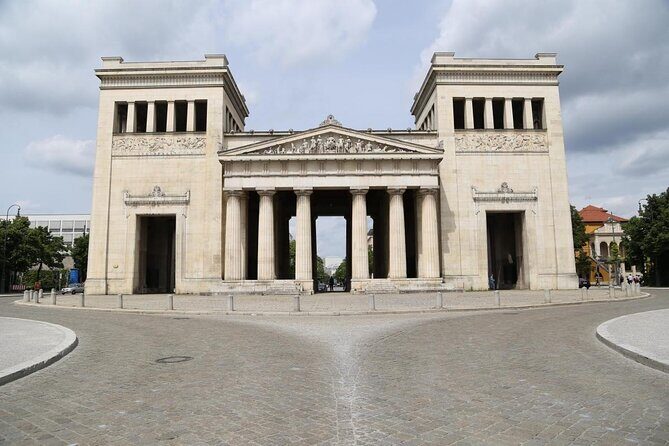
- Konigsplatz: where the Nazi movement showed off its power
- Hofbräuhaus: the early mass meeting energy
- Feldherrnhalle: the failed grab for power
- Hofgarten and the White Rose: resistance beyond the loudest voices
- Wrapping up at Königsplatz and Hitler’s former headquarters area
- How long it really feels: walking stamina and comfort
- Sound, crowds, and hearing the guide
- Accessibility and who should book
- What you’ll actually learn (beyond names and dates)
- The “food and tapas” angle: you won’t be fed on the tour
- Weather plan: cold days happen in Munich
- Booking tips and cancellation: keep it flexible
- Who else you’ll meet on this tour
- Should you book the Third Reich & WWII Walking Tour?
- FAQ
- Where does the tour start?
- Where does the tour end?
- How long is the tour?
- Is food included?
- Is the tour suitable for kids?
- Is the tour offered in English?
- Do I need to print a ticket?
- What is the cancellation policy?
Key things I’d zero in on
 1 / 2
1 / 2 2 / 2
2 / 2- Small-group feel with a group size capped low (many describe it as limited to 10, with an overall max noted as 30)
- Expert guides who can answer questions and explain how events connect
- Major Munich sites in sequence, from the early party momentum to major rally locations
- Sensitive pacing and reflection time, not just a rapid-fire lecture
- A practical walking format (near transit; you’ll need comfortable shoes and stamina)
A reality check before you go
This tour is about the Nazi movement and WWII-era Munich. That means you should expect serious history, not trivia. The good news is that multiple travelers highlight that the guides treat the material with the respect it demands, including moments to pause and process what you’re hearing.
If you’ve never studied this period, you might feel a bit overwhelmed. Reviews say it covers a lot and moves through major milestones quickly. On the other hand, several people also say beginners can still enjoy it because the guides keep things organized and invite questions along the way.
Price and logistics: what $35.09 really buys you
At $35.09 per person for roughly 2 hours 45 minutes (often described as about 3 hours), you’re paying for two things: a guide who can connect the dots, and a route that hits the key sites without you having to plan it all yourself.
This isn’t an all-day tour, and it doesn’t include food or hotel pickup. That can actually be a plus for value: you get the concentrated history portion, then you’re free to eat and explore where you want afterward.
A few practical notes that matter:
- You’ll need to walk well and stand for long stretches.
- The tour is in English and uses a mobile ticket.
- It’s near public transportation, which helps if you’re staying centrally.
Meeting point to finish line: where the walk starts and ends
The tour starts at Marienplatz (80331 München). It ends at Königsplatz 1 (80333 München), and you’ll finish at/near Hitler’s former headquarters.
Why this matters: you’ll be able to start from one of Munich’s easiest-to-reach hubs. And because you end in the Königsplatz area, it’s convenient if you want to keep going toward museums or related sights afterward.
One small downside mentioned by travelers: meeting point clarity after booking can be buried in the process. If you’re the type who likes a sure thing, double-check your directions before you arrive so you’re not hunting around crowded tourist zones.
Group size: intimate enough to ask questions
You’ll see two figures mentioned: the tour is described as small-group and limited to around 10, but the overall maximum in the details is 30 travelers. In practice, small-group usually means you can actually hear the guide and ask questions without being swallowed by a crowd.
From the reviews, the interaction style shows up clearly. People say guides were welcoming of dialogue and questions, which is huge for a topic where viewers often want to understand causes, not just facts.
The guide factor: why people keep praising the narration
This tour gets high marks largely because the guides seem genuinely prepared. Multiple reviewers name guides and praise their clarity, depth, and ability to handle hard moments without getting sensational.
Common themes in the feedback:
- Guides like Michael and Alex are praised for extensive knowledge and keeping people intrigued.
- Josh is repeatedly described as engaging and knowledgeable, including when walking through serious events.
- Ulrich gets credit for pacing and for follow-up suggestions, like recommending a place to go after the tour that sounded powerful and moving.
- Danielle is mentioned for warmth and for guiding through details even in very cold weather.
- Several travelers note the guide tried to create space for reflection, including quiet moments.
If you care about learning from people—not just reading plaques—this is one of the strongest reasons to pick this tour.
Stop by stop: what you’ll experience on the ground
Konigsplatz: where the Nazi movement showed off its power
The tour’s first major stop is Königsplatz. This is where the story shifts from the aftermath of World War I into the conditions that let extremist ideology spread.
You’ll learn how Germany was struggling—defeated in WWI, humiliated, and dealing with instability in the early 1920s. The tour frames the Nazi rise as something that grew out of chaos: political violence, economic strain, and fertile ground for propaganda.
Why this stop works for visitors: Königsplatz has a monumental, “staged” feel. Even if you’re not a history nerd, you’ll likely understand how a movement built on spectacle could win attention here. Some travelers specifically mention the tour helping them see how past events shaped the present.
One practical note: this is an outdoor plaza area. Bring layers and plan for standing time.
Hofbräuhaus: the early mass meeting energy
The tour connects that early environment to the Nazis’ earliest mass momentum, including the first mass meeting at Hofbräuhaus.
This is where you’ll hear the story of how the Nazi movement grew from early organizing and public rallies. Even if the building itself isn’t the point, the context matters: it explains why propaganda venues weren’t random—they were part of the machine.
If you’re hungry after, you’ll be passing a place that’s famous for Bavarian food and beer culture. Just know the walking tour itself does not include food or drinks. Plan to grab something on your own later.
Feldherrnhalle: the failed grab for power
Next comes Feldherrnhalle, tied to the Nazis’ failed attempt to seize power. The tour uses this location to show that early success wasn’t guaranteed—and that violence and political brinkmanship played major roles.
This part can hit hard because it shows ambition turning into danger. The pacing matters here, and reviewers mention guides handled it with sensitivity and sometimes gave time to process.
Hofgarten and the White Rose: resistance beyond the loudest voices
In the Hofgarten area, the tour brings in the White Rose resistance movement. This is an important balance. A tour like this could easily focus only on the villains; instead, you’ll also hear about people who pushed back against Nazi ideology.
Why it’s valuable: you leave with more than just “how Nazis rose.” You understand the opposition existed, and brave people acted even under extreme risk.
Some travelers also highlight how the guides stayed respectful and allowed quiet moments. If you’re sensitive to this era, this is one of the sections that can feel especially meaningful.
Wrapping up at Königsplatz and Hitler’s former headquarters area
The tour finishes back in the Königsplatz area, near Hitler’s former headquarters.
This ending matters because it puts the story’s “origin” and “outcome” in the same geographic neighborhood. You’re not just looking at random buildings—you’re tracing how political ideas became a regime, and how that regime left Munich changed.
How long it really feels: walking stamina and comfort
The time listed is about 2 hours 45 minutes, and reviews often echo “around 3 hours.” Several travelers mention:
- it’s a lot of walking/standing
- there’s little time to rest
- a mid-point indoor stop may happen (one traveler described a brief indoor stop of around 15 minutes)
So I’d treat this as a “comfortable shoes” tour. If you’re not used to city walking or you hate being outdoors in cold weather, plan accordingly.
A very practical tip from reviews: bring a drink and snack. People suggested the tour could better communicate that there’s not much downtime, so having your own small plan helps you stay sharp for the facts.
Sound, crowds, and hearing the guide
A few reviews say the guide was knowledgeable and engaging, but audio could be tricky—especially in cold weather or crowded conditions.
What you can do:
- choose a good spot in the group (front or center tends to help)
- don’t rely on overhearing everything if you’re on the edges
- if it’s a busy day, keep your expectations realistic: this is a walking route in a public city
Accessibility and who should book
The tour details say most travelers can participate and that service animals are allowed. It’s also near public transportation.
The big caution: it’s not recommended for children under 12. That makes sense here. The topic is serious, and the tour is information-dense.
Who it’s a good fit for:
- first-time visitors who want the “how it happened” story tied to real places
- travelers who like guided explanations more than reading individual plaques
- people who want a structured route that covers the key sites without guesswork
Who might want a different option:
- travelers who need frequent seating breaks
- people who struggle to focus for long periods of standing/walking
- anyone looking for something casual or light
What you’ll actually learn (beyond names and dates)
This tour’s strength is not just “here’s a building.” It’s how the story is assembled: post-WWI instability, propaganda and public meetings, violent power attempts, major rally spaces, and then resistance like the White Rose.
That sequence is useful for understanding why extremist movements took hold in specific conditions—not just that they existed.
One review even mentioned how the guide referenced how events connected to broader history, including how the U.S. fits into the wider story. Even if that varies by guide, the overall approach sounds interpretive and connected.
The “food and tapas” angle: you won’t be fed on the tour
You’ll pass famous eating spots, including Hofbräuhaus, but the tour does not include food and drinks.
If you want a great follow-up plan, you’ll likely have options right after the walk:
- grab Bavarian food in the area near where you end
- continue to nearby sights while you still have the narrative fresh in your mind
Just don’t book this expecting a meal stop.
Weather plan: cold days happen in Munich
Some travelers specifically mention freezing weather and say the guides did a good job keeping people moving and warm with explanations. One traveler also said the guide seemed to have a cold, but still made the time fly with lots of information and a mid-tour indoor break.
So yes, bundle up. You’re dealing with outdoor plazas and winter air at street level.
Booking tips and cancellation: keep it flexible
The tour includes free cancellation. You can cancel up to 24 hours in advance for a full refund. If you cancel less than 24 hours before, you won’t get your money back.
On the booking side, you’ll receive confirmation at the time of booking, and you’ll use a mobile ticket. Also, it’s common for this tour to be booked about 22 days in advance on average, so planning ahead is smart if you’re traveling during peak seasons.
Who else you’ll meet on this tour
Because it’s in English and aimed at travelers visiting Munich, you’ll likely share the route with:
- history-minded couples and solo travelers
- people doing a first-time Munich visit plus a heavy-hitter tour
- folks who want a guided explanation before they head into museums
That matches what the reviews describe: travelers call it a must-do if you want to see the rise of Nazism “come to life” through the actual locations.
Should you book the Third Reich & WWII Walking Tour?
If you want a focused, guided way to understand Munich’s role in the Nazi story, I think this is a solid pick. The big win is the guide quality—people repeatedly name guides like Michael, Alex, Josh, Danielle, Joel, Ulrich, and Bridget and praise their knowledge, pacing, and sensitivity. Add in the manageable duration and the reasonable price, and it’s easy to see why it scores well.
I’d say book it if:
- you can handle 2.5–3 hours of walking and standing
- you want clear, factual context tied to key locations
- you like discussion and Q&A, not just a lecture
Skip or switch plans if:
- you need frequent breaks or lots of seating
- you’re traveling with children under 12
- you’re worried about hearing in noisy conditions—because a few reviews mention audio can be a challenge
If you do book, come prepared: comfortable shoes, layers, and a snack. Then show up ready to learn—and to reflect. This tour is serious, but many travelers leave feeling it was worth every step.
Third Reich & WWII Walking Tour
FAQ
Where does the tour start?
The tour starts at Marienplatz, 80331 München, Germany.
Where does the tour end?
The tour ends at Königsplatz 1, 80333 München, Germany, at/near Hitler’s former headquarter.
How long is the tour?
It’s listed at about 2 hours 45 minutes.
Is food included?
No. Food and drinks are not included.
Is the tour suitable for kids?
It’s not recommended for children under 12.
Is the tour offered in English?
Yes, it’s offered in English.
Do I need to print a ticket?
No. It uses a mobile ticket.
What is the cancellation policy?
You can cancel for a full refund if you cancel at least 24 hours before the experience’s start time. Cancellation within 24 hours is not refunded.