
This is a smart, low-effort way to see a lesser-known side of Rome: the Stadium of Domitian hidden under Piazza Navona. You head underground about 5 meters and wander UNESCO-listed ruins at your own pace with an English audio guide.
I like two things right away. First, it’s great value for what you get—entry plus a full audio experience for a little over $12.10. Second, it’s a nice break from street crowds and heat, so you can enjoy the ruins without feeling rushed.
One drawback to consider: it’s not a huge, flashy site. If you prefer massive monuments, you may find it small and a bit less dramatic than Rome’s biggest headline stops.
- Key points before you go
- Why this hidden Rome stop feels different from the big sights
- Location and meeting point: where to start without stress
- Timing and opening hours you can actually plan around
- Price and value: what .10 buys you (and what it doesn’t)
- The underground setting: what you’ll see 5 meters below Piazza Navona
- Your audio guide experience: self-paced but not guesswork
- Stop-by-stop: what happens during your 40–50 minutes
- Entering Stadio di Domiziano under the Piazza
- Walking through the stadium ruins and imagining the scale
- Learning through exhibits, photos, and media support
- Finishing your self-paced loop and exiting the same way you entered
- The on-site library: a bonus for book lovers and curious minds
- Who this works best for (and who might want to skip)
- Practical tips that will save you time
- Bring comfortable shoes
- Plan for wayfinding
- Use the audio early, not last
- If tech fails, speak up fast
- Crowd level and comfort: a real advantage in Rome’s heat
- Group size and booking: what to expect logistically
- Add-ons and shopping: optional, not required
- Cancellation and flexibility
- The fine print on accessibility and animals
- Should you book the Piazza Navona Underground Stadium of Domitian ticket?
- FAQ
- How long is the Piazza Navona Underground Stadium of Domitian visit?
- What does the ticket cost?
- Is an audio guide included?
- What language is the audio guide offered in?
- Where is the meeting point?
- What are the opening hours?
- Is there a mobile ticket?
- How many people are allowed in the activity at once?
- Can I cancel for a refund?
Key points before you go

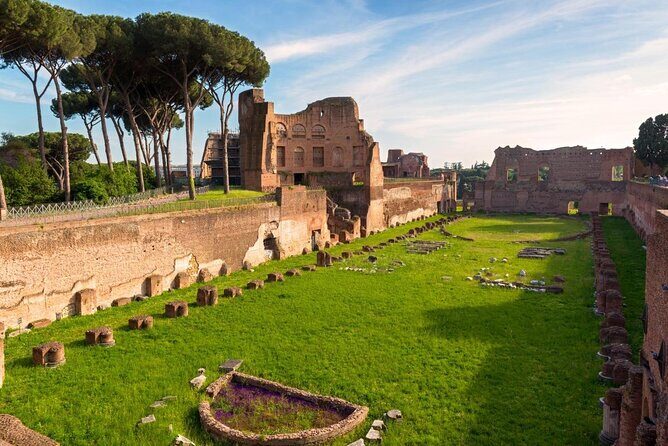
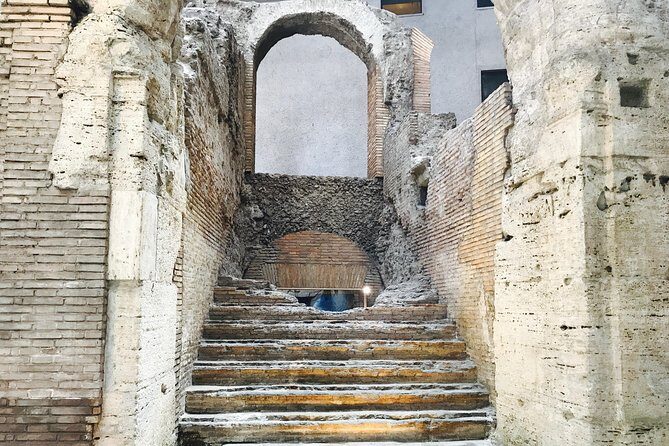
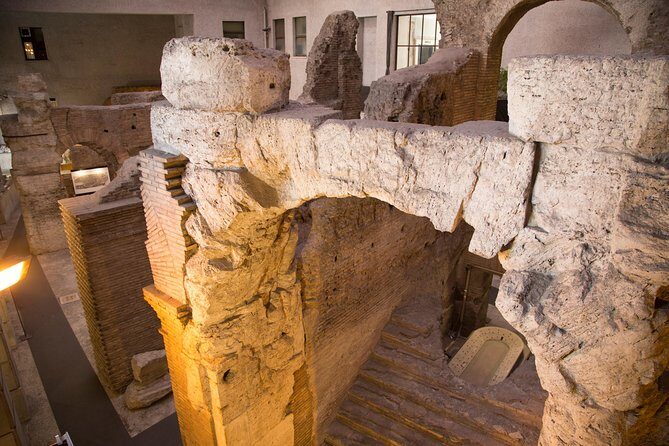
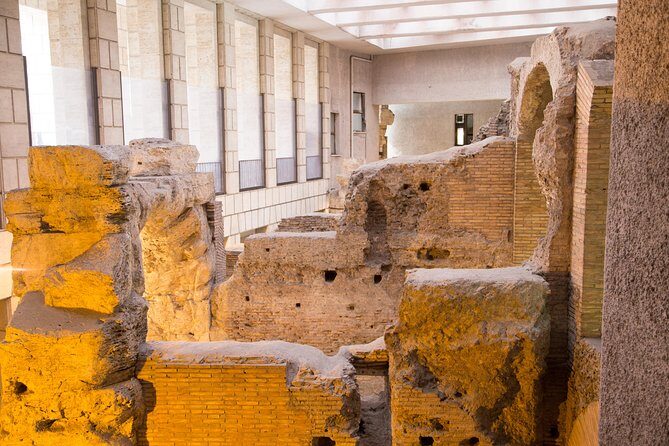
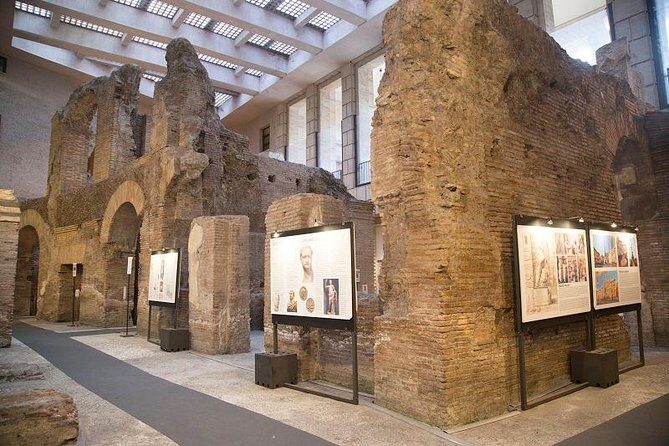
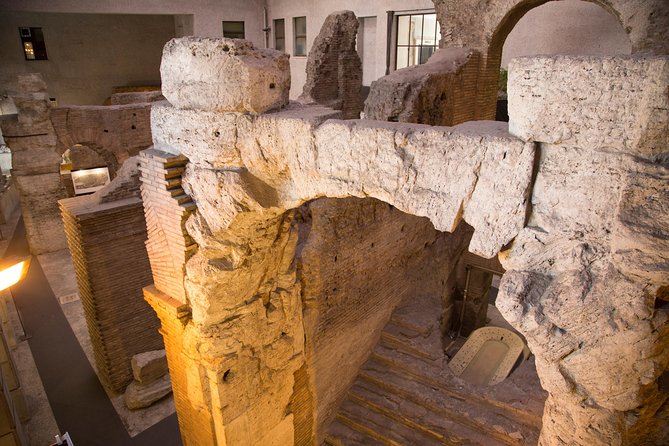
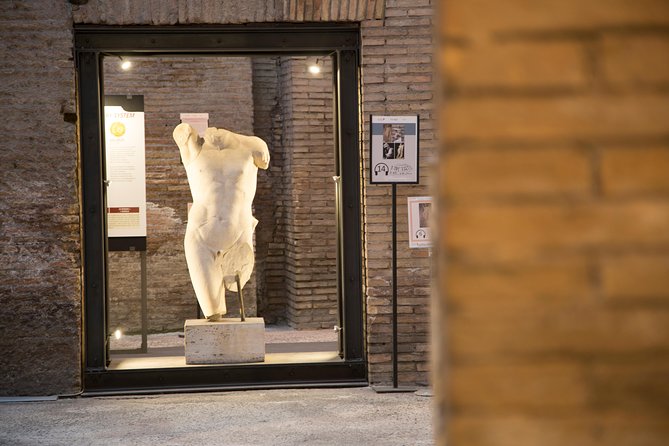
- Underground ruins right under Piazza Navona: you descend to where the ancient masonry stadium still sits.
- Self-paced English audio guide: you can move at your own speed instead of matching a group pace.
- Family-friendly setup: an audio guide for children age 6 and up is included.
- About 40–50 minutes: enough time for a calm visit without eating up your whole day.
- Mobile ticket convenience: you book ahead and access using your phone.
- Cooler, quieter than the street: a very welcome change of pace in warm weather.
Why this hidden Rome stop feels different from the big sights
Rome has famous ruins, and then it has the ruins you almost walk right over. Piazza Navona Underground is in that second category. You’re not just looking at history from the outside—you’re stepping into the layered city, under one of Rome’s most recognizable squares.
The vibe is quiet and museum-like. You get time to read what you see and listen when you want. It’s also an easy “win” if you already planned time at Piazza Navona and want a low-stress add-on that doesn’t turn into an all-day commitment.
Location and meeting point: where to start without stress
The activity starts at Via di Tor Sanguigna, 3, 00186 Roma. It ends back at the same meeting point.
This location matters because it’s very walkable if you’re already in central Rome. One practical note: a few travelers said the entrance can be hard to spot, especially because nearby references can change over time. If you’re arriving a little early, give yourself a few minutes to find the correct doorway.
Timing and opening hours you can actually plan around
Hours run 10:00 AM to 6:00 PM, Monday through Sunday for the full listed range. Your visit length is about 40 to 50 minutes.
Because this is scheduled within opening hours, I’d plan it as either:
- a mid-day cooldown break, or
- a shorter historical stop between bigger sights.
If your day is packed, the short duration is a gift. You won’t feel like you traded away hours you could have used elsewhere.
Price and value: what $12.10 buys you (and what it doesn’t)
The ticket is $12.10 per person, and it includes taxes, plus an audio guide and an audio guide for children (6+).
Here’s why that’s good value. Many Rome experiences charge separately for interpretation or audio. This one is built around the audio experience, and it’s the core of how you’ll understand what you’re seeing underground. For roughly an hour of guided context in English, it’s a straightforward deal.
What’s not included:
- souvenirs or DVD/photo purchases
- any optional extras like VR/AI experiences (a reviewer mentioned an extra AI add-on for 4€)
- food and drinks
- hotel pickup and drop-off
The underground setting: what you’ll see 5 meters below Piazza Navona
You descend about 5 meters beneath street level into excavations from the Roman Empire period. That physical drop is part of the magic. You’re looking at a space that feels like you’re walking into a buried layer of the city.
The centerpiece is the ruins of the Stadium of Domitian, described as the first and only masonry stadium in Roman history. Even if you know Rome’s big stadium storylines, seeing the masonry remains in place helps it click in your mind.
Expect ruins that require imagination. Multiple visitors noted it’s not wall-to-wall grandeur. The remains include structural elements—brickwork, arches and columns—and you’ll rely on the interpretation to visualize scale.
Your audio guide experience: self-paced but not guesswork
This is an audio guide-led visit. You receive a handheld device (or similar audio equipment) and follow along through the underground rooms and exhibits. The best part is control: you can slow down, pause for photos, or speed up if you already know the basics.
Most visitors said the audio was clear and thorough. A few, though, reported problems like the device battery dying mid-visit or staff being less helpful when tech failed. My practical advice: test the audio right away after you pick up the device, and if anything cuts out early, go back to staff quickly.
Also, if you personally prefer reading over listening, you might find yourself using the on-site displays as you go. A visitor noted that posters and signage can feel more useful than the narration at times—so don’t worry if you don’t treat audio like a must.
Stop-by-stop: what happens during your 40–50 minutes
Entering Stadio di Domiziano under the Piazza
You start by getting access into the underground area connected to Piazza Navona. This is the key threshold moment: the bustling square becomes a quiet underground walk.
Once inside, you’ll begin with the context that makes the site meaningful. The audio guide helps connect what you’re seeing to how the stadium functioned and how the Piazza area developed.
What makes this stop special is that it ties together Piazza Navona’s surface identity with what’s hidden below it. You’re not just admiring ruins—you’re learning why this location became what it is.
Walking through the stadium ruins and imagining the scale
As you move deeper into the exhibit space, you’ll see the ancient masonry remains of the stadium. Several travelers described it as interesting but small, so the visit can feel like a focused slice of a bigger story.
The “click” comes when the audio guide explains how sports and public entertainment worked in ancient Rome—especially around the idea of stadium events and what crowds experienced.
A useful mental trick: look at the fragments and then listen to the guide’s descriptions of function and space. That combo helps you reconstruct the stadium’s size even if the visible ruins are limited.
Learning through exhibits, photos, and media support
This site doesn’t rely only on ruins. You’ll encounter unpublished photos and additional media elements that support what you’re hearing. Some visitors highlighted that the visuals helped show how the stadium and area changed over time.
There are also optional add-ons mentioned by visitors, including a VR/AI experience that costs extra. If you’re the type who loves tech reconstructions, it might be worth considering. If you’d rather keep things simple, you can still have a complete, satisfying visit without it.
Finishing your self-paced loop and exiting the same way you entered
Your tour ends back at the meeting point. Since the duration is under an hour, you won’t lose time wondering when you’re “supposed” to be done.
That flexibility is ideal if you want a calm add-on that doesn’t lock you into a rigid schedule.
The on-site library: a bonus for book lovers and curious minds
One perk people don’t always mention in big Rome reviews is the on-site library. It contains art and history books, antique prints, postcards, gadgets, souvenirs tied to artistic crafts, and multimedia DVDs.
There’s also a children-focused section. If your group includes non-audio listeners or kids who need a break from the headphones, this kind of space can make the experience feel more family-friendly.
Who this works best for (and who might want to skip)
This is a great fit if you:
- like Roman history but want something less crowded
- appreciate ruins that require imagination and interpretation
- want an easy, under-an-hour activity near Piazza Navona
- travel with kids who are old enough for the included audio guide (6+)
You might not love it if you:
- only enjoy “major monument” scale and spectacle
- strongly dislike audio narration and would rather read everything with no listening
- are expecting a large open archaeological site
And if you’re the type who loves getting away from big tour clusters, you’ll likely enjoy the calmer pacing underground.
Practical tips that will save you time
Bring comfortable shoes
You’re walking underground through an exhibit space. Comfortable walking shoes are recommended, especially if your day already includes lots of pavement.
Plan for wayfinding
A few travelers said the entrance wasn’t obvious. If you want to avoid that frustration, arrive a little early and give yourself extra time to locate the right doorway on Via di Tor Sanguigna.
Use the audio early, not last
Start the audio as soon as you get your device. If you wait, you’ll miss the context that helps you understand what you’re looking at.
If tech fails, speak up fast
One traveler reported a battery issue and limited help afterward. That’s not the norm in the general tone, but it’s a real enough concern that you should flag problems immediately rather than trudging through a quiet exhibit.
Crowd level and comfort: a real advantage in Rome’s heat
Multiple visitors said it’s not crowded. That’s a big deal in Rome. Piazza Navona and the surrounding streets can be packed, and this underground stop gives you breathing room.
It’s also cooler underground. People specifically called out that it was a nice escape from heat, which makes this ticket a smart move on hot days when you still want history.
Group size and booking: what to expect logistically
This is limited to a maximum of 150 travelers. That ceiling matters because it helps keep the experience manageable.
On average, tickets are booked about 22 days in advance, which is a sign this is popular among travelers who like planning. Since it’s time-insensitive within hours (based on the general schedule), you still shouldn’t wait until the last minute if your dates are busy.
Add-ons and shopping: optional, not required
You can purchase DVD and souvenir photos on-site. Some visitors also mention VR/AI add-ons that cost extra.
Personally, I treat these as optional extras. The core value is the included audio guide and the actual stadium ruins. If you want a quick, satisfying visit, you can skip add-ons and still get your money’s worth.
Cancellation and flexibility
If plans change, cancellation is free up to 24 hours in advance of the experience start time. After that window, refunds aren’t offered.
That policy is helpful if you’re building your Rome day around weather or moving parts like dinner reservations.
The fine print on accessibility and animals
Service animals are allowed, and the site notes that most travelers can participate. As always, underground spaces can be uneven in places, so if you have mobility concerns, it’s worth thinking ahead before booking.
Should you book the Piazza Navona Underground Stadium of Domitian ticket?
Book it if you want a calm, well-interpreted history stop under one of Rome’s most famous squares. At $12.10, for 40–50 minutes with an included audio guide (plus an included kids’ guide for age 6+), it’s a strong value when you’re already in the Piazza Navona area.
Skip or pair lightly if you’re expecting a giant, visually dramatic archaeological site. This place rewards curiosity and context. The ruins are real, but the storytelling is what makes them connect.
My final take: if you like hidden Rome layers—like the idea of the city being like lasagna (layer on layer)—this is the kind of ticket that turns a normal walk into a memorable underground detour.
Ticket to Piazza Navona Undergrounds Stadium of Domitian
FAQ
How long is the Piazza Navona Underground Stadium of Domitian visit?
It’s approximately 40 to 50 minutes.
What does the ticket cost?
The price is listed as $12.10 per person.
Is an audio guide included?
Yes. An audio guide is included, and there is also an audio guide for children age 6 and above.
What language is the audio guide offered in?
The experience is offered in English.
Where is the meeting point?
The meeting point is Via di Tor Sanguigna, 3, 00186 Roma RM, Italy.
What are the opening hours?
The opening hours shown are 10:00 AM to 6:00 PM, Monday through Sunday.
Is there a mobile ticket?
Yes. The ticket is listed as a mobile ticket.
How many people are allowed in the activity at once?
The experience has a maximum of 150 travelers.
Can I cancel for a refund?
Yes. You can cancel up to 24 hours in advance for a full refund. If you cancel later than that, the amount isn’t refunded.