When you’re landing in Madrid for the first time, the city can feel overwhelming—sprawling neighborhoods, centuries of layered history, and enough monuments to keep you busy for weeks. We’ve found that this private eco-tuk-tuk tour offers one of the most practical and genuinely enjoyable ways to get oriented, and it does so without the typical tour-bus shuffle or the exhaustion that comes from trying to cover everything on foot.
What we really love about this experience is how thoughtfully it combines substance with style. You’re not just checking boxes at famous landmarks; you’re moving through the city at a pace that actually lets you absorb what you’re seeing, while a knowledgeable local driver shares stories and context that bring Madrid to life. The electric tuk-tuk itself is a refreshing change from the standard coach tours—it’s intimate, fun, and genuinely low-impact, which matters if you care about traveling responsibly.
There is one practical consideration worth noting upfront: the meeting point is tucked away in an underground bus station rather than at street level, which a few travelers have mentioned can be easy to miss on your first visit. It’s not a dealbreaker, but it’s worth paying close attention to the pre-tour instructions they send.
This tour works best for visitors making their first trip to Madrid, families with young kids who don’t want to walk for hours, or anyone who wants to see the major sights while learning the city’s layout and getting solid recommendations for where to spend your remaining time. Solo travelers have also praised the experience for how welcoming the guides are.
- Why an Eco-Tuk-Tuk Tour Makes Sense in Madrid
- The Itinerary: What You’ll Actually See
- The Guides Make This Work
- Practical Details That Matter
- Value Assessment
- Who This Tour Suits Best
- What to Expect: The Practical Reality
- The Honest Assessment
- FAQ: Practical Questions Answered
- More Private Tours in Madrid
- More Tours in Madrid
- More Tour Reviews in Madrid
Why an Eco-Tuk-Tuk Tour Makes Sense in Madrid

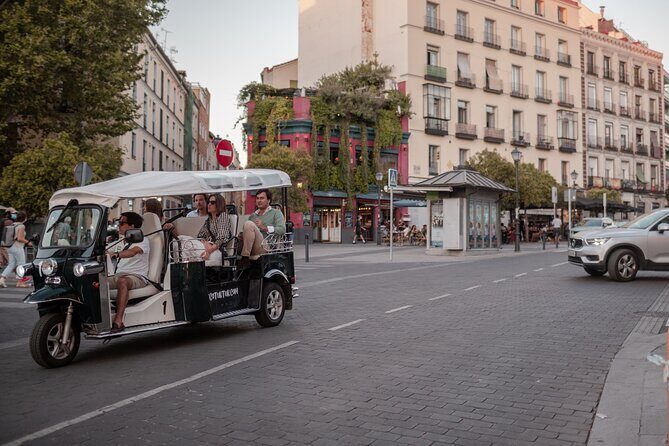
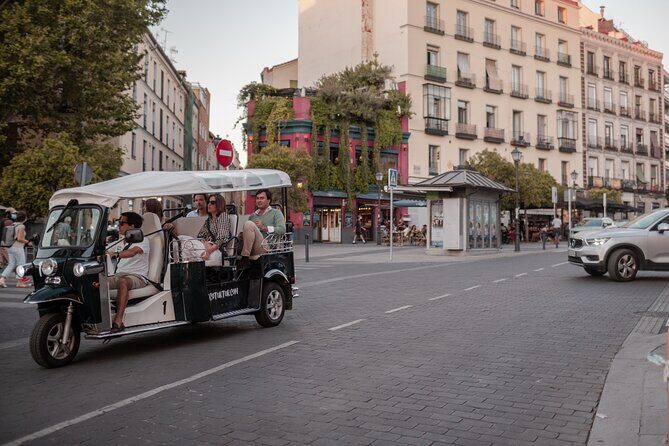
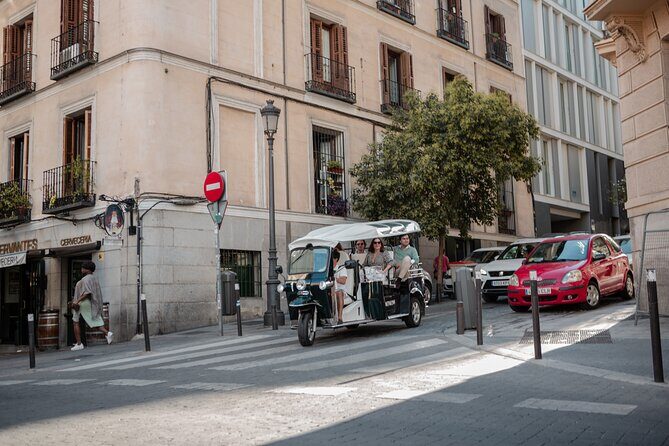
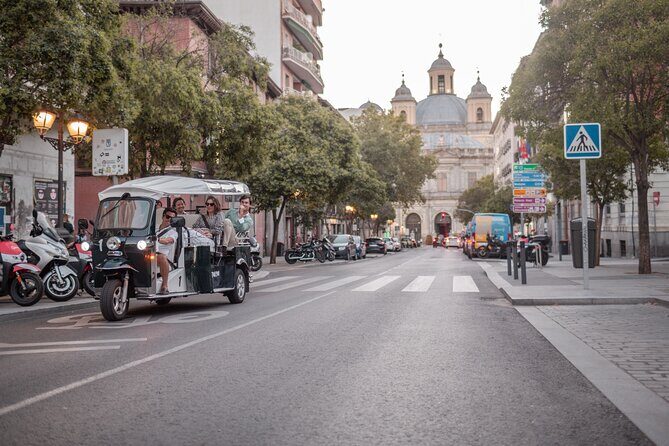
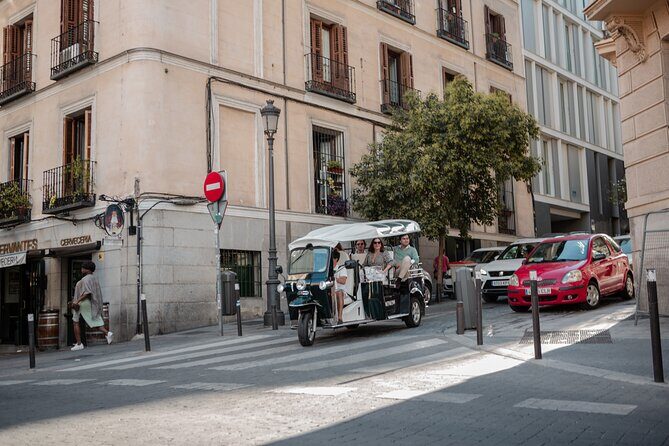
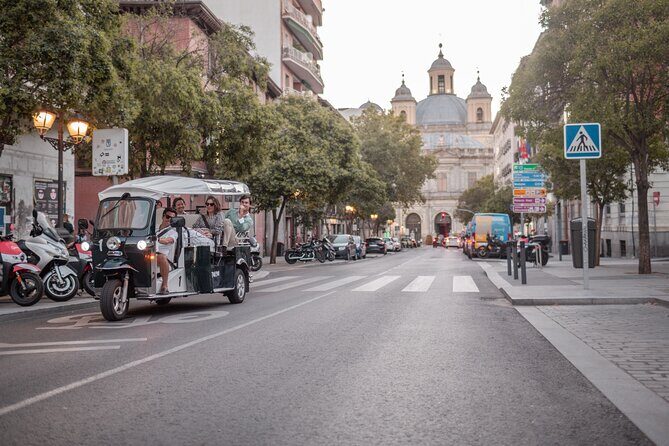
Madrid is a city where geography matters. Understanding how the neighborhoods connect, where the major plazas sit in relation to each other, and what makes different areas tick transforms how you explore the rest of your trip. Walking from the Royal Palace to the Prado Museum, for instance, is beautiful but takes time—and without context, you might miss why certain neighborhoods have such distinct personalities.
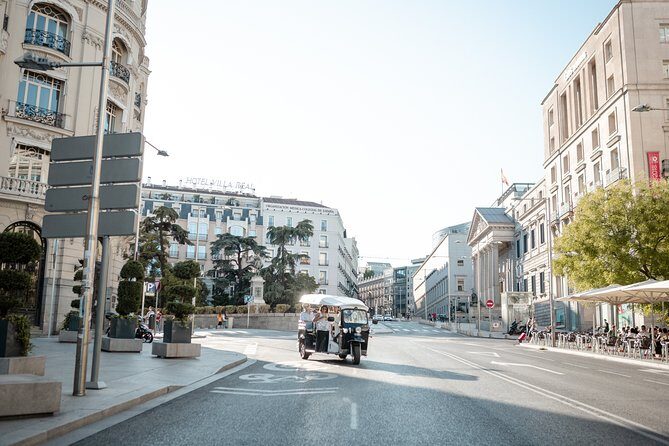
An eco-tuk-tuk splits the difference beautifully. You’re moving through the city fast enough to cover significant ground in a short window, but slow enough to actually see and photograph what you’re passing. One traveler captured this perfectly: “This is wonderful way to see a lot of Madrid in a short amount of time. Our guide was full of great information and patience.” That combination of efficiency and depth is what makes these tours so effective for first-time visitors.
The vehicles themselves are surprisingly comfortable. They’re open-air, which means you get genuine sensory contact with the city—the sound of Madrid’s traffic, the smell of the streets, the quality of light bouncing off historic facades—but you’re still seated and moving at a reasonable pace. In cooler months, blankets are provided, which speaks to the operators thinking through real traveler needs rather than just the tourist-season experience.
The Itinerary: What You’ll Actually See
This tour takes you through roughly 15 major stops across Madrid’s historic center and key cultural districts. Rather than rushing past each one, your guide will pause at carefully selected spots for photos and context, which is why the experience works whether you book 90 minutes or go for the full four hours.
The Royal Madrid Experience
You’ll start near the Royal Palace, one of Europe’s largest palaces and still used for official state functions. The palace has been the centerpiece of Madrid’s identity since its construction began in 1738 on the site of an earlier palace destroyed by fire on Christmas Eve 1734. That’s the kind of detail—the specificity of that Christmas Eve fire—that makes a good guide invaluable. One traveler noted: “This was an exceptional way to discover Madrid! I only wish we had done it earlier in our trip because we got so many ideas about places and neighborhoods to explore.”
The palace is surrounded by two distinct garden spaces: the Campo del Moro gardens to the west (dating back to the Middle Ages) and the more manicured Sabatini gardens on the north side. You’ll see both, and your guide will explain how these spaces function in Madrid’s social and cultural life today, not just their historical significance.
The Cathedral and Religious Heart
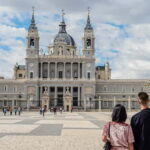
The Almudena Cathedral represents something genuinely unique in European religious history. It was consecrated by Pope John Paul II in 1993—the first cathedral consecrated outside Rome in over 400 years. Walking around it, you’re seeing relatively recent history that carries enormous weight. The cathedral’s museum contains objects telling the story of Madrid’s diocese, with everything from mosaics to episcopal artifacts spread across a dozen rooms.
The Centers of Power
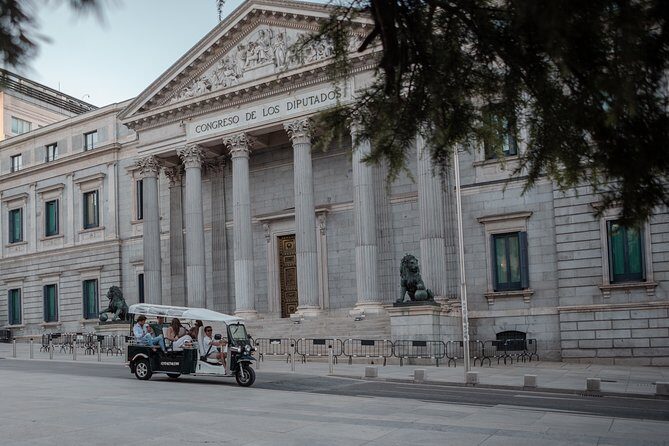
You’ll see the Palace of the Spanish Courts, an imposing neoclassical building recognizable by its six striated Corinthian columns and the famous bronze lions flanking the entrance—cast from cannons captured during colonial wars. These aren’t random details; they’re the physical language of how Madrid saw itself during the 19th century. The building’s interior includes the Session room and the library, though you’re viewing these from the outside, your guide will explain their significance and the building’s role in Spanish democracy.
Cultural Institutions
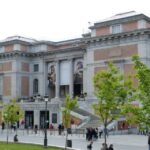
The Prado Museum earns a stop, and your guide will provide context about why it matters beyond its fame. One art historian has called it “the world’s most important museum for European painting,” and while that’s debatable, the collection of 16th-to-19th-century European masterworks is genuinely world-class. You’re not going inside on this tour, but you’ll understand why it deserves serious time if you’ve got it.
Next to the Prado sits San Jerónimo el Real, officially known as “Los Jerónimos.” It’s a late-Gothic church with Renaissance influences, originally built in the early 16th century but heavily restored over the centuries. It’s the kind of architectural layering that tells you how cities evolve—nothing stays exactly as it was built, and that’s part of the story.
The Markets and Neighborhoods
You’ll visit a covered market from around 1916, a beautiful example of how Madrid’s neighborhood gathering spaces work. These aren’t sterile shopping centers; they’re where locals actually buy food, socialize, and maintain community. Seeing this gives you a sense of Madrid beyond monuments.
The Plazas That Define the City
The tour includes Plaza de Santa Ana, which dates from 1810 and sits in the heart of the Cortes neighborhood. It’s been modified numerous times over the centuries, and each renovation tells you something about what Madrid valued at that moment. You’ll also see the Cibeles Fountain and the Puerta de Alcalá, the monumental gate built in 1778 by order of Carlos III to replace an earlier 16th-century entrance.
The Bank of Spain building gets a stop, and your guide will explain how its 1884 architecture—described as “quite decorative”—reflected the nation’s desire to project stability and importance. Buildings are political statements, and Madrid’s 19th-century architecture speaks volumes about Spain’s ambitions during that period.
The Temple of Debod
This is perhaps the most unexpected stop: an actual ancient Egyptian temple relocated to Madrid. Located west of Plaza de España, it sits on a hill where a military barracks once stood. The temple has no admission fee and offers one of Madrid’s best sunset views, which is why it often makes the cut for longer tours. It’s a reminder that Madrid’s cultural reach extends far beyond Europe.
You can also read our reviews of more private tours in Madrid



The Guides Make This Work
Here’s where the tour’s real value becomes clear: the quality of the guides. We’ve reviewed hundreds of tours across Europe, and the consistency of praise for guide knowledge and personality in these reviews is genuinely unusual. People aren’t just saying guides were “nice”—they’re mentioning specific historical details they learned, recommendations for restaurants and neighborhoods, and the guides’ obvious passion for the city.
One solo traveler wrote: “My guide, Gloria, was incredible—friendly, knowledgeable, and full of fascinating stories that brought the city to life. She knew just when to stop for photos and shared details about Madrid’s history, architecture, and hidden gems that I would have completely missed on my own.” That’s not generic praise; that’s someone describing exactly what makes a tour guide valuable.
Another traveler noted: “Laura, our driver, was hilarious and quite knowledgeable about the history of Madrid.” The humor matters—it keeps a history lesson from feeling like homework. Multiple reviews mention guides who shared insights about neighborhoods, local culture, and where to eat well, which is the kind of practical wisdom that actually shapes how you spend your remaining time in the city.
The guides appear to be trained not just to recite facts but to engage with genuine questions and adapt to their groups’ interests. One family traveling with children said: “It was a wonderful, fun and at the same time informative tour. Our children enjoyed, too! You can learn everything about Madrid in short and fun way, see the main great spots and even local jokes!”
Practical Details That Matter
Duration and Flexibility
Tours run from 90 minutes to four hours. The 90-minute version gets you the essential overview—Royal Palace, major plazas, key cultural institutions. The longer versions allow for more neighborhood exploration and deeper dives into specific areas based on your interests. One family traveling with children recommended the three-hour option as hitting a sweet spot between comprehensive and not exhausting.
Group Size and Privacy
This is genuinely private—only your group participates. Up to four people fit per tuk-tuk, and if your party is larger, you’ll be in multiple vehicles. This matters because you’re not sharing your guide’s attention with 40 other people. You can ask questions, request photo stops, and have actual conversations about what you’re seeing.
Meeting Point Reality
The starting point is at Calle Bailén 4 (officially marked as “Puerta del Príncipe”), near the Royal Palace. However, the actual pickup happens in an underground bus station—not at street level. One traveler appreciated the heads-up: “Pay attention to the details they send 30 minutes beforehand with where to meet the tuktuk, would have completely missed it otherwise. It’s down in a garage, not near the other tuktuks by the palace.” They send clear instructions, but reading them carefully prevents confusion. If you have mobility concerns about stairs, you can contact them in advance about elevator access.
Weather Considerations
Tours run in rain or heat, with blankets provided for cooler months. They only cancel under extreme weather conditions, which speaks to Madrid’s generally reasonable climate most of the year. The open-air nature means you experience the city authentically, but dress appropriately.
Timing and Booking
These tours are booked about 24 days in advance on average, which suggests they’re popular but not impossible to arrange last-minute. You can cancel free of charge up to 24 hours before your tour. The price of $28.66 per person is genuinely affordable for what you’re getting—a knowledgeable private guide, transportation, and a curated introduction to the city.
Value Assessment
Let’s talk about what you’re actually getting for the price. A private guide in most European cities runs $50-100 per hour. Transportation in Madrid typically costs €2-3 per ride. The novelty and fun factor of the tuk-tuk itself has real value—it’s a memorable experience, not just efficient sightseeing.
For under $30 per person, you’re getting expertise, context, transportation, and an experience that shapes how you’ll explore the rest of your trip. Families particularly appreciate this because kids stay engaged (tuk-tuks are fun in a way buses aren’t), and the guides seem genuinely skilled at making history accessible to younger travelers.
One family captured the practical value: “We only had 1 day in Madrid and the 2 hour tour allowed us to see the entire city while learning about its history.” If you’re short on time, this tour compresses what might take three or four days of independent exploration into a focused, guided experience.
Who This Tour Suits Best
First-time visitors, particularly those with limited time, get the most from this tour. You’ll understand Madrid’s geography, see the major sights, and get recommendations for what to prioritize based on your interests. The guides are consistently praised for suggesting neighborhoods and restaurants worth exploring further.
Families with younger children appreciate the comfort factor—no long walks, frequent photo stops, and guides who know how to keep kids engaged. The three-hour option seems to hit the sweet spot for families.
Solo travelers have specifically praised this experience. One solo traveler noted: “If you’re visiting Madrid—especially solo—this is one of the best ways to start your trip.” The guides are welcoming, and the private nature means you’re not awkwardly tagging along with couples or families.
Older travelers will find the tuk-tuks accessible. The operators specifically mention that vehicles suit older people and drivers will assist with boarding if needed. It’s a way to see significant ground without the exhaustion of walking tours.
Anyone on a budget gets excellent value. Under $30 per person for a private guide and transportation is genuinely hard to beat in European cities.
You can also read our reviews of more historical tours in Madrid


What to Expect: The Practical Reality
When you arrive, you’ll find your tuk-tuk at the underground meeting point. The vehicle itself is electric and compact—you’re sitting close to your guide, which actually enhances the conversational nature of the tour. You’ll have a clear view of the streets, buildings, and plazas you’re passing.
Your guide will narrate as you move, pausing at pre-selected spots for photos and explanation. The route may vary slightly based on street closures or demonstrations happening that day, but the major stops are consistent. One traveler appreciated the thoughtfulness: “She knew just when to stop for photos and shared details about Madrid’s history, architecture, and hidden gems.”
Longer tours often include a built-in stop where you can use a bathroom or grab coffee, which matters if you’re traveling with kids or just need a break. The guides are responsive to genuine needs—one review mentioned a guide who waited patiently while travelers found the meeting point, which speaks to flexibility within the tour structure.
The Honest Assessment
The only real limitation is that you’re seeing Madrid from the tuk-tuk rather than entering most buildings. You’re getting the exterior architecture, the neighborhoods, the layout, and context—which is genuinely valuable—but you’re not going inside the Prado or the Royal Palace. That said, this tour works perfectly as an introduction that helps you decide where to spend your deeper time. One traveler expressed this beautifully: “I only wish we had done it earlier in our trip because we got so many ideas about places and neighborhoods to explore.”
The guides are consistently knowledgeable and engaging, which elevates this beyond a simple sightseeing tour. They’re sharing their city, not just reciting facts.
Madrid Historical Tour with Local Guide in Eco Tuk Tuk Private
FAQ: Practical Questions Answered
How far in advance should I book this tour?
Tours are typically booked about 24 days in advance, but you can likely arrange something sooner depending on availability. It’s worth booking at least a few days ahead to secure your preferred date and time.
What happens if I’m running late to the meeting point?
The tour will be reduced by the amount of time you’ve lost. If you’re more than 15 minutes late, the tour will be cancelled without a refund. The meeting point is underground, so building in extra time to find it is wise.
Can I bring my children on this tour?
Yes, the tour accommodates families well. The minimum age is 2 years old (babies aren’t allowed), and the minimum weight is 9 kg. Multiple reviews from families with children praise how engaging the guides are with kids.
Is the tuk-tuk safe in bad weather?
Tours operate in rain or heat, with blankets provided for cooler weather. They only cancel under extreme weather conditions. The open-air design means you experience the city authentically, but you should dress appropriately for the season.
What’s included in the price, and what isn’t?
Included: your expert guide, private vehicle, transportation, pre-selected photo stops, and blankets for winter. Not included: hotel pickup/drop-off (not legal in Madrid), tips to the driver, or transfers outside the tour route. The $28.66 per person price is the actual cost you pay.
How many people can go on one tuk-tuk?
Up to 4 passengers fit per vehicle. If your group is larger, you’ll be split across multiple tuk-tuks, each with its own guide. The tour price is set based on the number of vehicles needed.
Can I modify the tour route or add extra stops?
The tour itinerary is fixed, and stops for photographs happen at pre-arranged locations. However, your guide will answer questions and provide recommendations for places to visit after the tour.
This tour offers genuine value for anyone wanting to understand Madrid’s layout, history, and cultural highlights without the exhaustion of walking-based tours or the anonymity of large group buses. The guides consistently earn praise for their knowledge, humor, and willingness to share local insights that shape how you’ll explore the rest of your time in the city. Whether you have 90 minutes or four hours, you’ll leave with a solid grasp of what makes Madrid tick and concrete recommendations for where to spend your remaining time. At under $30 per person, it’s one of the smartest ways to start a Madrid visit.