Visiting the Sagrada Familia with Kids

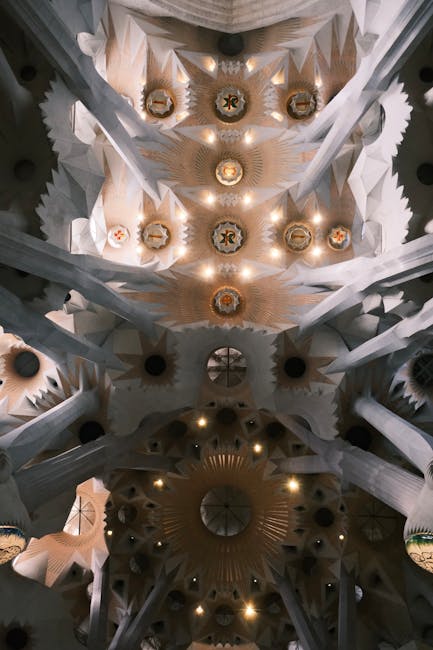
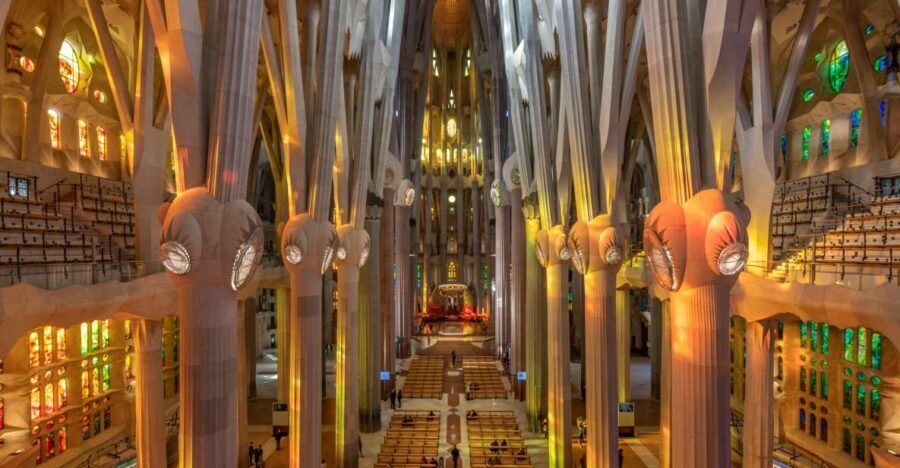
My three-year-old pointed at the ceiling and said “trees.” She wasn’t wrong. The columns inside Sagrada Familia split and branch exactly like a forest canopy. It’s one of those rare buildings that genuinely stops children in their tracks.
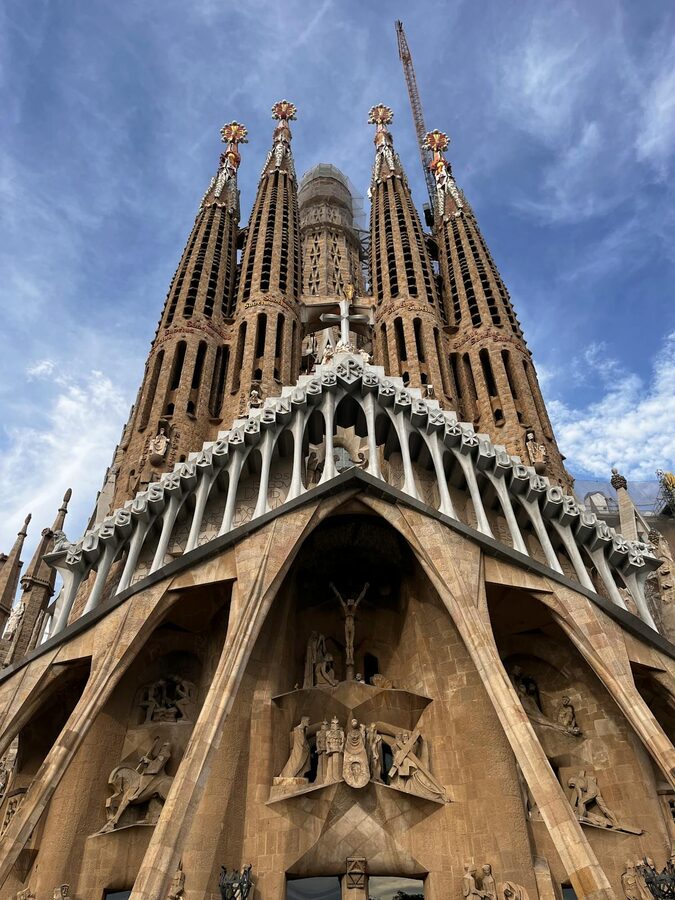
Sagrada Familia basilica exterior on a clear sunny day in Barcelona
We arrived about twenty minutes before our time slot and let the kids run around the small park opposite. There’s a pond with a perfect reflection of the Nativity facade — the little ones loved it more than the building itself, honestly. Get here early and you’ll have space to breathe before heading inside.

But getting tickets right is everything. The wrong ticket type, the wrong time slot, or no skip-the-line access can turn a magical morning into a test of everyone’s patience. I’ve done it both ways. Trust me on this.

Here’s what you actually need to know about visiting Sagrada Familia with your family.
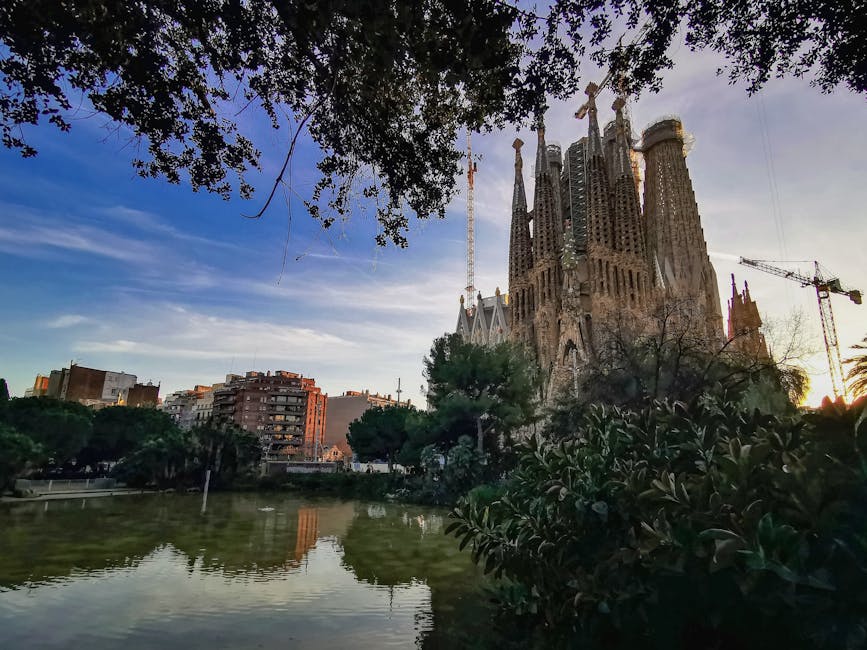
Sagrada Familia reflected in the pond at Placa de Gaudi park
That pond reflection I mentioned — here it is. The park opposite (Placa de Gaudi) is your secret weapon. Let the kids burn off energy before you go in, grab a bench, and take the obligatory reflection photo. There are also public loos here, which you’ll want to know about before you join the entry queue.

Short on Time? Here Are Our Top Picks

Sagrada Familia Entry Ticket with Audio Guide — $39
The one almost everyone books. Self-paced, so you can leave when the toddler hits the wall.
Book Now
Skip-the-Line Guided Tour — $67
Worth every penny if your kids are old enough to listen. Guides are brilliant with families.
Book Now
Priority Access Guided Tour — $58
Smaller groups, shorter waits. The best balance of value and quality for families.
Book Now

How Tickets Work (And Which One Families Should Get)
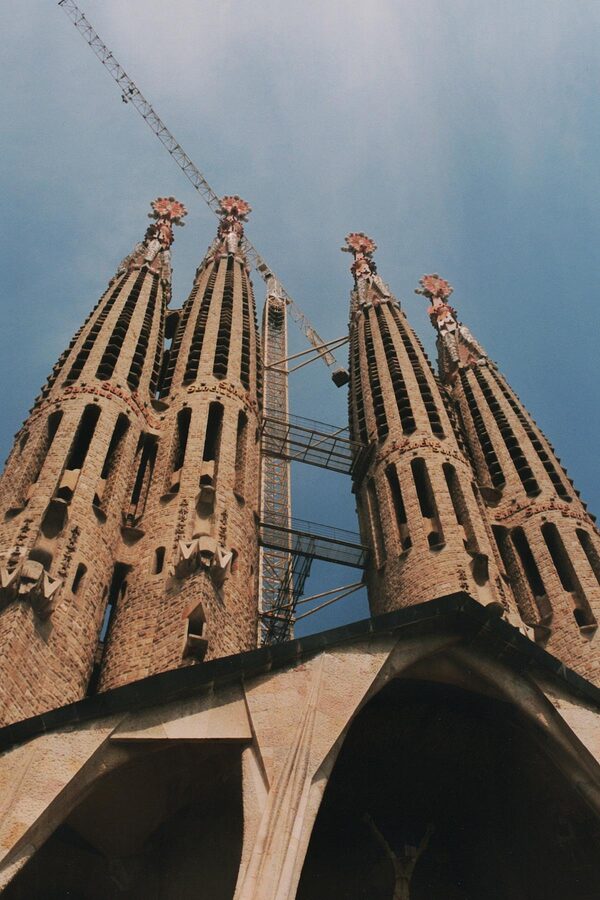
Low angle view of Sagrada Familia towers reaching into blue sky
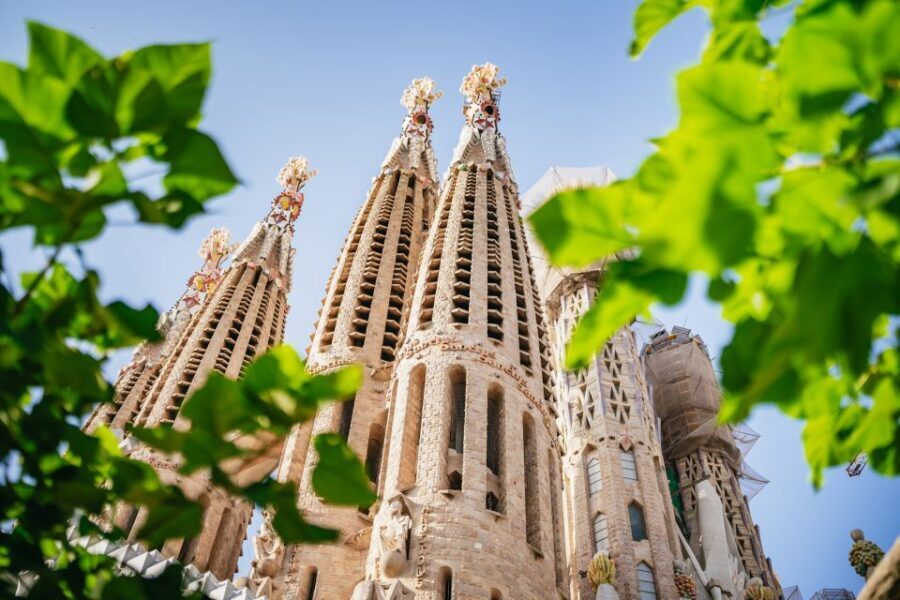
The towers look impossibly tall from ground level. Kids under 6 go free, which is a welcome relief when you’re paying Barcelona prices for everything else. Book your time slot for mid-morning — the light inside is at its absolute best between 10am and noon when the sun hits the stained glass on the east side.

All Sagrada Familia tickets are timed entry. You pick a 30-minute window when you book, and you need to arrive within that window. Miss it and you’re out of luck.

There are three main options. The basic entry with audio guide is the most popular — over 100,000 reviews and counting. You get your timed slot, download the audio guide app, and explore at your own speed. For families with small children, this is usually the smartest choice. No group to keep up with. No pressure to stay longer than the kids can handle.
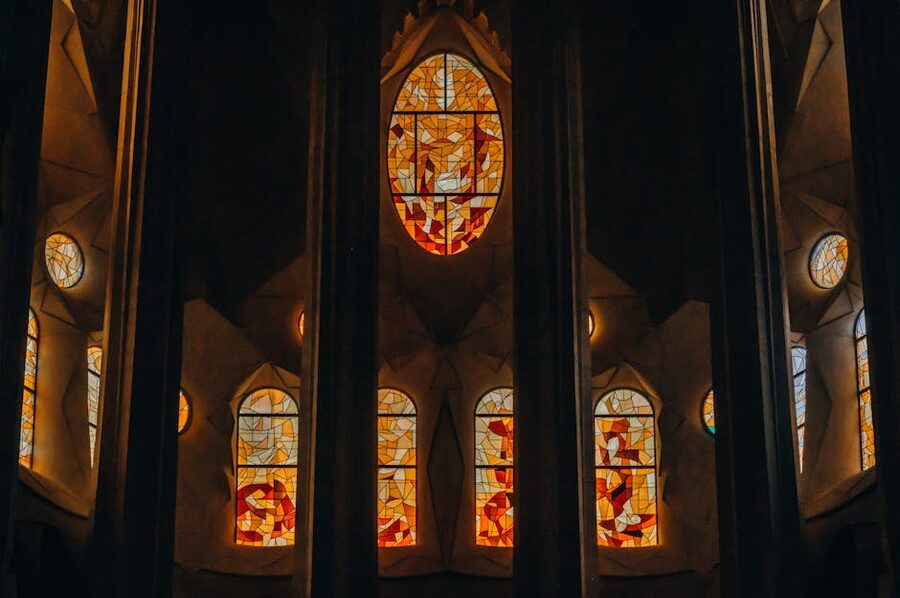
Colourful stained glass window inside Sagrada Familia casting light
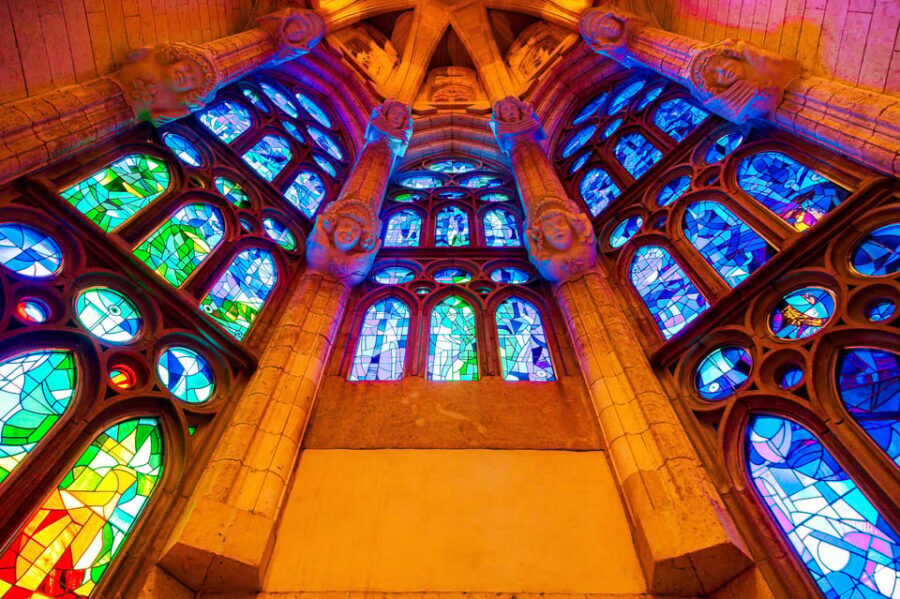
The stained glass is the thing most kids remember afterwards. Each side of the basilica has different colours — warm reds and oranges face the sunset, cool blues and greens face the sunrise. My daughter spent five minutes just watching the coloured light move across the stone floor. It’s like a giant kaleidoscope and you don’t need to explain it to children. They just get it.

Guided tours run about 90 minutes. That’s a long time for under-5s but genuinely brilliant for school-age children. The guides bring Gaudi’s vision to life in a way the audio app simply can’t match. One guide, Victor, apparently tells families to take their time and ask questions — that’s the kind of thing that makes all the difference with curious kids.

The tower access add-on costs extra and involves narrow spiral staircases. No lifts. No buggies. Children under 6 are not permitted in the towers, and honestly, even with older kids it’s a squeeze. Save it for a trip without the littles.

What It’s Actually Like Inside with Children
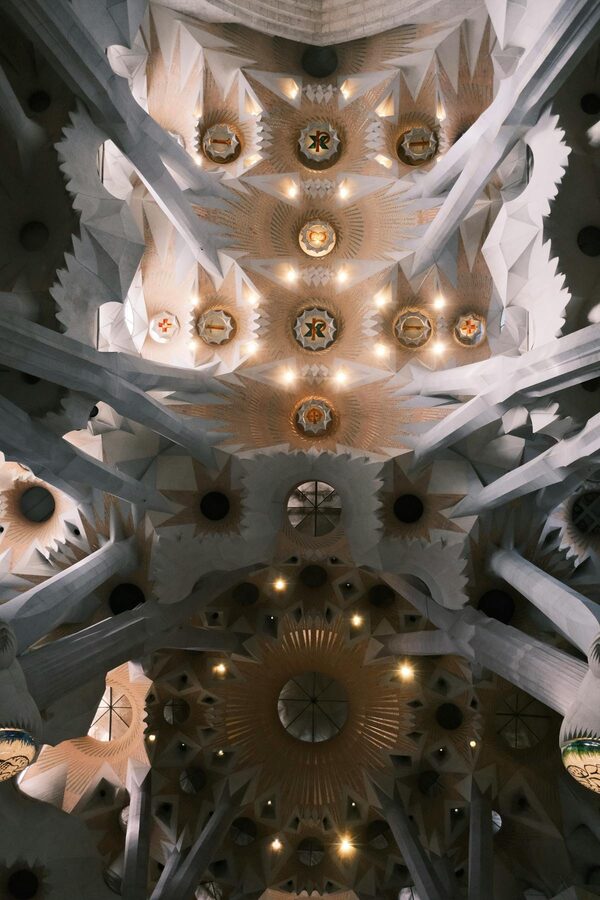
Tree-like columns and ceiling vaults inside Sagrada Familia Barcelona
This is what stopped my daughter mid-sentence. The ceiling really does look like a stone forest. Buggies are allowed inside but you’ll want a compact one — the aisles narrow near the museum section. We used a carrier for our youngest and it was much easier to tilt our heads back and actually enjoy the view.
Rays of light streaming through Sagrada Familia ceiling
The way light filters through the ceiling feels almost underwater. On a clear morning the whole nave seems to glow. We went on a slightly overcast day our first time and still thought it was stunning — but the second visit on a sunny morning was on a completely different level. If you can, pick a clear day.

The interior is the thing. Forget the outside for a moment — everyone’s seen photos of the towers and cranes. Inside is where Sagrada Familia earns its reputation.

Light pours through stained glass on both sides. The east windows glow blue and green in the morning. The west side blazes orange and red in the afternoon. My son said it looked like being inside a kaleidoscope. He’s not wrong.
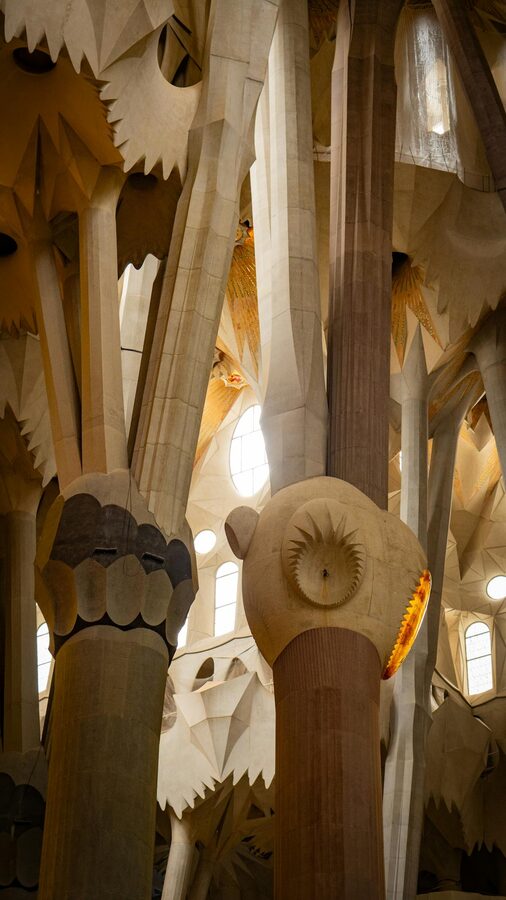
Tall branching columns inside Sagrada Familia with light streaming through
These columns are designed to split like tree branches — Gaudi studied nature obsessively and it shows. The floor is smooth and flat throughout, so even wobbly toddlers manage fine. Just watch them near the roped-off side chapels. No touching the 140-year-old stonework, please.

The space is enormous. Children don’t feel hemmed in the way they do in smaller churches. There’s room to wander, to look up, to whisper about the strange shapes overhead. I expected my kids to last about fifteen minutes. We stayed for nearly an hour.

The museum at the back has Gaudi’s original models and sketches. It’s quieter, cooler, and gives you a break from the crowds in the main nave. Older kids who’ve done any kind of architecture or engineering at school will find the upside-down model fascinating — Gaudi used weighted strings and mirrors to design the curves. Clever stuff.

When to Visit (This Matters More Than You Think)
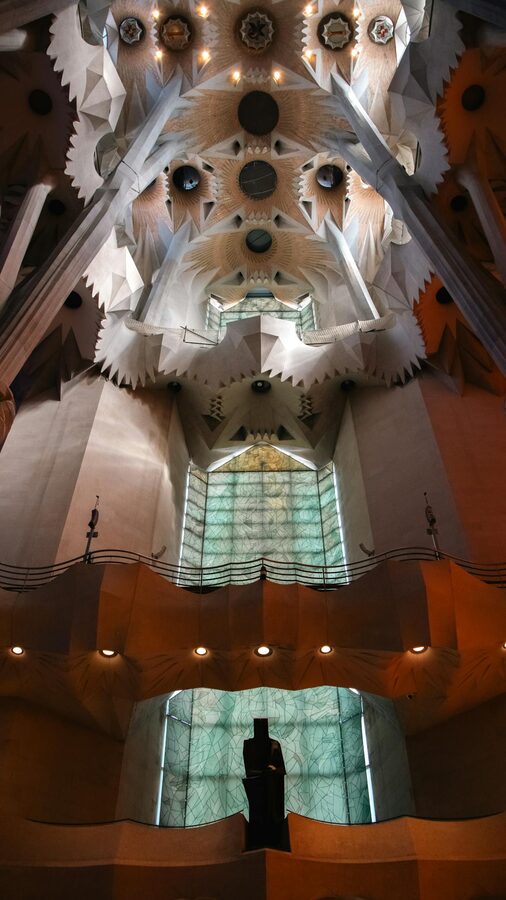
Geometric patterns and shapes in the interior ceiling of Sagrada Familia
Morning light is everything here. These geometric ceiling patterns look completely different at 10am versus 3pm. We booked a 9:30am slot on a Wednesday and had genuinely comfortable space around us — by 11am, the nave was packed and moving through it felt more like shuffling than exploring.

Book the earliest slot you can manage. 9am or 9:30am is ideal. The building faces east, so morning sun floods through the coloured glass and the interior literally glows. By afternoon the light shifts and, honestly, you lose the magic.

Families and travelers enjoying a sunny day near Arc de Triomf Barcelona
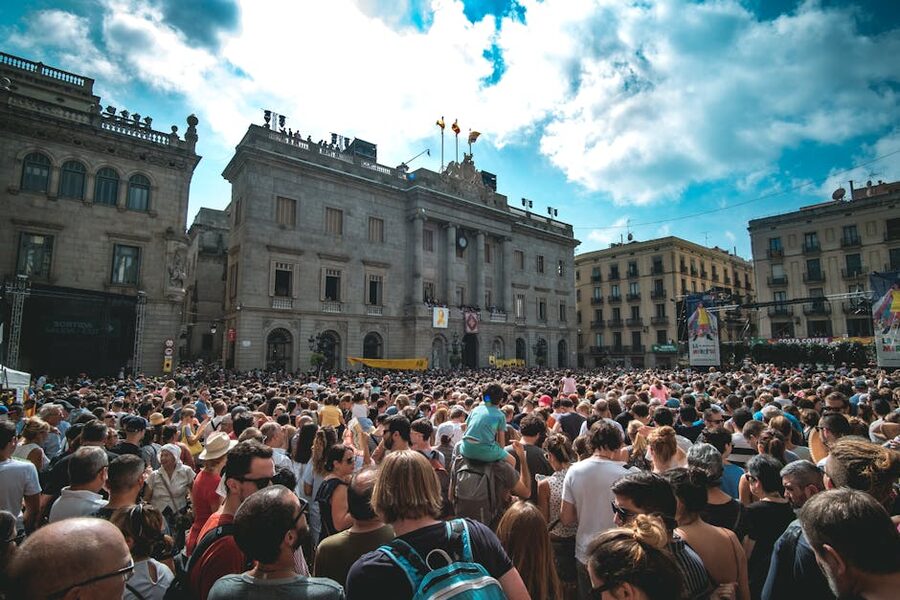
Barcelona in general is brilliant with kids, but timing makes all the difference. We learned the hard way that Sunday mornings are quieter at Sagrada Familia because locals tend to be at church services — but every other major attraction is rammed. Midweek visits win every time if you can manage it.

Midweek is quieter than weekends. Tuesdays and Wednesdays in particular tend to have smaller crowds. During school holidays you’ll need to book at least two weeks in advance — popular time slots sell out fast.
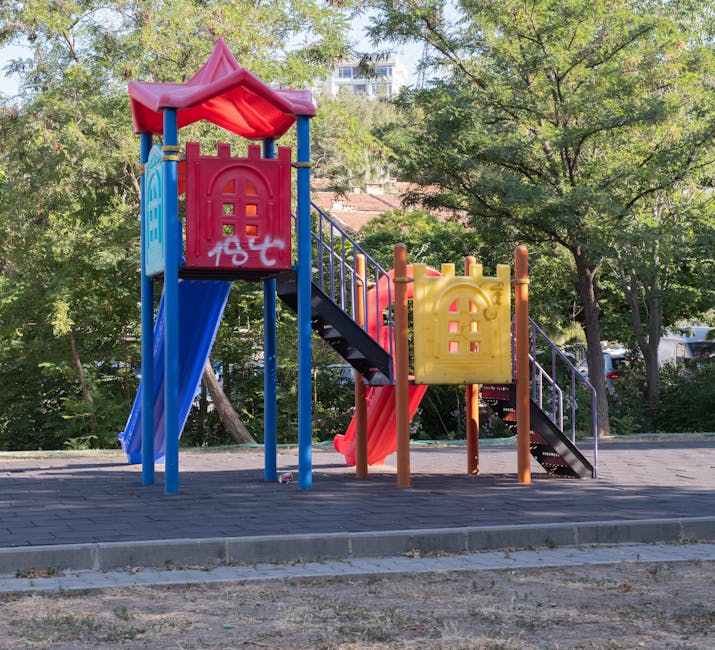
Children playing in a park playground in Barcelona
Barcelona has playgrounds everywhere and the one at Placa de Gaudi (right opposite Sagrada Familia) is your pre-visit lifesaver. Let them climb, swing, and burn off energy before you go into a space where they need to use indoor voices. Post-visit, the same playground works as a decompression zone. Every parent I spoke to who’d been to Sagrada Familia said the same thing: arrive early, playground first, then tickets.

Allow about 90 minutes total. That includes queuing for the security check (airport-style scanners), the main basilica, and the museum. With small children, you might leave after 45 minutes and that’s perfectly fine. No one will judge you. We’ve all been there.

The Best Tours for Families
Detail of Gaudi organic architecture design inspired by nature
Every surface has some kind of natural detail if you look closely. Get the kids to play “spot the animal” on the facades — there are turtles, chameleons, snails, and birds carved into the stone everywhere. My lot turned it into a competition and it kept them engaged far longer than any audioguide could.

I’ve narrowed it down to three options. Each suits a different kind of family.

1. Sagrada Familia Entry Ticket with Audio Guide — $39
Sagrada Familia entry ticket with audio guide tour
The standard entry is the most family-friendly option for a reason. You set your own pace, which is everything when you’ve got a child who needs the loo every twenty minutes. The audio guide app works on your phone — download it before you arrive so you’re not faffing with WiFi in the queue.

This is the one with over 100,000 reviews and a 4.6 rating. You explore independently with a downloadable audio guide, which means you can leave whenever the kids are done. Our full review covers everything you need to know about what’s included and how the audio app works. For families with under-5s, this is my top recommendation.

2. Skip-the-Line Entry Ticket & Guided Tour — $67
Sagrada Familia skip the line guided tour
The guides genuinely make Gaudi come alive for kids. Ours explained the animal symbols on the Nativity facade and my eight-year-old spent the rest of the day spotting turtles and chameleons carved into the stone. Worth the extra cost if your children are old enough to follow along — I’d say age 6 and up.

A 90-minute guided experience with a live expert who can answer your kids’ questions on the spot. You meet near the basilica and skip the ticket queue entirely. Our full review breaks down what makes this tour stand out, including the guides’ knack for making the architecture accessible. Best for families with school-age children who’ll engage with the stories.

3. Priority Access Guided Tour — $58
Sagrada Familia priority access guided tour
Smaller group sizes mean your kids can actually ask questions without being drowned out. Rated 4.9 out of 5 — the highest-rated Sagrada Familia tour available. Guides like Philippe, Albert, and Eleni keep getting name-checked in reviews, which tells you the quality is consistent. Good for families who want a guide but don’t want to feel rushed.

The best-rated option at 4.9 stars. Smaller groups, priority entry, and guides who consistently get praised by name — that’s rare. You’ll see the interior, learn about Gaudi’s design process, and finish at the museum. Check our detailed review for the full breakdown. This is the sweet spot if you want a guide but at a lower price than option 2.

Practical Tips for Families
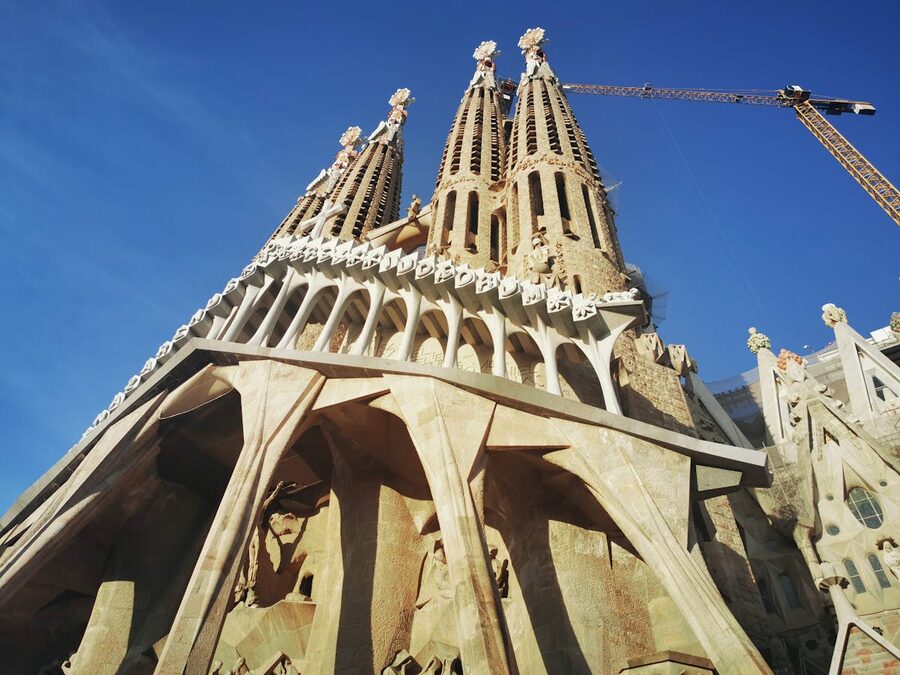
Angular sculptural figures on the Passion facade of Sagrada Familia
The Passion facade is the one you’ll likely exit through. It’s starker and more angular than the Nativity side — some children find the skeletal figures a bit spooky. Mine thought they were “cool skeletons”, but every kid is different. If yours is sensitive to that kind of thing, just walk past quickly and head for the gift shop. Yes, there’s a gift shop. It’s actually decent.

Security queues. There’s airport-style security at the entrance. Bags go through a scanner. It moves quickly but can take 10-15 minutes at peak times. Have your ticket QR code ready on your phone before you join the queue.

Buggies and prams. Allowed inside. The main nave is spacious and flat. The museum section has a slightly narrower path. A compact buggy works fine. A massive travel system will be awkward.

Toilets. There are loos inside the basilica. They’re clean and functional. Use them — the nearest public toilets outside are a good walk away.

No food or drink inside. Eat before you go. There’s a small park across the road (Placa de Gaudi) where you can have a snack before or after. A few decent cafes line the streets around the site, though they charge tourist prices.
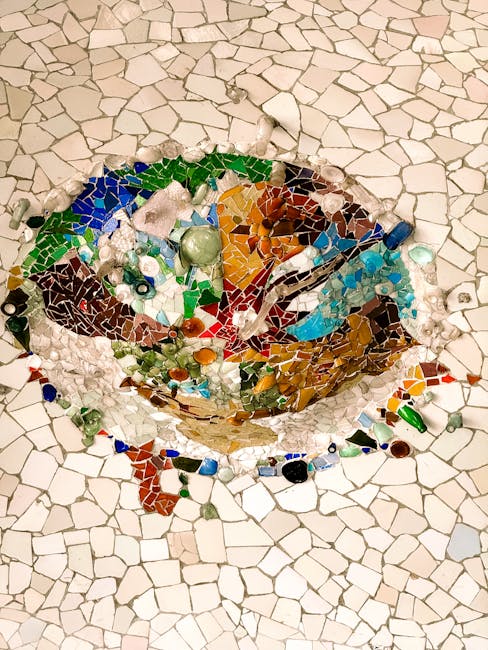
Close-up of colourful Gaudi mosaic tiles in Barcelona
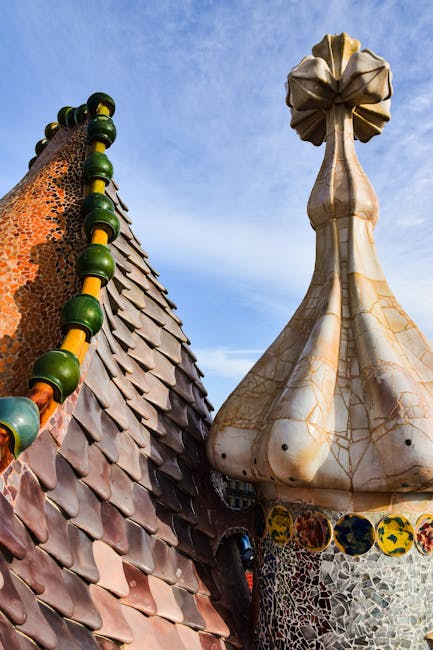
Gaudi used these broken tile mosaics (called trencadis) all over Barcelona. You’ll see them at Park Guell, Casa Batllo, and on the Sagrada Familia towers. The kids loved trying to work out what the original tiles looked like before they were smashed up and rearranged. It’s craft, engineering, and art history all in one — and they don’t even realise they’re learning.

Dress code. Shoulders and knees must be covered. This catches people out constantly, especially in summer. Pack a light scarf for quick cover-ups. Flip-flops are technically fine, but you’ll be on your feet for at least an hour.

The gift shop at the exit has genuinely nice things — Gaudi-themed colouring books, small mosaic tiles, and building block sets that kept my lot entertained on the flight home.

A Bit of History (For Curious Kids and Parents)
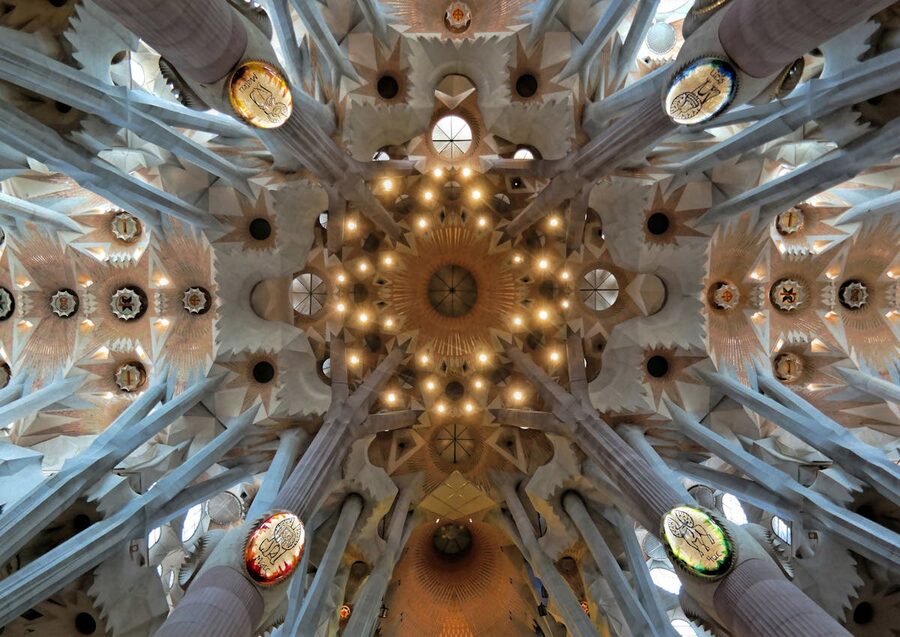
Intricate ceiling detail showing Gaudi geometric patterns inside Sagrada Familia
Gaudi spent 43 years working on this building. He never saw it finished — and neither did his children, or their children. Construction has been going on since 1882, making it the world’s longest-running building project. My son asked if the builders were “really slow” and honestly, it’s a fair question. The answer involves civil wars, funding gaps, and one very stubborn architect who kept changing the plans.
Sagrada Familia lit up at twilight showing its facade details
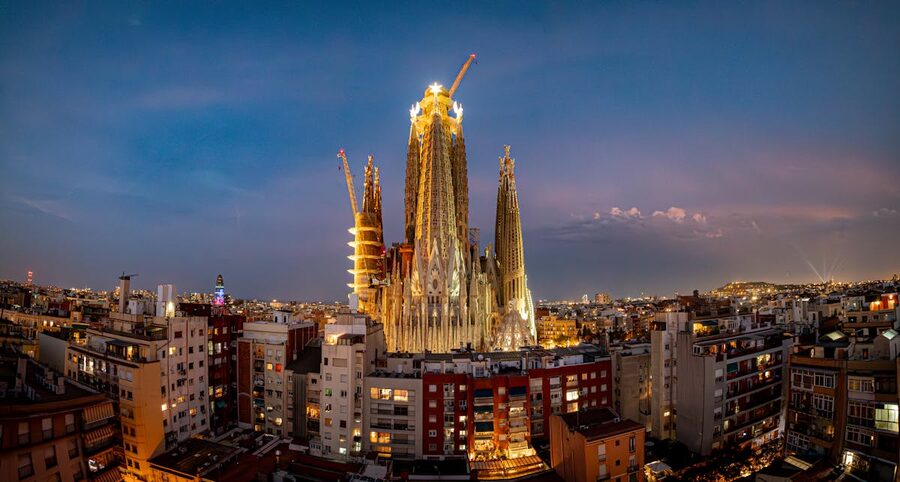
We walked past after dinner one evening and saw it lit up like this. Completely different building at night. The facade details you miss during the day suddenly pop out. If your hotel is nearby, it’s worth a five-minute detour after the kids’ bedtime routine. Ours were in the buggy and fell asleep to the sound of us going “oh wow” repeatedly.

Antoni Gaudi started work on Sagrada Familia in 1883. He was 31 years old. He spent the last twelve years of his life living on site, sleeping in his workshop, completely consumed by the project.
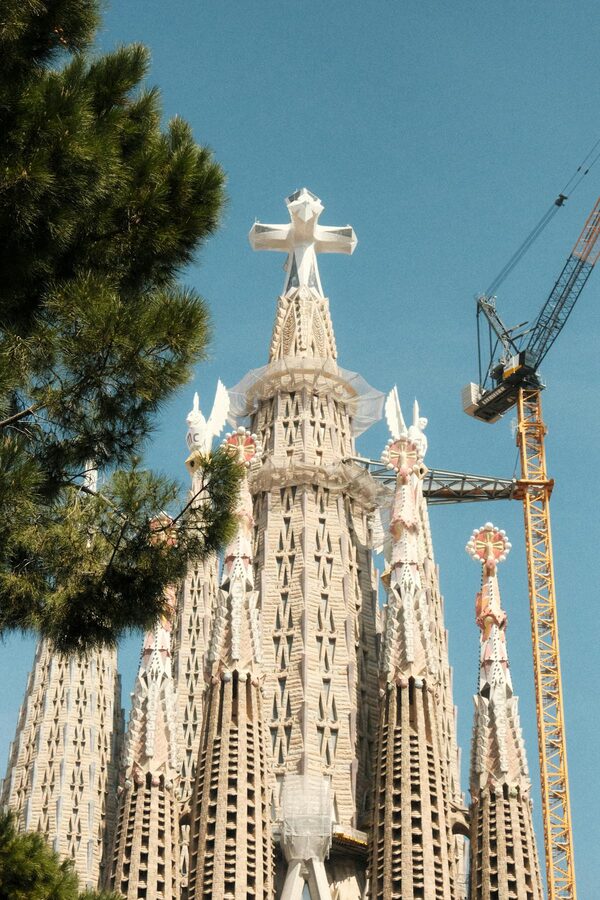
Sagrada Familia towers with construction crane against blue sky
Those cranes are part of the story now. Construction has been running since 1882 and the towers are still going up. My son found this absolutely fascinating — the idea that a building can take longer to build than most countries have existed. The current target for completion is 2026, the centenary of Gaudi’s death, though some finishing touches will likely run beyond that.

He died in 1926 after being hit by a tram. He looked so dishevelled that no one recognised him. He was taken to a pauper’s hospital before friends identified him. He’s buried in the crypt beneath the basilica — you can see his tomb through a small window.

The building still isn’t finished. Civil war, fires, and anarchists who destroyed Gaudi’s original models all slowed things down. But modern technology has accelerated the work dramatically. The current completion target is 2026 — the centenary of Gaudi’s death — though some elements will likely take longer.

What makes the building extraordinary is that Gaudi designed it entirely from nature. The columns are trees. The ceiling is a forest canopy. The light mimics a clearing in the woods. Every surface has a biological logic to it. Even small children sense this, which is why they react to the interior so strongly. It doesn’t feel like a church. It feels like something alive.

Getting There with Kids
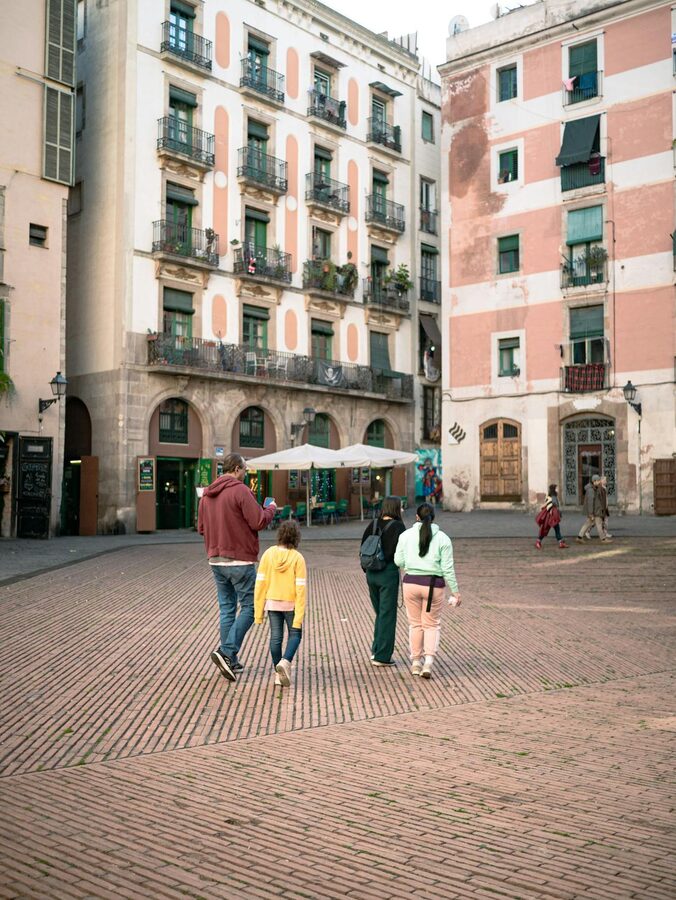
Family walking through a historic square in Barcelona old town
The Metro is by far the easiest option with kids. Sagrada Familia station drops you practically at the door. We tried walking from our hotel in the Gothic Quarter once — it’s doable but about 40 minutes, and with a buggy and two tired children it felt like four hours. Get the Metro. Seriously.
People walking along La Rambla street in Barcelona
La Rambla is the most famous street in Barcelona but honestly it’s not the easiest with small children. Stick to the Metro for getting to Sagrada Familia — it’s faster, the kids think it’s an adventure, and you avoid the pickpocket warnings that come with every La Rambla visit. Save the famous boulevard for a separate afternoon when you’ve got less on the agenda.

The Metro station is called Sagrada Familia (lines L2 and L5). It’s right there. Two-minute walk to the entrance. This is the easiest way to arrive with children and I wouldn’t bother with any other method unless your hotel is literally next door.

If you’re using the Hop-On Hop-Off bus, there’s a stop right outside. Handy if you’re combining Sagrada Familia with other sights in one day.

Taxis work well too. Just say “Sagrada Familia” and every driver knows where to go. From the Gothic Quarter it’s about a 15-minute ride and costs around 10-12 euros.

What Else to Do Nearby
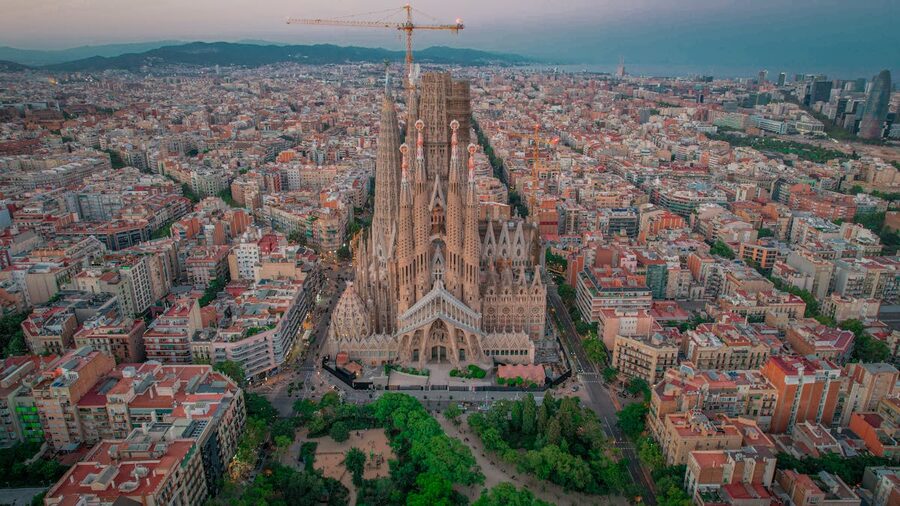
Aerial view of Sagrada Familia rising above Barcelona rooftops
From above you can see how Sagrada Familia dominates the Eixample grid. The neighbourhood around it is full of playgrounds and ice cream shops — we found a brilliant gelateria two blocks south that saved the afternoon. The streets here are wider and calmer than the Gothic Quarter, which makes pushing a buggy infinitely less stressful.
Ornate exterior of Hospital de Sant Pau Modernista building in Barcelona
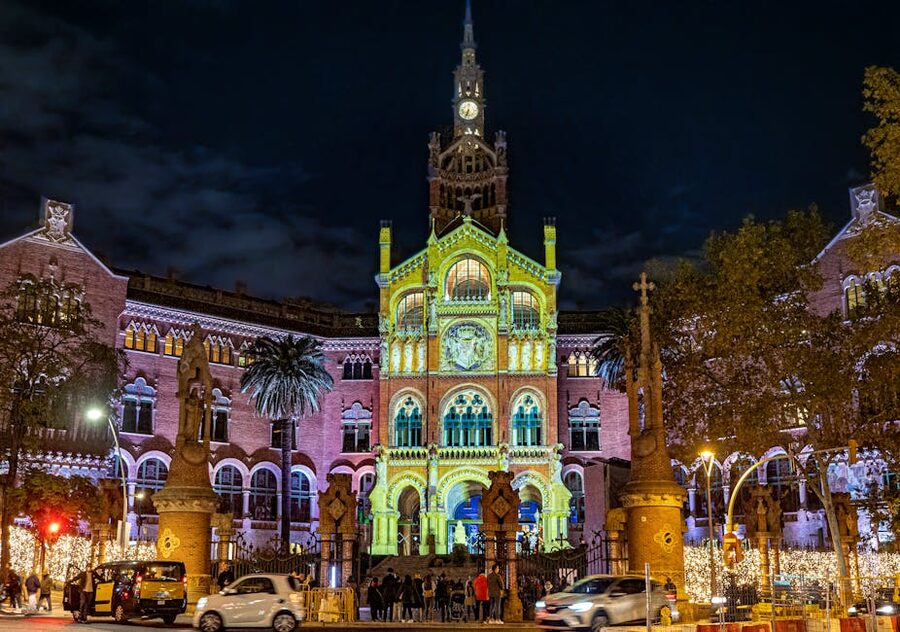
Hospital de Sant Pau is only ten minutes on foot and it’s gorgeous. Way fewer crowds than any Gaudi building, beautiful gardens for the kids to run in, and the mosaic work rivals anything at Park Guell. We spent an hour here after Sagrada Familia and it was one of the highlights of the whole trip. Easily the most underrated building in Barcelona.

The Hospital de Sant Pau is a ten-minute walk north. It’s a stunning Modernista complex, far less crowded than Sagrada Familia, and has beautiful open-air gardens where kids can run around. Highly recommended as a follow-up if your family still has energy.
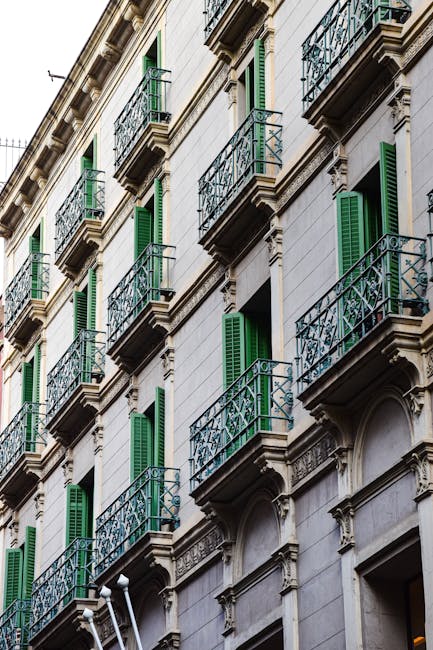
Geometric grid of buildings in Barcelona Eixample district
The Eixample grid from above is mesmerising — every block has a courtyard in the middle. The streets here are wide and buggy-friendly, unlike the narrow lanes of the Gothic Quarter. We walked to Casa Batllo from Sagrada Familia along Passeig de Gracia and found three playgrounds, two ice cream shops, and zero stress.

The Eixample district around Sagrada Familia is also home to Casa Batllo and La Pedrera (Casa Mila), two more Gaudi buildings that older children will enjoy. Both are about a 20-minute walk or a quick Metro hop away.

More Barcelona Family Guides
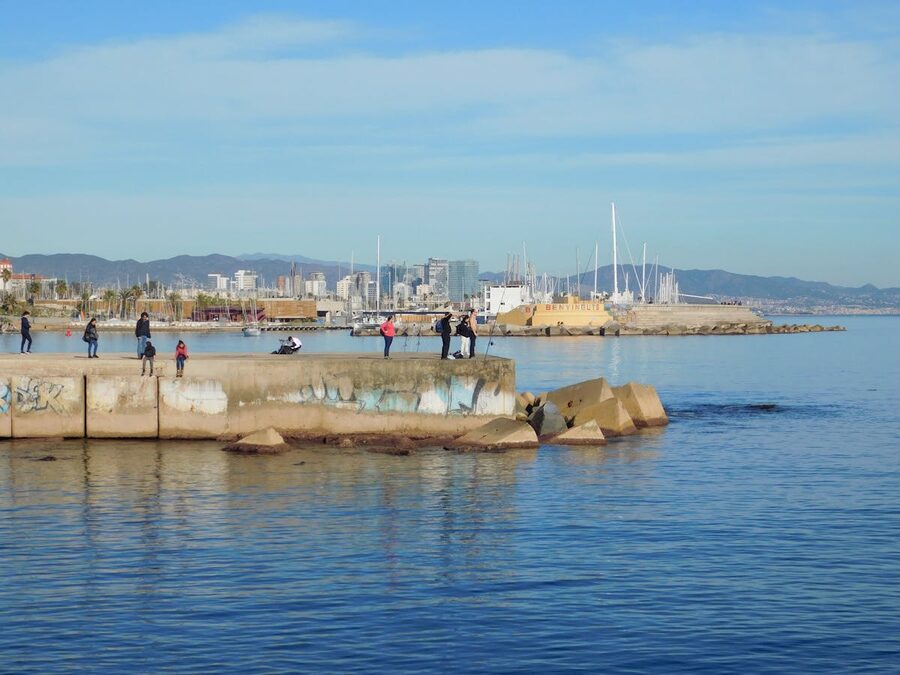
Barcelona coastline with beach and city skyline on a sunny day
Barcelona is one of those cities that just works with kids. Beaches, parks, Gaudi, and ice cream on every corner — we’ve been three times now and the children still ask to go back. If you’re planning more than just the Sagrada Familia (and you should), the guides below will save you the same trial-and-error we went through.
Barcelona skyline at sunset with city lights and mountains
Barcelona at sunset is something else entirely. After a full day of sightseeing with the kids, we collapsed at a rooftop restaurant in the Eixample and watched the sky turn pink. The Sagrada Familia towers were silhouetted against it. Genuinely one of those parenting moments where you think: yes, this is why we drag them across Europe.

If your family loved Sagrada Familia, you’ll want to see what Gaudi did at Park Guell too — it’s essentially a giant outdoor playground dressed up as a public park, and children go absolutely wild for the mosaic dragon at the entrance. Casa Batllo is another favourite with kids, especially the rooftop with its dragon-spine tiles, though it works better for children over 5 who can handle the audioguide. For a completely different kind of Barcelona day, the Barcelona Aquarium sits right on the harbour and has a glass tunnel that smaller children find genuinely mesmerising. And if you want to see the whole city without the walking, the Hop-On Hop-Off bus is a lifesaver for families — you sit on top, the kids point at things, and everyone stays happy.