When you’re planning a trip to Split, one decision stands out as particularly smart: booking a guided walking tour of Diocletian’s Palace and the surrounding historic center. We’ve found that this 90-minute experience, offered by Ancient Tours, delivers genuine insight into one of Europe’s most significant archaeological sites—and it does so without the inflated price tags you’d find elsewhere.
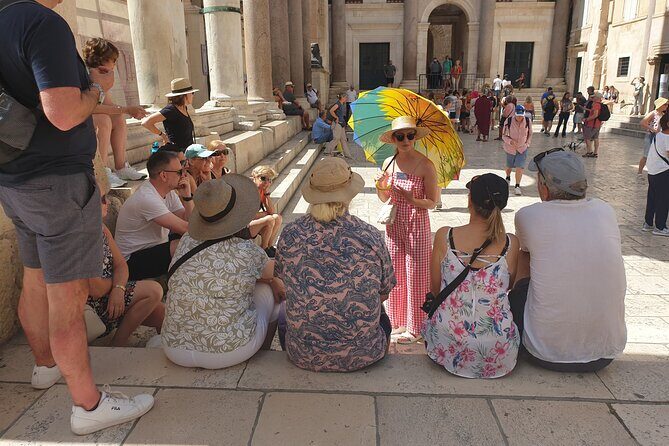
What really impressed us about this tour is how it transforms what could be a confusing maze of ancient stones into a coherent historical narrative. Your guide doesn’t just point at buildings; they explain why they matter and how they shaped everything that came after. We also appreciated that this tour keeps groups small—capped at just 20 people—which means you’ll actually hear your guide and have room to ask questions without shouting.
One thing worth knowing upfront: the tour doesn’t include admission to paid sections of the palace, like the underground substructures museum. Some travelers found this a bit disappointing, though the tour still covers substantial ground without those entries. The tour also involves navigating uneven, historic stairs, so it’s worth considering if you have mobility concerns.
This experience works best for first-time visitors to Split who want to understand the city’s layout and significance before exploring on their own, or for anyone traveling with just a single day in the city who needs maximum context in minimum time.
- What You’re Really Getting for Your Money
- Breaking Down the Itinerary: Seven Stops Through Time
- The Peristyle: Where It All Begins
- The Vestibulum: An Imperial Chamber
- The Substructures: Beneath the Surface
- The Golden Gate: Main Entrance and History Lesson
- Riva Harbor: The Waterfront Perspective
- Fruit Square: Medieval Context
- The Synagogue: Multicultural History
- The Guide Factor: Why This Matters More Than You Might Think
- Practical Details That Actually Matter
- What This Tour Isn’t (And Why That Matters)
- When This Tour Makes the Most Sense
- The Honest Assessment
- Logistics Worth Knowing
- FAQ: Practical Questions Answered
- The Bottom Line
- The Best Of Split!
- More Walking Tours in Split
- More Tours in Split
- More Tour Reviews in Split
What You’re Really Getting for Your Money



At $48.37 per person, this tour sits at an excellent price point for what’s included. You’re getting roughly 90 minutes of guided expertise covering one of Croatia’s most important historical sites. For comparison, many European city walking tours charge similar amounts for much less substantial content. The fact that this tour carries a 4.9-star rating from nearly 2,600 reviews suggests the pricing reflects genuine value rather than just competitive undercutting.
The real value here isn’t in what’s included—it’s in what your guide brings to the experience. As one traveler noted, “We learned so much that we never would have if we had explored on our own.” This is the core benefit of any walking tour: having someone who knows the stories behind the stones. Without a guide, you’d be reading plaques and trying to imagine what a Roman emperor’s palace actually looked like when it functioned. With one, you’re getting context that brings history alive.
👉 See our pick of the 3 Best Shore Excursions In Split
Breaking Down the Itinerary: Seven Stops Through Time
The tour follows a logical path through Split’s most significant locations, each one building on what came before. Let’s walk through what you’ll actually experience.
You can also read our reviews of more walking tours in Split



The Peristyle: Where It All Begins
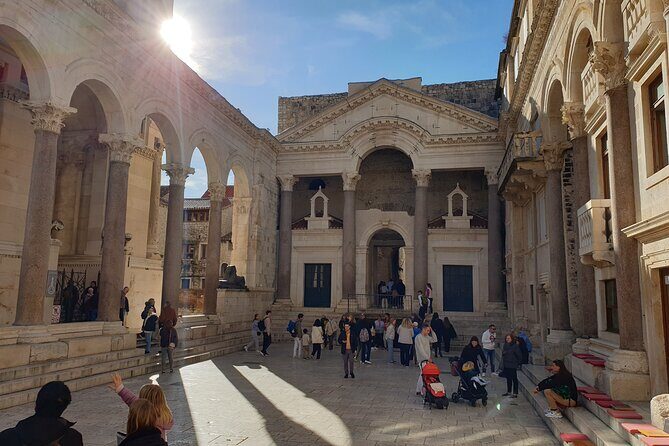
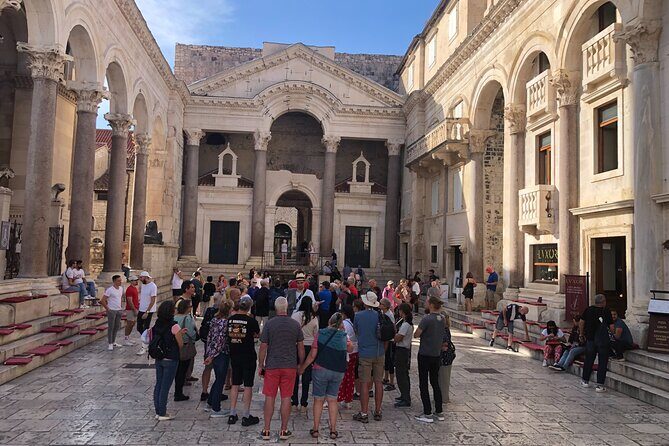
Your tour starts at the Peristyle, the central square of Diocletian’s Palace. This 15-minute stop sets the stage for everything else. The Peristyle is essentially the heart of the palace—from here, you could navigate to almost any other important area. Your guide will explain how this courtyard functioned, what the surrounding structures were, and how the palace was laid out. This opening stop is crucial because it gives you a mental map before diving into specific areas.
What makes this particularly useful is understanding scale. The palace is massive, and having someone point out the major zones prevents you from getting lost if you return later to explore on your own. You’re not just seeing an old courtyard; you’re learning how Roman emperors organized their living and working spaces.
The Vestibulum: An Imperial Chamber
Next comes the Vestibulum, the emperor’s vestibule, where you’ll spend about five minutes. This is where your guide explains the ceremonial importance of space in Roman architecture. You might even hear traditional Dalmatian singing here—a lovely touch that connects ancient history to living culture.
The vestibulum wasn’t just a fancy entrance; it was a statement of power. Understanding this helps explain why Diocletian chose Split and why this palace mattered so much to the region.
The Substructures: Beneath the Surface
The third stop takes you through the substructures of the palace—the underground support systems that held everything up. You’ll spend about 10 minutes here learning how the palace was constructed and how these spaces functioned over the centuries. The tour doesn’t include admission to the museum portion of the substructures, which is worth knowing. You can visit that on your own time if you’re interested in a deeper dive, but the tour covers the historical context without requiring that extra expense.
These underground chambers reveal engineering that was centuries ahead of its time. Your guide will explain how they were used for storage, how water systems worked, and how the structure adapted as the palace’s purpose changed over time.
The Golden Gate: Main Entrance and History Lesson
The Golden Gate stop (10 minutes) brings you to the palace’s primary entrance. Here, you’ll see the famous statue of Gregory of Nin, a figure central to Croatian history and language. Your guide will explain why this particular statue matters to Croatian identity and culture—information that provides context for understanding Split’s place in broader Croatian history.
The Golden Gate itself was the most impressive entrance to the palace, and standing here helps you understand the palace’s original grandeur before centuries of history transformed it into the mixed residential-archaeological site it is today.



Riva Harbor: The Waterfront Perspective
Stepping outside the palace proper, you’ll spend 15 minutes at Riva Harbor. This is where you’ll see a bronze model of the entire palace—an invaluable reference point for understanding the structure’s full extent. You’ll also learn about the history of Split’s beautiful Riva promenade, the waterfront that’s become the city’s social heart.
This stop is particularly valuable because it gives you perspective. You’ve been inside the palace, learning about individual spaces. Now you see how it all fits together from above, and you understand how the palace relates to the modern city that’s grown around it.
Fruit Square: Medieval Context
At Trg Brace Radic (Fruit Square), your guide will discuss a 15th-century Venetian citadel and introduce you to Marko Marulić, known as the father of Croatian literature. This 10-minute stop contextualizes what happened to Split after the Roman period—how medieval powers shaped the city and how local culture developed.
Understanding this history prevents the palace from feeling like an isolated archaeological artifact. You’re learning how Split evolved from a Roman retreat into a medieval city into the modern tourist destination you’re visiting today.
The Synagogue: Multicultural History
Your final stop involves passing by the 16th-century Synagogue, where you’ll learn about the history of Jewish people in Split. This 10-minute segment completes a picture of the city as a multicultural place with layers of religious and cultural history.
This isn’t included in paid admission, so the tour gives you the historical context without requiring an additional ticket. You’re learning about communities and traditions that shaped the city alongside its famous palace.
The Guide Factor: Why This Matters More Than You Might Think
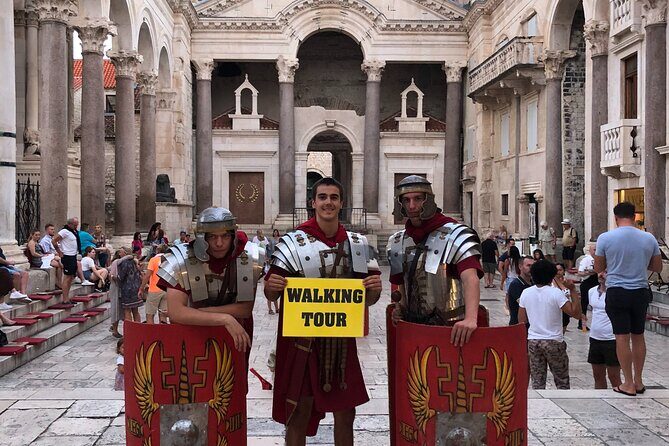
If you read through the reviews carefully, one pattern emerges immediately: the quality of your specific guide makes an enormous difference. The good news? Most guides on this tour are excellent. Multiple reviewers praised guides named Anton, Antonella, and Anthony as “amazing,” “superb,” and “the best guide I have ever had.”
These guides typically share specific characteristics that explain the five-star ratings. They’re knowledgeable history teachers or educated professionals who genuinely care about their subject. They tell stories rather than just listing facts. They’re personable and willing to answer questions that go beyond the prepared script. As one traveler put it, “He was willing to share his experiences to answer questions that were outside the realm of the tour.”
That said, a few reviews mentioned guides who were difficult to understand or unfocused. This is the honest reality of any tour company: consistency varies. The company should ideally invest in wireless headsets to solve the audio issues multiple reviewers mentioned, but this hasn’t happened yet.
Practical Details That Actually Matter
Group Size and Atmosphere: With a maximum of 20 people, this stays small enough to feel personal. You’re not herded along like a cruise ship excursion. One traveler specifically praised getting “a small family group” with a guide whose “knowledge and enthusiasm was just fabulous.”
Timing and Flexibility: The tour is roughly 90 minutes, though actual times vary slightly. The fact that you can choose from multiple tour times each day means you can fit this around your other plans. Many people book this early in their Split visit to establish context for exploring the rest of the city.
Location: The tour starts and ends at Peristil ul., right in the heart of the old city. This is genuinely convenient—no need for transportation to reach the starting point.
Physical Demands: The tour involves walking through narrow, historic streets and climbing uneven, historic stairs. One traveler noted, “Prepare for up and down stairs of uneven steps.” If you have mobility issues or difficulty with stairs, this tour isn’t ideal. For most travelers, though, the physical demands are manageable.
Booking Timing: On average, people book this about 13 days in advance, which suggests it fills up regularly but isn’t impossible to book last-minute. The free cancellation policy (up to 24 hours) reduces your risk significantly.
What This Tour Isn’t (And Why That Matters)
This is fundamentally an introduction to Diocletian’s Palace and Split’s history, not a comprehensive deep-dive. You won’t spend hours examining every detail. Instead, you’ll get the major highlights and the context that helps everything make sense.
For some travelers, this is exactly right—they want an efficient overview. Others might want to spend more time in specific areas or explore the paid museum sections. That’s fine; the tour serves its purpose as a foundation. Many reviewers mentioned using it as a starting point for their own exploration afterward: “Would recommend this tour at the beginning of your time in Split to get an idea of how to plan your time for the rest of your trip.”
The tour also doesn’t include meals, shopping stops, or visits to restaurants. It’s strictly historical and architectural. If you want those elements, you’d need to arrange them separately.
When This Tour Makes the Most Sense
First-time visitors to Split benefit enormously from this tour. You’ll understand the city’s layout and significance, making subsequent independent exploration far more enjoyable.
People with limited time in Split—whether you’re on a cruise ship, doing a quick stopover, or just have one day—get maximum value. This tour efficiently covers the most important sites.
History enthusiasts will appreciate having a guide explain the significance of what you’re seeing rather than trying to piece it together from guidebooks.
Solo travelers often book this to meet other visitors and gain confidence exploring the city afterward.
Families with older children (the uneven stairs make it less suitable for very young kids) will find the storytelling approach engaging rather than dry.
The Honest Assessment
Reading through nearly 2,600 reviews, the overwhelming consensus is positive. The vast majority rate this tour highly. The main complaints cluster around a few specific issues: audio quality when large groups gather in the same area, lack of admission to paid sections, and occasionally inconsistent guide quality.
These aren’t deal-breakers for most travelers. The audio issue is common in popular tourist areas and doesn’t prevent you from hearing your guide—it’s just sometimes challenging with competing tours nearby. The lack of included admissions is transparent upfront, and most paid sections can be visited independently if you want. Guide quality varies with any tour company, but the ratio of excellent guides to mediocre ones is clearly favorable here.
One reviewer who had a genuinely poor experience noted that their guide spent time on topics unrelated to the tour. This is unusual based on the broader review pattern, but it’s worth acknowledging that individual experiences can vary significantly.
Logistics Worth Knowing
The tour is mobile-ticketed, meaning you’ll receive your confirmation immediately upon booking and can show it on your phone at the meeting point. No printed tickets necessary.
Group discounts are available, which matters if you’re traveling with friends or family. The per-person rate drops when you book multiple people, making it even more economical.
The meeting point can be slightly tricky to find initially—one reviewer mentioned this—but it’s in the heart of the old city at Peristil ul., and your confirmation will include specific directions.
Weather considerations: This is an outdoor walking tour through historic streets. In summer, it can get hot, especially if your tour time is midday. Many travelers recommend bringing water and wearing comfortable walking shoes. Split’s summers are sunny and pleasant, but the stone streets don’t offer much shade.
FAQ: Practical Questions Answered
How much walking is involved?
You’ll be walking for roughly 90 minutes with several stops along the way. The pace is leisurely—this isn’t a fitness challenge. The main physical demands come from navigating uneven historic streets and climbing stairs rather than distance covered.
Do I need to buy tickets separately for any part of the tour?
Most of the tour visits areas that are free to access. However, if your guide takes you to the Diocletian Palace Substructures museum portion, that requires separate admission (not included). The tour covers the historical context without requiring this paid section, but you can visit it independently afterward if interested.
What if I can’t hear my guide?
This is a known issue when multiple tours operate simultaneously in the same area. The company doesn’t currently provide wireless headsets, which some reviewers noted as a gap. Position yourself close to your guide and feel free to ask them to repeat information if needed.
Is this suitable for children?
The tour works well for children old enough to walk comfortably for 90 minutes and navigate uneven stairs. Very young children or those with mobility challenges might find the physical demands difficult. The storytelling approach generally keeps older kids engaged.
What’s the cancellation policy?
You can cancel free of charge up to 24 hours before your tour. If you cancel within 24 hours of your scheduled start time, you forfeit your payment. The company also cancels if the minimum number of participants isn’t met, in which case you get a full refund or rescheduling option.
When should I book this tour during my Split visit?
Most travelers book it for their first or second day in the city. This gives you context for exploring independently afterward. If you’re only in Split for one day, booking this tour is an efficient use of your limited time.
What’s included in the price?
Your price covers 90 minutes of guided expertise and access to the outdoor areas of Diocletian’s Palace and Split’s historic center. It does not include museum admissions, meals, or transportation beyond walking.
Walking Tour of Split and Diocletian’s Palace
The Bottom Line
This tour represents genuinely smart travel planning at a fair price. You’re getting nearly 90 minutes with a knowledgeable local who brings context and stories to one of Europe’s most significant archaeological sites. The 4.9-star rating from nearly 2,600 reviews reflects real satisfaction, not marketing hype. Yes, you could explore the palace and city on your own, but you’d miss the historical narrative that transforms scattered stones into a coherent story. For $48.37, you’re investing in understanding rather than just sightseeing.
Book this tour if you’re visiting Split for the first time, have limited time in the city, or want to understand the historical significance of what you’re seeing. Skip it only if you’re an experienced Diocletian scholar, have severe mobility limitations, or prefer exploring entirely on your own. For everyone else, this is exactly the kind of efficient, educational, reasonably priced experience that makes travel better.