I’m a big fan of tours that do more than point and say. This Krakow Jewish Quarter and Former Ghetto walk pairs major sights—like the old synagogues and ghetto-era memorial stops—with a guide who turns dates and names into something you can actually picture. You also get Schindler’s List filming spots, so the neighborhood feels connected to both history and what you’ve seen on screen.
Two things I really like: first, the guides are consistently praised for deep knowledge and clear storytelling, with travelers mentioning guides like Bart and Magda for making heavy material respectful and understandable. Second, the value is strong for a 150-minute walking tour with a local expert—especially when you’re seeing multiple key sites in one go.
One possible drawback: it’s a lot to take in and you’re on your feet the whole time, so a couple of travelers said the pace can feel a bit fast if you prefer to linger and fully absorb each stop.
- Key Things You’ll Notice on This Tour
- Kazimierz Isn’t Just a Nice Neighborhood
- Where You’ll Start: Old Synagogue, ul. Szeroka 24 (Orange Umbrella)
- The 150-Minute Format: How the Timing Really Feels
- Stop by Stop: What Each Major Landmark Is Doing for You
- The Second-Oldest Synagogue in Europe and Why It Matters
- Holocaust Memorial Moments That Stay Respectful
- Heroes of Ghetto Square: Symbols You Can Walk Up To
- The Jewish Cemetery: Continuity Beyond Dates
- Schindler’s List Filming Spots You Can Recognize on the Ground
- Names, Traditions, and the People Your Guide Brings In
- Who You Might Get as a Guide (and Why People Repeat the Same Words)
- Accessibility and Group Rules You’ll Want to Know
- Price and Value: Why Can Make Sense (or Not)
- What’s Not Included (So You Don’t Get Caught Off Guard)
- Best For: Who Will Enjoy This Most
- Consider If You’re Not in the Mood for Heavy Topics
- Should You Book This Krakow Jewish Quarter and Ghetto Tour?
- FAQ
- Where does the tour start?
- How long is the walking tour?
- What is the price?
- Is the tour wheelchair accessible?
- What’s included and what’s not included?
- What is the cancellation policy?
- The Best Of Krakow!
- More Tours in Krakow
- More Tour Reviews in Krakow
Key Things You’ll Notice on This Tour
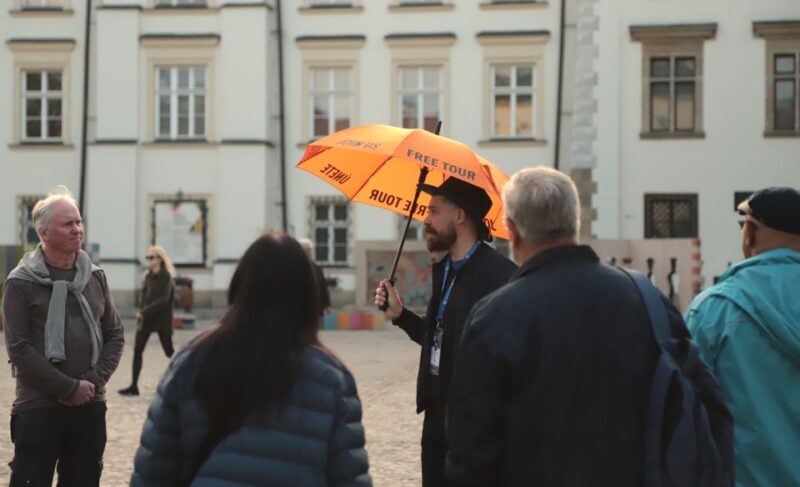
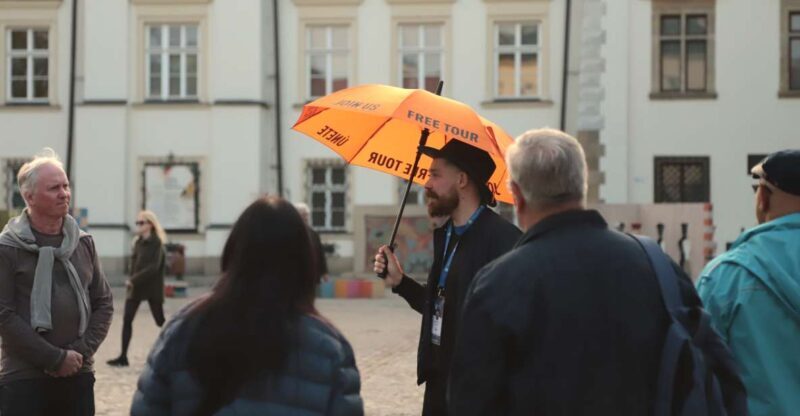
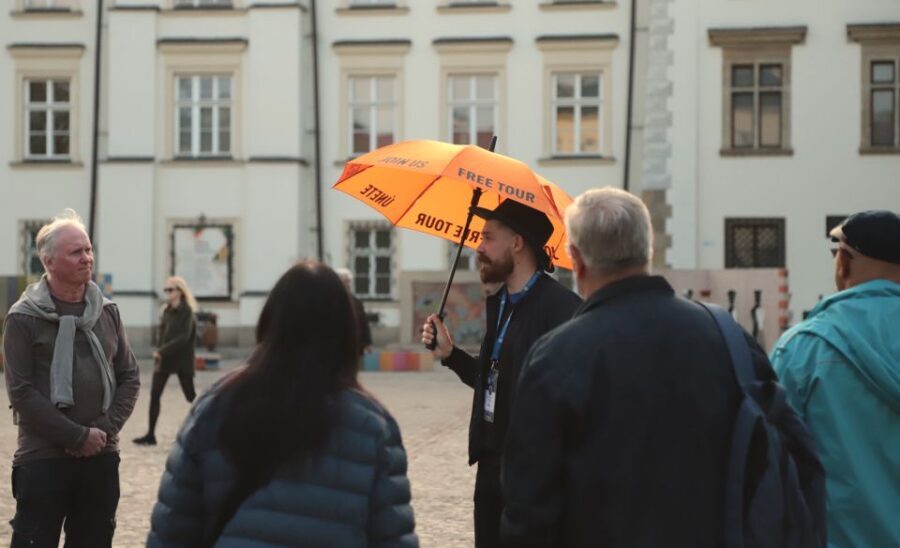
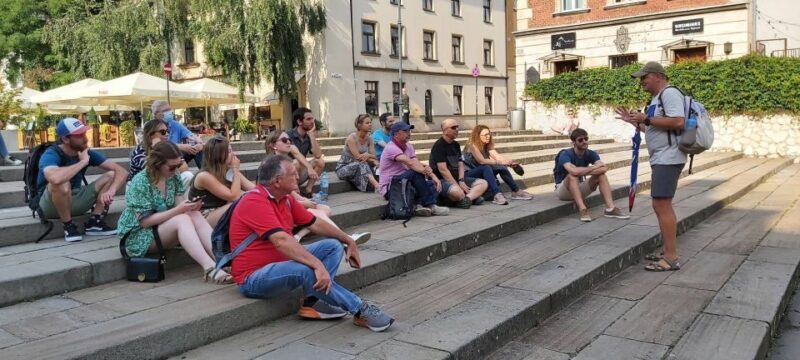
- Old Synagogue meeting point at ul. Szeroka 24, easy to find by the guides with an orange umbrella
- Second-oldest synagogue in Europe as a core landmark you’ll actually understand in context
- Heroes of Ghetto Square and other ghetto-era locations framed with care, not spectacle
- Holocaust memorial moments handled with a serious, reflective tone
- Schindler’s List filming spots that help you “see” the film’s world in real streets
- Jewish culture basics you can remember afterward, like Ashkenazim vs Sephardim and notable historical figures
👉 See our pick of the Our Picks For The 12 Best Spa & Hot Springs Experiences In Krakow
Kazimierz Isn’t Just a Nice Neighborhood
Kazimierz, the Jewish quarter of Krakow, has a way of pulling you in fast. Once it was its own city-in-the-making near Krakow, and in the Middle Ages Jewish families arriving from Western Europe helped shape a place that became known for community life and prosperity. On this tour, you don’t just walk through pretty lanes—you learn how that everyday bustle was built, and what happened to it later.
The key takeaway for me is that Kazimierz works on two levels. You can enjoy the street-level feel—small, cozy streets and the sense that life once moved differently here. And you can also hold the darker history in your head as you move from landmark to landmark, which makes the whole area feel more honest.
You can also read our reviews of more tours and experiences in Krakow.

Where You’ll Start: Old Synagogue, ul. Szeroka 24 (Orange Umbrella)
Your tour begins in front of the Old Synagogue at ul. Szeroka 24. The organizers make this easy: look for the guides with an orange umbrella.
This matters more than it sounds. In a neighborhood like Kazimierz, there are a lot of winding streets and overlapping groups on any given day. Starting in the right place reduces stress and helps you get oriented fast.
Practical tip from traveler feedback: wear comfortable shoes. People mention the walking adds up, and you’ll be happier if your feet feel good before the heavy parts start.
The 150-Minute Format: How the Timing Really Feels
This is a 2.5-hour walking tour, scheduled for 150 minutes. That’s long enough to cover meaningful ground, but short enough that you shouldn’t feel like you’re giving away your whole day.
That said, several visitors note that it can feel a bit rushed if you’re the type who wants to soak in every detail. The solution is simple: treat the tour as the “structure” for your understanding, then plan a little self-guided time afterward if something really grabs you.
Also, bring warmth if you’re visiting in cooler months. One review explicitly recommended wrapping up warm, and it’s easy to see why: you’re outside for the full stretch.
Stop by Stop: What Each Major Landmark Is Doing for You
The Second-Oldest Synagogue in Europe and Why It Matters
One of the headline experiences on this tour is the chance to connect with the second-oldest synagogue in Europe. The value isn’t just that it’s old. It’s that your guide uses the building as a doorway into how Jewish religious life shaped community routines.
When guides explain what you’re looking at—rather than just announcing a fact—it’s easier to remember. You also understand why synagogues weren’t only worship spaces; they were part of identity, community cohesion, and continuity.
Holocaust Memorial Moments That Stay Respectful
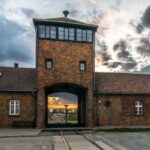
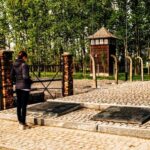
Another core stop is the Holocaust memorial. This is the part of the tour where the tone changes. Travelers describe it as emotionally difficult, but also important—and that’s exactly the point of a focused, guided approach.
A good guide doesn’t rush this section or turn it into a checklist. Instead, they help you connect the locations to the people who lived there before catastrophe, so the story isn’t only about loss. You leave with a clearer sense of why these places are protected and remembered.
Heroes of Ghetto Square: Symbols You Can Walk Up To
At Heroes of Ghetto Square, you’ll learn how public space became a statement—about resistance, dignity, and remembrance.
This kind of location is powerful because it’s not inside a museum. It’s out in the open, in the same city fabric you’re experiencing now. That contrast—old structures of memory in a working modern neighborhood—is often what makes travelers say the tour helped them understand the area more than casual wandering would.
The Jewish Cemetery: Continuity Beyond Dates
You’ll also visit the Jewish cemetery. Cemeteries can be tricky on tours: if a guide treats them like a photo stop, the experience turns shallow. But when a guide frames them properly, they become a way to understand community continuity—how people are remembered and how identity lasts through generations.
Even if you’ve read about Jewish history before, a cemetery stop can change how you feel about the timeline. It’s not abstract anymore.
Schindler’s List Filming Spots You Can Recognize on the Ground
Kazimierz is famous for being featured in the world of Schindler’s List, and this tour specifically includes filming spots. This is one of those smart additions that many people don’t realize they need until they’re actually standing where scenes were set.
Here’s why it works: film locations are usually shown as sets, cut from context. Walking with a guide lets you reconnect those images to actual street layout, neighborhood rhythm, and real places tied to history.
If you’re the type who likes to connect the dots between what you’ve seen on screen and where you’re standing, you’ll probably love this part.
Names, Traditions, and the People Your Guide Brings In
This tour doesn’t only focus on buildings. You also learn key cultural and historical concepts that help you “decode” what you see.
You’ll hear about Ashkenazim and Sephardim, which gives you a useful framework for how Jewish communities developed across different regions. You’ll also meet notable historical figures connected to the wider story, including Helena Rubinstein, Roman Polanski, Ludwick Zamenhof, and Maximilian Faktorowicz.
Why I think this is valuable: when a tour includes names, you can continue learning after you go home. If all you get are dates and street names, the information fades faster. With people and traditions added, it tends to stick.
Who You Might Get as a Guide (and Why People Repeat the Same Words)
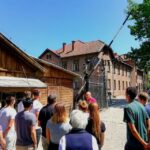
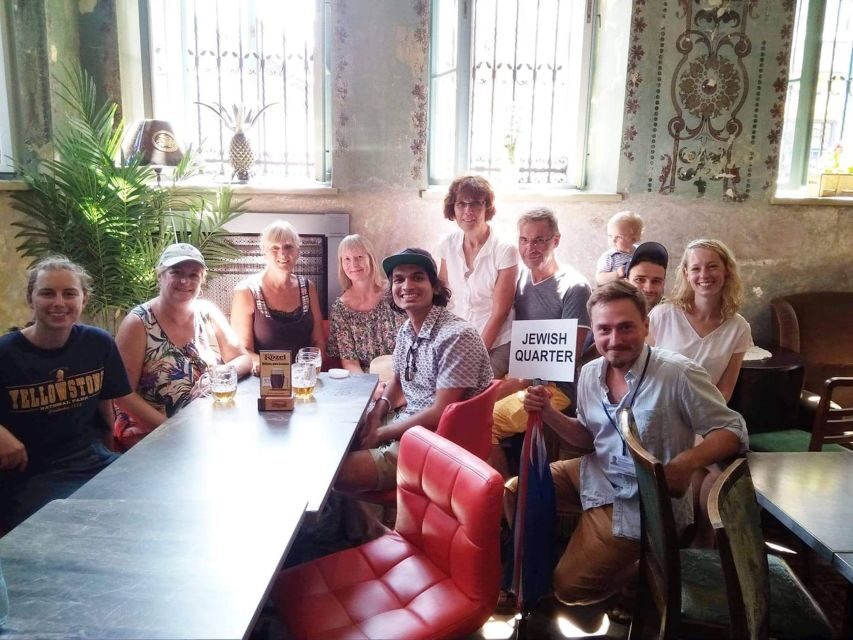
A huge chunk of what makes this tour work is the quality of the guide. Across recent traveler feedback, certain themes repeat: knowledgeable, clear, engaging, and respectful—especially when discussing difficult history.
People mention guides by name often, including Bart, Magda, Matt, Slavek, Emily, and Chris. Travelers describe them as passionate, confident, and strong at explaining what you’re seeing. Some also mention that the storytelling keeps the group engaged so the time goes faster than expected—even while the subject matter stays serious.
A couple of useful practical notes show up in reviews:
- Guides can handle questions well, including when travelers want deeper explanations.
- The pace usually includes multiple stops, so you’re not constantly “on” without breaks.
- The tone is thought-through, with humor or lighter moments kept appropriate for the setting.
Accessibility and Group Rules You’ll Want to Know
The tour is listed as wheelchair accessible, which is great news for travelers who want a guided path through the area without handling everything alone.
There are also clear behavior rules: no alcohol and drugs, and party groups aren’t allowed. If you’re traveling with people who like to keep things loud, this is one of those tours where the rules help keep the atmosphere respectful.
Price and Value: Why $19 Can Make Sense (or Not)
At $19 per person, this is positioned as a low-cost way to get a highly guided, high-impact route in under three hours. For many travelers, that’s the sweet spot: you’re paying for interpretation, not just entry to places.
To think about value the practical way, ask yourself:
- Do you want context while you walk, especially for the Holocaust memorial and ghetto-era history?
- Do you want a guide to connect landmarks like synagogues and cemetery stops into one coherent story?
If yes, $19 is easier to justify. If you prefer fully self-guided exploration, you may be able to build something similar on your own—but you’ll lose the connective tissue.
One note from traveler comments: some people compare paid tours versus free-tour style offerings in the same area. If you’re budget-sensitive, read your booking details carefully and choose the version that matches how you like to travel.
What’s Not Included (So You Don’t Get Caught Off Guard)
Food and drinks are not included. So plan your own snack or meal around the tour window.
Also, since it’s a walking experience, build in time before or after for breaks. A couple travelers mention needing to rest and that the tour can feel like a lot if you’re not prepared for constant movement.
Best For: Who Will Enjoy This Most
This tour tends to suit:
- Travelers who want an organized way to understand Kazimierz and the former ghetto story without missing key sites
- People who enjoy guides who explain what buildings and streets mean, not just where they are
- First-time visitors to Krakow who want one strong, focused history route
- Anyone who appreciates seeing Schindler’s List locations in a real neighborhood setting
Consider If You’re Not in the Mood for Heavy Topics
Because the route includes a Holocaust memorial and ghetto-era history, the subject matter can be emotionally tough. Travelers clearly say it can be difficult, but also important and handled in a respectful way.
If you’re traveling with someone who struggles with heavy history, you might discuss how you want to pace the day before you book.
Should You Book This Krakow Jewish Quarter and Ghetto Tour?
If you want one guided experience that gives you structure—synagogues, memorials, ghetto-era landmarks, cemetery context, and even Schindler’s List locations—this is a strong pick. The big reason is simple: travelers repeatedly praise the guides for being knowledgeable and capable of telling stories with care.
Book it if:
- You like walking tours with a clear storyline
- You want help understanding what you see in Kazimierz
- You value a local guide who can answer questions
Skip it or consider another format if:
- You dislike fast pacing and want to linger long at each stop
- You prefer light sightseeing only
- You’re not comfortable with emotionally difficult historical material
Krakow: Jewish Quarter and Former Ghetto Tour
FAQ
Where does the tour start?
The meeting point is in front of the Old Synagogue at ul. Szeroka 24. Look for the guides with an orange umbrella.
How long is the walking tour?
The tour lasts 150 minutes, or about 2.5 hours.
What is the price?
The price is listed as $19 per person.
Is the tour wheelchair accessible?
Yes, the tour is wheelchair accessible.
What’s included and what’s not included?
Included: an experienced local tour guide and a 2.5-hour walking tour. Not included: food and drinks.
What is the cancellation policy?
You can cancel up to 24 hours in advance for a full refund.
You can check availability for your dates here: