
Barcelona wasn’t on our radar for a family trip. We’d always thought of it as a city break destination — tapas bars, late nights, Gaudí. Not exactly toddler territory. But a cheap flight, a beachfront apartment, and four days later, we were completely sold. It’s one of the best cities in Europe for families, and we’re not sure why more people don’t talk about it.
The thing that makes Barcelona work is the combination. You get a proper city — culture, architecture, incredible food — but you also get a beach. A real one, with sand and calm water and ice cream vendors. The weather is warm from April through October. Most of the big attractions are walkable or a short metro ride apart. And it’s only two and a half hours from the UK, which with young kids is about the limit before everyone starts losing it.
How Many Days Do You Need
Three days is enough to hit the highlights. Four is better. It gives you breathing room — a slow morning at the beach, a long lunch, time to wander without a schedule. We did four and didn’t feel rushed once, which with kids is saying something.
Any fewer than three and you’ll feel like you’re sprinting between attractions. Any more than five and you’ll probably run out of new things to do unless you’re heading out on day trips.
Where to Stay
This depends on what matters most to your family.
Barceloneta is the beach neighbourhood. If being able to walk to the sand in five minutes sounds like your kind of holiday, this is where you want to be. The streets are narrow and lively, full of seafood restaurants and local bars. It’s noisy. It’s got character. And for families who want to split the day between beach and sightseeing, the location is hard to beat.
Eixample is the grid-pattern neighbourhood in the centre. Wide boulevards, big apartments, plenty of space. If you’re renting an apartment (which we’d recommend over a hotel with kids), you’ll get more square metres for your money here than almost anywhere else. It’s central enough that you can walk to most things, and the metro connections are excellent.
The Gothic Quarter is atmospheric. Medieval streets, hidden squares, that buzzing old-town feeling. But. If you’ve got a stroller, think carefully. The streets are cobbled and narrow, some barely wide enough for two people to pass. We managed, but it wasn’t always fun. Older kids on foot? Brilliant. A double buggy? Questionable.
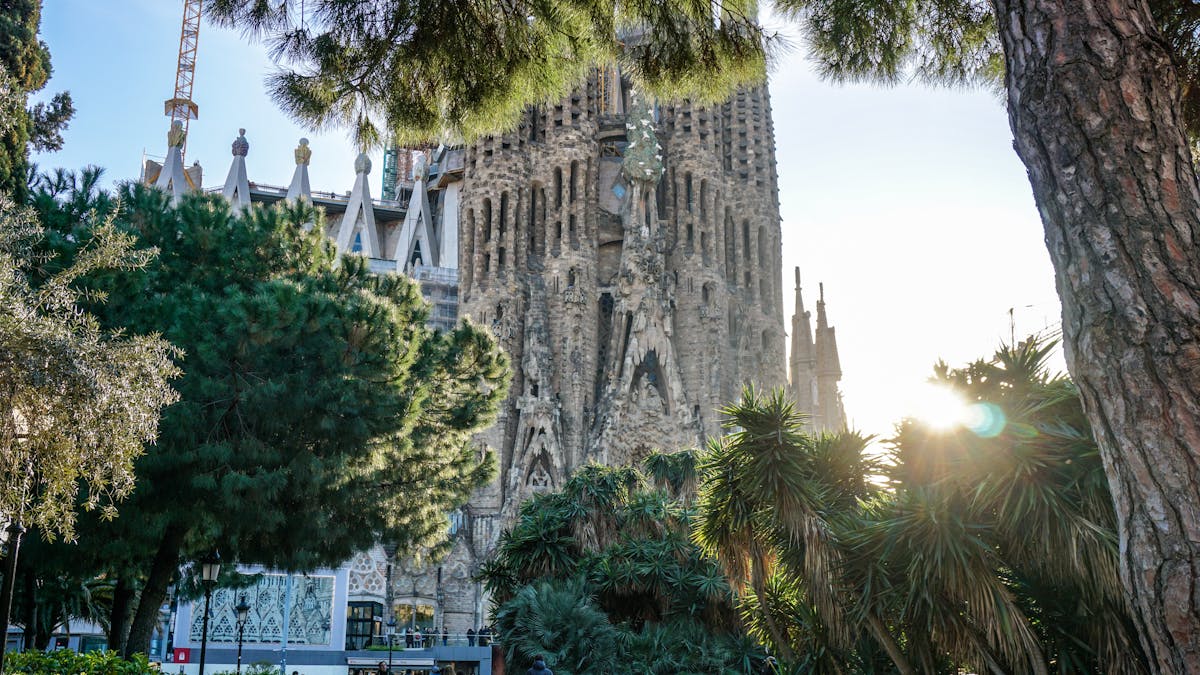
La Sagrada Familia
You have to go. Even if your kids have zero interest in architecture, the inside of this building will stop them in their tracks. The light through those stained glass windows is something else — reds, blues, greens, all shifting depending on the time of day. Our six-year-old stood with her mouth open for a solid minute, which might be a personal record.
Tickets are €26 for adults. Under 11s go free. Book in advance — not a few days, ideally a couple of weeks, especially in summer. Morning slots get the best light on the Nativity side, afternoon for the Passion side.
There’s a tower access add-on but honestly, skip it if your kids are small. The spiral staircases are tight, steep, and there’s no turning back once you’ve started. Our oldest handled it fine but it’s not something we’d do with anyone under about eight.
Allow about an hour and a half inside. There’s no café, so feed everyone beforehand.
Park Güell
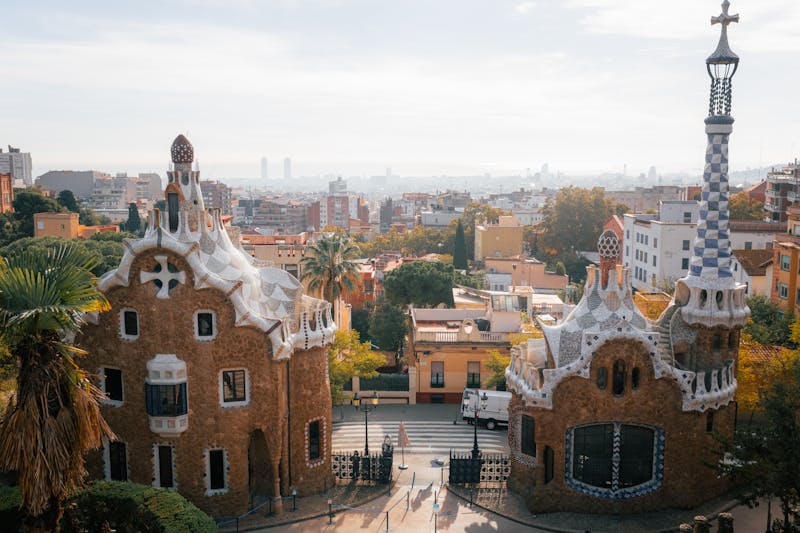
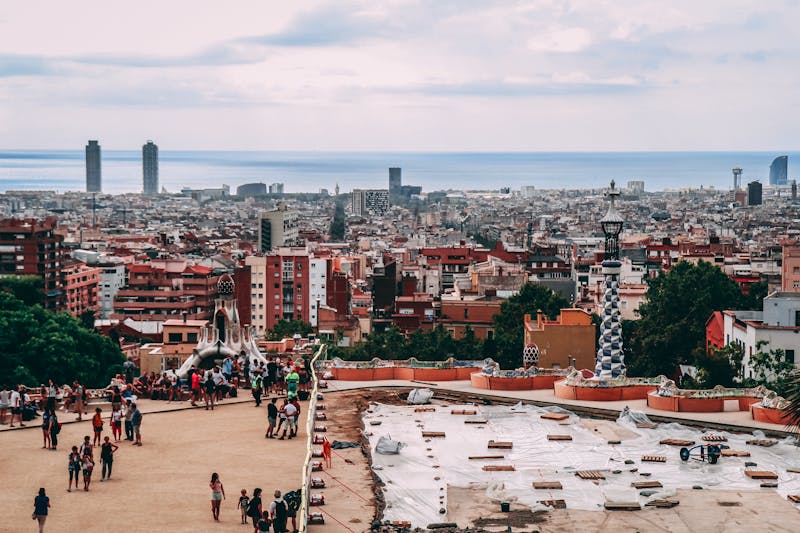
Gaudí’s mosaic wonderland on a hill. It’s colourful, it’s weird, and kids absolutely love it. Ours spent most of the time running between the mosaic salamander (the famous one you see on every postcard) and the wavy benches at the top with views over the whole city.
Tickets for the monument zone are €10 for adults, free for under 7s. Book a timed entry slot — they limit numbers and it does sell out. Morning is best, both for crowds and heat.
Here’s a tip that isn’t in most guides: the free zone outside the ticketed monument area has decent playgrounds and shaded paths. If your kids are very young and you’re not sure they’ll appreciate the mosaics, you could honestly just do the free bit and they’d still have a great time.
Barceloneta Beach
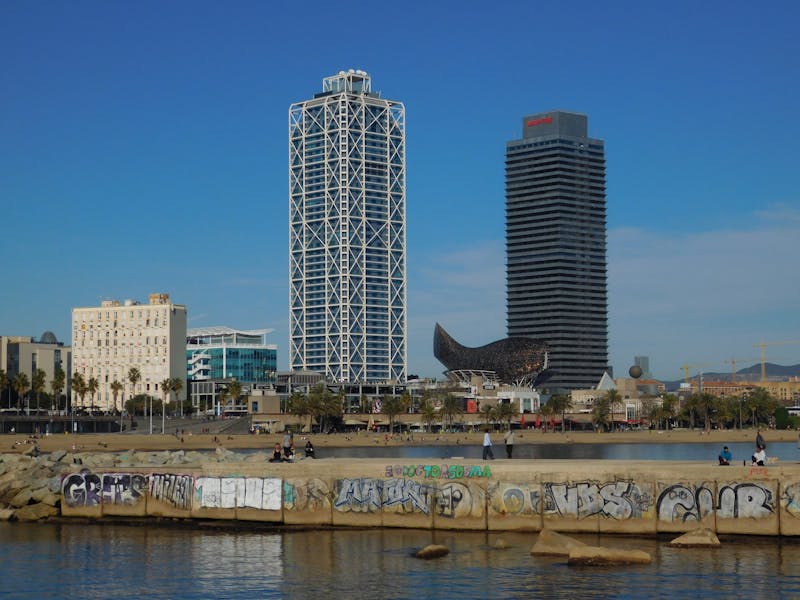
Free, sandy, and the water is calm enough for small children to paddle safely. In summer it gets packed, so get there before 11am if you want a decent spot. By midday you’ll be fighting for space.
Beach showers are dotted along the promenade, which is a lifesaver for getting sand off before the walk home. There are toilets too, though the queues can be long in peak season.
For food, the chiringuitos — beach bars right on the sand — are perfect. Nothing fancy, but cold drinks, sandwiches, and simple grilled fish. Expect to pay a bit more than you would a few streets back, but that’s the trade-off for eating with your feet in the sand.
We brought a small pop-up shade tent for the baby and it was worth its weight in gold. There’s very little natural shade on the beach itself.
One thing: don’t leave bags unattended. It’s a busy public beach in a big city. Take turns going for a swim.
La Boqueria Market
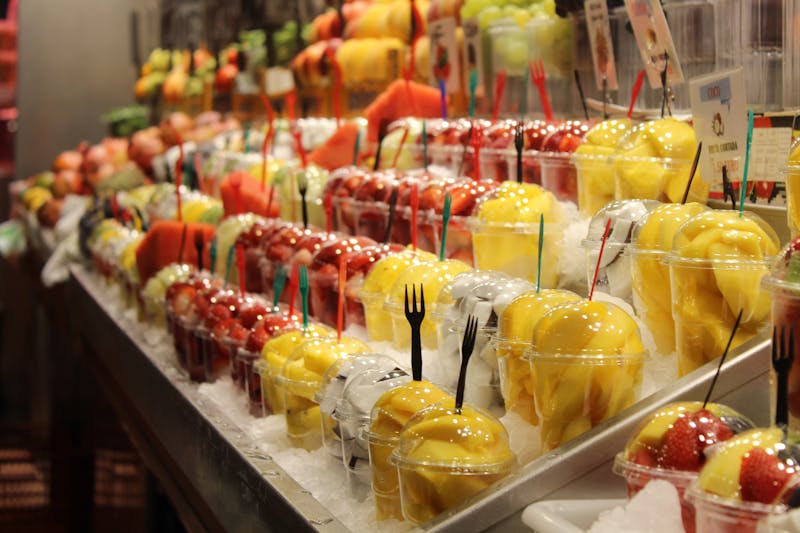
Right on La Rambla, and probably the most famous food market in Europe. The stalls are piled high with fruit, cheese, jamón, seafood, pastries — and the colours alone are worth the visit. Our kids were fascinated. Genuinely couldn’t stop pointing at things.
Fresh fruit cups for €2-3. Freshly squeezed juice for about the same. You can get a paper cone of jamón or some manchego and just graze your way through. It’s not a sit-down meal, it’s a sensory experience.
Go in the morning. By midday the aisles are so packed you can barely move, let alone navigate with children. Before 10am on a weekday is ideal. Weekends are busier but still manageable early.
Aquarium Barcelona
If you need a break from the heat or the kids are flagging after too much walking, the aquarium is a solid option. It’s down at Port Olímpic, not far from Barceloneta.
The main draw is the glass tunnel walkthrough — you stand on a moving walkway while sharks, rays, and all sorts glide overhead and around you. Our kids were transfixed. It’s genuinely impressive, even for adults who think they’ve outgrown aquariums.
Tickets are €24 for adults and €18 for children. You’ll get two to three hours out of it comfortably. There’s also an interactive kids’ area upstairs with touch pools and activities, which adds some extra time if you need it.
Tibidabo Amusement Park
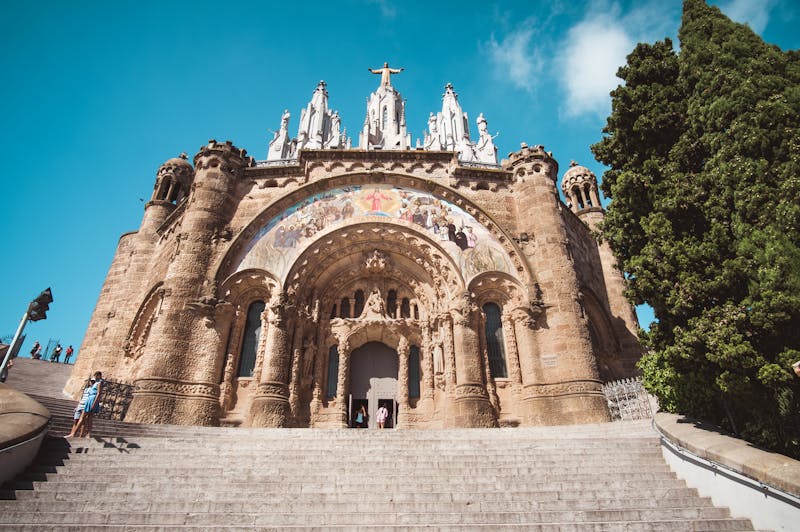
This one is special. An old-fashioned amusement park perched on top of a hill overlooking the entire city. The rides are charming rather than terrifying — carousels, a ferris wheel, bumper cars, a gentle roller coaster. Think vintage fairground, not Alton Towers.
An all-rides pass is €35 per person. That’s significantly cheaper than PortAventura (which is an hour’s drive away) and far more manageable with small kids. The views from the top are spectacular. On a clear day you can see all the way to Montserrat.
Getting there is half the fun. You take a tram and then a funicular up the hill. Kids love it. The whole journey feels like an adventure before you’ve even arrived.
It does get busy on weekends and in August. Weekday mornings are quieter.
Camp Nou and FC Barcelona
If you’ve got football-mad kids, this is non-negotiable. The stadium tour takes you through the museum, the tunnel, pitchside, the commentary boxes, and the trophy room. Even our daughter who has no interest in football was impressed by the sheer scale of the place.
Tour tickets are €28 for adults and €22 for children. The museum is surprisingly well done — interactive screens, historic kits, and enough trophies to keep sports-obsessed kids happy for ages. Allow about two hours.
The shop at the end is dangerous. Budget accordingly.
The Gothic Quarter
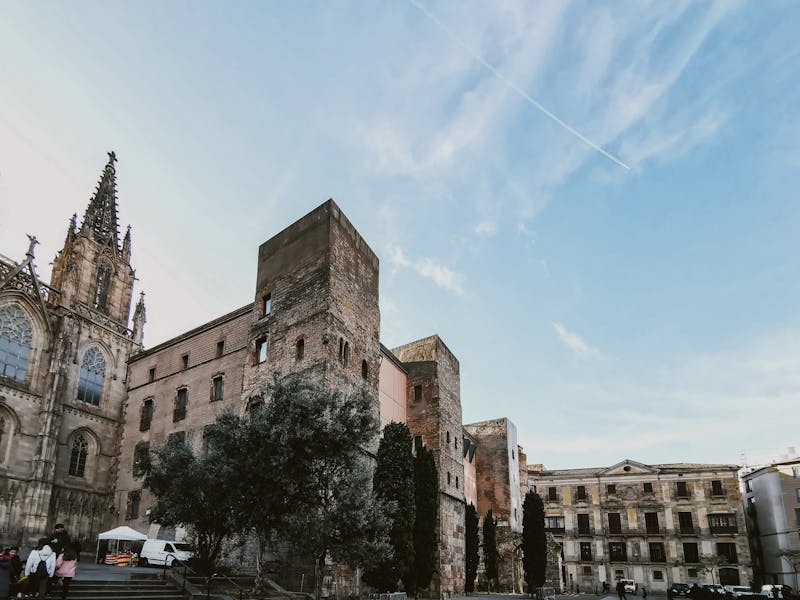
No tickets needed. Just wander. The narrow medieval streets open into unexpected squares, there are street performers around most corners, and the architecture is the kind of thing that makes you stop and look up. Plaça Reial is gorgeous — a wide square ringed with palm trees and restaurants, usually with someone playing guitar.
The cathedral is free to visit at certain times (check the schedule, it varies). The cloisters have geese. Actual geese, wandering about. This delighted our kids more than almost anything else we saw in Barcelona, which tells you everything about the priorities of small children.
Pick up ice cream from one of the gelaterias on Carrer de la Portaferrissa. It’s right in the heart of the quarter and there are several good ones within a few steps of each other.
Eating Out With Kids
Barcelona is one of the easiest cities we’ve found for feeding children. Spanish food is inherently kid-friendly. Patatas bravas — crispy potatoes with sauce. Croquetas — little fried béchamel bites, often with ham or cheese. Tortilla española — thick potato omelette served in slices. Pan con tomate — bread rubbed with tomato and olive oil — is on every table in every restaurant and kids demolish it.
Paella on the beach is a must-do at least once. Go to a proper restaurant rather than a tourist trap (if it’s got someone outside waving a laminated menu at you, keep walking). The rice should be slightly crispy on the bottom. That’s how you know it’s good.
For families who want variety without the argument about where to eat, El Nacional is brilliant. It’s a food hall in Passeig de Gràcia with different bars and restaurants under one enormous roof — seafood, tapas, grilled meats, cocktails for the grown-ups. Something for everyone, literally.
Dinner in Spain starts late. Restaurants don’t really fill up until 9pm. With kids, we ate at 7:30-8pm and often had the place nearly to ourselves, which was actually lovely.
Getting Around
The metro is efficient, clean, and covers almost everything you’d want to see. A T-Casual card gives you 10 trips for €11.35, which is excellent value. Under 4s travel free.
Most of the main attractions are walkable from the centre if you’re staying in Eixample or the Gothic Quarter. We walked to La Sagrada Familia, La Boqueria, the Gothic Quarter, and Barceloneta Beach without needing transport. Park Güell and Tibidabo are the ones where you’ll want the metro or bus.
Taxis are reasonably priced and all take car seats if you bring your own. We didn’t — just held the kids — but if that makes you uncomfortable, there are ride-hailing apps that let you request a car seat.
Practical Bits
Pickpockets. La Rambla and the metro are the hotspots. We’re not trying to scare you — Barcelona isn’t dangerous — but opportunistic theft from bags and pockets is common in crowded tourist areas. Keep bags zipped and in front of you. Don’t put phones in back pockets. Use a cross-body bag rather than a backpack if possible.
Siesta hours. Between about 2pm and 5pm, many smaller shops and some restaurants close. This isn’t a problem — it’s actually a gift. Use those hours to go back to your apartment, let the kids rest (or collapse on the sofa yourself), and head out again when it cools down. Trying to power through the afternoon heat with tired children is a mistake we made once and never repeated.
Sun protection. The UV in Barcelona is stronger than it feels, especially with a sea breeze taking the edge off the heat. We burned on day one despite thinking we’d been careful. Factor 50 on the kids, reapplied constantly, and hats that they’ll actually keep on.
Water. Tap water is safe to drink but tastes a bit odd. Most people buy bottled water. Bring refillable bottles and fill up at your apartment before heading out — buying water at tourist spots adds up.
Is Barcelona Worth It With Kids
Without hesitation. It’s got the rare combination of being a genuinely brilliant city — the kind of place that would be amazing as a couple — while also being completely manageable and enjoyable with children. The beach gives you an easy fallback on days when nobody wants to do anything cultural. The food is exactly what kids want to eat. The metro means you’re never far from anything. And the architecture is so wild and colourful that even the most reluctant small sightseer will find something to stare at.
Three to four days, a decent apartment, and a willingness to eat late. That’s all you need. We’re already planning to go back.