
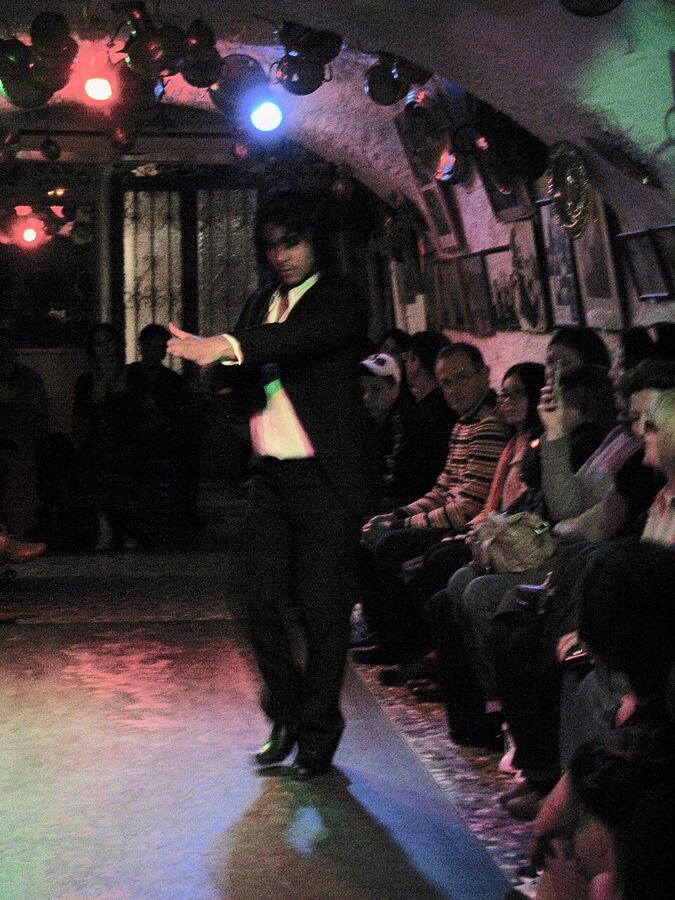
We took our kids to a cave flamenco show in Sacromonte and my 10-year-old was genuinely speechless for about 20 minutes afterwards. He’s usually a voluble child. Granada’s flamenco is different from Madrid’s polished tablaos and Seville’s earthy ones — it’s rawer, smaller, often performed in actual caves, and it’ll stay with your kids for years. This is the Spanish cultural experience to save for last.
In a Hurry? Our Family Picks
Most-booked intimate tablao: Granada Flamenco Show in La Alboreá ($21) — 5,400+ reviews, 4.7 rating, 1-hour show in a small central venue.
Classic cave experience: Sacromonte Flamenco at Cuevas Los Tarantos ($33) — authentic cave venue, 2,000+ reviews, 4.5 rating. The full Granada experience.
Modern cave show: Granada ZINCALÉ Flamenco in Sacromonte Caves ($23) — 50-min cave show, 4.6 rating, good budget Sacromonte option.
- In a Hurry? Our Family Picks
- Sacromonte vs tablao — which to pick
- A note on Sacromonte caves and kids
- What happens at a Granada cave flamenco show
- Our top picks to book
- 1. Granada Flamenco Show at La Alboreá —
- 2. Sacromonte Flamenco at Cuevas Los Tarantos —
- 3. ZINCALÉ Flamenco in Sacromonte Caves —
- Getting to Sacromonte
- The walk up through Albaicín
- Timing the evening
- What to prep your kids for
- Sacromonte Caves Museum — the daytime primer
- Pairing with the rest of Granada
- A short history of Sacromonte flamenco
- Granada flamenco vs other Spanish cities
- Practical tips
- What if it rains?
- Age-by-age guide
- Before you book, an honest list
Sacromonte vs tablao — which to pick
Granada has two kinds of flamenco venues and they offer genuinely different experiences.
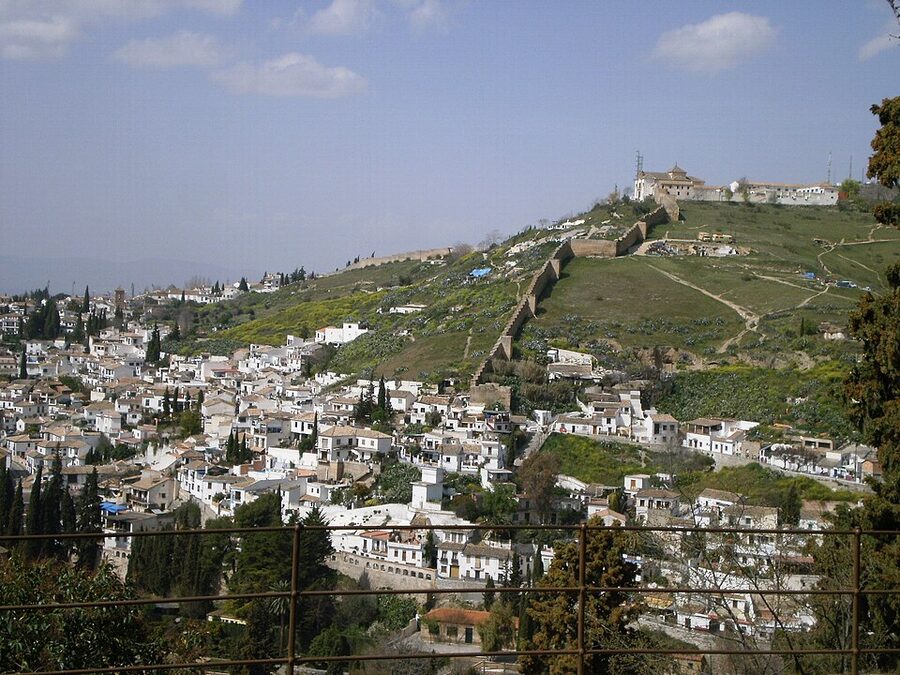
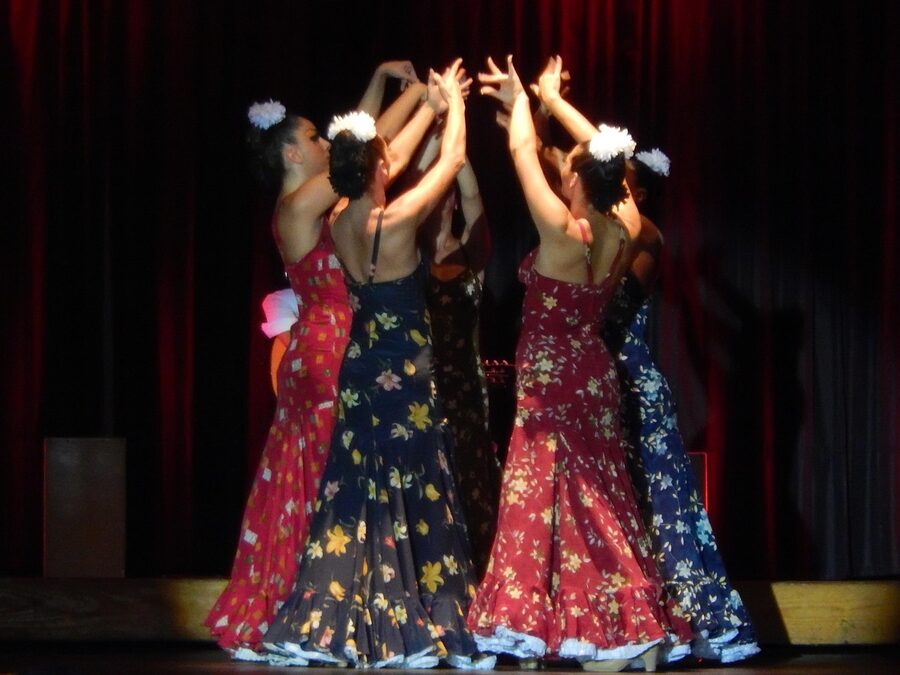
Sacromonte caves: the traditional setting. Actual whitewashed cave interiors carved into the hillside, 40-70 seats, dancers performing metres from the audience, walls echoing. The style of flamenco here is called zambra — a Granada-specific variant with wedding dance influences. Authentic, intense, and genuinely different from anywhere else in Spain.
City tablaos: smaller venues in central Granada (Albaicín or around the Cathedral). Regular tablao format — similar to Seville or Madrid but smaller venues. More accessible, cheaper, less commitment.
If this is your only Spanish flamenco show, do Sacromonte. If you’re doing multiple Spanish shows on a longer trip, do a Sacromonte show and compare to a Madrid or Seville tablao — they’re that different.
A note on Sacromonte caves and kids
The caves are intimate. This is both the magic and the warning. Kids who are comfortable with loud music and emotional performance will love Sacromonte. Kids who get overwhelmed in loud enclosed spaces might not — the stamping can be 100+ decibels in a cave and there’s no back row to retreat to.
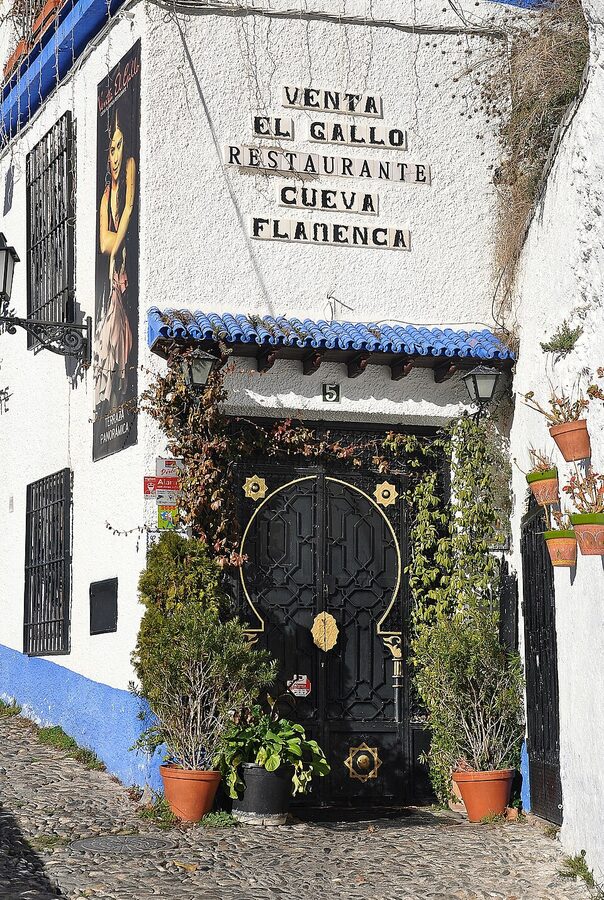
Age guide for cave venues specifically:
Under 7: probably too intense. Consider a central tablao instead.
7-10: workable if your child has done a flamenco show before or is generally resilient to loud performance. Book the early slot.
11+: full cave experience. This is when the Sacromonte venue format really lands — they get the intimacy, the intensity, the historical context.
What happens at a Granada cave flamenco show
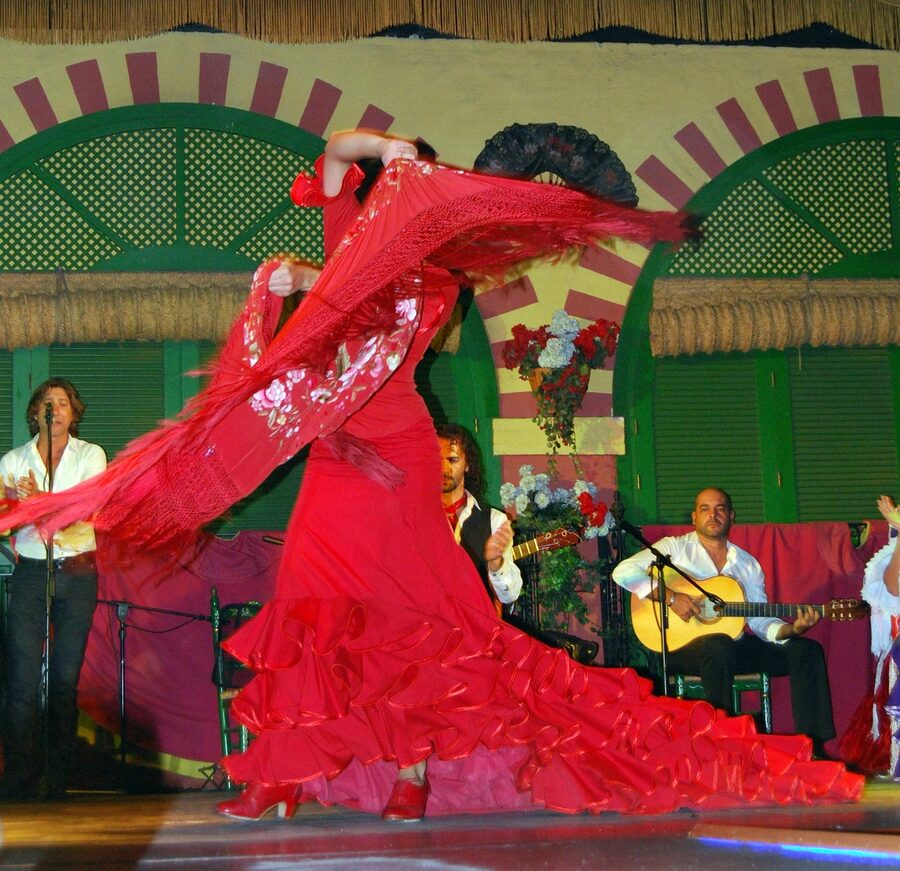
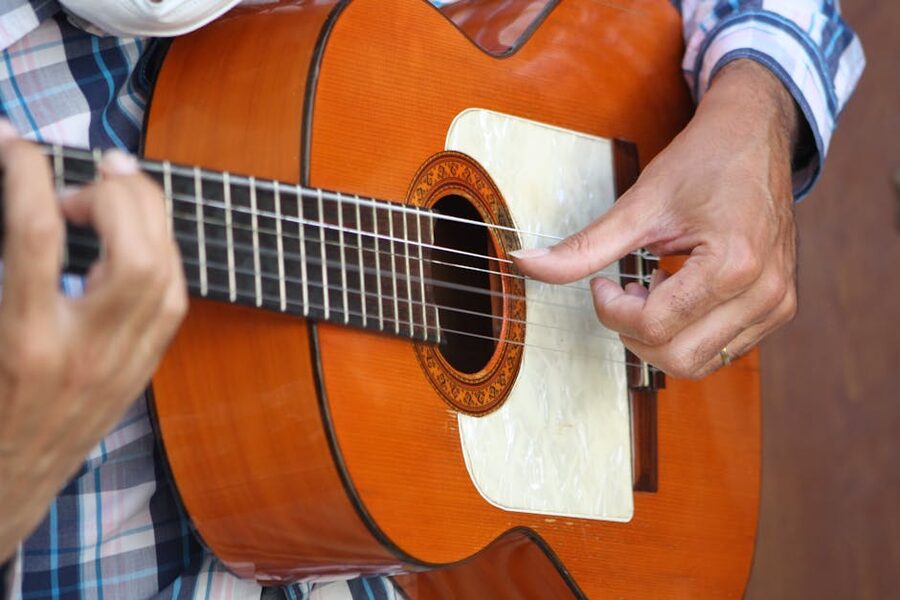
The format is broadly similar to Madrid and Seville tablaos — opening ensemble, solo dances, guitar and singing — but the Granada zambra tradition has specific touches.
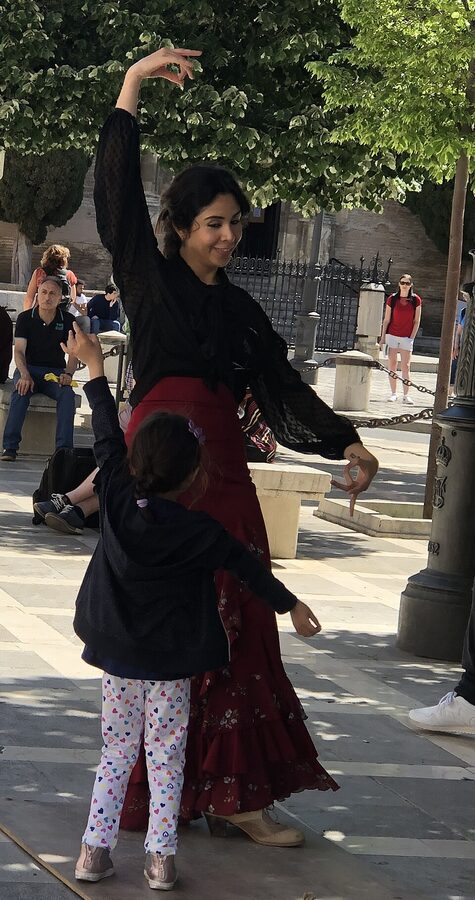
Zambra wedding dance: a traditional piece that represents a Romani wedding — bride, groom, guests. Slower, more choreographed than straight tablao. Unique to Granada.
Cave acoustics: the sound in a cave is different. Stomping reverberates off stone walls. Singing carries in ways it doesn’t in a regular room. Genuinely evocative — part of why cave flamenco is considered special.
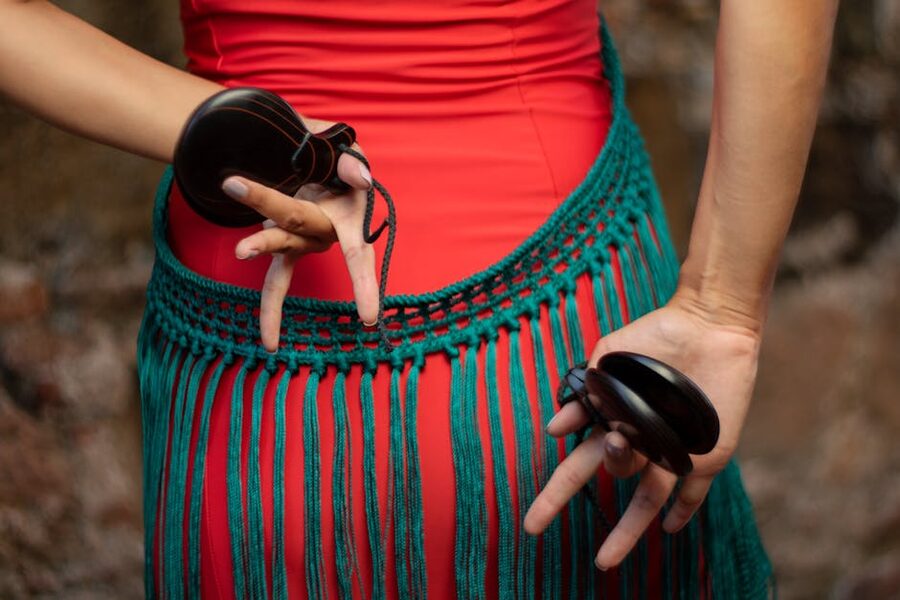
Audience proximity: you’re often 2-3 metres from the dancers. In a cave of 50 people, every seat is a front seat. This is the “nowhere to hide” experience — both for audience and performers.
Shorter shows: Granada cave shows tend to be 50-60 minutes vs 60-75 in Madrid/Seville. Works better for younger kids but can feel brief if you’ve come a long way.
Our top picks to book
1. Granada Flamenco Show at La Alboreá — $21
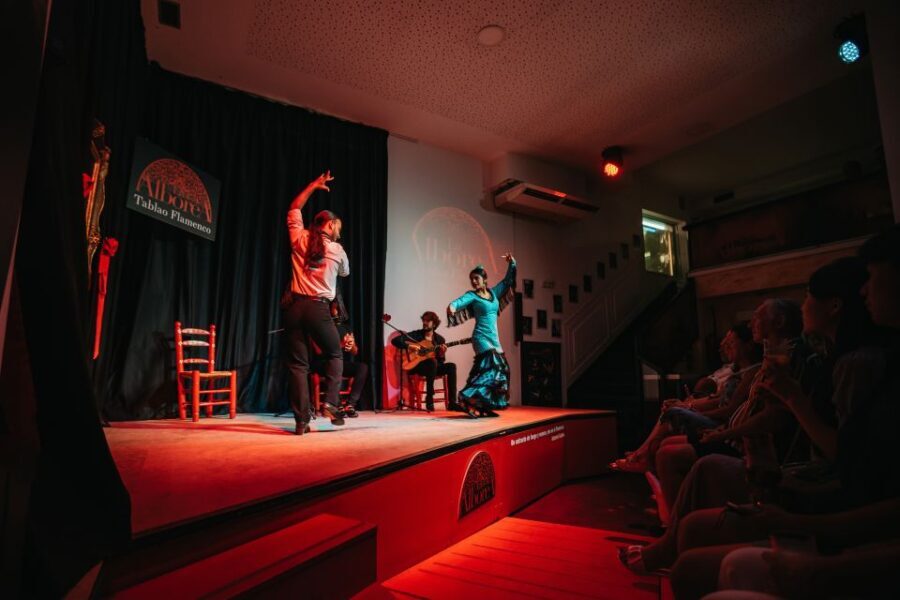
La Alboreá is a small central Granada tablao — not a Sacromonte cave but close enough to the traditional style. Best pick for first-time Granada flamenco with kids 7+. Our La Alboreá review covers what the venue is like, the show timing, and which seats are best. Drink included; no food add-on on this one.
2. Sacromonte Flamenco at Cuevas Los Tarantos — $33
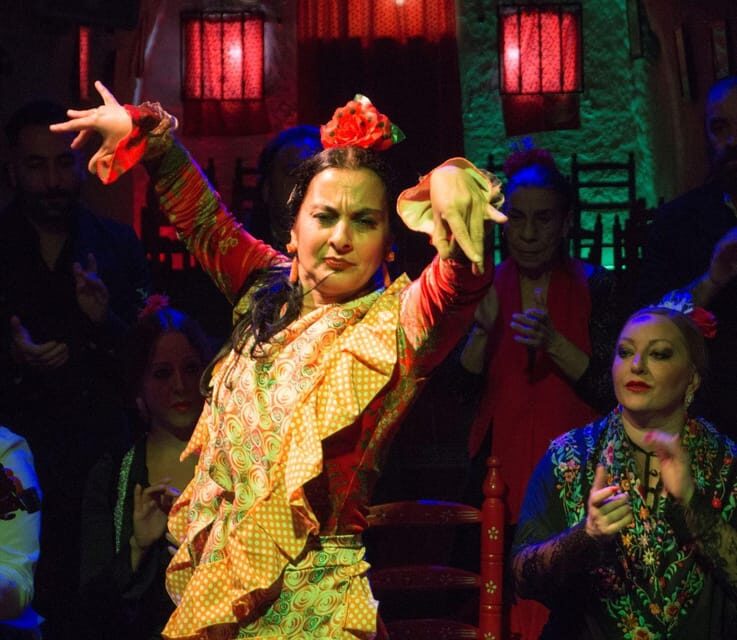
Cuevas Los Tarantos is one of the most established Sacromonte venues — running flamenco nightly for 50+ years. Our Cuevas Los Tarantos review covers the walk up to Sacromonte, what the cave interior is like, and what the show includes. Best for kids 10+; younger children find the cave intensity too much. The show includes traditional zambra pieces and the cave acoustics make every footstomp feel like a drum.
3. ZINCALÉ Flamenco in Sacromonte Caves — $23
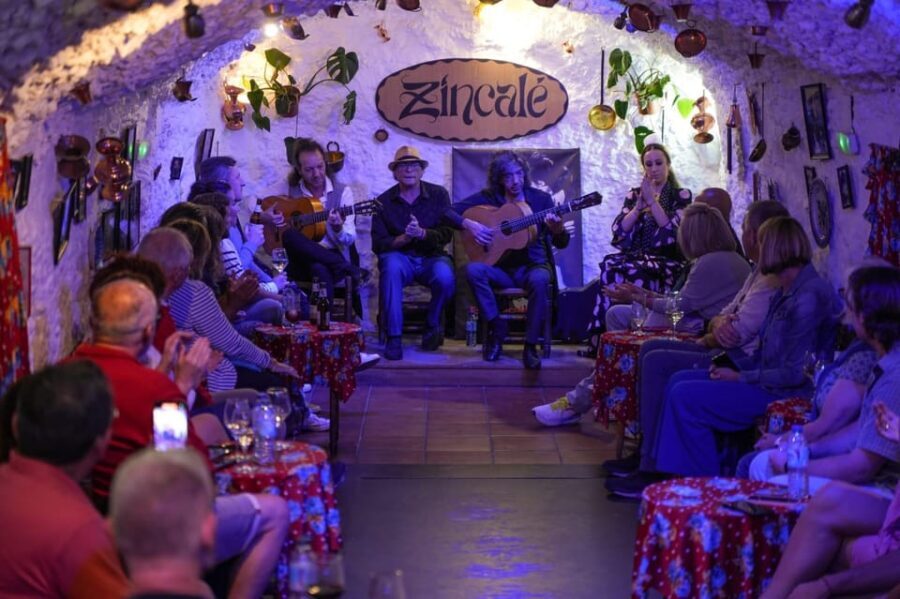
ZINCALÉ is a newer Sacromonte venue that brings a bit more production polish to the cave format. Shorter 50-minute show works better for younger kids. Our ZINCALÉ review covers how this venue differs from the older cave tablaos — slightly less raw, slightly more accessible. Good middle option between central tablao and traditional cave.
Getting to Sacromonte
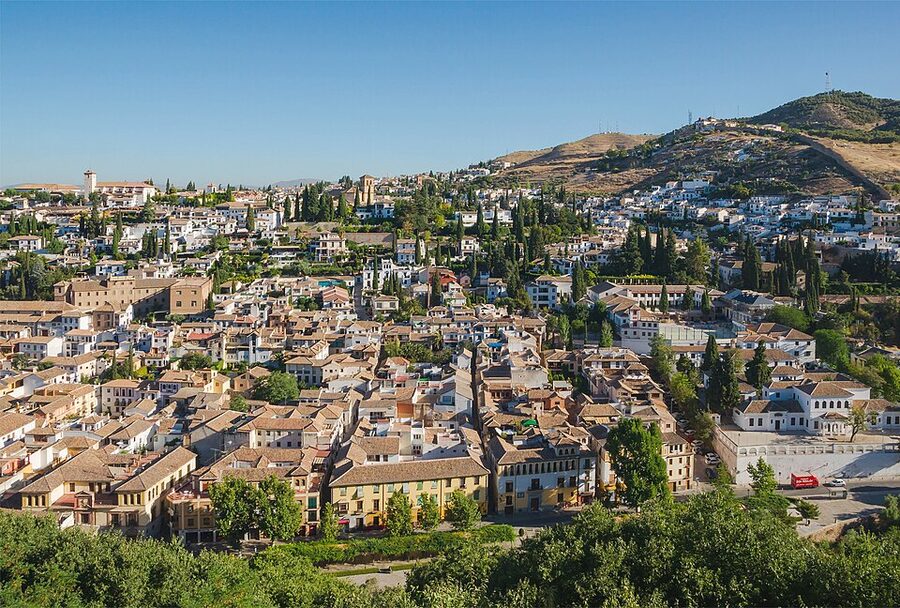
Sacromonte is steep and can be confusing at night. Options:
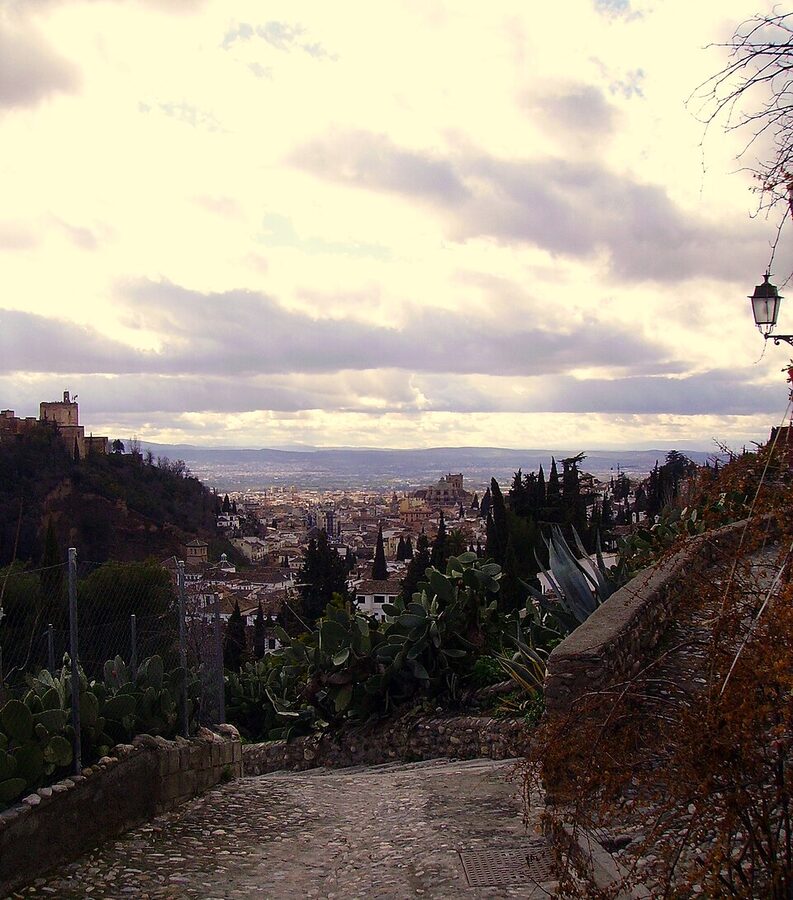
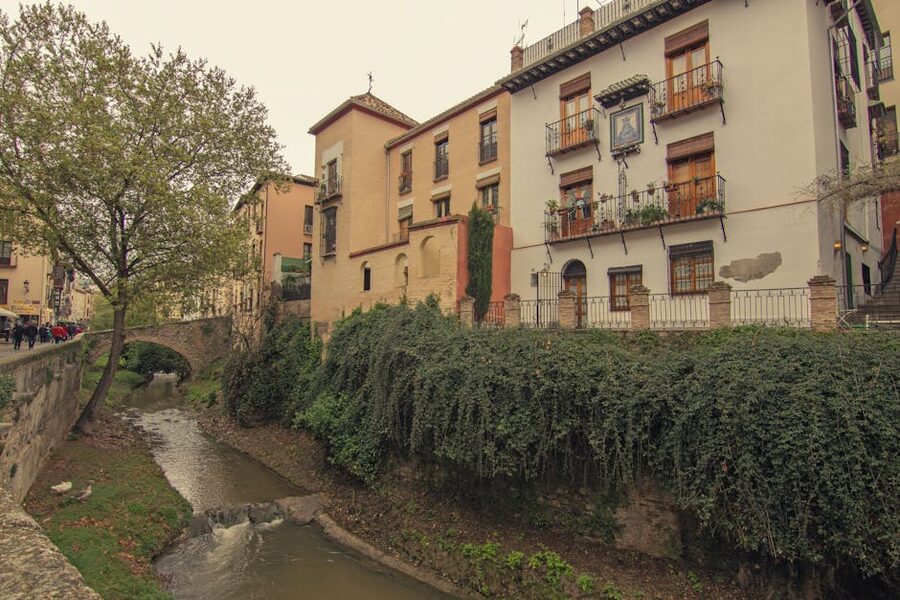
Walking (20-25 min from Plaza Nueva). The route goes up Carrera del Darro alongside the river, then climbs via Camino del Sacromonte. Evocative walk in daylight; manageable with older kids. We’ve done it with a 9-year-old. Under 7s will need a carrier or a taxi for the return.
Minibus C31 or C32. Public buses going up to Sacromonte. €1.40. Usually the smart move for evening shows — avoid the climb at the end of the day.
Taxi. €6-8 from central Granada. This is what we usually do for evening Sacromonte visits — easier with tired kids.
Pre-booked pickup. Some Sacromonte shows include transport from central Granada in the ticket price. Worth checking when you book.
The walk up through Albaicín
If you’ve got the time and energy, walking up through the Albaicín neighbourhood to Sacromonte is part of the experience. Narrow whitewashed lanes, hidden tea gardens, cármenes (walled gardens), and the famous Mirador San Nicolás viewpoint — a panoramic spot facing the Alhambra that’s worth a 15-minute stop.
Timing the evening
Most Sacromonte shows have two time slots — one at 8-8:30pm, one at 10-10:30pm. With kids, the earlier slot is non-negotiable.
Arrival: 20-30 minutes before the show starts. Cave seating is usually first-come-first-served, so arriving early gets you a better spot.
Dinner: eat before. Dinner-show combos exist but aren’t great for younger kids (pacing, late nights). Find a tapas bar in the Albaicín for an early dinner at 6pm, walk up to Sacromonte by 7:30pm, show starts at 8pm.
Return: shows end around 9-9:30pm. Take a taxi back from Sacromonte; avoid walking down the unlit hillside with tired kids.
What to prep your kids for
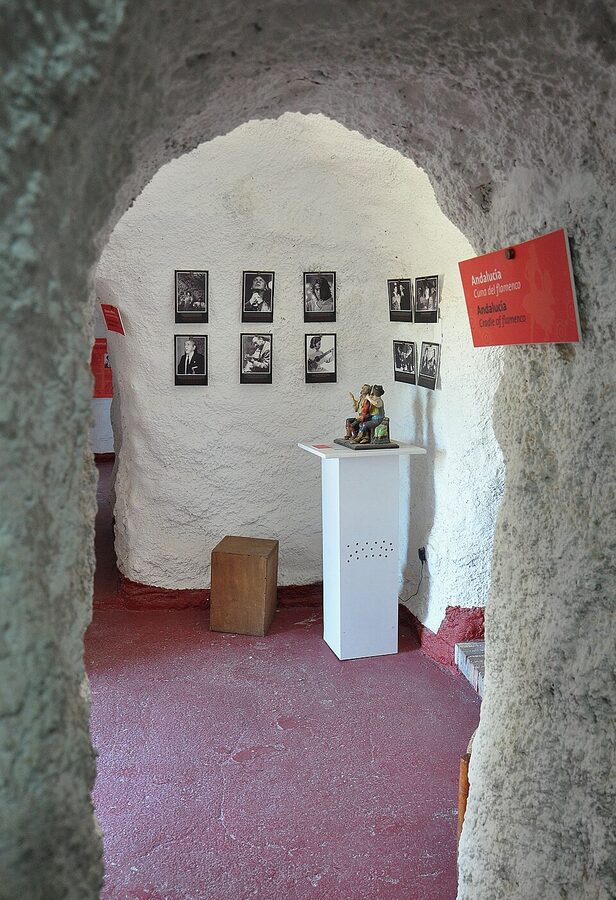
Tell them about the caves. A cave as a venue is unusual. If your child is prone to being startled by unfamiliar spaces, show them photos before you go. The Sacromonte Caves Museum (below) is a great primer.
It will be loud. Standard flamenco volume + cave acoustics = intense. Earplugs for small kids if you’re worried.
Zambra is different. The Granada dance style is choreographed around a wedding celebration. Tell your kids this in advance — they’ll be watching a “wedding” story unfold.
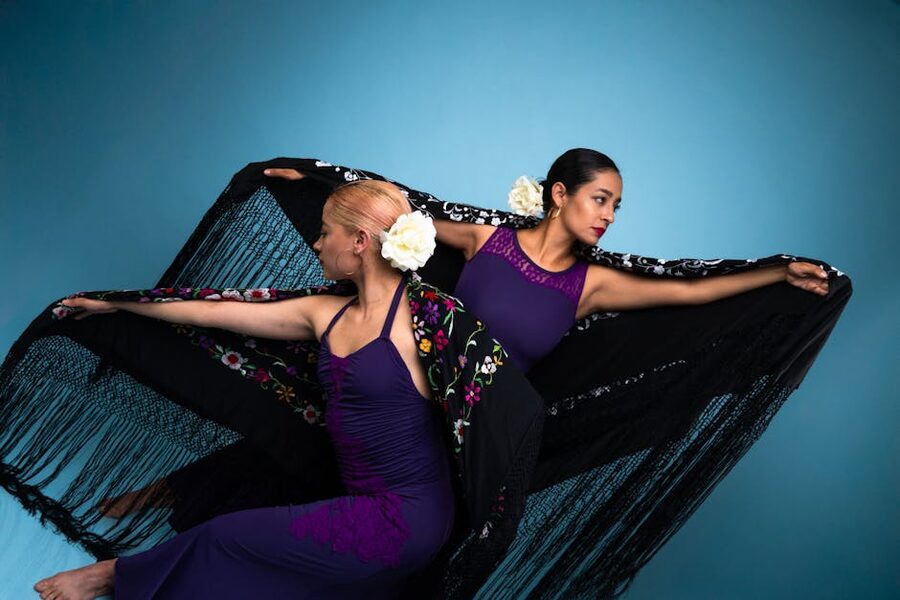
Stomping. The footwork is the core of Granada zambra. Kids love this but sometimes laugh out loud at the intensity — which is fine, just warn them briefly beforehand.
Olé is welcome. Like all flamenco, shouting olé at dramatic moments is part of the participation. Kids love being told they can do this.
Sacromonte Caves Museum — the daytime primer
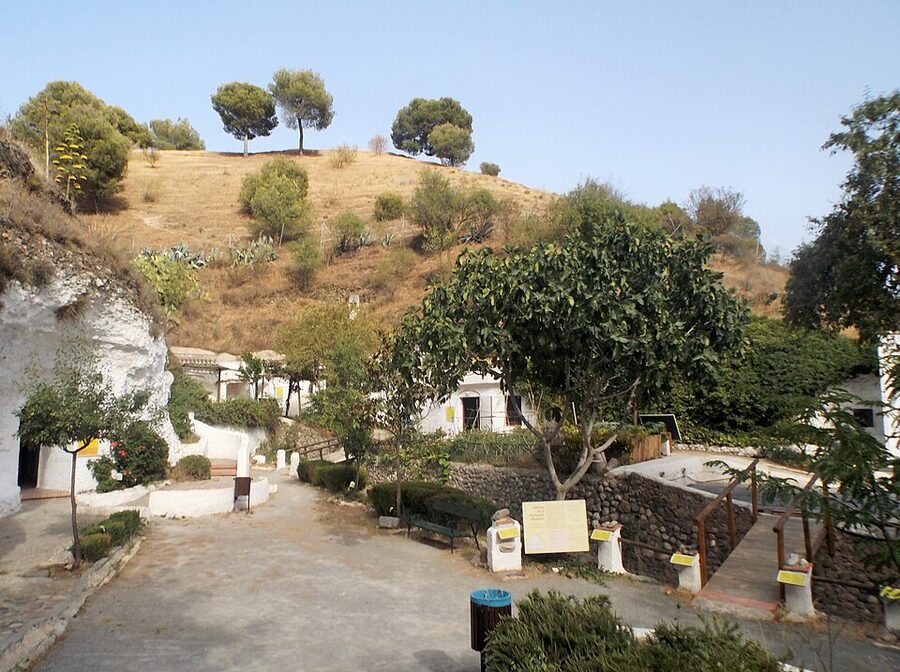
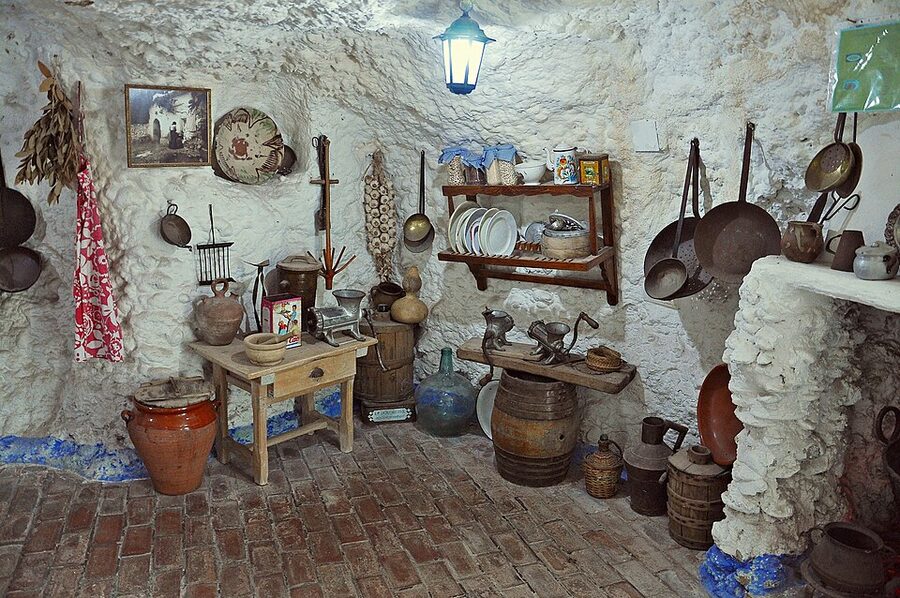
Before your evening flamenco show, go to the Museo Cuevas del Sacromonte during the day. €5 adults, €4 kids. 11 restored cave houses showing traditional Romani life — kitchen, bedroom, workshop, weaving studio, music room. Kids walk through and get a complete mental picture of what they’ll see that evening.
The museum sits at the top of Sacromonte and also has a viewpoint, ethnographic exhibits, and a good café. If you’re doing a Sacromonte day, the format is: museum in the morning/afternoon, walk to Mirador San Nicolás, have tapas dinner in the Albaicín, cave flamenco in the evening.
Pairing with the rest of Granada
Flamenco is the Granada evening activity. Daytime belongs to the Alhambra. Ideal 2-day Granada flow:
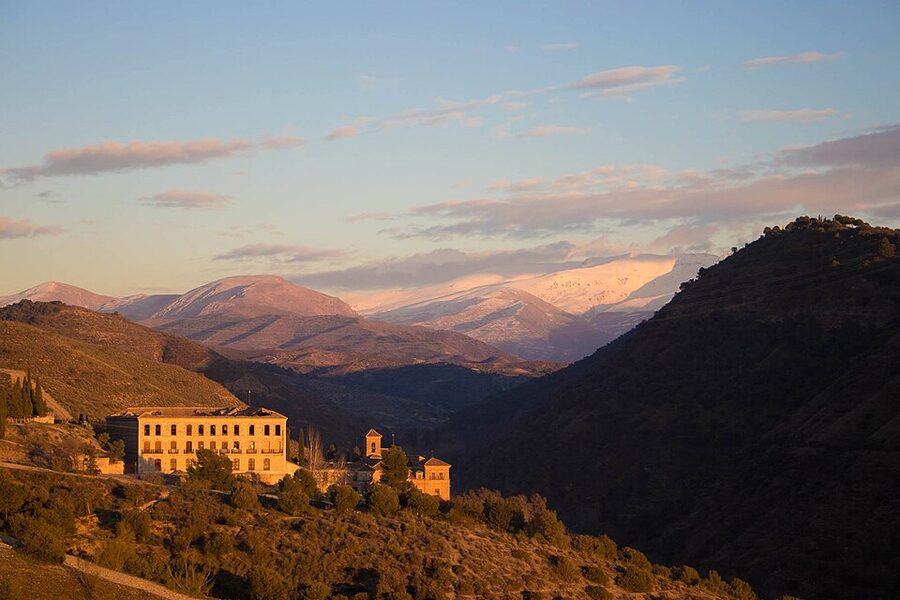
Day 1: morning Alhambra visit (Nasrid slot 9am); lunch in Albaicín; afternoon Sacromonte Caves Museum; evening flamenco cave show.
Day 2: lighter day — Cathedral, Royal Chapel, tapas wander; evening optional second flamenco if you’re hooked; or just tapas dinner somewhere central.
If you’ve got only one Granada night, do the Alhambra daytime and flamenco evening. That’s the essential Granada experience. Our Seville flamenco guide and Madrid flamenco guide compare the city-level differences if you’re doing multiple Spanish flamenco shows.
A short history of Sacromonte flamenco
Sacromonte has been home to Granada’s Romani (Gitano) community since the 15th century, when Muslim families also used the caves as residences. The neighbourhood became a Romani settlement after the Christian reconquest of Granada (1492), when dispossessed Moors and later Gitano families dug homes into the soft tuff hillside.
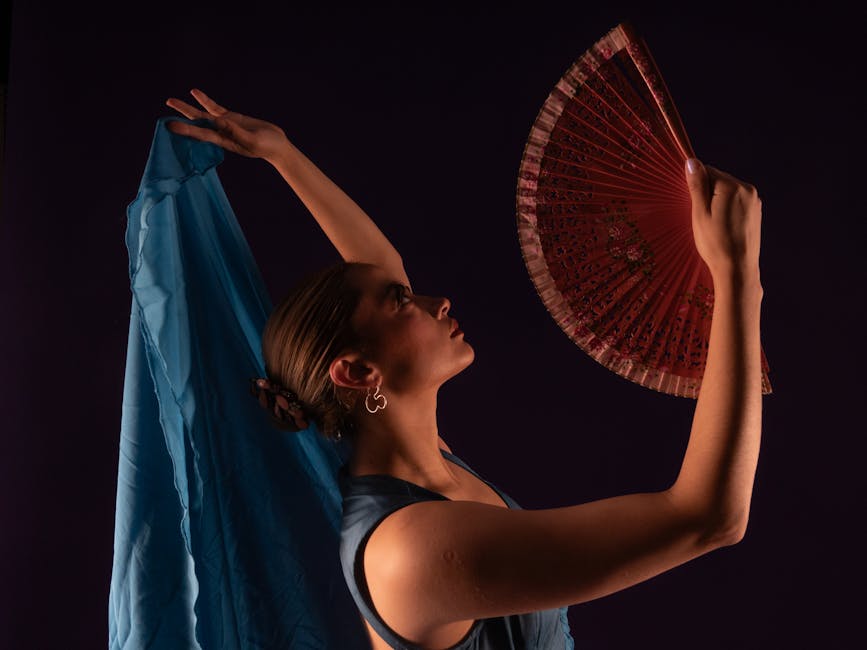
Flamenco evolved in Sacromonte throughout the 19th century — the Romani musical tradition fused with Moorish singing styles and Spanish folk song to create the classical flamenco forms we know today. The Granada zambra is a specific Sacromonte creation: originally a wedding celebration dance, later adapted for paying audiences.
The first tourist flamenco shows in Sacromonte started in the 1950s — when Granada began positioning itself as a cultural destination. Cuevas Los Tarantos opened in 1972, still run by the Maya family today. Several generations of Sacromonte Gitanos have made their living as flamenco performers; many started dancing as children and continue into their 60s.

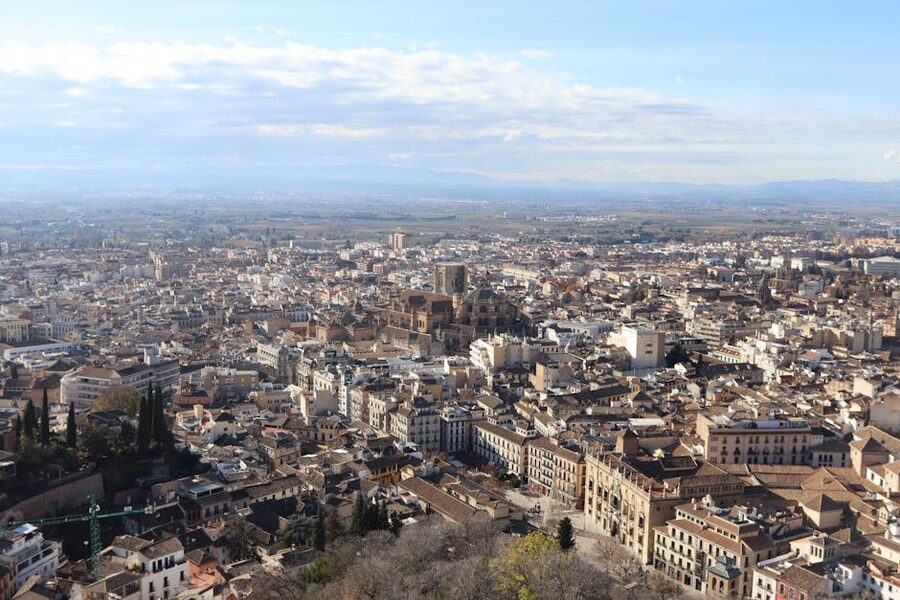
Granada flamenco vs other Spanish cities
If you’re comparing across Spain:
Madrid: most polished, biggest names, concert-venue formats. Best production values.
Seville: most rooted, commercial tablao scene, professional. Middle ground between polish and authenticity.
Granada (Sacromonte): most intimate, most raw, traditional setting. Hardest to book but most memorable.
Jerez de la Frontera: arguably purest singing — but few formal venues. Serious flamenco fans only.
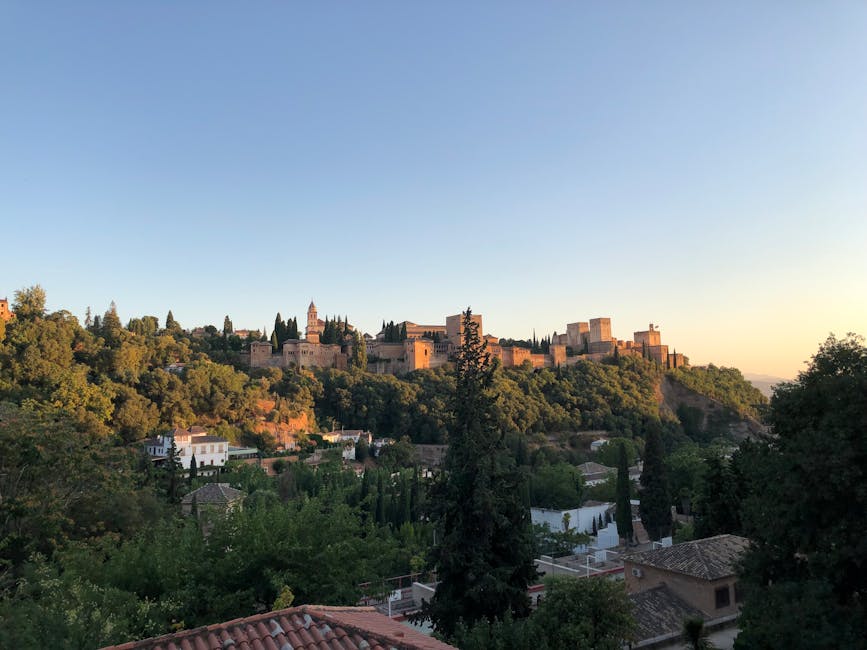
If Granada is your only Spanish flamenco: you’ll be fine, you might actually be lucky — Sacromonte is the most distinctive. If you’re doing multiple, save Sacromonte for last; the rawness makes other venues feel flat after.
Practical tips
Book 3-5 days ahead for Sacromonte cave shows. Popular evenings sell out.
Early show (8pm) for kids. The 10pm show is authentic but too late for most primary-age children.
Taxi back. Walking down Sacromonte in the dark with tired kids is no fun. Budget €8-10 for the return taxi.
Dress warmly in winter. Cave temperatures are consistent year-round (around 18°C) so it feels cold if you’ve walked up in a thick jacket.
Dress lightly in summer. Opposite problem — cave is cooler than the hot streets outside. A light layer is enough.
Photos/phones. Most venues allow photos only during the final number. Respect the rule; cave acoustics are part of the experience and phone screens disrupt.
Drink inclusion. Most tickets include one drink. Kids usually get a soft drink or water. Confirm when you book.
Dinner logistics. Eat in Albaicín before (tapas at Bar Los Diamantes or El Huerto de Juan Ranas), not after. Most Sacromonte restaurants shut by 11pm and eating at 9:30pm post-show is too late for kids.
Accessibility. Cave venues are old buildings with uneven floors and narrow entrances. Very small buggies might fit; wheelchairs usually don’t. If accessibility is a concern, pick a central tablao instead of a Sacromonte cave.
What if it rains?
Sacromonte cave venues are entirely indoor — rain doesn’t affect the show. The problem is the walk up and back; the cobbled paths get slippery and there’s no shelter.
If heavy rain is forecast, switch to a central Granada tablao (La Alboreá is 5 minutes from Plaza Nueva). You’ll miss the full Sacromonte experience but gain a dry walk home. Cave shows can be rescheduled up to 24 hours ahead on most booking platforms.
Age-by-age guide
Under 6: probably too intense for cave venues. A central tablao (La Alboreá) is manageable; Sacromonte is not.
7-9: workable in a cave if your child is generally brave. Start with a central tablao first trip, upgrade to Sacromonte on a return visit.
10-14: perfect age for cave flamenco. Full experience lands. Evening cave formats work well.
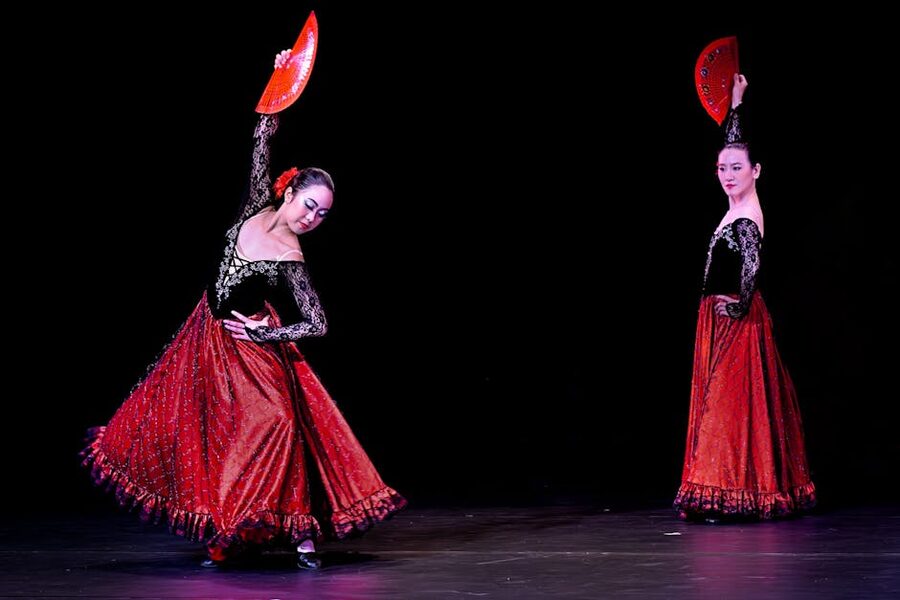
Teens: cave flamenco can be a revelatory experience for teens with any interest in music or dance. It’s the one Spanish cultural activity that’s hard to match anywhere else.
Before you book, an honest list
Book a cave show if: your kids are 10+ and you want a memorable one-of-a-kind Spanish experience.
Book a central tablao if: your kids are 6-9 or you want an easier evening. La Alboreá is the default.
Do the Caves Museum first if you’re taking kids to Sacromonte. Primes them perfectly.
Eat before, taxi back. This is the two-line rule for Sacromonte with kids.
Pair with Alhambra for the full Granada day: Alhambra morning, Sacromonte Caves Museum afternoon, flamenco cave show evening.
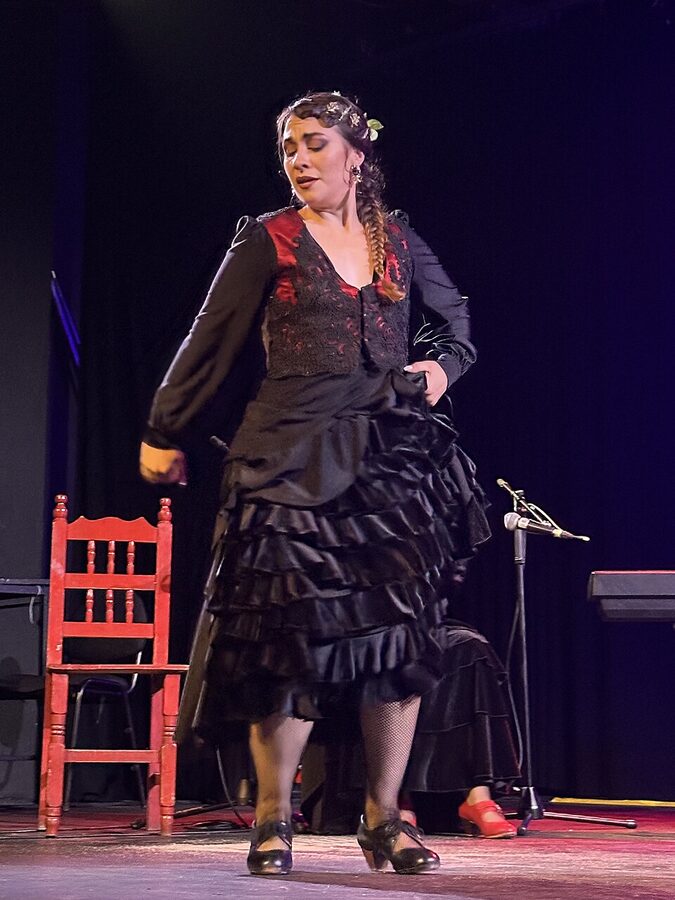
Book the 8pm show at Cuevas Los Tarantos, eat tapas in Albaicín at 6pm, walk up slowly to catch the sunset. Best Spanish evening money can buy.