
If you only see flamenco in one Spanish city with your kids, do it in Seville. The art form was born here, or close enough — Triana, the old working-class neighbourhood across the river from the cathedral, is where flamenco has been sung and danced in courtyards for 200 years. Watching a Seville tablao is different from watching a Madrid one: less polish, more heart, and the kids pick up on the difference even when they can’t quite say why.
In a Hurry? Our Family Picks
Best-value tablao show: Seville Live Flamenco Dancing Show at the Theater ($27) — 1 hour, intimate venue, 16,000+ reviews. Works from about age 7.
Most authentic feel: Casa de la Memoria Flamenco Show ($28) — Andalusian courtyard venue, 4.8 rating, the critics’ pick for purist flamenco.
Add a museum afternoon: Puro Flamenco Show with Optional Museum Ticket ($34) — pairs the show with the Museo del Baile Flamenco, brilliant for kids who want to understand what they’re watching.
- In a Hurry? Our Family Picks
- Why Seville is the flamenco city
- Is Seville flamenco kid-friendly?
- The Seville tablao scene
- Santa Cruz and central Seville
- Triana (across the river)
- Los Remedios and the Feria grounds
- Palacio Andaluz (on the outskirts)
- What happens at a Seville tablao
- Our top picks to book
- 1. Seville Live Flamenco Dancing Show at the Theater —
- 2. Casa de la Memoria Flamenco Show —
- 3. Puro Flamenco Show + Museum Ticket —
- Other reputable Seville tablaos worth knowing
- The Museo del Baile Flamenco (worth the detour)
- Getting there and timing
- Food and drink
- What to prep your kids for
- Pairing with the rest of Seville
- Seville vs Granada flamenco
- A short history (for the kids who ask)
- Practical tips
- What if it rains?
- Before you book, an honest checklist
Why Seville is the flamenco city
Flamenco has several origin stories depending on who you ask, but the one Seville claims (and has the strongest evidence for) is that the art form coalesced in the Triana neighbourhood in the 19th century. Triana had a large Romani community, a seafaring port culture, and family courtyards where people sang and danced. The earliest cafés cantantes — the pay-to-watch flamenco venues that turned a private art into a public one — opened in Seville in the 1840s.
Today Seville has about 20 active tablaos, a flamenco museum (Museo del Baile Flamenco, run by the legendary dancer Cristina Hoyos), and multiple flamenco festivals a year. Most visiting families see exactly one show on their trip — this guide is about how to pick that one show well.
Is Seville flamenco kid-friendly?
Short answer: more so than you might expect. The Seville tablao format is tighter than Madrid’s — shows are usually 1 hour flat, venues are small enough that kids feel included rather than lost, and the historical setting (most venues are 200-year-old buildings) gives the whole thing context.
Age guide:
Under 5: too young for most tablaos. Consider instead the free street flamenco in Plaza de España on weekend afternoons — it’s short, outdoors, and an easy first taste.
5-7: the shorter, smaller tablaos work. Pick a 7pm or 8pm show, sit near the front, keep the visit to 1 hour. No dinner-show add-ons at this age.
8-12: sweet spot. Any reputable Seville tablao works. The Museo del Baile Flamenco combo is the upgrade — kids who visit the museum first understand the show much better.
Teens: full experience. If your teen is genuinely interested, book the longer 1.5-hour shows and the museum visit. Some venues do late shows at 10pm that are more intense — suitable for 14+.
The Seville tablao scene
Four main tablao neighbourhoods you’ll encounter:
Santa Cruz and central Seville
The old Jewish quarter has several tablaos within the Alcázar-and-Cathedral radius. This is where most tourists stay and where the most-booked tablaos are. Casa de la Memoria, Tablao Las Setas, Teatro Flamenco Sevilla — all in or near Santa Cruz. Convenient, professional, slightly less atmospheric than Triana but very kid-friendly.
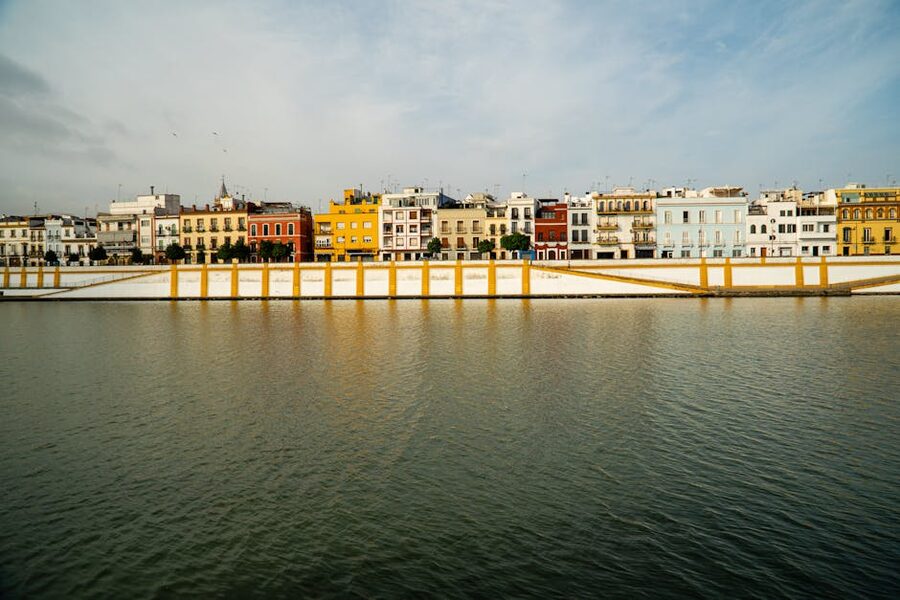
Triana (across the river)
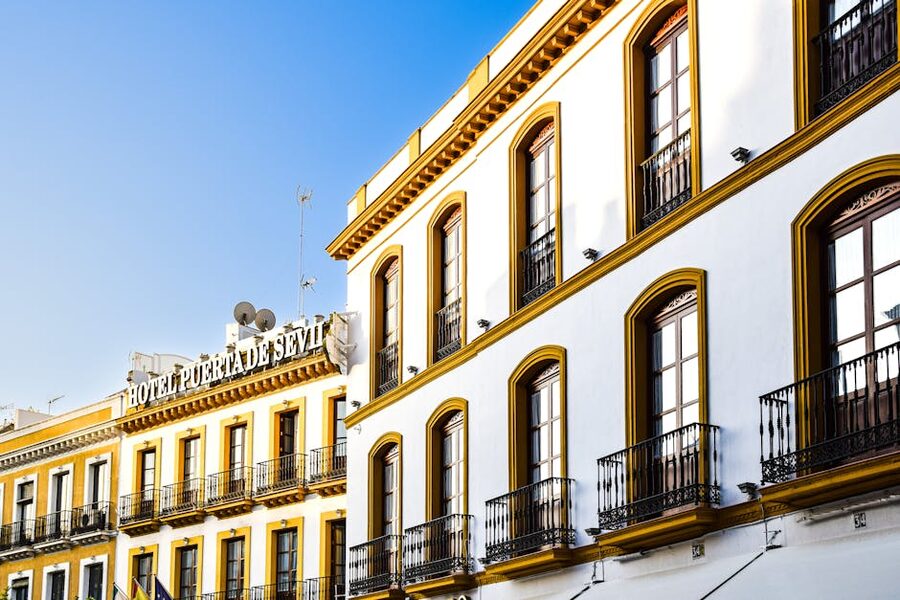
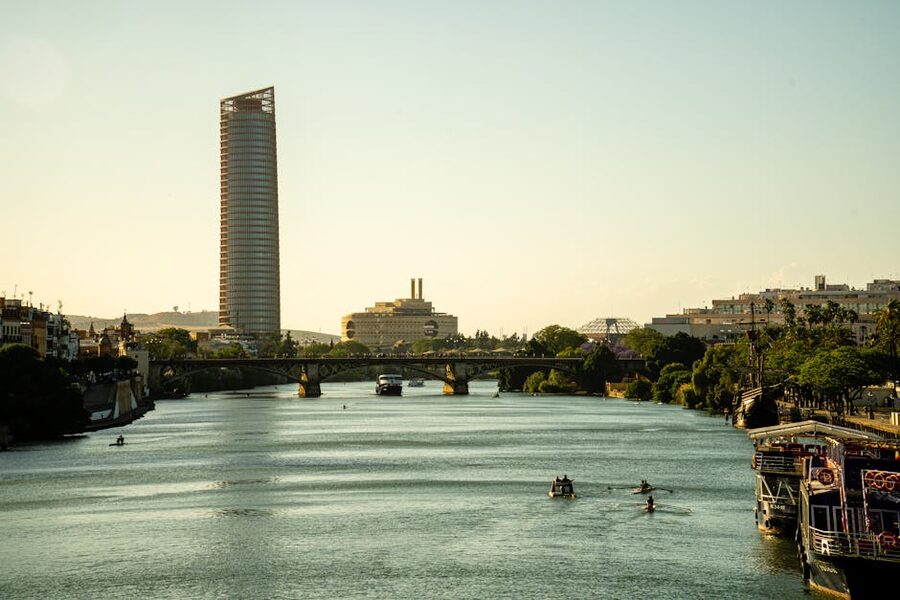
This is the flamenco heart. Teatro Flamenco Triana, Puro Flamenco (at times), Casa de la Guitarra, and several smaller family-run venues are here. The walk across the Puente de Isabel II from central Seville is 15 minutes, and Triana itself is worth exploring for tapas before or after a show.
Los Remedios and the Feria grounds
Further south, quieter. Less relevant for first-time visitors unless you’re here during the Feria de Abril (April) when the whole city shifts in this direction for a week of flamenco-dress parties. Most regular tablaos aren’t here.
Palacio Andaluz (on the outskirts)
A large dinner-show venue about 15 minutes by taxi from central Seville. Bigger production, coach tours often go here. Less intimate than the city-centre tablaos but suitable if you want a structured dinner-plus-show format. Less great with younger kids because of the 9:30pm shows and the meal pacing.
What happens at a Seville tablao
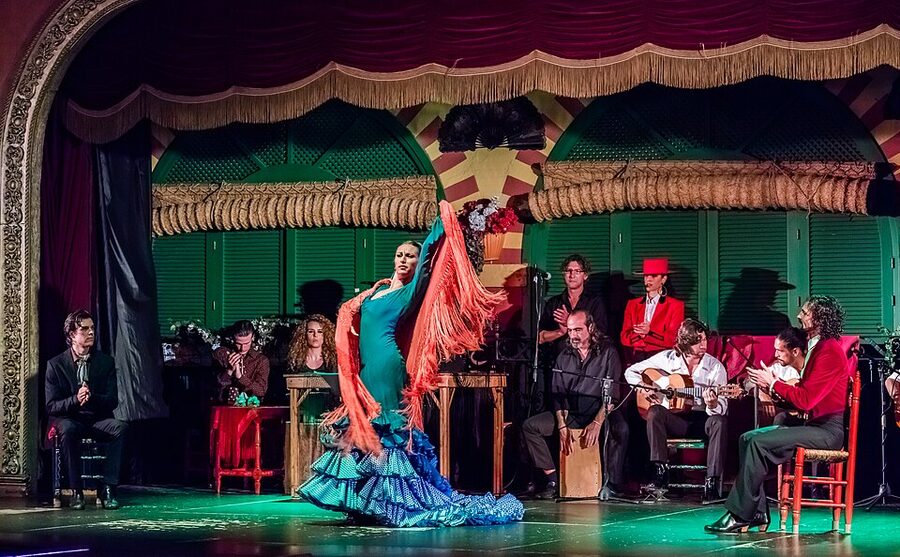
A standard 1-hour show has a similar structure to Madrid — opening ensemble, solo dance, singing piece, guitar solo, closing ensemble — but Seville shows tend to be earthier, with more direct interaction between the performers and shorter transitions. Some specific Seville elements:
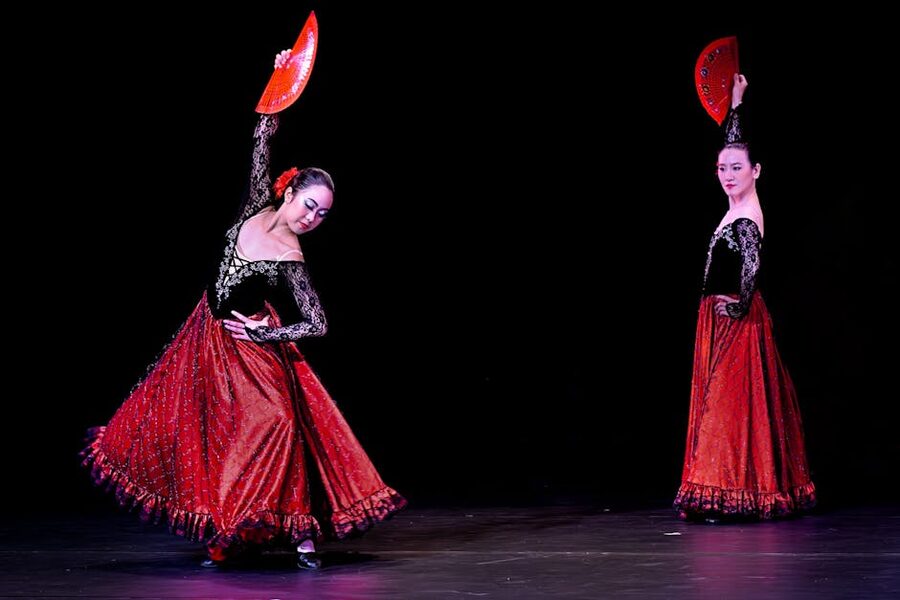
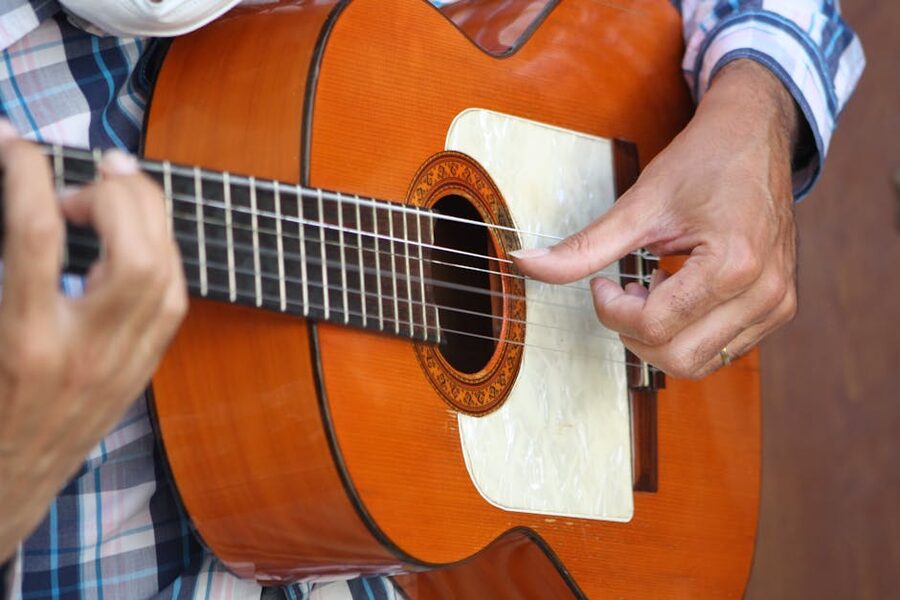
Palmas and compás. Seville shows lean more into the hand-clapping rhythms — often the guitarist and singer drop out for 30 seconds to let the clappers take over. Kids love this because they can hear the rhythm construction.
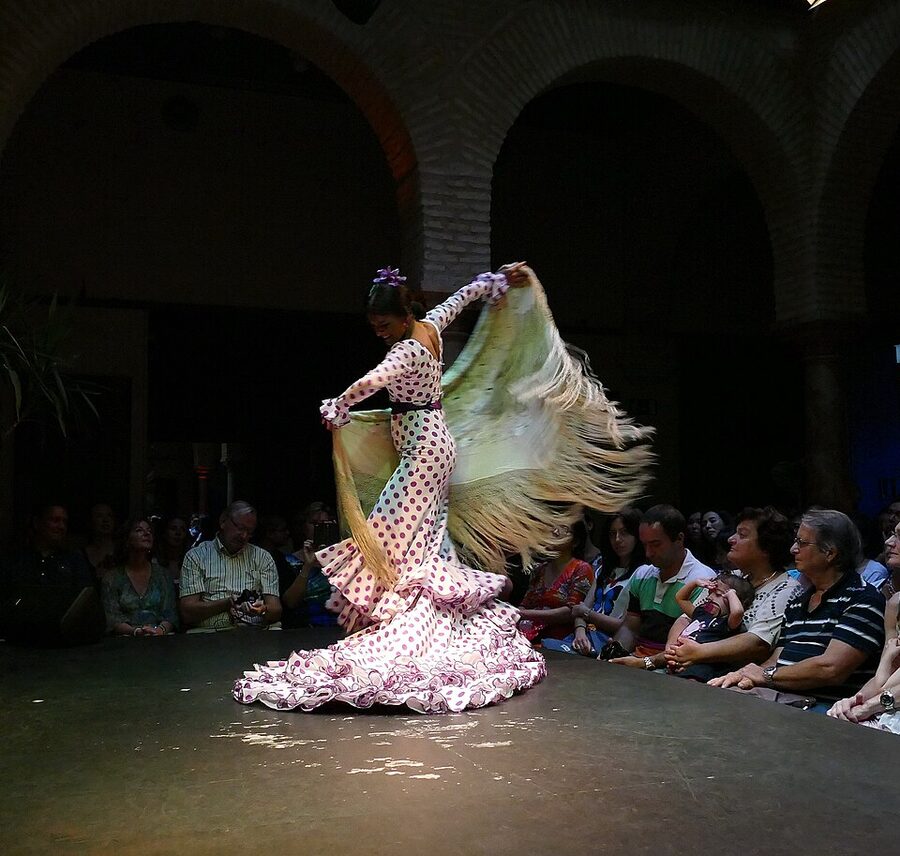
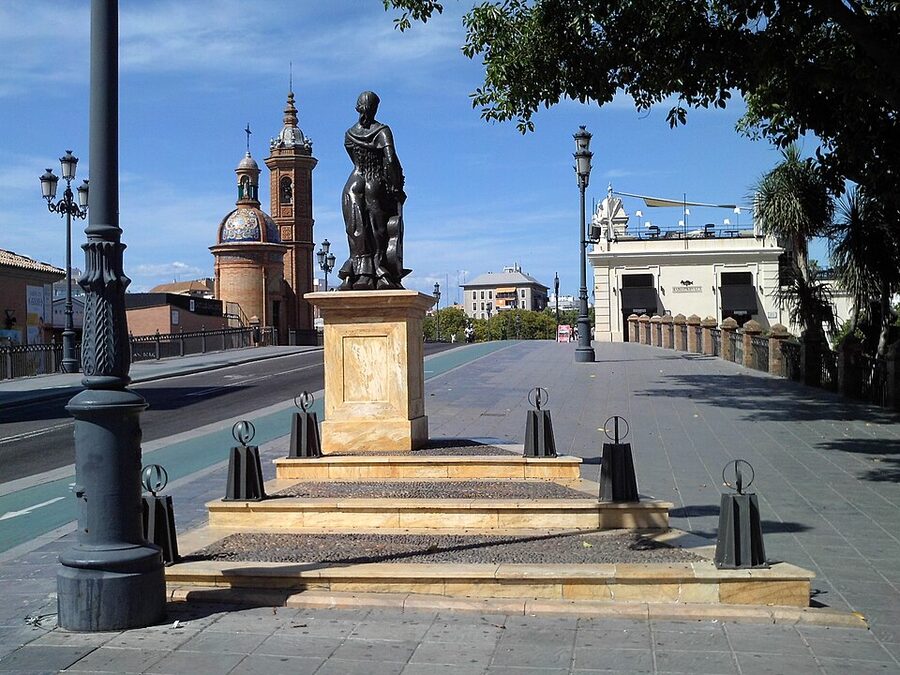
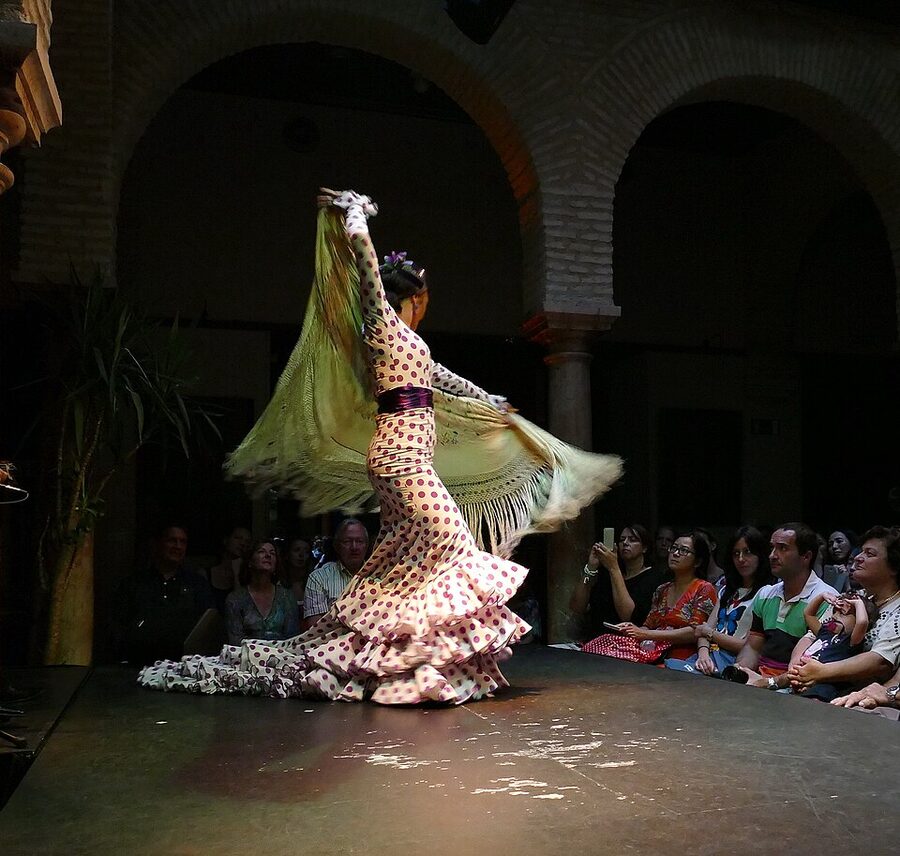
The bata de cola. The long flamenco train dress, uniquely associated with Seville-style dancing. Kids always notice when a dancer changes costume; the full bata de cola is genuinely dramatic with its 2-metre train that the dancer manipulates with kicks.
The singer sits. Unlike Madrid where singers sometimes stand or move, Seville tradition is for the cantaor to sit on a chair at the side of the stage. Kids notice this and ask why. The honest answer: so the singer can concentrate on the voice without worrying about movement.
Our top picks to book
1. Seville Live Flamenco Dancing Show at the Theater — $27
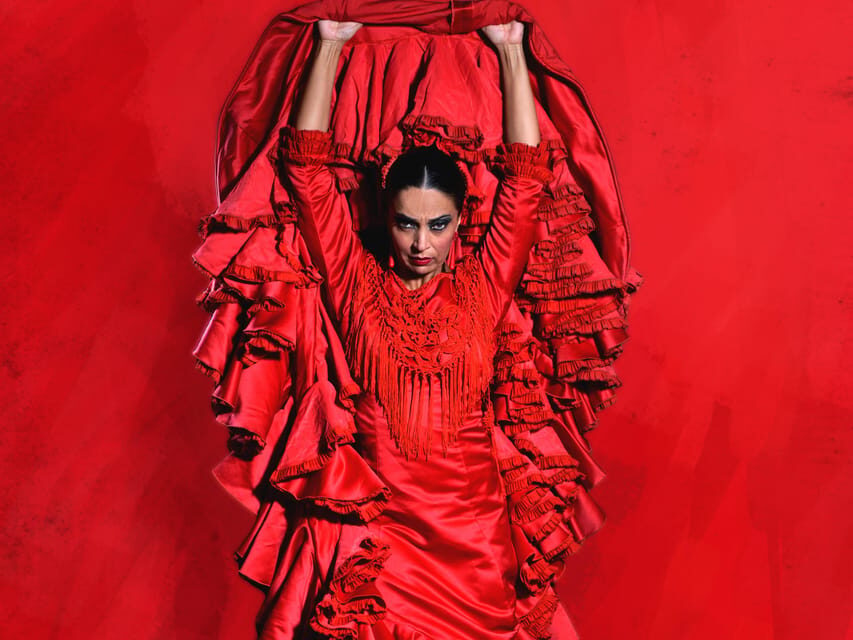
This is the default Seville booking for families. 1-hour format works for kids 7+, the venue is small enough to feel intimate, ticket price is the lowest in the top tier. Our review of the Seville theatre show covers what the venue is like inside, show times (there are usually three slots a day), and what’s included with the ticket. Drink included; no food add-on on this one.
2. Casa de la Memoria Flamenco Show — $28
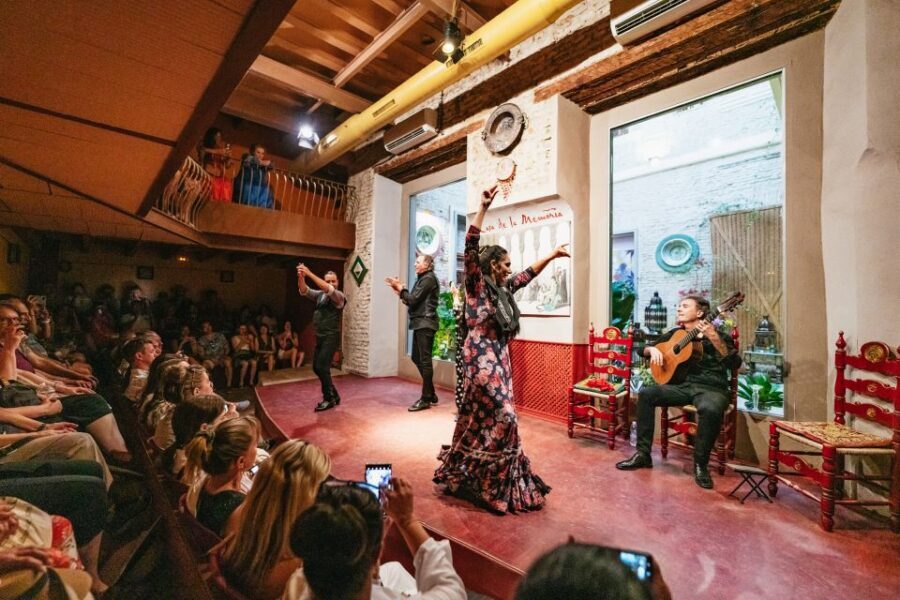
If your family is serious about seeing the “best flamenco” not just a “good flamenco”, Casa de la Memoria is the one. Performed in an Andalusian courtyard venue in central Seville, the show format emphasises traditional palos and classical dance. Our Casa de la Memoria review gets into why this venue has the reputation it does — basically, they book working artists not just tablao regulars. Best for 9+ kids who’ve had some flamenco exposure.
3. Puro Flamenco Show + Museum Ticket — $34
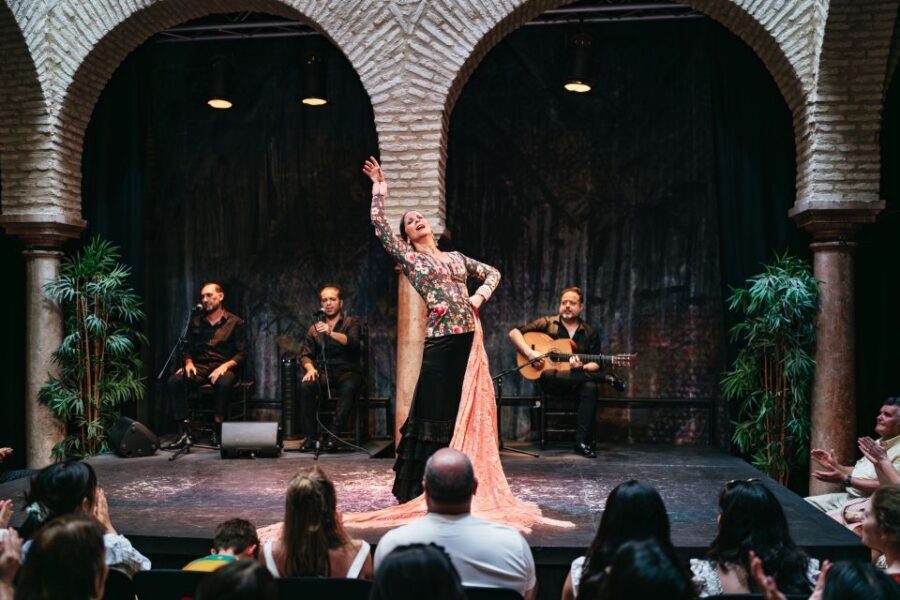
If you’re travelling with kids who love to understand what they’re watching, this is the smartest upgrade. The Museo del Baile Flamenco is excellent (Cristina Hoyos, one of Spain’s greatest dancers, founded it) and a pre-show afternoon there primes the kids perfectly. Our Puro Flamenco + Museum review covers what’s in the museum, how long to budget, and how the show pairs with it. Best combo for 9+ kids with real interest.
Other reputable Seville tablaos worth knowing
If the top three are sold out or you want alternatives:
Tablao Flamenco Las Setas — newer venue near the Metropol Parasol, good for families who want a more modern look. $33, 1 hour, 2,200+ reviews.
Teatro Flamenco Triana — in Triana, slightly larger venue, $28, 1 hour, 3,200+ reviews. Good for families staying on the Triana side.
La Casa de la Guitarra — tiny venue (about 40 seats), very atmospheric. $23, 1 hour, 1,300+ reviews. Good for families with older kids who want the most authentic feel.
El Palacio Andaluz — the dinner-show option. $38 for show, more with dinner. 1,300+ reviews. Skip with kids under 10 because of the late hours.
The Museo del Baile Flamenco (worth the detour)
Founded by the dancer Cristina Hoyos in 2006, this is the world’s only museum dedicated to flamenco dance. It sits in a central Seville building, three floors of exhibits, genuinely engaging for kids.
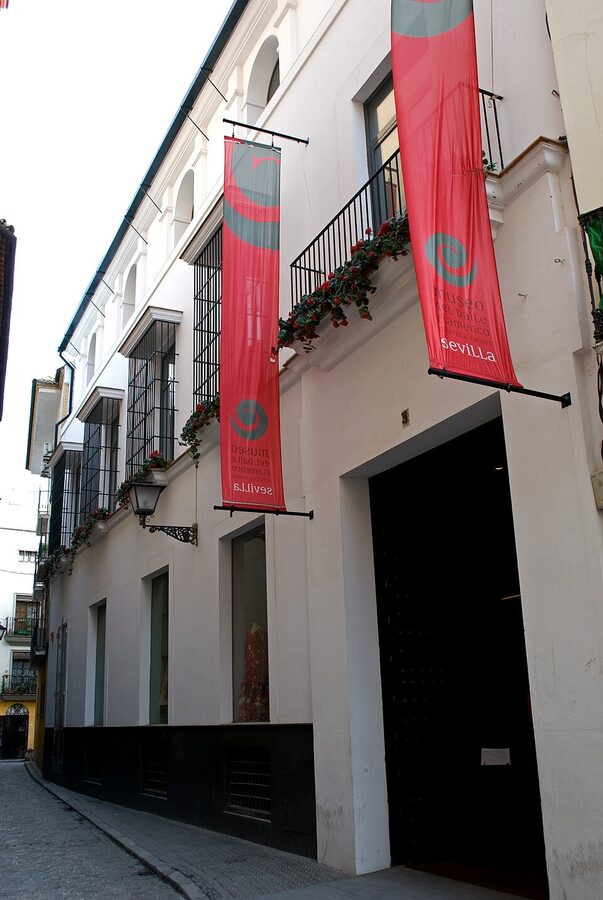
Highlights:
The interactive exhibits on the first floor — touchscreens showing the different palos (flamenco styles), costumes you can (sort of) try on, rhythm-practice stations where kids can try their hand at palmas.
The historical gallery with photographs of major flamenco figures from the 1880s onwards. Kids with an interest in old photos or in famous people will get something from this.
The basement dance school — if you time your visit right, there’s often a class in session and you can watch from the observation deck. Students of all ages; our daughter spent 20 minutes watching an 8-year-old’s lesson.
Combined ticket with a flamenco show at the venue — this is what the “Puro Flamenco Show with Optional Museum” option covers. Best all-round family flamenco experience in Seville.
Getting there and timing
Most tablaos are within a 10-minute walk of the Cathedral. Some are in Triana, which is a 15-minute walk (via the Puente de Isabel II) or a €5 taxi from central Seville.
Show times. Most Seville tablaos do three shows a day — typically 6pm, 8pm, and 10pm. With kids, go for the 6pm or 8pm slot. 10pm shows mean out at 11pm which is too late for most primary-age children.
Booking. Book online in advance — most shows sell out for weekend slots 3-5 days ahead in high season. GetYourGuide allows free cancellation up to 24 hours ahead, which gives you flexibility.
Arrival. Most venues don’t have numbered seats — arrive 15-20 minutes before the show to get a good spot. Front two rows are the best for kids (they can see footwork clearly). Back rows are better for acoustics if you care more about the singing.
Food and drink
Most show-only tickets include one drink (wine, beer, soft drink). The drink is brought to your seat before the show starts. Nothing more is served during; photography during the performance is usually restricted to the final number.
We never do the dinner-show format with young kids in Seville. Instead: eat at 6pm in Triana (tapas at Las Golondrinas or Casa Ruperto), walk back across the bridge for an 8pm show, home by 9:15pm. That’s the right pace for 7-10 year olds.
Kid drinks are usually a soft drink or water. Most venues have a kids’ version of the drink; ask at booking if you want to confirm.
What to prep your kids for
Same as any first flamenco: it’s loud, it’s emotional, the singing can sound surprising. A 10-minute briefing beforehand makes a big difference. Specific to Seville:
Triana is the root. Tell your kid where flamenco comes from — a specific neighbourhood, across a specific river, from a specific community. Gives them a mental pin on a map.
The shouted “¡Olé!” — this is encouraged at dramatic moments. Tell kids it’s OK to join in. Teens especially love being told they can do this.
Palmas are rhythm, not applause. The clapping during the show is part of the music, not approval clapping. Don’t clap during a song; wait until the piece ends. Kids need to know this; adults usually figure it out by watching others.
Phones down. Most tablaos ban photos and videos during the show (allowed at the end). Respect this; the atmosphere depends on it.
Pairing with the rest of Seville
A Seville flamenco show is the perfect end-of-day activity. Reasons:
It’s short (1 hour). You come out energised, not drained. You can go to dinner after if you’re used to Spanish hours.
It’s seated. After a day of Cathedral, Alcázar, and hot pavements, your feet need a break.
It’s cultural. Parents get a proper cultural hit they’d never choose without the kids pushing them out.
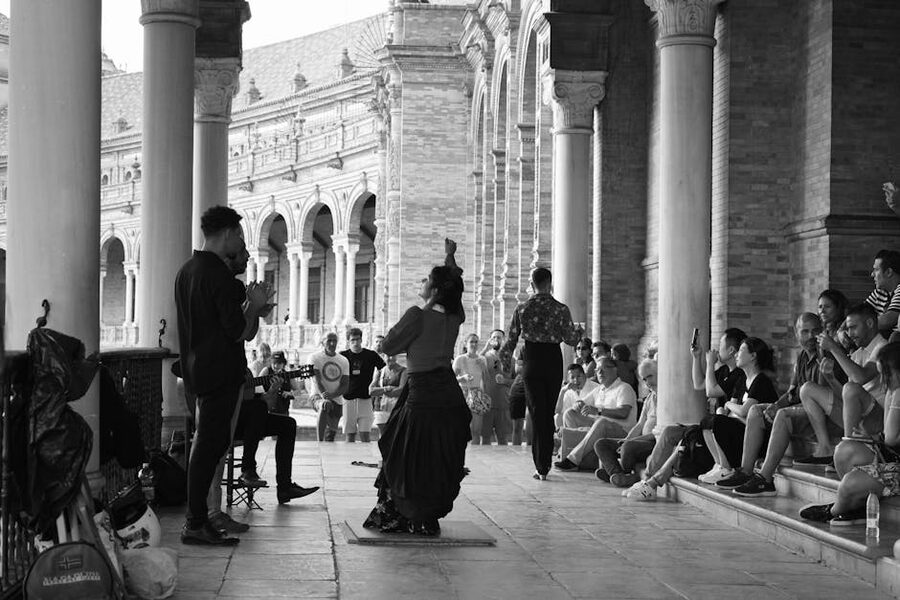
A Seville day with good flow: morning at the Alcázar, lunch in Santa Cruz, afternoon Cathedral and Giralda, brief rest at the hotel, light early dinner in Triana, 8pm flamenco show, late dessert somewhere. That’s the best first Seville day we’ve done with kids.
If you’re travelling between cities, our Madrid flamenco guide compares the two cities’ scenes — Madrid is more polished, Seville is more rooted. Both worth experiencing if you’ve got time.
Seville vs Granada flamenco
If you’re planning an Andalusian circuit, Granada is the other famous flamenco city — specifically the Sacromonte cave tablaos. Very different vibe:
Seville: the professional centre. Tablaos in old buildings, classical training, wide variety of styles. The “standard” flamenco experience.
Granada (Sacromonte): Romani (Gitano) cave tablaos with a specific style called zambra. More raw, more folkloric, more tourist-trap-adjacent if you don’t pick carefully. Worth doing once; not the first flamenco show to see.
Jerez de la Frontera (1 hour south of Seville): often considered the technically purest flamenco town, especially for singing. Serious fans make the day trip. Probably too niche for most family trips.
If you’re doing Seville first and then Granada, go for a Sacromonte cave show in Granada for a different kind of flamenco evening — the two won’t feel repetitive.
A short history (for the kids who ask)
Flamenco emerged in southern Spain (Andalusia) in the late 1700s and early 1800s — a fusion of Romani (Gitano) musical traditions, Moorish vocal styles from centuries of Muslim rule in Spain, Spanish folk song, and some Jewish and sub-Saharan African elements. It was originally performed privately — at family gatherings, in courtyards, at Romani weddings — and considered rough, marginal music.
The cafés cantantes — pay-to-watch flamenco bars — opened in Seville in the 1840s. They turned a private art into a public one. Triana’s courtyards and working-class bars were the original laboratories. By the late 19th century flamenco was being performed formally in Madrid and Barcelona; by the 1920s it was going international with recordings.
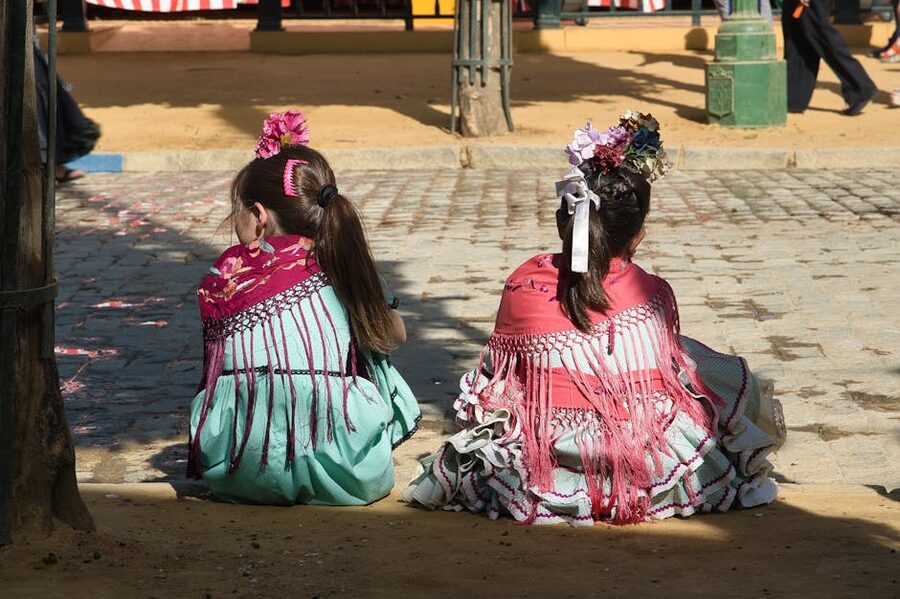
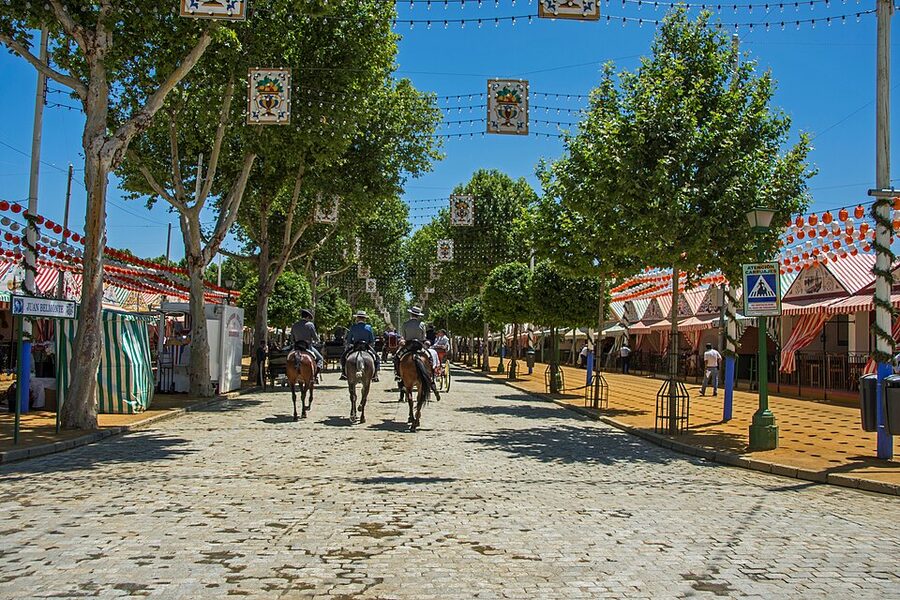
Seville’s Feria de Abril, established in 1847 as a livestock fair, became the city’s main flamenco and sevillanas festival. Today it’s a week-long fiesta in April with thousands of women in flamenco dresses, and it’s when Seville’s flamenco scene is at its most intense.
In 2010, UNESCO declared flamenco a part of Intangible Cultural Heritage of Humanity — recognising it as a cultural treasure of Spain. Seville has the only museum in the world dedicated to flamenco dance; the Museo del Baile Flamenco, founded by Cristina Hoyos, opened in 2006.
Practical tips
Book online. Same-day walk-ins for popular tablaos are possible midweek but risky at weekends. GetYourGuide or the venue’s own website works.
Arrive 15 minutes early. Seat yourself. Near the front is best for kids.
Dress smart casual. Nothing formal required, but no gym kit. Kids in whatever’s comfortable.
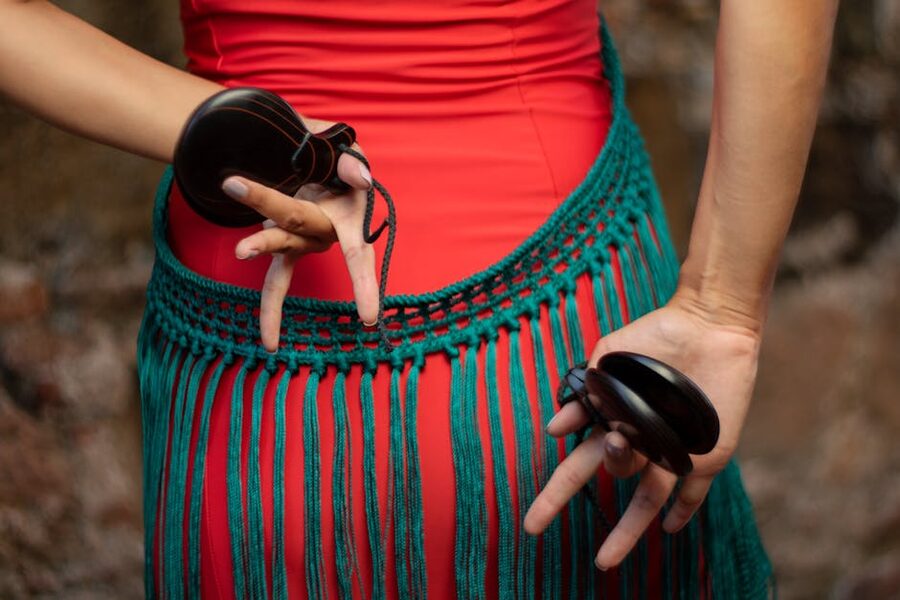
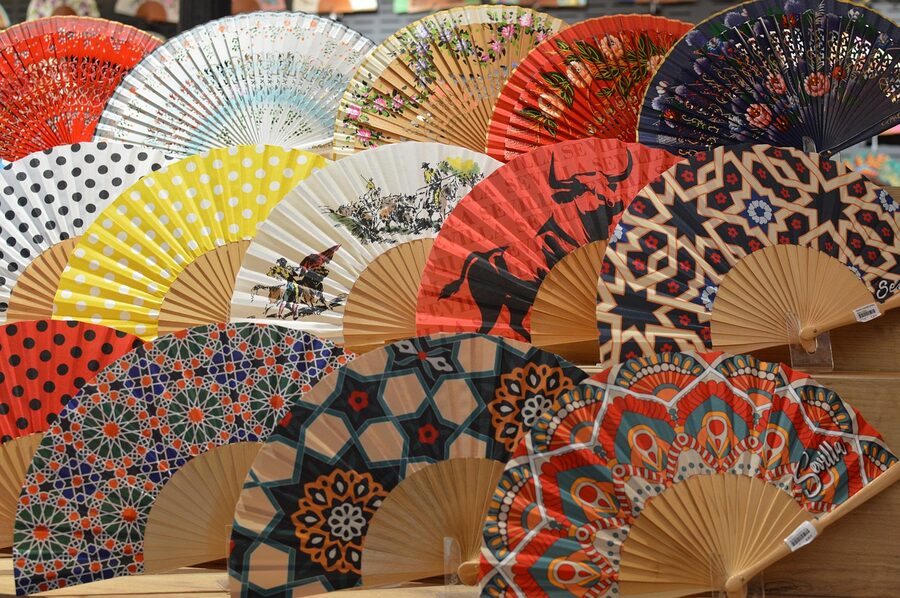
Bring a small gift for kids. Castanets or a mini flamenco fan from the Triana markets are €5-10 and kids love having a souvenir linked to what they just watched. We’ve got three sets of castanets rotating through our house from various flamenco evenings.
Photography. Allowed during the final piece at most venues. Check the venue’s specific policy; some are stricter than others. Flash is always banned.
Accessibility. Most Santa Cruz tablaos are in old buildings with steps; Triana tablaos mostly too. Ask the venue directly if you’ve got specific needs. Casa de la Memoria has a ramp; El Palacio Andaluz is fully accessible.
What if it rains?
Flamenco is entirely indoors — rain doesn’t affect the show. Seville doesn’t rain often in any case (about 50 rainy days a year, mostly winter). The only issue is walking to and from the venue; bring a small umbrella if the forecast is grim.
Actually a rainy Seville evening is a lovely time for flamenco. Streets are quiet, the tablao is warm and dimly lit, and the atmosphere focuses. Kids often sit through indoor shows better on wet nights when the alternative outside isn’t appealing.
Before you book, an honest checklist
Book a Seville flamenco show if: you’re in Seville for two or more days and want one authentic evening of Spanish culture. It’s one of the best value family cultural activities in the city.
Pick the top Seville Theatre show if: your family is new to flamenco and you want a proven, popular, family-sized option.
Pick Casa de la Memoria if: your older kids or teens are serious about seeing the best version. More purist, less tourist.
Pick the Puro Flamenco + Museum combo if: you want kids to understand the art form. The museum visit transforms the evening show.
Skip it if: kids are under 5 or you’ve done three flamenco shows already this trip.
One last tip: at the end of the show, most tablaos allow audience photos with the performers. Ask politely — most dancers are friendly, especially with kids, and they’ll pose for 30 seconds. Best souvenir photo you’ll get all trip.
Book the 8pm, sit near the front, let the kids clap palmas along with the finale. Worth every moment.