
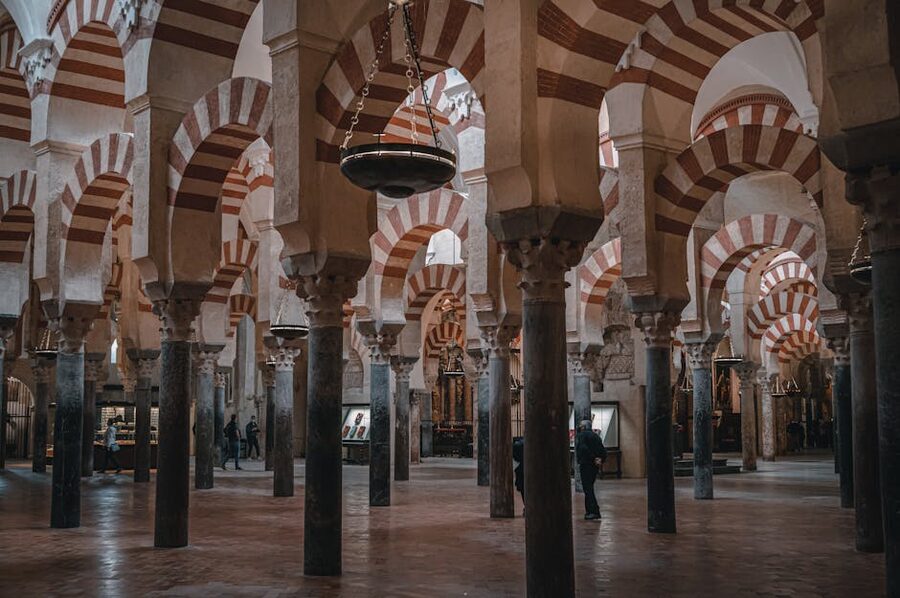
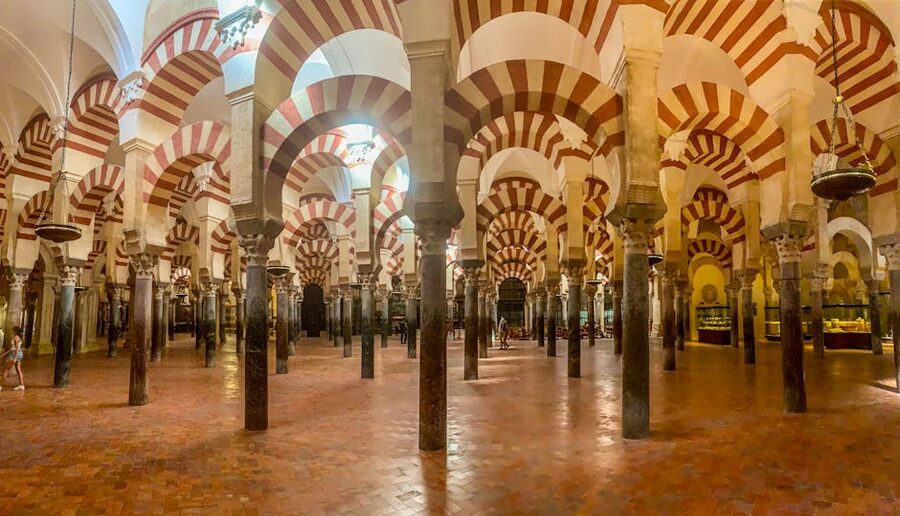
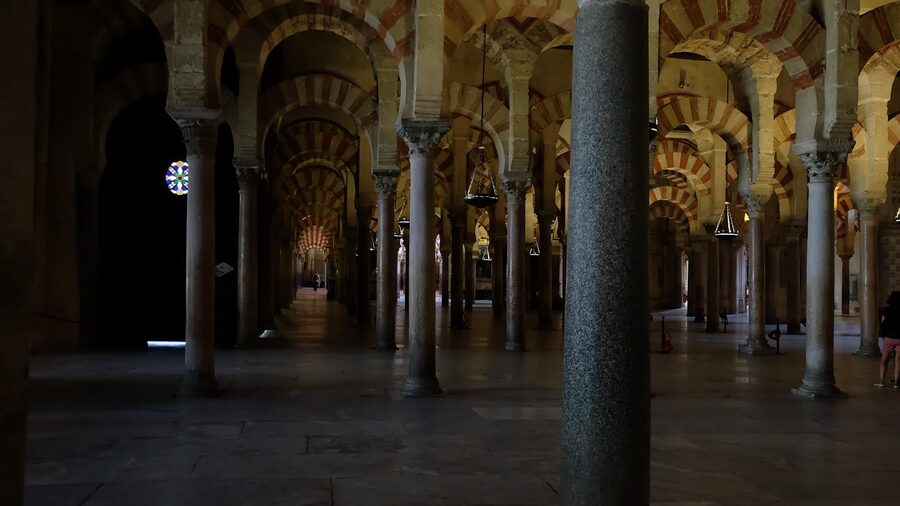
Our 11-year-old walked into the Mosque-Cathedral of Córdoba, looked up at the 856 striped red-and-white arches marching into the distance, and said “this is the weirdest building I’ve ever seen”. Exactly right. The Mezquita-Catedral is simultaneously an 8th-century Islamic mosque and a 16th-century Christian cathedral jammed into the same building — two religions, two architectures, same roof. Kids find it fascinating in a way they rarely find religious sites.
In a Hurry? Our Family Picks
Best-value guided tour: Skip-the-Ticket-Line Guided Tour ($31) — 75 min, 9,600+ reviews. Our top pick for families.
Detailed history tour: Mosque-Cathedral Detailed Guided Tour ($35) — 1.5 hours, deeper context. For kids 10+.
Self-paced audio: E-Ticket with Audio Guide ($24) — your own pace, 40 min minimum to 3 hours. Best for flexible families.
- In a Hurry? Our Family Picks
- Why this building is genuinely unique
- What you actually see on the visit
- 1. Patio de los Naranjos (entry courtyard, 10 min)
- 2. The mosque hall (30-40 min — the main experience)
- 3. The Mihrab (the Islamic prayer niche, 15 min)
- 4. The Cathedral (20-30 min)
- 5. The Treasury and chapels (15-20 min)
- 6. The Bell Tower (optional, 10 min climb, extra €3)
- Our top picks to book
- 1. Skip-the-Ticket-Line Guided Tour —
- 2. Detailed Guided Tour —
- 3. E-Ticket with Audio Guide —
- Getting to Córdoba and the Mezquita
- Timing the visit
- Age-by-age guide
- What to prep kids for
- Pairing with the rest of Córdoba
- A short history (for the kids who ask)
- Practical tips
- What if it rains?
- Before you book, an honest list
Why this building is genuinely unique
Almost no other major religious building in the world preserves two totally different faith traditions layered inside each other. Most conversion sites (Istanbul’s Hagia Sophia, for example) either dismantled or painted over the earlier layer. Córdoba’s Mezquita-Catedral kept both intact, which is why UNESCO recognised it in 1984.
Three things that land specifically with kids:
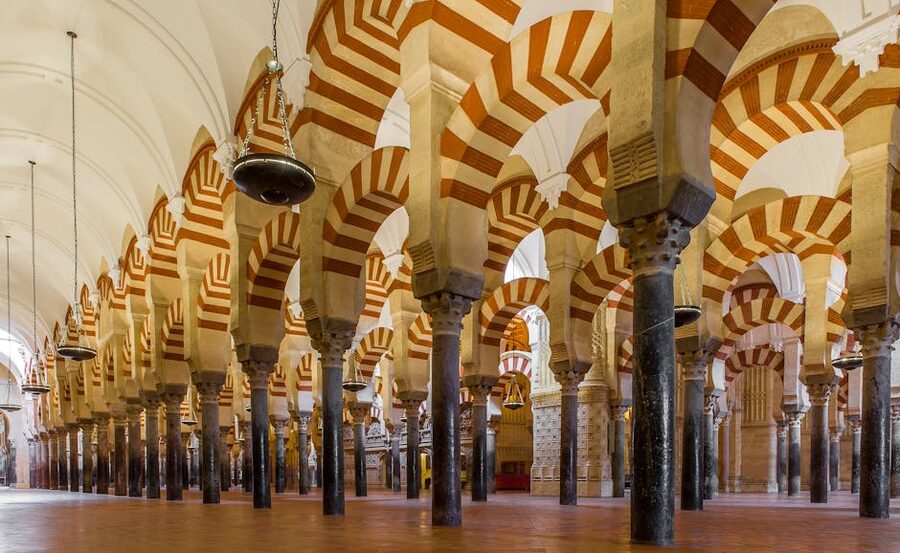
The scale. 23,000 square metres of prayer hall — one of the largest single-building interiors in Europe. Kids can run down the long corridors of columns (gently).
The visual puzzle. The double-striped arches create a dizzying effect. Kids love trying to photograph it and realising the camera can’t capture the depth.
The cathedral-in-mosque plot twist. Walking through the Islamic hypostyle hall you suddenly come upon a Renaissance Christian cathedral built right in the middle. Kids go “wait, what just happened?” Exactly the reaction the architects inadvertently designed.
What you actually see on the visit
The standard visit walks you through the complex in a loop of about 60-90 minutes. Key stops:
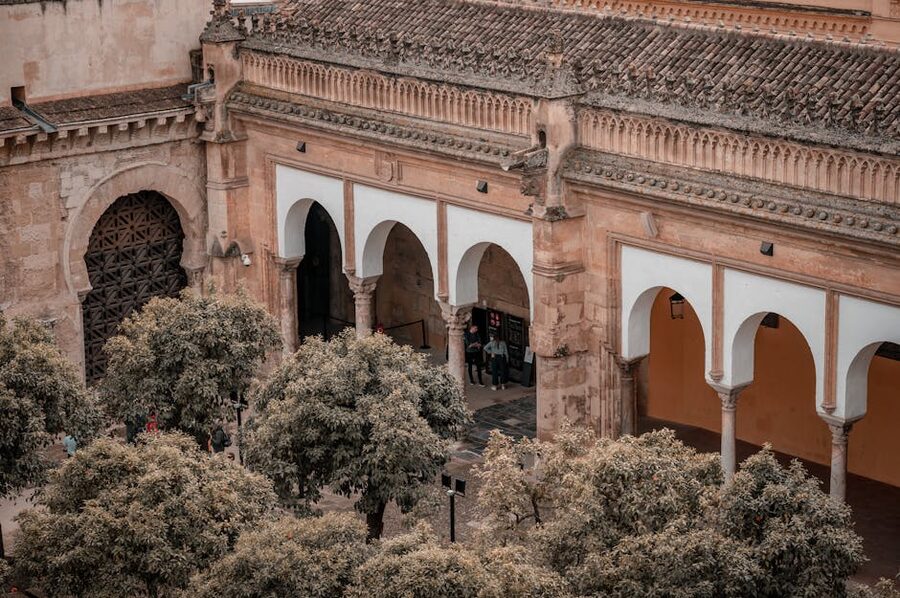
1. Patio de los Naranjos (entry courtyard, 10 min)
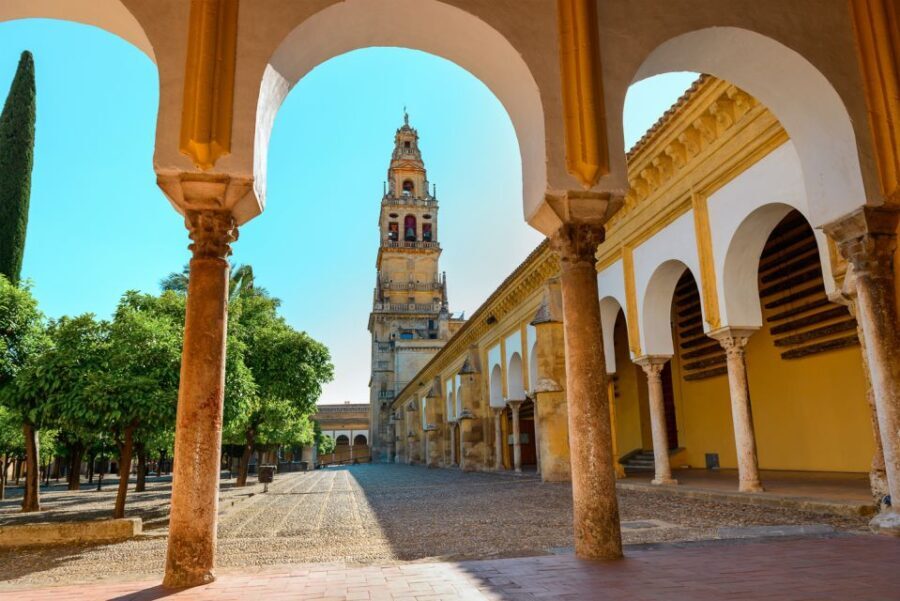
You enter through the orange-tree courtyard — the original ritual-washing area of the 8th-century mosque. Rows of orange trees, a central fountain, tiled walls. Free to enter (the ticketed visit starts inside the building proper).
2. The mosque hall (30-40 min — the main experience)
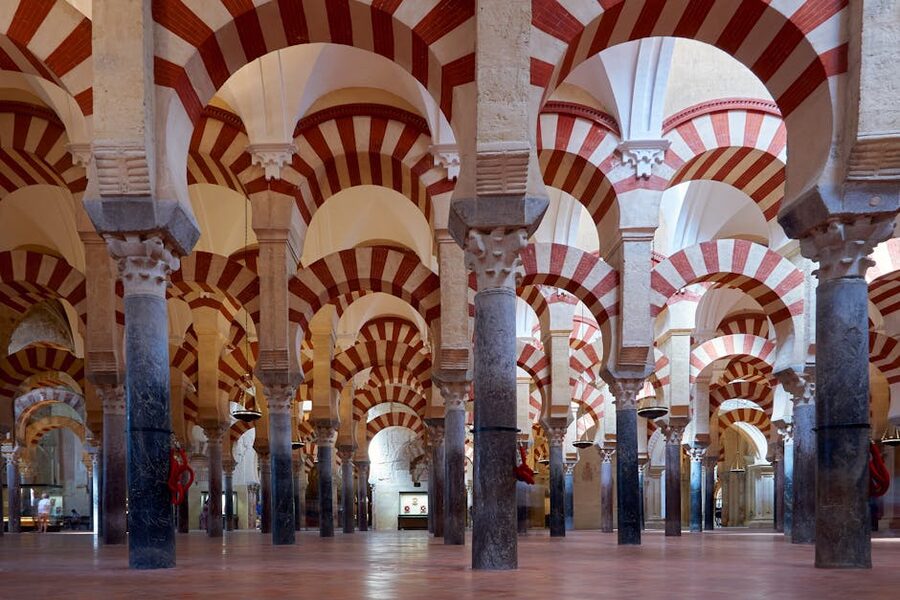
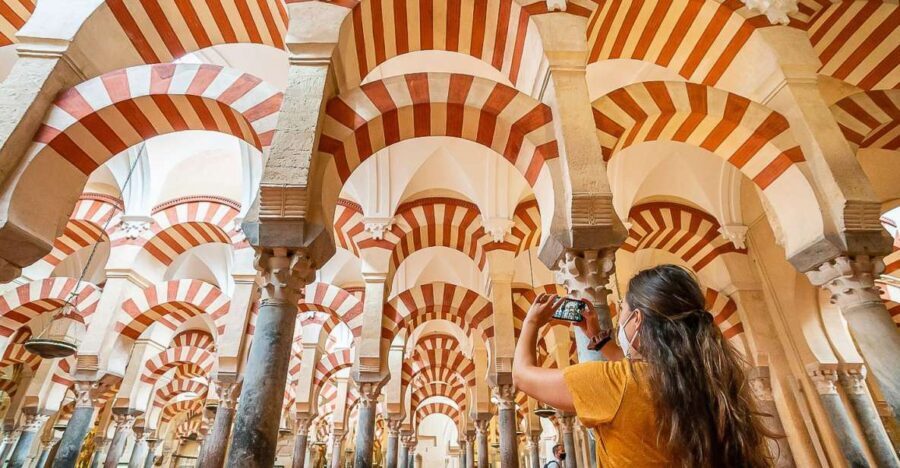
Enter through the Puerta de las Palmas and you’re instantly in the hypostyle hall — 856 columns supporting 365 double-arched columns (the numbers are intentional: 365 = days of the year). The effect is genuinely disorienting. Kids walk slowly, looking up, and usually don’t talk for the first 5 minutes.
3. The Mihrab (the Islamic prayer niche, 15 min)
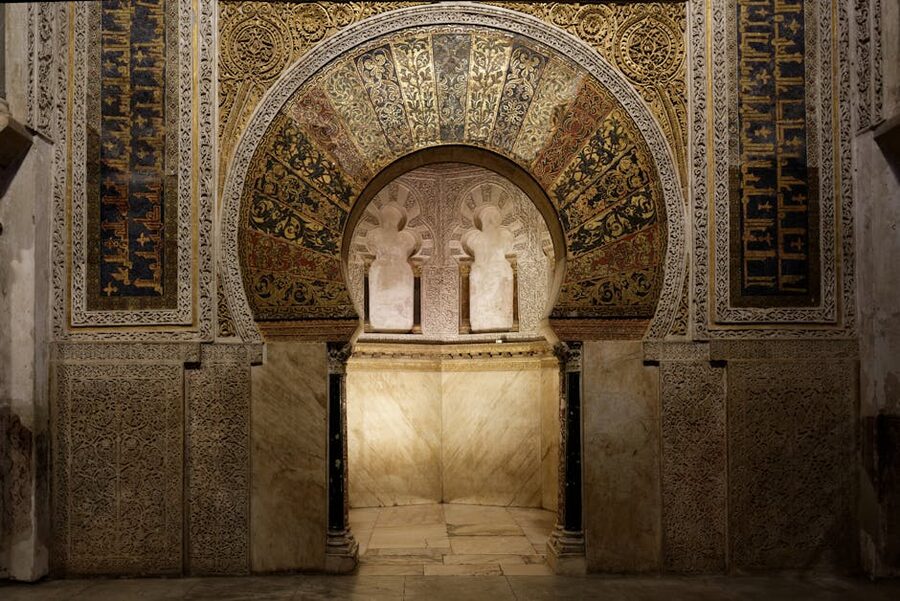
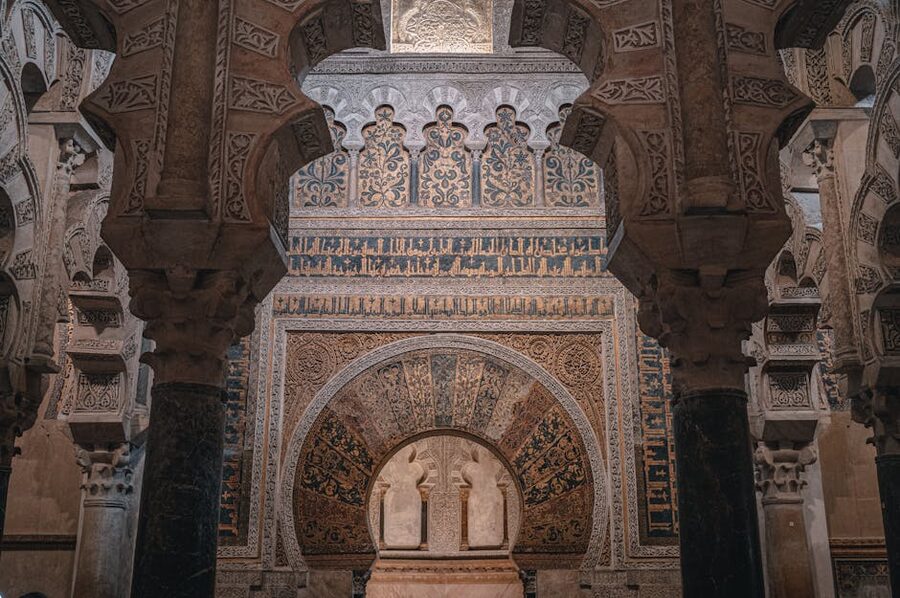
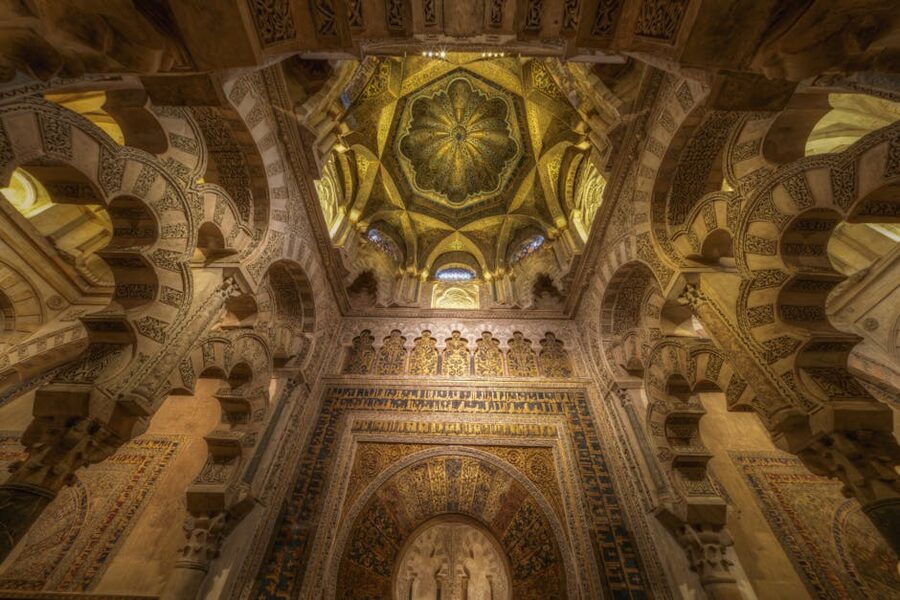
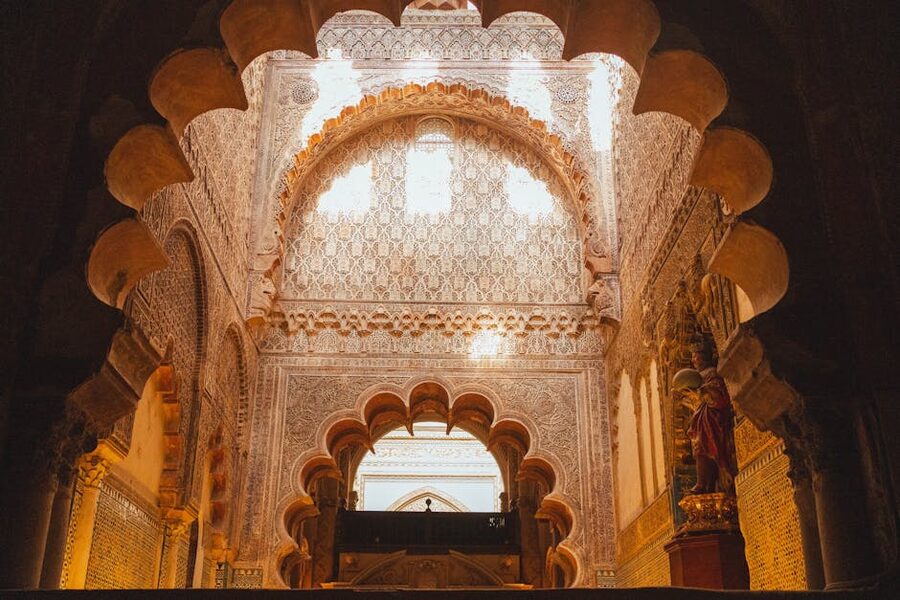
The Mihrab is the ornate prayer niche at the south wall, facing Mecca. Built around 965 under Caliph Al-Hakam II, covered in gold mosaic work that was a diplomatic gift from the Byzantine emperor. One of the most beautiful single architectural features anywhere in Spain.
4. The Cathedral (20-30 min)
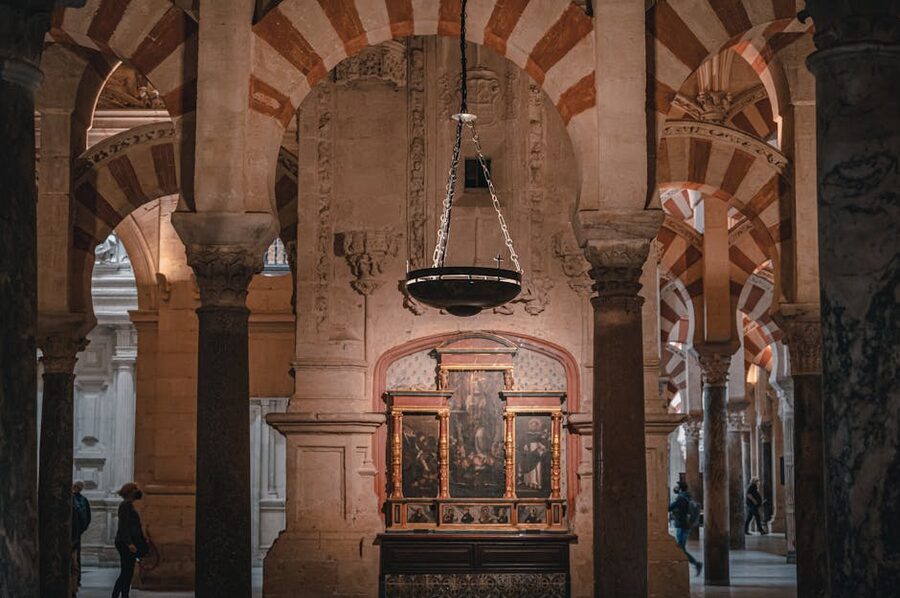
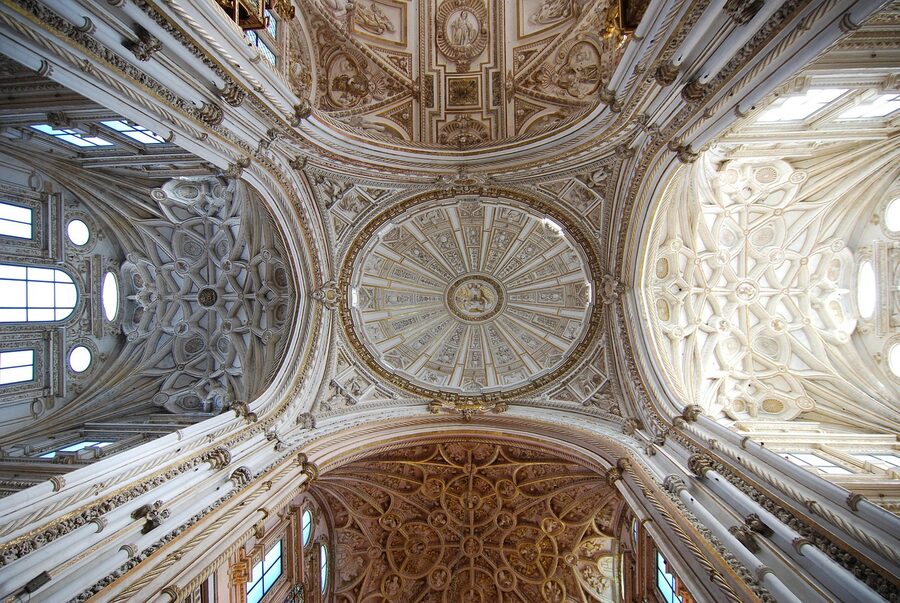
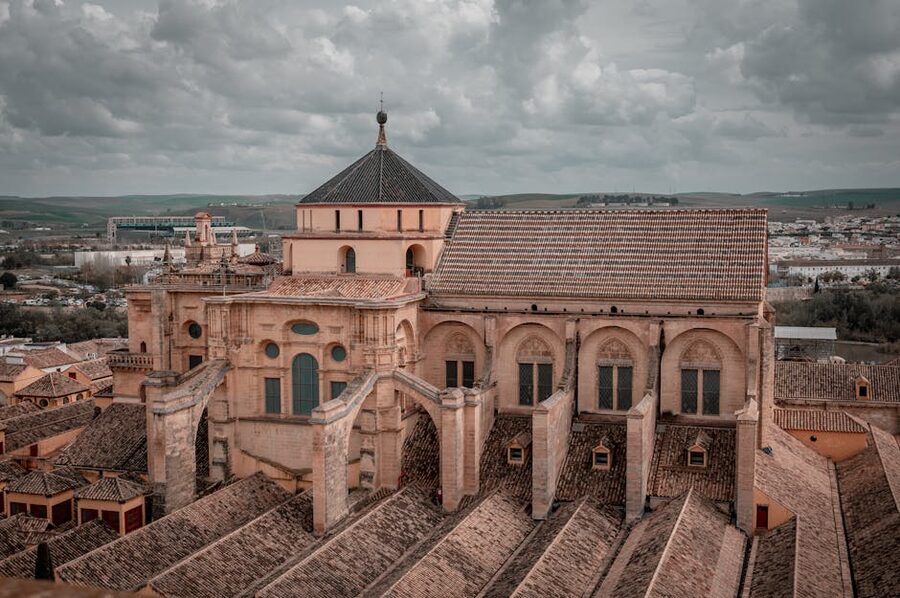
In the middle of the Islamic hall, a Christian cathedral was inserted in 1523. Renaissance choir, Gothic altar, Baroque ceiling — it’s a deliberate collision of styles. Charles V famously said after seeing it: “You have built here what could be built anywhere; to do so you have destroyed what was unique in the world.” The Cathedral is still beautiful, but the Emperor had a point.
5. The Treasury and chapels (15-20 min)
Around the edges are small chapels, tombs of important Córdoba families, and a treasury with silver reliquaries and religious art. Kids can skim this; the headline arches and Mihrab are what matter.
6. The Bell Tower (optional, 10 min climb, extra €3)
The Alminar-Campanario (minaret-bell tower) is on the west side. Climb up for views over Córdoba and the Mezquita’s roof. Not buggy-accessible; 54 metres tall, narrow stairs. Kids 7+ can handle; under-5s should stay below.
Our top picks to book
1. Skip-the-Ticket-Line Guided Tour — $31
Our default family booking. Guide handles tickets, walks you through the highlights in 75 minutes, answers kids’ questions. Our skip-the-line guided tour review covers guide quality, what the 75 minutes includes, and which time slots are quietest. Works for kids 7+ who can follow a guided group pace.
2. Detailed Guided Tour — $35
If your kids are 10+ and interested in history, this longer format earns its extra $4. More time at each stop, more stories, more context about the mosque-to-cathedral conversion. Our detailed tour review covers whether the extra depth lands with kids that age (usually yes) and which specific architectural features the guide focuses on.
3. E-Ticket with Audio Guide — $24
Self-paced is often the right call with younger children. Audio guide on your phone, no group to keep up with, stop whenever a kid needs a break. Our audio guide e-ticket review covers what the audio content includes (kid-focused version available in some languages) and how to pace the visit with small children.
Getting to Córdoba and the Mezquita
Córdoba is a major Andalusian city easily reached from other cities:
From Madrid: AVE high-speed train, 1h45m, about €40-80 depending on when you book. Kids under 4 travel free.
From Seville: AVE 45 min or regional train 1h15m. €12-25. This is the easy day trip.
From Granada: direct train 1h45m, about €35. Or 3 hours by car.
From Málaga: AVE 55 min, €30-50.
Córdoba station is 15-20 minutes walk from the Mezquita, or €7-8 taxi. The old town is compact — everything we’ll care about is within 15 min walking.
Timing the visit
Opening hours: 10am-7pm in summer (March-October), 10am-6pm in winter. On Sundays opens 8:30-9:30am for free entry (no ticket needed for 1 hour morning slot, but you can’t book a tour during that window).
Best time: 10-11am when it opens. Second best: 4-5pm when tour groups thin out.
Worst time: midday (noon-2pm). Heat outside, crowds inside.
Avoid Mondays if possible — some sections may be closed for cleaning/maintenance. Check before booking.
Age-by-age guide
Under 5: works surprisingly well. The visual impact lands. Budget 45 minutes; they’ll enjoy 30.
5-8: sweet spot. The “forest of arches” concept captures imagination. 60 minutes is about right.
9-12: full history engagement. The conversion story lands, the architectural context is fascinating.
13+: can handle the detailed guided tour. Historical complexity (Moorish Al-Andalus, Reconquest, Renaissance) is exactly the kind of material that clicks for teens who’ve done European history.
What to prep kids for
The scale. Tell kids in advance — “imagine a forest made of stone”. The first reaction is what they’ll remember; worth priming them.
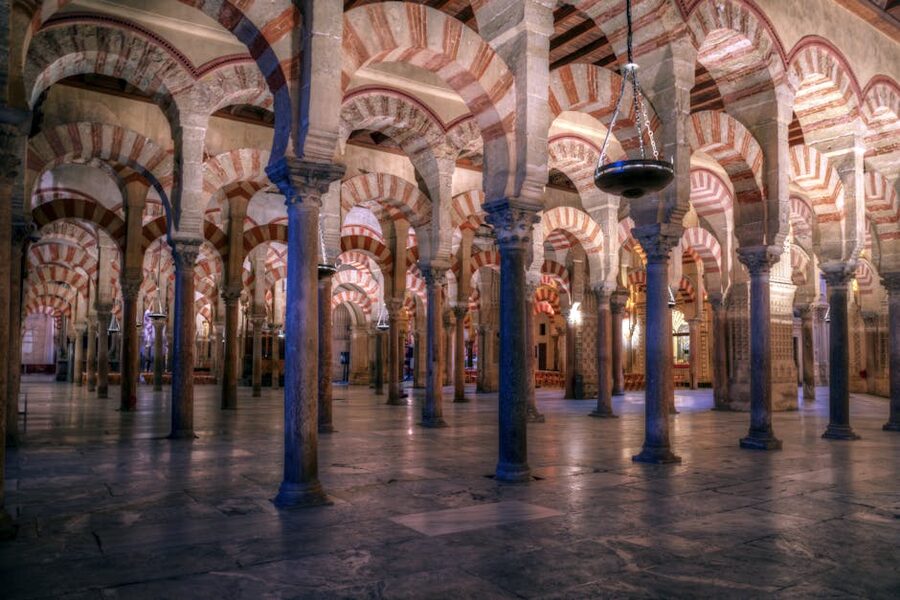
Both Muslim and Christian. This is the weird bit for kids. A building is both a mosque and a cathedral at the same time. Explain this before you go in — it’s the intellectual hook that makes the visit memorable.
Silent or quiet. The Mezquita is still a working Catholic cathedral. Low voices expected throughout. Kids who are used to museum-volume will adjust quickly.
Photography. Allowed without flash. Phones fine. No tripods. Kids can photograph the arches; it’s a perfect “photographer’s first big subject” location.
Pairing with the rest of Córdoba
The Mezquita is the main event but Córdoba has other family-friendly spots within walking distance:

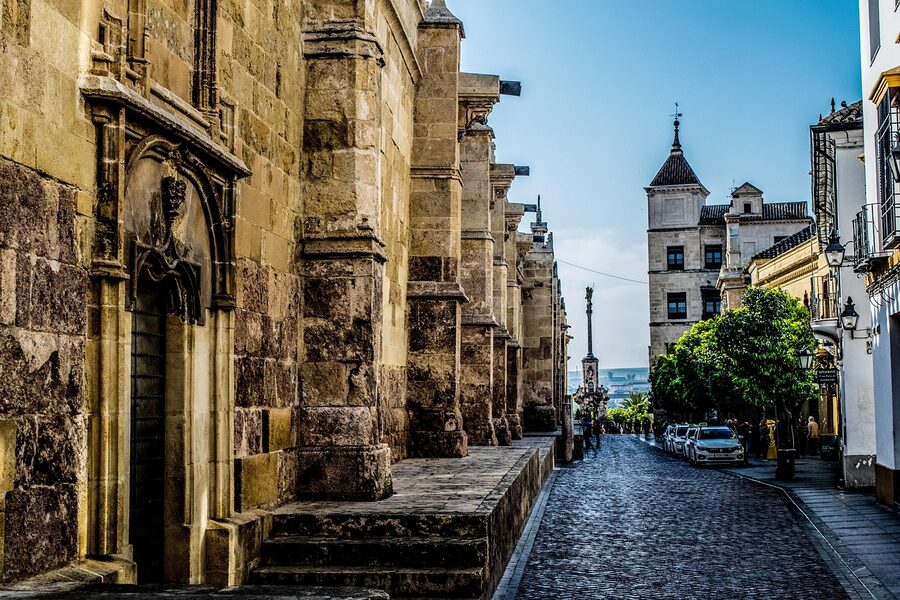
Jewish Quarter (Judería): medieval Jewish quarter next to the Mezquita. Narrow lanes, whitewashed walls, the 14th-century Synagogue (one of only 3 surviving medieval synagogues in Spain). 30-45 min wander.
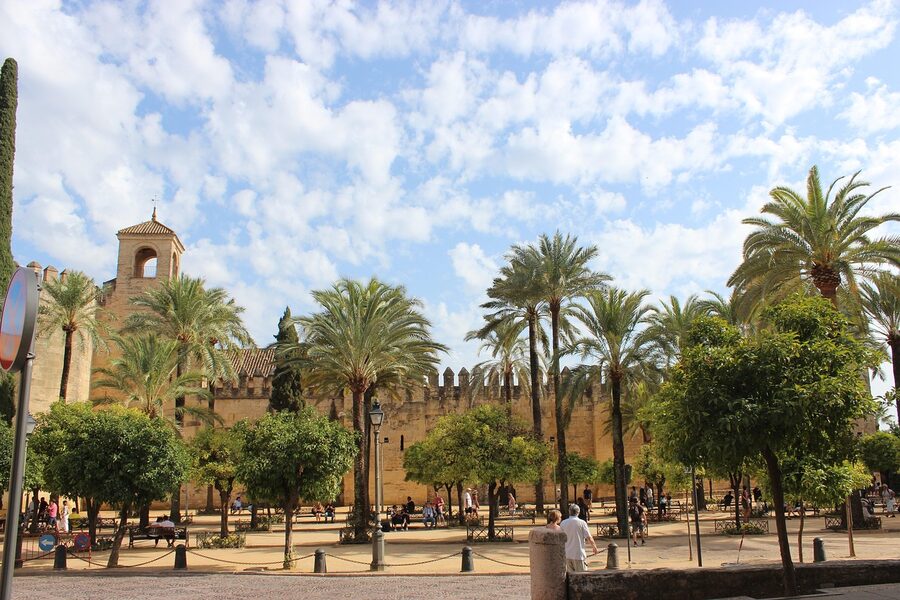
Alcázar de los Reyes Cristianos: Christian fortress-palace with Moorish-style gardens. 1 hour visit. Separate ticket (~€5).
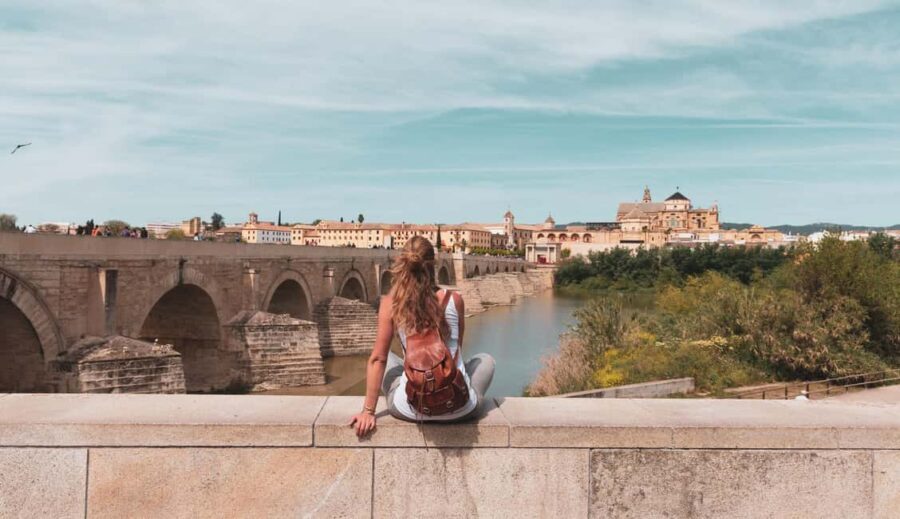
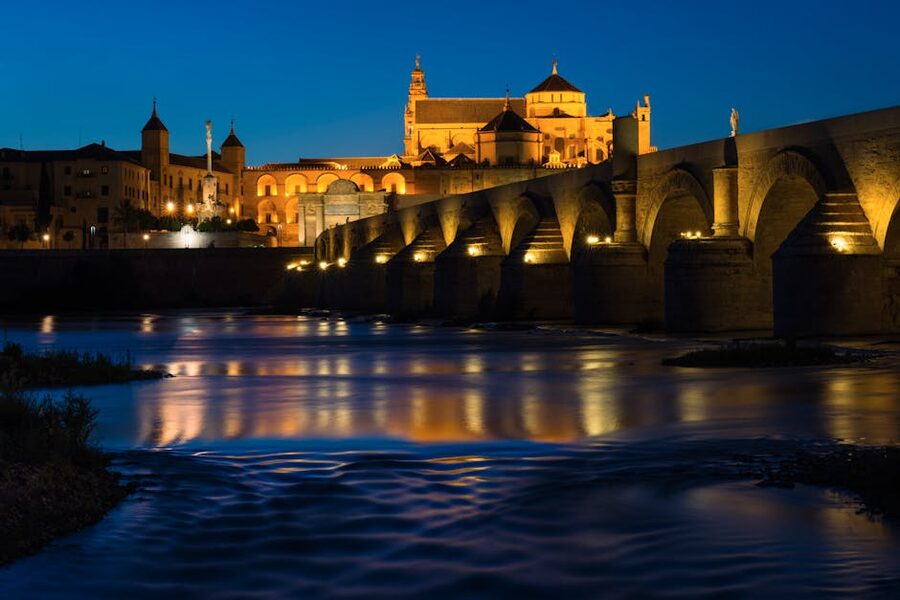
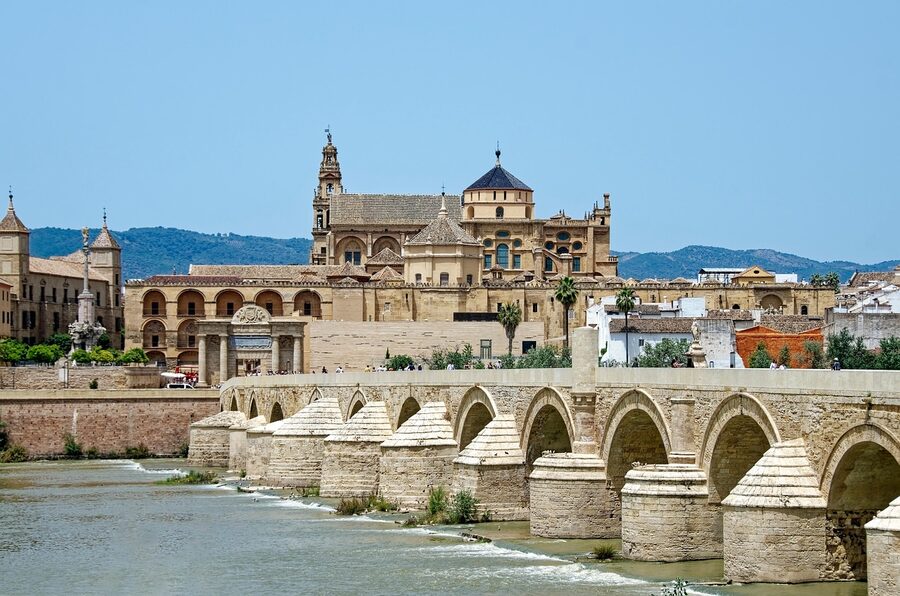
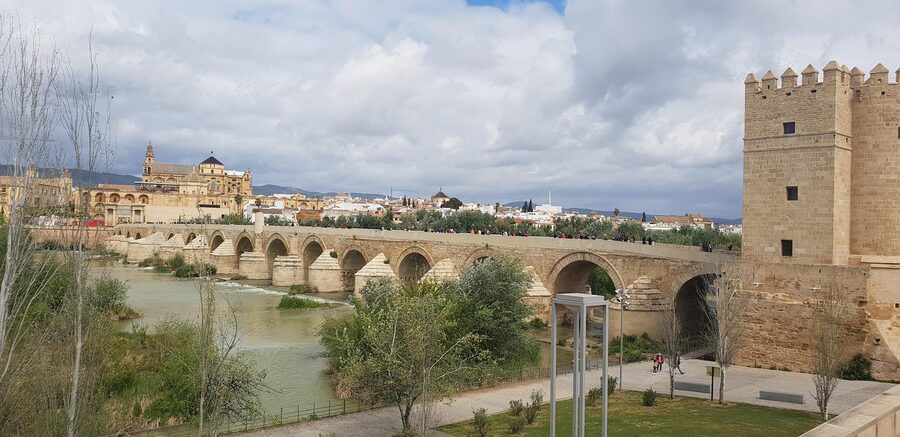
Roman Bridge and Calahorra Tower: walk across the 1st-century BC Roman bridge to the Calahorra Tower, a small museum about the convivencia (Muslim-Christian-Jewish coexistence). 30 min museum, 10 min bridge walk.
Cordoba Patios Festival (May): if you’re visiting in May, the city’s famous courtyards open to the public for the first two weeks. Not a separate ticket; a self-guided walking route.
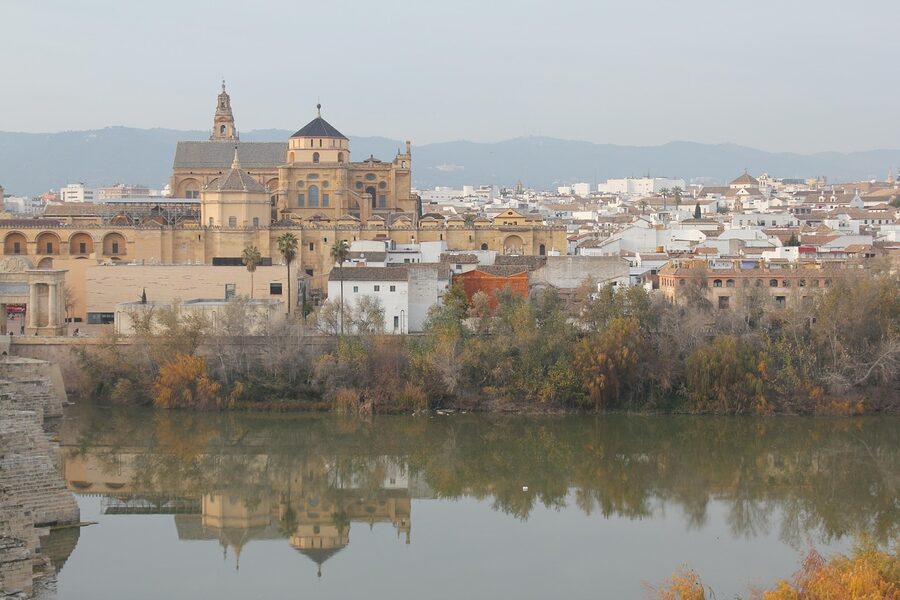
Córdoba as a day trip: our Seville family visit guide notes that Córdoba works brilliantly as a day trip from Seville (45-min AVE train each way, most attractions within walking distance of the station).
A short history (for the kids who ask)
The Mezquita-Catedral has been a religious site for almost 2,000 years. Key periods:
Visigothic church (6th-8th century): first Christian church built on the site.
Umayyad mosque (785-988): after the Moorish conquest in 711, the Christian church was shared and then replaced by a mosque. Successive caliphs expanded it in four major phases. By 988 it was one of the largest mosques in the world and the symbolic heart of Al-Andalus (Islamic Spain). Córdoba itself was Europe’s largest city at this time (400,000 people) — the cultural centre of the Muslim West.
Christian reconquest (1236): Ferdinand III took Córdoba from the Moors and the mosque was immediately re-consecrated as a cathedral. For nearly 300 years the Christian authorities used the building as-is, adding only small chapels along the walls.
Cathedral insertion (1523): Bishop Alonso Manrique got royal permission to build a proper cruciform Renaissance cathedral inside the mosque hall. The city council opposed it; Emperor Charles V famously regretted approving it after seeing the result. Construction took 250 years, finished 1766.
Modern ownership disputes: the building is legally owned by the Roman Catholic Diocese of Córdoba (since 2006, via a disputed registration). This has caused some political controversy — many Spaniards feel it should be public heritage rather than Church property. For visitors this doesn’t affect anything practical.
UNESCO status since 1984 — inscribed as a World Heritage Site for its exceptional architectural value.
Practical tips
Book skip-the-line. The regular ticket queue can hit 30 minutes in summer.
Dress modestly. Shoulders covered, knees covered. Kids can wear shorts but no sleeveless vests. A light cardigan in the bag is the universal fix.
Cameras OK. No flash, no tripods. Phones fine.
Audio guide languages: English, Spanish, French, German, Italian, Japanese. A kid-friendly version exists in Spanish; English version is standard.
Accessibility: step-free access throughout the main prayer hall. Some side chapels have steps. Wheelchair and buggy-accessible generally; bell tower is not.
Toilets: near the entrance and exit. Baby-change available.
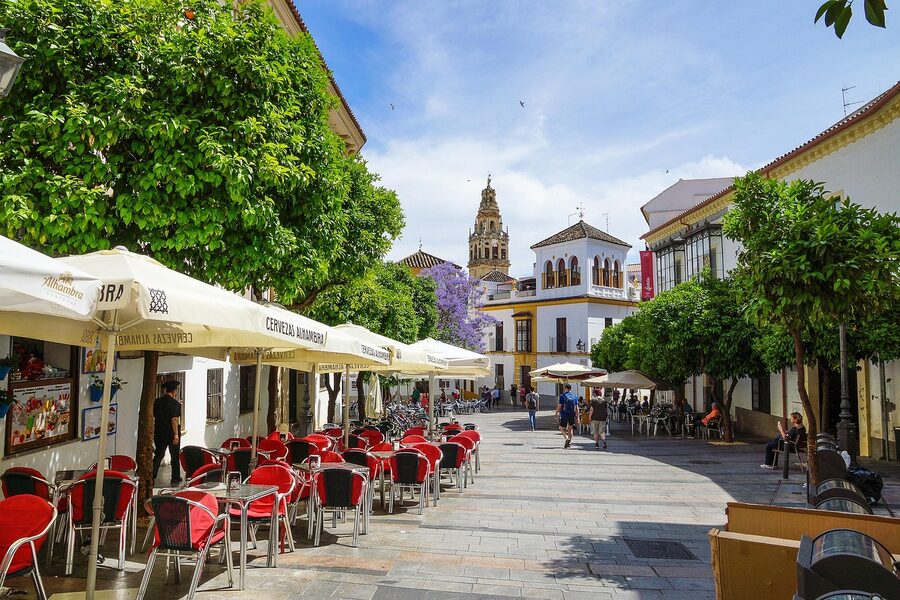
Food: nothing inside; plenty of tapas bars outside in the Jewish Quarter.
Combined tickets: many tours offer Mezquita + Alcázar + Jewish Quarter combos. Worth it if you want to see everything in one morning.
What if it rains?
The Mezquita is entirely indoor — rain doesn’t affect the visit at all. In fact, a rainy day is a good time to visit; the acoustic is even more contemplative when it’s quiet outside, and crowds thin.
Before you book, an honest list
Book the standard guided tour if: your kids are 7+ and you want the visit done well in 75 minutes. Default recommendation.
Book the detailed tour if: your kids are 10+ and genuinely interested in history.
Book the audio guide e-ticket if: your kids are under 7 or flexibility matters more than structure.
Skip the bell tower with under-5s. Revisit with older kids.
Pair with: Jewish Quarter wander, Alcázar, lunch in the patios. A half-day in Córdoba covers it all.
Day trip viable from: Seville (easiest), Granada, Málaga, Madrid. Don’t try to include Córdoba in the same day as another major city; each deserves a half-day minimum.
One last tip: at the end, walk around the back of the Cathedral to find the small Capilla de Villaviciosa — a chapel that was converted from one of the original mosque sections. It has both Islamic arches and Christian altar in one room. Best single “this is how the building works” photo in the entire visit.
Book the standard guided tour, arrive 10 minutes early, walk slowly. €31 for one of the most unique architectural experiences anywhere in Europe.