
My daughter’s exact words walking into the Salón de los Embajadores at the Alcázar were, “is this where the princess lived?” And honestly, yes — not always the kind of princess she was picturing, but this place has housed Moorish sultans, Christian kings, and queens for nearly a thousand years, and some of them were absolutely princesses. The Alcázar of Seville is the single most child-catching palace we’ve ever taken our kids into, and I say that as someone who has done a lot of European palaces with children.
In a Hurry? Our Family Picks
Best budget option: Royal Alcázar Entry Ticket ($23) — self-paced with skip-the-line, works at any age, most-booked Alcázar ticket by a country mile.
Full history day with guide: Alcázar + Cathedral + Giralda Skip-the-Line Tour ($64) — 3 hours, covers all three UNESCO sites with one ticket, live guide making the stories kid-friendly.
Alcázar-only guided tour: Seville: Alcázar Guided Tour ($46) — 75 minutes, skip-the-line, manageable for younger kids.
- In a Hurry? Our Family Picks
- Why the Alcázar is the one palace kids actually love
- What to actually see (a kid-paced route)
- 1. Patio del León → Patio de la Montería (entry courtyards, 5 min)
- 2. Palacio de Don Pedro (the main palace, 25-30 min)
- 3. The Patio de las Muñecas (Dolls’ Courtyard, 5 min)
- 4. Upper floor Royal Apartments (optional, 10-15 min)
- 5. The Gardens (40-60 min — this is the main event for families)
- 6. The Baños de María Padilla (underground baths, 5 min)
- Our top picks to book
- 1. Royal Alcázar Entry Ticket —
- 2. Alcázar + Cathedral + Giralda Skip-the-Line Tour —
- 3. Seville: Alcázar Guided Tour —
- Getting there and timing
- Free entry times
- Kids’ practical bits
- A short history (for the kids who ask)
- Pairing with the rest of Seville
- Best time of year to go
- What if it rains?
- Before you book, a short honest list
Why the Alcázar is the one palace kids actually love
Most royal palaces are a slog with kids. Walls of portraits, endless corridors of gilt furniture, velvet ropes keeping them 3 metres from anything interesting. The Alcázar is different for three reasons.
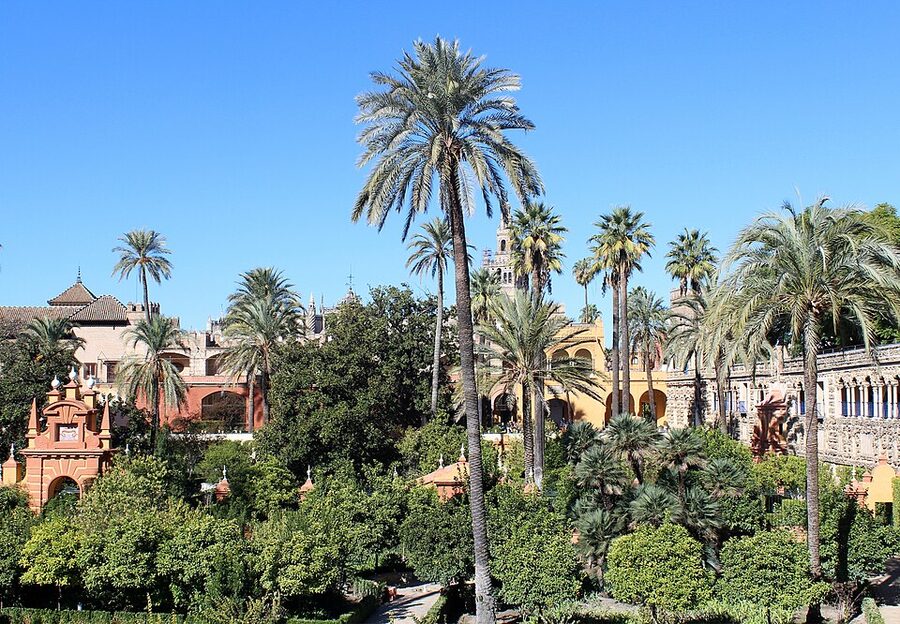
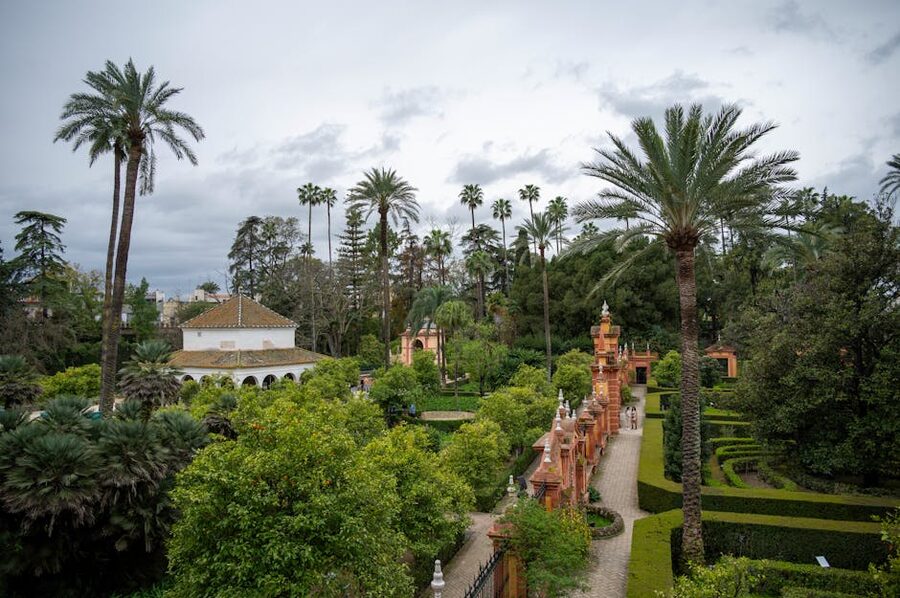
First, the gardens. The Alcázar gardens cover more ground than the palace itself and kids can actually run around. There are peacocks (genuinely — free-roaming, sometimes screaming), orange trees, fish ponds, and a maze of hedges. Most palace gardens are the bit adults wander through to look at statues; at the Alcázar they’re the main attraction for any child under 10.
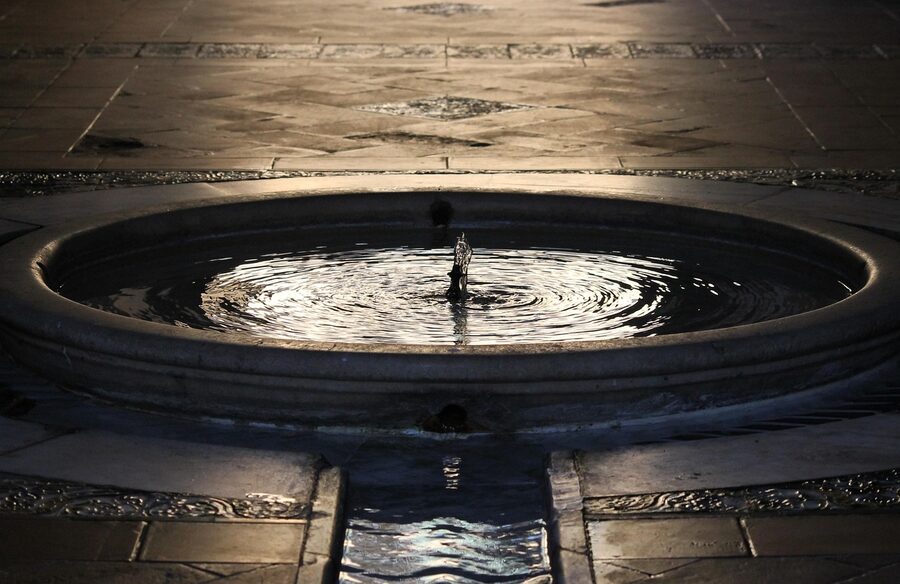
Second, the Moorish architecture is visual sugar for kids. Geometric tile patterns in ten colours, carved wooden ceilings they’ll crane their necks at, fountains, reflecting pools, stucco walls that look like lace. It’s like walking around inside a picture book.
Third, the Game of Thrones connection. Season 5 and 6 filmed the Water Gardens of Dorne scenes here. If your kid is GoT-aware (10+), mentioning this transforms the visit from “another palace” to “that palace from that show”. Some tour guides lean into the connection; the entry-ticket signage doesn’t.
What to actually see (a kid-paced route)
The Alcázar is big enough that you could spend four hours here, but most families manage 90 minutes to 2 hours before tired legs and attention issues kick in. This is the order we’ve found works best:
1. Patio del León → Patio de la Montería (entry courtyards, 5 min)
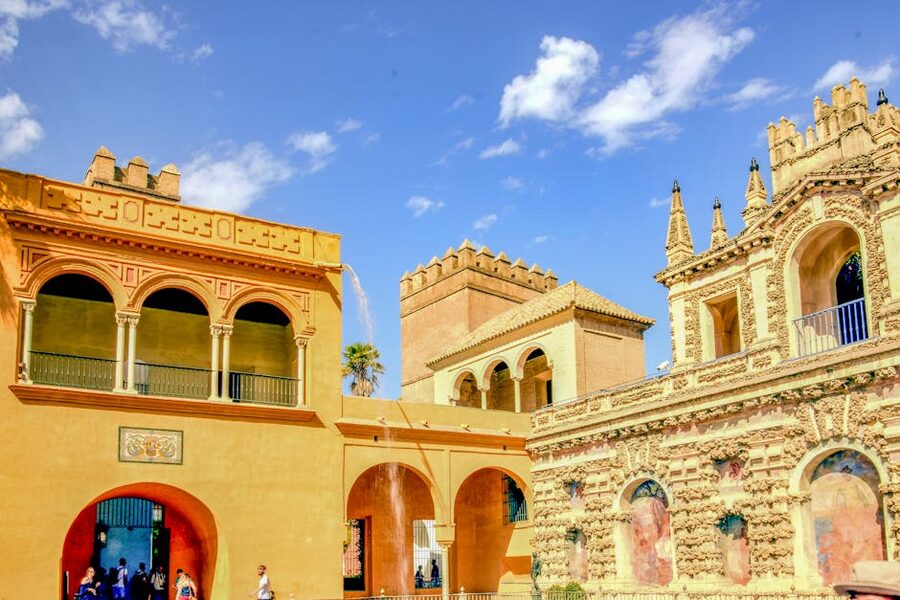
You enter through the Patio del León (Lion’s Courtyard), a simple paved square that was historically the first line of defence. It opens onto the larger Patio de la Montería (Hunting Courtyard), where the king’s hunting guards would gather. Nothing to hold kids’ attention here long — straight through.
2. Palacio de Don Pedro (the main palace, 25-30 min)
This is the heart of the Alcázar and where most of the famous rooms are. You enter through the Palacio de Don Pedro, built in the 14th century by the Christian king Pedro I — but using Moorish craftsmen and Moorish style, because he loved it. The result is one of the best examples of Mudéjar architecture in the world.
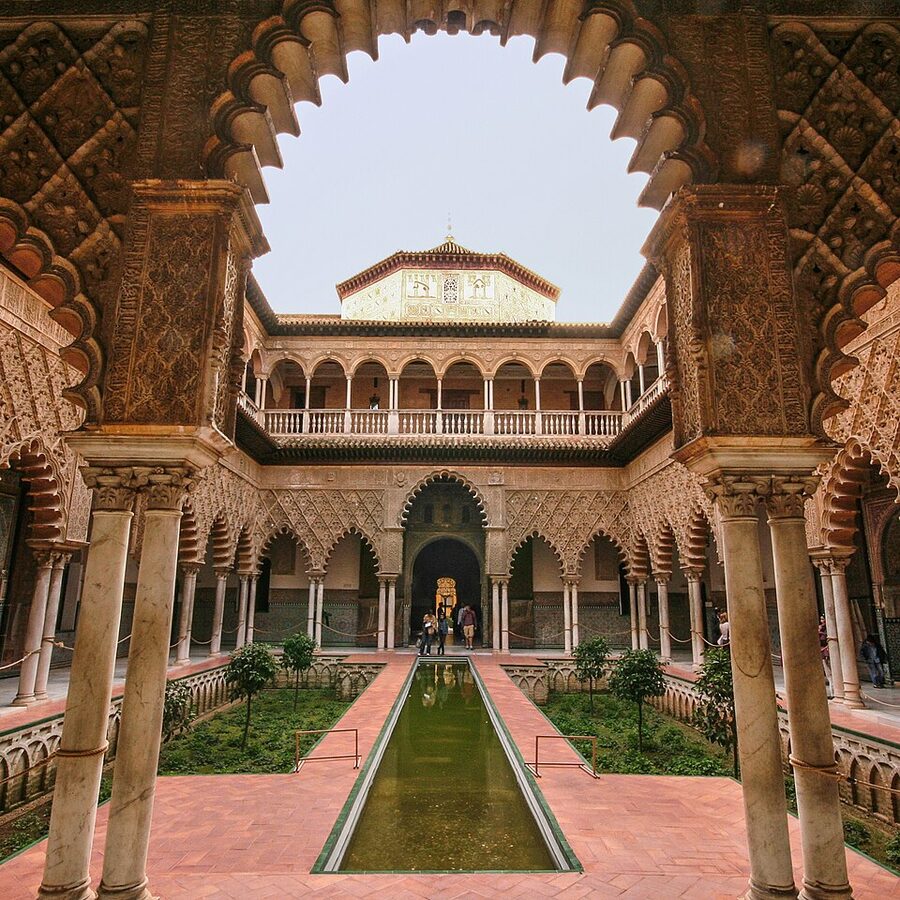
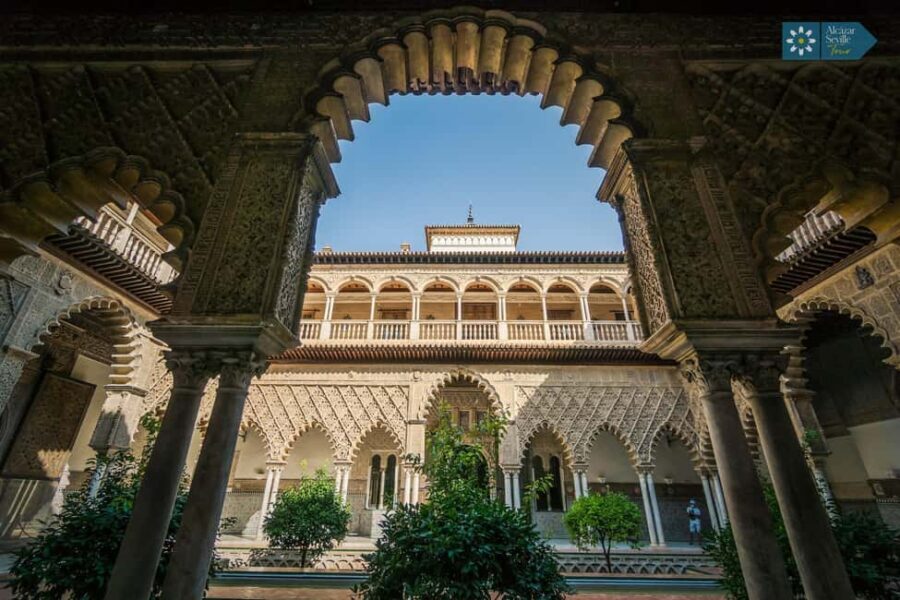
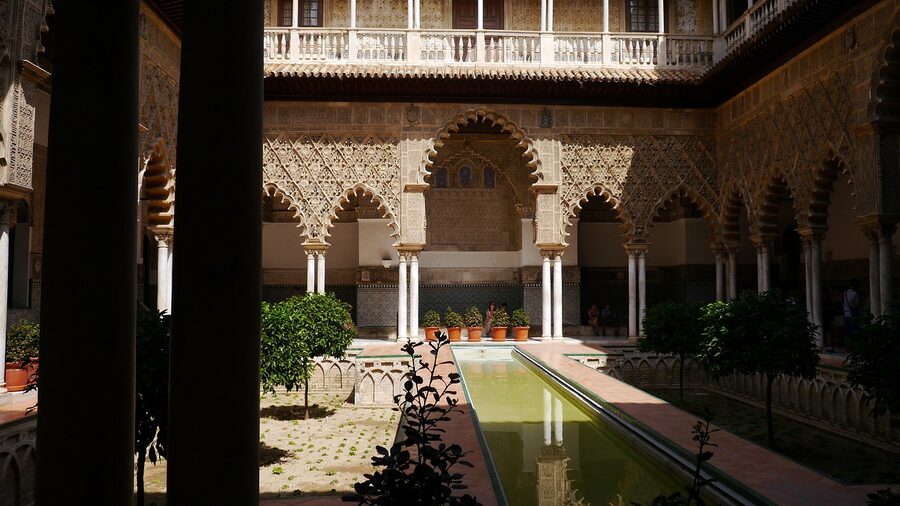
The single most famous room is the Patio de las Doncellas (Courtyard of the Maidens) — a long reflecting pool surrounded by delicate arches. This is the Game of Thrones Dorne shot. Kids love it. Parents love it. Even grandparents love it. Go early in your visit because it gets crowded by 11am.
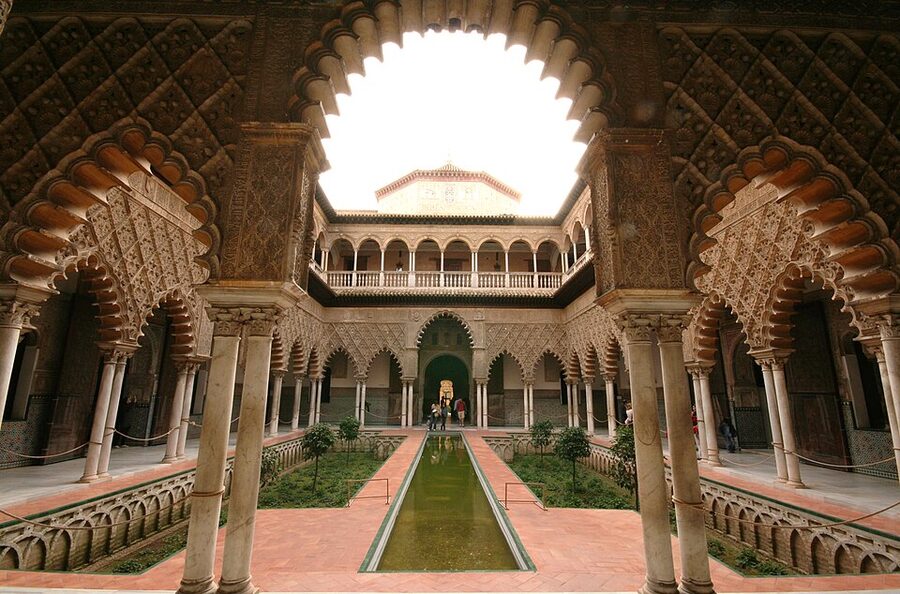
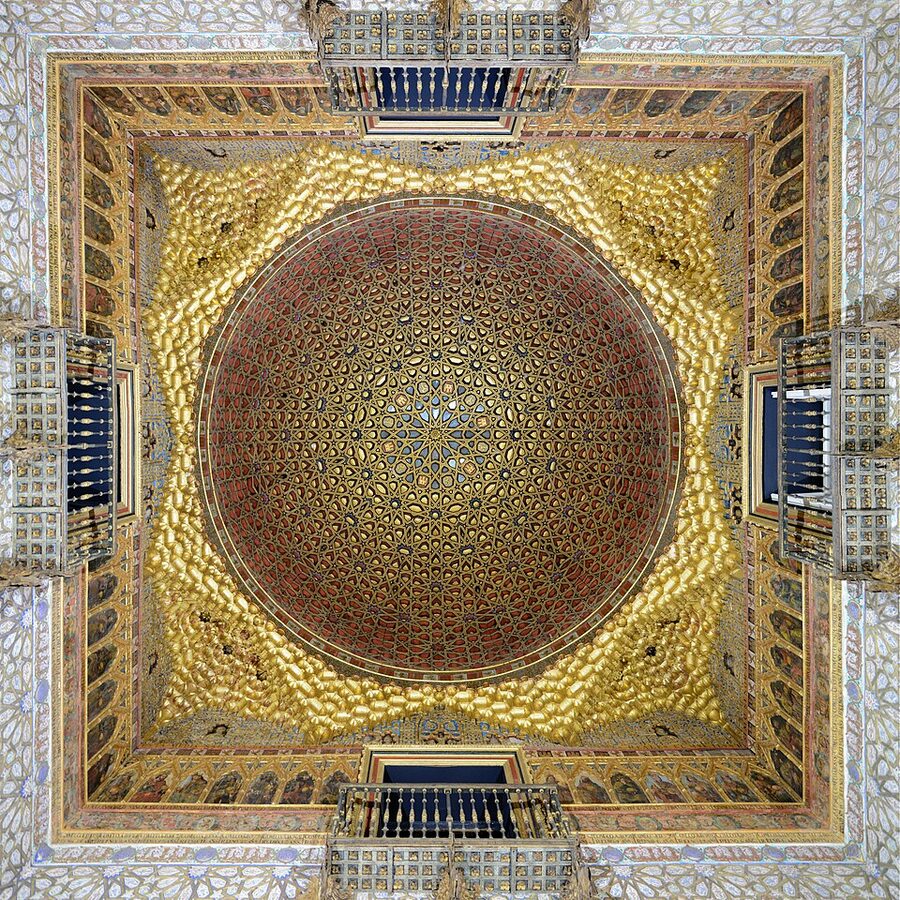
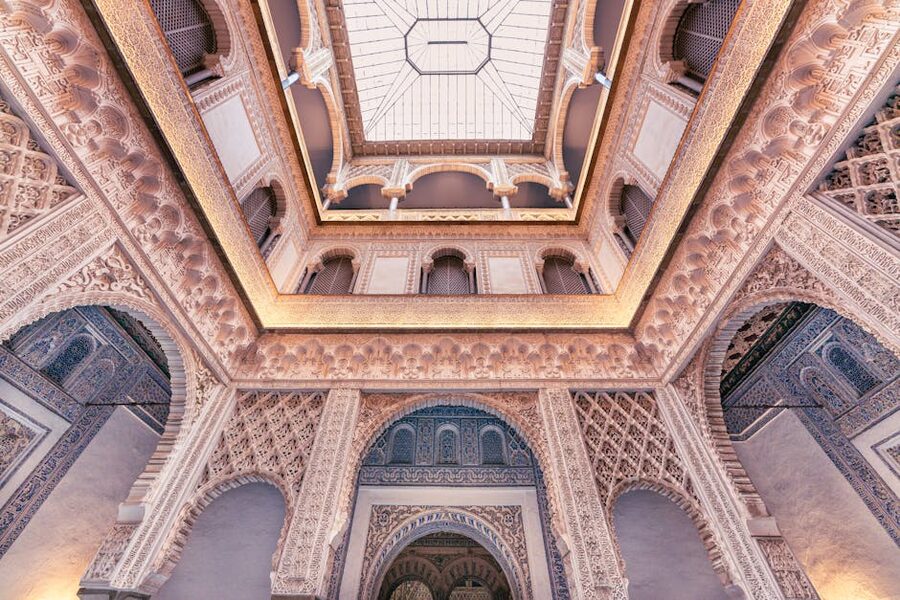
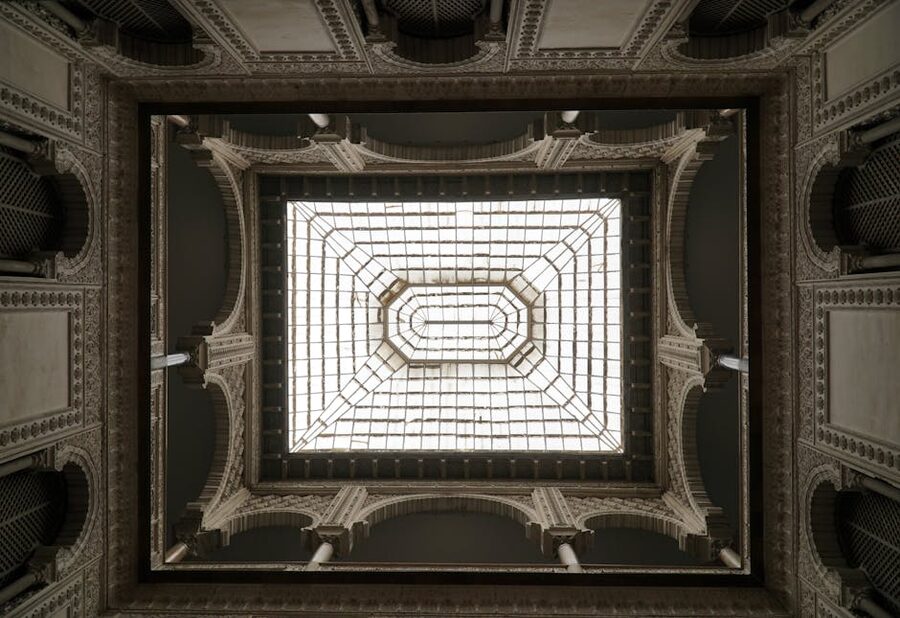
From the Patio de las Doncellas, you walk through a sequence of rooms including the Salón de los Embajadores (Ambassadors’ Hall) — a domed throne room with a carved wooden ceiling that’s one of the most impressive things we’ve shown our kids in any palace anywhere. The dome is gold-and-cedar mocárabes (geometric stalactite carvings); it’s 9 metres across and over 500 years old.
3. The Patio de las Muñecas (Dolls’ Courtyard, 5 min)
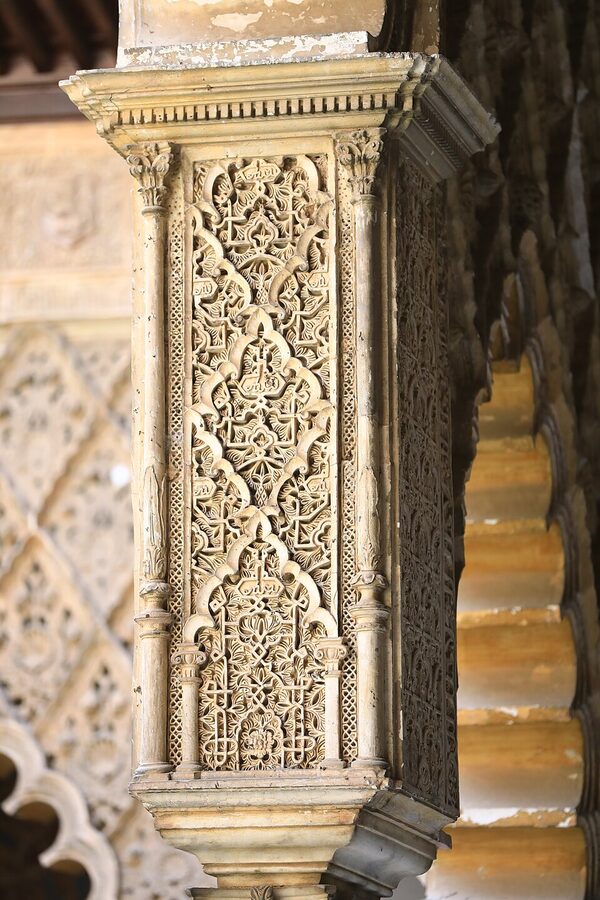
Smaller and more intimate than the Patio de las Doncellas. The name comes from tiny carved dolls’ faces hidden in the decoration — kids can hunt for them. There are two main ones and at least 10 hidden smaller ones. Our daughter spent 15 minutes here trying to find them all. Bring a torch or use your phone flashlight; some are in shadow.
4. Upper floor Royal Apartments (optional, 10-15 min)
The upper floor is still an official residence of the Spanish royal family when they’re in Seville, and it’s closed to self-guided ticket holders. You can see it on a separate guided tour (pre-book; limited daily slots). With kids under 10, skip it — the ground floor Moorish bits are much more interesting. With teens, maybe, especially if they’re into history.
5. The Gardens (40-60 min — this is the main event for families)
When you leave the palace, you come out into gardens that cover most of the Alcázar’s footprint. These are layered:
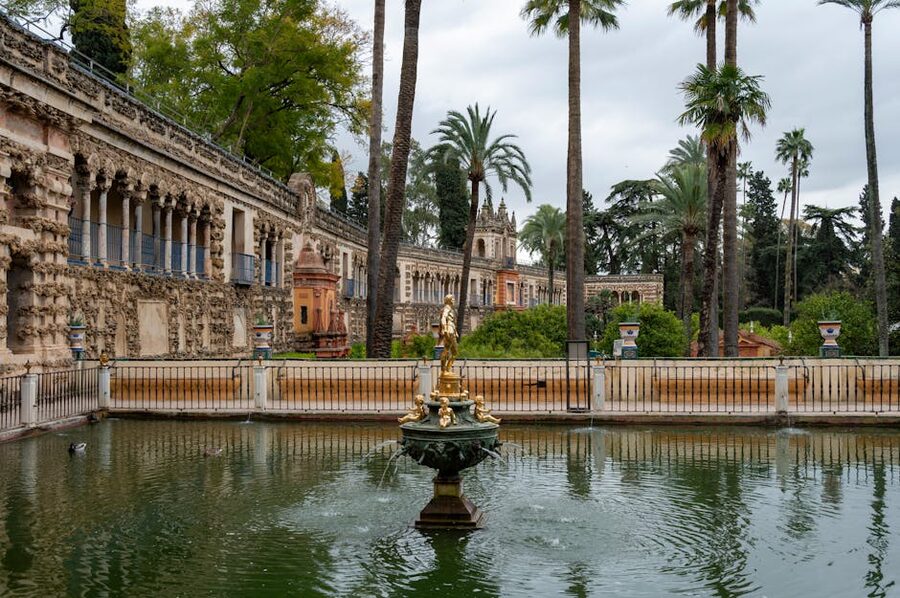
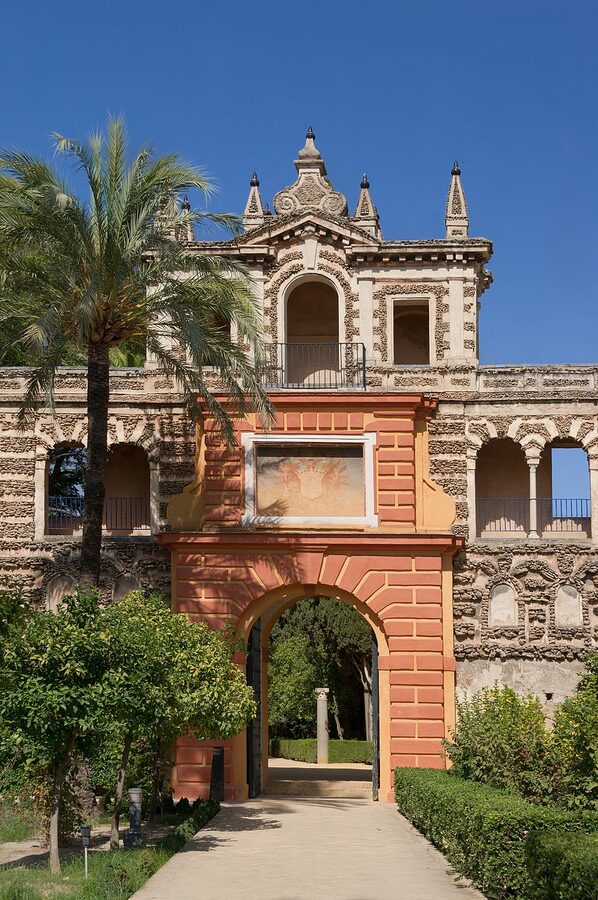
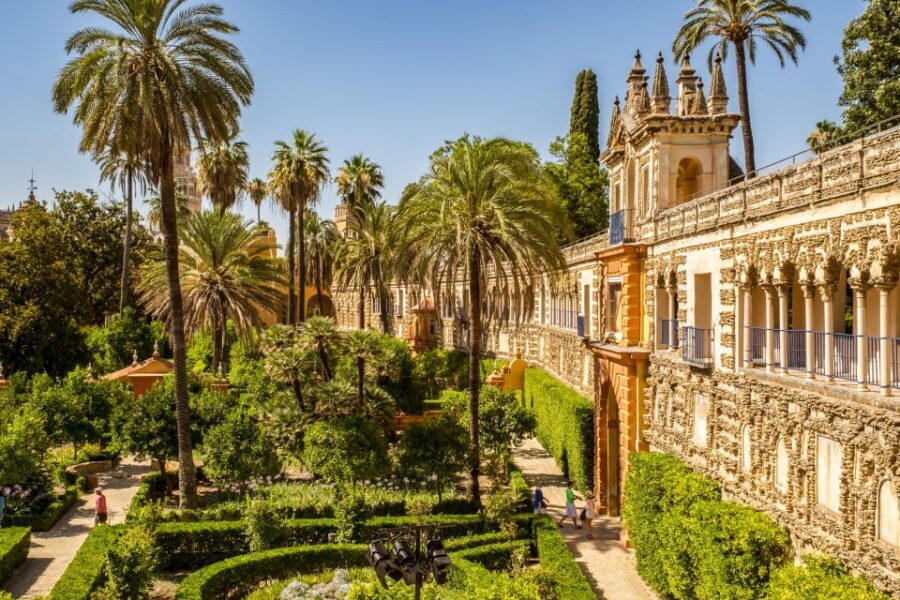
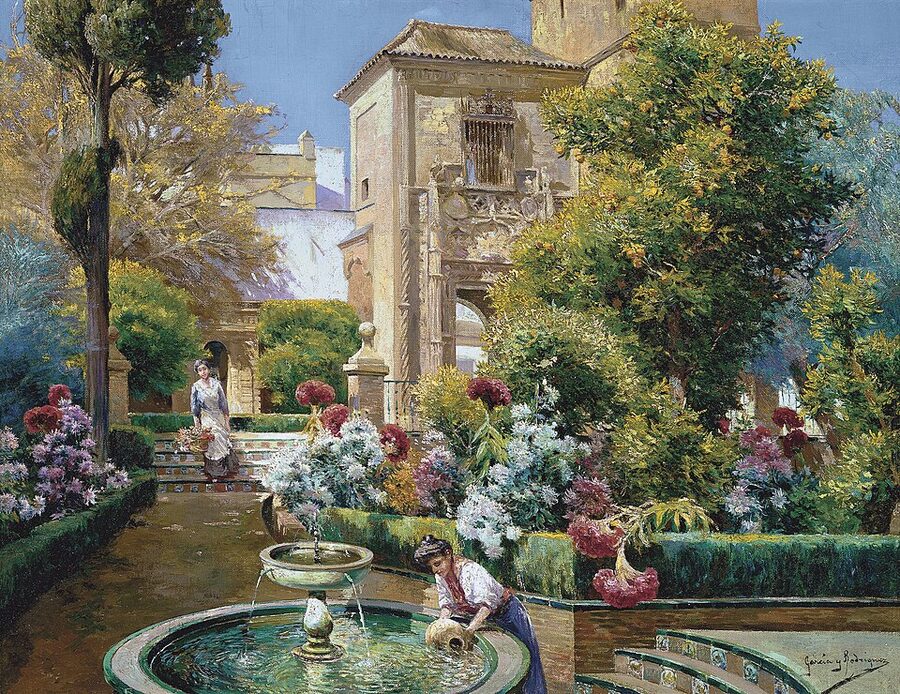
The Jardín del Estanque (Pond Garden) has a large pool with goldfish and sometimes ducks. The Jardín de las Damas is a formal Renaissance garden with fountains. The Jardín de los Poetas has poetry tiles set into the walls. And scattered throughout are peacocks, small ponds, orange groves, and the remains of Moorish baths.
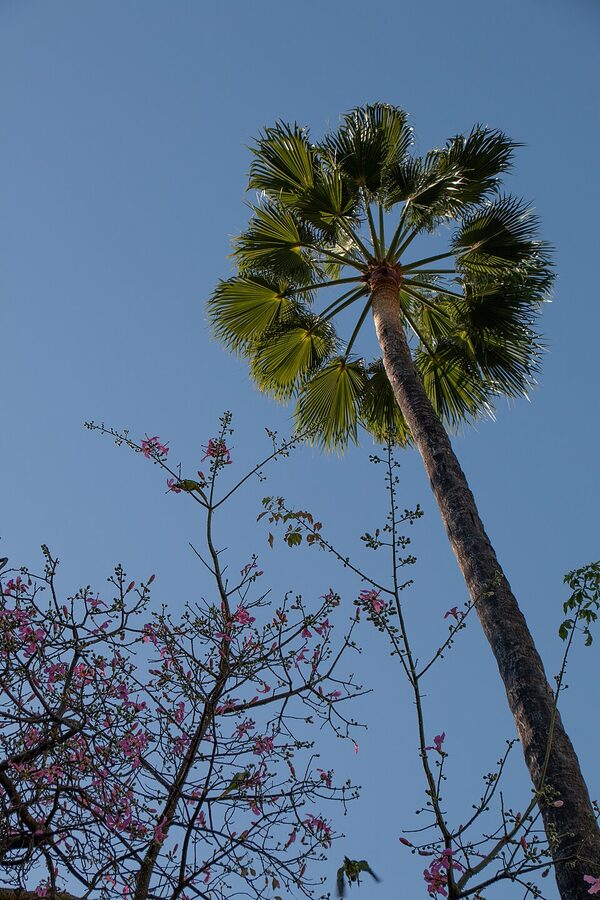
The gardens are where kids recover from the palace. Let them run, climb small walls (safely), chase fallen orange blossom, spot peacocks. This is the bit they’ll remember.
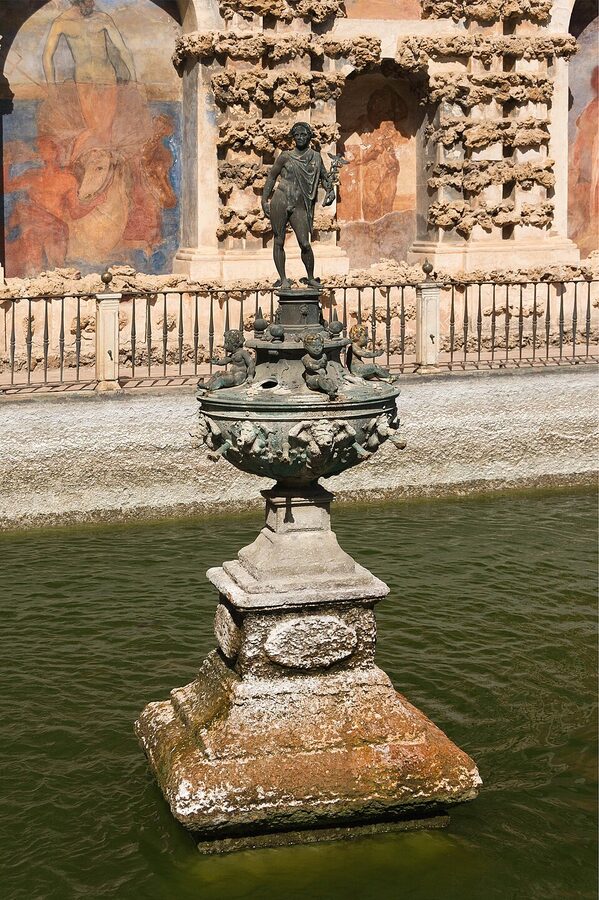
6. The Baños de María Padilla (underground baths, 5 min)
Often missed by first-time visitors. An underground Gothic vaulted cistern accessed via a staircase from the gardens. It’s cold, dim, and has a reflecting pool at the bottom. Kids love the drama of descending into a dark stone cave; a few find it spooky, so check your child’s tolerance for enclosed spaces.
Our top picks to book
1. Royal Alcázar Entry Ticket — $23
This is the one we’d default to for most families — budget-friendly, flexible, and the skip-the-line element saves you 30-60 minutes in high season. You bring your own pace; bring a guidebook or use your phone to read up on the highlights as you go. The Royal Alcázar entry ticket review covers which entry times are quietest and what to do if your kid hits tired-legs mode. Works for every age from buggy to teen. No guide, no pressure, no group to keep up with.
2. Alcázar + Cathedral + Giralda Skip-the-Line Tour — $64
If you’ve got limited Seville time and want to do all three big sites without the logistics, this is the ticket. 3 hours, live guide, skip-the-line access to all three venues. Our Alcázar + Cathedral + Giralda tour review is honest about whether kids can handle the whole 3-hour format — shorter attention spans might prefer to do Alcázar alone and Cathedral separately. Best for kids 9+ or older; younger children find three hours of guided tour tough.
3. Seville: Alcázar Guided Tour — $46
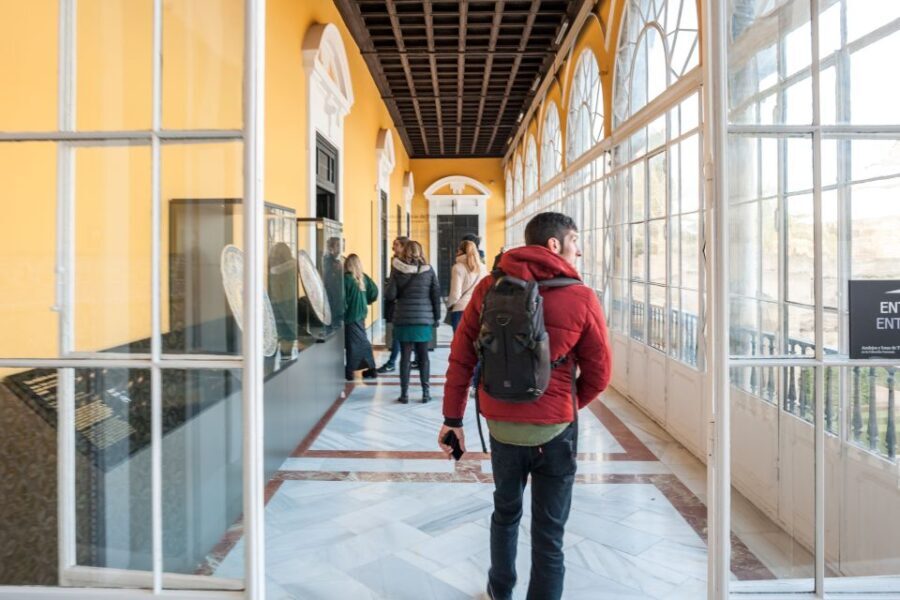
The sweet spot for families who want a guided experience but don’t need the full Cathedral/Giralda package. 75 minutes is short enough that younger kids stay engaged, long enough to get proper context. Our Alcázar guided tour review compares this to the self-paced version — the guide’s stories about Pedro the Cruel and the Christian-Moorish conversion story genuinely land well with kids who’ve done some European history at school.
Getting there and timing
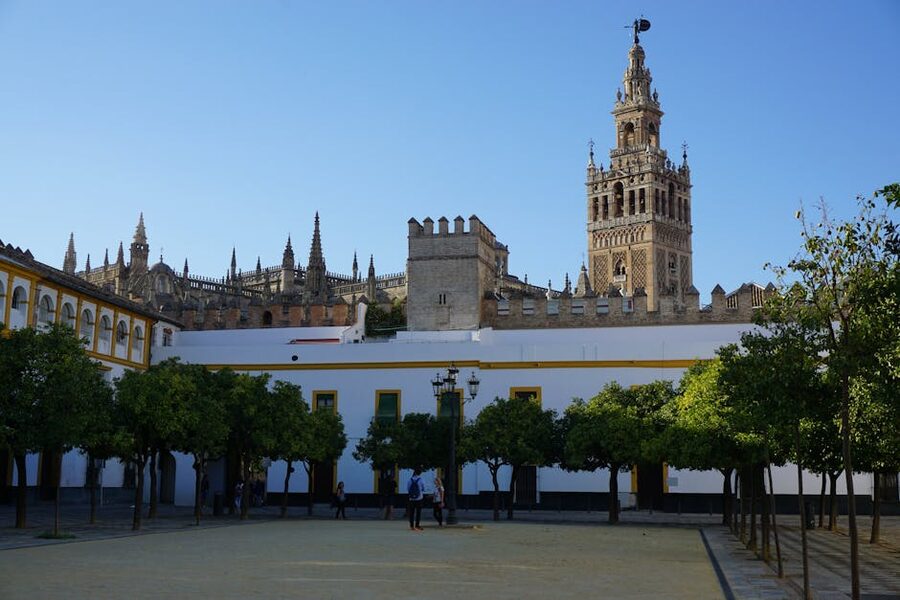
The Alcázar sits right in central Seville, next to the Cathedral and Giralda. Walking distance from virtually every central hotel.
Walking from Plaza Nueva, 8 minutes. From Triana (across the river), 15 minutes. From Santa Cruz neighbourhood (where most tourist hotels are), 5 minutes. There’s no really useful metro or tram route — walking is faster.
Timing — this is the single biggest thing to get right. The Alcázar opens at 9:30am. Book the 9:30 or 10am slot. By 11am it’s packed and photos are impossible. By noon the heat is tough in summer. Early morning is when the Patio de las Doncellas has its clean reflection, the gardens have their best light, and your kids have their best energy.
Closed some Mondays — check before booking. Tickets can sell out for weekend slots up to a week in advance in peak season.
Free entry times
The Alcázar has free entry for the last hour of the day every Monday (varies by season). Queues are horrendous and the palace is already closing, so it’s only worth it if you’re on a tight budget. With kids, honestly, just pay the €14 for skip-the-line — it’s one of the better value admissions in Spain.
Kids’ practical bits
Buggy access. Most of the Alcázar is buggy-accessible but there are steps in several sections — you’ll carry a buggy up about four flights in total to see everything. A baby carrier is easier. You can leave a buggy at the cloakroom near the entrance if you’d rather not deal with it inside.
Toilets. There are toilets near the entrance, in the main gardens, and at the cafeteria. All clean, all have baby-change. The ones near the cafeteria are the biggest.
Food and drink. There’s a small cafeteria inside the Alcázar — decent coffee and basic sandwiches but nothing special. We usually eat outside the palace, in the Barrio Santa Cruz (narrow streets, loads of tapas bars) or at Las Teresas on Calle Santa Teresa which is kid-friendly and does a good kids’ tortilla.
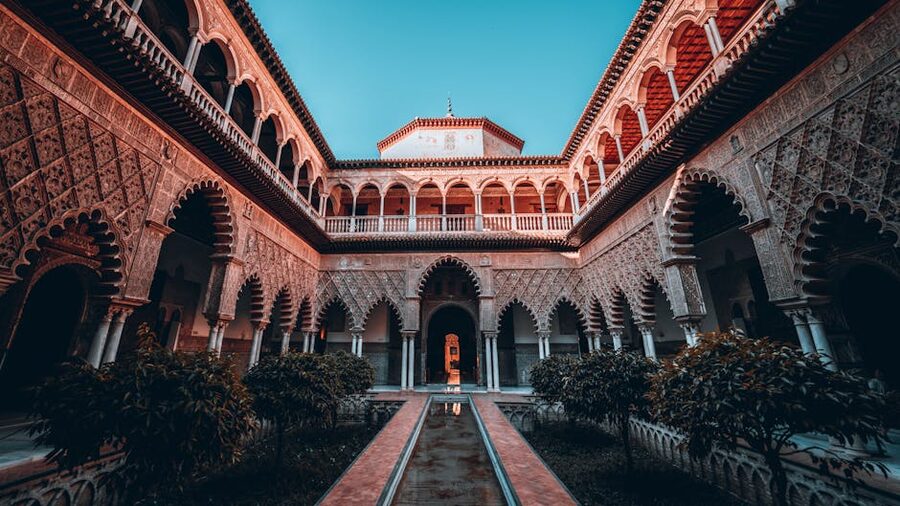
Photo opportunities. Phones and cameras allowed everywhere except in a few specifically marked rooms on the upper floor (not part of the main ticket). Flash photography is allowed but unnecessary — the light is excellent naturally.
Kids’ engagement prompts. Before you go in, tell your kids: “find me five different tile patterns”, “find the hidden dolls in the Patio de las Muñecas”, “find the goldfish pond”. Give them a specific job and they’ll engage with the palace. Without a job, they’ll ask to leave after 20 minutes.
A short history (for the kids who ask)
The Alcázar site has been a royal residence in some form for about 1,200 years. The Romans had an administrative building here; the Visigoths built on top of it; the Moors built the first proper palace in the 10th century after they took Seville as part of the Al-Andalus period. Most of what you see today is a mix of three building phases:
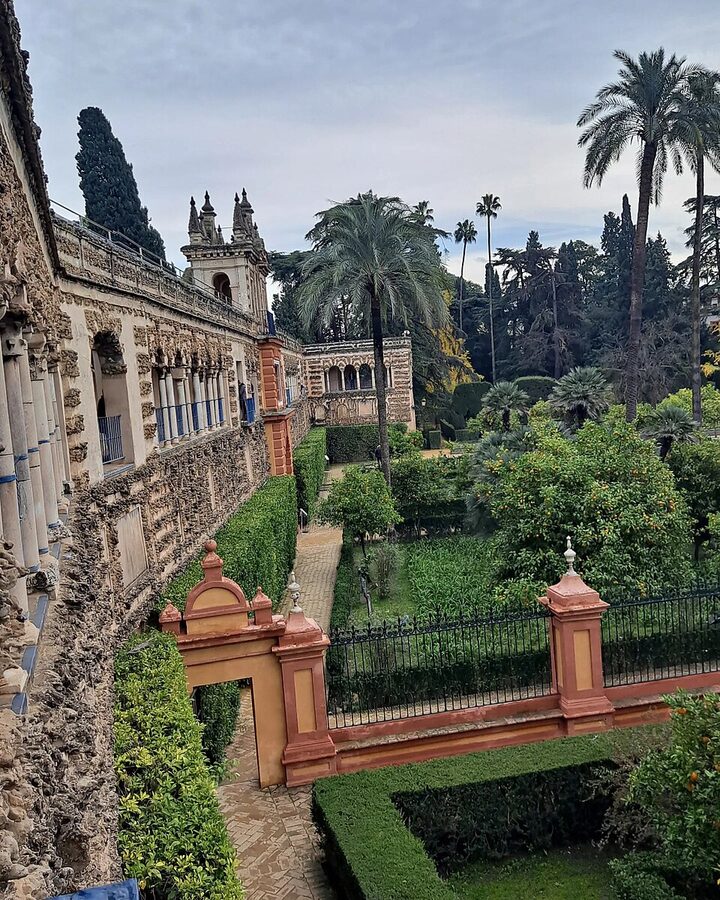
The Almohad Moorish palace (12th century) — the oldest surviving part. The outer walls, the Patio del Yeso, and parts of the garden structures date from this period, when Seville was capital of the Almohad caliphate and one of the most important cities in the Islamic world.
The Mudéjar palace of Pedro I (14th century) — after Seville was retaken by Christian Castile in 1248, the city’s royal palace continued to be used by the Castilian kings. Pedro I — known as Pedro the Cruel or Pedro the Just depending on who’s writing — built a new palace within the walls in 1364-1366, using Moorish craftsmen (mudéjares) to continue the Islamic architectural style even though he was a Christian king. This is the Palacio de Don Pedro you tour today, and it’s the best-preserved Mudéjar palace in the world.
Renaissance and later additions (16th century onwards) — Ferdinand and Isabella held their marriage ceremonies here; Christopher Columbus presented his voyage plans here; Charles V added a Renaissance palace wing for his 1526 wedding to Isabella of Portugal. The upper floor apartments (still used by the royal family) date from this era.
The Alcázar became a UNESCO World Heritage Site in 1987 (same inscription as the Cathedral and the Archivo de Indias). It’s still officially a royal residence — the king of Spain can come stay here whenever he wants, though he rarely does. The part you see on the tour is open to the public; the private royal apartments upstairs are closed.
For kids, the key facts that land are: (1) people have lived here continuously for over a thousand years, (2) it’s still technically the king’s palace today, and (3) several films and TV shows have used it as a location. These three framings turn it from “old building” to “living thing” and engagement goes up.
Pairing with the rest of Seville
A morning at the Alcázar pairs almost perfectly with an afternoon elsewhere in central Seville. After the palace, kids are usually peopled-out and need something lower-energy.
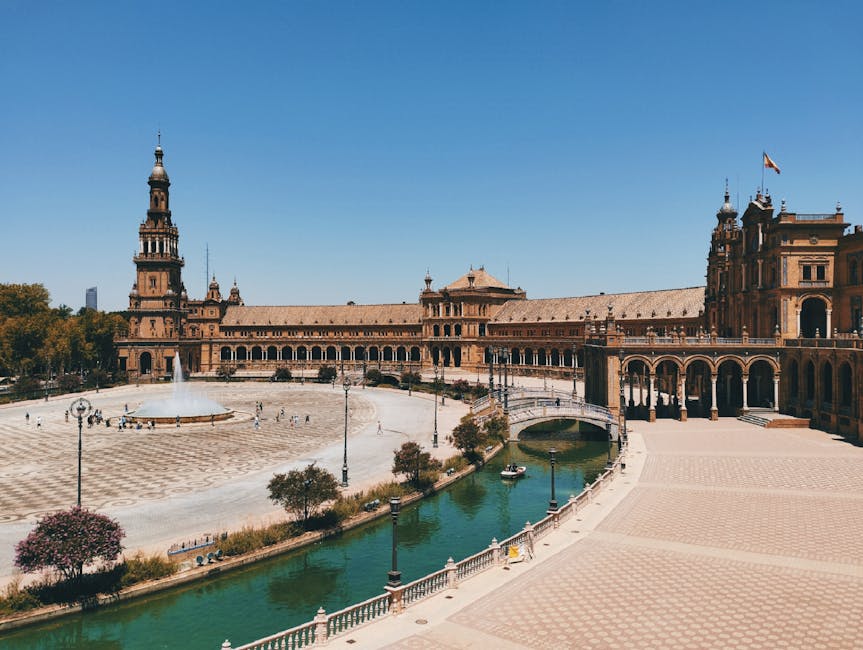
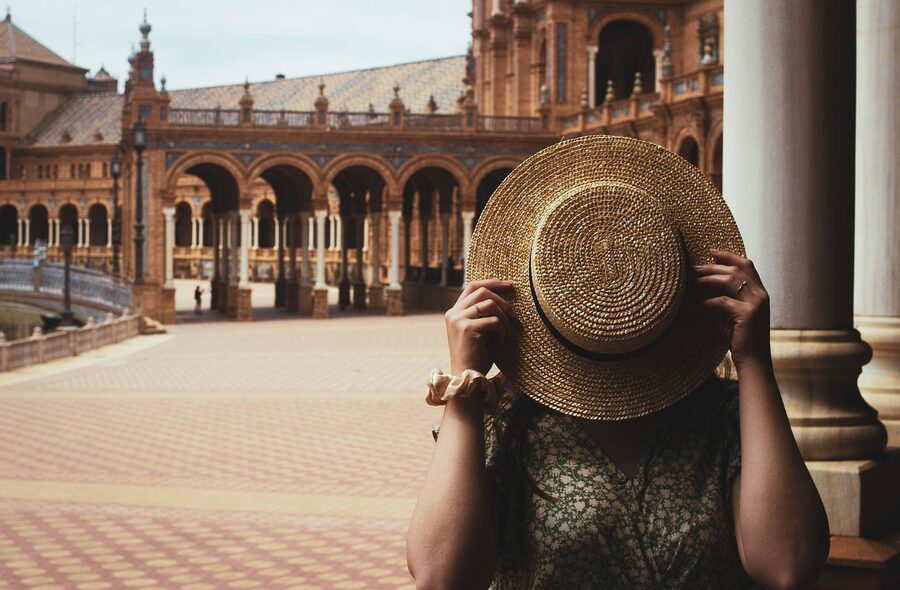
Plaza de España (15 min walk). Free, enormous, great for buggy access, row boats on the canal for €6. Our default next-stop after the Alcázar.
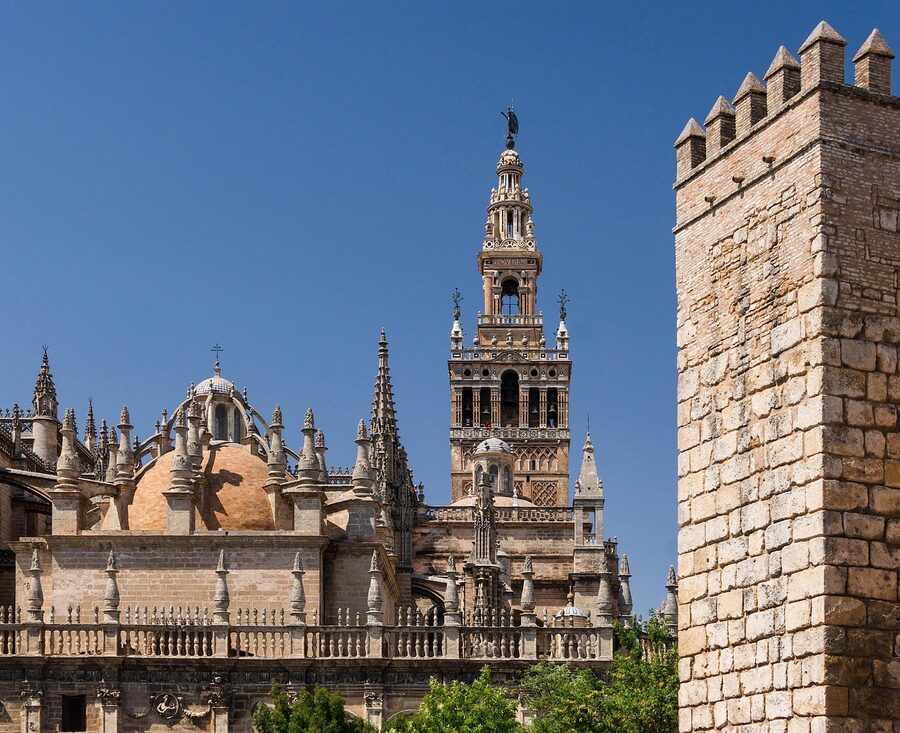
The Cathedral and Giralda (right next door). If you bought the combo ticket, you’ll do this either before or after the Alcázar. If you didn’t, the Cathedral alone is worth an hour — our kids were genuinely impressed by the scale (it’s the third-largest cathedral in the world). The Giralda tower climb is 35 ramps up (no steps — so manageable for older kids; buggies can’t make it).
Barrio Santa Cruz (immediately adjacent). Narrow whitewashed lanes, fountains, flower boxes, tapas bars. Good for a lunch stop or a post-palace wander. The whole Santa Cruz area used to be the Jewish quarter and it’s been kept architecturally intact.
Seville Aquarium (15 min walk, across the river). If you’ve got under-8s who need a break from history, this is the afternoon option — small but well put together, includes a shark tank kids love.
Full-day pairings: Alcázar in the morning, Plaza de España and early lunch, slow afternoon in the Barrio Santa Cruz, then dinner and maybe a family-friendly flamenco show in the evening. The Royal Palace of Madrid is a useful before/after comparison for families doing both cities.
Best time of year to go
Spring (March-April): orange blossom, cool mornings, long daylight. Best time overall. Seville’s Holy Week and Feria can clog the city, so check dates.
Autumn (September-November): still warm, fewer crowds than summer. Our default family-travel recommendation for Andalusia generally.
Summer (June-August): hot — 40°C+ in July-August. Kids can wilt fast. If you have to go, book the 9:30am slot and be out by noon for pool time at the hotel.
Winter (December-February): genuinely cold mornings (low single digits), warmer afternoons. Gardens still pretty but muted. Lowest crowds, cheapest flights and hotels.
What if it rains?
Seville’s not a rainy city — maybe 50 rainy days a year, mostly in winter. If it rains the day of your booking, the Alcázar indoor sections are fine; the gardens are where you get wet. With kids, the gardens are half the appeal, so rain genuinely does diminish the visit.
You can rebook most skip-the-line tickets up to 24 hours ahead. If the forecast looks bad and your schedule has flex, push the Alcázar to a drier day and do the Cathedral (fully indoor) or the Archivo de Indias (also indoor, Columbus documents, less interesting for kids) on the rainy day.
Before you book, a short honest list
Book the 9:30am slot. This is the single most important piece of advice in this whole article. Book early, go early, enjoy the quiet.
Under-5s: yes, but keep the visit short (90 minutes max) and skip the upper royal apartments. Gardens will be the highlight.
6-9: the sweet spot. Hunt-the-doll games in the Patio de las Muñecas, peacock spotting in the gardens, running in the Jardín de las Damas.
10+: full experience. Game of Thrones connection lands. Historical context lands. Consider the guided tour.
Do the Alcázar + Cathedral combo if you’ve got 9+ kids and one full day. Do the Alcázar alone if kids are under 8 or you’ve got flexibility to split sites over two days.
Skip the upper royal apartments on a first visit with kids. They’re closed to the standard ticket anyway, and the separate guided tour isn’t worth it for children under 12.
Allow at least 2 hours on-site. 90 minutes is the absolute minimum; 3 hours is the maximum unless you’re serious about the history.
One last tip: buy a small Alcázar guidebook in the gift shop at the end, not the start. Kids recognise places they’ve just been and the photos in the guidebook become “look, that’s where we were!” rather than “what’s this?” at the beginning. Turns the souvenir into a re-run of the day rather than a map.
Go in the morning, bring water, let the kids run in the gardens, don’t try to see every room. Worth every one of the €14 tickets.