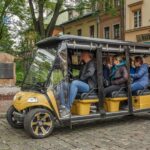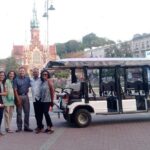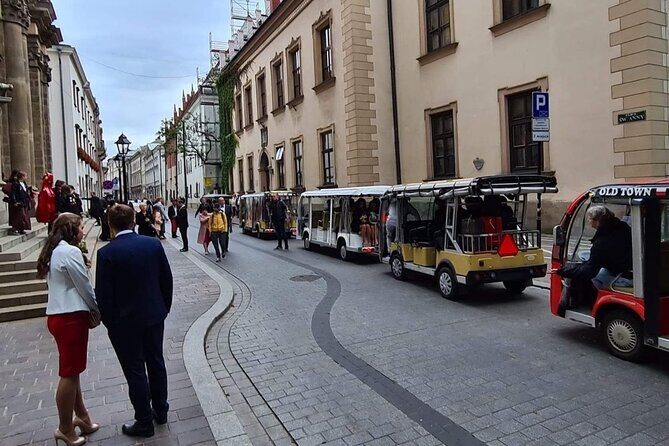
Krakow can feel big on day one, so I like a tour that helps you get your bearings fast—and this Krakow eco electric buggy loop does exactly that. You start at Parking 24H in the old town area, ride in a heated buggy with blankets, and get English narration while you bounce (gently) between major sights.
What I like most: you get a lot of stops for the time—nearly 24 sights—and the guiding comes through as genuinely knowledgeable and careful, with guides like Olivia, Jacob, Natalie, and Philip showing up often in feedback. The other big plus is value: for about $28.88 per person over roughly 1.5 hours, you’re spared the “walk and walk and walk” problem.
One consideration: group comfort. A few travelers noted the buggy can feel tight in winter layers, and audio/earpieces didn’t always work for everyone. If you’re sensitive to cramped seating or you need reliable audio, plan to arrive early and set expectations.
- Key things to know before you ride
- Eco Electric Buggy comfort: warm, easy, and surprisingly informative
- Meeting Point at Parking 24H (Mikołaja Zyblikiewicza 2): how to find it fast
- Duration, group size, and how much ground you truly cover
- A smart way to get bearings in Krakow (especially if you hate dead time)
- Church on the Rock (Kosciol na Skalce): martyrdom history on a small rock
- Plac Wolnica in Kazimierz: where free trade shaped the square
- A monastery church in Kazimierz: slow construction, big meaning
- Libuszhof and Kazimierz defensive walls: the quiet edges of history
- Tempel Synagogue: Jewish culture and community life today
- Kupa, Izaak, High, and Old Synagogues: architectural variety across centuries
- Wolf Popper Synagogue and the Rubinstein-related stop: human stories, not just structures
- Remah Synagogue: small, named for Rabbi Moses Isserles, and still active
- Ghetto Heroes Square (Podgórze): the route shifts from Kazimierz to tragedy
- Eagle Pharmacy Museum: the Under the Eagle story in one building
- Schindler’s Enamel Factory and the old ghetto wall: the big landmarks you can actually connect
- St. Joseph’s Church (Podgórski Square): a calm finish after heavy ground
- Audio guide, English, and staying comfortable in real Krakow weather
- Price and value: about .88 for a packed 90 minutes
- Best time to book: daylight helps you see more
- Who this tour is best for
- Should you book the Krakow eco electric buggy tour?
- FAQ
- How long is the Krakow city sightseeing buggy tour?
- What is the price per person?
- Do they offer pickup, and where does the tour start?
- Is the tour in English?
- How many stops and sights are included?
- Is there a maximum group size?
- Is it wheelchair-friendly or suitable for most people?
- What’s the cancellation policy?
- The Best Of Krakow!
- More City Tours in Krakow
- More Tours in Krakow
- More Tour Reviews in Krakow
Key things to know before you ride
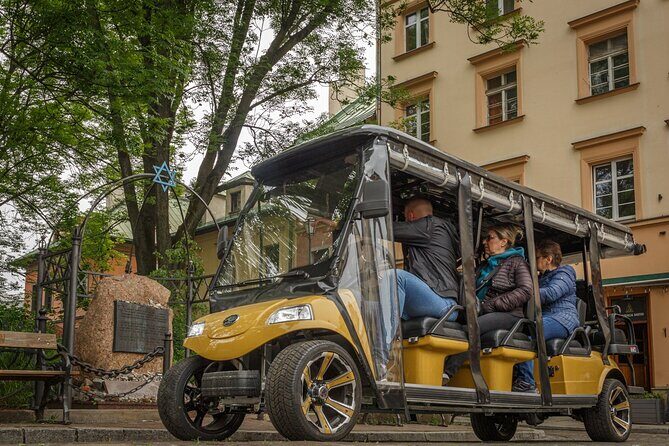
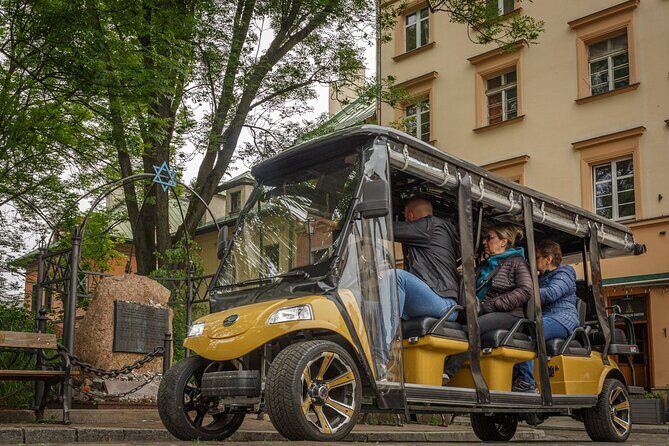
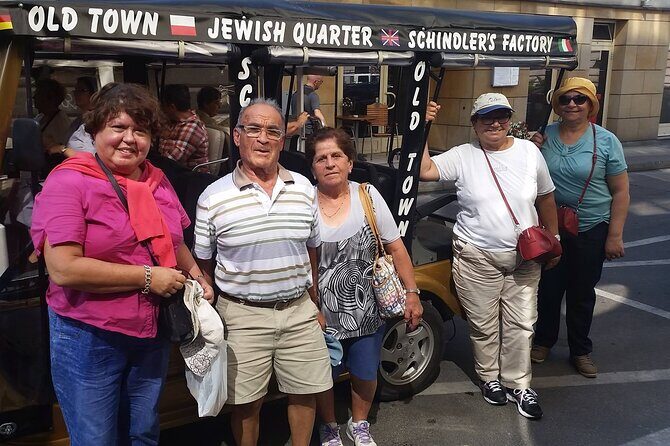
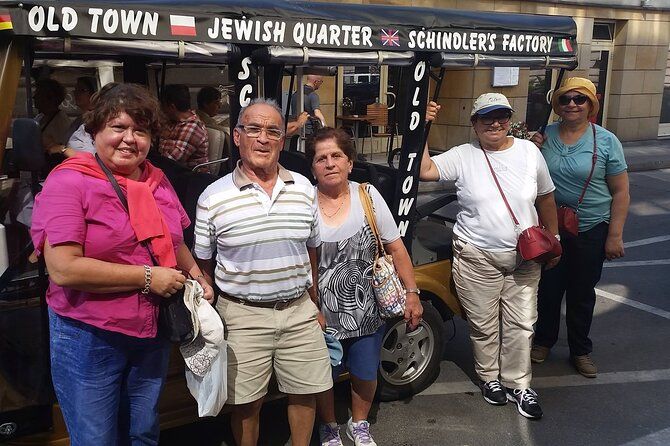
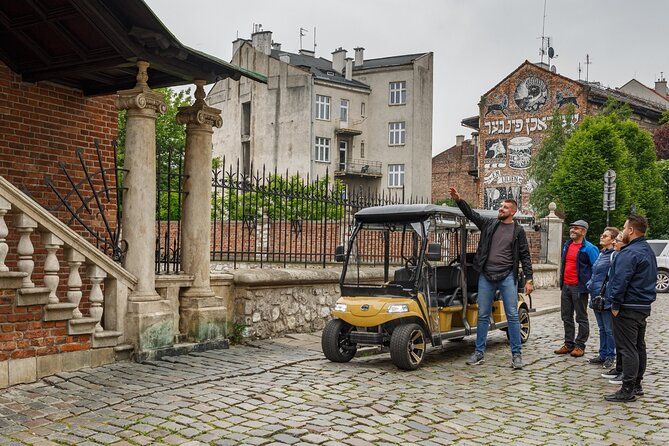
- Warmth on cold days: blankets and heating are part of the experience, which matters in Krakow weather.
- Nearly 24 sights in 90 minutes: you’ll cover Kazimierz and Podgórze efficiently.
- English narration + guide context: the best part isn’t just the locations—it’s what they explain.
- A strong Jewish-history route: Kazimierz synagogues plus ghetto-era landmarks are a core focus.
- Heavily guided, not just a bus tour: stops are frequent enough that you’ll actually look at things.
- Up to 50 travelers: larger groups can mean a snug ride—especially if everyone shows up bundled.
👉 See our pick of the Our Picks For The 12 Best Spa & Hot Springs Experiences In Krakow
Eco Electric Buggy comfort: warm, easy, and surprisingly informative
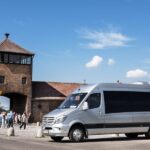
This is a “ride-and-stop” tour, not a sit-there-and-stare bus ride. You’ll travel by eco electric buggy golf cart style vehicle, with blankets and heat for comfort. In practical terms, that means you can spend your energy on photos and real sightseeing, instead of burning your legs on steep lanes and long distances.
The narration and guide commentary are what turn the route from sightseeing into understanding. You’re not just seeing buildings—you’re hearing why they matter, and how different pieces of Krakow connect.
And yes, there’s some bumpiness. A few people mention the ride can be a little shaky, but overall it seems manageable—especially compared with trekking on foot for the same number of stops.
You can also read our reviews of more city tours in Krakow
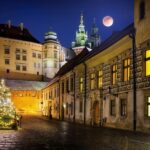
Meeting Point at Parking 24H (Mikołaja Zyblikiewicza 2): how to find it fast
The pickup/start point is listed as Parking 24H Kraków old town car park, Mikołaja Zyblikiewicza 2. That’s close to the old town area, so you’re not scrambling across the city.
A practical way to make it easy: look for the busy Zyblikiewicza Street area just off a wider main road, and aim to spot the pickup point across from a Zabka shop. That kind of landmark-based navigation helps a lot when you’re arriving in a city where street signage feels new.
End point: the tour returns to the meeting point.
Duration, group size, and how much ground you truly cover
Plan for about 1 hour 30 minutes (approx.). That timing is built for a lot of “quick look + meaningful context.” You’ll hop from Kazimierz to Podgórze and hit key sites without getting trapped in long transit gaps.
The group limit is up to 50 travelers. With that many people, you’ll want to pay attention to how seating is handled in the vehicle. Most travelers seem fine with it, but if you’re tall, broad-shouldered, or very bundled for winter, it can feel crowded.
A smart way to get bearings in Krakow (especially if you hate dead time)
Krakow has layers. Old Town feels one way; Kazimierz feels another; Podgórze feels different again. This tour helps you stitch those layers together, and it does it without requiring you to plan a complicated route.
If you’re the type who likes an “overview first, details later” day, this is a good fit. Several travelers treat it as a starting point—then they return on foot to explore what they liked most.
Church on the Rock (Kosciol na Skalce): martyrdom history on a small rock
Your first stop is Church on the Rock (Kosciol na Skalce), also known as Skałka. It’s a small outcrop crowned by a Pauline monastery—so yes, the setting matters here. You’ll hear about Saint Stanislaus and the moment in 1079 when he was slain by order of King Bolesław II the Bold.
This is the kind of stop where a short visit can still land emotionally, because the story gives the landscape meaning. And the good news: admission is free as noted.

Plac Wolnica in Kazimierz: where free trade shaped the square
In Kazimierz, your route includes Plac Wolnica, part of the old market fabric of the city’s founding. The tour context explains that it dates to 1335, and that it used to be as large as the main Krakow market square, serving trade and administration.
What I like about this stop is that it shifts your brain from “pretty square” to “how this neighborhood functioned.” Even if you only spend a brief time looking around, it’s easier to read the streets when you understand the old purpose.
A monastery church in Kazimierz: slow construction, big meaning
Another key Kazimierz stop is a basilica that was erected in stages from 1340 to the mid-15th century, meant as a monastery church. You’re also given context that there’s a monastic cemetery next to it, and that the church was later linked to canons regular of the Lateran after King Władysław II Jagiełło’s gift in 1404.
This is one of those places where the architecture makes more sense when you know it wasn’t built for casual worship—it was built for monastic life over a long stretch of time.
Libuszhof and Kazimierz defensive walls: the quiet edges of history
You’ll also pass through context connected with Libuszhof, a former complex of streets and buildings whose current shape was established through regulatory projects in 1808 and 1844.
There’s also mention of houses along Kazimierz’s defensive walls that once belonged to the Jewish hospital at the Kupa synagogue. It’s not flashy like a big monument, but it’s a reminder that history often hides at the seams—inside blocks, edges, and side streets.
Tempel Synagogue: Jewish culture and community life today
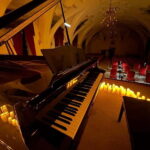
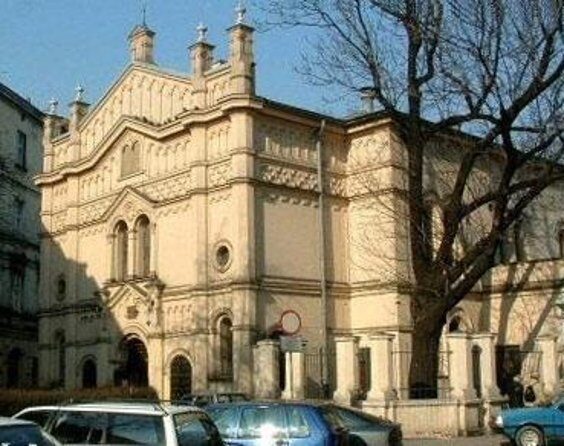
Tempel Synagogue is one of the standout cultural stops in the Kazimierz area. The tour framing emphasizes that it isn’t only a worship site; it’s a center for Jewish culture and hosts concerts and meetings, especially during festival periods.
So if you’re hoping for more than “buildings from the past,” this stop offers the modern thread. You get a sense of continuity, not just historical rupture.
Kupa, Izaak, High, and Old Synagogues: architectural variety across centuries
This part of the tour is a real strength: you’re shown multiple synagogues tied to different eras and communities, not one single highlight.
Here’s what each contributes:
- Kupa Synagogue (17th century): tied to the former Jewish quarter of Kazimierz and used for ceremonies and cultural festivals, including the annual Jewish Culture Festival.
- Izaak Synagogue (1644): an Orthodox Jewish synagogue, named for Isaac the Rich (Izaak Jakubowicz). It’s noted as designed by Italian-born architect Francesco Olivierri—an important clue that Krakow wasn’t architecturally isolated.
- High Synagogue: an inactive 16th-century Orthodox synagogue, also called the Tall Synagogue. The tour context points to its height and Late Renaissance architecture.
- Old Synagogue (Alta Shul): described as the oldest synagogue building still standing in Poland and a precious landmark of Jewish architecture in Europe. It also served as a major center for Krakow’s Jewish community before WWII.
Even if you don’t go inside everything (the tour may focus on exterior viewing at some stops), the grouping helps you notice differences in style, purpose, and era.
Wolf Popper Synagogue and the Rubinstein-related stop: human stories, not just structures
Two stops in Kazimierz add a “people first” feeling.
Wolf Popper Synagogue (also associated with Bociana) is described as having been one of the splendid prayer houses in the old Jewish quarter. The context includes decorative doors that once depicted symbolic animals—eagle, leopard, lion, buck deer—connected to traits of a devout man. Today, it functions as a bookshop and art gallery in the women’s area upstairs.
Then there’s a stop labeled Rubinstein, which provides background about Augusta-Gitte Rubinstein (and her family connections), including a note that philosopher Martin Buber was her cousin. It’s the kind of detail that makes the neighborhood feel populated with real lives, not just names on plaques.
If you like your sightseeing tied to characters and relationships, these two stops deliver.
Remah Synagogue: small, named for Rabbi Moses Isserles, and still active
Remah Synagogue is described as the smallest of the historic synagogues in Kazimierz and named after Rabbi Moses Isserles (ReMA). The tour frames it as one of two active synagogues in the city.
What that means for you: you’re not only looking at what survived; you’re also seeing what continues. It’s a “then and now” stop in a tour that already covers major “then” moments.
Ghetto Heroes Square (Podgórze): the route shifts from Kazimierz to tragedy
After Kazimierz, the tour clearly turns toward Podgórze and the WWII story.
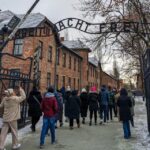
Ghetto Heroes Square is explained as a square within the Kraków ghetto in 1941–1943, where the Jewish population was concentrated before transport to concentration camps. The tour context also points out the pharmacy at number 18, Under the Eagle, run by Tadeusz Pankiewicz—the only non-Jewish inhabitant with rights to remain in the ghetto.
This is emotionally heavy ground. The value here is that the tour doesn’t treat it as a quick box-check. The placement of a specific site like the pharmacy makes the story feel grounded.
Eagle Pharmacy Museum: the Under the Eagle story in one building
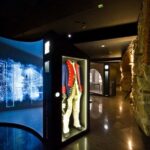
Right next door in the same narrative space is the Eagle Pharmacy Museum. You’ll get background on the Pankiewicz family and that it was the only pharmacy within the ghetto borders during the WWII ghetto period.
What I like about this stop is that it’s one physical place holding a rare kind of perspective—ordinary daily life mixed with extraordinary danger. You’re left with a clearer sense of how systems worked, not just dates and locations.
Schindler’s Enamel Factory and the old ghetto wall: the big landmarks you can actually connect
The tour includes Oskar Schindler’s Enamel Factory—now home to museums (including contemporary art and a historical museum branch tied to the former factory complex). It’s connected to the film Schindler’s List in the provided framing, but the important travel takeaway is that it’s a major stop where you can choose how much deeper to go if you want.
You’ll also visit the old ghetto wall, which helps you “see” the boundary rather than only read about it. That visual context can make later museum time make more sense.
St. Joseph’s Church (Podgórski Square): a calm finish after heavy ground
Finally, the route brings you to St. Joseph’s Church in Podgórze, located on Podgórski Square. After a sequence of intense historical stops, the return to a landmark church gives the tour a tonal reset—still in the same neighborhood story, but with less direct confrontation.
And since the tour ends back at the meeting point, you avoid the common hassle of coordinating separate transport after a long day on foot.
Audio guide, English, and staying comfortable in real Krakow weather
The experience is offered in English, and you’ll also have audio support (recorded narration is mentioned in feedback). This matters because with nearly 24 stops, you don’t want every explanation to depend only on the guide’s speaking volume.
Cold-weather comfort is a big deal here. Multiple travelers mention the buggy being warm and toasty, with blankets on board, which can turn a winter “no thanks” day into a doable one.
One practical tip: if you rely on audio, keep an eye on earphones/headsets during the ride. A small number of travelers reported issues, so it’s worth testing right away once you’re seated.
Price and value: about $28.88 for a packed 90 minutes
At $28.88 per person for around 1.5 hours, the value is tied to efficiency and interpretation.
You’re paying for:
- time saved versus walking between dispersed areas
- vehicle comfort (heat + blankets)
- a guided explanation that connects the Kazimierz synagogues and WWII-era Podgórze landmarks
This isn’t a museum-ticket-only plan where you spend all day indoors. It’s more like an organized orientation plus meaningful highlights—so it’s often best when you still plan to return later for deeper independent visits.
Best time to book: daylight helps you see more
Some people mention it can be harder to spot details when it’s dark. If you’re choosing between time slots, I’d bias toward daylight hours when possible—especially in winter when you want clear views and easier photos.
If you do go at night, still doable, just keep in mind that visibility affects how much you can enjoy each stop’s setting.
Who this tour is best for
This tour suits you if:
- you want a fast, structured overview of Krakow’s key districts
- you prefer sitting part of the time and saving your legs
- you care about Jewish-history context in Krakow and want it organized into a route
It may be less ideal if:
- you’re very uncomfortable with close seating in a group
- you expect the tour to focus heavily on every major Old Town/castle sight (this route concentrates on Kazimierz and Podgórze landmarks)
- you need a specific interior visit at Schindler’s Factory (the route includes Schindler’s Enamel Factory as a stop, but the tour pass-by vs tour depth can vary by how the stop is handled)
Should you book the Krakow eco electric buggy tour?
If you want an easy way to learn Krakow in a short window, I’d say yes—book it, especially early in your trip. The combination of guides, a warm buggy ride, and a route that connects Kazimierz synagogues with Podgórze WWII sites gives you a strong “whole-city” sense without exhausting yourself.
Just go in with realistic expectations: it’s a group ride with frequent stops, and space/audio comfort can vary. If you’re prepared for that, you’ll likely feel like the price is fair for what you get—an efficient, well-framed tour of some of Krakow’s most important places.
Krakow: City Sightseeing Tour Eco Electric Buggy Golf Cart
FAQ
How long is the Krakow city sightseeing buggy tour?
It’s listed as about 1 hour 30 minutes.
What is the price per person?
The price is $28.88 per person.
Do they offer pickup, and where does the tour start?
Pickup is offered, and the meeting point/start is Parking 24H Kraków old town car park at Mikołaja Zyblikiewicza 2, 31-029 Kraków, Poland.
Is the tour in English?
Yes, it’s offered in English.
How many stops and sights are included?
The tour highlights nearly 24 different sights, with multiple stops across Kazimierz and Podgórze.
Is there a maximum group size?
Yes, the tour has a maximum of 50 travelers.
Is it wheelchair-friendly or suitable for most people?
It states that most travelers can participate.
What’s the cancellation policy?
You can cancel for a full refund up to 24 hours in advance. If you cancel less than 24 hours before the start time, the amount paid is not refunded.