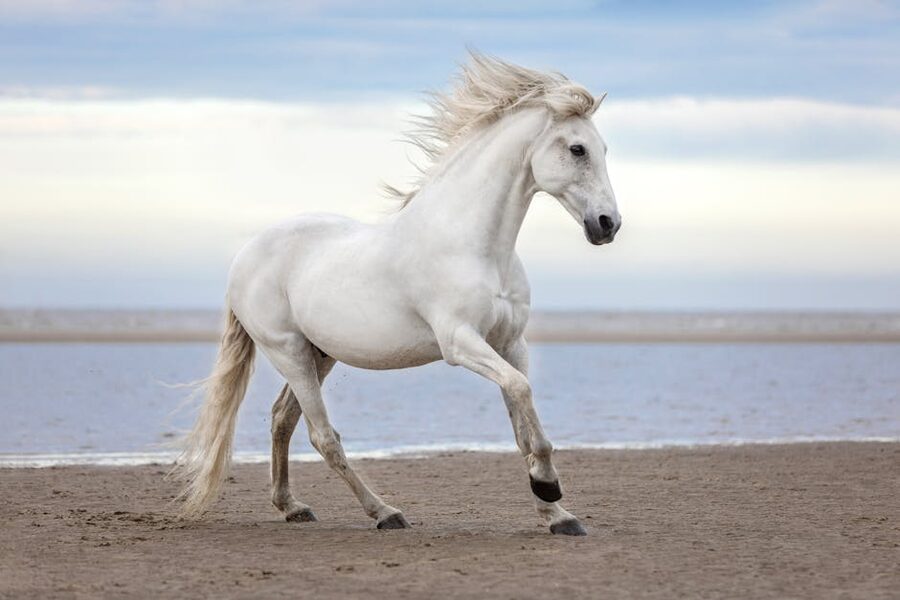
The first time my daughter saw a Pura Raza Española stallion do what can only be described as ballet — at the Royal Andalusian School of Equestrian Art in Jerez — she sat with her jaw open for 90 minutes. Kids who thought they didn’t care about horses suddenly care a lot. Andalusian horse shows are one of the best family experiences in southern Spain, and they’re criminally under-booked by English-speaking tourists.
In a Hurry? Our Family Picks
Most famous show: “How the Andalusian Horses Dance” (Jerez) ($31) — 90 min to 2 hr, 6,100+ reviews, 4.6 rating. The signature experience.
Budget Córdoba option: Cordoba Equestrian Show ($21) — 70 min, 2,300+ reviews. Easier to fit into a Córdoba day trip.
School visit without show: Royal Andalusian School Admission ($18) — watch training sessions + tour facilities on non-show days.
- In a Hurry? Our Family Picks
- What these shows actually are
- Why kids love this
- The Jerez show — what you actually see
- 1. Opening — riders enter (5 min)
- 2. Doma Vaquera — working cowboy style (15 min)
- 3. Classical dressage (20 min — the highlight)
- 4. Airs above the ground (15 min — the “wow”)
- 5. Coach driving (10 min)
- 6. Final ensemble (15 min)
- Our top picks to book
- 1. “How the Andalusian Horses Dance” (Jerez) —
- 2. Córdoba Equestrian Show General Entry —
- 3. Royal Andalusian School Admission (Jerez) —
- Getting to Jerez
- Show schedule strategy
- Sherry pairing
- Doma vaquera vs dressage — what’s different
- Córdoba show logistics
- Age-by-age guide
- Pairing with Andalusia itinerary
- A short history of Andalusian horses
- What to wear and bring
- What to prep kids for
- Weather and season
- Before you book, an honest list
What these shows actually are
The Royal Andalusian School of Equestrian Art in Jerez de la Frontera is Spain’s equivalent to the Spanish Riding School of Vienna — a national institution preserving high-school dressage traditions on Pura Raza Española horses. Their signature show is called Cómo Bailan los Caballos Andaluces (“How the Andalusian Horses Dance”) and it’s exactly that: 90 minutes of classical dressage set to Spanish music, including airs above the ground (the horse movements you’ve seen in paintings).
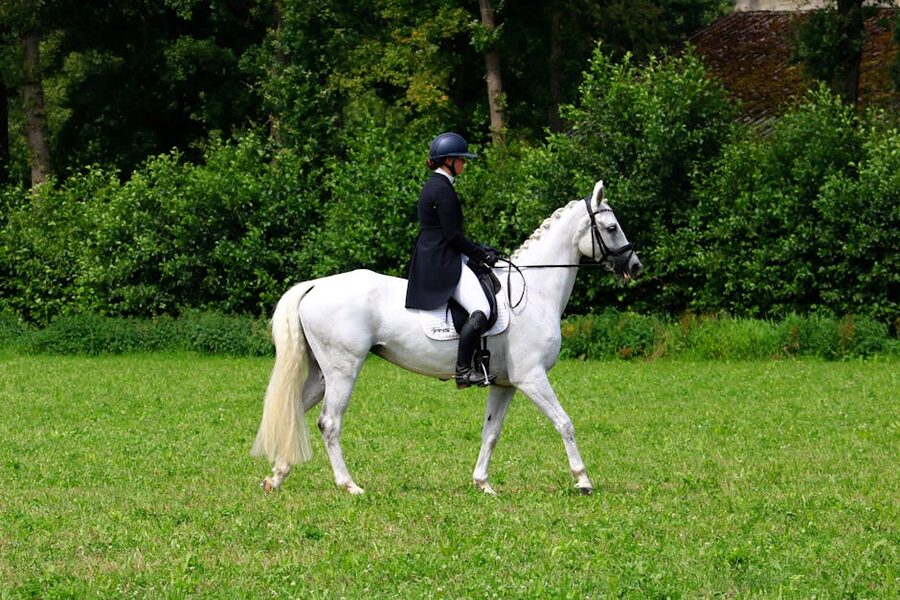
The Córdoba Equestrian Show at Caballerizas Reales (Royal Stables) is similar in format but shorter and less historically weighty. Same breed, same training style, usually at a more accessible price. Good alternative if Jerez doesn’t fit your itinerary.
Why kids love this
Three things specifically work:
The horses are visibly intelligent. Watching a dressage horse respond to what look like invisible cues from the rider is genuinely magical for kids. They get that the horse and human are communicating, even if they can’t see how.
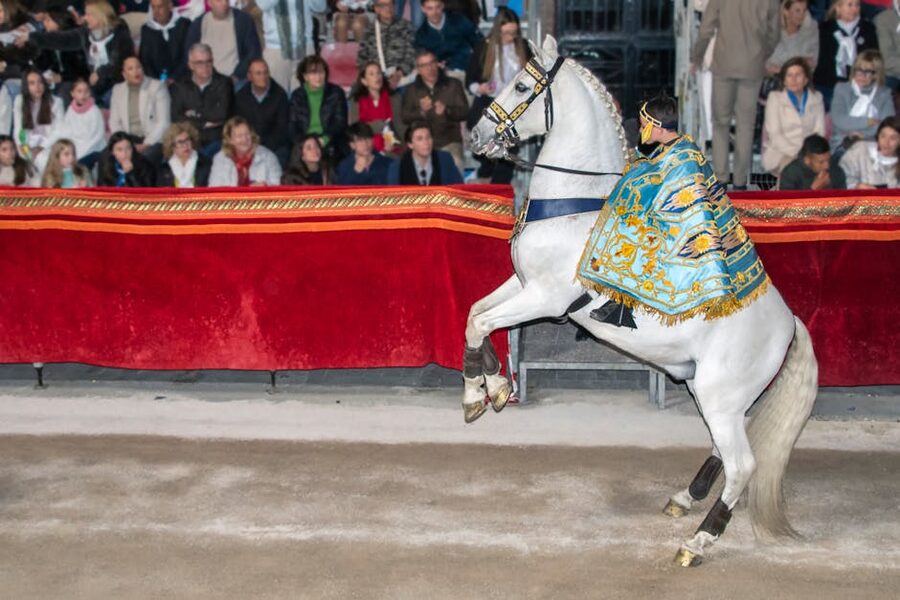
The costumes and setting are spectacular. Riders in traditional Andalusian costumes — short jacket, flat-brimmed hat, sashes. Horses with braided manes and decorative tack. Even kids who don’t normally care about pageantry engage with the visuals.
The format is short enough. 70-90 minute shows fit any kid’s attention span. Seated venue, shaded, with breaks between sets. No walking required.
The Jerez show — what you actually see
The “How the Andalusian Horses Dance” show runs on specific days (Tuesday/Thursday + one Saturday per month). Format:
1. Opening — riders enter (5 min)
Spanish Baroque music plays. Half a dozen riders in full traditional dress enter on their horses. The horses walk in formation. Kids settle in; parents start photographing.
2. Doma Vaquera — working cowboy style (15 min)
The first section demonstrates working cowboy techniques — horses trained for herding cattle, with quick turns, stops, and changes of lead. Faster and more energetic than classical dressage.
3. Classical dressage (20 min — the highlight)
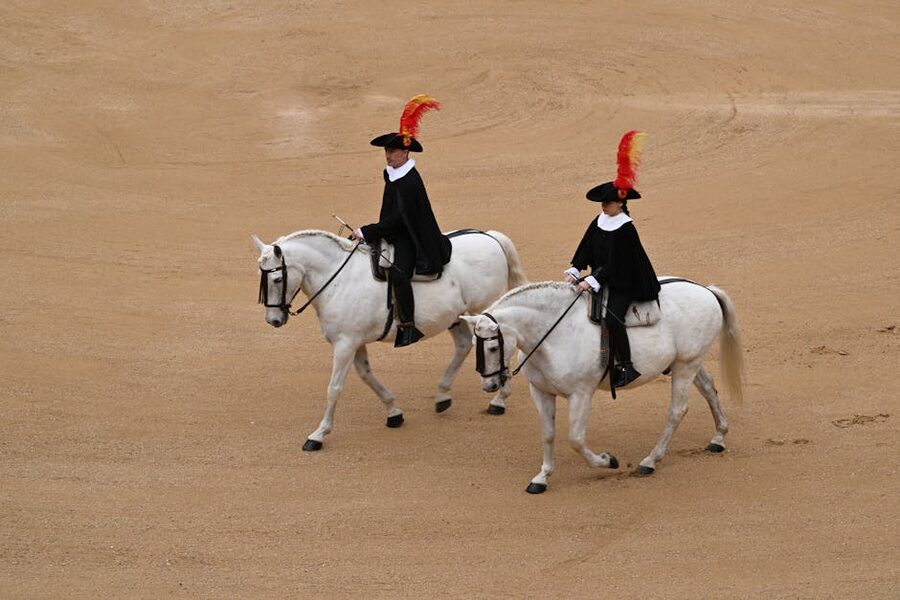
Individual riders perform classical dressage movements — piaffe (trotting in place), passage (raised trot), pirouette (turn on a single leg). Set to Spanish music, often with changes of tempo that the horses match precisely.
This is when parents realise they’re watching actual art. Kids realise they’re watching horse magic. Both are correct.
4. Airs above the ground (15 min — the “wow”)
The school’s signature section. Horses perform the classical battle moves — levade (controlled rear), courbette (rear and hop), capriole (leap with all four legs off the ground and kick). Kids gasp audibly. This is what they’ll remember.
5. Coach driving (10 min)
A change of pace — riders drive horse-drawn carriages in formation. Four-in-hand teams, eight-in-hand teams. Historically these were the carriages of Spanish royalty; now preserved as part of the school’s remit.
6. Final ensemble (15 min)
All riders return for a full-company finale. Formation riding with music, changes of direction, synchronised movements. Builds to a crescendo. Kids applaud enthusiastically.
Our top picks to book
1. “How the Andalusian Horses Dance” (Jerez) — $31
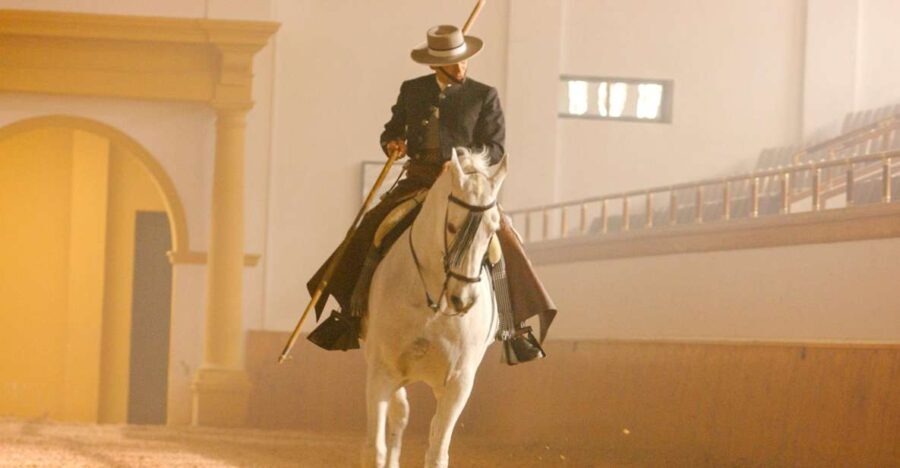
If you’re in the Jerez area (or doing a Cádiz/Seville-south trip), this is the experience. Twice-weekly shows (Tue/Thu plus some Saturdays). Our Jerez horse show review covers which seating sections are best, parking, and how to time the visit with lunch. Works for kids 5+; younger children cope with the 90-min format if it’s the afternoon show.
2. Córdoba Equestrian Show General Entry — $21
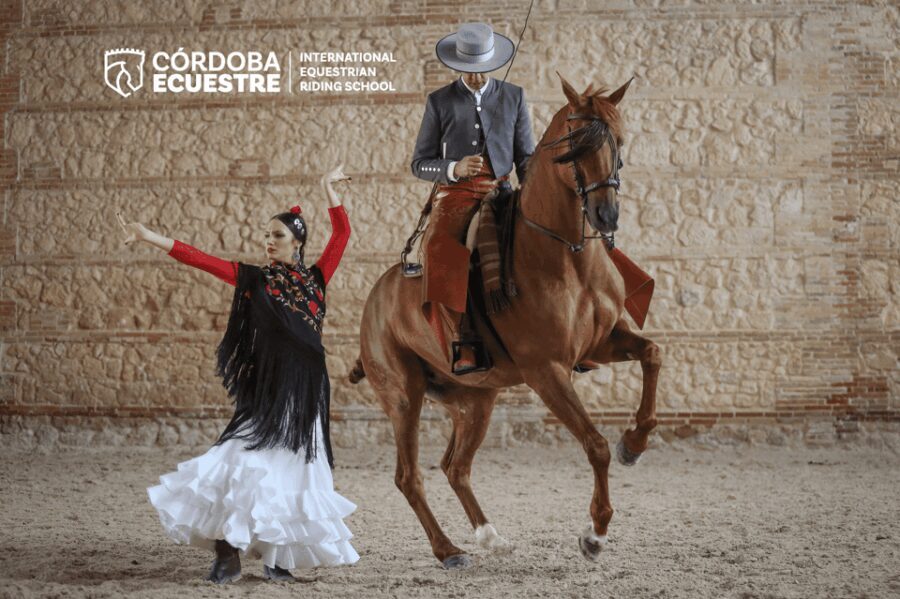
The Córdoba option is the natural choice if you’re basing in Córdoba. 70-minute format, at the historic Royal Stables (Caballerizas Reales), excellent venue. Our Córdoba equestrian show review covers how it compares to Jerez (slightly shorter, less famous, equally well-performed, $10 cheaper). Good for families with time only for one Andalusian site.
3. Royal Andalusian School Admission (Jerez) — $18
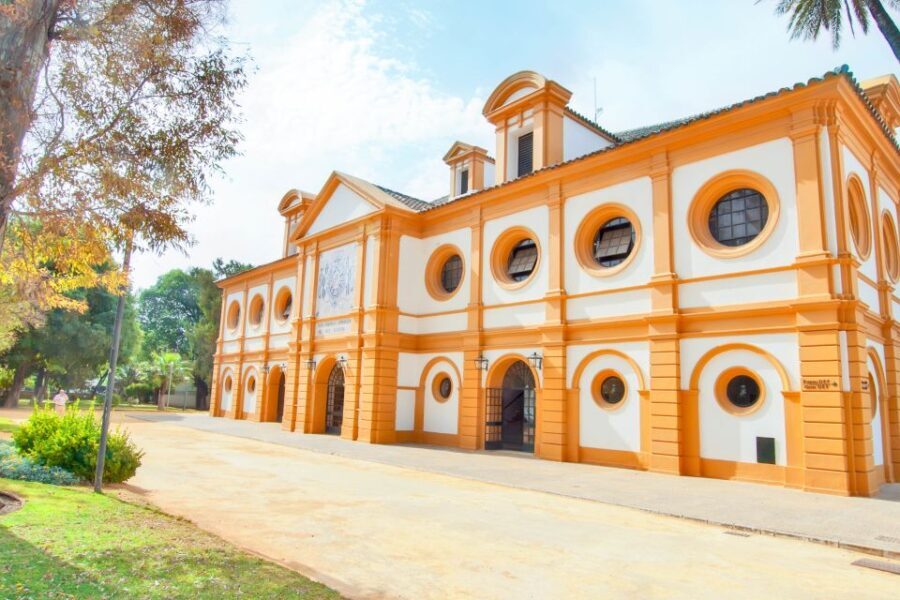
On non-show days (Mon/Wed/Fri), the school opens for admission-only visits. You see training sessions (not as polished as the show but fascinating to watch), a museum of carriages and saddlery, and the stables. Our admission review covers what you can see and whether it’s worth the detour if no show is scheduled. Good for horse-mad kids.
Getting to Jerez
Jerez is in western Andalusia, near Cádiz:
From Seville: 1-hour train or drive. Easy day trip.
From Málaga: 2.5 hours by car. Possible day trip.
From Granada: 3 hours by car. Needs an overnight.
From Cádiz: 30 minutes by car or train. If you’re staying in Cádiz, Jerez is the obvious day.
The Royal School is in central Jerez, 15 minutes’ walk from the train station or a €8 taxi. Parking is €5-10 at the venue.
Show schedule strategy
Book the show date first, then plan the rest of your Andalusian week around it. Show days are typically:
Standard: Tuesday and Thursday, 12pm start.
High season: add Saturday, some additional 10am shows.
Closed: religious holidays, early January.
Book 2-3 weeks ahead in peak season (April-October). Same-week availability in winter.
Sherry pairing
Jerez is the heart of Spanish sherry production. After the horse show, many families visit one of the big sherry bodegas — Tio Pepe, Gonzalez Byass, or Lustau. Most bodegas offer kid-friendly tours that focus on the barrels, the vineyards, and the cats (every bodega has cats to keep mice away). Adults taste; kids get grape juice. Takes 1-2 hours and makes the Jerez day a complete cultural experience.
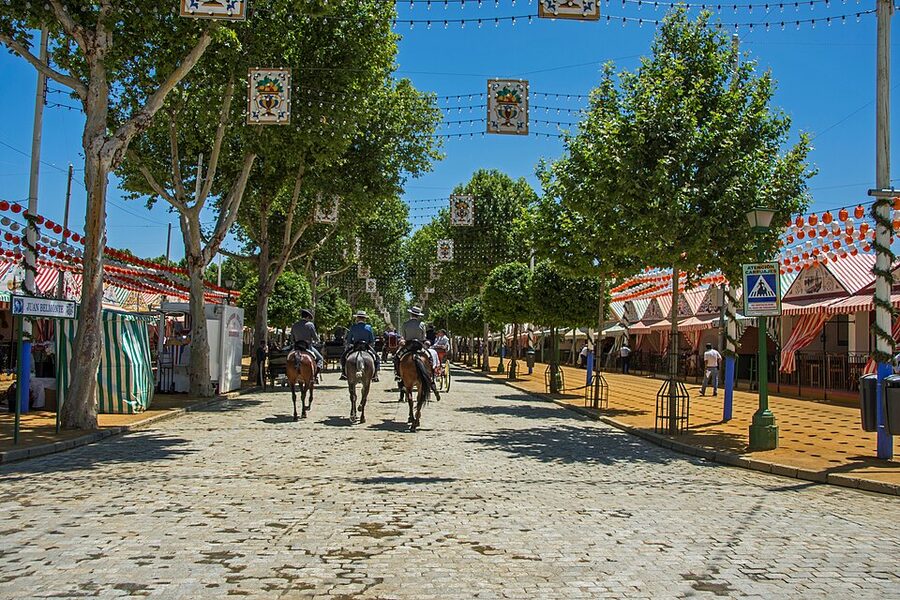
Doma vaquera vs dressage — what’s different
Kids who’ve watched the Jerez show often ask “is that horse fast or slow?” The answer is: both. Andalusian horses are trained in two main disciplines on display at the shows.
Doma vaquera is Spanish working-ranch riding — used historically to herd bulls across open country. Fast, agile, with quick stops and direction changes. One-handed riding with a long pole. The working cowboy tradition of southern Spain.
Classical dressage is the refined court tradition — slow, precise, with high school movements developed over centuries. Two-handed riding with invisible cues. The parade-ground tradition of Spanish royalty.
Both disciplines use the same Pura Raza Española horses; just trained differently. A good show includes sections of each so you see the range.
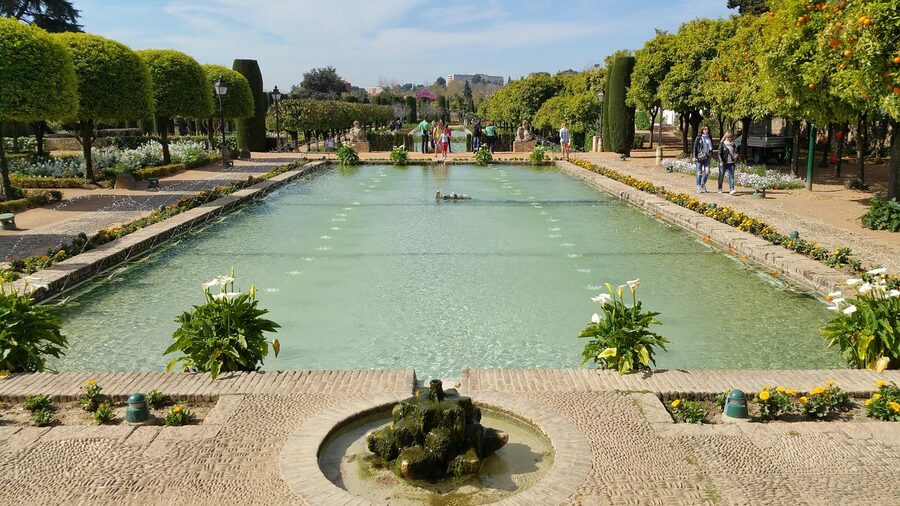
Córdoba show logistics
The Córdoba Equestrian Show at Caballerizas Reales runs more frequently — most evenings except Mondays. 70-minute format, 7pm or 9pm start depending on season.
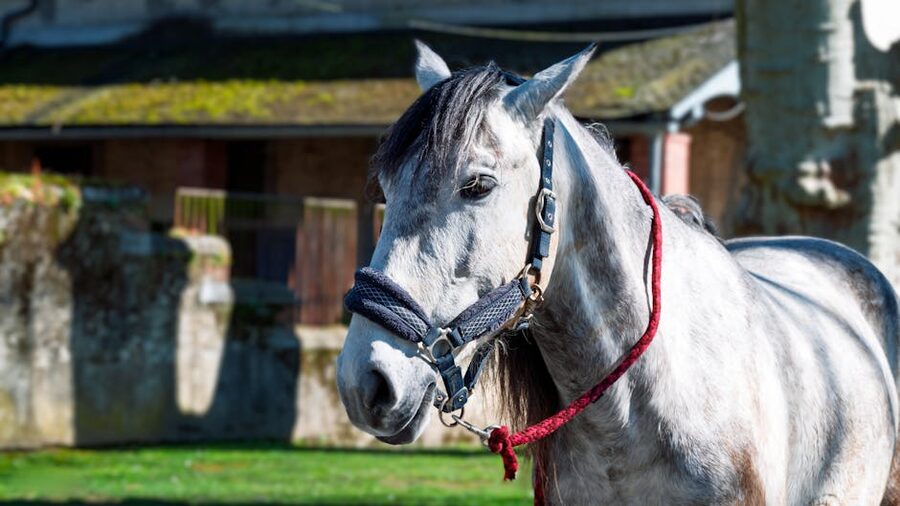
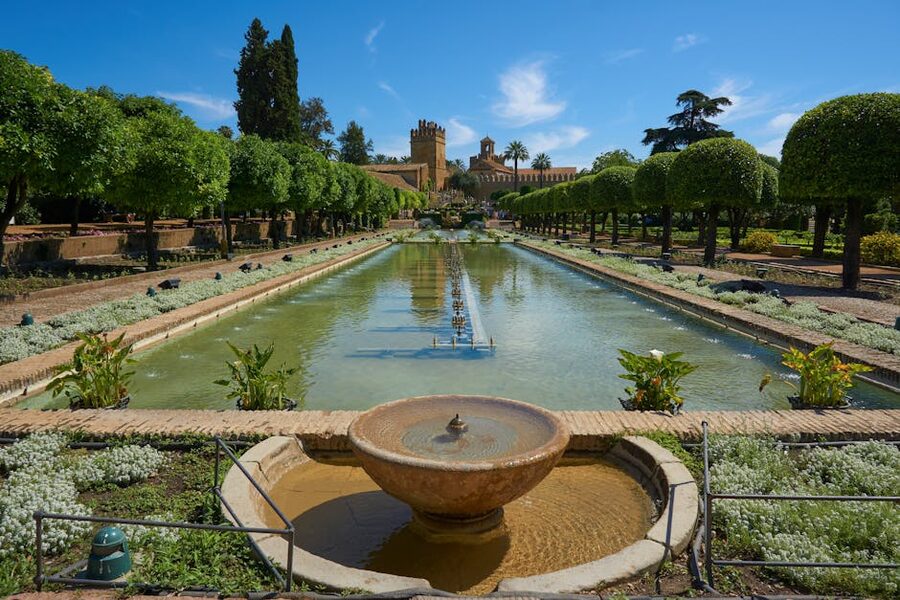
The venue is 3 minutes’ walk from the Alcázar de los Reyes Cristianos. Natural pairing for a Córdoba evening: Mezquita in the morning, Alcázar in the afternoon, equestrian show at 7pm, late tapas. The ultimate Córdoba family day.
Age-by-age guide
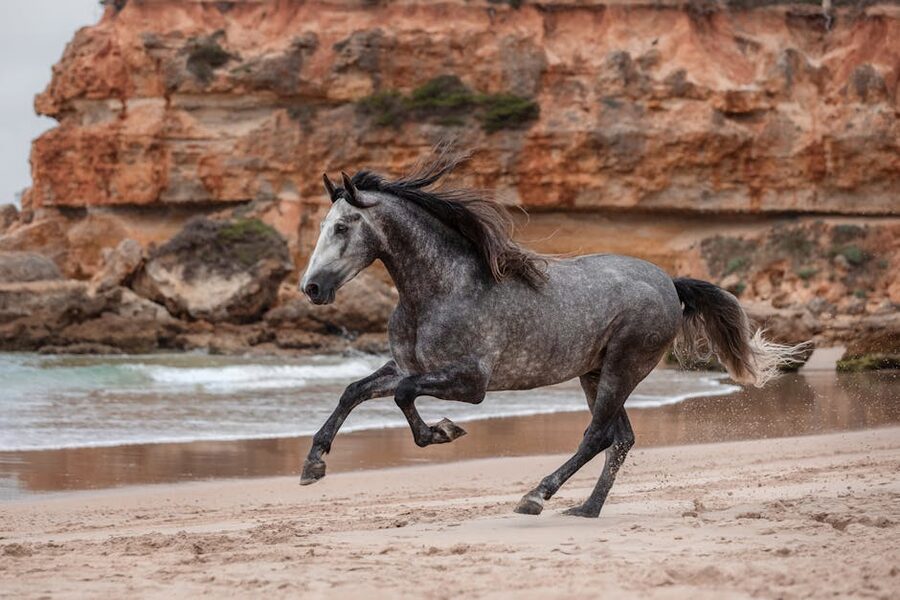
Under 5: workable but the 90-min format is stretched. Pick the Córdoba 70-min version if possible. Bring a snack; kids get hungry.
5-8: sweet spot. The visual elements — costumes, music, horses doing “tricks” — all land. Kids this age remember the show for years.
9-12: full appreciation. They can follow the technical progression from working cowboy riding through classical dressage to high-school airs.
13+: either love it or tolerate it politely. Horse-interested teens love it; screen-bound teens may find it slow. The 70-minute Córdoba version works better for this age group.
Pairing with Andalusia itinerary
The horse show is a single-event activity that pairs well with surrounding day content:
Jerez show day: arrive Jerez 10am, lunch in old town, 12pm show, sherry bodega visit at 3pm, drive back to base by 6pm.
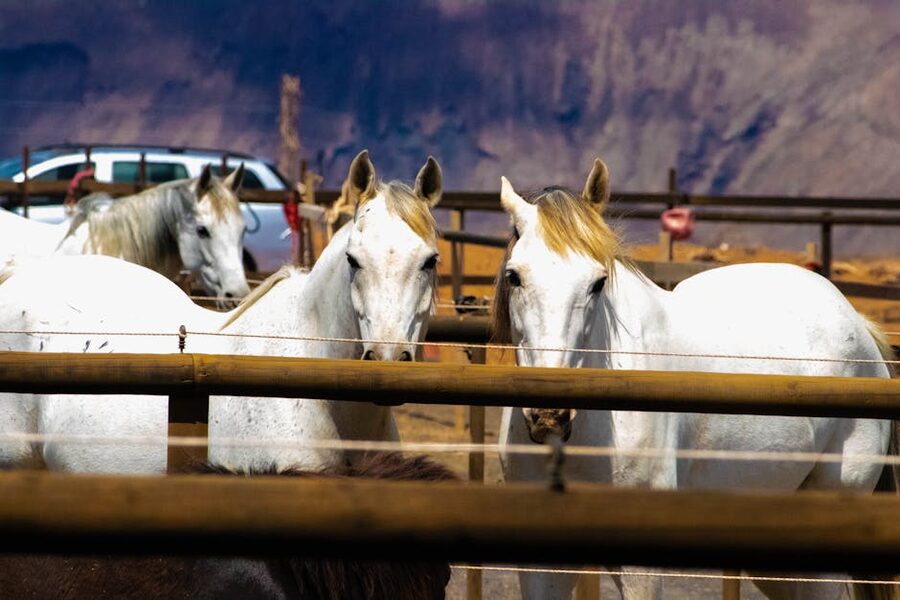
Córdoba show day: morning Mezquita, Alcázar in afternoon, 7pm equestrian show, late dinner. Full Córdoba cultural day.
Seville day trip: train to Jerez (1h), show at 12pm, back to Seville by 4pm for tapas dinner. Works brilliantly as a Seville break day.
A short history of Andalusian horses
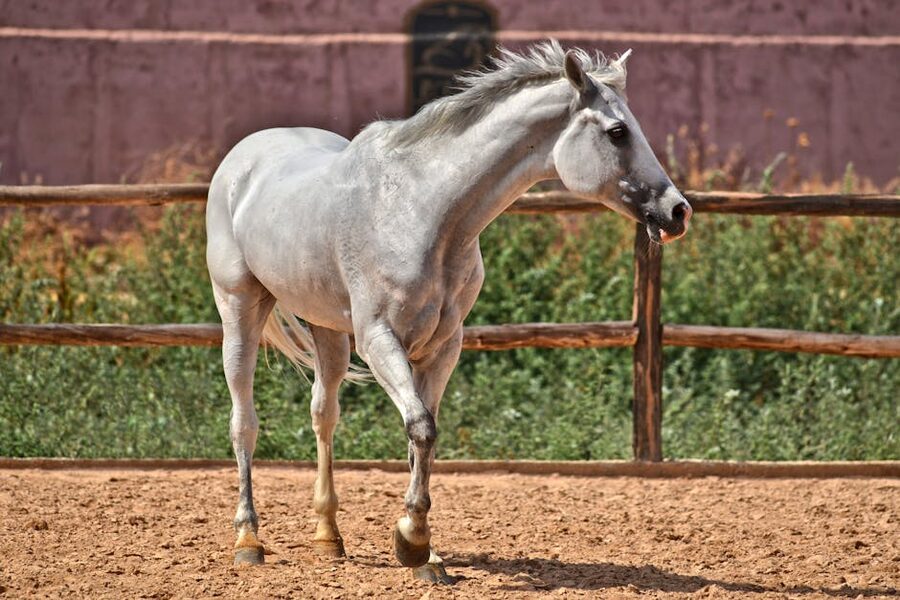
The Pura Raza Española (known in English as Andalusian) horse breed has been bred in southern Spain since Roman times. Roman cavalry used Iberian horses; Moors brought Arabian bloodlines during the 700-1492 Al-Andalus period; Spanish breeders refined the breed in the Renaissance. By 1600, Andalusian horses were the preferred riding mount across European royal courts.
The Royal Stables of Córdoba (Caballerizas Reales) were founded in 1570 by King Philip II specifically to breed what he called the “perfect horse” — strong, intelligent, trainable for both war and dressage. Most modern Andalusian lines trace back to the breeding programmes started here.
The Royal Andalusian School of Equestrian Art was founded in Jerez in 1973 by the rider Álvaro Domecq Romero — modern by comparison. The goal was to preserve Spanish classical dressage traditions that were disappearing as working cowboys shifted to trucks and cars. Spain now has a national equestrian tradition protected as Intangible Cultural Heritage.
What to wear and bring
Smart casual is fine. No dress code. Venue is indoor/covered so weather doesn’t matter.
Snacks are allowed; drinks at the venue bar. Bring a snack for kids who might get hungry during the 90-min show.
Photography allowed without flash. Phone cameras fine. Videos usually OK.
Accessibility: both venues are step-free; wheelchair access available. Buggies can be parked; lift babies onto laps for the seated show.
What to prep kids for
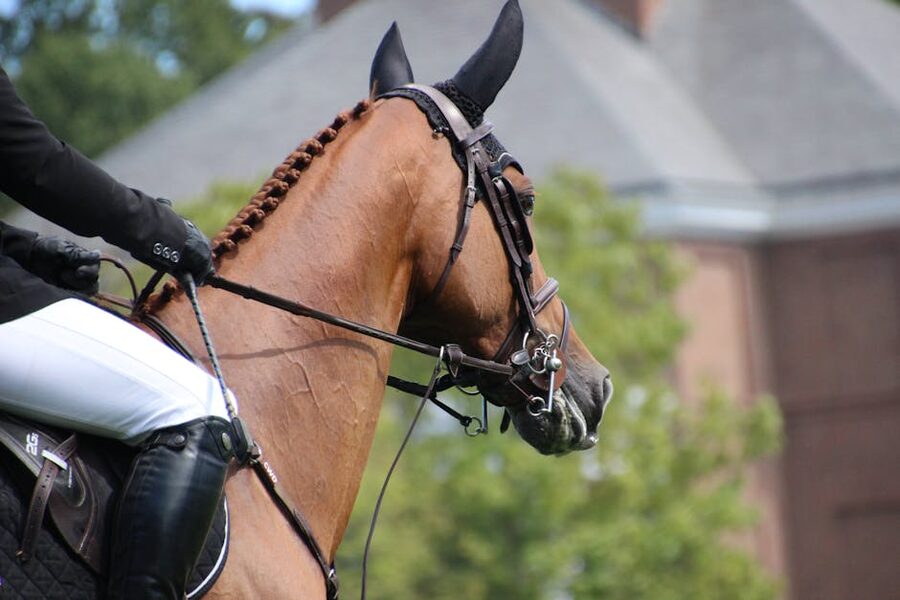
It’s not a rodeo. If your kid is expecting cowboys and jumping fences, they’ll be confused. This is classical ballet on horseback — slow, elegant, precise.
Silence during the “airs”. The audience holds breath when horses do levade/capriole. Kids learn to copy the hush; it’s part of the experience.
Clap at the end of each section. Unlike theatre, audiences applaud between pieces. Kids can clap as loudly as they like.
90 minutes is long. Tell them in advance. Some kids can’t manage; bring a small toy or quiet activity as backup.
Weather and season
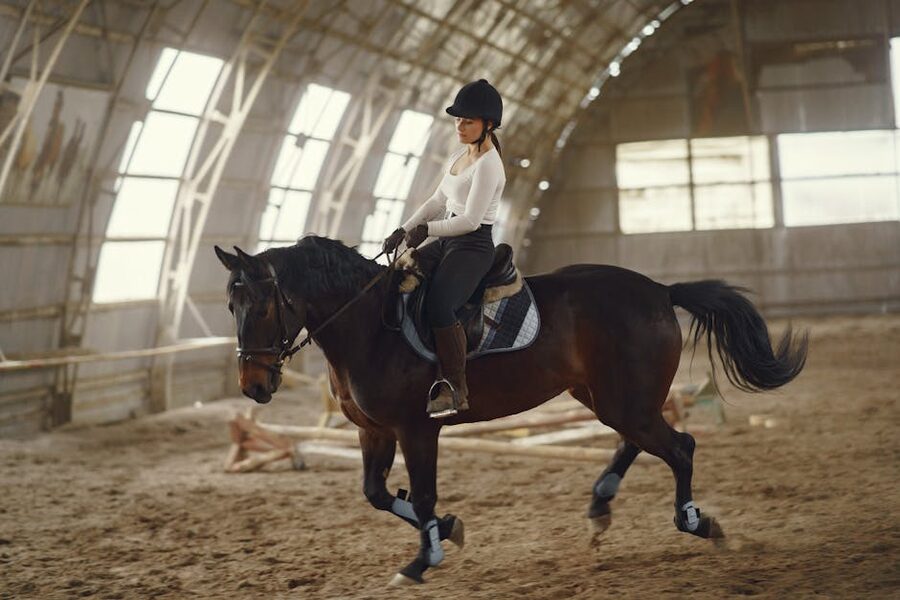
The Jerez venue is indoor; weather irrelevant. Córdoba’s outdoor (but covered) venue is fine in rain but very cold in winter — bring layers.
Best seasons: spring and autumn (April-May, September-October) for general comfort. Summer shows are popular (book earlier). Winter shows are quieter; less choice of dates.
Before you book, an honest list
Book Jerez if: you’re based in Seville or Cádiz and can do a day trip. The show is better than Córdoba’s.
Book Córdoba if: you’re already spending a day there and can’t fit Jerez.
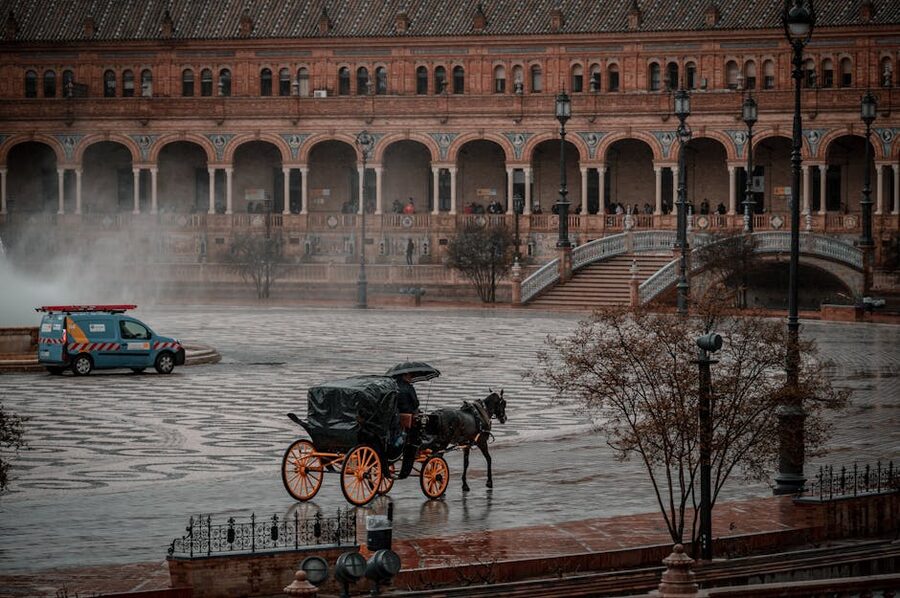
Book the admission-only if: you’re in Jerez on a non-show day and want to see training anyway.
Skip if: kids are under 4 or strongly disinterested in horses. The 70-90 min seated format is a commitment.
Pair with: Mezquita-Alcázar morning (Córdoba show), Seville Alcázar morning (Jerez show), sherry bodega tour (Jerez).
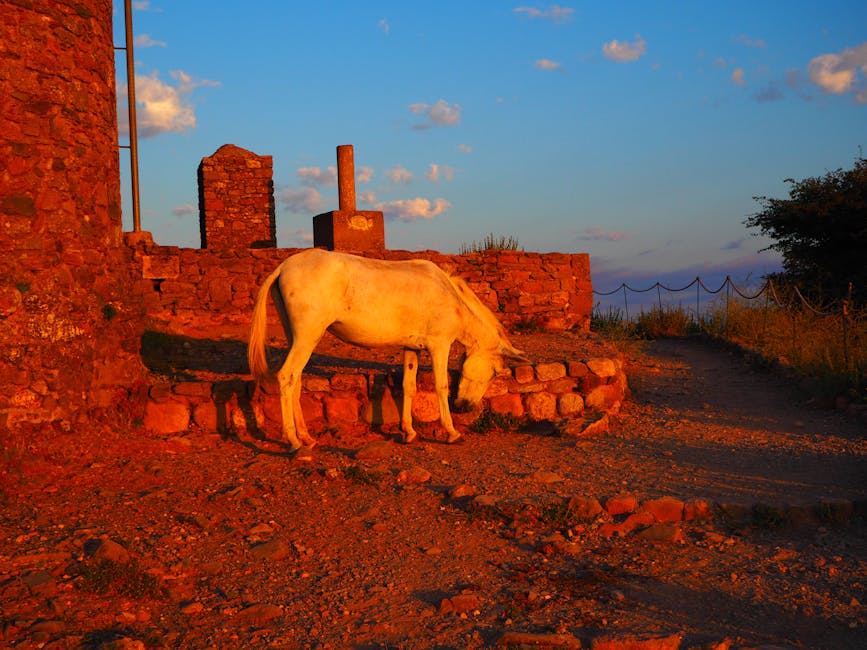
Book Jerez Tuesday show, train from Seville at 10am, back by 4pm. Best cultural afternoon in Andalusia.
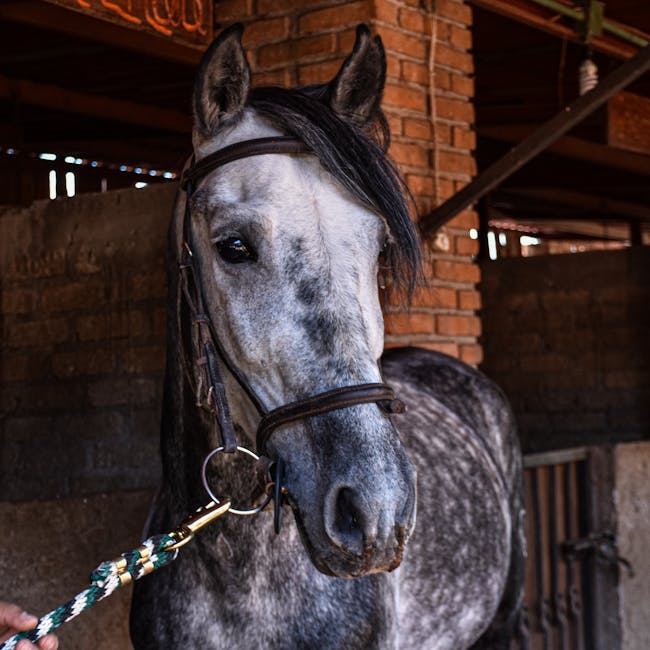
Whatever you pick — Jerez, Córdoba, or admission-only — booking an Andalusian horse experience is one of the best cultural decisions you can make on a Spain trip with kids. It’s a living tradition performed at the highest level, and kids come out of it genuinely changed.