If you’re visiting Krakow and Auschwitz-Birkenau is on your list, this small-group day tour with pickup is one of the more time-efficient ways to get there without turning the day into logistics. You’ll ride in an air-conditioned minivan, meet a tour leader, and then rely on licensed museum guides once you’re at the site.
Two things I like a lot: the tour is set up to keep you moving at the museum’s pace (not your guess-and-check pace), and the guides get repeatedly praised for being knowledgeable and respectful. In multiple trips, drivers such as Olek, Dominik, Marciek, and Sebastian are described as organized and communicative, which matters when the day starts as early as 4:00 a.m.
One thing to consider before you book: timing and museum rules can mean an extremely early departure and potential waiting in line. Reviews also mention that pickup details can shift, and because ticketing is tied to the Auschwitz-Birkenau Memorial and Museum requirements, the trip is non-refundable.
- Key takeaways before you go
- How the small-group setup actually helps
- Price value: what you’re really paying for
- The Auschwitz reservation rules you must plan around
- Pickup in Krakow: early, organized, and sometimes variable
- The van ride: what happens before you step into history
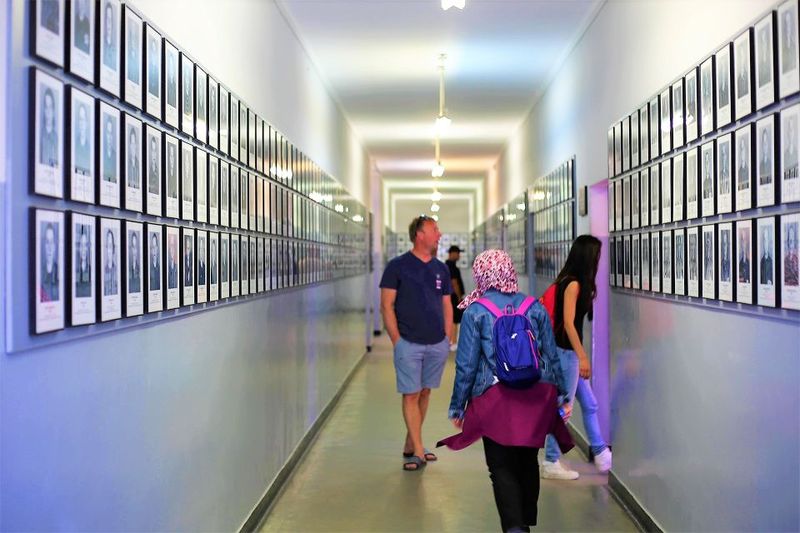
- Auschwitz I: the guided walk that gives meaning to the place
- The short break: when you should actually use it
- Birkenau (Auschwitz II): the scale that changes your brain
- The walk back to the bus: how the day ends
- Comfort and accessibility: who this works for
- What you should pack (and what to avoid bringing)
- Food on this day: the optional lunchbox reality
- The guides: why reviews keep circling back to knowledge
- Logistics watch-outs: the small problems that can matter
- Who should book this Auschwitz-Birkenau day trip?
- Should you book it? My honest call
- The Best Of Krakow!
- More Tours in Krakow
- More Tour Reviews in Krakow
Key takeaways before you go
- Early start is normal: pickups can run roughly 4:00 a.m. to 12:00 p.m., and waits at the museum can be up to 4 hours in some cases
- Guides are the whole point: English-speaking licensed guides are included, and reviews mention strong, sensitive explanations
- Two real stops, not a drive-by: about 2 hours at Auschwitz I and about 1.5 hours at Birkenau with a short break in between
- Comfortable transport, small-group flow: air-conditioned minivan pickup/drop-off and tour-leader support keep the day manageable
- Optional lunch is practical: a packed meal with wraps, fruit, and water is available, and many travelers found it good value (don’t expect full restaurant dining or tapas-style breaks)

👉 See our pick of the Our Picks For The 12 Best Spa & Hot Springs Experiences In Krakow
How the small-group setup actually helps
This tour is built around one big problem: Auschwitz-Birkenau is far more than a museum stop. It’s enormous, detailed, and emotionally intense. If you show up without a plan, you can burn hours finding entrances, figuring out timing, and trying to match your questions to whatever guide group happens to be starting.
With this setup, you start with organized hotel pickup in Krakow (exact time is messaged to you via email/text/hotel desk). Then you’re in a minivan with a tour leader for the ride, so you can focus on what you came for. Drivers in traveler feedback—like Kapcer, Olek, Marciek, and Greg—are often described as attentive to meeting points and clear about the day’s flow.
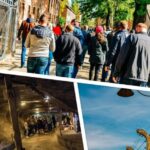
A small-group ride also helps in a subtler way: you tend to get less chaotic transitions. Travelers mention being lined up quickly for the correct English tour and, in at least one case, being in and waiting within minutes of arrival.
You can also read our reviews of more tours and experiences in Krakow.


Price value: what you’re really paying for
At around $41 per person (as listed), you’re paying for more than a bus ticket. The package includes transportation, entry ticket, and crucially, a guide at Auschwitz and Birkenau. That’s the expensive part you’d otherwise have to piece together yourself, and it’s the part that affects how understandable the site is.
You’ll also have the option to add a packed lunch. The lunch option is described as wraps (ham/cheese or hummus), an apple, banana, a chocolate bar, and bottled water. Several travelers call this lunchbox better than expected, which is a big deal on a day when food cravings might be the last thing on your mind—but energy still matters.
So the “value” angle here is simple: you’re paying to reduce friction. Fewer headaches. Better timing. A real guide where you need one.
The Auschwitz reservation rules you must plan around
This tour includes an important warning that you should treat as a checklist, not fine print. Because of growing demand and strict museum scheduling, you’re encouraged to book early. The tour operator needs your full name and contact details at booking, and those details need to match your ID.
If you book too close to the visit date, the tour notes that your booking can be treated as last minute, and it no longer guarantees an English-speaking guide. That matters most because this is a site where being able to ask questions—or just follow the explanation clearly—changes everything.
Also, tickets are non-refundable. That’s not unique to this tour; it’s tied to museum requirements. Still, it’s a real consideration if your schedule is shaky.
Pickup in Krakow: early, organized, and sometimes variable
This is where you need to go in with eyes open. Pickup can be as early as 4:00 a.m., and in some situations you may have a long wait in line at the museum—up to 4 hours is specifically mentioned in the tour details. That isn’t the provider being chaotic; it’s the museum system reacting to visitor volume.
What you can control is how prepared you are. A traveler-style tip from the reviews: expect a message the day before with your pickup time, and double-check your communication method (WhatsApp/email/text). Some reviews mention pickup being earlier than the time they expected, but drivers still handled it smoothly once contacted.
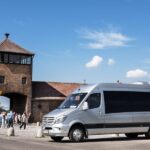
Meeting point logistics are straightforward: you’ll look for the Komfor number plate on the minivan and show your voucher to the driver or tour leader.
Drop-off is also defined, including plac Szczepański 8, Kraków.
More Great Tours NearbyThe van ride: what happens before you step into history
The trip is built around a minivan transfer that takes you from Krakow out to Auschwitz. Expect about 1.5 hours each way (the schedule gives that as the typical ride time). During the ride, a tour leader assists with the handoff process and keeps you on track.
A nice detail for travelers: the minivans are described as modern and comfortable, and multiple reviews mention air-conditioning. That sounds minor until you remember the early start, especially in colder months.
Also, the early ride is when you set your mental gear. You might feel fine until you arrive and the scale hits you. Having the day structured from the start helps you avoid arriving already stressed.
Auschwitz I: the guided walk that gives meaning to the place
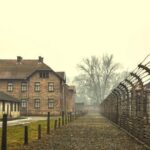
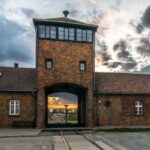
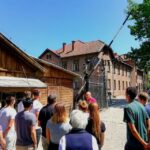
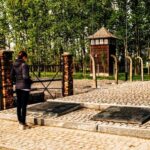
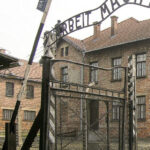
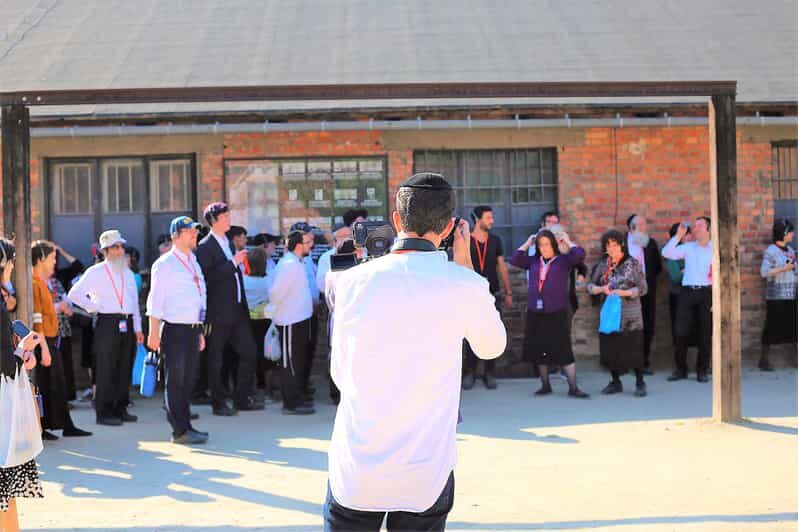
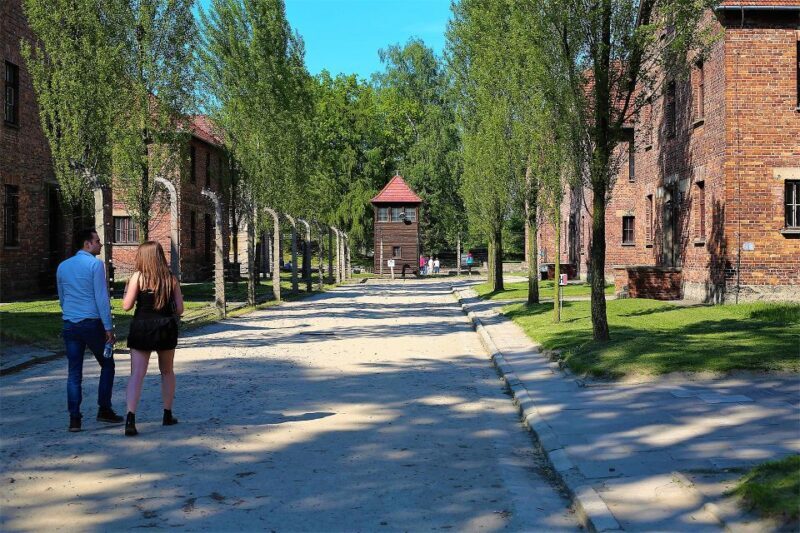
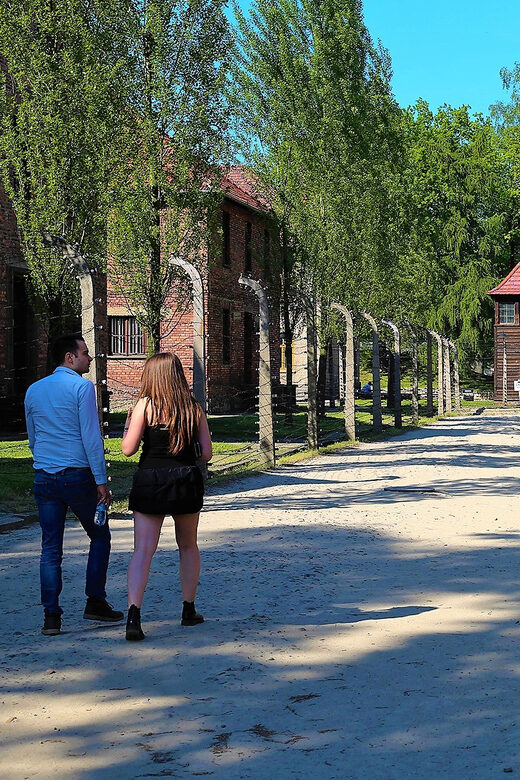
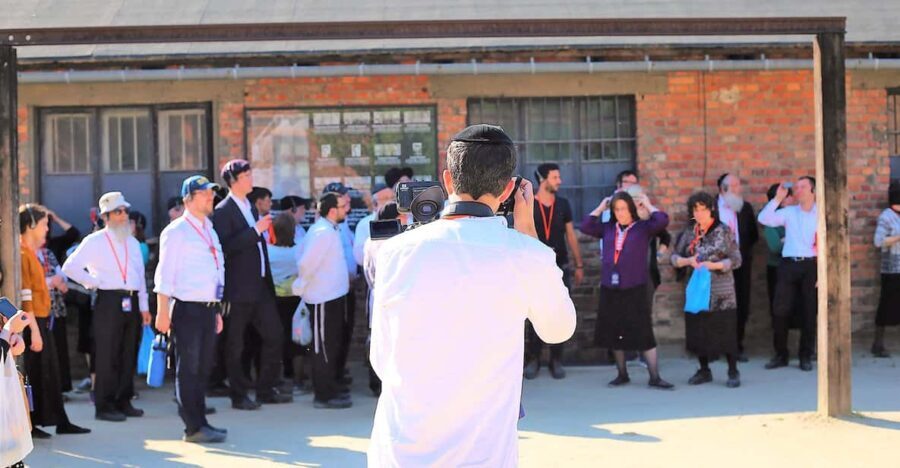
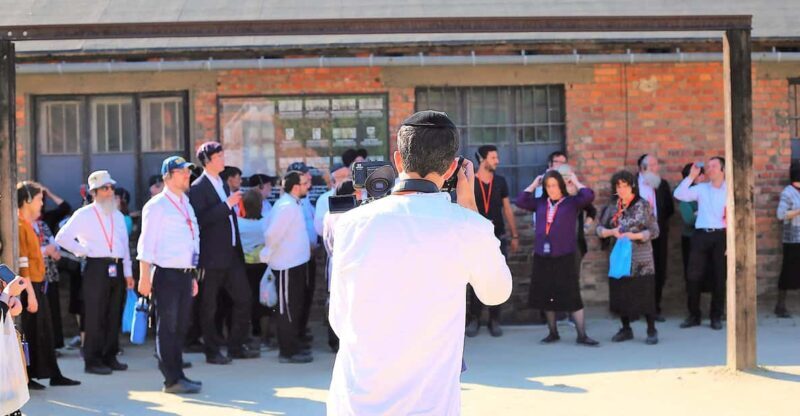
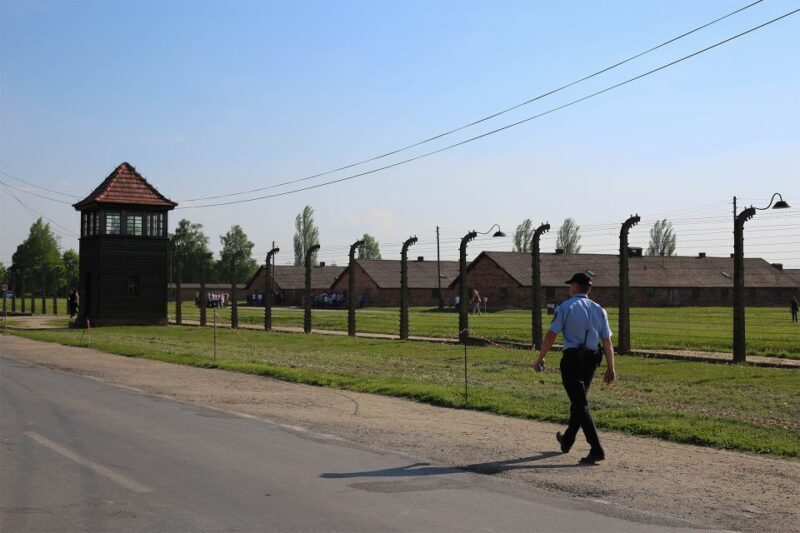
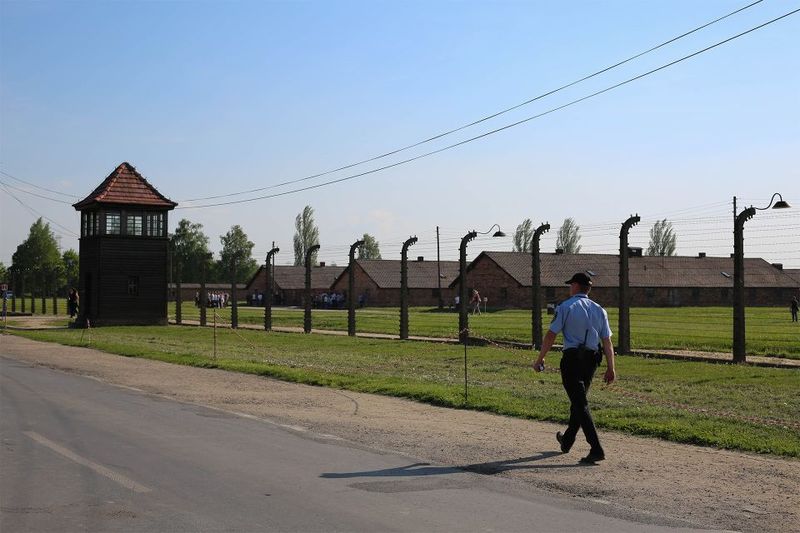
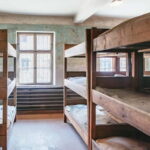
At Auschwitz I, you’ll get about 2 hours with a licensed guide. The focus is on the core elements you’ll recognize right away: barbed wire fences, watchtowers, barracks, gallows, and gas chambers. The tour time includes a short break (listed as around 15 minutes in the schedule, while the description mentions a short 20-minute break). Either way, it’s meant to reset you without losing momentum.
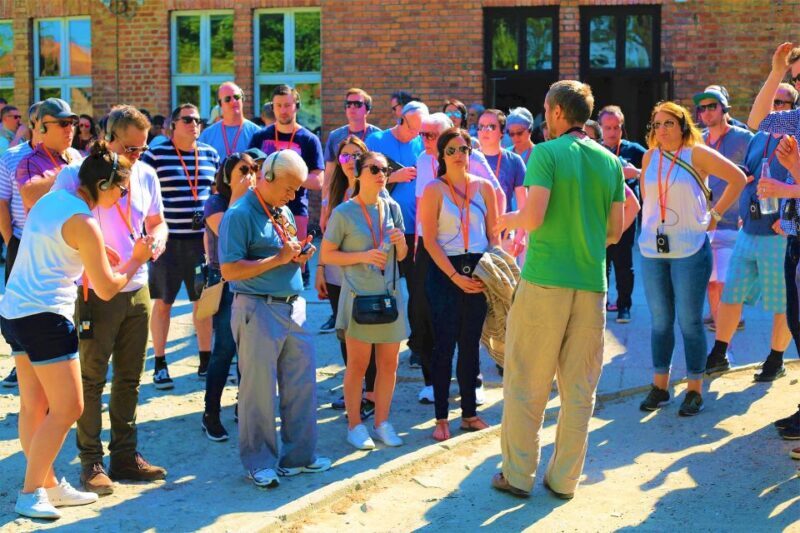
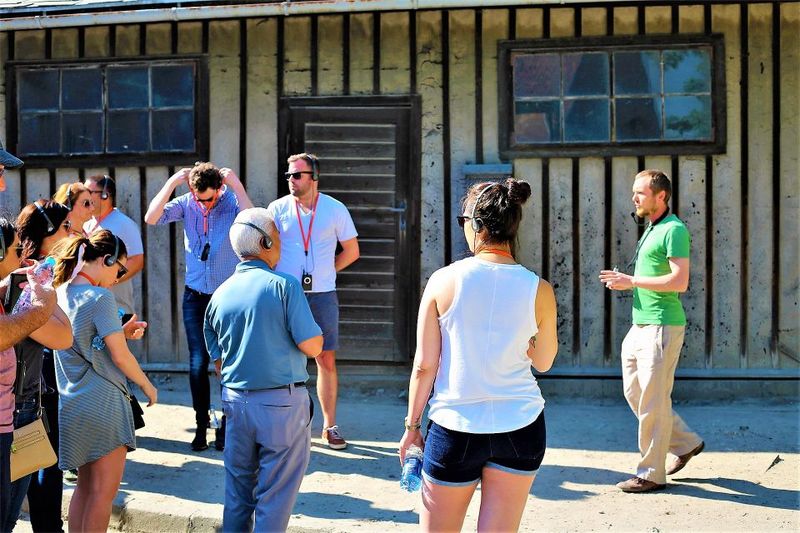
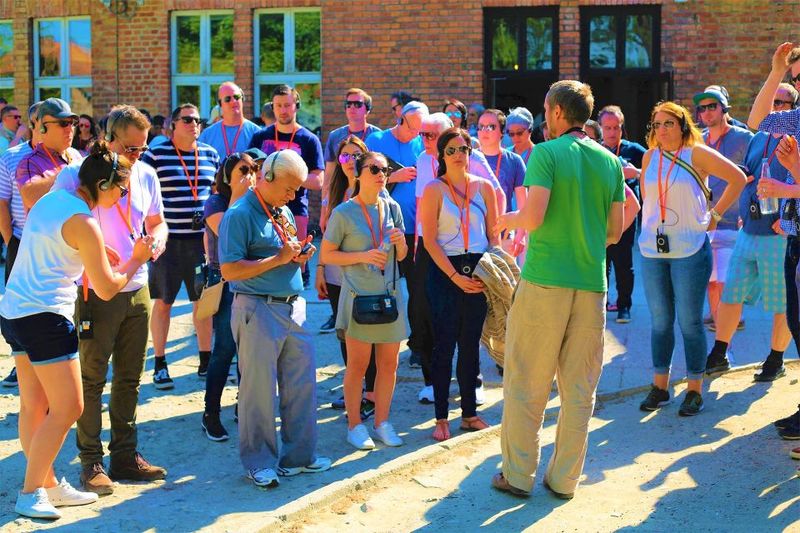
A guided visit here matters because Auschwitz isn’t laid out like a typical museum. Without context, you might see structures but miss the story of how the system worked. Reviews repeatedly mention guides who explain with the right sensitivity and keep the group together.
Some travelers describe the guide as passionate and emotionally careful, which is exactly what you want on a site like this. One review specifically highlights that the narrative helped “buy reality,” which is a key point: this tour isn’t just about seeing objects, it’s about understanding what the objects represent.
The short break: when you should actually use it
You’ll have a brief break before moving to Birkenau. Practically, this is when you should:
- drink water
- use the restroom
- adjust layers (the sites can feel colder or harsher than Krakow)
If you ordered the optional packed lunch, note that the tour timing emphasizes maximum time inside the camps, so the break may not feel long enough for a full meal unless you come prepared. Multiple reviews mention that lunch timing is short, and a couple imply it’s often better to snack lightly.
Birkenau (Auschwitz II): the scale that changes your brain
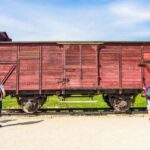
Birkenau is a short drive—about 5 minutes—from Auschwitz I, but it feels like a different world. You’re looking at a site comprised of around 300 buildings, including watchtowers, latrines, and gas chambers.
You’ll spend about 1.5 hours here with a guide. Reviews often describe this stop as deeply moving and disturbing, which comes as no surprise. What you can control is how you experience the stop: show up ready to slow down.
Birkenau’s biggest lesson is scale. You’re not just learning names and dates—you’re seeing how mass incarceration and extermination were built to function. The guide helps you connect what you see to the people who passed through and the memory of those who perished.
One thing I’d flag: the pace is guided. If you want to roam independently for hours and linger wherever you choose, you might feel the schedule doesn’t give you that freedom. The tour is designed for people who want structured context.
The walk back to the bus: how the day ends
After Birkenau, you’ll start the return drive to Krakow, around 1.5 hours back. Travelers report getting back as early as the early afternoon when things run smoothly.
At this point, you’ll likely be tired in a very particular way: your body is spent from walking, and your brain is spent from trying to understand. It’s normal if your first reaction is silence.
Drivers in the reviews often described as waiting promptly after the tour. That matters because you’ll need a clean transition from the site to the outside world.
Comfort and accessibility: who this works for
This is not positioned as an accessible tour for everyone. The tour notes it’s not suitable for people with mobility impairments. If you need accessibility support, wheelchairs are available at the Visitor Service Center if reserved in advance, but the tour itself still may not fit your needs.
Comfort-wise, the minivan ride is the upside: air-conditioned, and reviews mention you can leave belongings safely in the vehicle in some cases.
Clothing rules are also clear:
- no shorts
- no smoking
- no luggage or large bags
- no sleeveless shirts
- pets are not allowed
Bring comfortable shoes. You will walk more than you think you will.
What you should pack (and what to avoid bringing)
From the tour notes, keep it simple:
- passport or ID card
- comfortable walking shoes
- weather-appropriate clothing
For what not to bring, follow the site and tour restrictions: no large bags, no sleeveless shirts, and no shorts.
If you’re the type who always carries extra layers, bring a light jacket. Early pickup and cold mornings can sneak up on you. Also bring water—either via the lunchbox or your own bottle before you go inside.
Food on this day: the optional lunchbox reality
Yes, there’s food, but no, it’s not a long restaurant meal. The included option is a packed lunch: wraps (ham/cheese or hummus), an apple, banana, a chocolate bar, and bottled water.
Why this matters: it keeps you from getting stuck hungry while you’re waiting for your tour group and guide timing. Reviews specifically mention the lunchbox being good value for money and better than expected.
And for the record, don’t expect full-on dining or anything like tapas. The value is convenience: quick, portable, and filling enough to keep you functioning.
The guides: why reviews keep circling back to knowledge
If you read enough feedback, a pattern emerges: travelers consistently praise the knowledge and sensitivity of the museum guiding. Names mentioned in reviews include guides such as Anna, Magda, Margret, Mark, Rysiek, and Caspyer, plus drivers like Olek, Dominik, Marciek, Greg, Matthew, and Sebastian.
A good Auschwitz guide does two things:
1) explains clearly what you’re looking at (so it becomes understandable)
2) handles the material with care, so you’re not hit with facts in a careless way
Some reviews even mention guides helping the group stay together and answering questions. That’s a big deal in crowds, especially when you start with a mixed group and then get sorted into the correct English-speaking tour.
Logistics watch-outs: the small problems that can matter
A few common friction points show up in the details:
- Non-refundable tickets: plan carefully.
- Name matching: your name on booking has to match your ID.
- Early pickup confusion: some travelers mention schedule surprises, but most drivers still handled it well.
- Timing trade-off: lunch breaks are short so you can maximize time inside.
Also remember: the tour notes that the Old Town is a restricted traffic zone. If your hotel is in that area, you’ll be contacted to confirm the nearest possible pickup point.
This is all normal in Krakow. Just don’t assume your driver can roll right up to your front door.
Who should book this Auschwitz-Birkenau day trip?
This tour is a good fit if you:
- want an English-speaking licensed guide at Auschwitz and Birkenau
- prefer structured pacing over self-guided wandering
- value skip-the-line or faster entry handling (reviews mention queue-cutting in busy periods)
- want a straightforward day plan with pickup and drop-off
It’s less ideal if you:
- need extensive mobility accessibility (the tour says it’s not suitable for mobility impairments)
- need lots of free time to wander independently
- can’t manage an extremely early start
From Krakow: Auschwitz Birkenau Small Group Tour with Pickup
Should you book it? My honest call
I’d book this tour if you’re the type who wants your Auschwitz visit to be more than a photo-and-memories day. The combination of transport, museum entry, and guided explanation is what turns the trip from confusing to meaningful.
Book early if you can. The museum’s scheduling pressure and the English-guide guarantee are real factors. And on the day, show up ready for early departure, possible lines, and a steady pace.
If that sounds like your kind of trip—carefully planned, guided, and emotionally heavy—then this is a solid value way to do it from Krakow.
You can check availability for your dates here: