- What We Love About This Tour
- The Itinerary: What Happens Hour by Hour
- Hotel Pickup and the Drive to Oswiecim
- Auschwitz I: The Original Concentration Camp
- The Break Between Camps
- Auschwitz II-Birkenau: The Largest and Most Devastating Camp
- What Makes This Tour Different From Others
- Small Group Size Matters More Than You’d Think
- Pre-Booked Tickets Eliminate Stress
- Communication Is Genuinely Excellent
- The Guide Experience: What You’re Paying For
- Practical Considerations for Your Visit
- Weather and What to Wear
- What to Bring and What Not to Bring
- The Emotional Reality
- Value for Money: Is Per Person Really Enough?
- Honest Drawbacks Worth Knowing
- Schedule Changes Happen
- The Guide You Get Is Assigned
- Physical Demands
- Who Should Book This Tour
- FAQ: Practical Questions Answered
- The Bottom Line
- The Best Of Krakow!
- More Guided Tours in Krakow
- More Tours in Krakow
- More Tour Reviews in Krakow
What We Love About This Tour
 1 / 6
1 / 6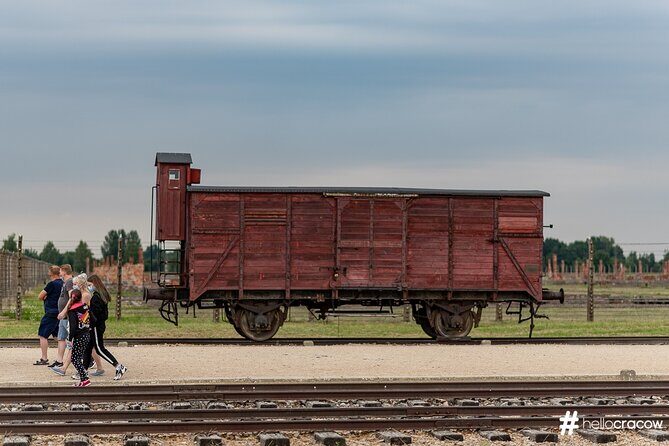 2 / 6
2 / 6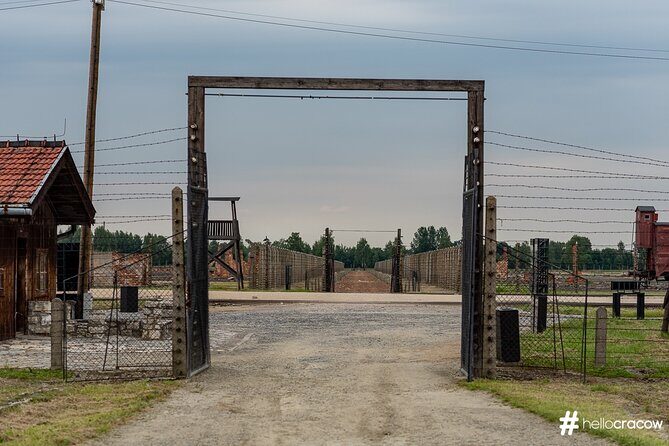 3 / 6
3 / 6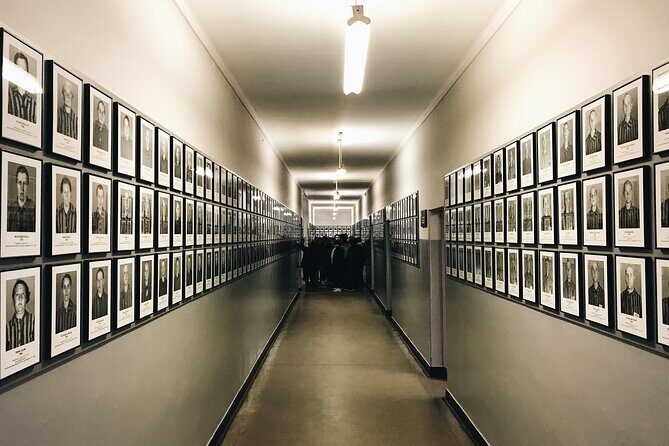 4 / 6
4 / 6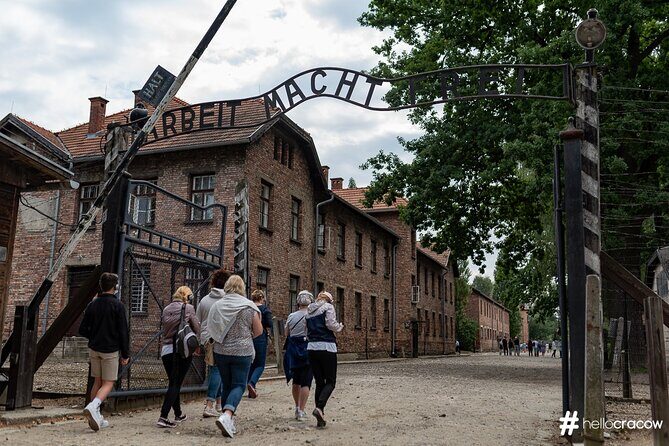 5 / 6
5 / 6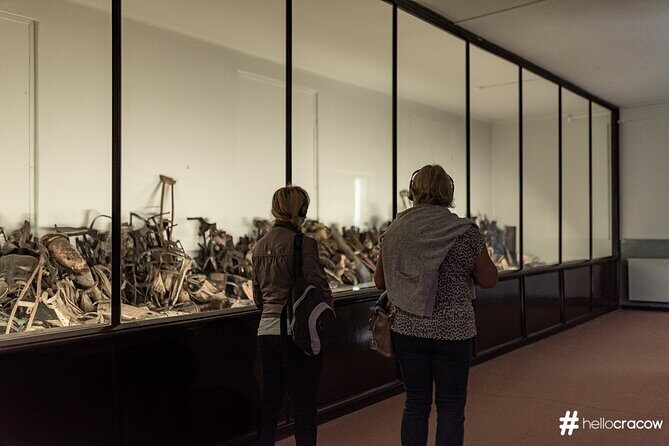 6 / 6
6 / 6We’ve reviewed hundreds of tours across Europe, and this Auschwitz & Birkenau experience stands out for two compelling reasons. First, the operational excellence is genuinely impressive—from the moment a driver texts that they’re on the way to your hotel until you’re dropped back at your door, every detail feels professionally managed. Second, and more importantly, the tour respects the gravity of what you’re visiting. This isn’t treated as a typical tourist activity; it’s handled with the solemnity and educational rigor that such a significant historical site demands.
That said, there’s one important consideration: the museum controls much of the schedule, which means your departure time might shift from what you originally booked (sometimes substantially). A few travelers experienced last-minute changes, and while the company communicates these promptly, it’s worth understanding that flexibility is occasionally required.
This tour works beautifully for anyone visiting Krakow who wants to understand the Holocaust’s devastating reality. Whether you’re a history student, a family wanting to educate your children, or simply someone seeking a deeper understanding of this dark chapter, this experience delivers exactly what you need.
👉 See our pick of the Our Picks For The 12 Best Spa & Hot Springs Experiences In Krakow
The Itinerary: What Happens Hour by Hour
You can also read our reviews of more guided tours in Krakow

Hotel Pickup and the Drive to Oswiecim
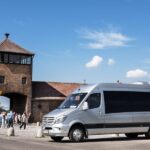
Your day begins when a friendly driver arrives at your hotel or a designated meeting point in Krakow. One traveler noted their driver “texted to say he’d be with us shortly,” and another praised their experience: “Pickup exactly on time.” This consistency matters when you’re coordinating an emotionally demanding day.
The drive to Auschwitz-Birkenau takes approximately 75 minutes covering 65 kilometers through the Polish countryside. You’ll have time to mentally prepare during the journey. Some drivers, like Michael and Patryk according to reviews, use this time to share local knowledge about Poland and the region’s history, adding context to what you’re about to experience.
Upon arrival in Oswiecim, there’s a brief pause where you can grab coffee, use facilities, or view outdoor exhibitions. This breathing room before entering the camps is thoughtfully built into the schedule.
Auschwitz I: The Original Concentration Camp
You’ll then meet your licensed museum guide—a professional educator assigned by the Auschwitz-Birkenau Memorial and Museum itself. This is crucial to understand: you’re not getting a tour operator’s guide, but rather someone trained and approved by the museum, which ensures historical accuracy and appropriate sensitivity.
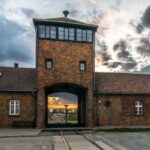
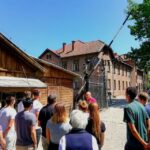
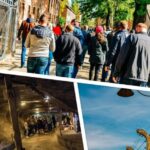
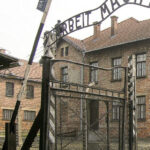
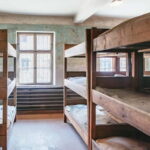
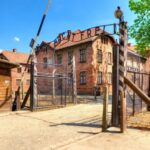
The first camp tour lasts approximately two hours. You’ll walk through the iconic gate with its “Arbeit Macht Frei” (Work Makes You Free) sign and explore the original wooden barracks, fortified walls, barbed wire fences, and the gas chambers and crematoria. Groups stay at or under 30 people—small enough that you can actually hear your guide clearly through the provided headsets, which makes an enormous difference in a place this significant.
What strikes most visitors is the scale of what they’re seeing. These weren’t abstract horrors—they were real structures where unimaginable suffering occurred. One traveler described it perfectly: “The displays are very well and sympathetically done. The entrance to Auschwitz is a brutal concrete structure which prepares you for the brutality of what took place there.”
The Break Between Camps
After Auschwitz I, you get a 15-minute break. This is where the lunch planning mentioned in reviews becomes relevant. There’s a café on-site where you can purchase food, though many travelers recommend bringing snacks since the break is brief and the food options are limited. One experienced visitor suggested pre-ordering a lunch bag through the tour operator, which several travelers found “really nice.”
Auschwitz II-Birkenau: The Largest and Most Devastating Camp
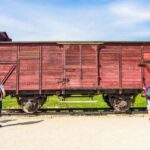
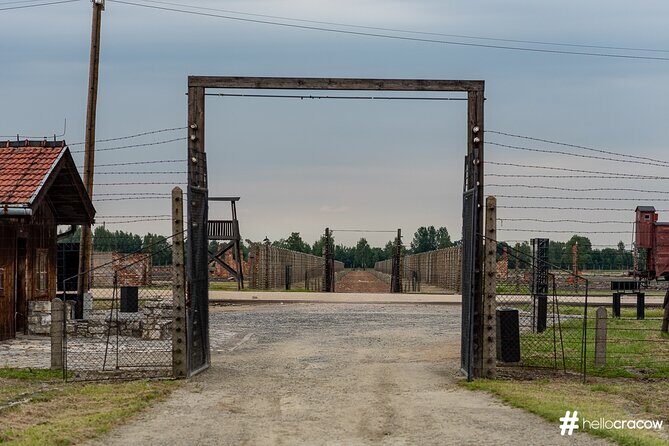
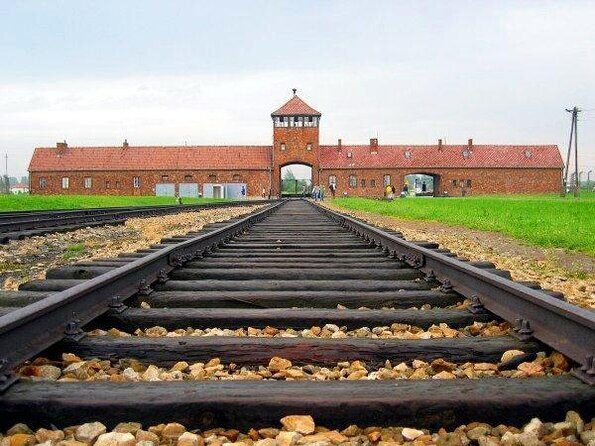
Just three minutes away, Birkenau presents an entirely different and even more overwhelming experience. Built in 1941 specifically as an extermination center, this camp could hold approximately 90,000 prisoners. The sheer scale—the endless rows of barracks, the selection ramps, the crematorium ruins—creates a visceral understanding of the Holocaust’s mechanized horror.
This portion typically takes 90 minutes. Your guide will discuss the terrible living conditions, the selections that determined who lived and who died, and the horrific medical experiments conducted by Nazi doctors like Josef Mengele. Many of the buildings are gone, but what remains—and what the landscape itself communicates—is profoundly moving.
One traveler shared: “It is hard to describe how great the day was when the locations are so awful in their histories.” That contradiction—the excellence of the experience set against the darkness of the history—captures what makes this tour meaningful rather than merely depressing.
What Makes This Tour Different From Others
Small Group Size Matters More Than You’d Think
The tour caps at 30 people per group. This isn’t a massive coach tour where you’re one of 60 people craning to see what the guide is pointing at. Several reviews specifically praised this aspect. One traveler noted: “We were in a car of 4 people and then the tour itself was with around 20 people, so not too packed!” Another mentioned: “Paying extra for the small group tour is worth it too.”
Why does this matter? At Auschwitz, you need mental and emotional space to process what you’re experiencing. A massive crowd can turn a profound educational experience into something that feels more like sightseeing. The small group format preserves the dignity of the visit.
Pre-Booked Tickets Eliminate Stress
Unlike some competing tours where groups queue outside the gates hoping for same-day entry, this operator books your tickets in advance with your name on them. One traveler who’d done the tour twice made this exact comparison: “This company ‘buys tickets with your name on it.’ The other company had us standing outside the gate at 4am to buy ‘same day entry?'” That’s not a small difference when you’re trying to manage an emotionally demanding day.
Communication Is Genuinely Excellent
Multiple reviews mention WhatsApp communication, with travelers receiving updates about exact pickup times, any schedule changes, and logistical details. One person noted: “Communication was very good from the onset to confirm this trip months in advance.” Another praised: “We had the first tour of the day and skipped the queue.”
The Guide Experience: What You’re Paying For
The quality of your guide significantly affects this experience. Based on reviews, most guides are exceptionally knowledgeable. One traveler described their guide as having “27 years experience who ‘told’ the story,” while another appreciated a guide who shared “the ‘academic’ version.” Different guides bring different strengths, but all are trained professionals.
What matters is that guides handle this subject with appropriate gravity. A traveler noted: “The guide was so knowledgeable, thoughtful and sincere.” Another said the guide “showed great respect to the sites.” This isn’t entertainment—it’s education delivered with the seriousness it deserves.
Practical Considerations for Your Visit
Weather and What to Wear
Roughly 70 percent of the tour happens outdoors. This isn’t a minor detail. One traveler emphasized: “Make sure you wrap up warm,” noting that “boy was it cold.” Another visitor in January 2026 mentioned “sub-freezing” temperatures and “mostly outdoors, so dress warmly.”
In warmer months, bring water. In colder months, dress in layers you can remove if needed. Comfortable walking shoes are essential—you’ll cover significant ground.
What to Bring and What Not to Bring
Food and drinks aren’t included, though there’s a café between camps. Pack snacks if you prefer your own food. Photography is permitted except in marked areas, and flash isn’t allowed inside buildings. Security screening happens before entry—similar to airport procedures—so plan accordingly.
One important detail: your full legal name must match your passport or ID exactly. No nicknames. One traveler’s wife had booked under her married name but carried ID in her maiden name, and it nearly caused problems. Make sure your booking name matches your travel documents precisely.
The Emotional Reality
This tour isn’t designed to be pleasant or uplifting. It’s designed to be truthful. One traveler said it best: “Very moving and sobering. Would 100% recommend to anyone.” Another noted: “The tour was very moving and at times I was lost for words.”
Some people find this cathartic and important. Others find it genuinely difficult. Both reactions are normal. Understanding that going in helps you prepare mentally.
Value for Money: Is $35 Per Person Really Enough?
At $35.07 per person, this tour includes transportation from your hotel, museum admission for both camps, a licensed guide, headsets, insurance, and taxes. Let’s break down what that actually means.
Museum admission alone to Auschwitz-Birkenau runs approximately $20-25 per person. Transportation from Krakow (a 75-minute drive each way) would cost $30-50 if booked separately. A professional guide adds another $50-100. Suddenly, $35 becomes genuinely remarkable value.
This isn’t a budget tour that cuts corners. Reviews consistently praise the quality of drivers, guides, and organization. You’re getting a professionally managed, emotionally appropriate experience at a price point that makes it accessible to travelers on moderate budgets.
One experienced traveler summed it up: “Book this trip worth the money, ease of mind!”
Honest Drawbacks Worth Knowing
Schedule Changes Happen
The museum controls entry times, and slots occasionally shift. One traveler booked a 7:15 a.m. tour and received notice two days before that it would instead depart at 1:30 p.m. While the company communicates promptly, this kind of change can disrupt your Krakow itinerary. It’s not the tour operator’s fault—it’s a limitation of how the museum manages capacity—but it’s worth understanding.
The Guide You Get Is Assigned
You don’t choose your guide. Most are excellent, but one traveler noted that while their first guide was phenomenal, their second guide was more “academic” in approach. That’s not necessarily bad, but it means you can’t count on a specific style or personality.
Physical Demands
This is a full day with substantial walking, much of it outdoors. If you have mobility limitations or health concerns, discuss this with the operator before booking. The tour runs in all weather, and you’ll be on your feet for hours.
Who Should Book This Tour
You should book this if you want to understand the Holocaust’s reality through direct encounter with the places where it happened. You should book it if you’re teaching your children about history and want them to grasp why “never again” matters. You should book it if you’re a history student, a researcher, or simply someone who believes bearing witness to difficult truths is important.
You might want to skip this if you’re traveling to Krakow primarily for relaxation and cultural enjoyment. This tour, while invaluable, is emotionally demanding and requires a full day. It’s not compatible with a light sightseeing itinerary.
FAQ: Practical Questions Answered
How early do I need to be ready for pickup?
The exact pickup time is confirmed the day before your tour (by afternoon at the latest), typically via WhatsApp. You should be ready 10-15 minutes before your confirmed time. The company has a track record of punctual pickups.
What if the museum changes my tour time after I’ve booked?
The museum controls entry slots and occasionally reassigns times, sometimes with only a few days’ notice. The tour operator communicates these changes promptly via WhatsApp. You can cancel with full refund up to 24 hours before the original tour time if the new time doesn’t work for you.
Is there time for a proper lunch?
There’s a 15-minute break between camps where you can purchase food at the café, but it’s not enough time for a sit-down meal. You should either bring snacks, purchase something quick at the café, or pre-order a lunch bag through the operator. Multiple reviews mention this as helpful.
Can I take photos inside the buildings?
Photography is allowed throughout the tour except in marked restricted areas. Flash photography is not permitted inside buildings. You’ll have plenty of opportunity to document your visit while respecting the solemnity of the sites.
What happens if I lose my ID or passport?
You cannot enter the museum without valid ID or passport matching the name on your booking. This is non-negotiable security protocol. Make absolutely certain your booking name matches your travel documents exactly—no nicknames or variations.
How many people will be in my group?
You’ll travel to the site in a smaller vehicle (typically 4-15 people), then join a larger museum group of up to 30 people for the actual tour. This balance provides both comfortable transportation and a reasonably sized guided group.
What if the weather is terrible?
The tour runs in all weather, as approximately 70 percent happens outdoors. Dress appropriately for conditions. If weather is truly severe enough to be unsafe, the tour can be rescheduled or you’ll receive a full refund.
Can I cancel if my plans change?
Yes, you can cancel up to 24 hours before your tour’s start time for a full refund. Changes made less than 24 hours before are not accepted. Cancellations due to poor weather or insufficient group size result in a rescheduled date or full refund.
Auschwitz & Birkenau Guided Tour with Hotel Pickup from Krakow
The Bottom Line
This tour represents one of the best-value historical experiences you can book from Krakow. It’s professionally operated, emotionally appropriate, and genuinely moving. You’re not paying for entertainment—you’re paying for access to places where history’s darkest chapters unfolded, guided by knowledgeable professionals who understand the weight of what you’re experiencing. With a 4.9-star rating from 733 reviews, nearly unanimous recommendation rates, and prices that make it accessible to budget-conscious travelers, this isn’t just a good tour. It’s an essential one for anyone visiting Poland who wants to understand the Holocaust’s reality beyond textbooks. Expect to spend a full day, dress for outdoor weather, bring your ID, and prepare yourself emotionally for something that will likely stay with you for years.