
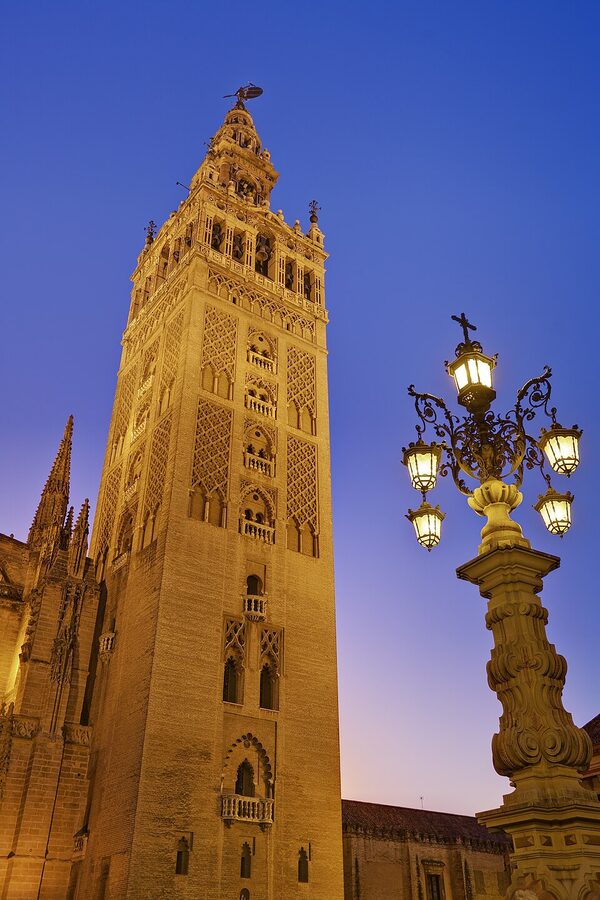
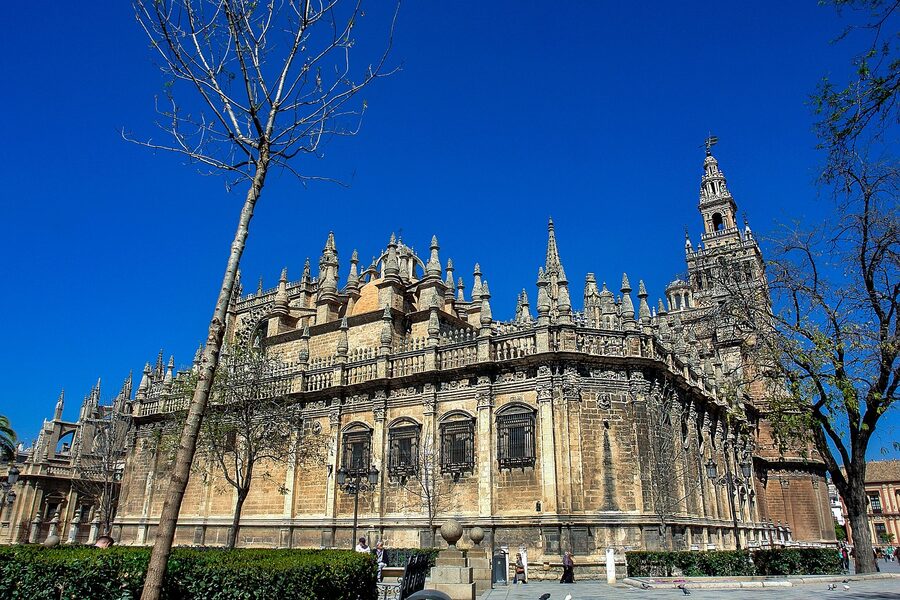
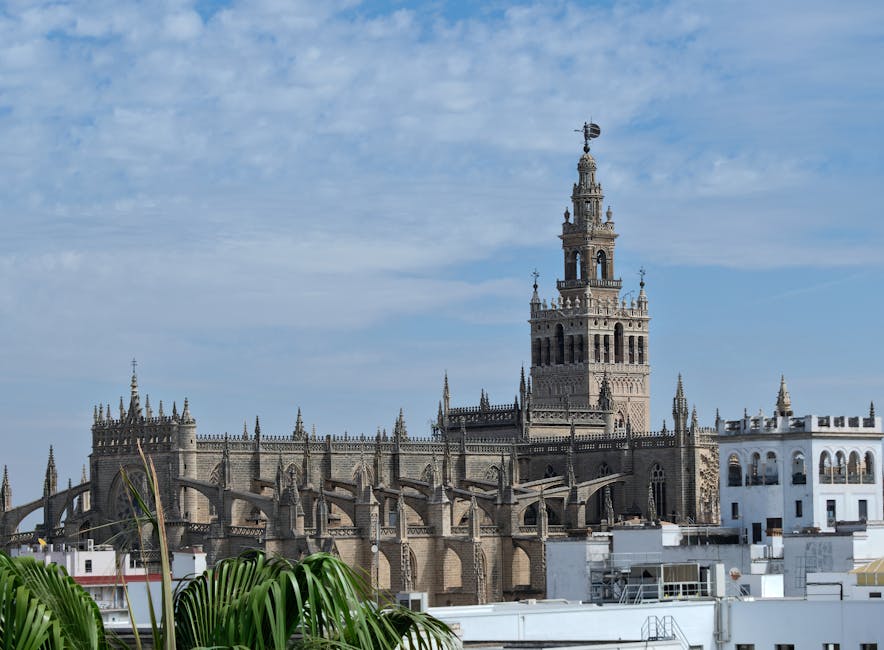
There’s a 35-ramp walk up to the top of the Giralda, no steps at all, and on the way our seven-year-old kept saying “why is there no staircase?” — which turns out to be one of those kid questions that has a brilliant historical answer. The tower was built with ramps so the muezzin could ride a horse up to call prayers five times a day. A thousand years later and the kids who visit still get to pretend they’re the horse. Seville’s Cathedral and its famous bell tower are one of those rare “big historical thing” visits that kids genuinely come out of energised rather than exhausted.
In a Hurry? Our Family Picks
Best budget option: Seville Cathedral and Giralda Entry Ticket ($20) — self-paced, skip-the-line, works with any age. 24,000+ reviews on the most-booked option.
With a live guide: Seville Cathedral and Giralda Tower Guided Tour ($42) — 1.5 hours, good for families with kids 8+ who benefit from stories and context.
Priority access tour: Priority Access Cathedral & Giralda Tour ($35) — short guided visit with priority entry, efficient for short Seville stays.
- In a Hurry? Our Family Picks
- Why this works with kids
- The Cathedral, room by room
- 1. Main nave (15 min)
- 2. Capilla Mayor — the main chapel altarpiece (10 min)
- 3. Tomb of Christopher Columbus (5-10 min)
- 4. Side chapels (20 min if you dip into a few, 60 min if thorough)
- 5. Sacristía Mayor (10 min)
- 6. Patio de los Naranjos — Orange Tree Courtyard (15 min)
- 7. Giralda climb (20-30 min including photos at the top)
- Our top picks to book
- 1. Cathedral and La Giralda Entry Ticket —
- 2. Cathedral and Giralda Guided Tour —
- 3. Priority Access Cathedral & Giralda Tour —
- Getting there with kids
- Free entry
- Practical kid bits
- Pairing with the rest of Seville
- A short history (for the kids who ask)
- Best time of year
- What if it rains?
- Age-by-age honest take
- Before you book, an honest checklist
Why this works with kids
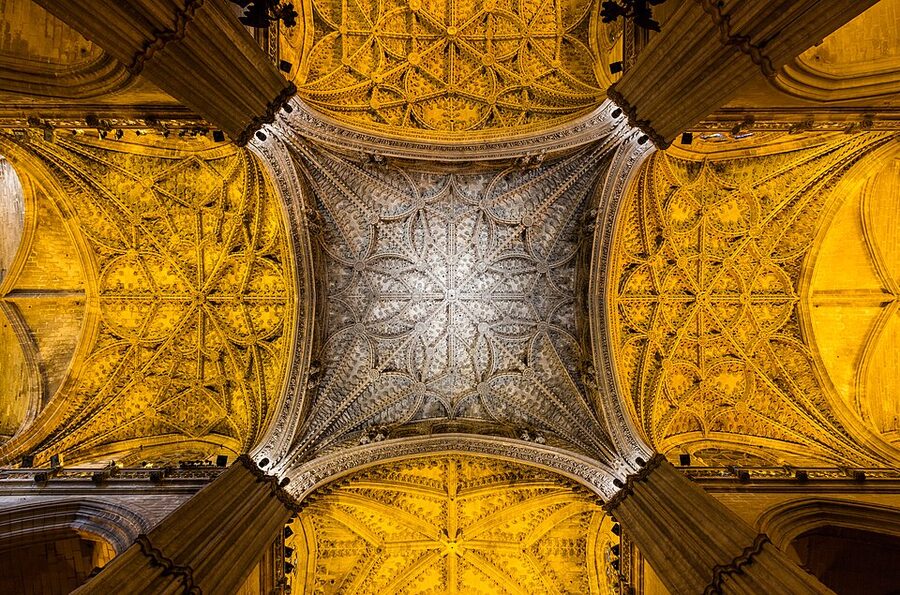
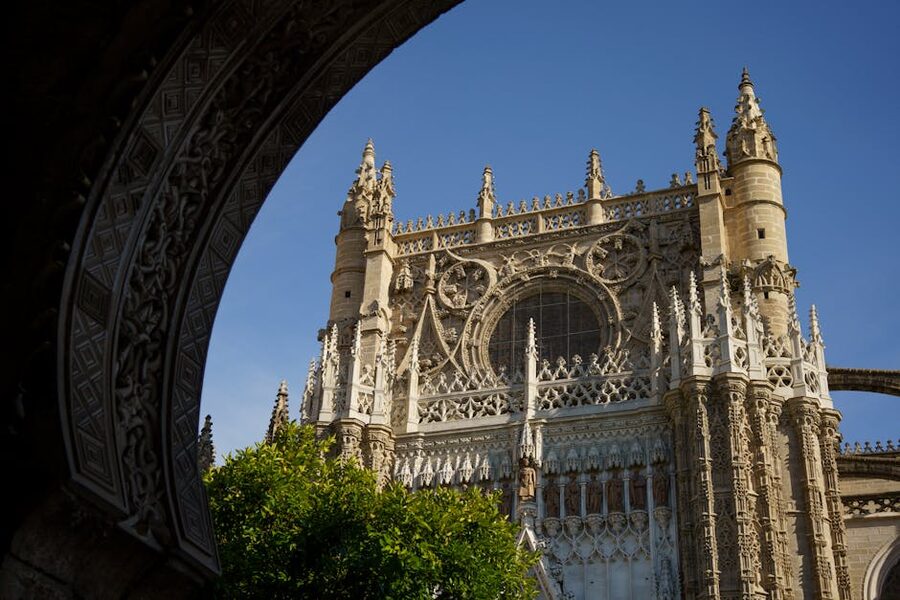
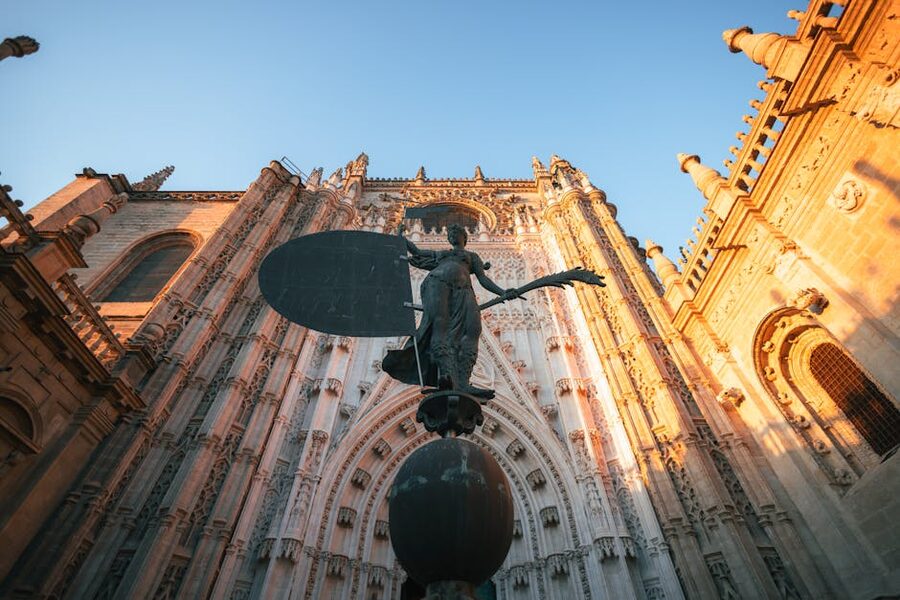
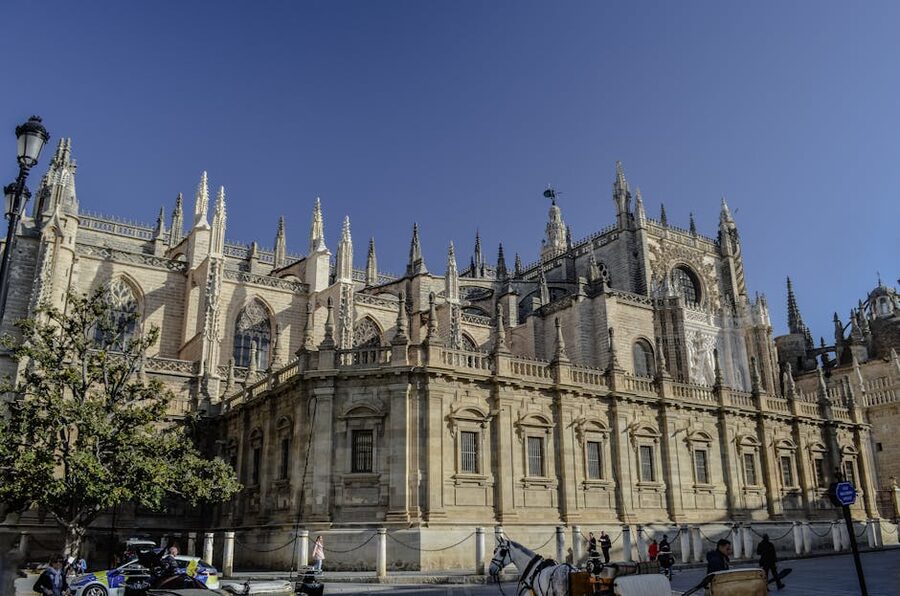
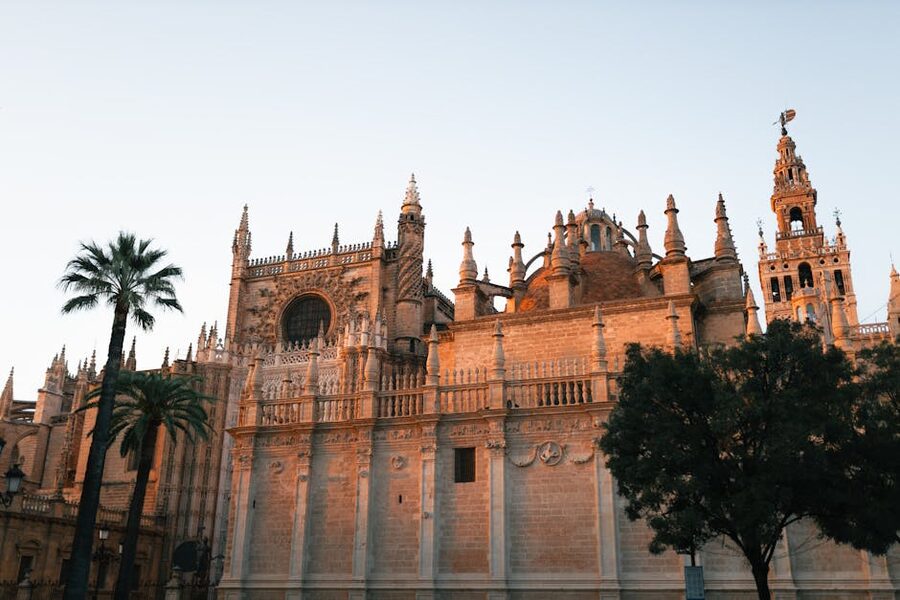
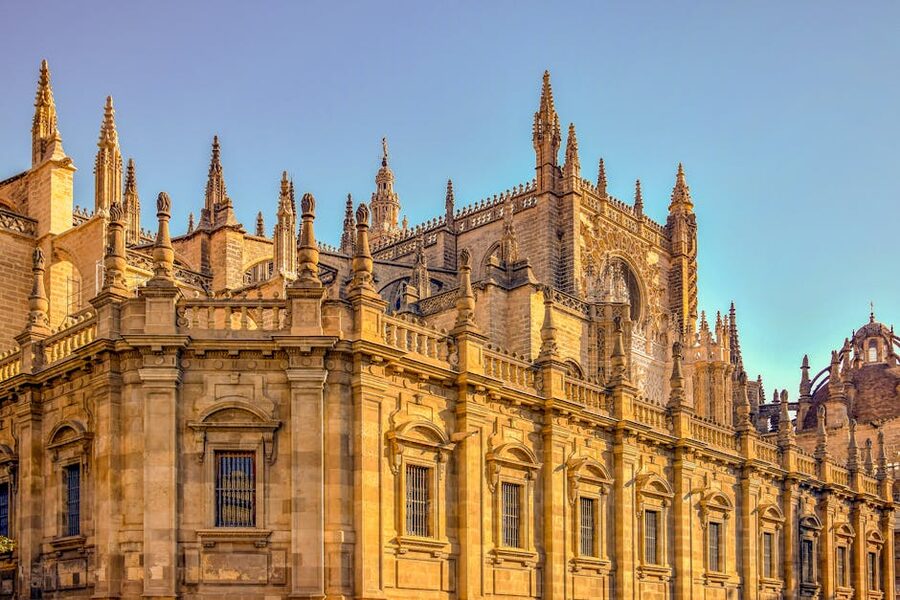
Seville Cathedral is the third-largest cathedral in the world (Vatican and St Paul’s are one and two) and the largest Gothic cathedral anywhere. That sounds like something only adults care about — but the scale actually does the work with kids. Walking into the nave is like walking into a stone forest; kids go quiet in a way they don’t for smaller churches.
Three things that specifically land with children:
The Giralda tower climb. As mentioned, 35 ramps not stairs — built for a horse — so buggies can almost make it (more on that below) and small kids can walk up without too much drama. The view from the top is better than almost any other city viewpoint in Spain.
The tomb of Christopher Columbus. Four giant bronze statues carry a coffin above their heads. Kids who know the Columbus story (almost all of them do) find this genuinely dramatic, and there’s an actual family mystery attached — some of his remains are here, some are in the Dominican Republic, and there are DNA tests from 2006 suggesting both claims might be partly true.
The scale. Biggest altarpiece in the world, largest wooden Gothic altar, 80 side chapels, gold that took all the New World gold haul from the 1500s to make. “Biggest” is a concept that works for almost every age of child.
The Cathedral, room by room
The standard entry walks you through about a dozen main areas in a loop. Here’s the order we’d hit them with kids and roughly how long to budget:
1. Main nave (15 min)
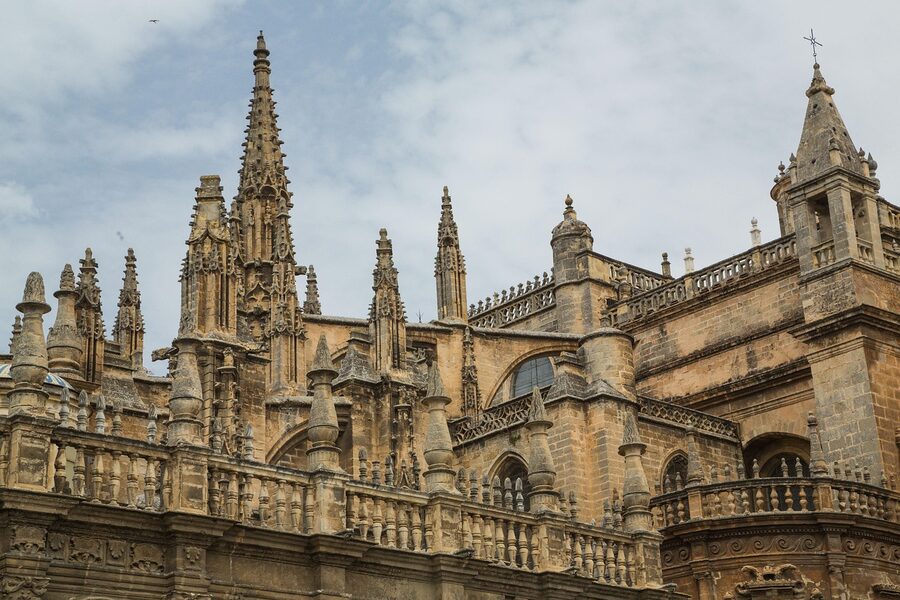
Walk slowly down the centre aisle toward the main altar. Look up. Look ahead. The stone ribs of the vault spread out 42 metres up. Point out the height to kids — it’s about the same as a 14-storey building. The columns are made of caliza stone from a quarry north of Seville; each one weighs around 200 tonnes.
2. Capilla Mayor — the main chapel altarpiece (10 min)
The enormous gilt-wood altarpiece is the world’s largest, 20 metres tall and made of 45 scenes carved between 1482 and 1564. It’s behind a gilded grille; you can see it from several angles. Kids can count the gold panels (there are 45 in total). The sheer amount of gold — mostly New World gold shipped back to Seville in the 16th century — is astonishing.
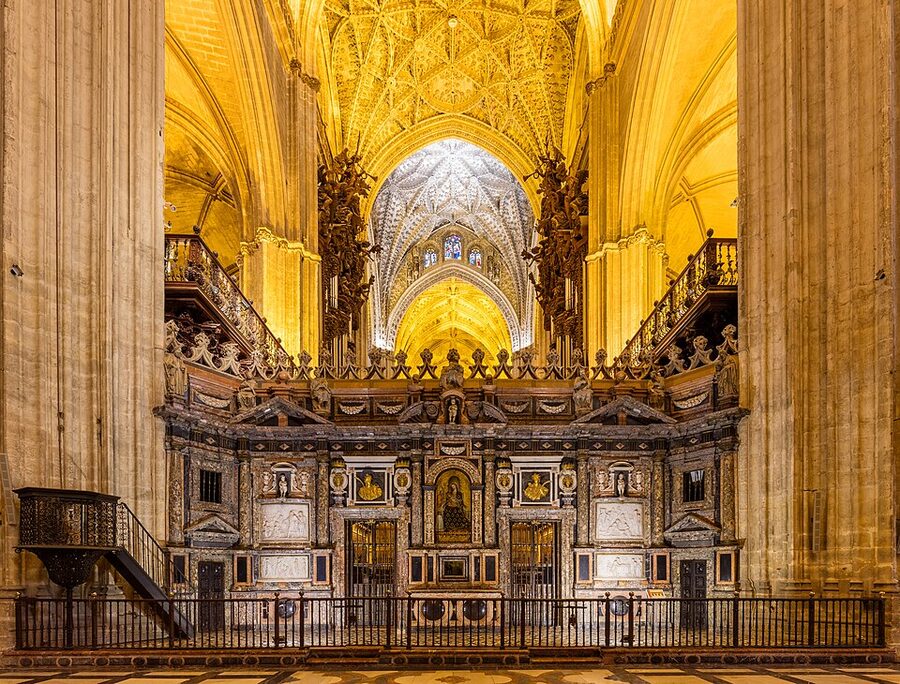
3. Tomb of Christopher Columbus (5-10 min)
Four bronze statues, each 3 metres tall, carry Columbus’s coffin on their shoulders. The four figures represent the four kingdoms of Spain at the time (León, Castile, Aragón, Navarra). Two on the left (Castile and León) hold their heads high. Two on the right (Aragón and Navarra) look down — supposedly because those kingdoms were reluctant to fund Columbus’s first voyage.
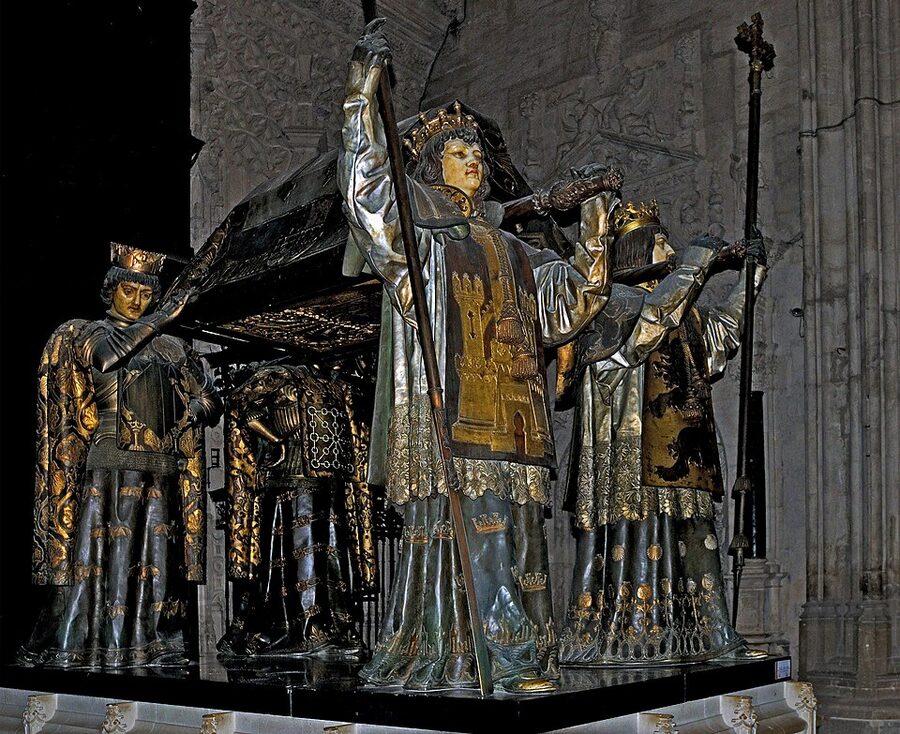
Discuss Columbus honestly — kids in 2026 know he wasn’t a simple hero and the colonisation story is complex. The tomb is the perfect place to tell them both sides. Don’t skip the awkward bits; they’ll thank you later for being straight with them.
4. Side chapels (20 min if you dip into a few, 60 min if thorough)
There are 80 side chapels, one per famous donor family or guild. Most families skim this part; a few chapels are worth stopping at:
Capilla de San Antonio — painting by Murillo (1656), stolen in 1874 (cut out of the frame), recovered in New York the same year. Kids love art heist stories.
Capilla Real (Royal Chapel) — burial place of King Ferdinand III who retook Seville from the Moors in 1248. His body is reportedly incorrupt and is shown on special feast days. Ask kids if they want the full story; some will be fascinated, some grossed out.
5. Sacristía Mayor (10 min)
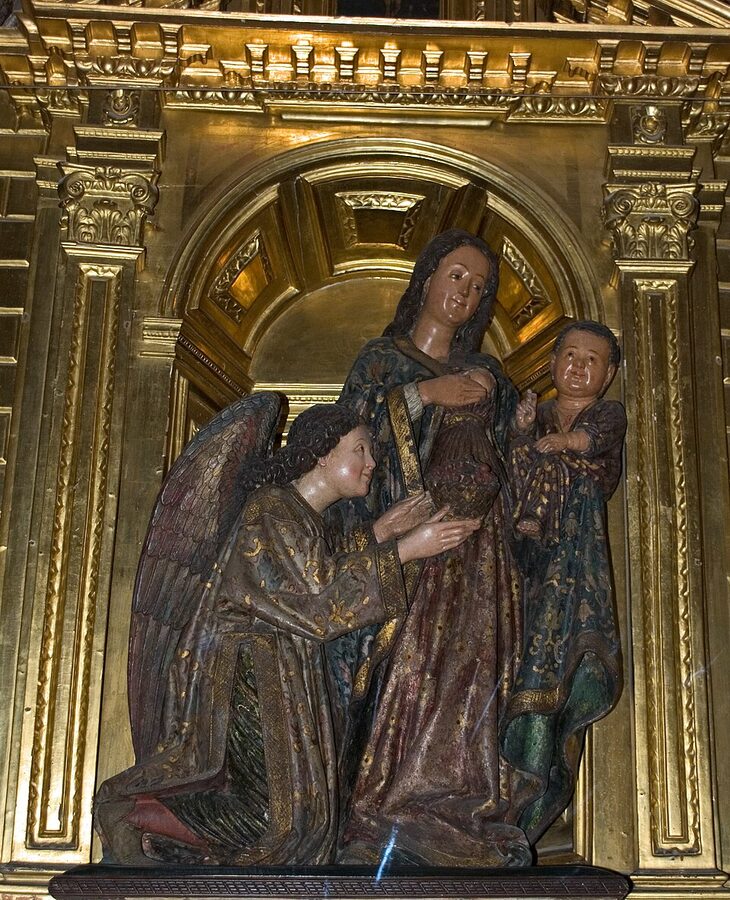
A large treasury room off the main nave with a Renaissance dome, gold religious ornaments, and Murillo paintings. Kids who like shiny things will love the Custodia de Arfe — a 4-metre-tall silver monstrance used in Corpus Christi processions. It’s one of the most elaborate pieces of silverwork in Europe.
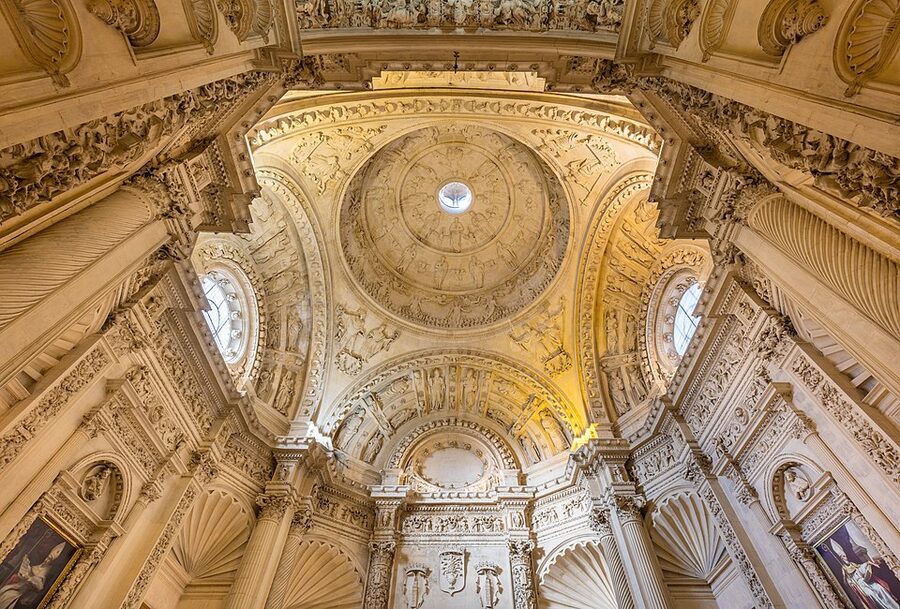
6. Patio de los Naranjos — Orange Tree Courtyard (15 min)
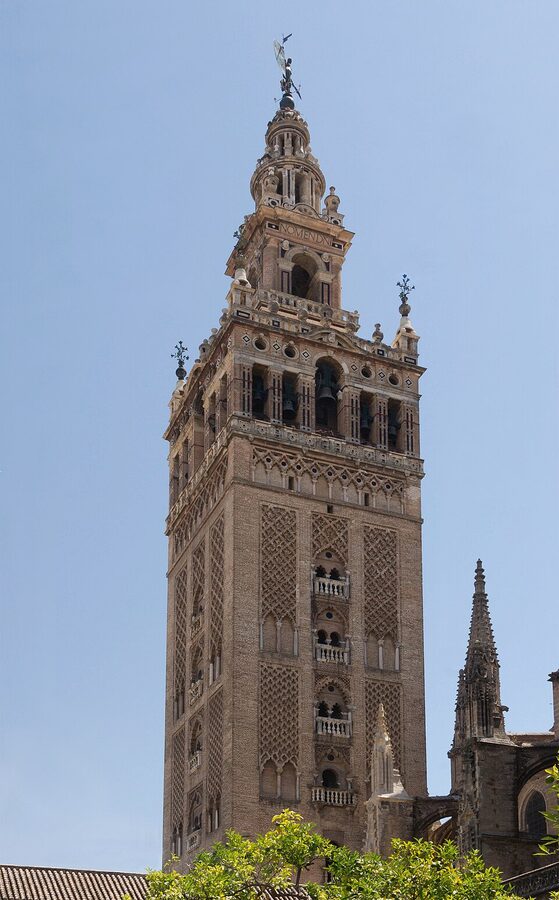
The original courtyard of the Almohad mosque that was here before the Cathedral. Rows of orange trees, a central fountain (where Muslims did ritual washing before prayer), and the old minaret (the Giralda) on one side. This is a breather — let kids run around, point at oranges, watch cats.
7. Giralda climb (20-30 min including photos at the top)
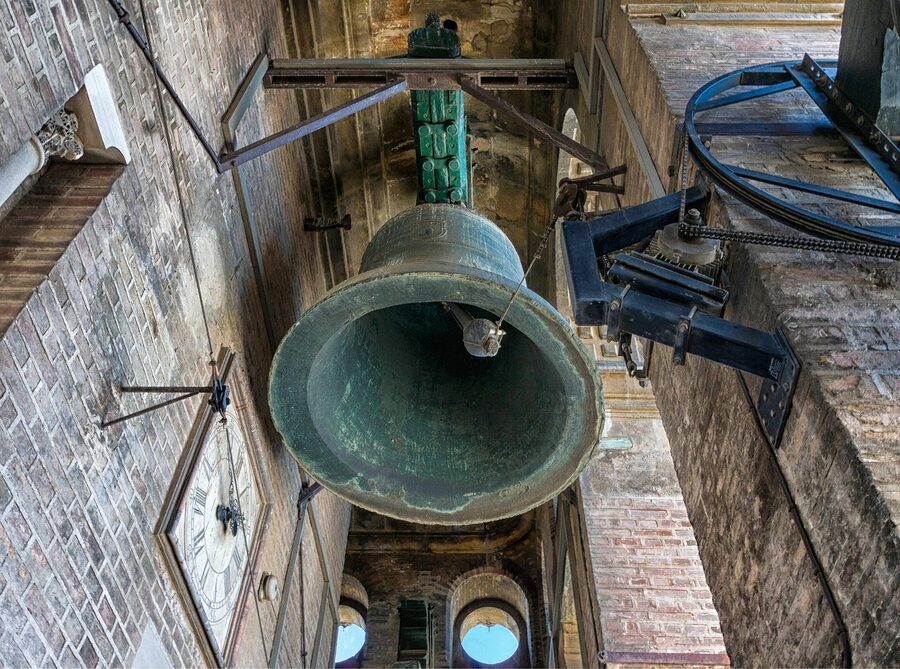
This is the kid highlight. The entrance is inside the cathedral (not from the courtyard) and the walk up is on 35 wide stone ramps — no steps, just gently sloping ramps that turn at each corner. The tower is 104 metres tall but you only climb to about 70m; the bell platform at the top is open to visitors.
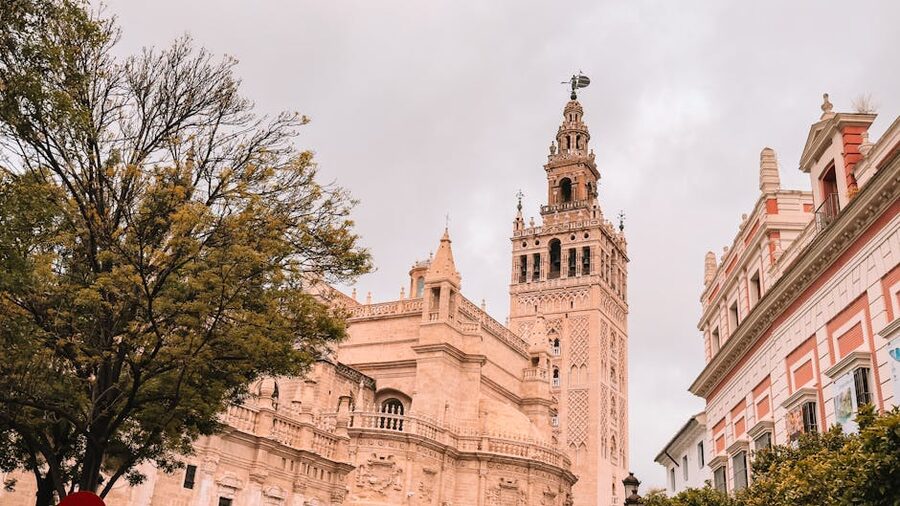
The ramps make it much more doable for kids than a conventional tower climb. Under-5s can walk up with stops. Over-7s handle it without issue. Older adults and anyone with mobility issues can do it at their own pace. Buggies don’t technically fit (ramp corners are narrow) but we’ve seen parents managing with slim ones and a baby carrier is an easier option.
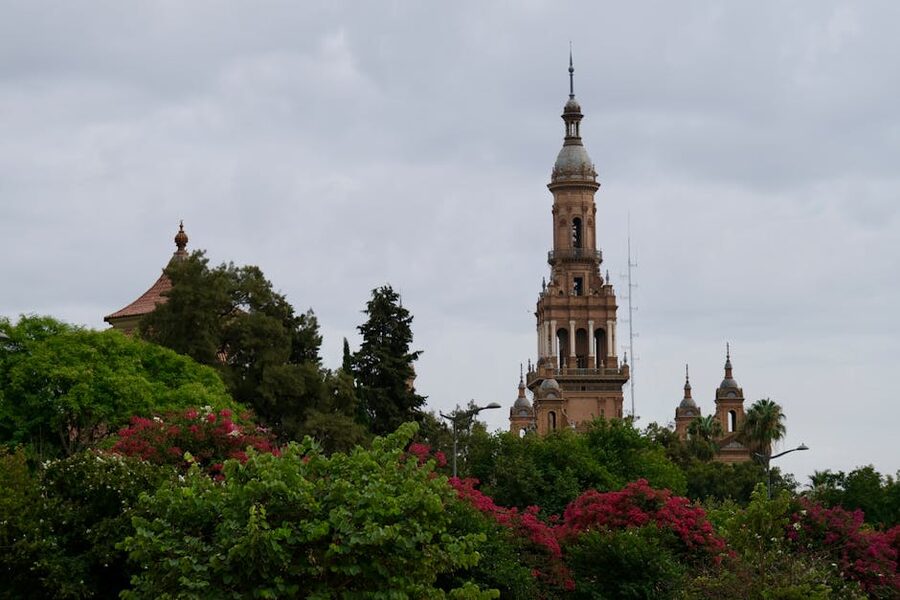
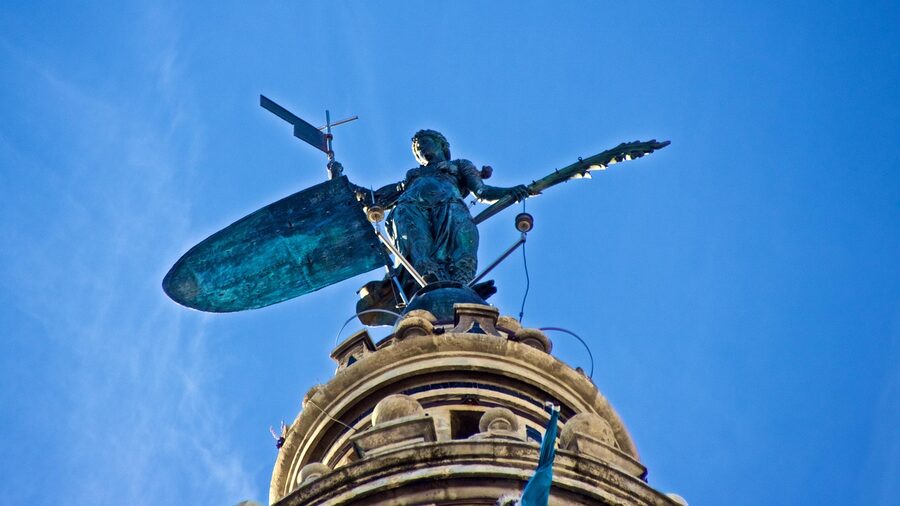
At the top: a 360° view of Seville. Plaza de España to the south, Triana across the river to the west, the Alcázar gardens below, the Roman aqueduct ruins east. The bells behind you ring on the hour and the quarter; if you’re up there at the chime, it’s loud. Kids love this. Older ears might prefer to be one minute up or one minute down when the bells strike.
Our top picks to book
1. Cathedral and La Giralda Entry Ticket — $20
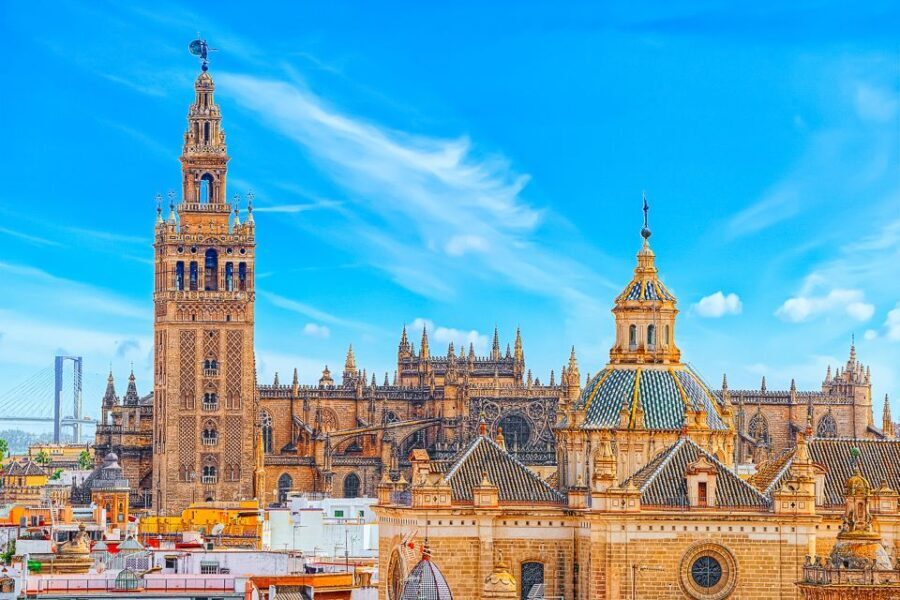
This is the default. Buy it, arrive 30 minutes before your slot, walk through at your own pace. Our full review of the Cathedral + Giralda entry ticket has more on which slot times are quieter and how long you realistically need on-site. Skip-the-line is included. Works for every age from buggy to teen.
2. Cathedral and Giralda Guided Tour — $42
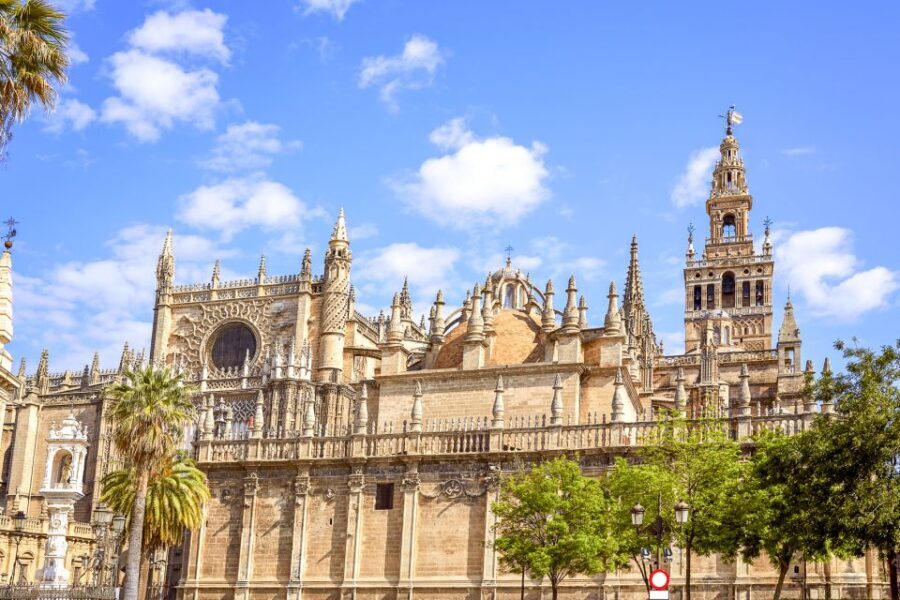
The guided tour is the right pick if your kid is old enough to follow a tour group and you want Columbus-tomb-style history delivered properly. Our review of the guided tour compares this to the self-paced option — mostly the same content, but a guide will answer your kids’ random questions in real time, which changes the experience. Group size usually 10-20 people.
3. Priority Access Cathedral & Giralda Tour — $35
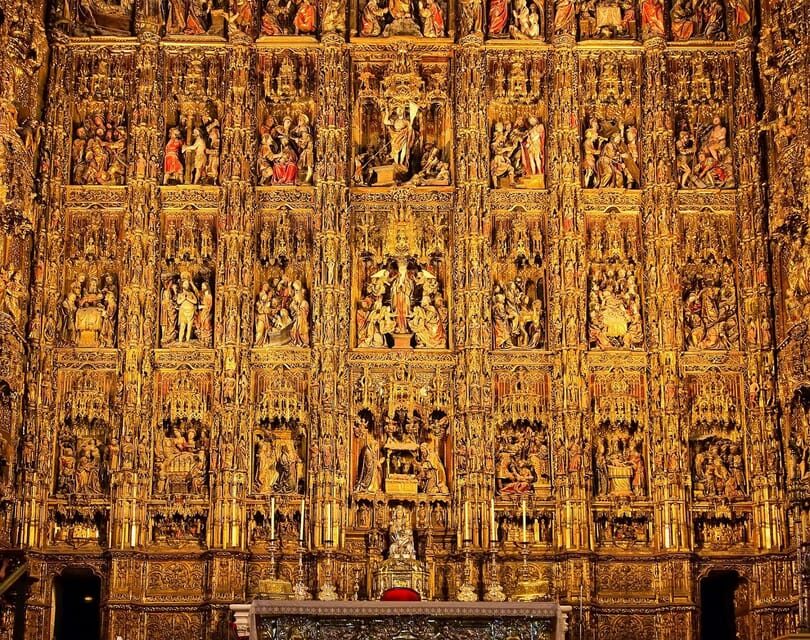
Mid-range option — priority entry plus a brief guided walk-through. Our Priority Access tour review is honest about the value: the guide is good but the priority entry alone (which this includes) is the real time-saver. Worth the extra over entry-only if you’re visiting in peak summer when the skip-the-line queue can still be 15-20 minutes.
Getting there with kids
The Cathedral is smack in the middle of old Seville. Virtually every central hotel is within 15 minutes’ walk. No metro or tram is worth faffing with for this trip — just walk.
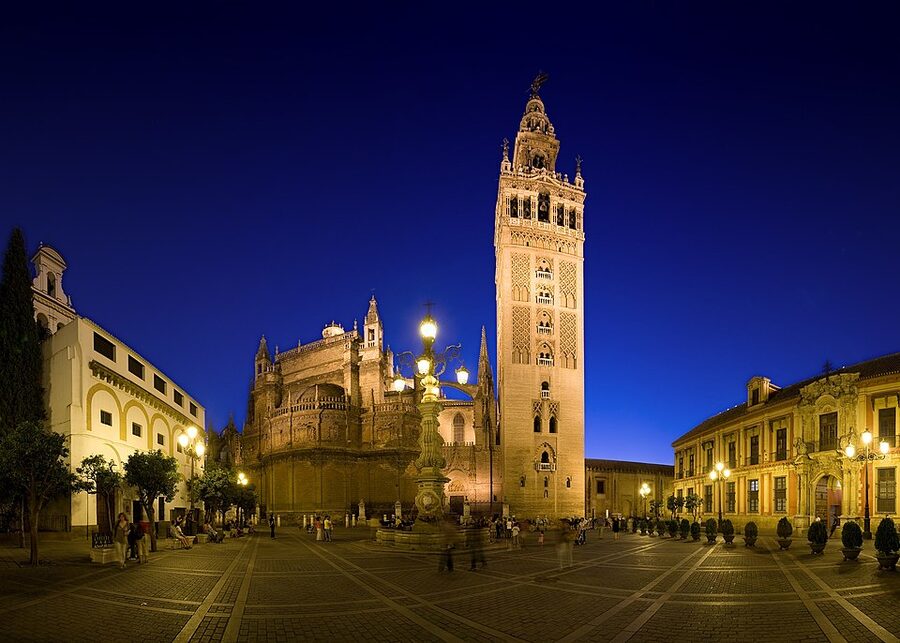
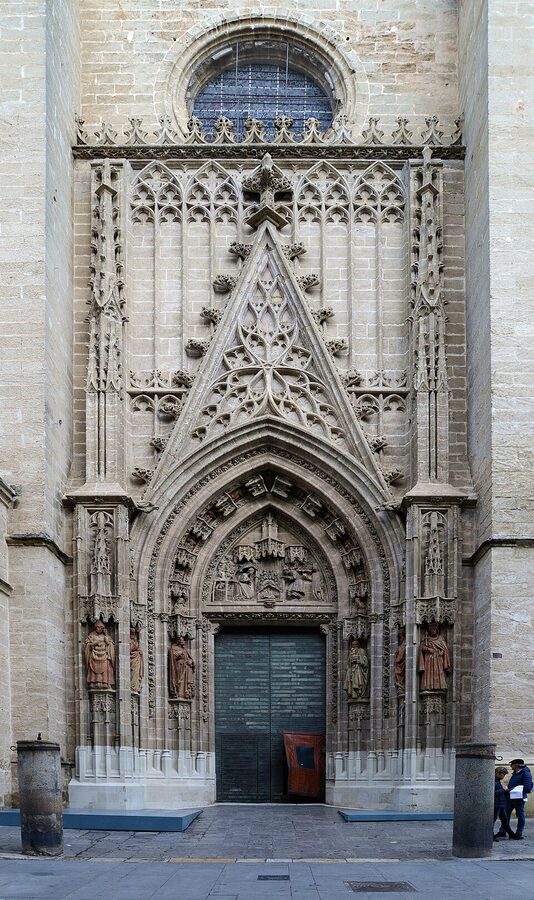
The entry is on Plaza Virgen de los Reyes at the north side of the Cathedral. Don’t confuse this with the Puerta del Perdón door on the west side — that’s closed to regular visitors.
Timing. The Cathedral opens 10:45am Monday-Saturday, 2:30pm Sunday. Book the first slot of the day. By noon it’s crowded, by 1pm the queue for the Giralda at the top is meaningful, by afternoon the heat (in summer) is punishing. Same logic as the Alcázar: early is always better.
If you’re doing the Cathedral and the Alcázar the same day, pair them in this order: Cathedral first (opens later but gets busy quickly), then Alcázar after lunch (still busy in the afternoon but less dramatically). Or do the combo tour which handles the ordering for you.
Free entry
Monday afternoons (around 4:30-5:30pm, varies by season) the Cathedral has free entry for residents of the EU. Queues are massive and the visit is compressed; with kids, honestly pay the €14 for skip-the-line. It’s worth it.
Practical kid bits
Buggy access. Mostly good in the main cathedral (all step-free via the main entrance). The Giralda is a different question — the 35 ramps are buggy-width at most points but have narrow turns. You can technically take a compact buggy up, but it’s a hassle. A baby carrier is much easier.
Toilets. Inside the Cathedral near the exit — clean, with baby-change. Not inside the Giralda; toilet before you start the climb.
Food and drink. No food allowed inside; water in sealed bottles is OK. There’s a small café just outside the exit (Puerta del Sagrario) that does a solid €3 coffee and ice cream. For proper lunch, walk 5 minutes into Barrio Santa Cruz — our family default is Bar Giralda (decent tapas, kid-friendly staff) or Las Teresas (classic Sevilla, good tortilla).
Dress code. Modest dress, so shoulders and knees covered. You’ll rarely be turned away in Seville heat (it’s a major tourist site and they know) but sleeveless tops on adults draw a side-eye. A light scarf or cardigan in a bag handles it.
Audio guide. Available at the entrance for €6. We’ve not found it especially kid-friendly — the content is aimed at serious adults. A guided tour (see tour picks above) is better value for families who want narration.
Photography. Allowed everywhere except during services. Tripods and flash are banned. Phones out for “hey it’s us in the cathedral” shots are fine.
Pairing with the rest of Seville
The Cathedral and Alcázar share the same Plaza del Triunfo and most families do both on the same day — morning Cathedral, afternoon Alcázar, or the other way round via a combo tour. See our dedicated guide on visiting the Royal Alcázar with kids for the companion piece.
After the Cathedral, the next sensible stops are within walking distance:
Barrio Santa Cruz — the old Jewish quarter, a maze of narrow whitewashed lanes with orange trees and ceramic-tiled walls. Perfect for a post-cathedral wander with tired kids. Lots of café stops possible.
Plaza de España — 15 min walk, free, huge semicircular plaza with 48 tile benches (one per Spanish province), a canal with row boats, and plenty of room for kids to run. Best late-afternoon pairing.
Archivo de Indias — right next door to the Cathedral, free, houses the original documents of the Spanish colonial empire including Columbus’s letters. Adults-only interest mostly; skip with young kids.
Casa de Pilatos — 10 min walk, another Mudéjar palace with courtyards and gardens. If you liked the Alcázar and have another palace in you, this is the second-best one in Seville.
For bigger trip planning, our Madrid family guide and Madrid flamenco shows guide are the natural companions for families doing both cities.
A short history (for the kids who ask)
The site has been a place of worship since at least the 5th century — a Visigothic church stood here first, then became the Great Mosque of Seville under the Almohad caliphate in the 12th century. The mosque’s Giralda minaret (1184) and the orange tree courtyard still survive.
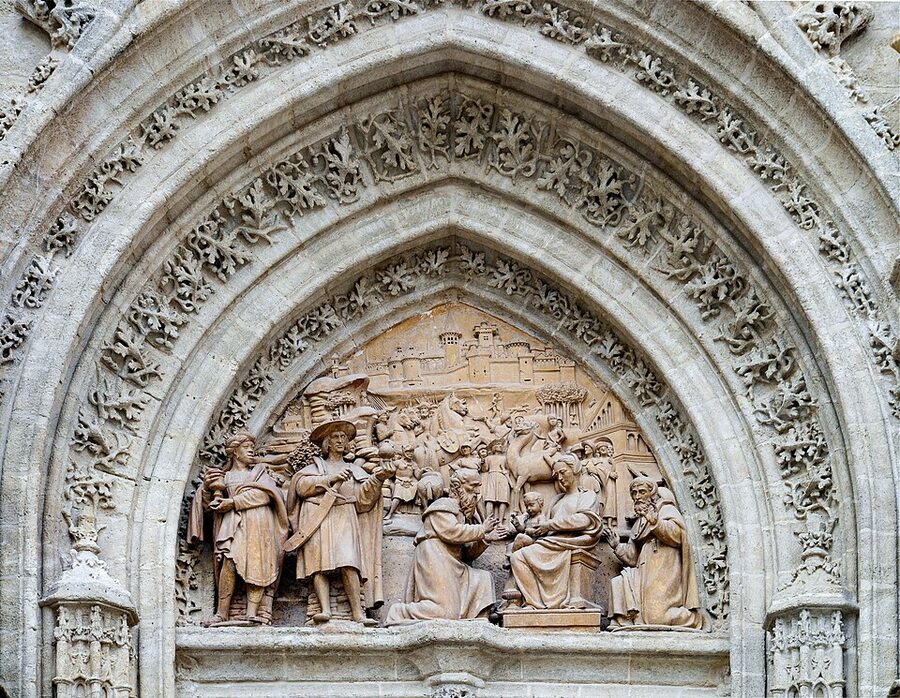
When Ferdinand III of Castile retook Seville from the Moors in 1248, the mosque was converted into a Christian cathedral. Over the next 150 years the building was used as-is, but by 1401 the Christian authorities decided to build something that reflected their power. The famous quote attributed to the cathedral chapter was: “Hagamos una iglesia tan grande que los que la vean acabada nos tengan por locos” — “Let us build a church so grand that those who see it finished will think we were mad.”
Construction started in 1402 and took 104 years. The mosque was completely demolished except for the minaret and the courtyard, and the new Gothic cathedral was built on the same footprint. The Renaissance dome (added 1567) and the Giralda’s Christian upper section (1568) came next. Columbus’s tomb was moved here in 1899 from Havana after Cuban independence.
UNESCO World Heritage Site since 1987 (inscribed together with the Alcázar and the Archivo de Indias).
Best time of year
Spring (March-May): orange blossom in the Patio de los Naranjos, perfect weather, moderate crowds. Best time overall. Avoid Holy Week unless you’re specifically there for it (the Cathedral has reduced hours during Semana Santa).
Autumn (September-November): still warm, fewer tourists, great light. Our default family pick alongside spring.
Summer (June-August): brutally hot. The Cathedral interior is actually cool (all that stone) but the Giralda climb turns into a sauna and the Patio de los Naranjos gets very warm. Visit early morning.
Winter (December-February): cool mornings, mild afternoons. Lowest crowds; lovely quiet visits. Christmas season has special services that are beautiful but crowded.
What if it rains?
Seville rains rarely — maybe 50 days a year. If it does rain, the Cathedral is mostly indoors. The Giralda climb is sheltered. The only part that gets wet is the Patio de los Naranjos, and there’s arcade cover around the edges.
Wet weather actually improves the visit in one specific way: the stone interior smells faintly of wet stone, and the acoustic is different (you hear the sound of rain on the vaults if it’s heavy). Romantic, weird, memorable for kids.
Age-by-age honest take
Under 5: works if you keep the visit short (90 min max) and skip some side chapels. Giralda climb is doable with determined small legs but consider a carrier. The scale impresses them even without words.
5-8: sweet spot. Columbus tomb lands, Giralda climb is exciting, orange courtyard is a breather. 2 hours is about right.
9-12: full experience. Historical context sticks, they notice the architectural details, the Columbus story is something they can discuss properly.
Teens: surprisingly engaging, especially if they’ve done any Spanish or European history at school. The Columbus mystery and the mosque-to-cathedral conversion story lands well with teenagers.
Before you book, an honest checklist
Book the entry ticket if: you want flexibility, have kids of mixed ages, or prefer self-paced visits. Default family pick.
Book the guided tour if: your kids are 8+ and you want the stories delivered properly. Better engagement, slightly more expensive.
Do the Cathedral + Alcázar combo if you’ve only got one day in Seville and want both big sites. Kids 9+ ideally.
Skip the audio guide. It’s aimed at adults with a serious interest; kids zone out.
Bring water. The Cathedral interior is cool but the Giralda climb makes you sweat. A water bottle per person is the right call.
Plan the Giralda climb for the end. After you’ve walked the main cathedral, the Giralda is your reward. Kids who’ve been going quietly through the nave will find renewed energy for the climb.
One last thing: at the top of the Giralda, ask your kids to point out the Alcázar, Plaza de España, Triana across the river, and the bullring. Making them spot things turns the viewpoint from “nice view” to “we figured out a city”. They’ll remember the shape of Seville better because of it.
Book the first slot, bring snacks, climb the ramp. Worth every bit of the €14 ticket.