
When you’re planning a Rome trip, the Vatican looms large on every traveler’s must-see list. The challenge isn’t whether you should go—it’s how to navigate one of the world’s most visited attractions without spending half your day in queues. After reviewing hundreds of traveler experiences with this Crown Tours offering, we’ve found something genuinely worthwhile here. We love that you actually bypass the notorious ticket lines and get expert commentary throughout, transforming what could be a frustrating cattle-call into a thoughtful journey through centuries of art and spirituality. The price is remarkably reasonable for what you’re getting—admission to three separate Vatican sites plus a licensed guide costs just $35 per person.
That said, there’s one legitimate consideration: the Vatican is genuinely massive, and three hours requires a brisk pace. Some travelers felt rushed, while others appreciated the curated highlights approach. This tour works best for first-time Vatican visitors who want to see the essential masterpieces without getting lost in the labyrinth, or for travelers with limited time who’d rather experience the highlights well than wander aimlessly for hours.
- What Makes This Tour Different From Going Solo
- Understanding the Three-Hour Timeline
- The Sistine Chapel: What You Actually Experience
- St. Peter’s Basilica: The Grand Finale
- The Practical Details That Matter
- The Price Question: Is Actually a Good Deal?
- What the Reviews Really Tell Us
- Who This Tour Is Best For
- Practical Logistics and Cancellation
- The Honest Assessment
- Frequently Asked Questions
What Makes This Tour Different From Going Solo
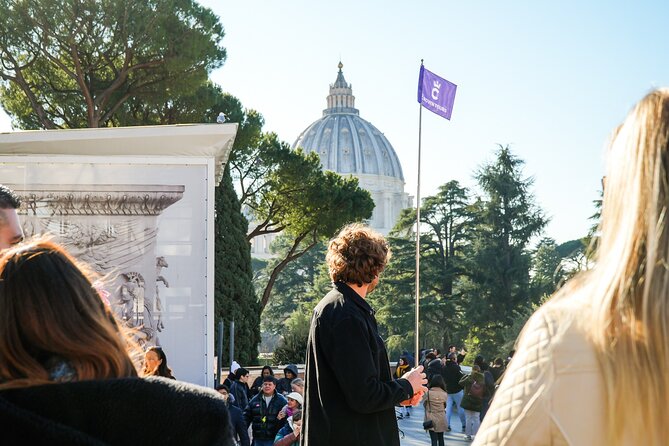
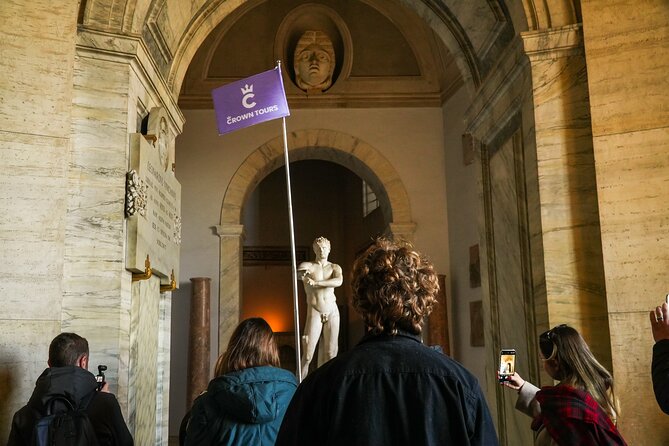
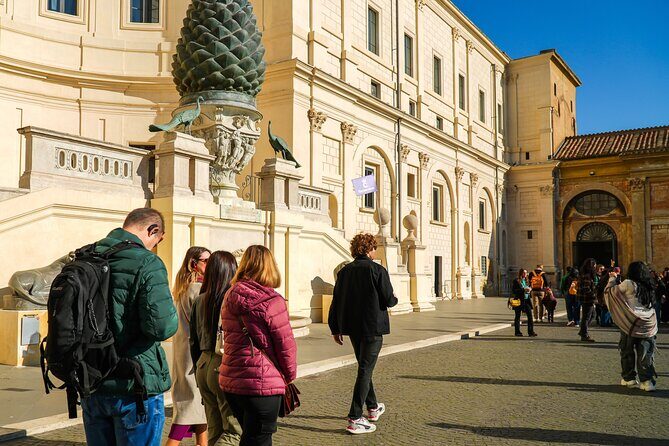
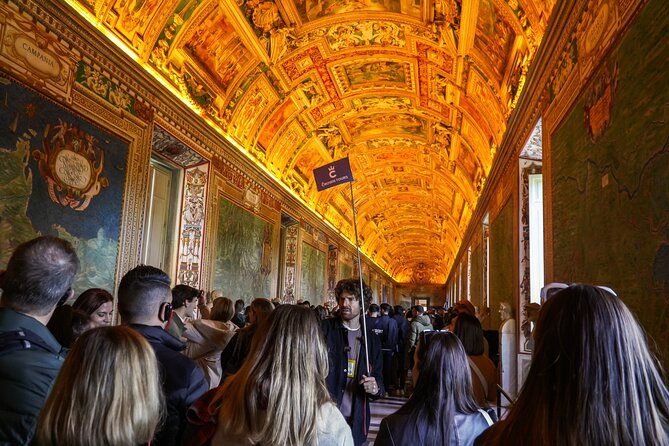
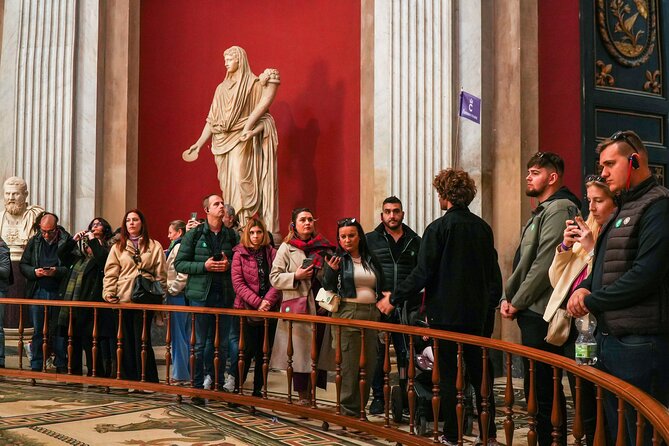
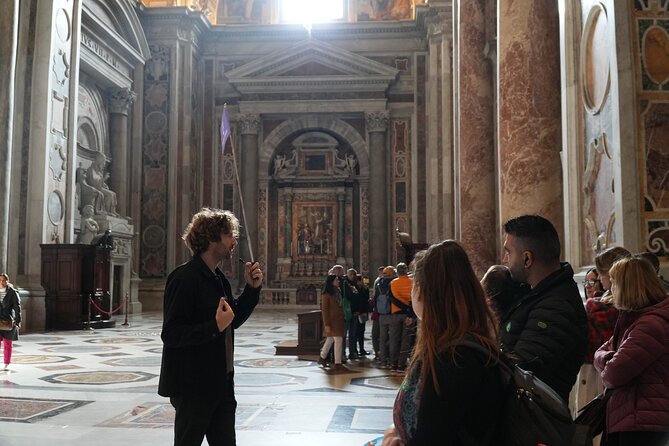
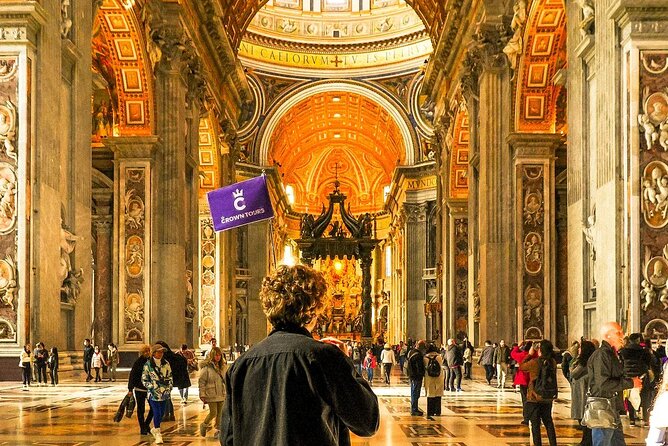
The Vatican Museums aren’t like other museums. There’s no logical progression from entrance to exit. Without guidance, you’ll find yourself making arbitrary choices: left or right at unmarked corridors? Which gallery matters most? How do you find the Sistine Chapel in a building with 7 kilometers of galleries? This tour solves that fundamental problem by providing what one traveler called “a curated route” through the collection.
The skip-the-line component is genuine and saves real time. During peak seasons, independent visitors can wait 90 minutes just to enter the museums. You’ll still pass through security screening—everyone does—but you skip the ticket queue entirely. You check in at a nearby office, collect your radio headset and entry documents, and walk straight to the entrance while others wait outside. On a rainy day or during high season, this advantage becomes especially valuable.
The radio headsets deserve mention because they fundamentally change how you experience a crowded venue. Instead of straining to hear a guide who’s 15 people away, everyone hears clearly. One reviewer noted: “Headsets help you follow the commentary with ease,” which matters more than it sounds when you’re navigating shoulder-to-shoulder crowds in the Sistine Chapel.
Understanding the Three-Hour Timeline
The tour moves through eight distinct stops, and understanding the pacing helps set realistic expectations. Your guide will spend roughly 10 minutes on logistics at the Vatican office, then about an hour inside the Vatican Museums proper, before moving to the Sistine Chapel (20 minutes), and concluding at St. Peter’s Basilica (30 minutes). The remaining time accounts for transitions between sites and the individual galleries within the museums.
This structure means you’re not lingering extensively anywhere. You’re seeing the masterpieces, hearing their stories, and moving forward. One traveler appreciated this approach: “We learned a lot more about everything we saw. We could not have learned on our own.” The guides pick out what matters most—the pieces that define art history—rather than letting you wander past everything equally.
The Gallery of the Candelabras showcases refined Greco-Roman sculptures in marble galleries that feel almost serene compared to the crowds outside. The Gallery of Tapestries displays Renaissance works illustrating biblical scenes, offering insight into how the Church used art as storytelling for an illiterate population. The Gallery of Maps features beautifully frescoed regional maps of Italy, blending geography, art, and history in a way that surprisingly resonates with visitors. The Museo Pio Clementino includes the Laocoön and Sons, one of classical antiquity’s most powerful sculptures—a writhing family being consumed by snakes, captured in marble with an emotional intensity that still startles modern viewers.
The Sistine Chapel: What You Actually Experience
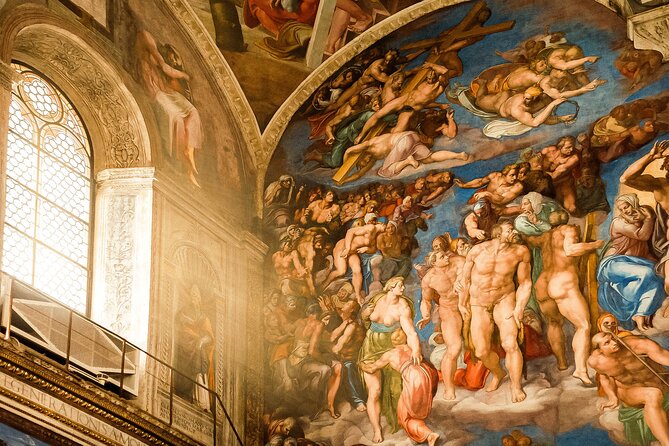
Everyone knows Michelangelo painted the ceiling. What’s harder to convey is the actual experience of standing beneath it. The chapel is smaller than many expect—roughly 130 feet long and 45 feet wide. Thousands of people fill that space daily, creating an almost overwhelming sensory environment. Yet something remarkable happens: most visitors fall silent. You’re looking up at The Creation of Adam, one of history’s most iconic images, in the actual space where it was painted 500 years ago.
One traveler described it beautifully: “The stained glass gives the whole room a soft glow, and the ceiling is even more impressive in person than you expect…it’s one of those moments where you just stop and stare for a while.” Your guide provides context before you enter—one reviewer mentioned receiving “a lengthy review of each of the paintings”—which helps you understand what you’re seeing rather than just gawking. You learn that Adam’s creation wasn’t Michelangelo’s invention but emerged from Renaissance theology about the moment of human consciousness.
It’s important to know that the Sistine Chapel sometimes closes without notice for papal ceremonies or religious events. During papal transitions or special masses, access is restricted. This isn’t the tour operator’s fault—it’s the reality of visiting a functioning religious space. Several reviewers encountered closures but noted their guides compensated by extending time in the museums instead.
St. Peter’s Basilica: The Grand Finale
St. Peter’s is the world’s largest church by interior volume, and stepping inside creates an immediate sense of awe. The scale is almost incomprehensible—the interior could fit a dozen normal cathedrals. You’ll see papal tombs, including some with windows where you can view the pope laid out with a mask over the face, which one traveler found “unusual to see something like that up close, but it definitely stuck with us.”
For tours starting before 3 PM, you’ll have guided access to the basilica. Later tours become self-guided due to Vatican restrictions on guided groups during closing hours. The basilica closes Wednesday mornings and on December 24 and 31, so timing matters if you’re planning around specific dates. Even self-guided, you’re walking through a space where every surface tells a story—carvings, paintings, sculptures, and mosaics created over centuries.
The Practical Details That Matter
The maximum group size is 20 people, which is genuinely small for Vatican tours. Some operators run groups of 40 or 50. A smaller group means your guide can actually see everyone and respond to questions. You’ll meet near the Vatican Museums at Via Mocenigo 15, a location near public transportation, so getting there from your hotel is straightforward via Rome’s metro or bus system.
Regarding what to bring: the dress code is strictly enforced. Shoulders and knees must be covered. No sleeveless tops, shorts above the knee, or low-cut garments. One experienced traveler wrote: “Follow the rules when entering St Peter’s. No cleavage, no shoulders, nothing less than knee-length, remove your hats, and keep in mind you are in a religious setting!” The Vatican turns people away for dress code violations, which is frustrating if you’ve paid for the tour.
You cannot bring strollers (even foldable ones), weapons, glass items, sharp objects, food, or alcohol. These aren’t arbitrary rules—they reflect security protocols and respect for a sacred space. If you’re traveling with young children, you’ll need to arrange childcare or carry them.
Booking 63 days in advance is the average, suggesting tours fill up during peak season. If you’re visiting Rome in summer or during Easter week, booking early matters. The tour is offered in English, and reviews mention guides from various backgrounds—Spanish, Italian, and native English speakers—all described as knowledgeable.
The Price Question: Is $35 Actually a Good Deal?
When a tour costs $35 per person, skepticism is reasonable. But context matters. The Vatican Museums alone charge €17 for admission. St. Peter’s Basilica charges €10 (if you’re not just visiting the basilica proper). The Sistine Chapel is only accessible through the museums. So you’re paying roughly $27 in admission fees alone. The skip-the-line ticket adds value beyond just access—it saves time that would otherwise be wasted in queues.
Add a professional guide with Vatican knowledge, radio headsets so you can actually hear in a crowded environment, and the coordination of moving a group through three separate sites, and the pricing becomes genuinely reasonable. You’re not paying $35 for someone to walk alongside you—you’re paying for expertise, logistics, and access.
That said, value is subjective. One traveler paid $100 and felt rushed: “Not possible to do the tour in 3 hours. We rushed so much, we weren’t able to see and enjoy anything.” Another traveler with the same three-hour constraint felt it was perfect: “Great skip the line tour…a great way to learn about the history of the Vatican.” The difference often comes down to personal expectations about pace.
What the Reviews Really Tell Us
With nearly 1,900 reviews averaging 4.5 stars, patterns emerge. The most consistent praise goes to the guides themselves. Travelers mention specific guides by name—Roberto, Elena, Sonia, Jessica, Giuliano—and describe them as “knowledgeable,” “passionate,” “thorough,” and “kind.” This suggests Crown Tours recruits well and trains its guides properly.
The second consistent positive is the skip-the-line access itself. Multiple reviewers specifically praised this feature, noting how it helped them move through efficiently. One traveler said: “It was great to skip the lines and not have to wait in the queues.”
The most consistent criticism relates to pacing. Some felt the tour moved too quickly: “We rushed so much, we weren’t able to see and enjoy anything.” Others felt their guide spent too much time talking: “Almost broke me before we got into the museums. Too much information.” These opposite complaints suggest different guides have different styles, and the experience partly depends on which guide leads your group.
A few reviews mentioned technical issues—radio headsets that didn’t work or unclear English from certain guides. These seem like exceptions rather than patterns, but they’re worth noting.
Who This Tour Is Best For
This experience works beautifully for first-time Vatican visitors who want to understand what they’re seeing rather than just photograph it. If you’ve never been to the Vatican and want an efficient introduction to the highlights, this tour delivers. It’s also ideal for travelers with limited time—if you have one morning in Rome for the Vatican, this structures that time wisely.
It’s less ideal if you’re a slow traveler who likes lingering with artworks, or if you’re visiting the Vatican for the second or third time and want to explore lesser-known galleries. It’s also not the choice if you’re traveling with young children who need frequent breaks or stroller access.
Practical Logistics and Cancellation
You can cancel free up to 24 hours before the tour starts, which provides reasonable flexibility. The tour is confirmed at booking time, so you’ll know immediately if a spot is available. Confirmation will arrive via email with your meeting details and what to bring.
The meeting point is near public transportation, making it accessible from anywhere in Rome. The tour ends at St. Peter’s Basilica, which is also centrally located, so getting back to your hotel or to lunch afterward is straightforward.
The Honest Assessment
This tour represents genuine value for Rome visitors who want expert guidance through the Vatican without wasting hours in lines. The skip-the-line access is real, the guides are knowledgeable, and the price is reasonable for what you’re getting. The three-hour timeframe requires a brisk pace, which some travelers love and others find rushed. The experience depends partly on which guide leads your group—some are exceptional, all are competent. The Vatican’s unpredictable closures for religious ceremonies are beyond the tour operator’s control but worth knowing about. If you’re a first-time visitor with limited time, this is one of Rome’s best-value tours. If you prefer leisurely exploration, consider a full-day Vatican experience instead.
Skip the line: Vatican Museums, Sistine Chapel & St Peters Tour
Frequently Asked Questions
Q: Will I actually skip any lines, or is that just marketing?
A: You skip the ticket line entirely. You still pass through mandatory security screening like everyone else, which can take time during peak hours, but you won’t wait 60-90 minutes for a ticket. One reviewer noted: “We waited 90 minutes outside in the pouring rain” on an exceptionally busy day, but this is unusual. Most travelers report efficient entry compared to independent visitors.
Q: What if I want to see the Vatican’s Egyptian collection or other galleries we skip?
A: This tour focuses on highlights rather than comprehensiveness. One traveler wished she could have seen “the Egyptian room,” which isn’t included in the curated route. If you want to explore beyond the main galleries, plan a separate visit or book a full-day tour instead.
Q: Can I bring my stroller with young children?
A: No. Strollers aren’t permitted inside any Vatican site, even if they fold. You’ll need to arrange childcare or carry children. This is a significant consideration if you’re traveling with toddlers.
Q: What happens if the Sistine Chapel is closed when I visit?
A: It closes without notice for papal ceremonies and religious events. If this happens, your guide extends time in the Vatican Museums instead. You don’t receive a refund, as this is beyond the operator’s control. Several reviewers encountered closures and appreciated the guide’s flexibility in response.
Q: Is the dress code really strictly enforced?
A: Yes. One experienced traveler witnessed “women immediately removing the white shirts given to them to cover their chest and shoulders” and “people complaining they couldn’t even go in because of what they were wearing.” Shoulders and knees must be covered. Plan accordingly.
Q: How many people will be in my group?
A: Maximum 20 travelers, which is genuinely small for Vatican tours. This allows your guide to see everyone and respond to questions, unlike larger group experiences with 40+ people.
Q: What if I’m traveling with mobility limitations?
A: The tour isn’t recommended for people with mobility challenges. The Vatican Museums involve extensive walking through galleries and up stairs, and the Sistine Chapel requires standing in crowds. If you have specific limitations, contact the operator before booking.
Q: Can I extend my Basilica visit if I want to see more?
A: Yes. The tour includes 30 minutes of access to St. Peter’s, but you can stay longer on your own after the guided portion ends. Many travelers do exactly this—they use the tour to see the highlights, then explore independently.
Q: What’s included in the price, and what costs extra?
A: The $35 price includes skip-the-line tickets for the Vatican Museums and Sistine Chapel, entrance to St. Peter’s Basilica (guided for morning tours, self-guided for afternoon), a professional guide, radio headsets, and assistance at the meeting point. Food, drinks, and hotel transportation aren’t included. There are no hidden fees.
Q: How far in advance should I book?
A: The average booking is 63 days ahead, suggesting tours fill during peak season. If you’re visiting Rome in summer (June-August) or around Easter, booking at least 4-6 weeks early is wise. Off-season visits (November-February) offer more flexibility.