
You’ll need these 12 essential Spanish phrases for your family holiday: “Hola” and “Buenos días” for friendly greetings, “Por favor” and “Gracias” for politeness, “¿Dónde está…?” when you’re lost, “¿Es seguro nadar aquí?” for beach safety, “Estoy perdido/a” in emergencies, “¿Puede ayudarme?” for assistance, “No entiendo” when confused, “¿Habla inglés?” to find English speakers, “Feliz Navidad” for holiday cheer, “Me gustaría ir a…” for planning activities, “¡Lo siento!” for apologies, and “¿Puede repetir?” for clarification. Master these basics and you’ll discover countless ways to enhance your family’s Spanish-speaking adventure.
- Greetings That Open Doors During Family Travel
- Essential Politeness Phrases for Every Holiday Interaction
- Navigation and Location Questions for Lost Families
- Beach and Pool Phrases Kids Need to Know
- Daily Activity Planning Questions for Family Fun
- Reconnecting With Relatives After Time Apart
- Expressing Gratitude During Family Gatherings
- Offering Help in Host Homes and Family Settings
- Safety Communication for Crowded Tourist Areas
- Language Barriers and Getting Help
- Holiday Season Celebrations and Well-Wishes
- Sharing Travel Plans and Destination Excitement
- The Sum Up
Greetings That Open Doors During Family Travel
When you step off the plane in a Spanish-speaking country with your family in tow, your first words can set the tone for your entire trip. Start with “Hola” paired with time-specific greetings like “Buenos días” when entering shops or hotels – this combination encourages friendly service and shows respect.
You’ll find that “¡Buenas!” works perfectly for casual encounters with locals, while “¿Cómo estás?” invites brief conversations that help connect with people.
Remember to use formal greetings with older adults and hotel staff. A simple “¿Cómo se llama?” opens doors when meeting hosts or other families. Adding phrases like “Me alegra verte” shows genuine appreciation and helps build emotional connections with new acquaintances during your travels.
Don’t underestimate the power of combining these phrases with genuine smiles and eye contact – they’re essential nonverbal components that demonstrate politeness across Spanish-speaking cultures.
Essential Politeness Phrases for Every Holiday Interaction
The magic of politeness transcends language barriers, and mastering a few key courtesy phrases will transform your family’s interactions throughout your Spanish-speaking adventure. “Por favor” and “gracias” form the foundation of every polite exchange – whether you’re ordering meals, asking for directions, or checking into hotels.
When communication breaks down, “Perdón, no entiendo” and “¿Puede repetir, por favor?” become lifesavers. These phrases signal you’re trying while buying precious time to process information. Practice these phrases daily to build the confidence you’ll need for real conversations.
Remember the formal-informal distinction: use “¿Puede ayudarme?” with hotel staff but “¿Puedes ayudarme?” with younger locals.
“Quisiera” sounds more polite than “quiero” when ordering food.
Close interactions warmly with “Gracias por su ayuda” and “Que tenga buen día” – these small gestures create memorable connections.
Navigation and Location Questions for Lost Families
Where exactly are you when your family realizes you’ve been wandering in circles for twenty minutes? Don’t panic—these Spanish phrases will get you back on track quickly.
Start with “Estoy perdido/a” (I’m lost) to grab immediate attention. Follow up with “¿Dónde está…?” (Where is…?) for specific locations or “¿Cómo llego a…?” (How do I get to…?) for directions.
When receiving help, listen for key direction words: “Siga recto” (go straight), “Gire a la izquierda” (turn left), or “Gire a la derecha” (turn right). Use “¿Está lejos?” (Is it far?) to gauge walking time.
If you’re confused, say “No entiendo” (I don’t understand) and ask “¿Puede señalarme en el mapa?” (Can you show me on the map?). Remember to approach people with polite expressions like “disculpe” (excuse me) before launching into your questions.
Beach and Pool Phrases Kids Need to Know
Finding your way back to your family is one thing, but keeping everyone safe and happy at the beach or pool requires a different set of Spanish phrases. Start with safety basics like “¿Dónde está el salvavidas?” to locate lifeguards and “¿Es seguro nadar aquí?” to check swimming conditions.
When kids need comfort items, they’ll use “¿Dónde está la toalla?” or “Quiero mi traje de baño.”
Sun protection becomes essential with phrases like “Necesito bloqueador solar” and “El sol está muy fuerte.”
For play time, teach them “Quiero nadar en la piscina” and “Quiero construir un castillo de arena.” When children want to practice their swimming strokes, they can say “Quiero practicar natación.”
Most importantly, guarantee they know “No puedo tocar el suelo” to communicate when water’s too deep and “Quiero salir del agua” when they’re tired.
Daily Activity Planning Questions for Family Fun
How do you turn a family vacation into an adventure everyone will remember? Start by asking the right questions before you pack your bags.
First, determine how many structured activities work best for your crew daily. Some families thrive with three planned stops, while others prefer one main attraction with plenty of downtime. Ask each family member to name their must-do activity—this creates ownership and excitement.
Next, have everyone describe their ideal family adventure in one word. You’ll discover if you’re planning for “relaxation” or “excitement.”
Rank activity types together: adventure sports, cultural experiences, shopping, or wildlife encounters. Remember to balance exploration with adequate rest periods to accommodate different energy levels within your family.
Consider what your family needs right now. Sometimes you need bonding time, other times pure fun. These planning conversations ensure everyone’s voice gets heard.
Reconnecting With Relatives After Time Apart
When you’re planning to reconnect with relatives after months or years apart, the weight of unresolved emotions can feel heavier than your luggage. Family estrangement affects up to 38% of adults, so you’re not alone if this reunion feels complicated.
Start small with gradual contact—texts or calls before meeting face-to-face. Avoid old flashpoint topics that caused problems before. Instead, focus on neutral conversations about shared interests or present-day plans.
Set clear boundaries beforehand. Agree on time limits for visits and ground rules like no shouting or personal attacks. Prepare coping strategies and have an exit plan if emotions run high. Remember that over half of estranged family members actually wish to reconcile, especially after apologies or behavior changes.
Keep expectations realistic. You don’t need to achieve perfect closeness immediately. Small, predictable interactions build trust over time better than forcing deep conversations right away.
Expressing Gratitude During Family Gatherings
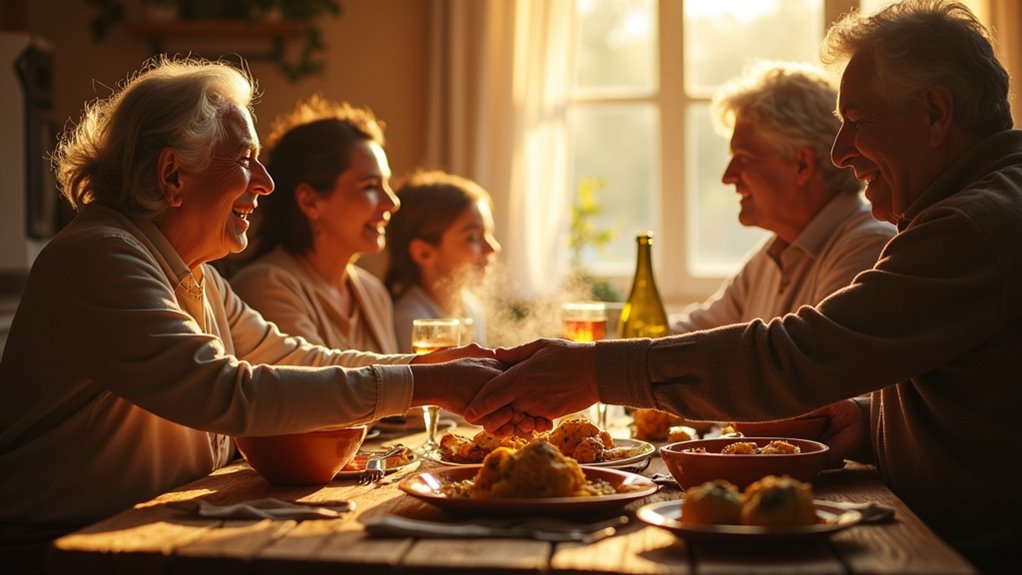
Expressing gratitude during family gatherings creates a warm atmosphere that brings everyone closer together, especially when you’re steering conversations in Spanish. Start with basics like “Gracias por invitarnos” when arriving, or compliment the host with “Huele delicioso aquí.”
Share what you’re thankful for using “Estoy agradecido/a por mi familia” – remember to match the ending to your gender.
For deeper appreciation, try “Aprecio mucho que hayamos podido compartir este momento” or “Gracias de todo corazón.”
When someone asks “¿Por qué están agradecidos?” be ready to express gratitude meaningfully. Thank your host for meals with “Gracias por la comida” and wrap up conversations with “Gracias por todo.” You can also express ongoing gratitude by saying “Hoy y todos los días doy las gracias por compartir momentos con ustedes.”
These phrases show genuine appreciation while strengthening family bonds.
Offering Help in Host Homes and Family Settings
Remember to use usted with older relatives and tú with close family. Repeat offers gently rather than insisting—this cultural rhythm shows respect while maintaining family harmony. Use phrases like “¿Cómo puedo ayudarle?” to offer assistance, as courteous language creates positive first impressions and enhances comfort for all family members.
Safety Communication for Crowded Tourist Areas
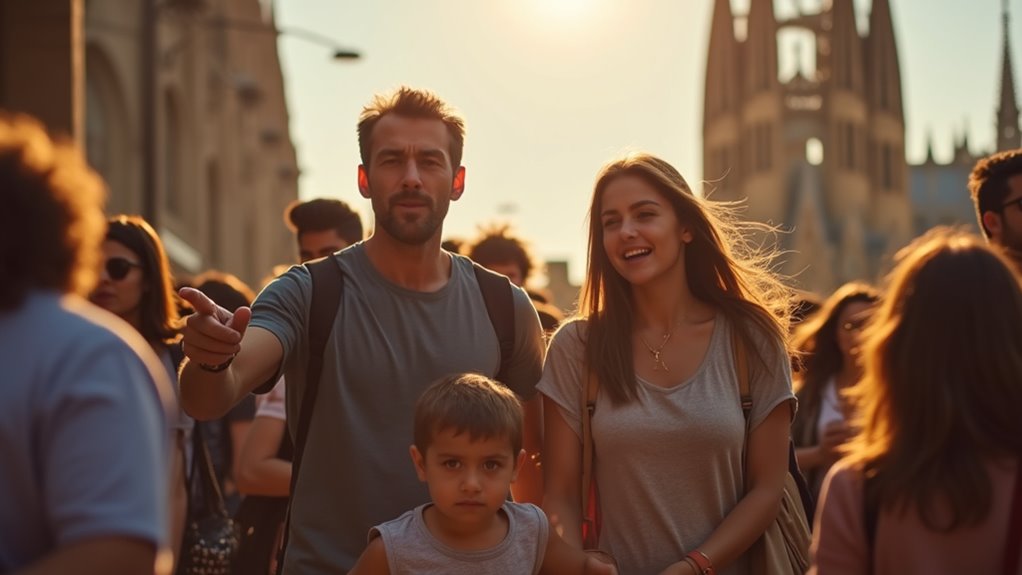
For immediate danger, shout “¡Ayuda!” or “¡Socorro!” Both mean “Help!”
If you’re lost, tell locals “Estamos perdidos” or “No sé dónde estoy.”
Should you need authorities, ask “¿Dónde está la estación de policía más cercana?”
For emergencies requiring evacuation, use “¿Dónde está la salida de emergencia?” If you accidentally bump into someone while rushing to safety, quickly say “¡Lo siento!” to show empathy and maintain politeness even in stressful situations.
These phrases guarantee you can protect your family while enjoying your Spanish-speaking destination safely.
Language Barriers and Getting Help
When you can’t communicate effectively in Spanish, your first priority is establishing whether anyone nearby speaks English. Ask “¿Habla inglés?” or “¿Habla alguien inglés?” to quickly find English speakers in crowds.
If you’re stuck with Spanish, slow things down. Tell them “Hablo muy poco español” or “No entiendo bien el español” to signal your limited comprehension. Request slower speech with “¿Puede hablar más despacio, por favor?” and don’t hesitate to say “¿Puede repetir, por favor?” when you miss something.
Switch communication channels when speaking fails. Ask “¿Puede escribirlo, por favor?” for written directions or “¿Puede mostrarme en el mapa?” for visual guidance. In urgent situations where you need immediate assistance, remember that “¡Socorro!” is a universal way to call for help. These strategies help you navigate language barriers without getting overwhelmed or agreeing to things you don’t understand.
Holiday Season Celebrations and Well-Wishes
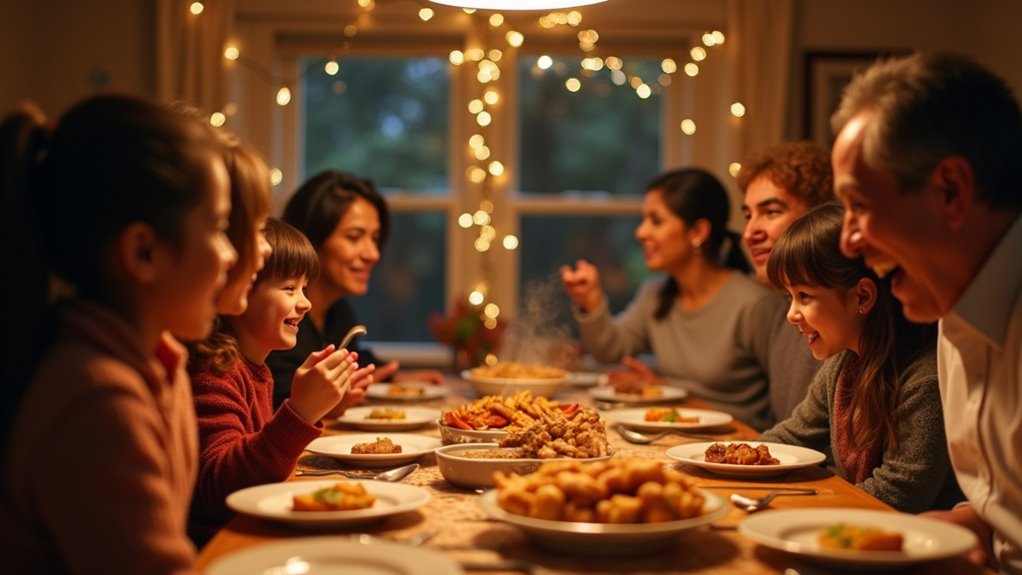
Beyond getting help when language barriers arise, you’ll want to connect with Spanish-speaking families and friends through heartfelt holiday greetings. “Feliz Navidad” works perfectly for Christmas, while “Felices Fiestas” covers the entire holiday season including New Year’s.
For more personal touches, try “Que pases una feliz Navidad” or “Te deseo una feliz navidad” when speaking directly to someone. Ring in the New Year with “Feliz Año Nuevo” or the fuller “Felices Fiestas y un Próspero Año Nuevo.” These greetings work well in both formal and casual contexts, making them versatile for any holiday interaction.
Family-focused phrases like “Que lo pasen en familia” show you understand what matters most during holidays. For heartfelt moments, “Que tengas una Navidad llena de amor y alegría” expresses genuine warmth. These phrases help you participate meaningfully in Spanish-speaking holiday traditions.
Sharing Travel Plans and Destination Excitement
Sharing your travel excitement with Spanish-speaking locals transforms ordinary tourist interactions into genuine connections.
When announcing destinations, use “Me gustaría ir a la playa” (I’d like to go to the beach) or “¿Dónde está el museo?” (Where is the museum?) to spark conversations about local spots.
Express genuine enthusiasm with “¡Eso se ve delicioso!” (That looks delicious!) when discovering new foods, or ask “¿Te gusta este lugar?” (Do you like this place?) to share excitement about discoveries.
Build deeper conversations by inquiring about plans: “¿Qué recomendarías hacer aquí?” (What would you recommend doing here?) shows you value local insights. These meaningful interactions during trips help create cultural exchange that enriches your entire family holiday experience.
When sharing itinerary details, “Tengo una reserva a nombre de…” (I have a reservation under the name of…) helps with accommodations, while “¿Qué te trajo aquí?” (What brought you here?) creates meaningful exchanges.
The Sum Up
You’ve got the basics now – twelve phrases that’ll turn awkward pointing and frustrated gestures into real connections. Don’t worry about perfect pronunciation; locals appreciate the effort more than perfection. Practice these with your kids before you leave, and you’ll find yourselves having actual conversations instead of playing charades at every restaurant. Your family’s Spanish adventure just got a whole lot more authentic and enjoyable.