
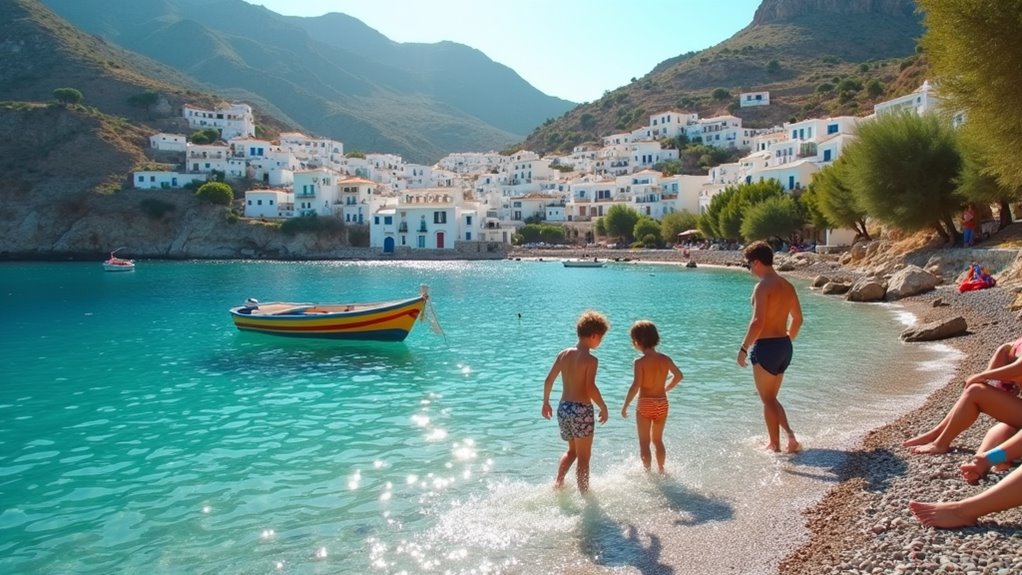
You’ll want to choose family-friendly islands like Naxos and Crete, which offer shallow beaches great for toddlers and reliable ferry connections. Book ferries 1-2 months ahead using Ferryscanner, especially for summer travel, and pack motion sickness pills for little ones. Plan minimum 4-night stays to reduce travel fatigue, focus on sandy beaches with Blue Flag safety certifications, and use Athens as your gateway for exploring ancient sites. These essential strategies will help you master the logistics and discover why Greek island hopping creates magical family memories.
- Best Greek Islands for Families With Children
- Essential Transportation Between Islands and Mainland
- Must-Do Family Activities on Each Island
- Where to Stay: Family-Friendly Accommodations by Island
- Sample Itineraries for Different Trip Lengths
- Avoiding Crowds: Quieter Islands vs. Popular Destinations
- Ferry Schedules and Booking Tips for Island Hopping
- Car Rentals and Getting Around Each Island
- Athens as Your Gateway: Family Activities in the Capital
- Beach Safety and Swimming Spots for Kids
- Packing Essentials for Greek Island Adventures
- Budget Planning and Money-Saving Tips for Families
- The Sum Up
Best Greek Islands for Families With Children
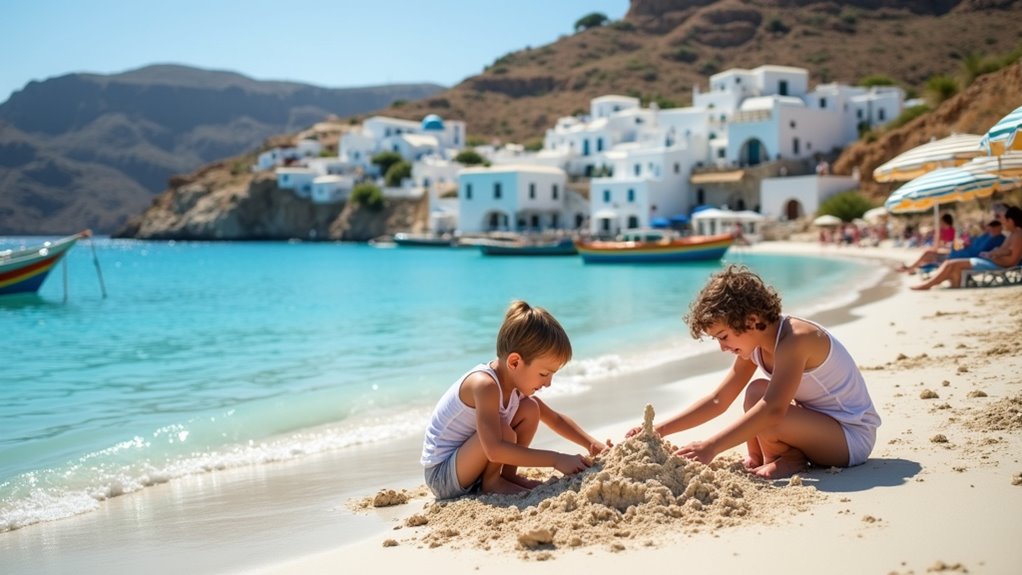
While many Greek islands welcome families, some stand out as absolute gems for traveling with children. Naxos tops the list with its shallow, calm waters great for toddlers and fantastic sandy beaches like Agios Georgios. You’ll love the relaxed atmosphere and affordable prices.
Crete offers the perfect blend of history and beaches. Your kids can explore Knossos palace while enjoying magical pink sands at Elafonisi Beach. The extensive outdoor activities keep everyone entertained.
Paros provides excellent connectivity for island hopping and works beautifully for families with kids aged 7-11. Golden Beach on Paros stands out as another top family beach with its protected waters and excellent facilities. Rhodes combines great beaches with historical sites, while Corfu’s lush landscapes and clear waters at Paleokastritsa bays create ideal conditions for snorkeling and safe swimming.
Essential Transportation Between Islands and Mainland
Once you’ve picked your perfect family-friendly islands, you’ll need to figure out how to get from one magical destination to the next. Ferries are your best bet for island hopping with kids. Regular ferries like Blue Star cost €15-40 and offer more space for restless children, while high-speed options (€30-80) cut travel time markedly.
For longer routes, overnight ferries save on accommodation—kids love sleeping onboard!
Book tickets 1-2 months ahead through Ferryscanner, especially for summer travel. Follow established routes like Athens-Mykonos-Naxos-Santorini to avoid backtracking.
Pack light with rolling luggage since ferries get crowded. Bring Dramamine for seasickness and snacks for delays.
Consider flights for longer distances, though they’re pricier than ferries. Flying between islands often requires connecting through Athens, which can add extra travel time but may still be faster than lengthy ferry rides.
Must-Do Family Activities on Each Island
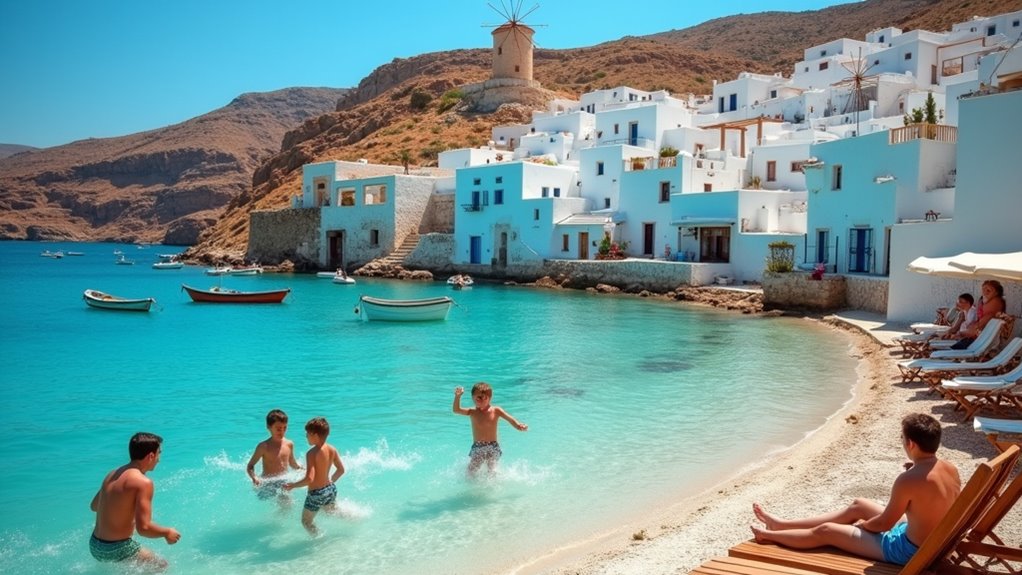
After settling into your island paradise, you’ll discover that each Greek destination offers unique adventures perfectly suited for curious young minds.
In Athens, the Acropolis Museum transforms mythology into reality through interactive storytelling and role-playing activities your kids will remember forever.
Crete captivates families with the Palace of Knossos, where children explore the legendary Minotaur’s labyrinth, plus Elafonissi Beach’s shallow pink sands great for sandcastle construction.
Rhodes combines history at Lindos Acropolis with nature at the Valley of Butterflies, where thousands flutter overhead between June and September.
Santorini’s catamaran tours take you to active volcanoes and hot springs, while Akrotiri reveals ancient civilizations frozen in time.
Mykonos offers thrilling water sports and authentic farm experiences, letting kids connect with local agriculture and traditional Greek life.
In Zakynthos, families can spot sea turtles during glass-bottom boat tours that provide clear underwater views without getting wet.
Where to Stay: Family-Friendly Accommodations by Island
Finding the perfect family base transforms your Greek island adventure from stressful to spectacular, especially when you choose accommodations that cater to children’s needs and parents’ peace of mind.
In Santorini, skip overpriced Oia for Lotza Studios in Finikia—traditional cave houses with outdoor jacuzzis and spacious terraces where kids can safely play.
Naxos offers excellent value with Corali Hotel’s family rooms and private beach access, while the Maisonette at Naxos Center Houses provides apartment-style living with full kitchens. Plaka beach stands out as highly regarded for its beauty and crystal clear, calm waters, lined with boutique hotels great for family stays.
Ios surprises families at Mylopotas Beach, where Hotel Aegeon delivers pools and beach proximity at budget-friendly rates.
Crete’s Cretan Malia Park accommodates varying budgets with bungalows and suites.
Meanwhile, Corfu’s Mesongi area features safe, shallow beaches great for younger children.
Sample Itineraries for Different Trip Lengths
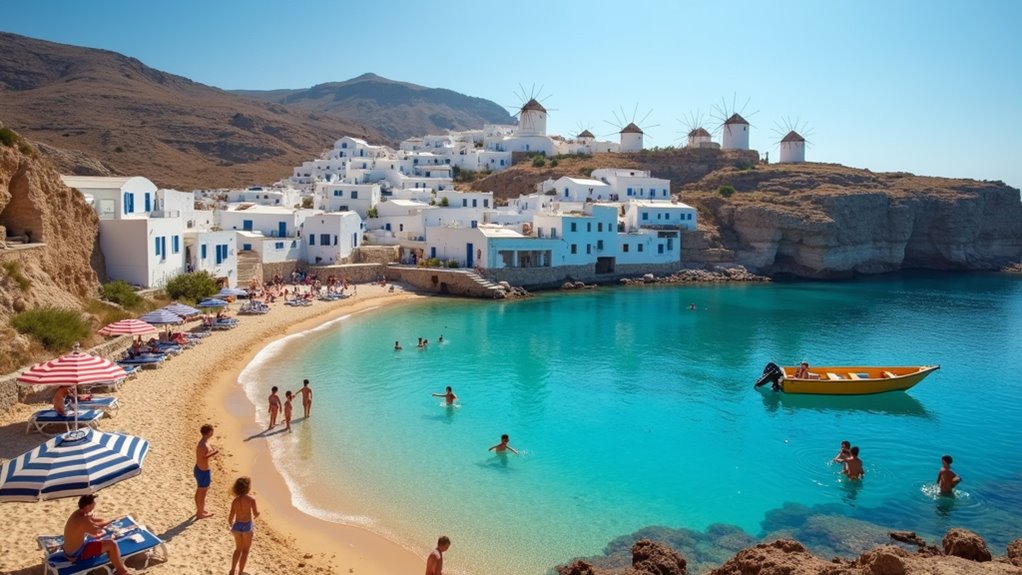
Whether you’re planning a quick week-long escape or an extended two-week adventure, the key to successful Greek island hopping with kids lies in balancing must-see destinations with realistic travel times and child-friendly pacing.
For seven days, focus on Athens (two days) plus two islands like Mykonos and Santorini, spending three and two nights respectively. This allows time for the Acropolis, beach relaxation, and volcano exploration without constant packing.
Ten-day trips can add Paros for village tours and family dinners. Consider a specialized nine-day Cyclades itinerary featuring Milos and Sifnos, where kids can enjoy unique beaches like Sarakiniko and horseback riding adventures. A comprehensive ten-day luxury itinerary might include private speed boat transfers between islands, which eliminate ferry scheduling stress and create exciting experiences for children.
Remember: four nights minimum on your primary island prevents travel fatigue while maximizing beach time and local experiences your children will actually remember.
Avoiding Crowds: Quieter Islands vs. Popular Destinations
While Santorini’s sunsets and Mykonos’s windmills capture headlines, these crowd magnets can quickly turn your family vacation into a stress-fest of packed beaches, overpriced restaurants, and cranky kids waiting in lines.
Instead, consider quieter alternatives that’ll give your family breathing room to actually enjoy Greece.
Naxos offers the Cycladic charm without cruise ship chaos, while Paros provides affordable family fun with charming town centers great for exploration.
For ultimate tranquility, try car-free Hydra where kids can ride donkey taxis, or Sifnos with its laid-back vibe and peaceful beaches. Chios attracts visitors mainly to its Mastic field villages, where families can learn about the unique production of Mastiha from ancient trees.
Karpathos delivers hiking adventures through lush forests, and Kythira enchants families with Aphrodite legends and rugged coastlines.
These hidden gems offer authentic Greek experiences without the tourist madness.
Ferry Schedules and Booking Tips for Island Hopping
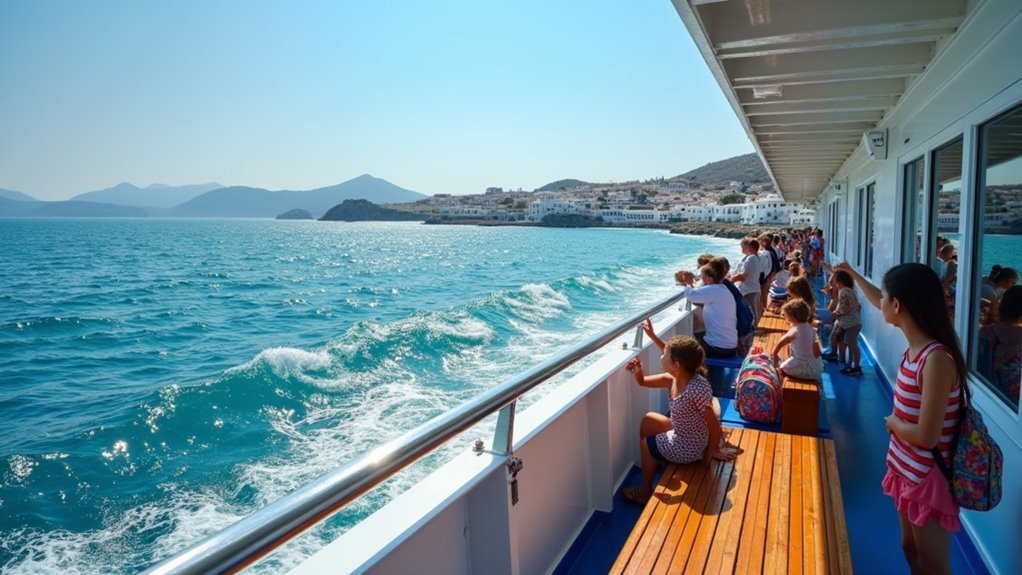
Planning your Greek ferry adventure starts with understanding that ferry schedules roll out gradually from November through May, so you’ll need patience and flexibility when booking your family’s island-hopping journey.
You’ll find year-round connections from Athens ports to major Cyclades islands, with summer bringing multiple daily departures on popular routes like Mykonos-Naxos.
Budget-friendly options include Rafina-Andros at €25 per person, while longer routes to islands like Folegandros cost around €83. Interactive ferry maps help families visualize their planned excursions before finalizing bookings, making trip organization much easier with children in tow.
Use platforms like Ferryhopper or Blue Star Ferries’ website to compare real-time schedules and prices.
Book popular summer routes early, but remember that inter-island connections often reduce considerably in winter.
High season runs late March through October, offering families the most routing flexibility.
Car Rentals and Getting Around Each Island
Once you’ve secured your ferry tickets, renting a car becomes your ticket to discovering hidden beaches, mountain villages, and authentic tavernas that tour buses can’t reach.
You’ll need a valid EU or International Driving License held for at least one year. If you’re under 25, expect a €9 daily surcharge.
Choose compact cars for couples or small families exploring cities, but opt for MPVs or SUVs when traveling with larger families or planning long distances. Off-road vehicles work best for mountainous terrain and secluded beaches.
Remember essential safety rules: seatbelts for everyone, child seats for kids under 4, and children under 12 must sit in back seats.
Always notify your rental company before taking vehicles on ferries, as some agencies prohibit this or charge additional fees. Booking in advance guarantees better rates and ensures your preferred vehicle type is available during peak travel seasons.
Athens as Your Gateway: Family Activities in the Capital
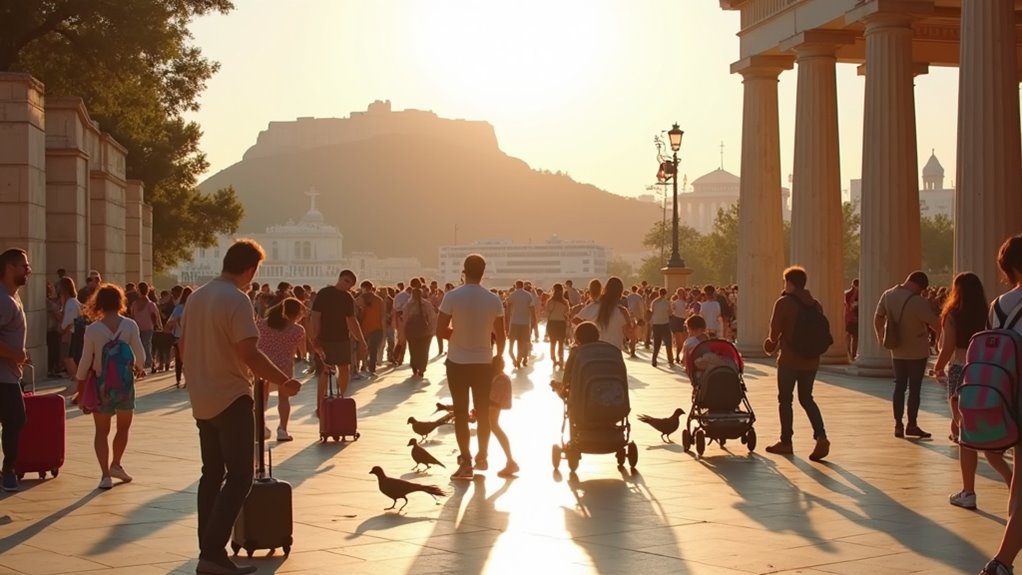
Before your ferry whisks you away to the islands, Athens offers three perfect days to ease your family into Greek culture and let the kids burn off airplane energy. The Acropolis captivates children with its ancient stories, while Plaka’s cobblestone streets provide easy stroller navigation. Your kids will love exploring Anafiotika’s maze-like pathways that feel like a Greek village adventure.
Choose from 178 museums offering hands-on exhibits great for curious minds. Climb Lycabettus Hill for breathtaking city views and picnic spots. With 300 sunny days annually, you’ll likely enjoy perfect weather for outdoor exploration.
Book accommodations early if you’re visiting May through June. Athens’ excellent airport connectivity to 154 destinations makes it the ideal starting point for your island-hopping adventure. The capital benefits from ongoing infrastructure modernization including improved airports and transportation, making family travel more convenient than ever.
Beach Safety and Swimming Spots for Kids
While Greek islands boast some of the world’s cleanest waters, choosing the right beach makes all the difference for families with children. Sandy beaches on Crete, Rhodes, Naxos, Mykonos, and Corfu offer safer alternatives to rocky shores where sea urchins lurk.
St. George beach’s shallow waters and gentle shelving make it great for little ones, while Paros features numerous sheltered kid-friendly spots.
Look for Blue Flag beaches that meet high safety standards, and choose organized beaches with lifeguards during peak season. Morning swims are ideal when seas are calmer.
Skip inflatable armbands—they don’t guarantee safety. Instead, maintain constant supervision within designated buoy areas.
Pack anti-allergic gel for potential jellyfish encounters, and seek natural shade under tamarisk or pine trees rather than heavy coverings. Stay aware of meltemi winds in the Aegean, which can create rougher beach conditions and affect your choice of swimming spots.
Packing Essentials for Greek Island Adventures
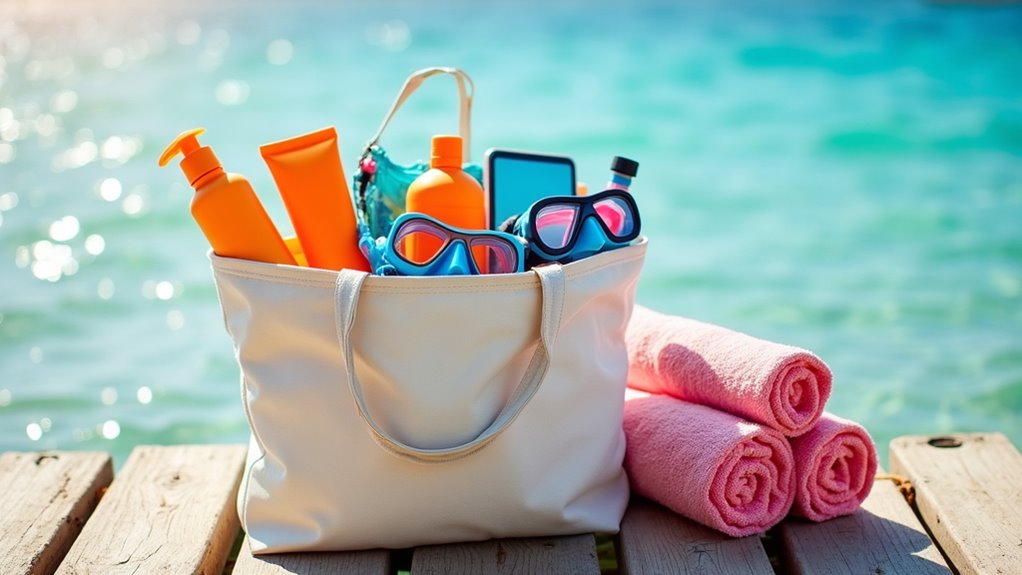
Since Greek islands present everything from scorching sun to unexpected ferry winds, smart packing becomes your family’s ticket to comfortable adventures.
Pack synthetic long pants and quick-drying shorts for versatility, plus lightweight shirts that’ll protect little ones from harsh Mediterranean sun. Don’t forget a fleece jacket and waterproof rain gear for those breezy evening ferry rides.
Footwear essentials include hiking boots for exploring ancient ruins, waterproof sandals for beach days, and comfortable walking shoes for cobblestone streets. Pack wool hiking socks to prevent blisters during family hikes.
Your health kit should include motion sickness pills for ferry rides, strong mosquito repellent, and sunscreen with SPF 15 minimum. Bring a 24-30 liter daypack for water bottles, snacks, and quick-dry towels since many hotels don’t provide them. Don’t forget to pack European adapters for charging your cameras, phones, and other devices throughout your island adventure.
Budget Planning and Money-Saving Tips for Families
Beyond packing smart, planning your family’s Greek island budget requires strategic thinking that’ll keep everyone happy without breaking the bank. You’ll save substantially by traveling during shoulder season when accommodation and ferry costs drop dramatically. Book early for the best family room deals, especially at budget hotels ranging €40-80 per night that offer more space than cramped hostels.
Skip expensive car rentals and embrace public transport instead. Island buses cost just €1.60-5.00, turning transportation into an adventure kids love. Pack picnic lunches using local markets, and seek tavernas with affordable gyros for €2-7. Consider purchasing multi-attraction passes when planning to visit several historic sites, as they offer significant savings for families exploring multiple destinations.
Focus on free activities like beach days and hiking rather than costly attractions. Your daily family budget of €100-150 covers accommodation, meals, and transport while keeping stress low.
The Sum Up
You’ve got all the tools you need for an unforgettable Greek island adventure with your kids! Remember, flexibility’s your best friend when traveling with little ones—don’t pack too much into each day. Let your children help choose which beaches to explore and activities to try. Pack those snacks, embrace the slower island pace, and prepare for magical sunsets, crystal-clear waters, and memories that’ll last a lifetime. Your family’s Greek odyssey awaits!