
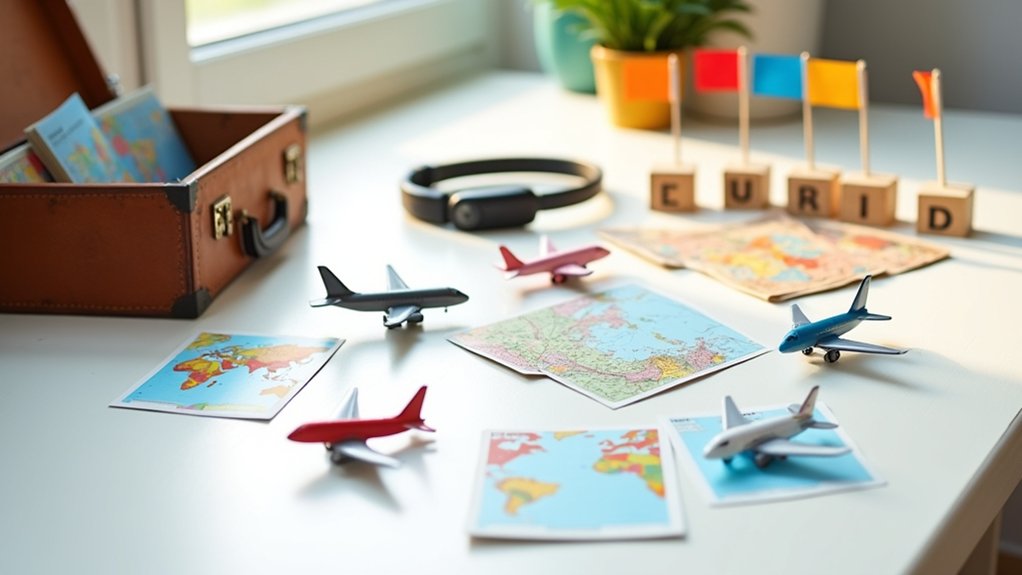
Transform your family’s travel prep into an exciting language adventure by turning screen time into educational movie sessions, creating cozy bilingual reading nooks, and converting daily activities like cooking into vocabulary games. Master essential greetings through role-play, involve kids in trip planning to spark curiosity, and explore your destination’s culture together. Use language apps for quick 10-15 minute practice bursts and connect with native speakers online for authentic conversations that’ll boost confidence and fluency before you explore these strategies further.
- Turn Screen Time Into Language Learning With Movies and Cartoons
- Create Cozy Learning Moments With Bilingual Books and Audiobooks
- Transform Everyday Activities Into Interactive Language Games
- Use Puppet Play to Encourage Natural Speaking
- Master Essential Greetings and Polite Phrases First
- Focus on Practical Questions Kids Will Actually Use
- Make Learning Musical With Songs and Local Music
- Get Creative With Picture Books and Craft Activities
- Plan Your Trip Together to Build Natural Curiosity
- Explore Destination Culture and Traditions
- Use Language Learning Apps for Daily Practice Bursts
- Connect With Native Speakers Through Online Exchange Programs
- Last Words
Turn Screen Time Into Language Learning With Movies and Cartoons

While screen time often gets a bad rap from parents, you can actually transform those daily viewing hours into powerful language learning opportunities for your kids. Choose educational content in your target language and watch together—co-viewing dramatically improves language acquisition compared to solo viewing.
Interactive engagement beats passive watching every time, so pause to discuss characters, repeat new words, and ask questions about the plot. This approach supports executive functions like planning and problem-solving that develop alongside language skills during early childhood.
Stick to WHO’s one-hour daily guideline for children over three, focusing on quality over quantity. Educational programs with repetitive vocabulary exposure boost problem-solving skills and language development simultaneously.
Background entertainment shows won’t help, so select structured content specifically designed for learning. Remember, your active participation transforms screen time from mindless entertainment into an effective language-building tool that prepares kids for your upcoming trip.
Create Cozy Learning Moments With Bilingual Books and Audiobooks
How can you make language learning feel as natural as your child’s favorite bedtime story? Transform reading time into bilingual adventures with multilingual books and audiobooks. Research shows that access to multilingual digital picture books increases vocabulary growth by 12% when children read more books regularly.
Create cozy reading nooks where your child can explore stories in both languages. Bilingual books reinforce your home language while building English skills, leading to proficiency in both without deficits. You’ll find that shared book reading supports your bilingual child’s overall language development.
Choose audiobooks that let your child hear native pronunciation while following along. This combination strengthens reading skills and builds confidence. Whether you’re reading Spanish-English stories or exploring other language pairs, these intimate learning moments make language acquisition feel like quality time together.
Studies show that children from English-only homes in dual-language settings perform as well or better than monolingual peers, demonstrating that bilingual exposure benefits all children regardless of their home language background.
Transform Everyday Activities Into Interactive Language Games
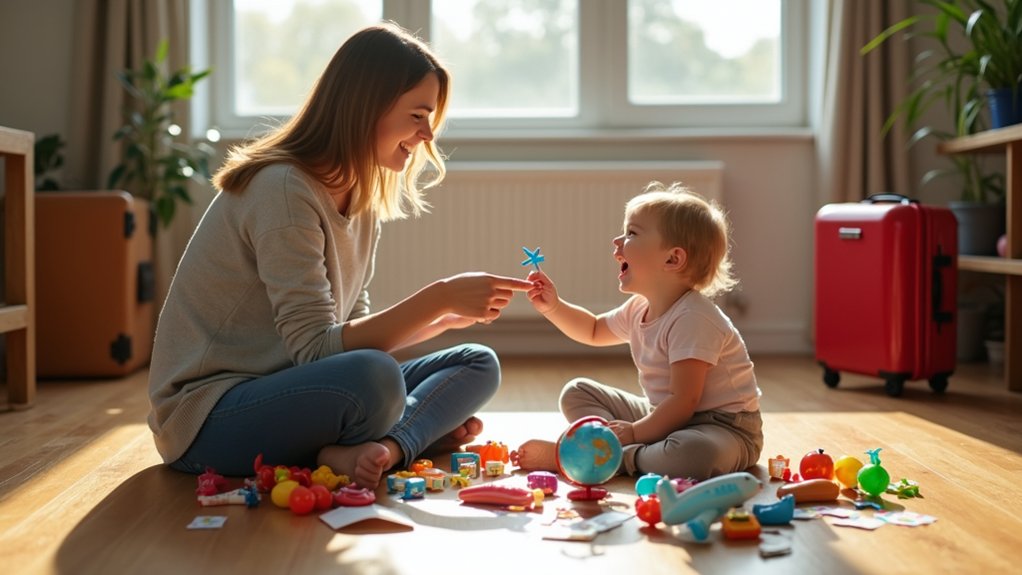
Since children naturally learn through play, you can turn ordinary household moments into dynamic language adventures that don’t feel like formal lessons. During breakfast, describe your child’s cereal as “small, round, crunchy circles” or play “I Spy” with colorful fruit.
While cooking together, count ingredients and name utensils in your target language.
Transform your home into a vocabulary playground by hiding objects with foreign language clues for scavenger hunts. Label furniture with sticky notes and create simple home maps marking rooms in the new language.
Try “Simon Says” using household commands like “touch the blue chair.”
Get moving with charades, acting out vocabulary words, or animal sound imitations with descriptive scenarios. Create Bingo cards with words from your target language and have children mark off called words until someone completes a row. These playful activities seamlessly weave language learning into daily routines.
Use Puppet Play to Encourage Natural Speaking
When your child feels shy about speaking a new language, puppets become magical conversation starters that transform hesitation into excitement. You’ll notice quiet children become proactive participants when fascinated by these simple tools.
Create role-playing scenarios where your child practices conversations with puppet characters. They’ll gain confidence speaking foreign phrases through this non-threatening interaction. Let them tell stories or explain concepts to their puppet friend—this mistake-free experimentation builds natural speaking abilities.
Puppets create a relaxed atmosphere that boosts communication while increasing concentration spans. You can use them anywhere: classrooms, homes, or travel preparation sessions. Studies demonstrate that puppet shows provide greater impact than traditional storytelling methods in developing children’s behavioral and learning outcomes.
The dramatic play enhances vocabulary development and storytelling skills simultaneously.
Research shows children demonstrate high motivation when puppets guide their language learning, making curriculum goals more achievable through creative, engaging interactions.
Master Essential Greetings and Polite Phrases First
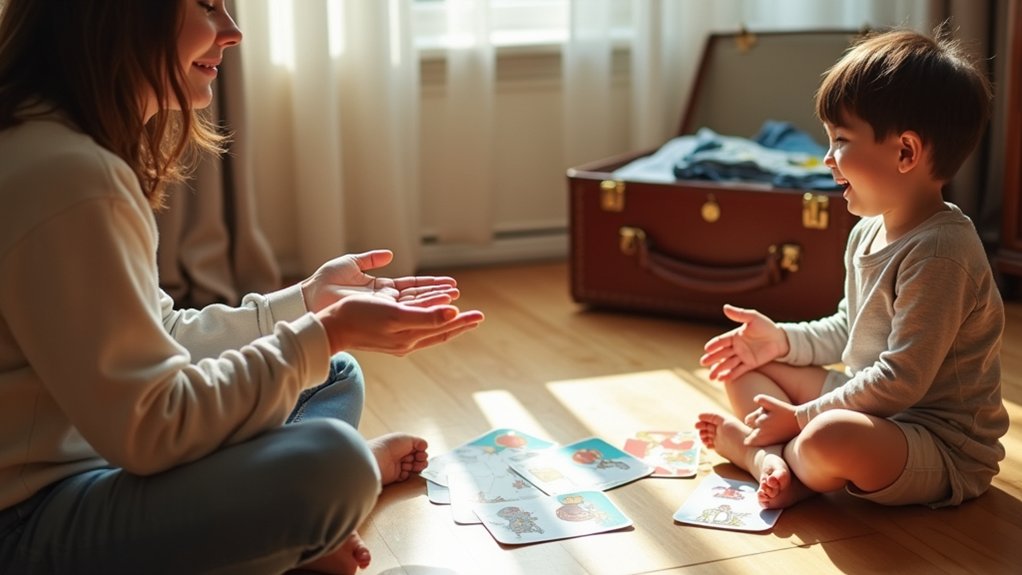
Building your child’s language foundation starts with mastering basic greetings and polite phrases—these essential building blocks create immediate confidence and open doors to meaningful conversations.
Start with core phrases like “please,” “thank you,” and “excuse me.” Your child will use these constantly during travel interactions. Practice essential greetings such as “hello,” “good morning,” and “goodbye” through daily role-play during meals or playtime.
Don’t forget cultural variations! Teach “hola” for Spanish-speaking destinations or “namaste” with folded hands for India. These show respect and delight locals.
Model polite speech consistently—your child learns through exposure. Children are more likely to imitate adult actions than follow verbal instructions alone. Praise correct usage to reinforce good habits. Even toddlers can practice with signs or simple sounds.
These foundational phrases build confidence, improve social connections, and pave the way for advanced vocabulary development during your adventures.
Focus on Practical Questions Kids Will Actually Use
After your child feels comfortable with basic greetings, it’s time to equip them with practical questions they’ll actually need during your travels.
Focus on high-frequency phrases that provide immediate utility: “Where is the bathroom?”, “Can I have…?”, and “How much does it cost?” These essentials reduce cognitive load while increasing retention through real application.
Teach question structures like “Where are you from?” to help your child start natural conversations with other kids and adults.
Prioritize simple vocabulary for basic needs—words like “water” and “bread” enable daily interactions.
Rather than overwhelming them with exhaustive vocabulary, concentrate on survival phrases that work in restaurants, shops, and public spaces. Practice these phrases by having your child ask for directions at local stores or landmarks to build real-world conversational skills.
This targeted approach builds confidence as children successfully navigate real situations independently.
Make Learning Musical With Songs and Local Music
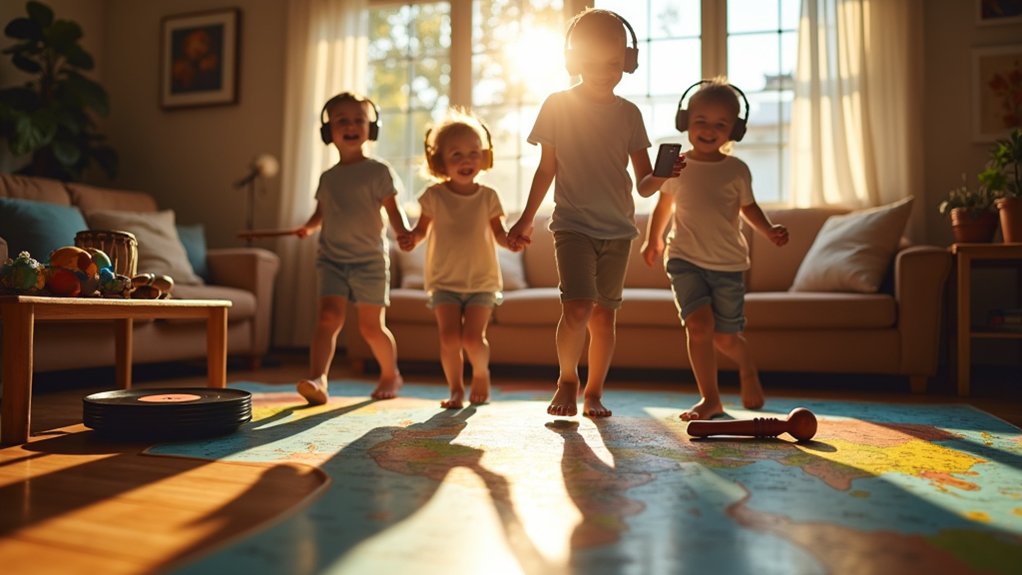
Music transforms language learning from a chore into pure joy for children. Research shows singing outperforms speech in language learning, boosting accuracy from 60% to 71%. Your child’s brain naturally links rhythm and melody to language acquisition, improving grammar, pronunciation, and vocabulary retention.
Start with simple repetitive songs like local lullabies or nursery rhymes from your destination country. These reinforce new words through melody and rhythm. Download popular children’s songs in your target language and sing along during car rides or bedtime routines.
Try improvisational singing games where you replace familiar tune lyrics with new vocabulary words. Even background music while practicing creates richer language experiences. The rhythm helps children remember pronunciation patterns and sentence structures naturally, making those tricky foreign sounds stick better than traditional drilling methods. Group singing activities also foster increased empathy among children, creating a more supportive learning environment for language acquisition.
Get Creative With Picture Books and Craft Activities
Picture books pack a powerful punch for language learning, delivering richer vocabulary than everyday conversations while sparking your child’s imagination through vibrant illustrations. You’ll find these books contain more complex words, detailed nouns, and adjectives that expand your child’s linguistic toolkit beyond basic pronouns used in daily speech.
The visual storytelling helps your little one connect new words to meanings while understanding story sequences from beginning to end. Bright imagery captures attention and builds curiosity about different cultures and characters. Reading together also promotes bonding and cognitive growth between parent and child during these shared learning moments.
Try pairing picture books with hands-on craft activities that reinforce the vocabulary. Create character masks, build story scenes with clay, or design postcards featuring book locations. This combination strengthens comprehension while making language learning interactive and memorable for your upcoming travels.
Plan Your Trip Together to Build Natural Curiosity
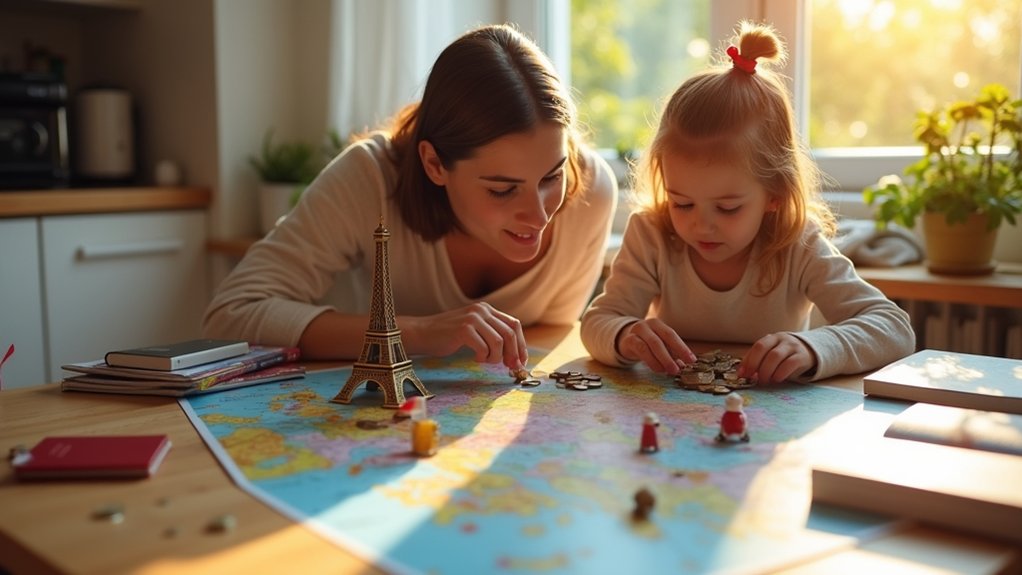
Why not transform trip planning into your child’s first language adventure? Getting kids involved in destination research naturally exposes them to maps, signs, and place names in the target language. They’ll build geography and cultural vocabulary while searching for landmarks online, then practice pronunciation as you discuss what they’ve discovered.
Map out itineraries together to introduce travel phrases like “train station” and “museum.” Let them mark routes while learning directional terms, then plan daily schedules using time expressions.
When you budget and pack together, they’ll master numbers, money terms, and item categories through hands-on practice. This hands-on experience makes abstract concepts concrete, as children naturally absorb language when it’s connected to real activities they can touch and manipulate.
Before departing, simulate airport check-ins and role-play restaurant scenarios. This preparation builds confidence and overcomes speaking fears, making real interactions feel natural rather than intimidating.
Explore Destination Culture and Traditions
Use world map puzzles to explore geography, foods, and cultural norms, comparing them with your home traditions. Engage in hands-on cultural activities like Thai cooking classes, Japanese origami workshops, or Spanish flamenco lessons. These immersive experiences naturally weave language learning into cultural discovery.
Visit local markets, attend festivals, and encourage safe interactions with local children. When kids connect emotionally with a culture through authentic experiences, they’re more motivated to communicate in the local language. Research your destination’s history and customs beforehand to help children understand the context behind the language they’re learning.
Use Language Learning Apps for Daily Practice Bursts
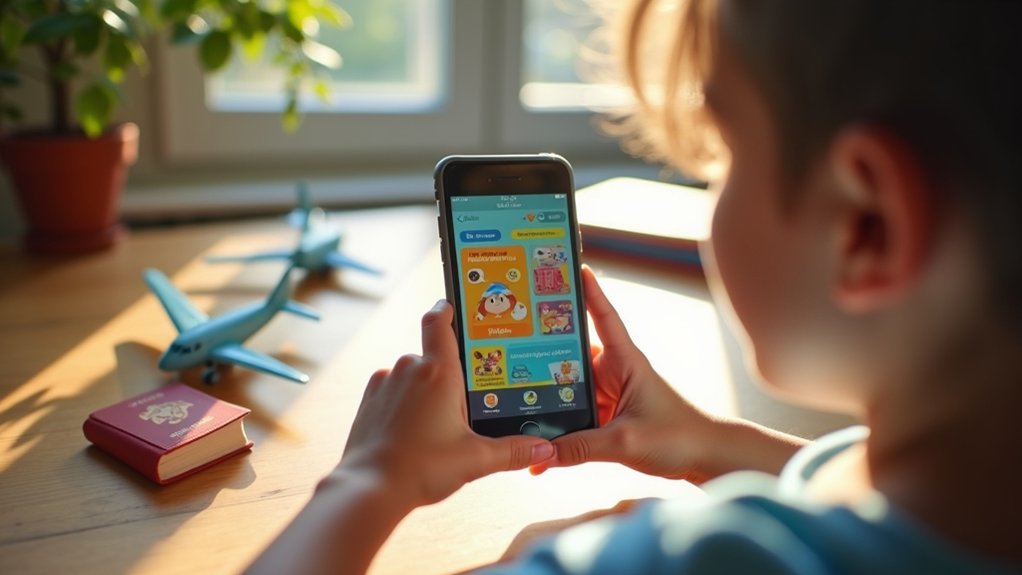
While culture provides rich context for language learning, you’ll need consistent daily practice to build fluency—and that’s where language learning apps shine.
Research shows 81% of studies found mobile apps effective for vocabulary and pronunciation improvements, with users often matching four university semesters’ worth of progress in half the time.
The key is establishing short, consistent practice sessions. Just 10 minutes daily can yield significant grammar and vocabulary gains, with 60% of users improving oral proficiency.
Most kids naturally gravitate toward 15-minute app sessions several times weekly, often during free time bursts rather than planned study periods.
Popular apps like Duolingo and Babbel offer gamified experiences that keep children engaged while building essential language foundations through interactive practice and personalized feedback. However, apps work best for beginners and low-intermediate learners who are still building their foundational vocabulary and grammar skills.
Connect With Native Speakers Through Online Exchange Programs
Although traditional classroom settings can’t always provide authentic conversation practice, online exchange programs connect your child directly with native speakers for real-world language interaction. These programs substantially improve speaking skills and boost your child’s willingness to communicate in their target language.
Research shows that learners with lower competence levels gain the most from these exchanges, making them great for beginners. Your child will develop fluency while building intercultural awareness and motivation through peer cooperation.
Programs like Virtual NSLI-Y offer structured 10-week sessions for high schoolers, with 96% of alumni finding the experience valuable. These exchanges also reduce language anxiety and help children overcome their reluctance to speak with foreigners through authentic interactions.
With the online language learning market growing 20% annually, these platforms provide flexible, authentic practice that traditional classes simply can’t match for developing real conversational confidence.
Last Words
You’ve got nine fantastic ways to make language learning an adventure rather than a chore. Start with just one or two methods that excite your kids most, then gradually add others as they build confidence. Remember, you’re not aiming for fluency—you’re sparking curiosity and giving them tools to connect with people they’ll meet. Every “hello” and “thank you” they master will transform your family trip into something magical.