

Your family travel medical kit should include adhesive bandages in various sizes, pain relievers like acetaminophen and ibuprofen, a digital thermometer for fever monitoring, and antihistamines for allergic reactions. Don’t forget antiseptic wipes and antibiotic ointment for wound care, broad-spectrum sunscreen, hand sanitizer with 60% alcohol, and oral rehydration salts for dehydration. Pack emergency contacts and prescription medications in original containers. These essentials will help you handle most common travel health issues with confidence and preparation.
- Adhesive Bandages and Wound Care Supplies
- Pain and Fever Relief Medications
- Digital Thermometer for Temperature Monitoring
- Antihistamines for Allergic Reactions
- Antiseptic Wipes and Antibiotic Ointment
- Motion Sickness Prevention and Treatment
- Broad-Spectrum Sunscreen and After-Sun Care
- Hand Sanitizer and Hygiene Essentials
- Rehydration Salts and Electrolyte Packets
- Emergency Contacts and Prescription Medications
- Last Words
Adhesive Bandages and Wound Care Supplies
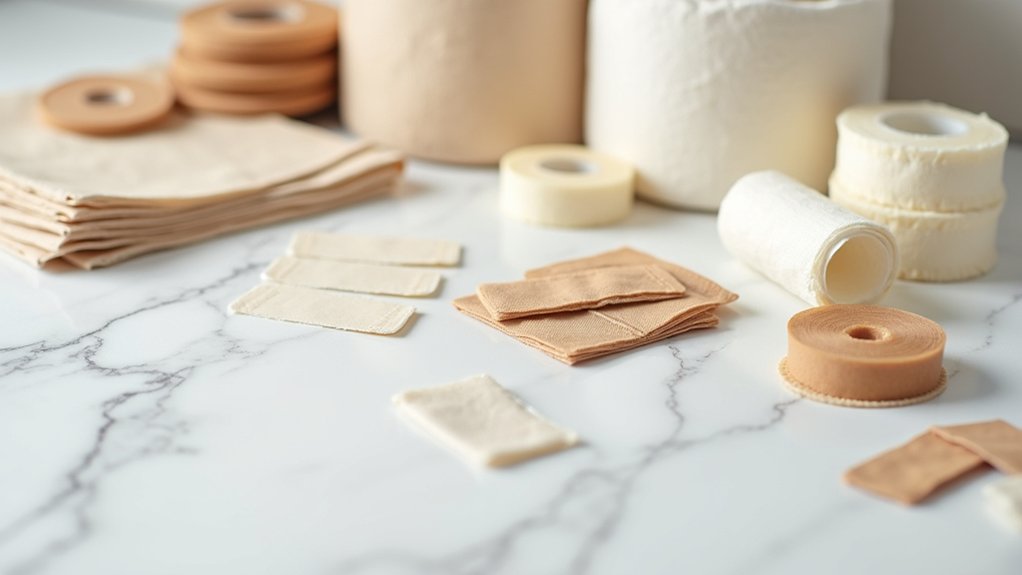
When you’re assembling a family travel medical kit, adhesive bandages and wound care supplies form the essential foundation that’ll handle most minor injuries you’ll encounter on the road.
Pack fabric adhesive bandages in assorted sizes—they’re more durable than plastic ones. Include sixteen 1″ x 3″ bandages, twelve junior plastic ones for smaller cuts, four knuckle bandages, and one elbow/knee bandage for larger scrapes.
You’ll also need sterile gauze dressings and nonstick pads for more serious wounds. Add cloth tape and medical adhesive tape to secure dressings properly.
Don’t forget butterfly closure bandages—they’re lifesavers for deeper cuts that need wound edges held together. Include antiseptic wipes and triple antibiotic ointment packets to prevent infection and promote healing. Store your supplies in waterproof pouches to protect them from moisture and weather conditions during your travels.
Pain and Fever Relief Medications
Beyond treating cuts and scrapes, you’ll need reliable medications to tackle the headaches, fevers, and body aches that can derail family adventures. Pack acetaminophen (500 mg tablets) like Tylenol for general pain relief and fever reduction. Include ibuprofen (200 mg tablets) such as Advil or Motrin to address inflammation from sightseeing injuries and stress headaches. Don’t forget aspirin (325 mg tablets) as an alternative pain reliever for adults.
For families with children, pack age-appropriate formulations with weight-based dosages in chewable, liquid, or tablet forms. Use a medication syringe to ensure accurate dosing of liquid medications for children. Always keep medications in their original labeled containers and pack extras for trip delays. Customize quantities based on your family’s medical history and destination-specific risks to ensure you’re prepared for common travel ailments.
Digital Thermometer for Temperature Monitoring
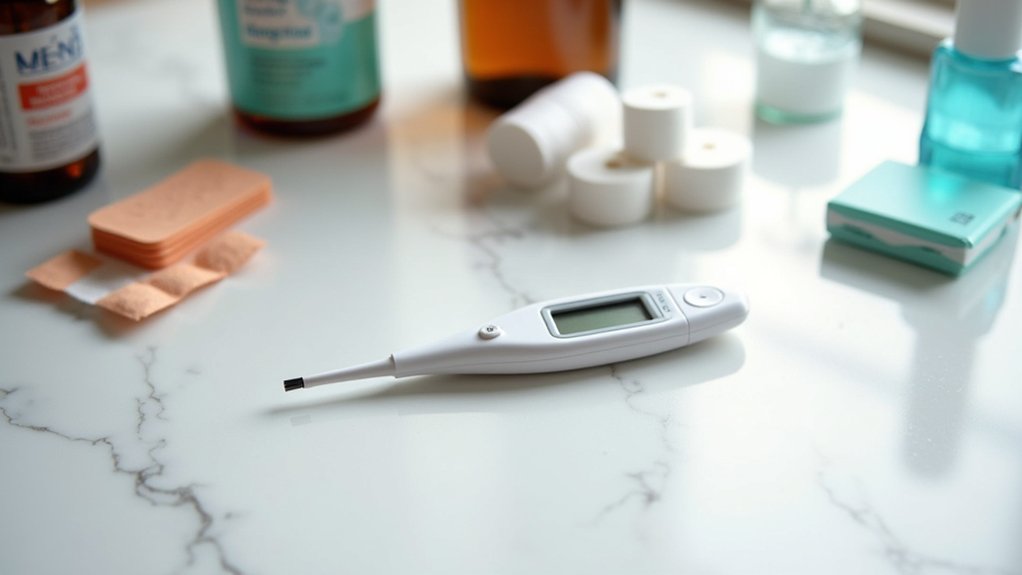
How can you quickly determine if someone in your family has developed a fever during your travels? A digital thermometer with LCD display is essential for accurate temperature monitoring anywhere. Choose non-contact infrared models for contactless readings, especially helpful for children who struggle with oral thermometers. Look for features like beeper alarms, memory function, and auto shut-off.
For maximum portability, pack lightweight models weighing just 7 grams that fit easily in luggage with other first-aid supplies. Consider disposable single-use thermometers for hygienic family trips—they prevent cross-contamination and work perfectly during power outages.
Many travel kits include multiple thermometers alongside medications and wound care supplies. Whether you’re on domestic trips or traveling internationally, having reliable temperature monitoring enables rapid fever detection and early intervention. Professional medical kits often combine digital stethoscopes with thermometers to provide comprehensive diagnostic capabilities for both routine health checks and immediate medical needs.
Antihistamines for Allergic Reactions
While monitoring temperature helps you catch illness early, allergic reactions can strike without warning during family trips. You’ll want second- or third-generation antihistamines in your travel kit since they cause minimal drowsiness and work with once-daily dosing.
Pack cetirizine (Zyrtec), loratadine (Claritin), or fexofenadine (Allegra) for all-encompassing allergy relief. These H1-receptor antagonists effectively treat runny nose, sneezing, itchy eyes, and skin reactions without making you drowsy.
Consider adding azelastine (Astepro) nasal spray for rapid congestion relief. For severe reactions that don’t respond to antihistamines, oral pills and liquids can also treat hives, swelling from unexpected allergen exposure.
Avoid first-generation antihistamines like diphenhydramine—they’ll leave your family too sedated for travel activities.
Most options are approved for children ages 2 and above, making them great for family use when unexpected allergens appear.
Antiseptic Wipes and Antibiotic Ointment
When cuts and scrapes happen during family adventures, you’ll need antiseptic wipes and antibiotic ointment to prevent infections before they start. These pre-moistened wipes contain alcohol or povidone-iodine that kill bacteria, viruses, and fungi around wounds.
They’re great for cleaning scraped knees without needing water or soap, and they’ll also disinfect your hands or medical tools like tweezers. These wipes are particularly valuable when providing care for insect bites, helping to clean the affected area and reduce the risk of secondary infection from scratching.
Choose individually packaged wipes from reputable brands to prevent drying out. After cleaning wounds with wipes, apply antibiotic ointment like Neosporin to create a protective barrier against bacteria.
This one-two punch prepares wounds for bandaging and promotes proper healing.
Store both items in sealed packaging and replace them before expiration dates to maintain effectiveness during your travels.
Motion Sickness Prevention and Treatment
Since motion sickness can turn family adventures into miserable experiences, you’ll want to pack both prevention tools and treatment options in your travel medical kit.
Include acupressure wristbands like Sea-Bands, which you’ll apply before travel with pressure buttons positioned half an inch above the wrist crease.
Pack ginger products such as ginger candy or ginger ale for natural symptom relief.
Add antihistamine medications like Dramamine or Dramamine Less Drowsy, but give them 30-60 minutes before travel for best results.
Don’t forget emergency supplies: ziplock bags for containing vomiting, cleansing wipes for cleanup, and paper towels.
Include peppermint or lavender aromatherapy items for nausea relief, plus crackers for settling upset stomachs during recovery. Pack a cool compress for the forehead when symptoms progress to headache and severe nausea.
Broad-Spectrum Sunscreen and After-Sun Care

Because sun exposure poses serious health risks during family vacations, you’ll need thorough sun protection in your travel medical kit. Pack broad-spectrum sunscreen with SPF 15+ that blocks both UVA and UB rays. Choose water-resistant formulas and consider mineral-based options with zinc oxide or titanium dioxide for sensitive skin.
Apply sunscreen 15-30 minutes before exposure, using one ounce per adult application, and reapply every two hours.
Don’t forget after-sun care essentials. Include aloe vera gel to soothe sunburned skin and reduce inflammation. Pack hydrocortisone cream for itching relief and moisturizers with petrolatum to lock in hydration.
Cool compresses help reduce swelling from overexposure. Remember, childhood sunburn doubles melanoma risk later, so consistent protection matters for your family’s long-term health. Consider scheduling a pre-travel checkup to discuss sun safety strategies specific to your destination’s climate and UV index levels.
Hand Sanitizer and Hygiene Essentials
While sun protection shields your family from external threats, maintaining proper hygiene protects against invisible dangers like bacteria and viruses that thrive in crowded travel environments.
You’ll need hand sanitizer with at least 60% alcohol concentration in travel-size bottles (100ml or less) for security compliance. Pack antiseptic wipes to disinfect high-touch surfaces like airplane tray tables and seats while also cleaning wounds when needed. Include antiseptic wipes in your kit as they serve the dual purpose of cleaning wounds deeply and disinfecting surfaces during travel.
Consider filling one side of a contact lens case with sanitizer for ultra-compact storage. Don’t forget multiple face masks, as airline and destination requirements vary—some only accept medical-approved varieties like KN95 or N95.
Store everything in a bright, zippered pouch for easy access during flights, and always check expiration dates before departing.
Rehydration Salts and Electrolyte Packets
What happens when traveler’s diarrhea strikes your family in a remote location without access to medical care? You’ll desperately need oral rehydration salts (ORS) to prevent dangerous dehydration. These sodium-glucose packets are WHO-endorsed lifesavers that’ve reduced child mortality from diarrheal diseases by millions annually.
Pack multiple ORS sachets in your travel kit—they’re lightweight, inexpensive (under $1 in most countries), and incredibly effective. Low-sodium formulations reduce IV fluid needs by 33%, keeping families out of foreign hospitals.
You’ll find them essential whether dealing with food poisoning in South Asia, motion sickness on bumpy rides, or heat-related dehydration in tropical climates. A Visual Communication Tool can help you communicate symptoms and treatment needs to local medical providers when language barriers exist.
Pair ORS with anti-diarrheal medications like loperamide for comprehensive treatment. Don’t travel without these packets—dehydration progresses quickly in children.
Emergency Contacts and Prescription Medications
How quickly can you reach your family doctor when your child has an allergic reaction 8,000 miles from home? Emergency contacts become your lifeline during medical crises abroad. Create a thorough list including your primary care physician, pediatrician, and emergency contact person back home with complete phone numbers and addresses.
Document everyone’s medical history on a detailed form listing conditions, surgeries, allergies, and current medications. Include a recent EKG copy and note all prescription strengths with dosing instructions.
Pack prescription medications in original labeled containers with enough supply for your entire trip plus three extra days. Carry prescription copies and include epinephrine auto-injectors for severe allergies. Don’t forget to include your pharmacy details as part of your essential medical documentation. Check TSA guidelines for traveling with medications and verify expiration dates before departure.
Last Words
You’ve got the essentials covered—now pack smart and travel confidently. Don’t forget to check expiration dates before each trip and replace used items promptly. Keep your medical kit easily accessible, not buried in checked luggage. Remember, you can’t predict every health hiccup, but you’ll handle most common issues with these supplies. Your family’s safety is worth the extra space in your suitcase, so don’t skimp on preparation.