
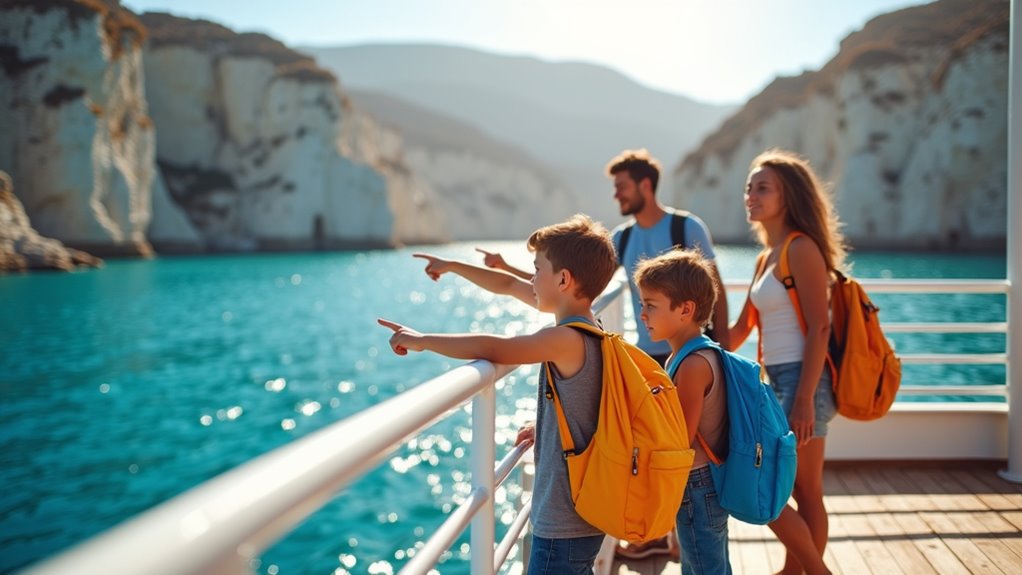
Choose family-friendly islands like Naxos, Crete, and Corfu that offer shallow beaches and kid amenities. Schedule overnight ferries around children’s sleep times and pack interactive games for journey entertainment. Book accommodations near beaches with gradual depths and on-site facilities. Rent cars on larger islands for flexible exploration and easy transport of baby gear. Maintain flexible itineraries accommodating nap times, and plan guided tours with hands-on activities. Consider shoulder seasons for fewer crowds and better weather conditions while maximizing your family’s comfort.
- Choose Kid-Friendly Island Combinations for Maximum Enjoyment
- Plan Strategic Transportation Between Islands to Minimize Travel Stress
- Select Accommodations Near Family Attractions and Easy Beach Access
- Pack Interactive Activities for Ferry Rides and Flight Delays
- Book Guided Tours That Engage Children Through Hands-On Learning
- Prioritize Calm Beaches and Shallow Waters for Safe Swimming
- Research Child-Friendly Boat Excursions With Snorkeling Opportunities
- Maintain a Flexible Itinerary That Accommodates Nap Times
- Rent Cars on Larger Islands for Convenient Family Exploration
- Consider Weather Patterns and Seasonal Crowds When Booking Travel
- The Sum Up
Choose Kid-Friendly Island Combinations for Maximum Enjoyment
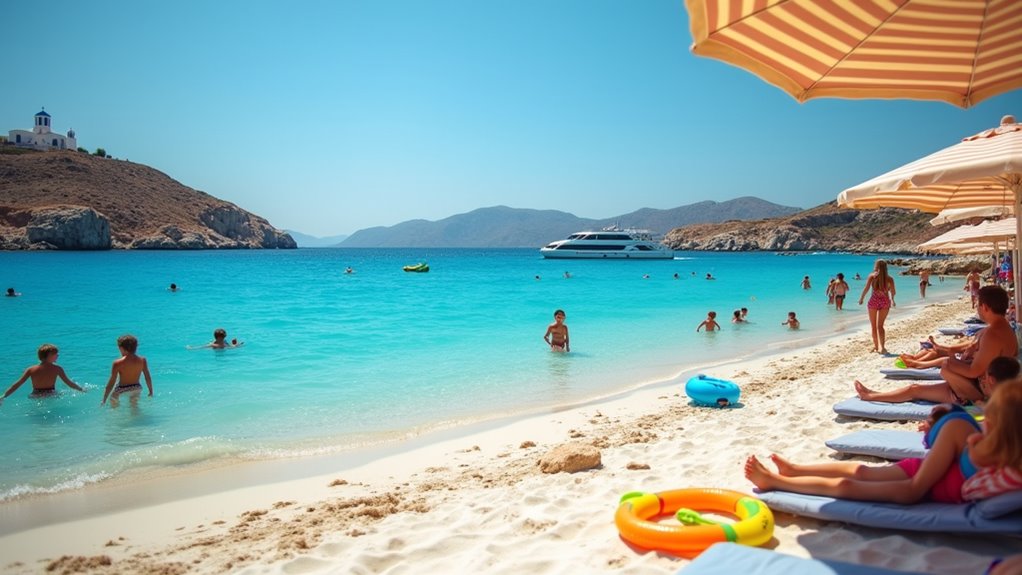
Using Naxos as your primary base works exceptionally well, allowing day trips to neighboring islands while maintaining stability for younger children.
If you’re seeking varied experiences, the Corfu, Crete, and Rhodes trio delivers lush landscapes, ancient ruins, and extensive sandy beaches that’ll keep everyone entertained.
Plan Strategic Transportation Between Islands to Minimize Travel Stress
Consider overnight ferries for longer distances—Minoan and Anek Lines’ 9pm departures let children sleep during travel, preserving precious daytime exploration hours while eliminating an accommodation night. For families exploring the Saronic and Argolic Islands, short ferry rides under an hour from Athens and the Peloponnese significantly reduce travel fatigue for young children.
Select Accommodations Near Family Attractions and Easy Beach Access
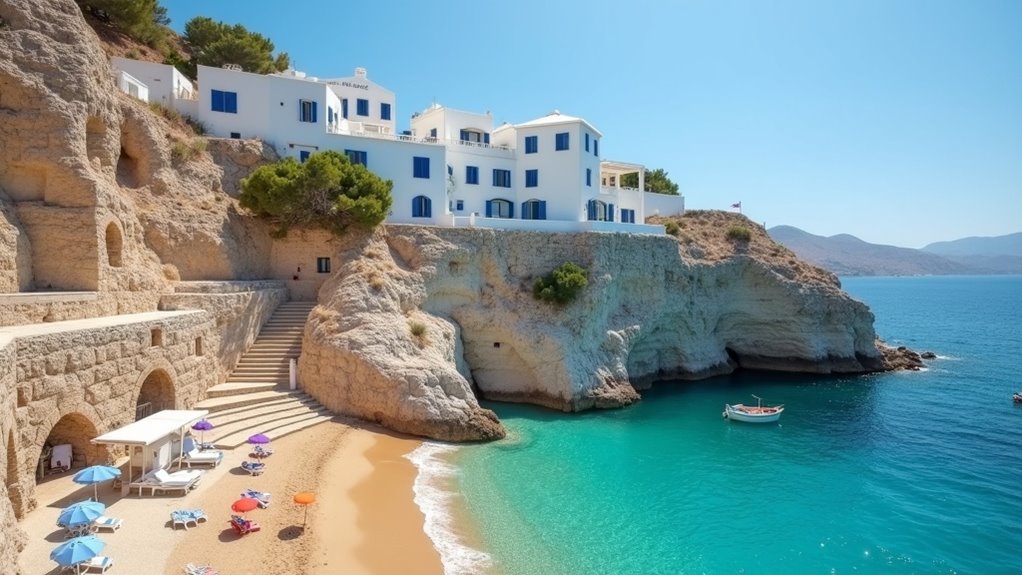
When traveling with children, your accommodation choice can make or break your Greek island adventure. You’ll want hotels that put beaches and family activities within easy reach, eliminating stressful transportation with tired kids.
On Ios, stay at Mylopotas Beach where crystal-clear shallow waters create perfect toddler conditions. Corali Hotel offers beachfront access with free sunbeds and family rooms, while Dionysos Seaside Resort provides luxury rooms with private pools.
In Santorini, choose Finikia village for its 10-minute walk to Oia. You’ll enjoy morning strolls before crowds arrive without needing rental cars. The village features traditional cave house style accommodations with outdoor amenities and peaceful streets great for families.
Crete’s resorts excel at family entertainment. Creta Maris features water parks and evening kids’ shows, while Amirandes includes dinosaur parks and lazy rivers. These all-inclusive options keep children entertained steps from your room.
Pack Interactive Activities for Ferry Rides and Flight Delays
Long ferry rides between Greek islands can quickly turn restless children into cranky travelers, but the right entertainment arsenal transforms these journeys into memorable adventures. Pack portable classics like “I Spy” adapted for spotting dolphins, fishing boats, and Greek landmarks. Bring travel-sized board games including Uno, Battleship, and Spot It! that work perfectly in confined ferry spaces.
Load tablets with downloaded movies and educational apps about Greek mythology or marine life—connectivity’s often spotty between islands. Pack drawing supplies, small puzzles, and printable Greek-themed bingo cards featuring ancient ruins and Mediterranean wildlife. Don’t forget headphones for peaceful screen time and familiar comfort items like stuffed animals.
Create scavenger hunts challenging kids to identify different sailboat types or count windmills on passing islands, keeping them engaged throughout those longer crossings. Consider creating a simple story about the ferry journey that includes sensory details like the sound of engines and the feeling of the boat’s movement to help anxious children know what to expect.
Book Guided Tours That Engage Children Through Hands-On Learning
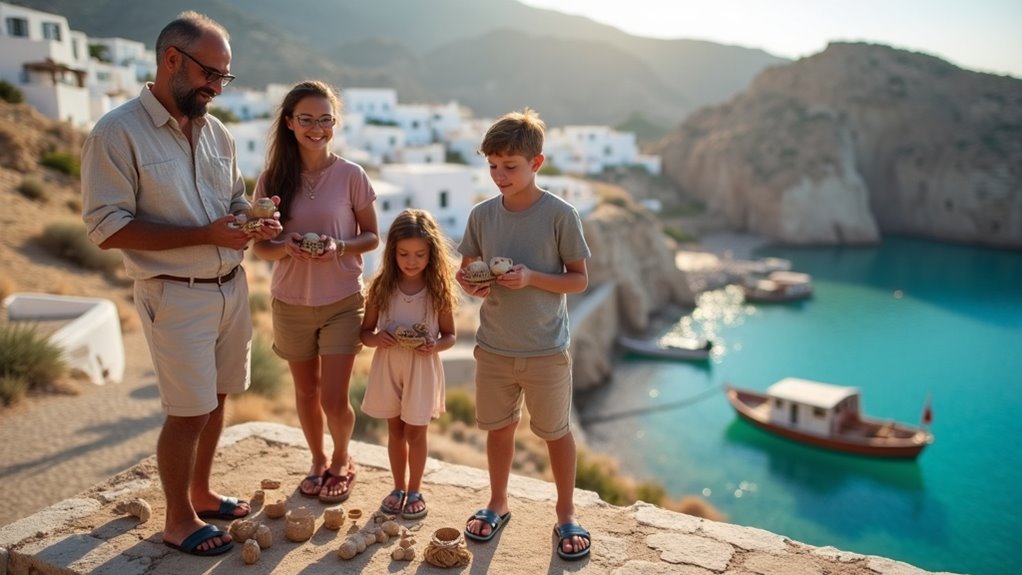
While traditional sightseeing often leaves kids fidgeting and bored, Greece’s best family tours transform ancient history into interactive adventures that captivate young minds. Book tours at Athens’ Acropolis Museum, where guides connect children with Greek mythology through engaging presentations.
Consider Santorini’s Akrotiri, the “Pompeii of Greece,” where kids explore actual ancient structures and discover how civilizations lived. Children can learn about ancient water systems and archaeological structures through these guided tours.
You’ll find cooking classes particularly effective—children learn traditional Greek cuisine through hands-on preparation while connecting to local culture. Farm visits on Mykonos offer direct agricultural experiences, letting kids interact with crops and animals while learning sustainable practices.
Sea turtle boat tours in Zakynthos provide marine biology education through glass-bottom boat observations. These guided experiences create lasting memories while teaching history, culture, and science naturally.
Prioritize Calm Beaches and Shallow Waters for Safe Swimming
After booking those memorable guided experiences, you’ll want to choose beaches where your children can safely enjoy Greece’s stunning waters. Look for beaches with gradual depth increases and crystal-clear visibility so you can monitor your kids while they explore.
Elafonisi in Crete offers knee-deep waters great for toddlers, while Avithos in Kefalonia provides calm conditions where many parents teach swimming.
Protected bays like Monastiri on Paros shelter families from strong Cycladic winds, and Lagada Beach on Kos combines shallow turquoise waters with natural tree shade. For convenient access from Athens, consider Megalo Kavouri, located just 16 km from Athens city center and easily reachable by metro and bus.
Choose beaches with on-site canteens and nearby restaurants so you won’t need to drag hungry children far for meals. These family-friendly spots ensure your little ones can safely experience Greece’s beautiful coastline.
Research Child-Friendly Boat Excursions With Snorkeling Opportunities
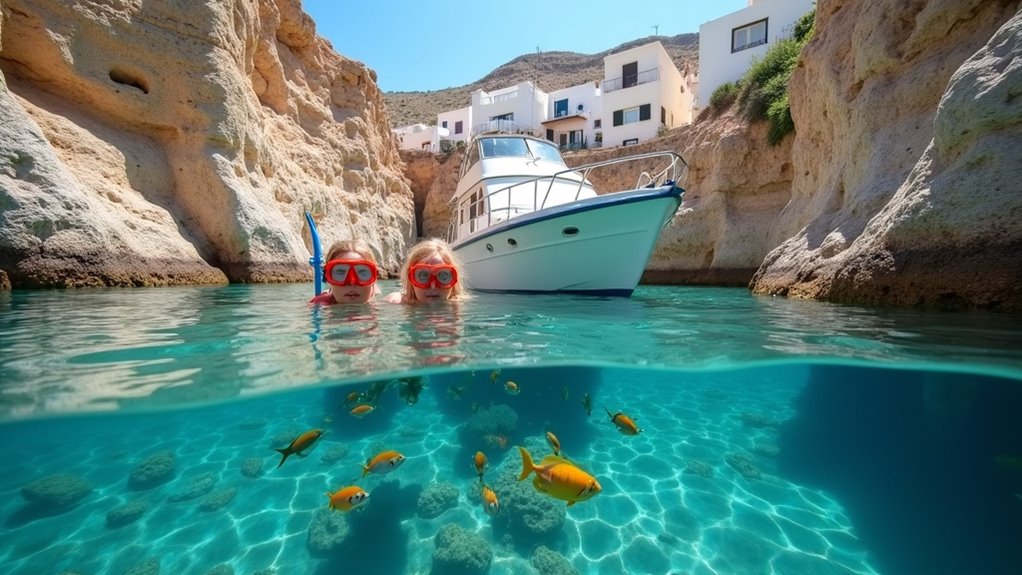
Once your kids master the calm shoreline waters, they’ll be ready for boat-based snorkeling adventures that reveal Greece’s underwater treasures. Family-friendly yacht charters provide professional crews trained in child supervision, ensuring safety during all water activities. You’ll find shorter sails in protected waters great for young explorers.
Consider Saronic Islands trips covering Aegina, Hydra, and Poros with customized 2-5 day itineraries. Private boats guarantee family-only groups for personalized experiences.
Cyclades small ship cruises welcome children aged 7+ and promote device-free water fun while friendships form during shared snorkeling sessions. These vessels typically accommodate 4 to 50 passengers, making them ideal for intimate family adventures.
Ionian Islands multi-adventure cruises combine boat excursions with island hopping, while Evia catamaran trips offer comfortable cabins and exciting lagoon visits that’ll thrill your young adventurers.
Maintain a Flexible Itinerary That Accommodates Nap Times
Even the most adventurous toddlers need their rest, so building flexibility around nap schedules will make or break your Greek island adventure. Plan ferry departures around natural sleep windows—early morning boats work well when kids doze during the journey.
Book accommodations with blackout curtains and quiet rooms for midday rest periods.
Don’t pack your schedule too tightly. Leave 2-3 hour gaps between major activities, allowing for unexpected meltdowns or extended naps. Consider splitting sightseeing into morning and late afternoon chunks, using the hottest part of the day for indoor rest.
Keep backup indoor activities ready—coloring books, tablets, or quiet toys work when weather disrupts outdoor plans. When booking island-to-island transportation, remember that weather can cause delays, so always have contingency plans for extended waiting periods with children. Remember, a well-rested child enjoys taverna dinners and beach time much more than an overtired one.
Rent Cars on Larger Islands for Convenient Family Exploration

While ferries work perfectly for smaller islands, renting a car transforms your family’s experience on larger destinations like Crete, Rhodes, and Naxos. You’ll discover hidden beaches, mountain villages, and authentic tavernas that tour buses can’t reach.
Choose compact cars for fuel efficiency on narrow roads, or opt for minivans accommodating 7-8 passengers with extra luggage space. SUVs handle rugged terrains beautifully when you’re exploring Crete’s interior or Rhodes’ mountainous regions.
Book early for automatic transmissions during summer months. You’ll find trusted providers like Rental Center Crete and Greek Eco Cars offering delivery to airports or hotels. Expect to pay €5-€15 daily in low season, rising to €40-€100 during peak summer.
Many companies offer free cancellation and no prepayment options. Having your own vehicle allows you to easily transport baby equipment like strollers and extra snacks, making travel more comfortable for families with young children.
Consider Weather Patterns and Seasonal Crowds When Booking Travel
Timing your Greek island adventure around weather patterns and tourist seasons can make or break your family vacation. Summer months from June to August offer ideal swimming conditions with sea temperatures reaching 25°C, but you’ll face maximum crowds and higher prices. June provides the driest weather with fewer travelers than July-August peak season.
Spring (March-May) delivers pleasant 15-25°C temperatures great for exploring with kids, while autumn maintains warm sea temperatures through October with fewer crowds. You’ll avoid the chaos of packed beaches and restaurants during these shoulder seasons.
Skip winter months when many businesses close, ferry schedules reduce, and rainy weather limits outdoor activities. November brings cooling temperatures with daytime highs around 14°C and nighttime lows near 8°C, marking the transition to the less favorable winter season.
Plan early morning visits to popular attractions during summer, or choose shoulder seasons for easier access to facilities and more relaxed island hopping.
The Sum Up
You’ve got the tools to make Greek island hopping with kids unforgettable. Remember, it’s not about seeing every sight—it’s about creating memories your family will treasure. Don’t stress if plans change or little ones need extra breaks. The islands aren’t going anywhere, and neither is your sense of adventure. Pack light, stay flexible, and let your kids’ curiosity guide you to hidden gems you’d never discover alone.