

You’ll save substantially by choosing Eastern European cities like Riga or Prague over expensive Western capitals. Travel mid-week and off-season for 20-30% savings on flights and accommodations. Book budget hotels in walkable city centers, use public transportation with family day passes, and dine at local markets where meals cost just €8-€10. Take advantage of hundreds of free attractions available in major cities, and avoid Eurozone destinations when possible. These strategies will help you discover how smart planning transforms expensive family trips into affordable adventures.
- Choose Eastern European Cities for Maximum Savings
- Travel Mid-Week and Off-Season for Lower Prices
- Book Budget Accommodations in Walkable City Centers
- Dine Like Locals to Cut Food Costs
- Take Advantage of Free and Low-Cost Attractions
- Use Public Transportation Instead of Taxis
- Avoid Eurozone Destinations When Possible
- Set a Realistic Budget and Track Your Spending
- Last Words
Choose Eastern European Cities for Maximum Savings

While Western European capitals continue to strain family budgets, Eastern European cities offer exceptional value without sacrificing cultural richness or memorable experiences. You’ll find destinations like Riga and Ljubljana emerging as top choices for savvy families, with markedly lower accommodation costs and dining expenses than their western counterparts.
These cities aren’t just budget-friendly—they’re less crowded, making sightseeing more enjoyable with children. Latvia’s tourist accommodation showed 7.4% growth in nights spent, while Poland recorded 5.2% increases, indicating rising popularity among travelers seeking affordability. Better flight connections now make these destinations more accessible than ever.
Central Eastern Europe’s 8% visitor growth outpaces Southern Mediterranean‘s 2%, proving families are discovering these hidden gems. You’ll stretch your euros further while creating unforgettable memories in historically rich cities.
Travel Mid-Week and Off-Season for Lower Prices
Timing your European city break strategically can slash your family’s travel costs by hundreds of pounds. You’ll save 20-30% on flights by choosing mid-week departures over weekends, while accommodation rates drop 15-25% for Tuesday-Wednesday check-ins.
Off-season travel delivers even bigger savings – flights to Vilnius cost just £30-£70 in winter versus peak season highs.
Cities like Riga and Warsaw offer complete breaks under £253 during off-peak periods. You’ll find three-star stays in Riga for £123 and Warsaw for £131 mid-week off-season. The stronger sterling against most European currencies this year makes these destinations even more affordable for UK families.
Meanwhile, peak season inflates costs dramatically – Dublin reaches £411 and Edinburgh £399.
Beyond savings, you’ll enjoy fewer crowds at attractions and restaurants without premium pricing, making your family trip more relaxed and affordable.
Book Budget Accommodations in Walkable City Centers
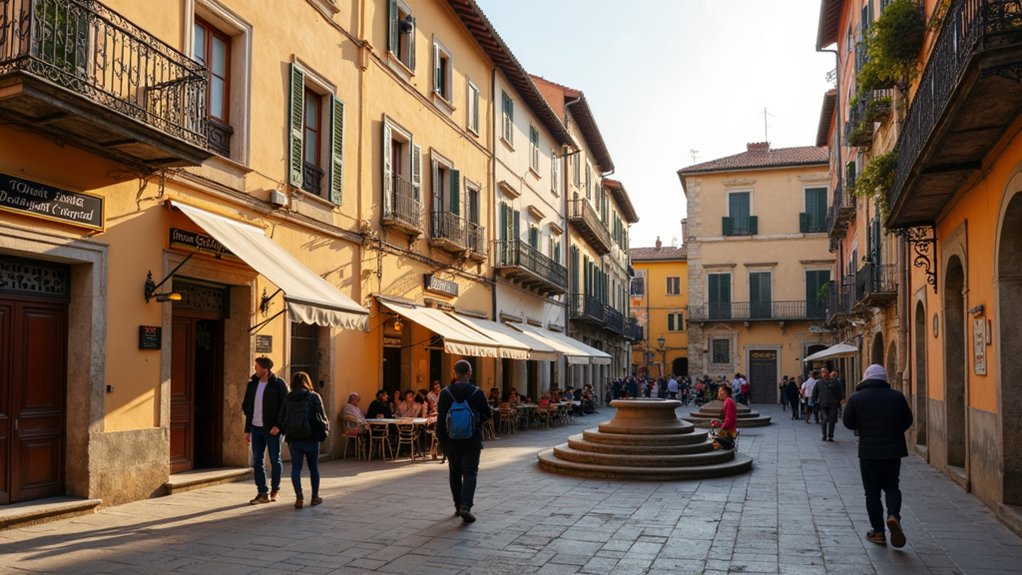
Your accommodation choice can make or break your family’s European city break budget, but you don’t need to sacrifice location for savings. Look for budget hotels and guesthouses in walkable city centers, where mid-range options typically cost €70–110 per night across Central Europe.
You’ll save markedly on transportation when major attractions are within walking distance.
Target neighborhoods 10–20 minutes from old town squares—you’ll save €20–50 per night while maintaining easy access to everything. Consider exploring smaller Polish cities like Rzeszow or Bialystok, which offer growing tech hubs and modern developments alongside traditional cultural attractions.
In Vienna, consider districts just outside the Ring like the 4th, 6th, or 7th for better value.
Prague offers exceptional overall value, with four-night getaways averaging €485.
Eastern European gems like Riga provide the lowest average hotel costs among major European destinations, making your family budget stretch further.
Dine Like Locals to Cut Food Costs
Food expenses can quickly devour your travel budget, but eating where locals dine transforms both your wallet and your family’s cultural experience. Skip tourist restaurants and head to traditional establishments where families actually eat.
In Prague, daily lunch specials cost just €8–€10 for soup, main dish, and beer. Belgrade’s kafanas serve complete meals for two—including mixed grill, salads, drinks, and dessert—for €30–€35.
Local bakeries offer incredible value: burek (flaky pastries) costs €1.50–€2.50 across Eastern Europe. Markets provide affordable alternatives to restaurant dining, with Budapest and Warsaw offering Europe’s cheapest grocery prices. A €100 grocery basket from New York would cost just €37 in Budapest, making self-catering an incredibly economical option for families.
Even expensive cities like Paris become manageable when you shop at local markets and bistros instead of tourist traps.
Take Advantage of Free and Low-Cost Attractions

While expensive admission fees can drain your family’s travel fund, Europe’s major cities offer remarkable free attractions that rival their paid counterparts. Rome leads with 553 free attractions, including the Pantheon and Trevi Fountain.
London’s 487 free sights feature world-class museums like the British Museum and Tate Modern. In Paris, you’ll find 394 free attractions plus monthly free museum days.
Don’t overlook free guided tours—Barcelona offers 164, while Lisbon provides 140. Prague’s Astronomical Clock performs hourly shows in Old Town Square, and you can explore Prague Castle grounds without fees.
Amsterdam hosts 721 free events throughout the year. For families seeking the most cost-effective destinations, consider Granada where a 24-hour travel card costs just €1.23, making it easy to explore the city affordably.
Plan around free entry times: Barcelona’s MNAC is free Saturday afternoons, and many cities offer complimentary museum access on specific days.
Use Public Transportation Instead of Taxis
When you’re steering Europe’s cities with your family, public transportation becomes your secret weapon for slashing travel costs while keeping everyone comfortable. You’ll spend 2-3 times less than taxis, with public transport fares averaging just €1.50-€3 per ride versus taxi minimums of €5-€10. Family day passes cost €10-20 total, compared to €50+ for equivalent taxi rides.
European cities are designing family-friendly features that’ll surprise you. Finland’s trains include playgrounds on double-decker carriages, while Czech Republic offers cinema compartments for kids. Barcelona’s superblocks prioritize pedestrian safety, and Vienna’s expanding metro lines focus on high-capacity family services. Using reliable public transport ensures your family can reach destinations efficiently, especially when traveling between urban and rural areas during holidays.
With night trains accommodating strollers and cities investing billions in network expansion, you’re choosing predictable, sustainable travel that stretches your budget markedly further.
Avoid Eurozone Destinations When Possible
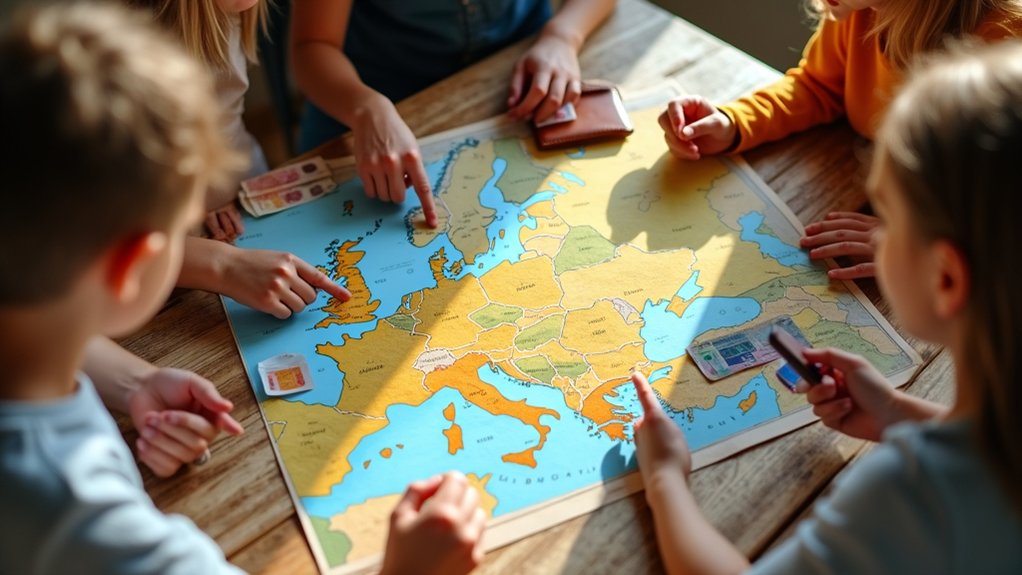
Since your family’s vacation budget stretches dramatically further outside the Eurozone, you’ll discover that non-euro destinations offer the same rich European experiences at a fraction of the cost.
Prague’s affordable food and accommodation rival any Western European capital, while Krakow provides endless family activities in its vibrant center without breaking the bank.
Budapest delivers free attractions like the Government Building and St. Stephen’s Bastion, great for budget-conscious families.
In the Balkans, Plovdiv offers museum entries for just 2-3€, and Montenegro’s day tours start at only 12€ per person.
Even beach destinations like Varna, Bulgaria provide seaside holidays for 30-50€ daily—far less than comparable Mediterranean spots using euros.
Sofia stands out as one of the cheapest European capitals for city breaks, offering families excellent value with its affordable dining and accommodation options.
Set a Realistic Budget and Track Your Spending
Once you’ve identified your ideal destination, creating a realistic budget becomes your foundation for a stress-free family city break. Start by calculating daily costs—Switzerland demands $359 per person while Croatia offers relief at $128.
Most UK families budget around £2,005 for holidays, but here’s the reality check: 73% overspend by 55% on average.
Factor in your biggest budget busters. Food and drinks cause 68% of families to exceed budgets, with parents spending £378 on eating out alone.
You’ll likely spend £202 on children’s beach items and miscellaneous purchases.
Track everything religiously since 90% admit unplanned food and beverage spending. Remember that holiday costs are 18% higher during school holidays, so consider traveling during off-peak periods to maximize your budget.
Consider that 83% prioritize destination over strict budgets, but vigilant monitoring prevents the common 42% overspend on treats.
Last Words
You’ve got all the tools you need to make your European family adventure both memorable and affordable. Don’t let budget fears hold you back from exploring incredible cities with your loved ones. Start planning with these strategies in mind, and you’ll discover that amazing family experiences don’t require breaking the bank. Pack your bags, grab your family, and get ready to create lasting memories without the financial stress.