
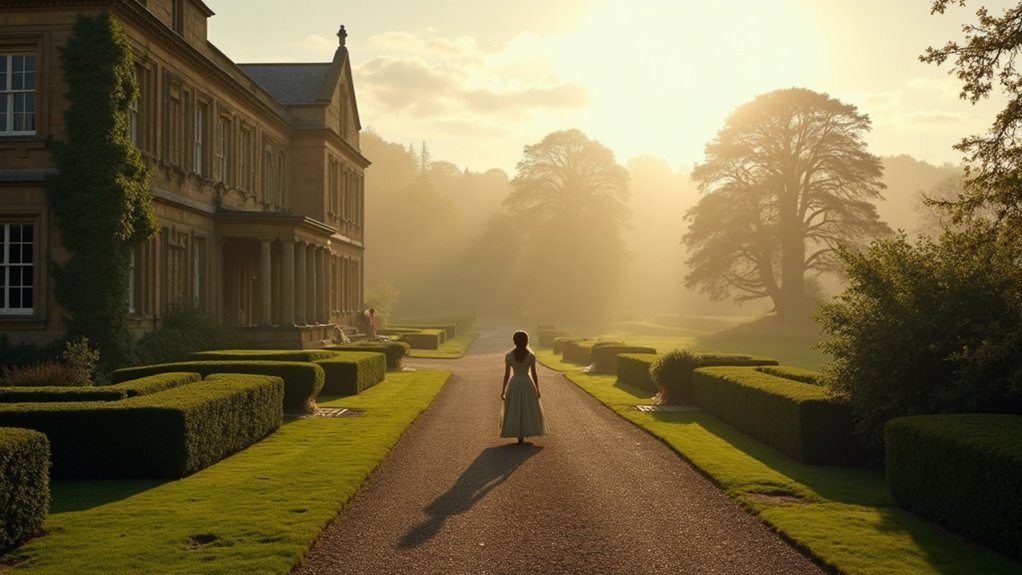
You’ll discover Jane Austen’s world through twelve enchanting locations across England, from her birthplace at Steventon Village to the grand Assembly Rooms in Bath where she socialized. Visit Chawton Cottage where she wrote all six novels, explore Lacock Village’s film locations from Pride and Prejudice adaptations, and walk through Stoneleigh Abbey’s aristocratic halls that inspired Northanger Abbey. These sites offer book-loving teens authentic connections to Regency England and the landscapes that shaped literature’s most beloved novelist’s imagination and stories.
- Steventon Village: Where Jane Austen’s Story Began
- St Nicholas Church Steventon: The Baptism Site
- Bath’s Georgian Splendor: Living Among High Society
- Jane Austen Centre: Immersive Georgian Experience
- Chawton Cottage: The Writing Sanctuary
- Chawton House and Grounds: Family Connections
- Chatsworth House: Stepping Into Pemberley
- Peak District Landscapes: Elizabeth’s Walking Tours
- Stoneleigh Abbey: Grand Estate Life
- Lacock Village: Television Magic Comes Alive
- Assembly Rooms and Pump Room: Dancing and Society
- Literary Pilgrimage Route: Connecting All Six Novels
- Last Words
Steventon Village: Where Jane Austen’s Story Began
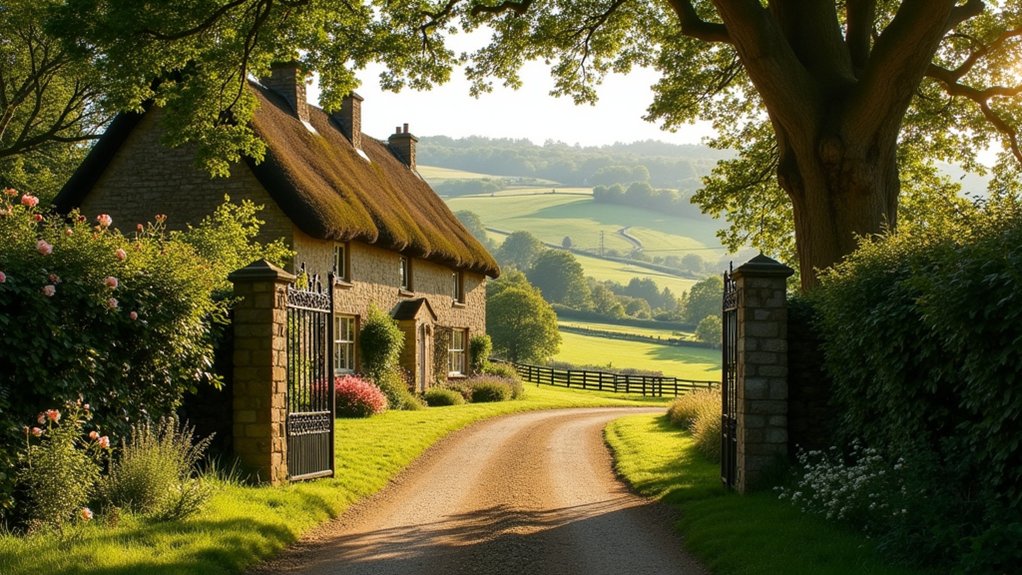
Though the original rectory was demolished in the 1820s, you can walk the same lane the Austen family traveled to church, flanked by fields and trees.
A lime tree marks the rectory site, planted by Jane’s brother James.
The grassy slope behind the former house inspired descriptions in Northanger Abbey.
This untouched landscape offers quiet reflection on her creative childhood. Jane spent her first 25 years in this village, making it the longest period she lived anywhere during her lifetime.
St Nicholas Church Steventon: The Baptism Site
Where does a literary pilgrimage begin if not at the very place where Jane Austen entered the world? St. Nicholas Church Steventon marks where Jane’s spiritual journey started with her baptism reception on April 5, 1776—her first public appearance at under four months old.
You’ll find this medieval church largely unchanged since Austen’s time, built around 1200 A.D. Notice the ancient scratch dials on exterior walls and carved faces flanking the main door. The church tower contains three bells, with the oldest cast in 1470. The Austen family maintained over 100 years of clergy leadership here, with George, James, and Henry Austen serving as rectors.
Walk through the churchyard to discover James Austen’s grave and Jane’s maternal grandmother’s memorial in the chancel floor. This intimate country church perfectly captures the family’s deep religious roots.
Bath’s Georgian Splendor: Living Among High Society
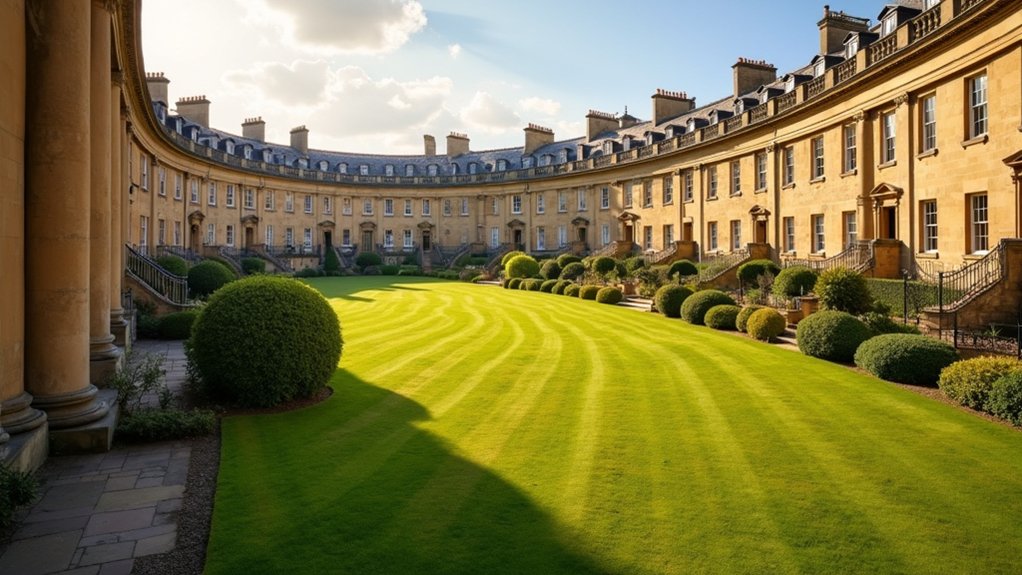
After Jane Austen’s family moved to Bath in 1801, she found herself immersed in the city’s glittering social world—a setting that would profoundly shape her literary voice.
You’ll discover this elegant Georgian backdrop by exploring the Royal Crescent, where Austen’s characters would’ve mingled among high society. Walk along the sweeping curve of 30 terraced houses, admiring the 114 Ionic columns that create Bath’s most iconic view.
Don’t miss The Circus, with its three crescent-shaped terraces, and the Assembly Rooms where Austen attended balls that inspired scenes in *Northanger Abbey* and *Persuasion*. The Upper Rooms still showcase their original chandeliers and Regency-era decor from the fashionable gatherings Austen would have attended.
As you stroll Great Pulteney Street‘s Georgian facades, you’re experiencing the same social hierarchy and architectural grandeur that influenced Austen’s keen observations of class and society.
Jane Austen Centre: Immersive Georgian Experience
To fully learn about Austen’s world, step into the Jane Austen Centre at 40 Gay Street—just doors away from where the author lived in 1805. This Grade II listed Georgian building transforms your teens into Regency characters through period costume dress-ups and interactive experiences with actors portraying Austen’s famous characters.
They’ll write with quill pens, taste Regency foods, and snap photos with Austen’s waxwork figure. The permanent exhibition reveals how Bath influenced her novels, while guided walking tours explore locations from her books. The life-size wax model was meticulously crafted using forensic techniques and contemporary descriptions to create the most accurate representation possible of the beloved author.
Don’t miss the Regency Tea Rooms for authentic refreshments.
If you’re visiting in September, you’ll catch the annual Jane Austen Festival—the world’s largest celebration featuring costumed parades and summer balls throughout the city.
Chawton Cottage: The Writing Sanctuary

While the Jane Austen Centre offers an immersive experience, nothing compares to standing in the actual rooms where Austen penned her masterpieces.
At Chawton Cottage in Hampshire, you’ll walk through the two-storey farmhouse where Jane spent her final eight years writing all six novels. This former coaching inn became her sanctuary after years of financial instability, providing the peace she needed to restore her imagination.
You’ll see her original twelve-sided walnut writing desk—scarcely larger than a dinner plate—where she revised earlier works and composed new novels including Mansfield Park.
The cottage’s 17th-century structure remains preserved, surrounded by farmland that evokes the period atmosphere. The house was built around 500 years ago as a farmhouse and coaching inn, establishing its deep historical roots in the English countryside. This treasured site represents Austen’s most prolific and happiest period, making it essential for book-loving visitors.
Chawton House and Grounds: Family Connections
The restored gardens showcase late 18th-century style with informal lawns and terraces. Don’t miss the walled garden at the highest point, which Edward built and Jane referenced in her 1813 correspondence.
Between the house and road, you’ll find St Nicholas Church, where Cassandra Austen and their mother rest in the churchyard—a poignant connection to Jane’s beloved family. The small grey stone building has origins dating back to at least 1270, though it was rebuilt after a fire in 1871.
Chatsworth House: Stepping Into Pemberley
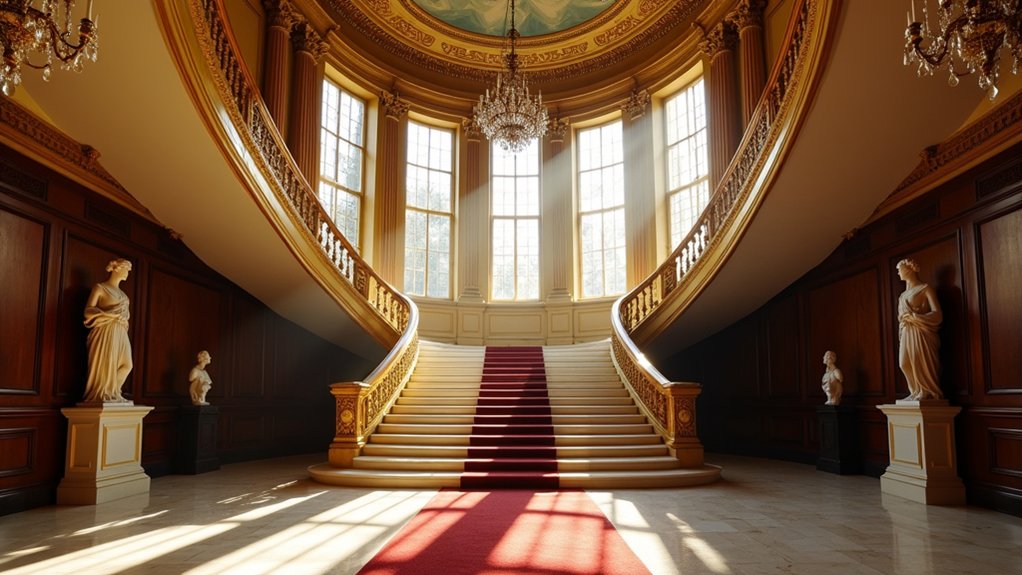
When Elizabeth Bennet first glimpses Pemberley in *Pride and Prejudice*, she’s struck by its natural beauty and elegant proportions—a reaction you’ll likely share when approaching Chatsworth House in Derbyshire’s Peak District.
Jane Austen visited Chatsworth in 1811 while revising her manuscript, and the estate’s description matches Pemberley perfectly: a handsome stone building on rising ground, backed by woody hills and bordered by the River Derwent.
Your teens will recognize Chatsworth from the 2005 film adaptation, where the Sculpture Gallery and Painted Hall served as Pemberley’s interiors.
You can explore over 100 acres of Capability Brown landscapes, view Austen first editions in the Devonshire Collection, and walk the same rooms where Elizabeth discovered Darcy’s true character. Austen named Darcy’s sister Georgiana, possibly as a tribute to the real Duchess Georgiana Cavendish who lived at Chatsworth.
Peak District Landscapes: Elizabeth’s Walking Tours
Beyond Chatsworth’s manicured gardens, Elizabeth Bennet’s true adventures unfold across the rugged Peak District moorlands—and you can follow her exact footsteps through some of England’s most dramatic countryside.
Start at Stanage Edge, where Keira Knightley filmed her daydreaming scene overlooking the Derwent Valley. The four-mile gritstone ridge offers windswept views of Mam Tor and Kinder Scout, just a short climb from Hathersage village. The area’s popular climbing routes have made it a favorite destination for outdoor enthusiasts seeking both literary connections and adventure.
Explore Bakewell Town‘s cobbled streets, where Austen stayed in 1811 while finishing Pride and Prejudice. The market town inspired Lambton, complete with the historic Rutland Arms Inn where Elizabeth receives Lydia’s elopement letter.
Don’t miss Longnor Village, the BBC’s Lambton location, with its Georgian elegance and Old Bull Inn perfectly capturing Austen’s quintessential English countryside.
Stoneleigh Abbey: Grand Estate Life
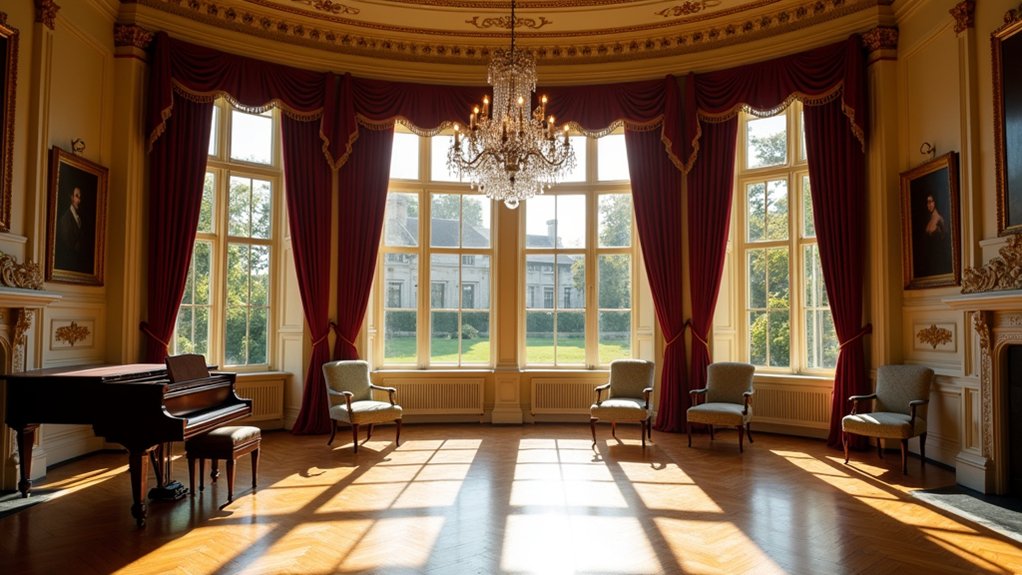
The estate’s mixed architectural styles directly influenced *Northanger Abbey’s* atmospheric settings, while Humphry Repton’s landscape designs showcase the period’s garden artistry.
As you tour the horseshoe staircase and formal wings, you’ll understand how this family connection to the wealthy Leigh relatives provided Jane with intimate knowledge of aristocratic life, enriching her novels with authentic detail. Jane carried her Pride and Prejudice manuscript during her transformative 1806 visit to this grand estate.
Lacock Village: Television Magic Comes Alive
Stepping into Lacock Village feels like entering a perfectly preserved film set, which isn’t surprising since this 13th-century Wiltshire gem has starred in countless period dramas. Your teens will instantly recognize the High Street from Pride and Prejudice, where the Bennet sisters shopped for bonnets and encountered Wickham and Darcy.
The Red Lion, which doubled as Meryton Assembly Room, still welcomes visitors today.
You’ll find St Cyriac’s Church familiar from Emma’s wedding scenes, while the George Inn displays filming photos over lunch. Lacock Abbey was also used for Darcy’s flashback scenes to Cambridge in the 1995 adaptation.
The National Trust’s careful preservation means these stone cottages haven’t changed in 200 years, creating an authentic Regency atmosphere that brings beloved book scenes to life for young Austen fans.
Assembly Rooms and Pump Room: Dancing and Society
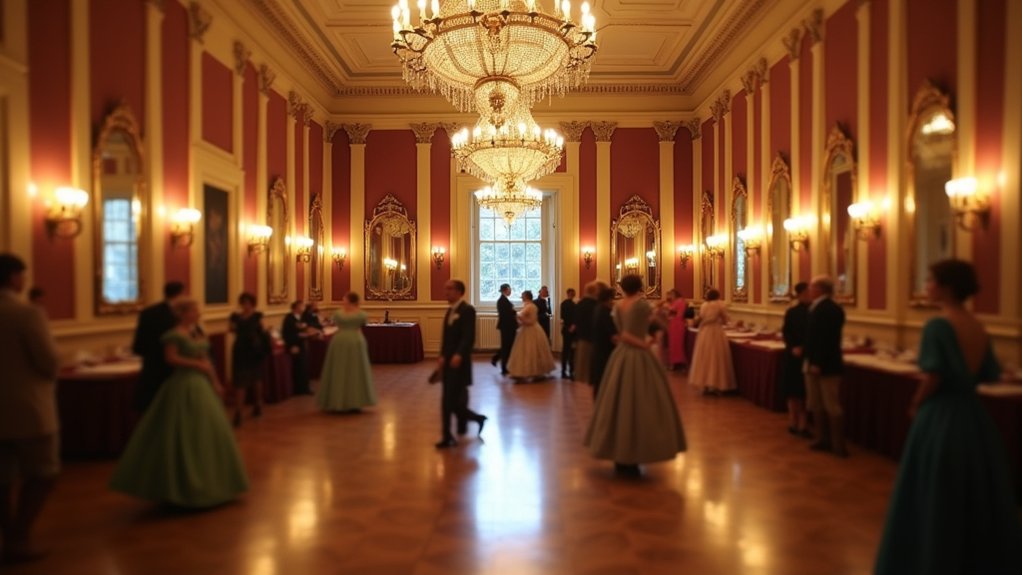
While Lacock Village offers cinematic charm, Bath’s Assembly Rooms and Pump Room represent the authentic heart of Regency social life that Austen knew intimately. You’ll walk through the same elegant spaces where Austen herself attended balls and concerts from 1801-1805.
The magnificent ballroom, stretching 100 feet with original crystal chandeliers, hosted twice-weekly balls that drew 800 people including nobility.
Your teens will recognize these rooms from Northanger Abbey and Persuasion, where Austen drew from personal experience to create her memorable scenes. The octagonal room and tea room showcase Georgian society’s sophisticated entertainment.
Though the Lower Rooms burned down in 1820, these Upper Assembly Rooms survive as Bath’s premier social venue, perfectly preserved for modern visitors. The entire building is constructed from distinctive Bath stone, quarried from the nearby Combe Down and Bathampton Down Mines.
Literary Pilgrimage Route: Connecting All Six Novels
Beyond individual landmarks, you can trace Jane Austen’s entire literary journey through interconnected pilgrimage routes that span her six beloved novels. Start with the 9-mile Steventon Birthplace Circuit from Overton, where Pride and Prejudice, Sense and Sensibility, and Northanger Abbey came to life. You’ll walk the same fields Austen knew for 25 years, visiting St. Nicholas Church and Cheesedown Farm.
Continue along the Oxford to Bath Walking Trail, a multi-day adventure covering 29 miles through Bibury and Tetbury. End in Bath at the Roman Baths and Sydney Gardens Jane Austen Trail.
The Great West Way extends your pilgrimage to Lyme Regis’s Cobb breakwater from Persuasion, while Hampshire’s literary road trip connects Winchester Cathedral and Chawton’s museum, completing your all-encompassing Austen experience. The scenic route passes ancient oak trees that have stood since Austen’s time, creating an authentic connection to the landscapes that inspired her writing.
Last Words
You’ll find that visiting these Jane Austen locations transforms reading her novels from homework into adventure. Your teens won’t just analyze Pride and Prejudice—they’ll walk through actual Georgian streets and imagine Elizabeth Bennet’s footsteps. Pack comfortable shoes, bring the books along, and don’t forget your camera. These aren’t just tourist stops; they’re gateways into Austen’s world that’ll make her witty social commentary feel immediate and real for today’s young readers.