
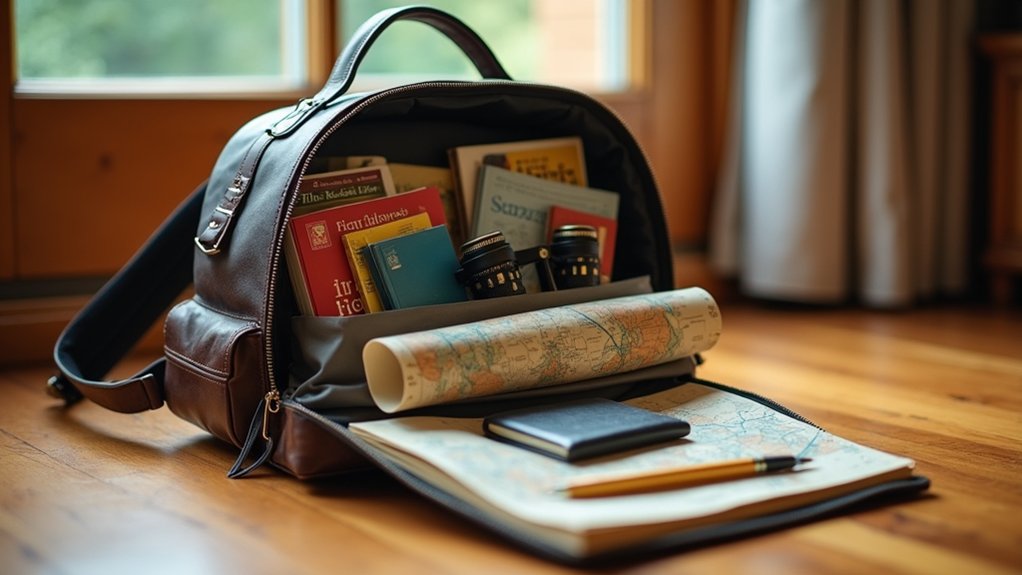
Start by thoroughly researching your destination’s educational opportunities and creating a detailed timeline of relevant historical events. Choose cost-effective locations that fit your schedule constraints, prioritizing museums, national parks, or cultural sites. Engage children in pre-trip learning through maps, vocabulary, and destination-specific activities. Document experiences with journals, photos, and artifacts while observing what captures their interest. Extend learning through post-trip projects, cooking local recipes, and converting observations into ongoing curriculum that reinforces classroom concepts throughout the year.
- Research Your Destination Thoroughly Before You Go
- Choose Destinations That Fit Your Time and Budget Constraints
- Engage Children in Pre-Trip Learning Activities
- Create Meaningful Educational Experiences On-Site
- Document the Journey Through Multiple Methods
- Observe and Note What Captures Your Children’s Interest
- Extend Learning Through Post-Trip Activities and Projects
- Convert Travel Experiences Into Ongoing Curriculum Components
- Last Words
Research Your Destination Thoroughly Before You Go
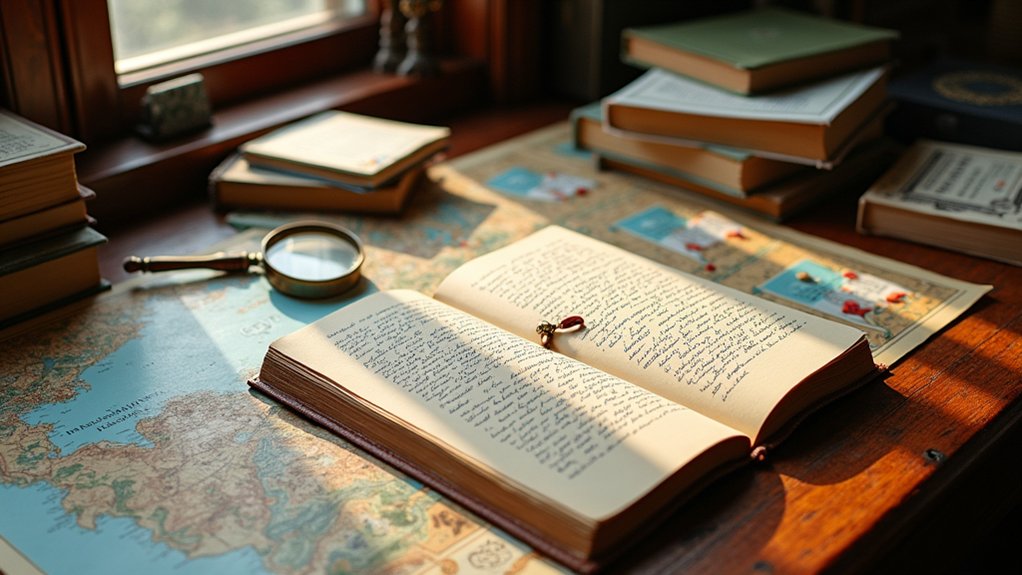
Before you pack your bags, diving deep into your destination’s history, culture, and educational opportunities will guarantee your family trip from a simple vacation into a rich learning adventure.
Start by researching your destination’s physical and social environments to understand what educational experiences await. Compare different transportation options as a family decision-making exercise, weighing costs and logistics together. Create a chronological timeline of major historical events and periods relevant to your destination, so you won’t miss key moments when visiting historical sites.
Read books and watch documentaries about the local culture beforehand. Research ancestry connections—you might discover ancestral villages to visit or relatives to meet. Outline your complete itinerary, including museums, capitol buildings, and cultural attractions. Download language learning apps to practice basic phrases in the local language, which will enhance communication and show cultural respect during your travels.
This thorough preparation assures every family member understands the educational value you’ll encounter.
Choose Destinations That Fit Your Time and Budget Constraints
While your destination research provides the educational foundation, choosing a location that aligns with your family’s time and budget constraints will determine whether your trip actually happens. Start by evaluating your schedule—school holidays offer more flexibility, while term-time trips work best for shorter 3-5 day itineraries to museums or nearby educational sites.
With families spending an average of $4,580 per trip, prioritize cost-effective options. Beach destinations top family preferences at 62% and often fit modest budgets. Visiting relatives ranks second at 61%, dramatically reducing accommodation costs.
Consider educational spots like national parks or city museums that offer enriching experiences without premium pricing. Many families now prioritize flexible cancellation policies when booking, with 80% of travelers preferring this option to protect their investment.
Let your kids influence the decision—87% of parents report this approach keeps trips within budget while boosting engagement.
Engage Children in Pre-Trip Learning Activities
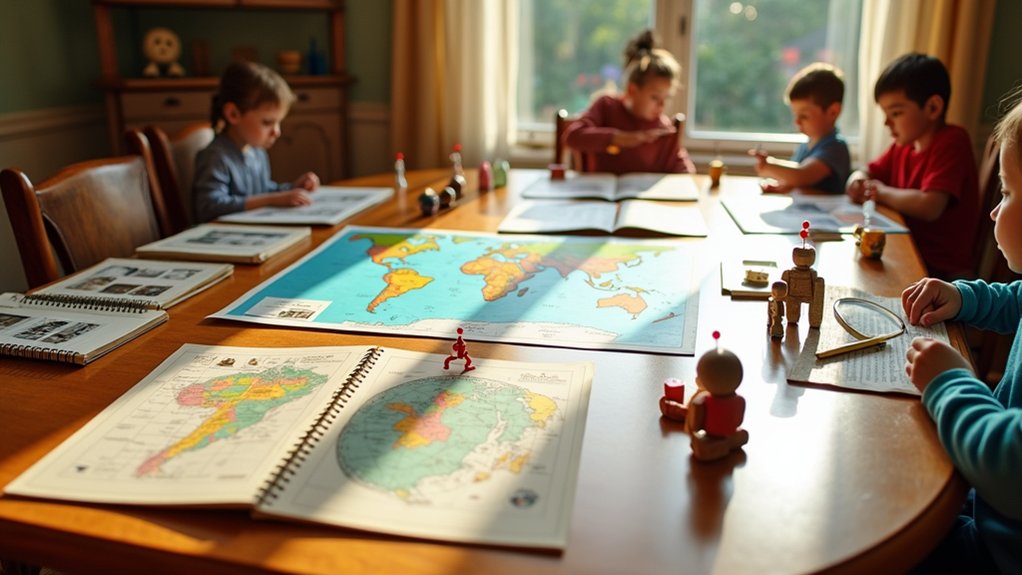
Once you’ve locked in your destination, transform anticipation into education by getting your children actively involved in learning about where you’re headed. Start by discussing trip logistics—share maps, itineraries, and what they’ll experience. This reduces anxiety and helps kids mentally prepare for the adventure ahead.
Next, introduce relevant vocabulary and subject matter they’ll encounter. If you’re visiting a science museum, explore basic concepts beforehand. Check if your destination provides educational materials like lesson plans or activities—about one-third of sites offer these resources to align preparation with actual experiences.
Include hands-on activities that build confidence and foundational knowledge. Visual learning methods help children retain information better when they engage with content face-to-face. Pre-trip instruction combined with follow-up activities significantly improves the educational effectiveness of your family adventure. This preparation enhances engagement and maximizes learning outcomes during your family trip.
Create Meaningful Educational Experiences On-Site
When you arrive at your destination, shift from passive sightseeing to active participation that engages your children’s natural curiosity. Choose museums offering hands-on experiences over traditional displays, and prioritize interactive exhibits that encourage exploration.
At natural destinations, guide your children through environmental discovery activities that develop problem-solving skills and adaptability. Balance educational goals with their interests—if they’re excited about water activities, incorporate swimming or beach exploration that combines fun with learning about marine ecosystems.
Encourage multi-sensory engagement by letting them touch, smell, and actively participate in cultural experiences. Whether you’re visiting historical sites or participating in agritourism, ask questions that prompt critical thinking. Consider exploring soft adventure activities like hiking or fishing that blend physical engagement with environmental learning.
These active learning approaches create lasting memories and improve academic achievement while developing communication skills and confidence that textbooks simply can’t provide.
Document the Journey Through Multiple Methods
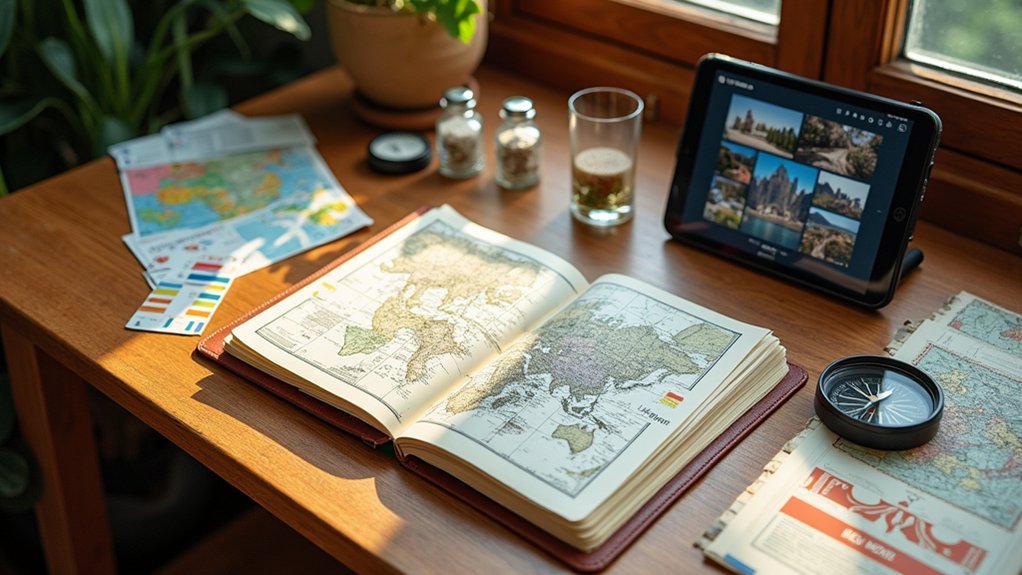
Beyond simply experiencing educational destinations, you’ll want to capture these learning moments through deliberate documentation that transforms temporary experiences into lasting educational resources. Give your children notepads or sketchpads with clear guidelines about what to observe and record. Create country notebooks that combine journals, postcards, ticket stubs, and art experiences to demonstrate cross-curricular learning. Purchase one postcard daily and have children document what they learned that day.
Designate responsible family members to handle photography while you focus on managing activities. Create scrapbooks incorporating photos alongside boarding passes, museum tickets, and maps. Focus on photographing children engaging with destinations rather than just capturing landmarks.
Collect themed artifacts like regional items or historical objects to create “show and tell” materials for sharing discoveries. Use these documented experiences to create comprehensive follow-up work such as detailed trip reports that reinforce learning long after returning home.
Observe and Note What Captures Your Children’s Interest
While capturing memories matters, paying attention to what naturally draws your children’s attention will guide you toward the most meaningful learning opportunities. Watch which exhibits spark questions at science centers or what wildlife captures their focus during nature walks.
Notice if they’re drawn to hands-on demonstration zones at children’s museums or fascinated by manufacturing processes during factory tours.
Take mental notes when they linger at specific displays or repeatedly ask about certain topics. Their natural curiosity reveals genuine interests you can build upon.
If they’re captivated by rock formations during hikes or spend extra time collecting shells at the beach, follow their lead. These observations help you tailor future trips and identify learning opportunities that align with their developing passions and strengths. Consider involving children in planning the next destination by asking what excites them most about potential locations.
Extend Learning Through Post-Trip Activities and Projects

Once you’ve returned home, transform your travel experiences into engaging projects that cement what your children learned. Create a thorough memory book by compiling tickets, postcards, and photos alongside written reflections from daily observations. Include pressed leaves or other mementos from nature visits you made together.
Replicate cooking class recipes you learned during your trip, or organize craft workshops that mimic local artisan techniques you observed. Build models of farm structures or ecosystems you visited to reinforce hands-on learning.
Turn local legends into family performances or illustrated books. Research additional folklore online to extend storytelling sessions. Set up home terrariums inspired by trip ecosystems, and edit photo essays highlighting key facts from each location you explored together.
Practice the basic phrases you learned abroad during daily family activities to maintain language skills and cultural connections.
Convert Travel Experiences Into Ongoing Curriculum Components
Transform your family’s travel memories into structured learning opportunities that extend far beyond the trip itself. You’ll want to map your experiences to specific curriculum frameworks, creating measurable learning outcomes that align with your children’s educational goals. Document observations through digital planners and maintain detailed notes during travel—these become valuable resources for cross-curricular assignments.
Convert hands-on experiences into ongoing projects. If you explored ecosystems, continue species identification studies at home. Geography lessons can incorporate landscape mapping techniques you practiced abroad. Cultural interactions become springboards for language learning and sociology discussions. This approach leverages the principle that active participation leads to significantly higher retention rates compared to traditional classroom methods.
Create structured narratives from your experiences to enhance literacy skills. Use captured snapshots and real-time observations as foundation materials for science, geography, and humanities modules that’ll reinforce learning throughout the academic year.
Last Words
You’ve got the tools to turn any family trip into a powerful learning adventure. Don’t stress about making everything perfect—focus on your children’s natural curiosity and build from there. Remember, the most meaningful education happens when you’re genuinely engaged together. Start small with your first educational trip, then expand as you discover what works best for your family’s unique learning style and travel preferences.