This Waters of Katrina History Tour offers a thoughtful look into how water has shaped New Orleans, both in its beauty and its struggles. If you’re curious about the city’s relationship with floods, storms, and the mighty Mississippi, this tour could be a compelling way to learn beyond the usual tourist spots.
What makes it appealing? First, it provides a clear, focused narrative on the natural and man-made challenges the city has faced, especially around Katrina.
Second, it offers a chance to see several iconic locations with insightful commentary that ties history to the city’s ongoing story.
However, it’s worth noting that this is a relatively short, 2-hour experience, and not a deep dive into every aspect of New Orleans’ water issues. The stops are brief, and the tour is designed more as an overview rather than exhaustive exploration. If you’re expecting detailed historical lectures or a slow-paced, in-depth tour, this might not be the best fit.
But if you’re looking for a compact, well-organized introduction that links water and city life, this tour could be just right.
It’s especially suited for travelers interested in history, urban resilience, or those who want a meaningful perspective on how water has shaped NOLA.
Key Points:
– Concise and focused: It offers a compact overview of New Orleans’ water-related history in just two hours.
– Educational stops: The tour includes significant sites like Jackson Square and the French Market, blending cultural insights with water history.
– Free access at key locations: Most stops are free to explore, making the tour both affordable and easy to follow.
– Insightful commentary: Guides discuss the city’s flood history, storm innovations, and how water impacts daily life.
– Group size and convenience: Small group setting (max 14 travelers) enhances interaction and comfort.
– Accessible location: Starts conveniently at Decatur Street near public transit options.
A Close Look at the Waters of Katrina History Tour
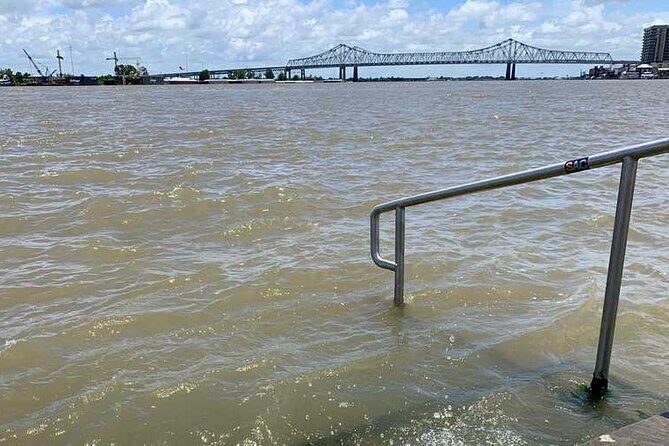
This tour starts in the lively heart of New Orleans, at 768 Decatur Street, and takes you on a journey through some of the city’s most historic and water-centric sites. It’s designed to give you a sense of how water, both as a vital resource and a destructive force, has influenced the city’s development.
What the Tour Explores
Most travelers are drawn to New Orleans for its vibrant music, food, and culture, but behind that lively surface lies a city constantly battling water. This tour’s focus on flooding, storm preparedness, and water infrastructure makes it particularly relevant, especially considering the impact of Hurricane Katrina. It’s a deeper look into those water-related challenges that often go unnoticed when simply wandering through the French Quarter.
You can also read our reviews of more historical tours in New Orleans



The Itinerary Breakdown
Stop 1: Mississippi River
The tour begins with the Mississippi River, a natural giant that has carved the city’s identity. We loved the way guides explained how the river powers New Orleans’ trade, tourism, and economy. But it also highlights the dangers — floods have always been part of the city’s fate. You’ll get a sense of how the river is both a blessing and a curse.
What to expect: Expect a brief but pointed discussion about the river’s dual role. It’s a great starting point because it frames the entire water story of New Orleans.
Stop 2: Latrobe Park
Next, the tour visits Latrobe Park, named after Benjamin Latrobe, who built the city’s first water system. Here, we appreciated the historical context, understanding how early water infrastructure was crucial for survival and growth.
What to expect: A quick stop that connects the city’s colonial past with its ongoing water challenges.
Stop 3: Woldenberg Riverfront Park
The transformation of what used to be flood walls and warehouses into Woldenberg Riverfront Park is a visual reminder of urban adaptation. Originally a gritty industrial zone, it now offers green space and art, symbolizing resilience.
Expect: A chance to see how land use has evolved, and how the city’s relationship with water continues to shape its landscape.
Stop 4: Jackson Square
This iconic square is the city’s heart, laid out in 1721. We loved hearing stories about its history as we took in the architecture and lively atmosphere. It also offers a perfect backdrop for understanding the colonial roots of New Orleans.
Highlights: The guide discusses how flood protection efforts have been ongoing since the city’s founding, tying into the water narrative.
Stop 5: French Market
Originally a Native American trading post, the French Market has evolved into a hub of multicultural commerce. It’s a wonderful spot to see how diverse influences have shaped the city’s culture.
Expect: An overview of how trade and water routes support local life, with stories of European, African, and Caribbean communities.
Stop 6: French Quarter
The final stop is the French Quarter itself. Here, we spent the most time — about 45 minutes — exploring the neighborhood’s architecture and history. The guide shared how the French and Spanish built levees to tame the Mississippi, but as Mark Twain famously said, the river always has its own way.
What you’ll take away: The ongoing struggle between man-made defenses and natural forces, especially as floods continue to threaten the city.
The Group Experience
The tour is capped at 14 people, which makes for a more intimate experience. It starts promptly at 10 am, so arriving on time is key. The small size allows for easy questions and more personalized interaction. The tour is also mobile-ticketed, so you can quickly check in without hassle.
How Does It Feel?
Most reviews haven’t been published yet, but based on the structure and content, expect a laid-back, informative walk. The pace is manageable, and the stops are short enough to keep your interest high. The focus on history and water makes it particularly engaging for those who like learning about how cities adapt to natural challenges.
The Value Proposition
At $30 per person, this tour is quite reasonable for what it offers. Given the short duration, it’s a great way to get a curated, insightful overview of New Orleans’ water saga without committing to a full-day experience. Plus, the fact that most stops are free to explore afterward makes it a flexible and budget-friendly option.



Practical Tips
- Wear comfortable shoes for walking.
- Bring sunscreen or a hat if it’s sunny.
- Arrive a few minutes early to start on time.
- If you’re especially interested in flood history or urban resilience, you’ll find this tour particularly satisfying.
- It’s accessible near public transit, which is handy for those staying downtown.
Is This Tour Right for You?
If you’re fascinated by how cities fight water and floods, or want to understand New Orleans beyond the touristy facades, this tour delivers. It’s not a comprehensive flood control lesson, but it offers enough context to change the way you see the city. Families with older children interested in history might find it engaging, but it’s not specifically tailored for kids.
If you prefer in-depth, slow-paced explorations, you might find the two-hour structure a bit brisk. But for those who want a quick, meaningful overview, it hits the mark.
Waters of Katrina History Tour
FAQs
How long is the Waters of Katrina History Tour?
It lasts approximately 2 hours, making it a good option if you want a quick yet informative experience during your day.
Where does the tour start and end?
It begins at 768 Decatur Street and finishes back at the same point, which is convenient for planning your day.
Is the tour suitable for all ages?
Most travelers can participate, and it’s a good introduction for those interested in history and water issues. It’s not specifically marketed as family-friendly, but older children might enjoy it.
What is the group size?
The maximum is 14 travelers, ensuring a more personal experience with your guide.
Can I cancel if my plans change?
Yes, there is free cancellation up to 24 hours before the start, full refund included.
Are tickets digital or physical?
The tickets are mobile, so you can easily display them on your device.
What should I bring?
Comfortable shoes, sun protection, and perhaps a water bottle. The stops are short, so there’s no need for heavy gear.
Is it accessible via public transportation?
Yes, the meeting point is near public transit options, making it easy to find.
In the end, this Waters of Katrina History Tour is best suited for curious travelers eager to understand the water dynamics that have shaped New Orleans. It offers a concise but meaningful look at how floods, the Mississippi, and city planning intertwine, making it a worthwhile addition to your exploration of the Big Easy.