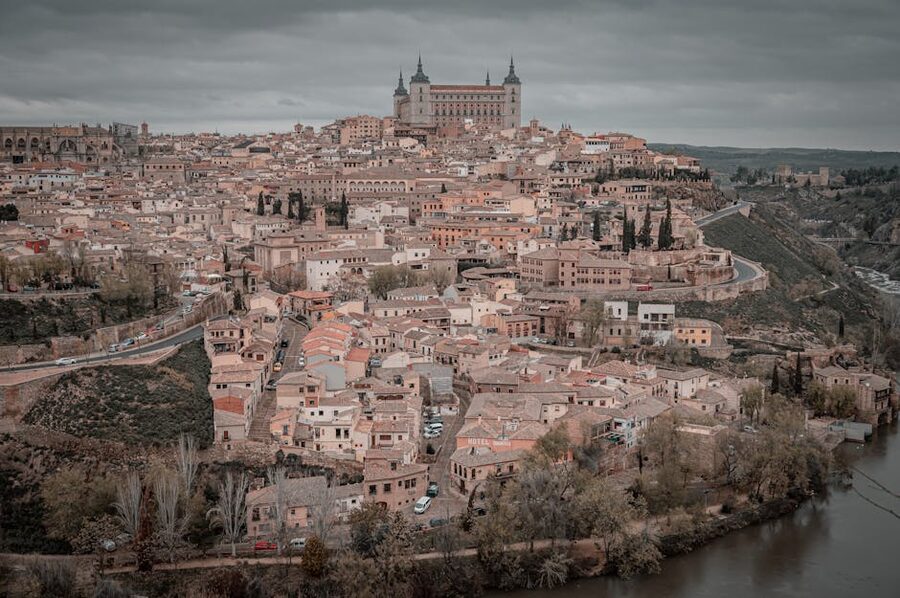
We stepped off the high-speed train and my daughter grabbed my arm. “Mum. It’s a castle city.” She was looking at Toledo rising from the plain — stone walls, church towers, and the massive Alcazar fortress crowning the hilltop like a medieval crown. She wasn’t wrong. Toledo looks exactly like the kind of city children draw in stories about knights and princesses. The difference is that this one is real, it’s 30 minutes from Madrid, and it has been standing here for over two thousand years.
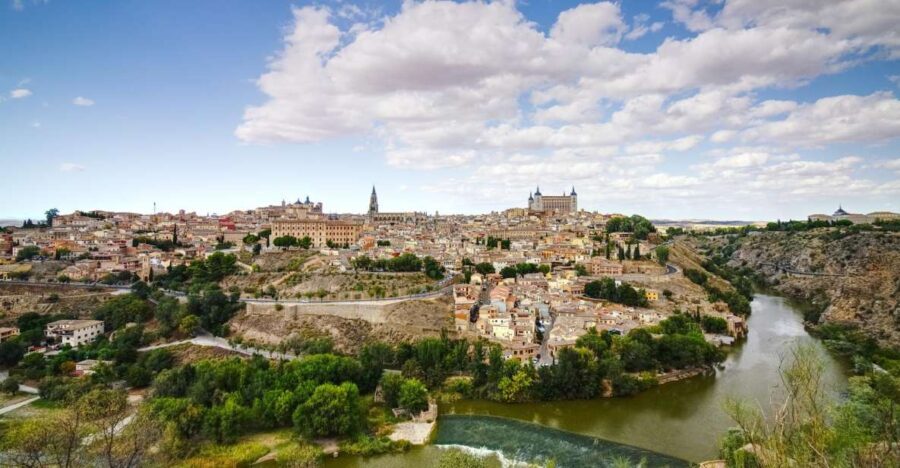
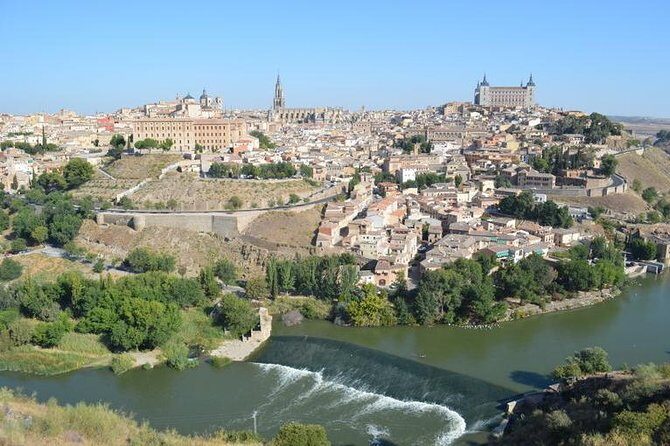
Toledo sits on a granite hilltop almost entirely surrounded by the River Tagus. The natural moat made it virtually impregnable for centuries — Romans, Visigoths, Moors, and Christians all fought to hold this rock. From the opposite bank you get this panoramic view that hasn’t fundamentally changed since El Greco painted it in the 1500s. My son said it looked like “a level in a video game.” He meant it as a compliment. It’s the most dramatic cityscape in Spain.
Toledo is the most popular family day trip from Madrid, and for good reason. A medieval walled city perched above a river gorge, packed with sword shops, marzipan bakeries, and narrow streets that feel like a treasure hunt. It’s history made physical — children can touch the walls, walk the streets, and imagine the knights who walked here before them.
Here’s everything you need to know about taking your family.
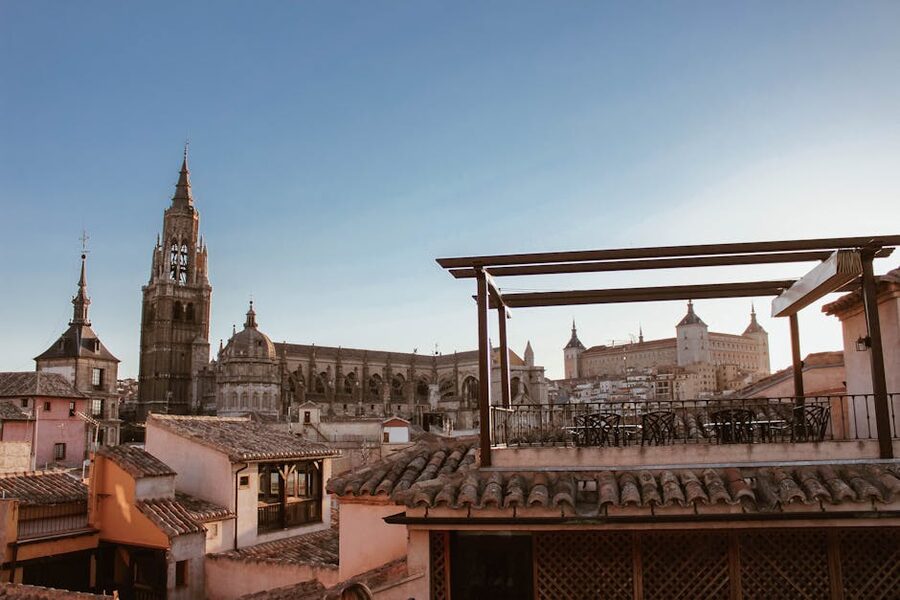
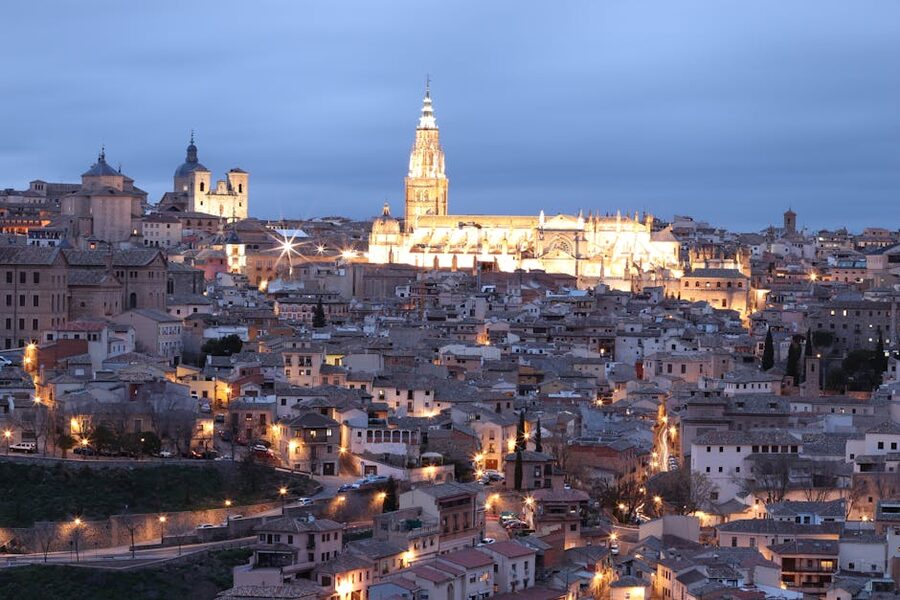
Toledo at golden hour is when the stone glows. If you’re on a full-day trip, stay until late afternoon. The sandstone walls turn honey-coloured in the setting sun and the whole city looks like it’s been dipped in gold. We caught this light from the Mirador del Valle viewpoint across the river. Every single person on the viewpoint was taking photos. Nobody was talking. It’s one of those moments where even children go quiet. Photo: Chensiyuan, CC BY-SA 3.0, via Wikimedia Commons
Toledo Tour with Cathedral from Madrid — $81
Full-day guided tour including cathedral entry. The most comprehensive family option. Book Now
Toledo Guided Day Trip — $32
Budget option with guided walk + generous free time. Cheapest way for families. Book Now
Toledo Half or Full Day Tour — $64
Flexible timing. Optional lunch included. Choose your own pace. Book Now
What Toledo Is Like with Children
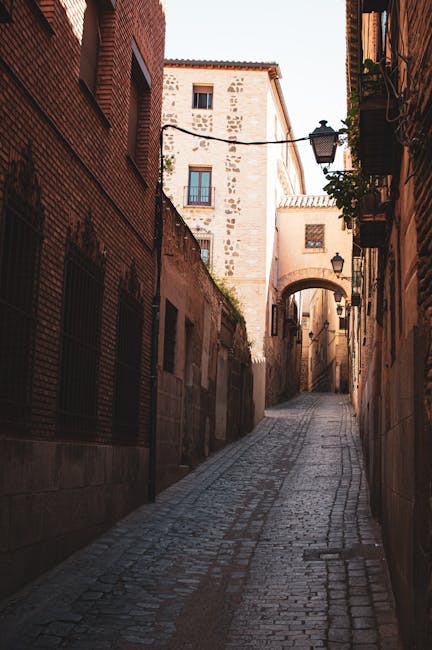
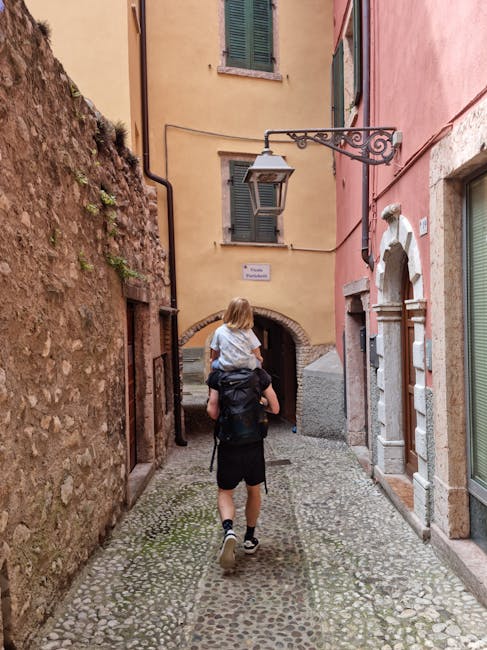
Toledo’s streets are medieval in every sense. Narrow, winding, cobblestoned, and completely car-free in the old town. Children can run ahead (within sight) without any traffic worry. Every corner reveals something — a hidden courtyard, a sword shop window, a tiny square with a fountain. My kids treated the whole city as an exploration game. “What’s down THIS street?” was the question of the day. The answer was always something interesting.
Toledo works for families because it’s essentially an adventure playground disguised as a city. The streets are a maze. The buildings are dramatic. There are sword shops on every corner (Toledo has been famous for its steel since Roman times). And the scale is manageable — the entire old town is walkable in 2-3 hours, which is exactly the right length for children before they hit the wall.
The city is also known as the “City of Three Cultures” because Christians, Muslims, and Jews lived here together for centuries. The mosques, synagogues, and churches standing side by side make this tangible. Even young children can understand that different people worshipped in different buildings, and that they all shared the same streets.
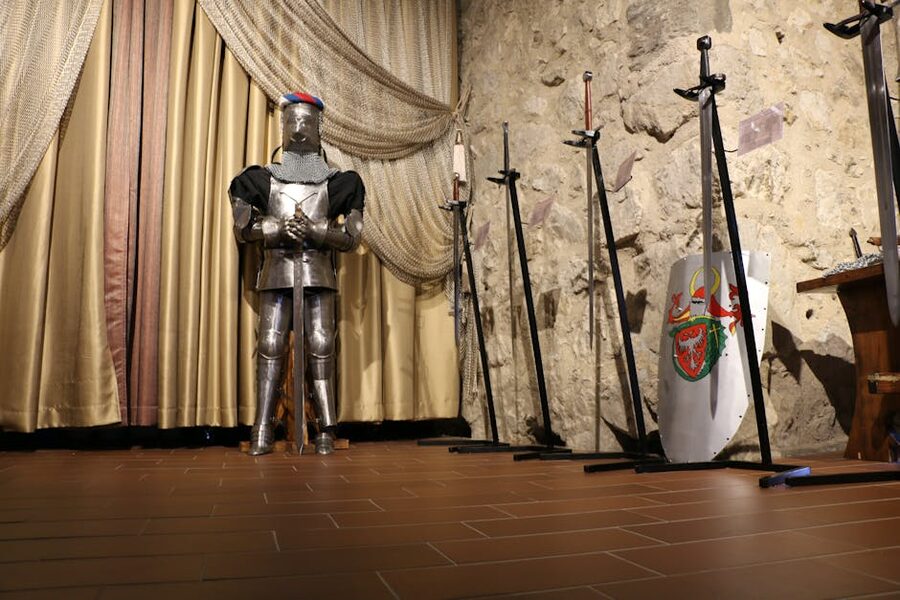
Toledo has been famous for sword-making since Roman times. The sword shops along the main streets are children’s favourite windows in the city. Full-size replicas of medieval swords, Lord of the Rings weapons, Game of Thrones blades, and suits of armour fill every display. My son pressed his face against six different sword shop windows. He didn’t buy anything (swords are heavy and expensive) but the window shopping alone kept him engaged for half an hour. Small souvenir swords start at about 10 euros.
What to See (The Family Route)
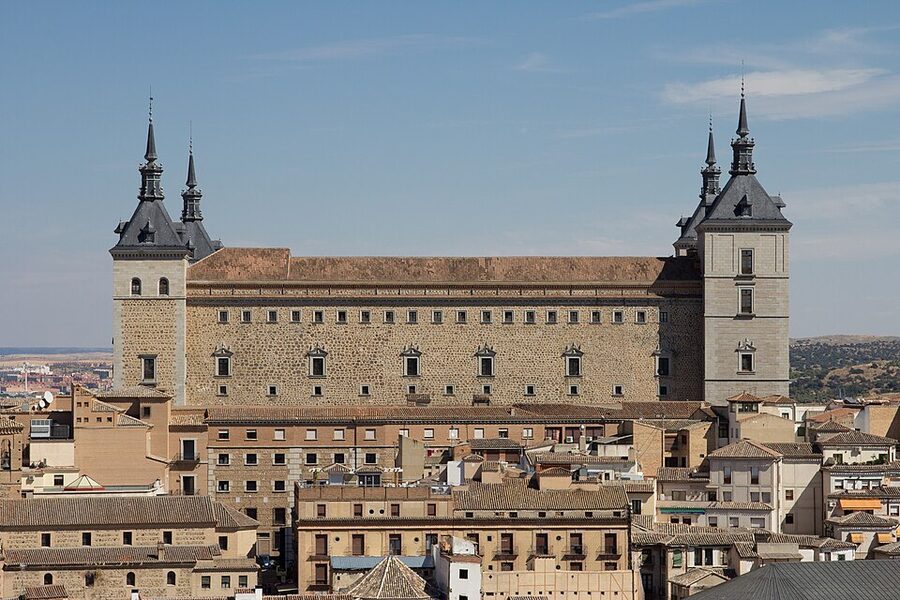
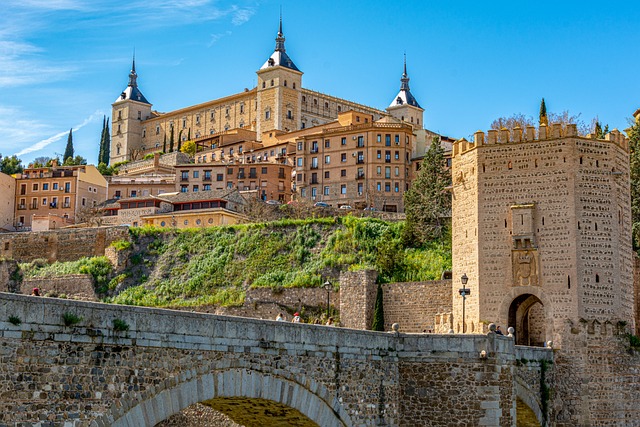
The Alcazar dominates the Toledo skyline. It’s been a Roman palace, a Moorish fortress, and a Spanish royal residence. The current building houses a military museum with weapons, uniforms, and a recreation of the 1936 siege during the Civil War. Children aged 8+ find the military history fascinating. Younger ones enjoy the views from the terrace — you can see the river, the plain, and Madrid in the distance on a clear day. Entry is about 5 euros; under-18s free on Sundays. Photo: Carlos Delgado, CC BY-SA 3.0 es, via Wikimedia Commons
The ideal family route through Toledo starts at the top of the hill and works down:
The Alcazar. Start here — it’s at the highest point of the city. The former fortress houses a military museum with swords, armour, and a dramatic recreation of the 1936 siege. The rooftop terrace has panoramic views. Children aged 6+ genuinely engage with the military exhibits. Under-6s will prefer the views and the courtyard.
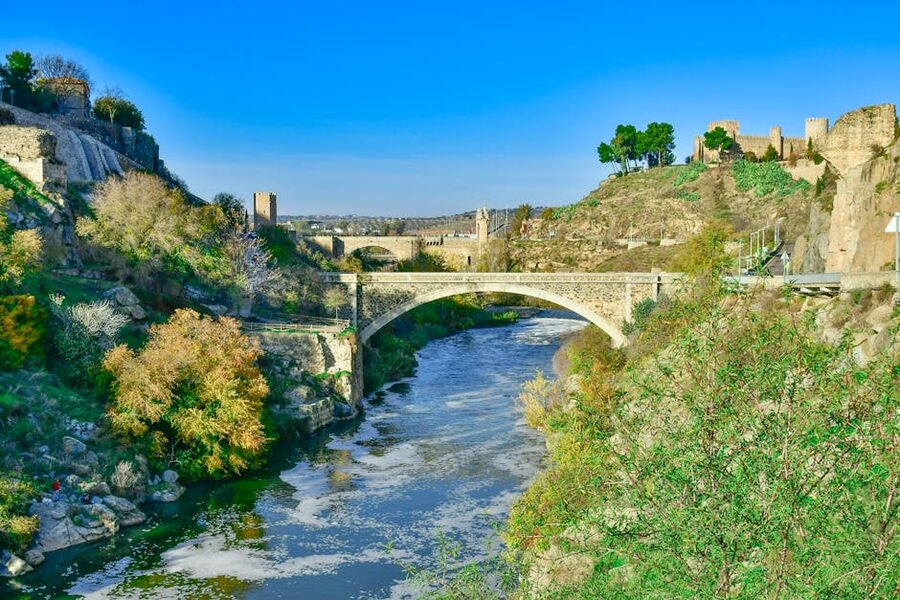
The Alcazar and the Alcantara Bridge are the classic Toledo postcard shot. The bridge dates from the Roman era, rebuilt by the Moors in the 10th century. If you’re arriving by bus or car, you’ll cross it on the way in. Stop on the bridge (there are pedestrian walkways) and look up — the Alcazar towers above you and the city walls stretch in both directions. My daughter said it looked “like a real castle, not a pretend one.” It is a real castle. And it’s been here for a thousand years.Toledo Cathedral took 267 years to build. Construction started in 1226 and finished in 1493 — longer than the entire history of the United States. My son found this mind-boggling. The facade is Gothic at the bottom and Baroque at the top, reflecting the centuries of changing architectural fashion. The bell tower is 90 metres tall and visible from everywhere in the city. If your kids get lost (unlikely in the pedestrianised old town, but still), tell them to walk toward the tower. It’s the centre of everything.
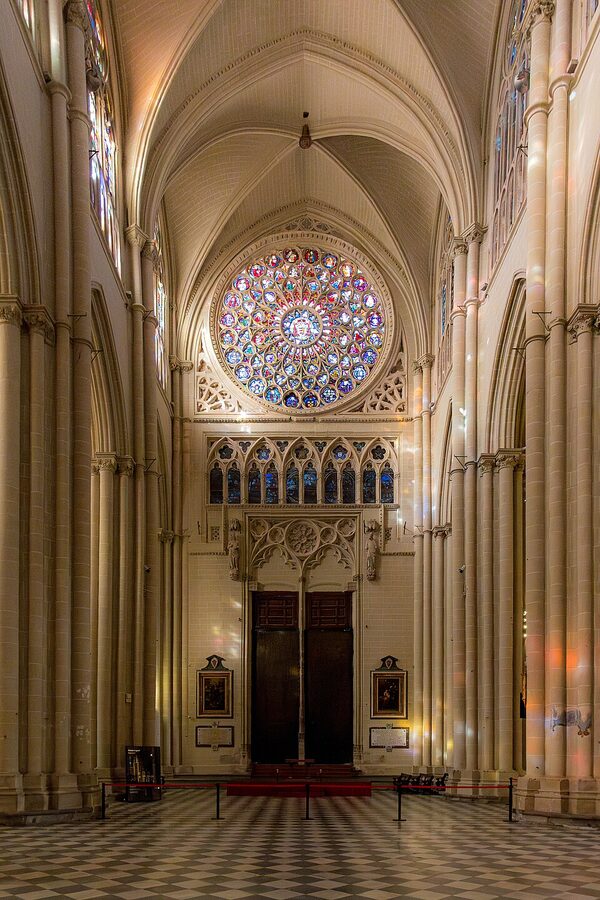
Toledo Cathedral. One of the greatest Gothic cathedrals in Europe. The interior is overwhelming — vaulted ceilings 44 metres high, stained glass on every side, and a Baroque altarpiece that’s one of the most ornate in Spain. Children react to the scale. The Transparente — a section where natural light pours through a hole in the ceiling onto a sculpted marble scene — genuinely stops people in their tracks. Entry costs about 10 euros (under-11s free) and includes an audioguide.
Toledo Cathedral’s interior is one of the most impressive in Spain. The Gothic nave stretches 120 metres long and 44 metres high. The Transparente — an 18th-century marble sculpture lit by natural light through a hole cut in the ceiling — is the centrepiece. When the sun hits it, the stone seems to glow from inside. My children stood and stared for a full minute, which in child-time is approximately an hour. It’s worth timing your visit for when the sun angle is right (late morning to early afternoon). Photo: Fernando, CC BY-SA 4.0, via Wikimedia Commons
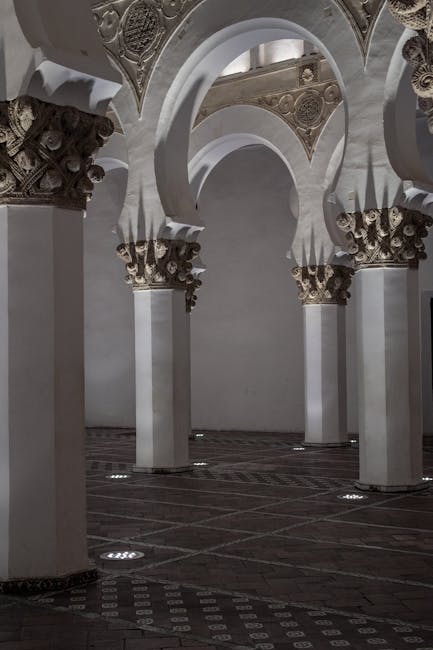
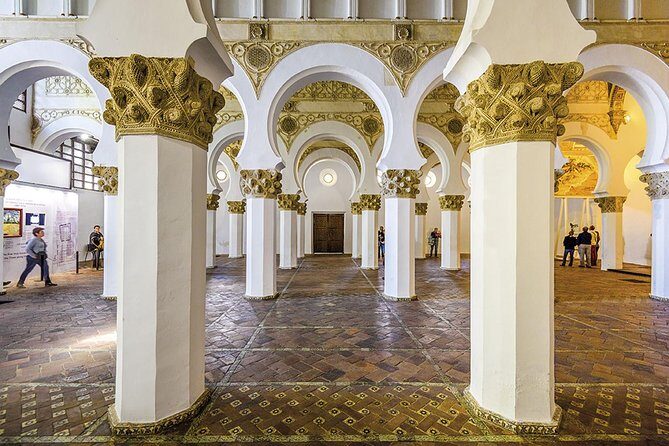
The Synagogue of Santa Maria la Blanca. A stunning 12th-century synagogue with white horseshoe arches that looks more like a mosque than a church. It’s small, cool, and peaceful — the perfect break from the heat. Children find the arches mesmerising and the history (a synagogue that became a church) sparks good questions.
Santa Maria la Blanca is the oldest synagogue building in Europe still standing. Built in 1180, converted to a church in 1405, now a museum. The white horseshoe arches are Moorish in style — built by Muslim craftsmen for a Jewish congregation in a Christian kingdom. That’s the City of Three Cultures in a single building. My kids didn’t grasp the full significance but they understood the basic idea: different people worked together to make something beautiful. Good lesson. Cheap ticket. Worth the stop.
Santo Tome Church (El Greco’s Burial of the Count of Orgaz). A small church housing Toledo’s most famous painting. El Greco’s masterpiece shows a funeral procession where saints descend from heaven to carry the coffin. Children notice the faces first — every person in the painting is a portrait of someone El Greco knew. The church visit takes about 15 minutes and costs 3 euros.
El Greco lived in Toledo for 37 years and his paintings are everywhere. The Burial of the Count of Orgaz at Santo Tome is the headline, but you’ll see his elongated figures in churches and museums throughout the city. Children notice his style immediately — “why are all the people so tall and thin?” — which leads to a conversation about artistic expression that makes sense even to six-year-olds. El Greco painted what he felt, not what he saw. Children understand that instinctively.
The Marzipan (Why Children Will Remember Toledo)
Toledo marzipan has been made here since the 12th century. Every bakery in the old town sells it — in animal shapes, fruit shapes, and traditional figurines. The kids chose a marzipan pig and a marzipan fish. They ate them in about forty seconds. Santo Tome is the most famous marzipan brand (confusingly, same name as the church). Their shop on Calle Santo Tome has a window where you can watch marzipan being made. Free entertainment. Budget about 5-8 euros for a box of assorted shapes.
Toledo has been making marzipan since the Moors introduced almond cultivation in the 8th century. It’s the city’s signature food and children absolutely love it. Every bakery sells it in animal shapes, fruit shapes, and traditional figurines. The marzipan figurines make perfect edible souvenirs.
Santo Tome (the marzipan brand, confusingly named after the church) is the most famous producer. Their main shop on Calle Santo Tome has a window where you can watch the marzipan being made. Free to watch. Irresistible to buy. Budget about 5-8 euros for a box of assorted shapes. My children ate an entire box before we reached the train station.
How to Get There from Madrid
The AVE high-speed train gets you from Madrid Atocha to Toledo in 33 minutes. It’s fast, comfortable, and children find the speed thrilling — the train reaches 250 km/h on some stretches. Tickets cost about 15-25 euros each way depending on when you book. The train station in Toledo is beautiful in its own right — a neo-Mudejar building with Moorish arches and tiles. From Toledo station, a bus (about 10 minutes) or taxi (about 5 euros) takes you up the hill to the old town.
High-speed train (recommended): AVE trains run from Madrid Atocha to Toledo every 30-60 minutes. Journey time: 33 minutes. Cost: about 15-25 euros per person each way. Children under 4 travel free. Ages 4-13 get a reduced rate. Book online at renfe.com for the best prices.
Guided tour (easier with kids): The guided day trips from Madrid include coach transport, a guide, and typically 3-5 hours in Toledo. You don’t need to navigate anything. The guide handles logistics while you focus on the children. Starting from $32 per person, it’s competitive with the train cost once you add taxis and entrance fees.
By car: About 70 minutes from central Madrid on the A-42 motorway. Parking outside the old town walls is free or cheap. The drive through the Castilian plain is flat and uneventful — children will be bored. Save this option for if you’re also visiting nearby villages.
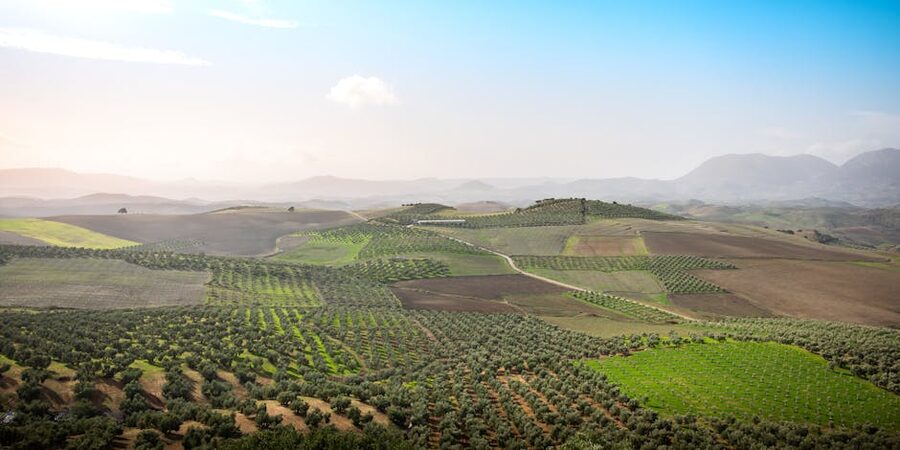
The countryside between Madrid and Toledo is classic Castilian landscape. Flat, dry, olive groves stretching to the horizon. La Mancha — Don Quixote country. If you’re driving, look for the windmills on the hilltops south of Toledo (Consuegra has a famous row of them). My son asked if Don Quixote was real. He’s not. But the windmills are. Sometimes the line between history and legend gets genuinely blurry in this part of Spain.
A Bit of History (The City of Three Cultures)
Toledo has been continuously inhabited for over 2,000 years. The Romans called it Toletum and made it a regional capital. The Visigoths made it the capital of all Spain. The Moors held it for 350 years. Then the Christians reconquered it in 1085. Each civilisation left buildings, art, and traditions that still survive. Walking through Toledo is literally walking through layers of time. The bridge you cross might be Roman foundations with Moorish arches and Christian fortifications. All in one structure.
Toledo’s nickname — the City of Three Cultures — comes from the centuries when Christians, Muslims, and Jews lived here together in relative harmony. This period of convivencia (coexistence) produced extraordinary art, architecture, and scholarship. The translation schools of Toledo preserved ancient Greek and Arabic texts that might otherwise have been lost.
The evidence of this coexistence is everywhere. The synagogues have Moorish arches built by Muslim craftsmen. The churches contain Arabic calligraphy. The Alcazar was a Muslim fortress converted to a Christian palace. This layering of cultures is what makes Toledo unique — and what makes it genuinely educational for children.
Tell your kids that people of three different religions lived together in this city for hundreds of years, sharing streets, markets, and daily life. They’ll find the concept either normal (because why wouldn’t they?) or fascinating (because history rarely works that way). Both reactions are valuable.
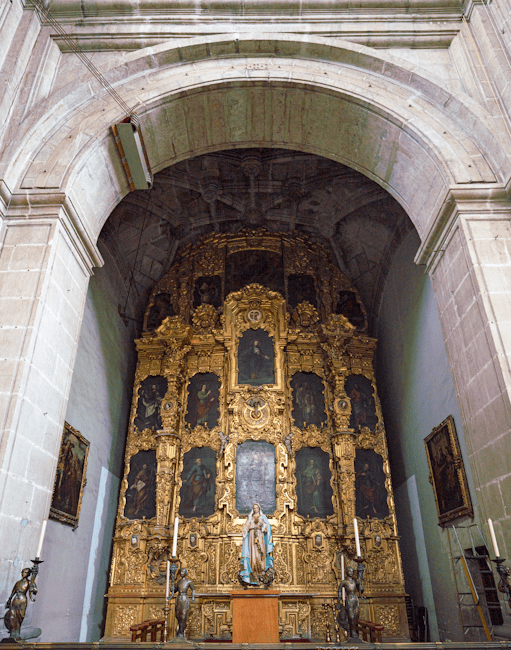
Toledo’s churches are extraordinarily ornate. The altar screens (retablos) are covered in gold leaf — literally gilded from floor to ceiling. The wealth that flowed through Toledo during the medieval period is visible in every church interior. Children are often more impressed by the sheer amount of gold than by the religious significance. My daughter asked if it was “real gold.” It is. Tonnes of it. Shipped from the Americas and hammered onto wood to the glory of God. Quite a thing to explain to a five-year-old.
Practical Tips for Families
Comfortable shoes are absolutely essential. Toledo is built on a hill. Every street is either going up or going down. The cobblestones are uneven and can be slippery when wet. Trainers only. My daughter wore her sandals and complained from the first hill onwards. We carried her for the last hour. Learn from our mistake. Trainers. No exceptions. Even if they want the sparkly shoes.
Allow a full day. The guided tours are typically 6-9 hours including travel from Madrid. Independent visitors should aim for 4-5 hours in Toledo itself. That’s enough for the Alcazar, the cathedral, the synagogue, Santo Tome, marzipan shopping, and lunch.
Buggies. Technically possible but genuinely difficult. The streets are steep, cobblestoned, and narrow. Steps everywhere. A carrier is infinitely better for under-3s. If you must bring a buggy, stick to the main routes — Calle del Comercio and Calle de Santo Tome are the flattest.
Heat. Toledo is on a hilltop in central Spain. In July and August it regularly hits 40°C. The streets are stone and reflect heat upwards. Morning visits are essential in summer. By 2pm the old town is an oven. Bring water, hats, suncream, and a healthy respect for the Castilian sun.
Lunch in Toledo should not be rushed. Find a restaurant with a terrace on one of the quieter plazas (avoid Plaza de Zocodover — it’s touristy and overpriced) and order a proper Castilian lunch. Carcamusas (a pork and pea stew) is the local speciality. Perdiz (partridge) is the traditional dish. Neither sounds child-friendly but the kids’ menu is usually available — omelette, croquettes, and chips never fail. Budget 12-15 euros per person for a good lunch with drinks.
Toilets. Limited public toilets in the old town. Use the ones in the cathedral, the Alcazar, or restaurants. The cafes on Calle del Comercio are your best bet for a quick loo stop without buying a full meal.
The escalators. Toledo has outdoor escalators (Remonte de Recaredo) on the east side of the hill that take you from the lower level up to the old town. Game-changer if you’re arriving from the train station and don’t want to walk uphill with children. Free. Runs all day.
The city walls are climbable in places. Not officially sanctioned but children inevitably find sections where they can scramble up a few stones. The walls along the Paseo del Miradero have low sections with views over the river valley. We let ours climb (supervised) and they spent fifteen minutes pretending to defend the city from invaders. Free entertainment. Genuine historical imagination. And they slept brilliantly on the train home.
The Best Viewpoints
The Mirador del Valle is the classic Toledo viewpoint. It’s across the river from the city, about a 15-minute walk from the old town (or a 5-euro taxi). The entire city is laid out before you — cathedral, Alcazar, walls, bridges. At sunset the stone turns golden and the river reflects the sky. If you’re on a guided tour, check whether the itinerary includes this viewpoint — the good ones do. If you’re independent, don’t skip it. It’s the photograph you’ll frame.
Toledo has three main viewpoints. The Mirador del Valle (across the river) gives you the classic panoramic shot. The Alcazar terrace gives you views south over the plain. And the tower of the Iglesia de los Jesuitas gives you a bird’s-eye view down into the old town streets — you can see the cathedral, the Alcazar, and the river all at once. Each costs a small entry fee (2-3 euros) except the Mirador del Valle which is free.
The Best Tours for Families
1. Toledo Tour with Cathedral from Madrid — $81
The most comprehensive Toledo tour with nearly 6,800 reviews. Full day from Madrid including cathedral entry (which costs 10 euros separately), synagogue visit, Santo Tome church, and guided walking tour through the old town. The guide covers the Three Cultures history in a way that works for all ages. At $81 per adult it’s not cheap, but once you factor in transport, cathedral entry, and guide fees, it’s competitive with going independently.
The complete Toledo experience with nearly 6,800 reviews. Full-day tour including cathedral entry, synagogue, Santo Tome, and guided old town walk. Our full review covers the itinerary and family suitability. The best option for families who want everything covered without planning anything.
The budget option at $32 per person. Over 3,500 reviews. Includes a guided walking tour to get your bearings, then generous free time to explore at your own pace. Entrance fees to individual attractions are extra, but you choose which ones to visit — which means you only pay for what interests your family. For families with younger children who won’t last inside a cathedral, this flexible format is ideal.
The most affordable Toledo day trip with over 3,500 reviews. Guided walking tour plus free time. Our review explains the flexible format. Best for budget-conscious families or those with younger children who need freedom to explore at their own pace.
Choose your own adventure: half day or full day. Over 5,800 reviews. The half-day option (5 hours) is good for families with under-5s who can’t handle a full day. The full-day version includes optional lunch at a Toledo restaurant. My advice: do the full day if your kids are 5+. Toledo deserves the time. The half-day version rushes through things that should be savoured.
Flexible half-day or full-day format with over 5,800 reviews. Optional lunch included in the full-day version. Our review compares both options. Best for families who want timing flexibility — especially those with very young children who might need to leave early.
The plazas in Toledo’s old town are perfect for family breaks. Find one with a fountain, order drinks from a nearby cafe, and let the children run. Plaza de San Juan de los Reyes is our favourite — quieter than the main squares, shaded by trees, and with a stunning monastery next door whose cloister is one of the most beautiful in Spain. No crowds. No rush. Just cold drinks and happy children.
Most guided tours give you 1-3 hours of free time in Toledo. Here’s how families should use it:
Sword shops. Browse the windows. Every shop sells medieval weapons, armour, and Lord of the Rings replicas. Children are fascinated. Small souvenir swords and daggers (safe, blunt) start at about 10 euros. Budget for at least one per child.
Marzipan shopping. Visit the Santo Tome marzipan shop on Calle de Santo Tome. Watch the production window. Buy a box. Eat it on the way to the next stop.
The zip line. There’s a zip line (Fly Toledo) that crosses the Tagus River gorge. It’s spectacular but has a minimum age of 10 and a minimum weight requirement. Check their website for current restrictions.
The Train Tourism (Zocotrén). A tourist train that runs through the old town streets and across the river to the viewpoint. About 6 euros per person, 30 minutes. Children love it. Parents’ feet love it more.
Toledo is just one of several medieval fortress towns within day-trip distance of Madrid. If your family loved Toledo, Segovia (with its fairy-tale Alcazar and Roman aqueduct) and Avila (with its complete medieval walls) are equally impressive. Some tours combine two or three cities in one day, though with children I’d recommend one city at a time. Do it justice. Let them explore properly. Come back for the others.
More Madrid Family Guides
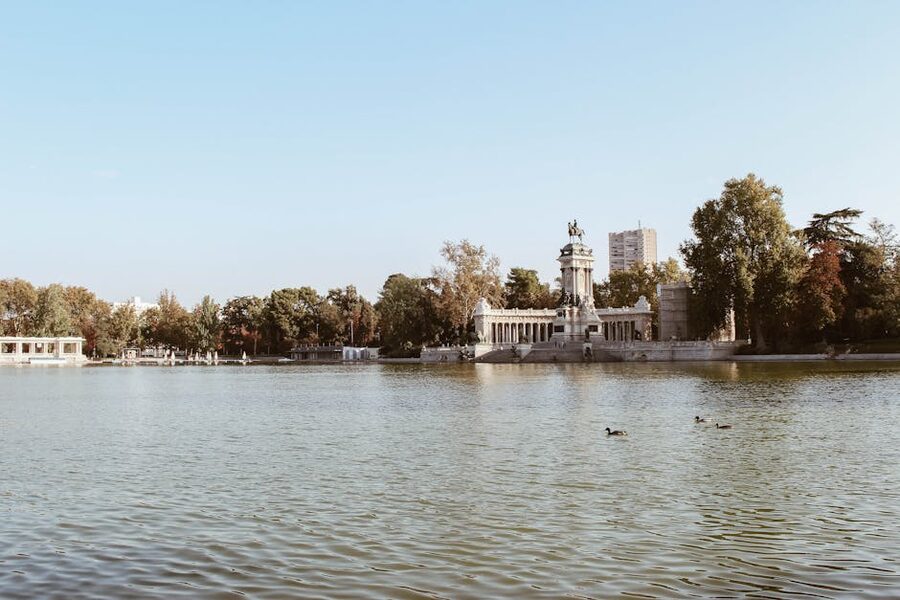
After a full day in Toledo, the next day in Madrid should be easy. Retiro Park is the perfect recovery — rowing boats, playgrounds, and the Crystal Palace. Let the kids decompress from yesterday’s history lesson. They’ll need it. And so will your legs. Toledo involves a LOT of walking uphill. Retiro Park involves sitting in a boat. Choose wisely.
Toledo is Madrid’s most dramatic day trip, but the city itself has plenty more to offer families. The Royal Palace of Madrid rivals Toledo’s Alcazar for grandeur — and it’s right in the city centre. The Prado Museum with kids brings Spanish art to life for children who’ve just seen El Greco in Toledo. The Bernabeu Stadium Tour is the perfect contrast — modern Madrid after medieval Toledo. And Segovia and Avila are the natural next day trips if your family can’t get enough of medieval fortress towns.