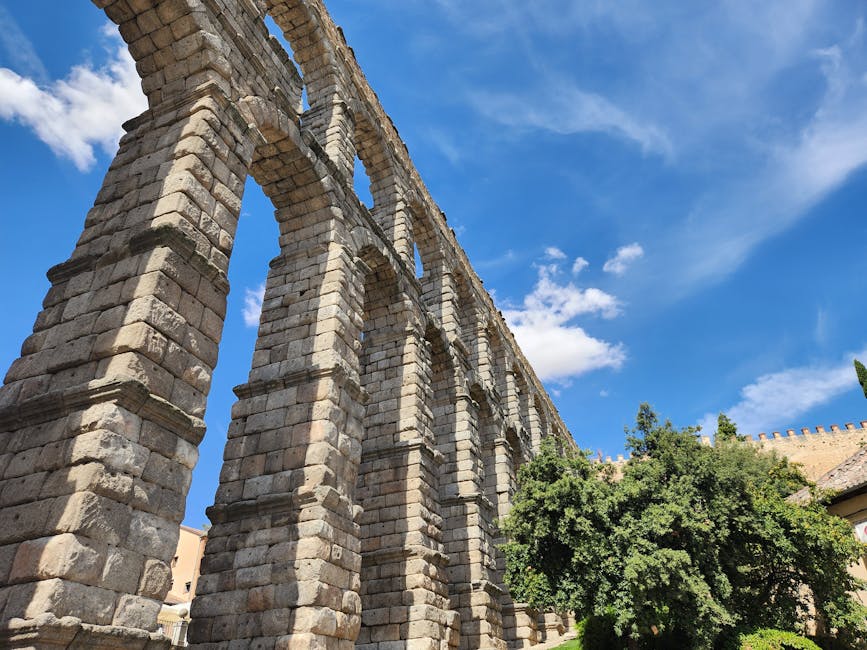
My daughter saw the Segovia Aqueduct and burst into tears. Not scared tears. Overwhelmed tears. “It’s SO big, Mum.” She was standing at the base of a 2,000-year-old Roman structure that rises 28 metres above the street — higher than a nine-storey building — and she understood, in the way that only children can, that something this enormous shouldn’t still be standing. But it is. No mortar. No cement. Just granite blocks balanced on top of each other for two millennia. It broke her brain a little bit. Mine too, if I’m honest.
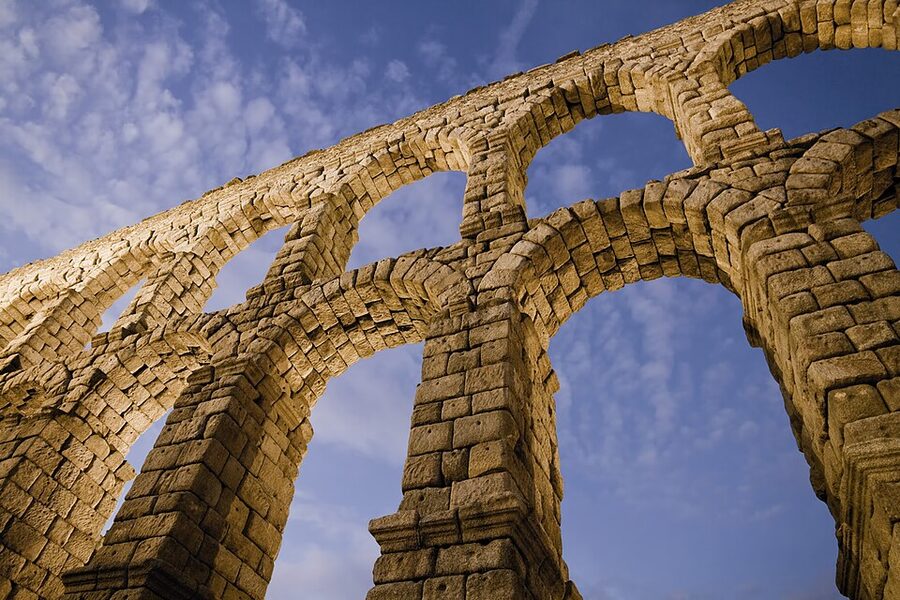
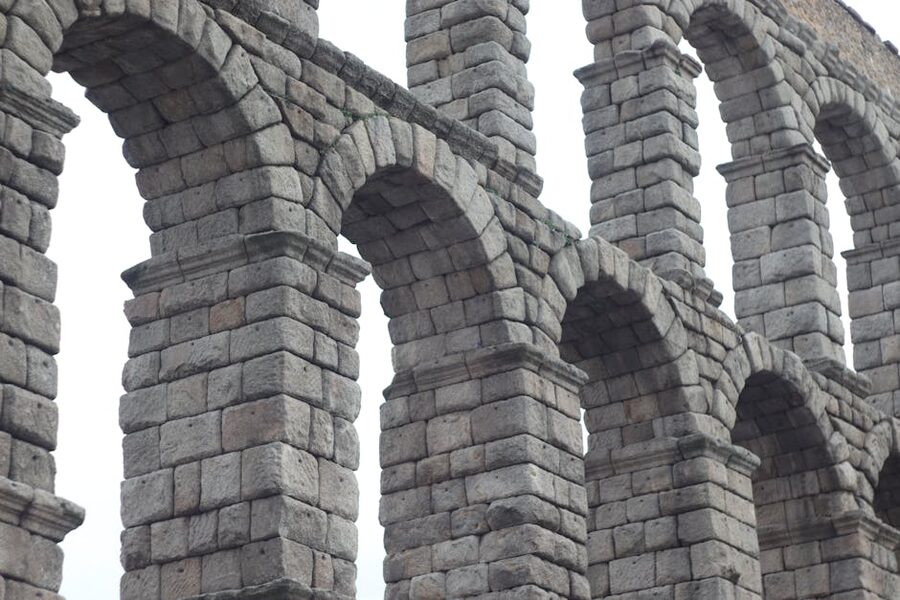
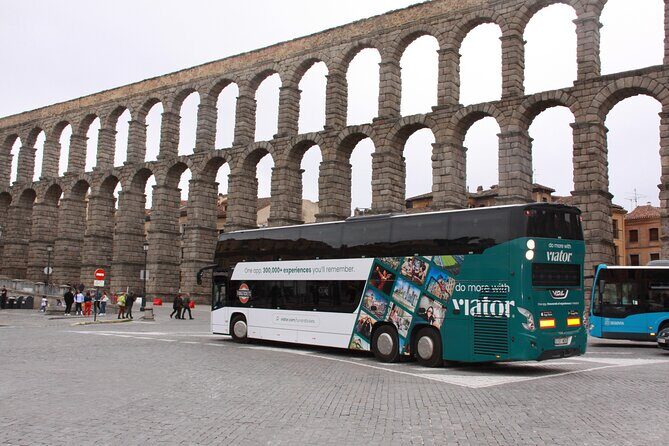
The Segovia Aqueduct is one of the best-preserved Roman structures on earth. Built in the 1st or 2nd century AD with no mortar — just perfectly cut granite blocks stacked with mathematical precision. It carried water from the Sierra de Guadarrama mountains into the city for nearly 2,000 years. The arches reach 28.5 metres at the highest point. My son tried to count them. He got to 44 before he lost track. There are 167. Children find the numbers genuinely mind-boggling.
Segovia and Avila are two medieval fortress cities about an hour north of Madrid. Most guided tours combine both in a single day — and it’s one of the best family day trips in central Spain. Segovia has the aqueduct and a fairy-tale castle. Avila has the most complete medieval walls in Europe. Together, they deliver the kind of “castle and knights” experience that children dream about.
Here’s how to do both with your family.
The aqueduct dominates the entrance to Segovia’s old town. You see it before you see anything else — a wall of stone arches stretching across the Plaza del Azoguejo. It’s free to look at (it’s in the middle of the street), free to walk under, and free to photograph from every angle. The Romans built it to carry water. Now it carries the weight of every family’s holiday photos. There’s a legend that the devil built it in one night. My son believed this immediately. Photo: David Corral Gadea, CC BY-SA 3.0 es, via Wikimedia Commons
Avila & Segovia Tour with Monument Tickets — $81
The complete day trip. Both cities, monument entry included, guided throughout. Nearly 10,000 reviews. Book Now
Avila & Segovia Day Trip (GYG) — $74
Same concept, slightly cheaper. Tickets to monuments included. Full day from Madrid. Book Now
Segovia & Avila Day Trip with Optional Tickets — $59
Budget option. Transport + guided tour, monument entry pay as you go. Most flexible. Book Now
Segovia with Kids: What to See
The Aqueduct
Getting up close to the aqueduct is the first thing to do. Walk under the arches and look up. The stones are enormous — each one weighs several tonnes — and there is genuinely no cement holding them together. The Romans cut the granite with such precision that the blocks lock together under their own weight. My eight-year-old spent five minutes trying to find the cement. He couldn’t. “So it’s just… sitting there?” Yes. For 2,000 years. That conversation about engineering lasted the rest of the day.
The aqueduct is the first thing you see in Segovia and it’s the most impressive Roman structure most children will ever stand next to. It’s free — it’s in the middle of the city. Walk under it. Touch the stones (you can). Look up at the arches. Count them if your child is that kind of child.
The best views are from the stairs on the east side of the Plaza del Azoguejo. Climb up and you’re at eye level with the top of the arches. From here you can see the aqueduct stretching away in both directions — 813 metres of precisely stacked granite. No mortar. No cement. Just physics and Roman engineering. It’s one of those things that’s genuinely more impressive in person than in photos.
The Alcazar
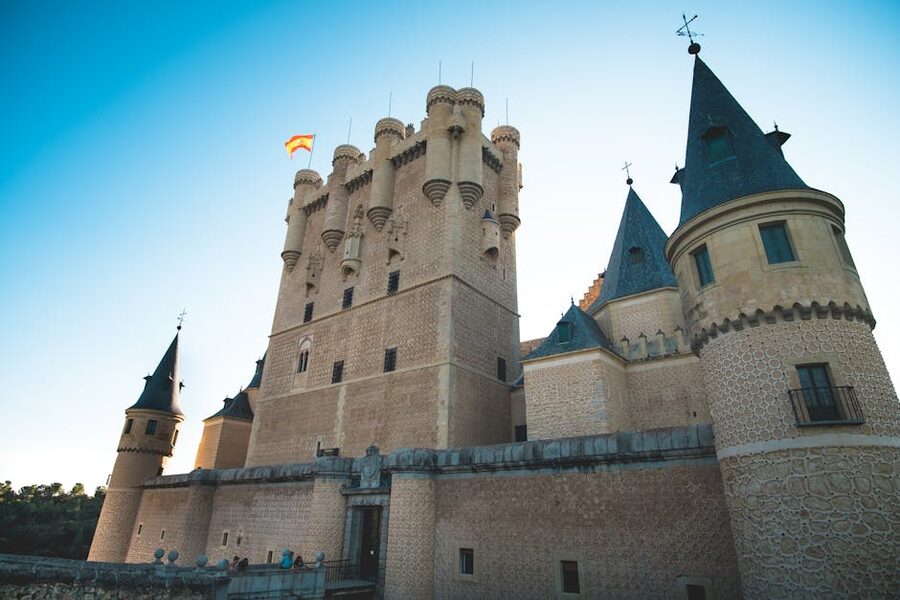
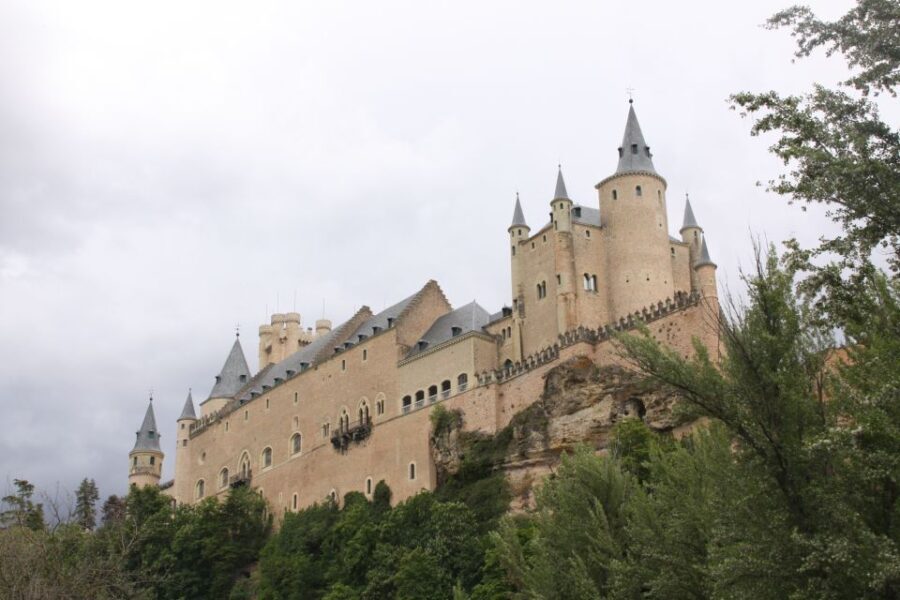
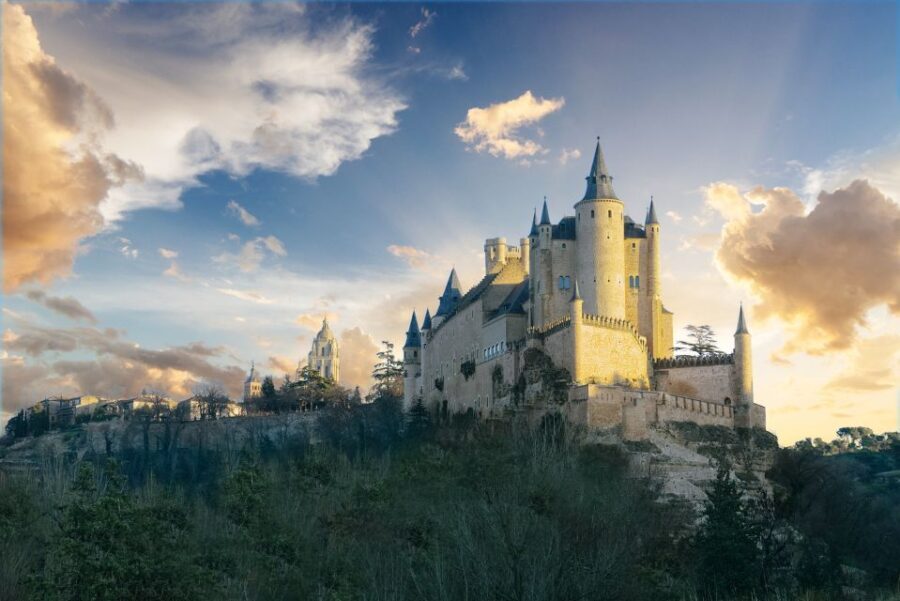
The Alcazar of Segovia looks like a Disney castle. That’s not a coincidence — it’s widely believed to have inspired the castle in Snow White. It sits on a rocky promontory where two rivers meet, with pointed turrets reaching into the sky. My daughter gasped when she saw it. “IT’S THE REAL ONE.” She meant the real Disney castle. We didn’t correct her. Sometimes the real thing deserves to win.
The Segovia Alcazar is possibly the most castle-looking castle in Spain. Pointed turrets, a drawbridge, a moat (dry now), and a position on a rocky cliff where two rivers meet. It looks exactly like a fairy tale illustration. Disney reportedly used it as inspiration for the castle in Snow White and Cinderella.
Inside, the rooms are decorated with armour, tapestries, painted ceilings, and royal furniture. The Throne Room has a coffered Moorish ceiling in gold and blue. The Hall of Kings has painted friezes showing every Spanish monarch. Children love the armour collection and the views from the tower.
From below, the Alcazar looks genuinely impregnable. The rock it sits on drops away vertically on three sides. No army ever successfully stormed it. Children understand this immediately — “nobody could climb THAT.” The castle was a royal residence, a state prison, a military academy, and nearly burned down in 1862. Now it’s a museum. Entry costs about 8 euros for adults; children get a reduced rate. The tower climb (152 steps) gives you the best views in Segovia. Photo: Rafa Esteve, CC BY-SA 4.0, via Wikimedia Commons
The tower climb is 152 steps up a narrow spiral staircase. The view from the top is spectacular — the aqueduct, the cathedral, the Sierra de Guadarrama mountains, and the two rivers meeting below the castle. Children aged 5+ can manage the climb. It’s narrow, steep, and one-way (up and down the same staircase), so avoid it with buggies or children who panic in tight spaces.
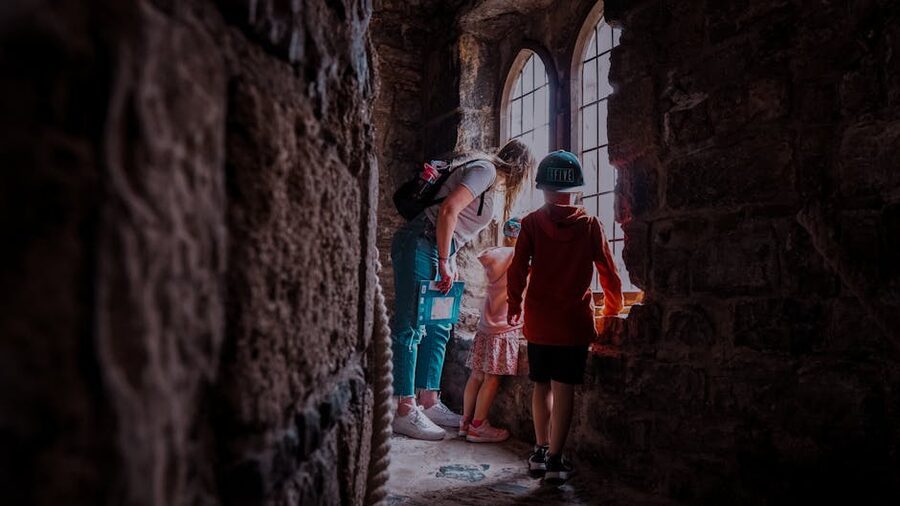
Children are in their element inside the Alcazar. Stone walls, suits of armour, narrow windows to peer through, and enough rooms to explore for a solid hour. The armour collection includes a full set of jousting armour for a horse. The painted ceilings are extraordinary — gold and blue geometric patterns that look like they belong in a storybook. My son said the Throne Room was “where the king sat and decided things.” Historically accurate. Well done, son.
Segovia Cathedral
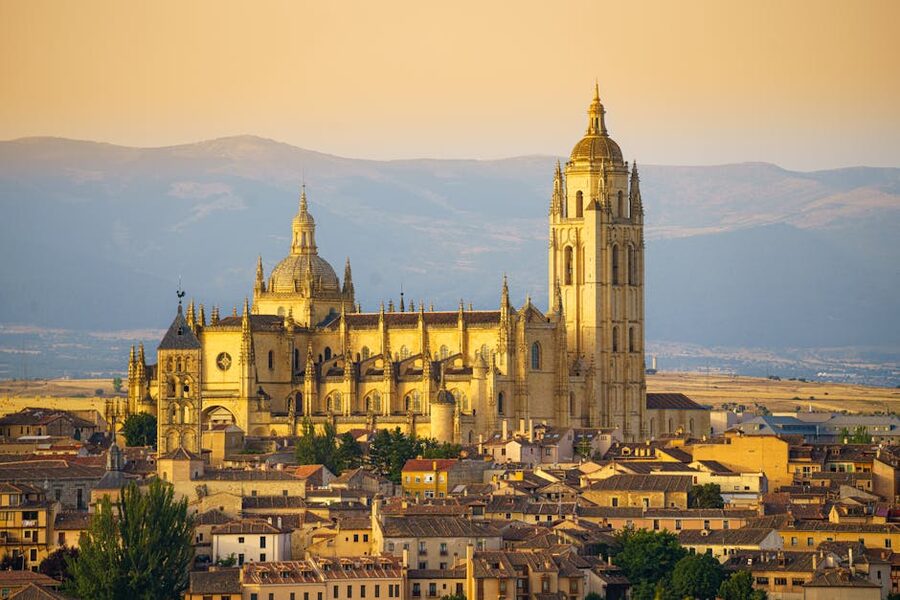
Segovia Cathedral is nicknamed “The Lady of Cathedrals” for its elegant proportions. It’s the last major Gothic cathedral built in Spain (1525-1768) and it shows — the style is lighter and airier than earlier Gothic churches. The exterior is impressive from the Plaza Mayor. Inside, the vaulted ceilings soar and the stained glass catches the light beautifully. Entry costs about 3 euros. With children, 20 minutes inside is enough — the cathedral is beautiful but not as engaging for kids as the aqueduct or the Alcazar.
The cathedral sits on Segovia’s main square (Plaza Mayor) and is worth a quick visit. It’s the last major Gothic cathedral built in Spain and its nickname — “The Lady of Cathedrals” — reflects its elegant, balanced proportions. Entry costs about 3 euros. With children, 15-20 minutes is enough to appreciate the interior and the cloister.
The Cochinillo (Roast Suckling Pig)
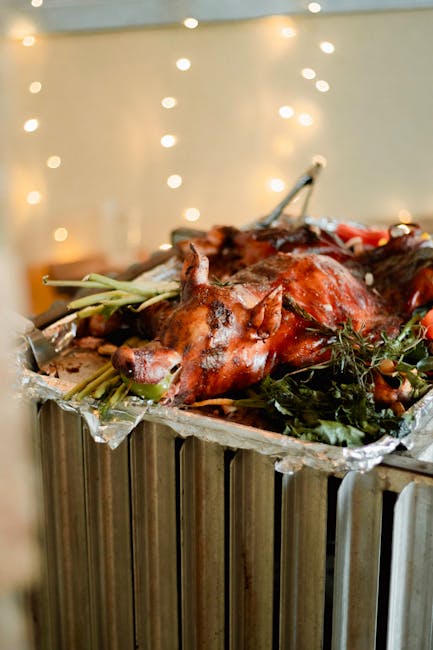
Segovia’s famous dish is cochinillo — roast suckling pig. The restaurants make a theatrical show of it: the chef cuts the pig using the edge of a plate (to prove how tender it is), then smashes the plate on the floor. Children find this absolutely hilarious. The food itself is rich and delicious — crispy skin, tender meat. Not every child will eat it (some are disturbed by the “baby pig” concept), but watching the plate-smashing ceremony is entertainment in itself. Budget 15-25 euros per person for a cochinillo lunch.Segovia’s old town streets connect the aqueduct to the Alcazar. The walk between them takes about 20 minutes and passes through the main shopping street, the Plaza Mayor, and past the cathedral. It’s downhill from the aqueduct to the castle, which is perfect — the kids arrive at the Alcazar with energy. Coming back is uphill, which is less perfect. A taxi from the Alcazar back to the aqueduct costs about 5 euros and saves everyone’s legs for Avila.
Segovia is famous for its roast suckling pig (cochinillo asado). The traditional restaurants carve the pig using the edge of a plate, then smash the plate on the floor. It’s pure theatre and children love it. The food is excellent — crispy skin, meltingly tender meat. Not all children will want to eat it, but watching the ceremony is half the fun.
Mesón de Cándido (right next to the aqueduct) is the most famous cochinillo restaurant in Segovia. It’s been serving the same dish since 1786. Touristy? Yes. Worth it for the experience? Absolutely. Book in advance on weekends.
Avila with Kids: What to See
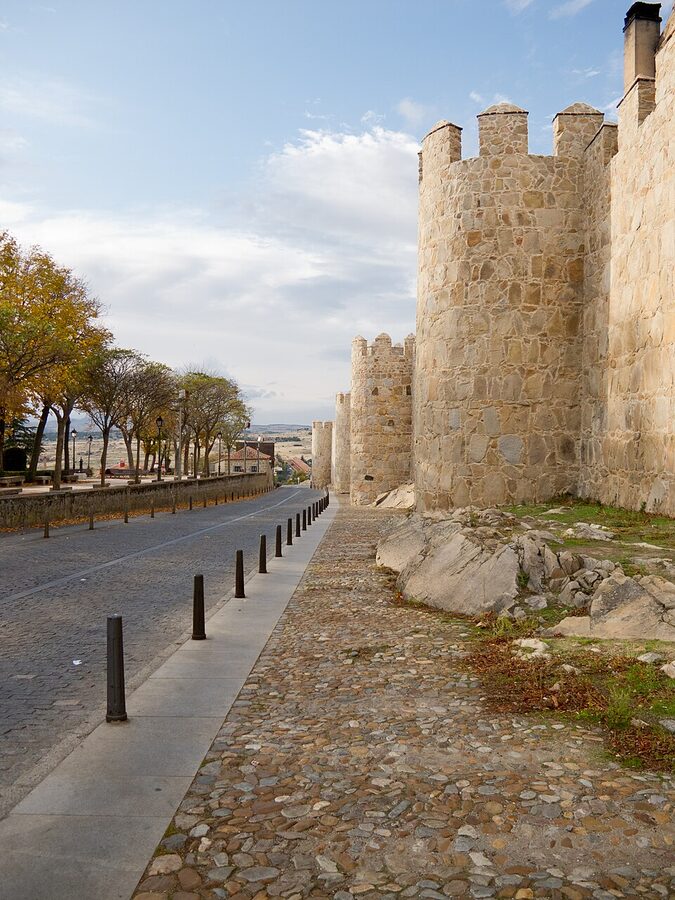
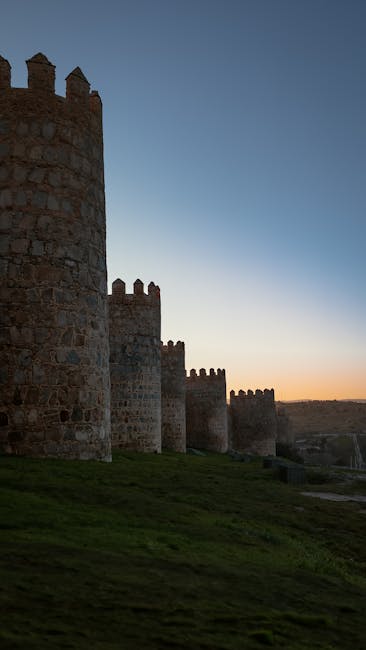
Avila has the most complete medieval city walls in Europe. 2.5 kilometres of walls, 88 towers, 9 gates — all intact, all walkable. The walls were built in the 11th century and they look exactly as they did 900 years ago. Children can walk along the top, look through the arrow slits, and imagine defending the city from invaders. This is the kind of history lesson that doesn’t feel like learning. It feels like an adventure. Photo: Carlos Delgado, CC BY-SA 3.0, via Wikimedia Commons
Walking the Walls
Avila’s medieval walls are the most complete in Europe. 2.5 kilometres of unbroken wall with 88 semi-circular towers, encircling the entire old town. You can walk along the top for about 1.3 kilometres (roughly half the circuit) with views over the town and the Castilian plain.
Walking on top of the walls is the highlight of Avila for children. The path is wide enough for families (about 2 metres), with guardrails on both sides. Children can look through the original arrow slits, peer over the battlements, and count the towers. My kids turned it into a race — “who can reach the next tower first?” The walk takes about 30-40 minutes at family pace. Entry costs about 5 euros for adults. Under-8s free. The views from the top over the Castilian plains stretch to the mountains on a clear day.
The wall walk costs about 5 euros for adults. Under-8s are free. The path is wide enough for families but not suitable for buggies — there are steps at the entrance and the walking surface is uneven stone. Children aged 3+ can walk it with supervision. The guardrails are solid.
The best section runs from the Puerta del Alcazar to the Puerta del Carmen. This stretch has the most towers, the best views, and the section where the walls are highest. Allow 30-40 minutes for the walkable section.
The Cathedral
Avila’s cathedral is actually built into the city wall itself. The apse forms one of the wall’s defensive towers — it’s literally a church that doubles as a fortress. This is unusual and children find it fascinating. “The church IS the wall?” Yes. During times of siege, the cathedral’s thick walls served as the final defensive position. Religion and military defence in one building. Avila doesn’t do things by halves.Avila’s walls are the most Instagram-friendly medieval structure in Spain. 88 towers, 9 gates, 2,500 metres of unbroken wall. From the road approaching the city, the silhouette is extraordinary — a complete walled city rising from the plain like something from a Lord of the Rings film. My kids spotted the first tower from the coach window about 5km out. By the time we arrived they were counting towers and couldn’t sit still. That’s the sign of a good destination.
Avila’s cathedral is unique because it’s built into the city walls — the apse forms one of the wall’s defensive towers. It’s both a church and a fortress. Inside, it’s Romanesque transitioning to Gothic, with thick walls, small windows, and a fortress-like atmosphere that’s very different from the light, airy cathedrals elsewhere in Spain.
Yemas de Santa Teresa
Avila’s signature sweet is the yema — an egg yolk and sugar confection named after the city’s most famous resident, Saint Teresa. Every bakery sells them. They’re tiny, intense, and children either love them or find them “too eggy.” Buy a box and try one. They make unusual souvenirs and they’re genuinely delicious.
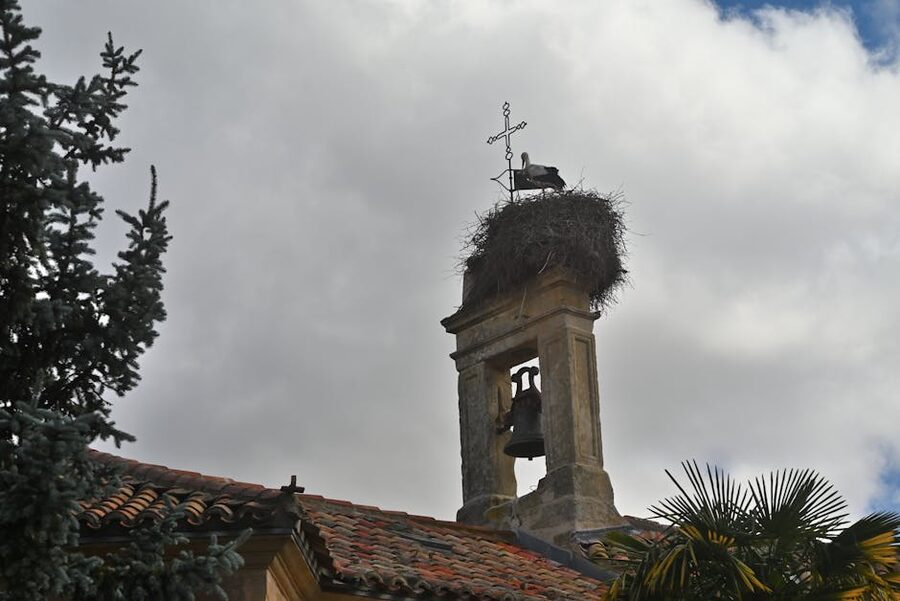
White storks nest on Avila’s church towers and wall towers. Enormous stick nests balanced on top of stone turrets — they’ve been nesting here for centuries. Children spot them before adults do. “LOOK! A BIRD HOUSE!” The storks are huge (wingspan over 1.5 metres) and the nests are genuinely impressive constructions. In spring and early summer you can see chicks being fed. Free wildlife entertainment from the top of the walls. No binoculars needed — the nests are that close.
A Bit of History
Segovia and Avila sit on the frontier where medieval Christian Spain met Muslim Al-Andalus. The walls and castles weren’t decorative — they were defensive necessities in a land contested for centuries. Avila’s walls were built after Alfonso VI reconquered the city from the Moors in 1088. Segovia’s Alcazar was a forward military position. Understanding this context — that real people built these walls because real enemies were coming — makes the visit meaningful for children. History isn’t just stories. These walls saved lives.
Both cities sit on the meseta — the high central plateau of Spain. Segovia was a major Roman city (hence the aqueduct) and later became a favourite residence of the medieval Castilian kings. Isabella I was proclaimed Queen of Castile in Segovia’s main square in 1474 — the moment that eventually led to the unification of Spain.
Avila was reconquered from the Moors in 1088 and immediately fortified with the walls you see today. Its most famous resident is Saint Teresa of Avila (1515-1582), a Carmelite nun and mystic who reformed the Catholic Church and is one of only four women to be named a Doctor of the Church. Her convent and birthplace are both in the city.
For children, the key story is the frontier. These cities were on the edge of Christian Spain, facing Muslim Al-Andalus to the south. The castles and walls were built not for show but for survival. Real battles happened here. Real people defended these walls. That context transforms tourist attractions into living history.
The Castilian plain stretches endlessly in every direction. From the top of Avila’s walls you can see why they were built — there’s no natural cover for miles. Any approaching army would be visible from the watchtowers hours before it arrived. Children understand this instinctively when they look out from the walls. “You could see EVERYTHING.” Exactly. That was the point. The landscape is the defence. The walls are the insurance.
Practical Tips for Families
Most guided tours use a comfortable air-conditioned coach. The drive from Madrid to Avila is about 90 minutes, then Avila to Segovia about 70 minutes, then Segovia back to Madrid about 90 minutes. That’s a lot of coach time. The good news: children sleep on coaches. The return journey in the late afternoon is when every child in every family passes out. Pack a travel pillow and enjoy the silence.Entering through the medieval gates is half the experience. Avila’s Puerta del Alcazar is the main entrance — a massive stone gateway flanked by towers that makes you feel genuinely small. Children walk through it and immediately understand they’re entering a different kind of place. The gates were designed to be intimidating. A thousand years later, they still work. My son walked through, looked up at the walls on both sides, and said “nobody is getting in here.” Precisely the point.Inside the walls, Avila is a proper small Spanish town. Not a tourist park — people live here. There are schools, shops, bakeries, and children playing in the squares. The main plaza (Mercado Chico) has cafe terraces where you can sit and watch normal life happen inside medieval walls. It’s a good reminder that these walls weren’t built for travelers. They were built for the families who lived here. Nine hundred years later, families still do.
It’s a long day. Most tours run 9-10 hours including travel. That’s a big ask for under-5s. Children aged 6+ handle it well because the day has variety — walls, castles, aqueducts, food. Under-5s may struggle with the coach time (about 4 hours total).
Buggies. The old towns of both Segovia and Avila are cobblestoned and hilly. Buggies work on the main streets but not on the walls (steps) or inside the Alcazar (stairs). Carrier recommended for under-3s.
Weather. Both cities are at altitude (over 1,000 metres). They’re noticeably cooler than Madrid, especially Avila. In winter it can be genuinely cold with snow. In summer it’s hot but drier than the coast. Bring layers in spring and autumn — the temperature can drop 10°C between Madrid and Avila.
Food. Lunch in Segovia is a highlight, not an afterthought. Budget for cochinillo or at least a proper Castilian lunch. Guided tours usually include a lunch stop (sometimes included, sometimes at your own expense). If lunch isn’t included, book Mesón de Cándido or any restaurant on the Plaza Mayor.
Both cities have beautiful main squares for family breaks. Segovia’s Plaza Mayor has cafe terraces with views of the cathedral. Avila’s Plaza del Mercado Chico has ice cream shops and a playground nearby. These squares are where you’ll spend your free time — letting the kids run while you have a coffee. Budget 15 minutes of plaza time per city. It’s the decompression that keeps the day manageable.
The Best Tours for Families
1. Avila & Segovia Tour with Monument Tickets — $81
Nearly 10,000 reviews with a perfect 5.0 rating — exceptional for a full-day tour. Includes coach transport from Madrid, guided tours of both cities, and entry tickets to the main monuments (Alcazar, walls, cathedral). At $81 per adult with all entries included, the value is genuine — buying the monuments separately plus transport would cost more. Children get reduced rates. Under-4s free. The guide handles all logistics while you focus on the kids.
The most-reviewed Avila & Segovia tour with nearly 10,000 reviews and a perfect score. Full day including monument tickets. Our full review covers the itinerary and family experience. The obvious first choice for families who want everything included.
Same concept, slightly cheaper at $74 per adult. Over 4,500 reviews. The GYG version includes the same monument tickets and guided tours. Route and timing are virtually identical. Check both platforms and compare availability for your dates — sometimes one has slots the other doesn’t. The experience is equivalent either way.
An alternative with over 4,500 reviews. Same format — both cities, monument tickets included, guided throughout. Our review compares this with the Viator option. Worth checking if option 1 is sold out or if this fits your budget better.
3. Segovia & Avila Day Trip with Optional Tickets — $59
The budget option at $59 per person. Over 2,100 reviews. Transport and guided walking tours are included but monument entry is optional (pay as you go). This means you choose which monuments to enter — useful if your kids are under 6 and won’t last inside a cathedral. You can skip some entries and save money while still getting the guided walks and the main sights from outside. Best for families on a budget or with very young children.
The most affordable option with over 2,100 reviews. Transport and guided tour included, monument entry optional. Our review explains the optional ticket approach. Best for budget-conscious families or those with younger children who may not enter every monument.
The Sierra de Guadarrama mountains sit between Madrid and Segovia. On a clear day from the Alcazar tower you can see snow on the peaks even in spring. The high-speed train from Madrid to Segovia takes just 28 minutes and goes through these mountains via a tunnel. By car, the mountain pass road is scenic but slow. If your kids are old enough to appreciate mountain views, the drive is worth it. Otherwise, take the train — it’s faster and the kids think the tunnel is exciting.
Going independently to both cities in one day is possible but requires planning. The easiest route:
Madrid → Segovia by train (28 minutes, high-speed AVE from Chamartín). Spend the morning in Segovia (aqueduct, Alcazar, lunch). Then Segovia → Avila by bus (about 1 hour, buses from Segovia bus station). Spend the afternoon in Avila (walls, cathedral). Then Avila → Madrid by train (about 90 minutes, regional trains from Avila station).
With children under 8, I’d take the guided tour. The multi-transfer logistics add stress to what should be a relaxing day. Once kids are old enough to manage train changes without having a meltdown at the ticket machine, going independently gives you more flexibility.
More Madrid Family Guides
Central Spain is castle country. Segovia and Avila are the headline acts, but there are hundreds of medieval castles, walls, and fortresses within day-trip distance of Madrid. Once your children discover they love castles (and they will), the options are endless. Toledo is the other essential medieval day trip. Between Segovia, Avila, and Toledo, your family will have more castle stories than they can count.
Segovia and Avila complete Madrid’s medieval day trip trio alongside Toledo with kids — three fortress cities, each dramatically different, each within 90 minutes of the capital. Back in Madrid, the Royal Palace continues the royal history indoors, the Prado Museum brings the art of these periods to life, and the Bernabeu Stadium provides the modern contrast. Madrid with children is a week of castles, art, football, and some of the best food in Spain. Give it the time it deserves.