
Exploring Rome’s Jewish Ghetto and Trastevere: A Deep Dive into the Eternal City
If you’re looking for an intimate glimpse into Rome’s neighborhoods beyond the usual tourist spots, this Jewish Quarter and Trastevere District Private Walking Tour might just be what you need. Although we haven’t taken it ourselves, the detailed reviews and carefully crafted itinerary suggest it offers a thoughtful, personalized experience.
What we love about this tour is how it combines two very distinct parts of Rome: the historically significant Jewish Ghetto with its impressive synagogue and ancient ruins, and the charming, lively streets of Trastevere, famous for medieval alleys and authentic Roman atmosphere. Another big plus is how the private format means you get a guide’s undivided attention, which typically translates to a more flexible and engaging visit.
On the downside, at $430.52 for up to 10 people, this isn’t exactly a bargain, but the value comes with expert guidance and avoiding crowds. If you’re someone who appreciates having a dedicated guide to answer questions and tailor the route, then this could be a worthwhile investment.
This tour’s best suited for travelers who want a mix of history, architecture, and local flavor, especially those who enjoy walking and exploring neighborhoods at a leisurely pace. It’s not ideal for those looking for a quick, surface-level overview, but rather for those who value depth and personal insights.
Key Points
- Personalized experience with a licensed local guide
- Combines two neighborhoods with unique histories and atmospheres
- Includes multiple notable sites like the Synagogue, Theatre of Marcellus, and Tiber Island
- Ideal for history lovers and those interested in Rome’s Jewish heritage and medieval streets
- Great for small groups wanting more interaction and flexibility
- Cost reflects a private, in-depth tour rather than a large group outing
A Closer Look at the Itinerary
Prefer personalized experiences? Here are other private options we've covered in Rome
Theatre of Marcellus: Rome’s Ancient Open-Air Stage
The tour kicks off with an outside view of Teatro di Marcello, an ancient Roman theatre that dates back to 17 BC. Built during the Roman Republic, this site offers a glimpse of how Romans once enjoyed performances of drama and song. While you can only see the outside, the architecture itself is a testament to Roman engineering prowess. Locals and travelers still gather here for various events, which makes it a lively start to the walk.
One of the reviewers shared that their guide was particularly engaging, and it’s easy to see why — the theatre’s imposing columns and its role in Roman culture make it a compelling introduction. It’s a good way to get your mind around Rome’s ancient past early on.
Piazza Mattei and the Fountain of Turtles: Art and Playfulness
Next, you’ll visit Piazza Mattei, home to one of Rome’s most beautiful fountains — the Fountain of Turtles. Designed by Giacomo Della Porta and later enhanced with Bernini’s touches, this fountain is notable for its bronze sculptures of dolphins and turtles. It’s a quiet spot, perfect for snapping photos or simply admiring the intricate details.
According to reviews, this stop offers a delightful contrast to grand Roman ruins — here, you’ll appreciate smaller, artistic touches that demonstrate everyday Roman life and craftsmanship. It’s about appreciating art in unexpected places, which adds a layer of intimacy to your experience.
The Jewish Ghetto: History and Heritage
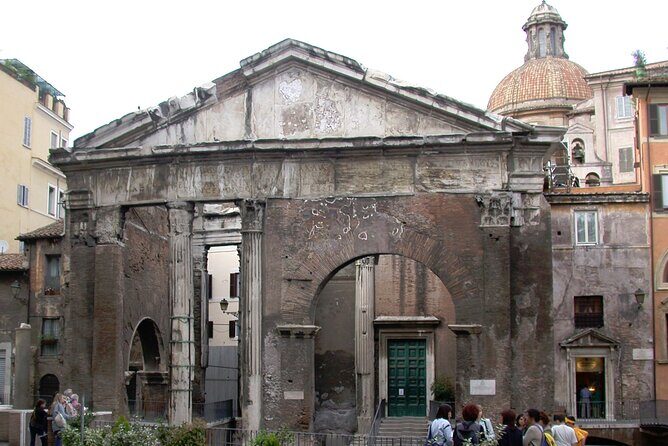
The Jewish Ghetto is perhaps one of the most culturally significant parts of this tour. The Portico di Ottavia and the Synagogue are highlights, revealing connections to Rome’s Jewish community that’s been here for centuries. The Portico of Octavia once enclosed temples and a library, now serving as a reminder of layered Roman history.
The synagogue, built between 1901 and 1904, is an architectural statement with elements of Assyrian-Babylonian, Egyptian, and Greco-Roman styles. Its lavish Art Nouveau interior hints at a vibrant community that has persevered through centuries. One reviewer noted that guides are talented at engaging groups, making the history come alive, even for those who might have already seen similar sites.
Ruins and Bridges: From Ponte Rotto to Tiber Island
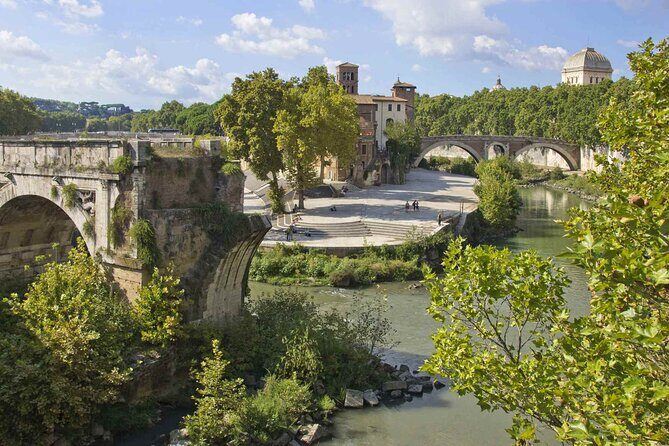
Moving along the Tiber River, you’ll visit Ponte Rotto, or the “Broken Bridge.” The remaining arch, visible from the water, is part of the ancient Pons Aemilius — a reminder of Rome’s engineering feats. This spot offers a poetic view, and many find it a peaceful, contemplative moment.
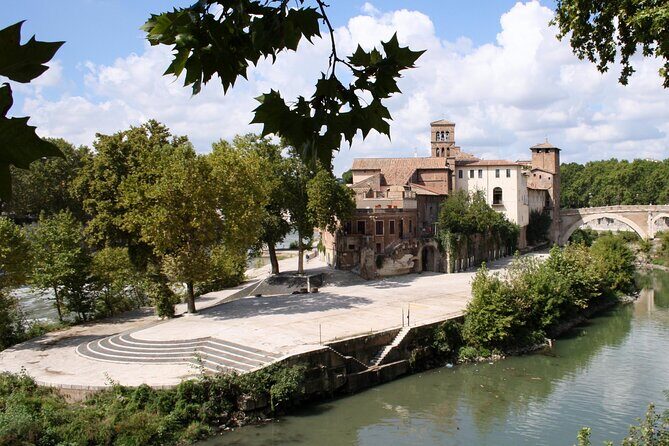
Next, crossing Ponte Fabricio, the oldest Roman bridge still in its original form from 62 BC, connects the city to Tiber Island. The island has historically been associated with medicine, housing hospitals dating back to the 16th century. It’s a small but meaningful slice of Roman history, and the walk there is scenic.
If you're drawn to exploring Rome on foot, we've looked into these other walking experiences
Tiber Island and the Medieval Streets of Trastevere
The walk continues onto Tiber Island, where you get a sense of how Rome’s geography shaped its history. The island’s connection to healing and the presence of historic hospitals make it more than just a pretty spot — it’s a symbol of Roman resilience.
Finally, you arrive in Trastevere, a neighborhood loved for its labyrinth of medieval streets, artisan shops, and lively piazzas. The Piazza in Piscinula and the Church of Santa Cecilia give insight into local life and religious history. The basilica, dating back to the 4th century, features mosaics from the late 13th century, adding to its charm.
The vibrant Santa Maria in Trastevere basilica, with its ancient mosaics, is a highlight for many. As one review pointed out, guides do well to share stories about these historic churches, making it more engaging than just admiring the architecture.
The Practical Side: What You Should Know
While the tour is approximately 3.5 hours long, it involves lots of walking at a leisurely pace. Expect to spend around 15 minutes at each stop, enough time to take photos and absorb the surroundings but not so long that it drags. The total itinerary covers a lot — from ancient ruins to medieval streets — so comfortable shoes are a must.
The price of $430.52 per group might seem steep, but it includes a private guide service. This means personalized attention, tailored commentary, and the flexibility to ask questions that matter most to you. Given the reviews praising guides such as Yev and Yevgen, it’s clear that knowledgeable, engaging guides are a key part of the experience.
The tour doesn’t include private transportation or bottled water, so plan accordingly. Meeting points are conveniently located near public transit, making it easy to start and end the tour without hassle.
Who Will Enjoy This Tour?
If you’re curious about Rome’s Jewish community and want to see medieval streets away from large crowds, this tour suits you. It’s especially good if you prefer guided experiences that allow for questions and a more personal touch. If you’re a history enthusiast, architecture lover, or just someone keen to explore Rome’s neighborhoods with a local guide, you’ll find plenty to enjoy.
The Bottom Line
This private walking tour offers a rich blend of history, culture, and local life. The small group setting, led by knowledgeable guides, enhances the experience, making it more than just a walk through old streets. You’ll see ancient ruins, beautiful fountains, and historic churches, all at a relaxed pace that allows you to truly take in the surroundings.
It’s an ideal choice for travelers who want to go beyond the major sites and dive into the character of Rome’s neighborhoods. While it definitely costs more than a typical group tour, the personalized attention and depth of information can make it worth it, especially if history and authentic local atmosphere are priorities.
For those who value engaging guides, stunning views, and a well-paced, detailed journey through Rome’s Jewish Ghetto and Trastevere, this tour offers a compelling way to experience the city’s soul.
Jewish Quarter and Trastevere District Private Walking Tour
“We had a great time and learned quite a bit, even though we've had similar tours in the past. Our guide, Yev, was great at engaging our group of j…”
FAQs
Is this tour suitable for children?
The tour is designed for walking and exploring historic neighborhoods, so it’s suitable for those who enjoy walking and learning about history. It’s not specifically marketed as family-friendly, but older children with interest in history and culture will likely enjoy it.
Does this tour include transportation?
No, private transportation isn’t included. The tour is a walking experience starting and ending at the specified location, so comfortable shoes and good walking gear are recommended.
How long is the tour?
It lasts about 3 hours and 30 minutes. The walk covers several sites, with around 15 minutes spent at each stop, providing a relaxed pace to explore without rushing.
What’s included in the price?
You get a private guide for 3.5 hours, which means personalized commentary and a flexible route. Entrance fees are included for all sites listed in the itinerary.
Is there any water provided?
No bottled water is included, so it’s a good idea to bring some along, especially on warm days.
How far in advance should I book?
The tour is popular, with an average booking time of about 52 days ahead, so planning early is advisable to secure your preferred date.
Taking this tour could be a highlight of your Rome trip if you’re after a more personal, in-depth look at some of the city’s most characterful neighborhoods. With engaging guides and a thoughtfully curated route, it promises a memorable journey into Rome’s layered past and lively present.
More Walking Tours in Rome
More Tours in Rome
- Full-Day Excursion to Kasbah Ait Ben Haddou & Ouarzazate
- Tbilisi : Kazbegi, Ananuri, Gudauri & Gergeti. PRIVAT TOUR
- Florence from Rome by Train: Enjoy a Full-Day Small-Group Tour
- Rome: Private Tour with a Local Guide
- Group tour: Christian Catacombs
- Rome St.Peter Dome, Basilica, Grottoes Morning Private Tour
More Tour Reviews in Rome
- Full-Day Excursion to Kasbah Ait Ben Haddou & Ouarzazate
- Tbilisi : Kazbegi, Ananuri, Gudauri & Gergeti. PRIVAT TOUR
- Florence from Rome by Train: Enjoy a Full-Day Small-Group Tour
- Rome: Private Tour with a Local Guide
- Group tour: Christian Catacombs
- Rome St.Peter Dome, Basilica, Grottoes Morning Private Tour
More Rome experiences we've covered
- Discover 2 Great Tours In Rome
- 15 Top-Rated Rome Workshops & Classes
- We Rank Rome’s 15 Top Shore Excursions
- Rome’s 15 Best Shopping & Market Tours
- Rome’s 15 Top Photography Experiences
- Rome’s 15 Best Pasta Experiences
- Full-Day Excursion to Kasbah Ait Ben Haddou & Ouarzazate
- Rome’s 3 Best Sailing Experiences: Which To Choose?
- Rome’s 15 Top Motorbike And Scooter Rentals (With Prices)
- 6 Best Massage & Relaxation Services In Rome (With Prices)
- Which Rome Lunch Experiences To Choose? We Rank The 15 Best
- The 15 Top Historical Tours In Rome: Which Is Best?