

You can choose from supervised European culture programs through Erasmus+, wildlife conservation projects in Africa with structured safety protocols, or language learning adventures in Latin America that match your teen’s proficiency level. Working holiday experiences in Australia and New Zealand offer income opportunities, while archaeological expeditions and sustainable farming programs provide hands-on learning. Technology internships, outdoor leadership training, and teaching English abroad round out these transformative options that’ll prepare your teen for college success.
- European Cultural Immersion Programs
- Teaching English in Southeast Asia
- Wildlife Conservation Projects in Africa
- Language Learning Adventures in Latin America
- Working Holiday Experiences in Australia and New Zealand
- Volunteer Medical Missions in Developing Countries
- Archaeological Expeditions and Historical Site Work
- Sustainable Farming and Eco-Tourism Initiatives
- Adventure Sports and Outdoor Leadership Training
- Technology and Innovation Internships Abroad
- Last Words
European Cultural Immersion Programs

When you’re considering a gap year in Europe, culture programs offer the safest and most structured way to experience authentic local life while staying within budget. Programs like Erasmus+ provide supervised environments where you’ll develop language skills through real-world practice in countries like France, Spain, and Poland.
You’ll participate in cultural activities, festivals, and traditional experiences that 97% of participants say increased their tolerance and global perspective.
These structured programs cost considerably less than independent travel while offering educational value that strengthens college applications. With 87% of Europeans valuing cultural exchange, you’ll find welcoming communities enthusiastic to share their heritage.
Short-term options like summer schools and semester exchanges let you test different cultures safely before committing to longer stays, ensuring maximum value from your gap year investment. Many participants gain valuable language skills, especially in Spanish through immersion experiences.
Teaching English in Southeast Asia
Teaching English in Southeast Asia presents an affordable alternative to European programs that lets you earn money while gaining international experience. You’ll need a bachelor’s degree and 120-hour TEFL certification for most countries like Thailand, Vietnam, and Indonesia.
Cambodia offers the most accessible entry, requiring only fluent English proficiency without degree mandates.
Before applying, obtain a criminal background check and prepare for medical examinations. Schools typically sponsor work visas and guide you through paperwork, though processing times vary considerably by country.
Indonesia’s KITAS visa requires months, while other Southeast Asian routes move faster. Many programs offer training and support for beginners without prior teaching experience.
Choose reputable TEFL certification providers over budget options, as regional schools prioritize recognized credentials. Having teaching experience documented can sometimes substitute certification requirements and commands higher salaries.
Wildlife Conservation Projects in Africa

Wildlife conservation projects across Africa offer gap year students meaningful hands-on experience while contributing to endangered species protection. You’ll work alongside rangers conducting anti-poaching patrols, monitoring lions and elephants through radio telemetry, and caring for orphaned wildlife in specialized rehabilitation centers.
Programs in Kenya, South Africa, and Zimbabwe accommodate ages 15-18 with flexible 2-12 week durations. You’ll maintain waterholes during dry seasons, remove invasive plants, and set camera traps to study nocturnal animal behaviors. Activities include tracking rhinos, assisting veterinary teams, and participating in game counts.
These ethical placements require no prior experience and provide 40-80 volunteer service hours. Living in protected reserves guarantees safety while you develop practical conservation skills. Programs operate year-round with summer and winter break options specifically designed for high school students. Participants work directly with critically endangered species like the Rothschild’s Giraffe, contributing valuable research data that supports broader conservation efforts across multiple reserves.
Language Learning Adventures in Latin America
Where better to master Spanish or Portuguese than through complete culture in Latin America’s vibrant cities and welcoming communities? You’ll find excellent immersive programs in Buenos Aires and Rio de Janeiro that match your proficiency level with daily local interactions.
Don Quijote offers extended Spanish learning throughout Latin America, while API Abroad provides thorough Argentine studies with language certificates.
Gap year programs smartly combine language study with meaningful volunteering across South America. You can teach English in Guatemala, earning $500-750 monthly while supporting bilingual education initiatives. These programs address real needs—12 million children lack educational access in the region. Many rural schools face inadequate infrastructure that directly impacts students’ ability to focus and learn effectively.
Your parents will appreciate structured, supervised environments that prioritize safety while you gain valuable language skills and cultural understanding that’ll boost your university applications.
Working Holiday Experiences in Australia and New Zealand

While Latin America offers incredible language immersion, Australia and New Zealand provide structured working holiday programs that’ll let you earn money while exploring some of the world’s safest destinations.
You’ll need to be 18-30 (sometimes 35) with a valid passport and proof of funds—$4,200 NZD for New Zealand or equivalent for Australia.
New Zealand’s program costs $770 NZD and processes within 16-52 days, allowing 12-month stays with temporary work only. You’ll need medical insurance and roundtrip ticket proof.
Australia offers two visa types (subclasses 417 and 462) depending on your nationality, both requiring online applications from outside the country.
These programs cap participants, so apply early. You can’t bring dependents, but you’ll gain valuable work experience while funding your gap year adventures safely. Popular job opportunities include fruit picking, hospitality roles, tourism positions, and retail work that provide immediate income for travelers.
Volunteer Medical Missions in Developing Countries
If you’re pursuing pre-med studies or healthcare training, volunteer medical missions in developing countries offer transformative experiences that build clinical skills while making meaningful impacts. Kenya, Zimbabwe, Tanzania, and Nigeria are popular destinations where you’ll work alongside local healthcare providers in maternal care, emergency training, and disease prevention programs.
These missions report 98% increased confidence in medical skills and 95% improved teamwork abilities among volunteers.
Organizations like International Medical Relief have operated safely since 2002, forming sustainable partnerships in 97% of cases. Sub-Saharan Africa particularly needs support, with fewer than 2.5 healthcare providers per 1000 people.
You’ll develop leadership skills while contributing to health literacy programs and vaccination initiatives, creating lasting positive change in underserved communities. Research shows that approximately 66% of health students globally express willingness to volunteer during health emergencies, demonstrating the strong commitment among future healthcare professionals to serve communities in need.
Archaeological Expeditions and Historical Site Work
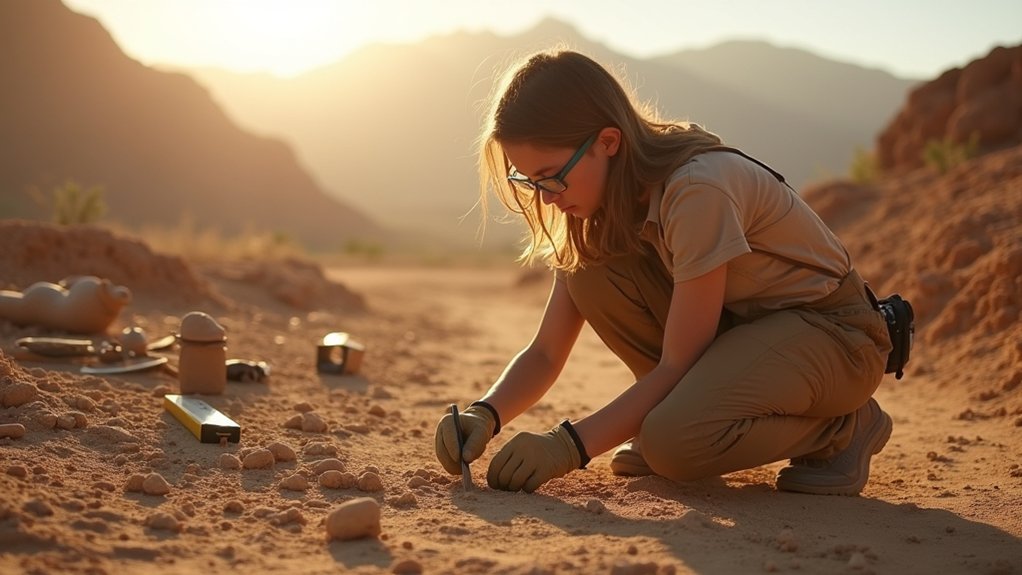
Though you might picture archaeologists as seasoned professionals with decades of experience, structured programs across Peru, North America, and historical sites welcome gap year students aged 15-18 with no prior experience required.
You’ll work alongside professional archaeologists learning excavation techniques, artifact classification, and site mapping at locations like Cusco’s Sacred Valley or Colorado’s San Luis Valley.
These programs prioritize safety with 24/7 supervision and accommodate 12-24 students per session.
You’ll stay with host families or supervised lodges with transportation included.
Free options exist through the National Park Service, while fee-based programs offer additional excursions to sites like Machu Picchu.
Beyond fieldwork, you’ll gain research skills through lab work, documentation, and educational presentations that strengthen university applications. Programs focus on heritage preservation activities including maintaining national sites and protecting archaeological locations from tourist-related damage.
Sustainable Farming and Eco-Tourism Initiatives
From uncovering ancient civilizations, you can shift your focus to cultivating future ones through sustainable farming and eco-tourism programs that offer hands-on agricultural experience while addressing global food security challenges.
The WWOOF program connects you to 1,700 organic farms across America, exchanging half-day work for free accommodation. At just $40 annually ($30 with student discount), it’s budget-friendly with flexible stays from days to months. You’ll learn sustainable agriculture while developing practical skills.
Australia’s AgCAREERSTART offers structured 10-12 month paid placements for ages 18-25, providing mentoring and career development with high agriculture sector retention rates. The program demonstrates remarkable economic impact, returning $5.56 to the agricultural sector for every dollar invested.
New Hampshire’s Glen Brook Farm combines sustainable farming with homesteading skills like fiber arts and carpentry, plus wilderness expeditions that build outdoor leadership abilities while emphasizing environmental stewardship.
Adventure Sports and Outdoor Leadership Training
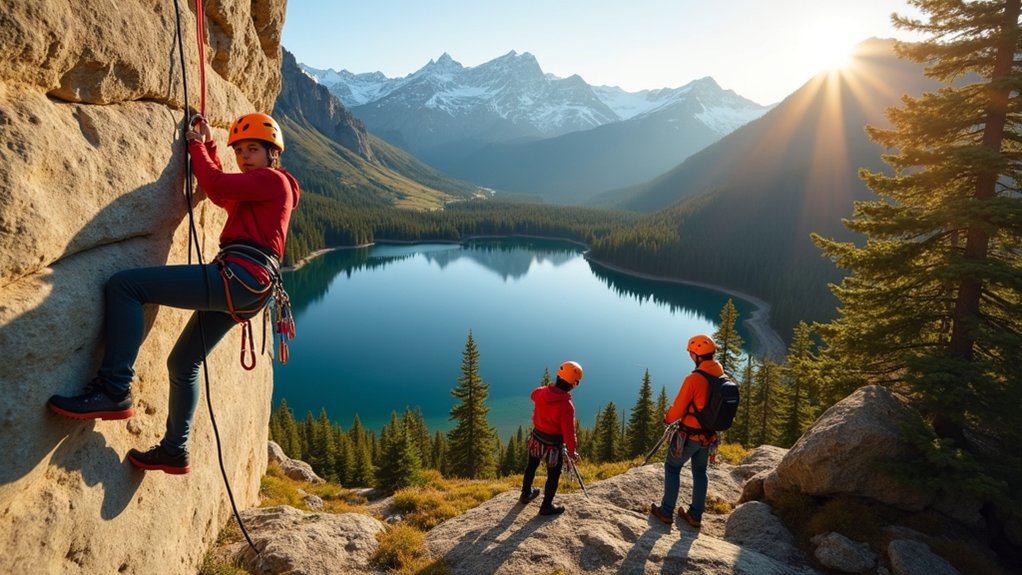
Where can ambitious gap year students develop leadership skills while conquering some of the world’s most challenging outdoor environments? Adventure sports and outdoor leadership programs offer transformative experiences that build confidence, wilderness expertise, and risk management skills.
NOLS provides 14-week wilderness courses in locations like Tanzania, featuring mountaineering and backpacking adventures. Their gap year applications increased 125% year-over-year, though tuition costs around $11,500 excluding room and board. These programs offer safer outdoor environments during the pandemic due to lower outdoor transmission rates.
High Mountain Institute’s Colorado program focuses on rock climbing and public land conservation, expanding by 50% due to demand.
Outward Bound offers *all-encompassing* programs including rafting, sailing, and rock climbing across Oregon and Maine. These programs serve 30,000 annual students and demonstrate significant social-emotional development outcomes.
With 95% of participants reporting adequate preparation for their next step, these adventures create lasting foundations for college success.
Technology and Innovation Internships Abroad
While technology internships abroad offer exciting career opportunities, finding the right program requires careful consideration of costs, safety standards, and educational value. Computer science internships have surged 48% in 2025, with data science leading international placements across multiple cities.
Singapore stands out as Asia’s tech hub, hosting Google and Meta with strong cybersecurity and fintech programs. London dominates European opportunities, accounting for 65% of UK startups and offering diverse fintech roles.
Consider structured programs like CIEE’s summer internships, which provide six academic credits and 225-300 work hours over eight weeks. These programs include internship seminars and skill development components. Programs are customized individually based on your specific career goals and skill level rather than offering pre-set placements.
Part-time options offer 100-120 hours over six weeks, allowing you to maintain graduation timelines while gaining valuable international tech experience in established, supervised environments.
Last Words
You’ll find these gap year options offer incredible growth opportunities while maintaining reasonable costs and safety standards. Research each program thoroughly, verify insurance coverage, and establish regular check-in schedules with family. Don’t forget to budget for emergencies and unexpected expenses. Whether you’re drawn to conservation work or culture, you’ll return home with invaluable life skills, global perspective, and enhanced college applications that’ll set you apart from your peers.