

Transform reluctant teens into enthusiastic travel companions by giving them real decision-making power in destination choices and activity planning. Let them research options, maintain friend connections through scheduled social media time, and respect their natural sleep patterns by avoiding early morning activities. Match activities to their hobbies, provide structured independence with clear safety boundaries, and assign them documentation roles like photography or journaling. You’ll discover how small shifts in approach create lasting enthusiasm for family adventures.
- Give Them Real Input in Trip Planning and Destination Choice
- Build in Structured Independence With Clear Boundaries
- Allow Friend Connections Through Social Media and Video Calls
- Plan Activities That Match Their Current Interests and Hobbies
- Offer Choices Within the Itinerary for Personal Autonomy
- Create Tech-Free Bonding Moments That Feel Natural
- Respect Their Sleep Schedule and Energy Levels
- Include Age-Appropriate Challenges and Learning Opportunities
- Give Them Photography or Documentation Responsibilities
- Plan Some Separate Activities Where They Can Explore Safely
- Last Words
Give Them Real Input in Trip Planning and Destination Choice
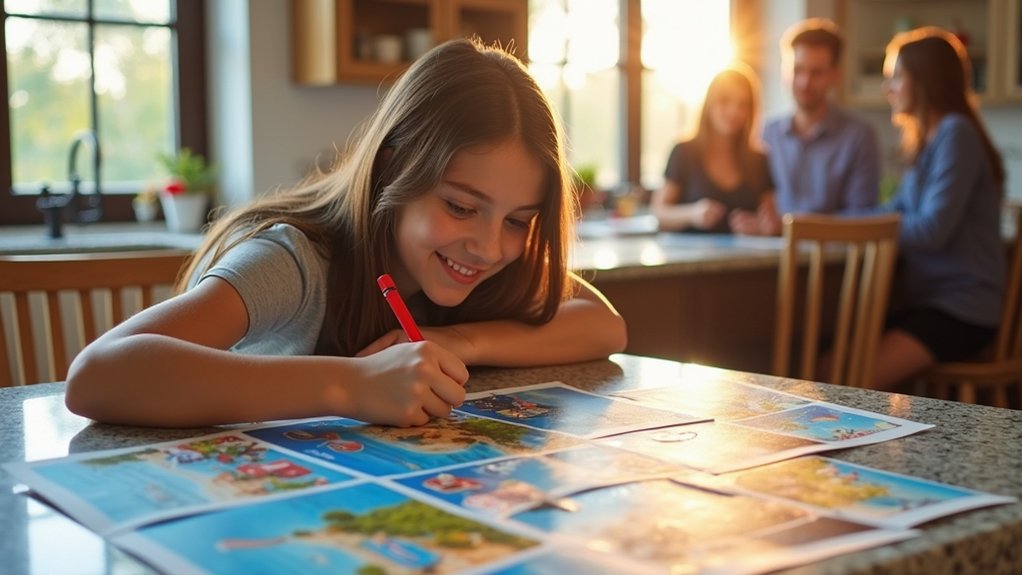
One of the fastest ways to transform a reluctant teen into an engaged travel companion is giving them genuine decision-making power over your family’s destination and itinerary. Nearly two-thirds of kids want real authority over vacation destinations, with teens aged 13-15 showing the strongest desire for input.
When you involve your teenager as a “co-pilot” in planning, you’ll likely see increased adaptability and openness to new experiences.
Try having your teen research and present three potential destinations for your review. This maintains their agency while respecting practical family constraints.
Their digital expertise on platforms like YouTube and social media often uncovers destinations and activities you’d never discover alone, reducing your planning burden while capitalizing on their enthusiasm for online exploration. Teens who help choose destinations develop lifelong skills in geography, culture, and decision-making through the travel planning process.
Build in Structured Independence With Clear Boundaries
While giving teens input on destinations builds excitement, creating opportunities for structured independence during the trip transforms reluctant travelers into confident explorers. You’ll need clear safety protocols—mandatory check-ins, designated locations, and agreed-upon boundaries. Consider real-time GPS tracking, which over half of parents already use.
Start with preparatory training before departure. Enroll your teen in first aid courses, discuss hotel security procedures, and practice handling stranger encounters. This builds both their confidence and your comfort level. Research shows that decreased independence may contribute to rising mental health issues in teenagers, making these skills even more crucial.
Establish clear expectations: check-in frequencies, predetermined meeting spots, and contingency plans. Though only 20% of parents never allow unsupervised time, you can gradually increase freedom based on demonstrated responsibility.
Allow Friend Connections Through Social Media and Video Calls

Nothing kills a teen’s vacation enthusiasm faster than complete digital isolation from their social circle. You’ll find your teen more cooperative when they can maintain those essential friend connections through Instagram, Snapchat, or video calls. Set specific times for social media check-ins rather than imposing complete bans.
This approach actually mirrors how 67% of users rely on these platforms to stay connected with people they care about.
Consider allowing morning or evening “friend time” where they can share vacation photos and chat with their crew. You might be surprised how readily teens engage in family activities when they know they’re not completely cut off. Studies show that children tend to respond more readily to conversations on social media, leading to more open exchanges.
Smart boundaries work better than digital punishment. Let them document and share family moments – it often increases their investment in making those memories worth posting about.
Plan Activities That Match Their Current Interests and Hobbies
Since teens dedicate hours daily to their favorite hobbies, you’ll see dramatically better participation when vacation plans actually connect with what they’re already passionate about.
Research destinations with gaming cafes or esports tournaments if your teen loves competitive gaming. Book accommodations near basketball courts, volleyball nets, or emerging pickleball facilities for athletic teens.
Creative kids will appreciate pottery studios, photography workshops, or local baking classes during your trip.
Consider fitness-focused activities like hiking trails, hotel gyms, or even golf simulators that show 30% growth in popularity. Look for destinations that offer horseback riding opportunities, which uniquely blend physical exercise with nature and help develop patience and responsibility.
For media enthusiasts, plan movie nights featuring nostalgic films or visit filming locations.
The key is matching vacation activities to their existing interests rather than forcing completely new experiences they’ll resist.
Offer Choices Within the Itinerary for Personal Autonomy

When you build flexibility into your family vacation schedule, you’re giving your teen the independence they crave while maintaining the structure you need.
Consider allowing them to explore another section of an amusement park or walk alone to a nearby coffee shop – even though fewer than 25% of parents typically permit this level of freedom.
Set clear safety protocols like mandatory phone check-ins and predetermined meeting spots. Use real-time GPS tracking if it eases your concerns – over half of parents already do.
Start with controlled environments like hotels, then gradually expand their boundaries based on demonstrated responsibility.
This autonomy practice helps counter rising teen anxiety and depression while building essential decision-making skills. Planning family trips during peak summer months like July and August ensures maximum schedule flexibility when school isn’t in session.
Balance structured activities with teen ownership opportunities for a vacation everyone enjoys.
Create Tech-Free Bonding Moments That Feel Natural
While screens often dominate family time, creating natural tech-free moments doesn’t require dramatic declarations or phone confiscation ceremonies. Instead, focus on activities that naturally discourage device use.
Plan hands-on experiences like cooking local cuisine together, building sandcastles, or exploring hiking trails where phones feel unnecessary rather than forbidden.
Research shows families engaging in routine screen-free time report fewer conflicts and more positive interactions. You’ll find success when these moments emerge organically from your activities rather than feeling forced.
Consider collaborative projects like sketching landmarks you’ve visited or playing card games during downtime. Interestingly, while content viewing ranks as the third most important family bonding activity after mealtime and travel, purposeful breaks from screens can actually strengthen these connections. The key is making these experiences feel like natural extensions of your adventure rather than arbitrary rules.
When tech-free time feels purposeful and engaging, even reluctant teens often embrace the break from digital distractions.
Respect Their Sleep Schedule and Energy Levels

Just as you’re creating meaningful shared experiences, you’ll also want to honor your teen’s biological need for sleep and natural energy rhythms. Your teenager isn’t being difficult when they sleep until noon – their brain naturally shifts toward later bedtimes and wake times during adolescence.
Most teens need 9¼ hours of sleep but only get 7-7¼ hours during school, making holiday recovery time essential.
Plan family activities for afternoon or evening when your teen’s energy peaks naturally. Allow moderate catch-up sleep of up to two extra hours, which actually reduces anxiety symptoms.
Avoid scheduling early morning activities that’ll create conflict. Instead, embrace their rhythm by planning meaningful conversations during their alert hours. These biological clock changes are a normal part of puberty that affects when teens naturally feel sleepy and alert.
This respect shows maturity and creates genuine appreciation for family time.
Include Age-Appropriate Challenges and Learning Opportunities
Beyond honoring their natural rhythms, you can tap into your teenager’s developmental need for autonomy by giving them real responsibility in planning your family getaway. Let your teens research and select activities that genuinely interest them—this creates ownership and excitement.
Create a family Pinterest board where everyone pins destination ideas, or delegate specific tasks like researching restaurants or local attractions.
Choose destinations that push them outside their comfort zone while building confidence. Whether it’s charting foreign markets independently, trying white-water rafting, or exploring ancient sites like Athens’ Acropolis, these experiences foster growth.
Give them decision-making power in selecting excursions and cultural activities. When teens actively participate in planning, they’re invested in the trip’s success and discover new capabilities along the way. Consider providing them with prepaid credit cards to manage their own vacation expenses within set limits.
Give Them Photography or Documentation Responsibilities

Since teenagers naturally gravitate toward capturing and sharing their experiences, harness this instinct by making them your family’s official trip documentarians. Create photo scavenger hunts with themes like colors, alphabet letters, or shapes to encourage exploration of destinations like London’s attractions.
Challenge older kids with creative photography techniques—experimenting with angles, positioning light behind subjects, or capturing bokeh effects and light trails.
Assign different documentation tasks: maintaining travel journals, creating photo walls from trip images, or using Instax cameras for retro polaroid prints. Consider hiring a professional photographer for special family portraits that can be incorporated into their documentation projects. Turn it into friendly competition by forming teams, creating shared albums, and assigning point values based on photo difficulty.
Have them present video montages using apps like Capcut, and teach timer functions for group selfies. These responsibilities transform reluctant participants into engaged storytellers.
Plan Some Separate Activities Where They Can Explore Safely
While family togetherness remains the heart of any vacation, strategic separation can actually strengthen your trip’s success. Plan supervised independence that matches your teen’s maturity level and your destination’s safety profile.
Split up at bustling markets like Camden or Spitalfields in London, setting clear meetup times and locations. Resort environments offer perfect opportunities—ski mountains, cruise ships, and all-inclusive properties let teens explore while maintaining security boundaries.
Consider traveling with another family who’s same-age kids, creating natural peer groups for independent activities. Supervised group challenges like escape rooms or trampoline parks provide excitement with adult oversight. These activities promote teamwork and bonding while keeping teens engaged in structured fun.
Urban exploration works well in safe neighborhoods around your hotel, allowing teens to discover local cafés, shops, and culture independently. This balance of freedom and structure shows you trust their growing independence.
Last Words
You’ve got the tools to transform your reluctant teen into an enthusiastic travel companion. Remember, it’s about finding that sweet spot between family time and their growing independence. Don’t expect instant enthusiasm – it might take a trip or two for them to appreciate these adjustments. Stay flexible, keep communicating, and celebrate the small wins. Before you know it, they’ll be asking about your next adventure together.