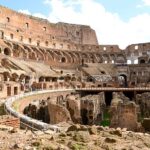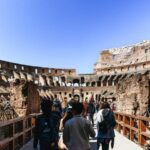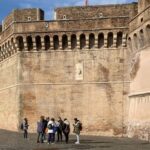
This evening tour through Rome’s Jewish Ghetto and surrounding neighborhoods packs a lot into four hours. You’re getting seven food stops, wine and beer tastings, walking through some of the city’s oldest districts, and learning the stories behind both the food and the places you’re visiting. The small group size caps at 15 people, which makes a real difference when you’re trying to hear your guide and actually connect with the neighborhood instead of moving through it like a herd.
What makes this work is the combination of genuine local food and actual historical context. You’re not just eating—you’re eating in places that matter, learning why these dishes matter, and understanding the neighborhoods you’re walking through. The guides consistently get praised for knowing their stuff, whether it’s the history of the Jewish Ghetto, the details about each dish, or the stories of the surrounding areas like Campo de’ Fiori and Piazza Navona.
The one thing to keep in mind is group pace and guide consistency. Most guides keep things moving smoothly and keep everyone together, but the reviews show this isn’t always guaranteed. If you’re traveling with people who walk at different speeds, you’ll want to mention that when booking. Also, if you’re hoping for a deep dive into modern Jewish history or the interior of the synagogue, this tour focuses more on ancient Rome and the food—you won’t get that here.
- Seven Stops That Actually Fill You Up
- The Guides Really Do Make the Difference
- The Evening Timing Works in Your Favor
- What’s Actually Included (and What Isn’t)
- Price and Value Analysis
- Who This Tour Actually Works For
- The Jewish Ghetto Context
- Logistics and Practical Details
- Potential Downsides Worth Considering
- Making Your Decision
- FAQ
- Do I need to arrange my own transportation to the meeting point?
- What if I have dietary restrictions or allergies?
- Is the interior of the Jewish Synagogue included in the tour?
- How many people will be on the tour?
- How much walking is involved?
- What’s included in the price?
- Can I cancel if my plans change?
- What should I wear?
- What neighborhoods will we visit?
- Do I need to book in advance?
- The Best Of Rome!
- More Food & Drink Experiences in Rome
- More Tours in Rome
- More Tour Reviews in Rome
Seven Stops That Actually Fill You Up
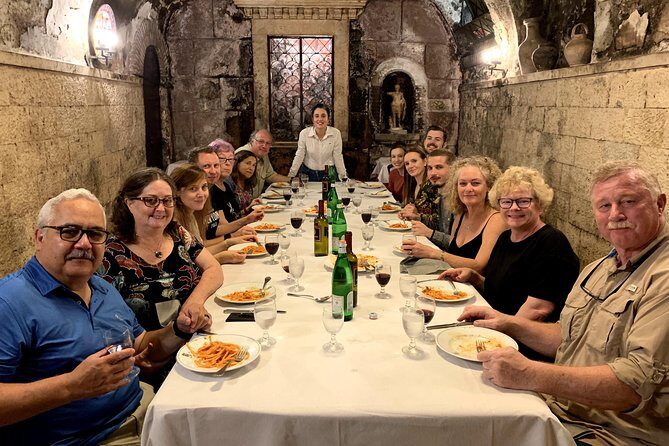
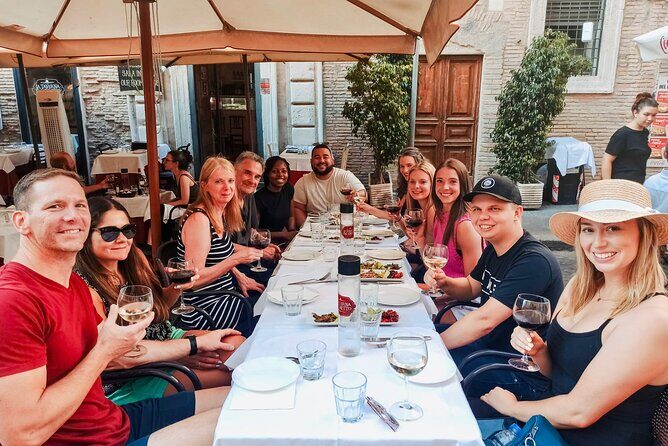
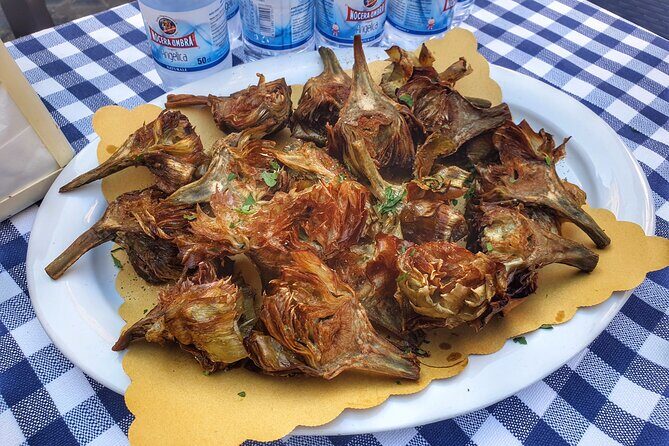
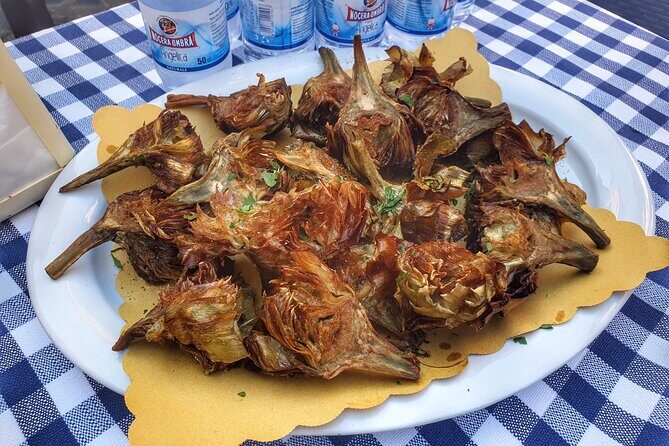
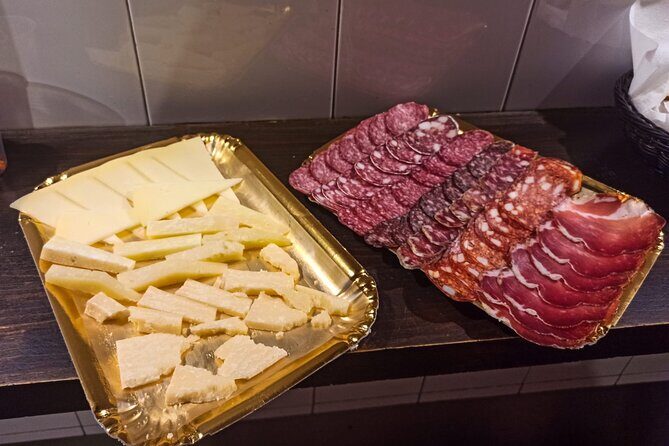
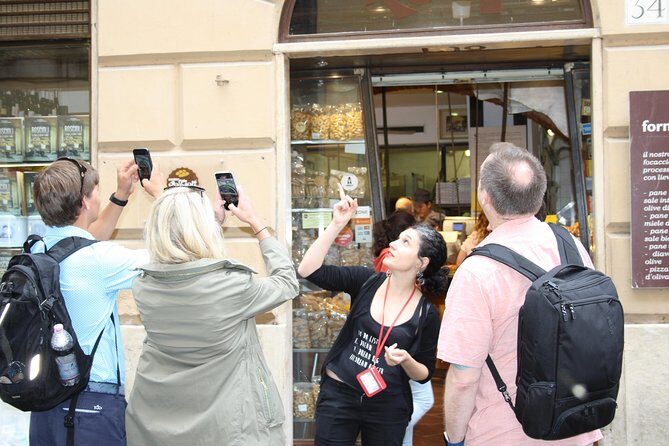
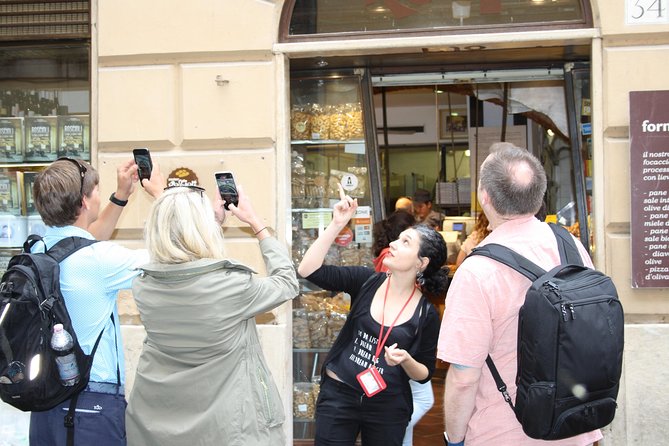
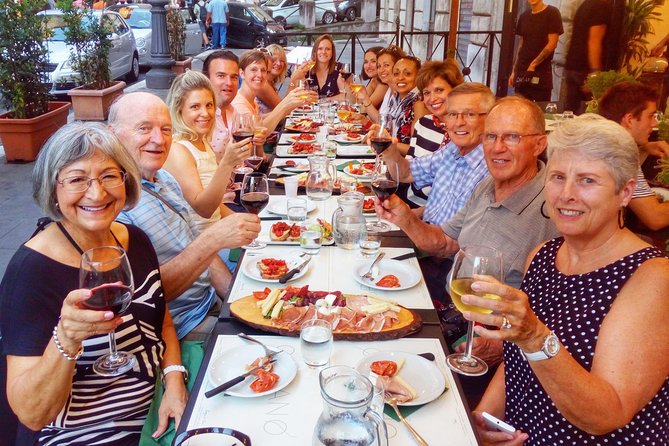
This tour isn’t a tasting menu situation where you leave hungry. You’re hitting seven different places, and the portions add up. You start in the Antico Quartiere Ebraico, the actual Jewish Ghetto neighborhood, where you’ll sample Roman-Jewish fried artichokes at a local restaurant—these crispy, flattened artichokes are a classic dish specific to this area and worth trying even if you hate artichokes normally.
From there, you move through Il Portico di Ottavia, one of the oldest surviving structures in Rome (built during Emperor Augustus’s time), where you’ll stop for cured meats and local cheese paired with wine. The fact that you’re eating while surrounded by 2,000-year-old architecture isn’t lost on anyone who’s done this tour.
Campo de’ Fiori is next, and this is where you’ll find the traditional Roman pizza from a family-run bakery that’s been making it since 1972. Pair that with an award-winning Italian beer, and you’re getting a real sense of how Romans actually eat, not how travelers think they eat.
The main event happens at Area Sacra di Largo Argentina, where you’ll have dinner among the actual ruins of Rome’s oldest theater—this is where Julius Caesar was assassinated, and yes, you’re eating pasta in front of that history. The local wine that comes with this stop ties everything together.
By the time you reach Piazza Navona, you’re moving into dessert territory. You’ll get tiramisù (three different versions to choose from), real Italian coffee from a shop that’s been roasting its own beans since 1938, and finally artisanal gelato from a traditional family shop. The coffee shop detail matters here—they use water from an ancient aqueduct, which is the kind of specific local knowledge that separates a real tour from a generic one.

👉 See our pick of the Discover 2 Great Tours In Rome
The Guides Really Do Make the Difference
The reviews consistently mention guides by name—Maria, Fabrizia, Andrea, Marco, Bruno, Hans—and that’s telling. These aren’t faceless tour operators. They’re people who know the history, know which restaurants to take you to, and genuinely seem interested in sharing what they know.
What you get from the better guides is a running commentary on the neighborhoods, the history layered into each stop, and actual answers to questions instead of a script. One reviewer mentioned their guide had a master’s degree in art history, which elevated the whole experience. Another noted that their guide explained not just what they were eating, but why it mattered and how it connected to the area’s history.
That said, the experience depends partly on who’s leading your group. One reviewer had a guide who walked ahead with faster walkers and left slower members of the group behind—including a couple in their late 80s. The tour operator responded appropriately, but it’s worth noting that if your group has different walking speeds, you should mention it when booking.
You can also read our reviews of more food & drink experiences in Rome



The Evening Timing Works in Your Favor
Tours start at 5:45 pm, which means you’re walking through these neighborhoods as the sun’s coming down and the crowds are thinning out. The Jewish Ghetto and surrounding areas get packed during the day, so the evening timing gives you a chance to actually see the spaces and hear your guide without competing with hundreds of other travelers.
The downside is that cobblestones can be slick if it’s rained, and if you’re not comfortable walking at night in unfamiliar neighborhoods, this might not be ideal. But for most people, the timing is actually a feature—you get better views, better photos, and a more authentic sense of how Romans move through their own city.
What’s Actually Included (and What Isn’t)
The seven food stops, wine, beer, and soft drinks are all included in the price. You’re not nickel-and-dimed for extras at each restaurant. The guide is knowledgeable and local. You’re getting a real dinner, not just samples.
What’s not included: hotel pickup and drop-off. You need to get yourself to Piazza Mattei by 5:45 pm, and the tour ends at Largo di Torre Argentina. If you’re staying in central Rome, public transit or a taxi gets you there easily. Budget 15-20 minutes from most central hotels.
Also not included: the interior of the Jewish Synagogue. You’ll see it from outside, and the guide will explain its history, but you won’t go inside. If that’s important to you, this might not be the right tour.
Price and Value Analysis
At $107.63 per person, you’re paying for seven food stops with wine and beer included, four hours with an expert guide, and access to places you’d struggle to find or understand on your own. That breaks down to roughly $15 per food stop plus the guide’s knowledge.
Compare that to eating dinner at a decent Roman restaurant (€25-40), adding drinks, and you’re already at €40-50 just for one meal. This tour gives you the equivalent of multiple restaurant experiences without the full price tag of each. The wine and beer are included, which matters—that’s another €10-15 per person if you were buying separately.
Is it a bargain? Not in absolute terms. Is it good value? Yes, especially if you’re interested in both food and history. You’re not just getting meals; you’re getting context and local expertise that would take weeks to develop on your own.
Who This Tour Actually Works For
This is perfect if you like walking and eating but don’t need to move fast or cover enormous distances. Four hours of walking through Rome, with frequent stops to eat, is manageable for most fitness levels. You’re not hiking; you’re strolling through neighborhoods with breaks built in.
It works well if you’re interested in how Romans actually eat rather than fancy restaurant experiences. These are neighborhood spots, family-run places, traditional dishes—not Michelin-star dining. The food is good and authentic, but you should go in expecting local trattoria food, not haute cuisine.
It’s less ideal if you have specific dietary restrictions. The tour doesn’t accommodate gluten-free, dairy-free, or vegan diets. Vegetarian options can be arranged if you mention them at booking, and other restrictions can be accommodated if you note them in advance. There’s also a note about nut allergies and cross-contamination risk, so if that’s a concern, you’d need to discuss it directly with the operator.
You can also read our reviews of more tours and experiences in Rome


The Jewish Ghetto Context
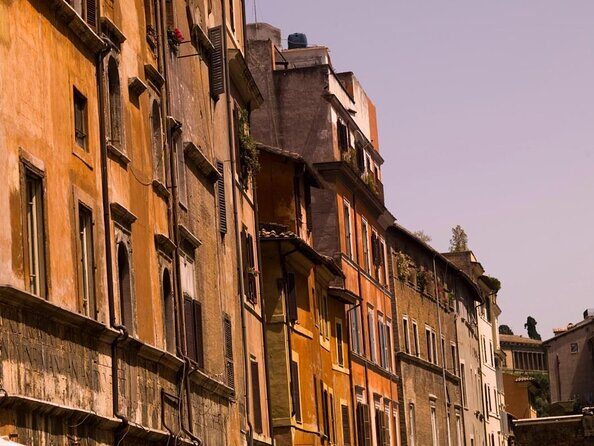
The neighborhood itself has real historical weight. This was where Rome’s Jewish population was confined for centuries—the buildings are notably tall because residents were packed into a small space and could only build upward. There are memorial plaques on the ground marking homes where residents died in the Holocaust. Some guides mention this history; others focus more on ancient Rome and the food. It depends on your guide and their approach.
If you’re looking specifically for Jewish history or Holocaust education, manage your expectations. This is marketed as a food tour that happens to go through the Jewish Ghetto, not as a Jewish history tour. The food is not kosher. The emphasis is on the neighborhood’s food culture and its place in Rome’s larger history, not specifically on Jewish heritage.
Logistics and Practical Details
You’ll need moderate fitness level to do this—four hours of walking with frequent stops. Wear comfortable shoes and dress in smart casual (they specify this in the requirements). The tour operates rain or shine, so check the forecast.
The group size maxes at 15, which is genuinely manageable. It’s small enough that you can hear your guide and ask questions, but large enough that you’re not getting a private tour at a premium price. You’re meeting other travelers, which some people love and others tolerate—the reviews mention that striking up conversations with your group enhances the experience.
Book at least a couple of weeks in advance if possible. The average booking comes in 56 days ahead, which suggests this tour fills up, especially during peak season. You can cancel free up to 24 hours before, so there’s no real risk if your plans change.
Potential Downsides Worth Considering
Some reviewers felt the food was repetitive—that the dishes served weren’t special enough to justify the focus on food. One person noted that aside from the first couple of stops, the offerings were things you could find at any Roman restaurant. This is worth considering if you’re expecting unusual or innovative dishes.
Another reviewer mentioned wanting a handout or list of the restaurants visited so they could return later. That’s feedback the operator should consider, but it’s not currently included, so if that matters to you, you might want to take photos or notes at each stop.
The walking pace issue came up in one review, where slower walkers felt left behind. This is preventable if you mention your group’s pace when booking, but it’s worth being aware of.
Making Your Decision
Book this tour if you want to eat well, learn actual history, and have a knowledgeable local guide. If you’re interested in food culture and how Romans actually eat, and you want context for what you’re tasting, this delivers. If you value small groups and evening neighborhood walks, this hits the mark.
Skip it if you have strict dietary needs that aren’t vegetarian, if you’re looking specifically for Jewish heritage education, or if you want to move quickly through a lot of Rome. Also skip it if you prefer sit-down restaurant meals over multiple standing stops and tastings—some stops are quick bites, not full sit-downs.
The real value here isn’t just the food—it’s the combination of food, local expertise, small group size, and the chance to see neighborhoods that matter historically without the midday tourist crowds. That combination doesn’t come cheap, but it’s worth the price if it matches what you’re looking for.
Jewish Ghetto & Piazza Navona: Food, Wine & Sightseeing Rome Tour
FAQ
Do I need to arrange my own transportation to the meeting point?
Yes. Hotel pickup is not included. The tour starts at Piazza Mattei in central Rome, and you’ll need to get there by taxi, public transit, or on foot depending on where you’re staying. The area is near public transportation, so buses and trams are convenient options.
What if I have dietary restrictions or allergies?
Vegetarian options can be arranged if you mention them at booking. Other dietary restrictions can be accommodated if you note them in advance in the special requirements field. However, the tour does not accommodate gluten-free, dairy-free, or vegan diets. If you have nut allergies, be aware there’s a risk of cross-contamination at the restaurants.
Is the interior of the Jewish Synagogue included in the tour?
No. You’ll see the synagogue from outside and learn about it from your guide, but the tour does not include going inside the building.
How many people will be on the tour?
The tour is capped at 15 travelers maximum, which keeps it small enough to hear your guide and ask questions without feeling like you’re in a huge group.
How much walking is involved?
You’ll walk for four hours with frequent stops to eat. The pace is moderate, and you’re not covering huge distances quickly—you’re strolling through neighborhoods with built-in breaks. Most people with moderate fitness can handle it, though you should wear comfortable shoes.
What’s included in the price?
The price includes seven food tastings at different restaurants, wine and beer with meals, soft drinks at all stops, a full dinner among ancient Roman theater ruins, and a local expert guide. Hotel transportation is not included.
Can I cancel if my plans change?
Yes. You can cancel free up to 24 hours before the tour starts. If you cancel less than 24 hours in advance, you won’t get a refund.
What should I wear?
The dress code is smart casual. Wear comfortable walking shoes since you’ll be on your feet for four hours on cobblestone streets, which can be slick if it’s rained.
What neighborhoods will we visit?
You’ll tour the Jewish Ghetto, Campo de’ Fiori, Piazza Navona, and surrounding areas including the Teatro di Marcello, Area Sacra di Largo Argentina, the Church of St. Eustace, and Il Portico di Ottavia. The exact order and stops can change based on the day and guide preferences.
Do I need to book in advance?
The average booking comes in about 56 days ahead, which suggests the tour fills up regularly, especially during peak season. Booking a few weeks in advance is recommended to secure your spot.