
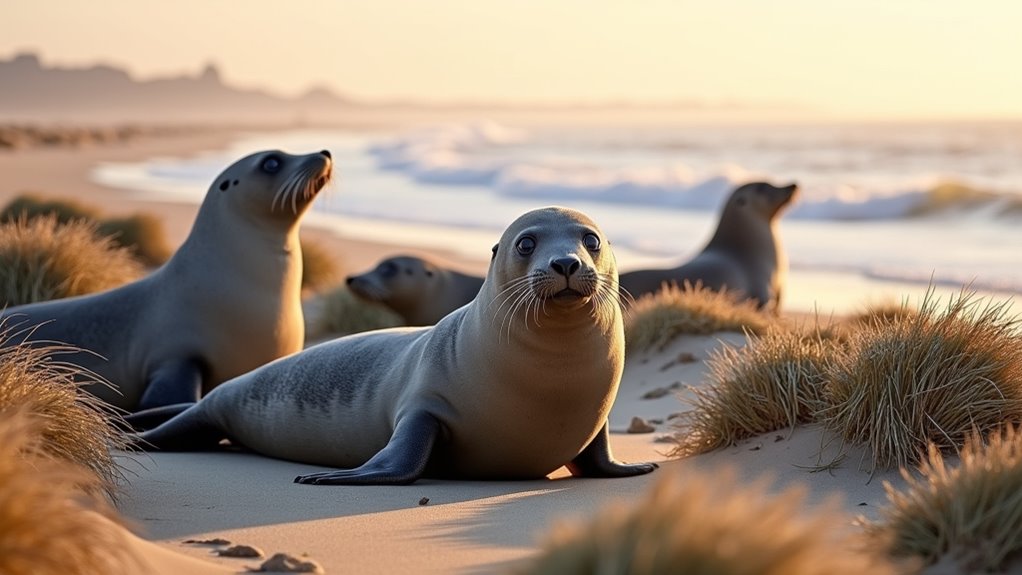
You’ll have the best seal watching experience at Winterton Beach by visiting during pupping season from November to February when over 3,000 pups are born. Arrive early before 9am to avoid crowds and secure parking at the main car park for £7-8. Stay 10-15 metres away from seals, keep dogs on leads, and dress warmly in layers with waterproof gear. Support conservation through Friends of Horsey Seals donations. Discover additional insider secrets below for an unforgettable wildlife adventure.
- Plan Your Visit During Peak Pupping Season for Maximum Seal Activity
- Choose the Right Car Park and Understand Parking Costs at Winterton Beach
- Take the Scenic Winterton to Horsey Coastal Walk Along the Dunes
- Maintain Safe Distances and Respect Wildlife Protection Guidelines
- Dress Appropriately for Exposed Coastal Conditions and Changing Weather
- Bring Binoculars and Camera Equipment for Close-Up Views Without Disturbance
- Follow Proper Etiquette to Keep Seals Calm and Undisturbed
- Visit Early Morning or Weekdays to Avoid Crowds and Enjoy Peaceful Viewing
- Support Local Conservation Efforts Through Friends of Horsey Seals
- Consider Staying Overnight in Local Accommodation for Multiple Viewing Opportunities
- The Sum Up
Plan Your Visit During Peak Pupping Season for Maximum Seal Activity
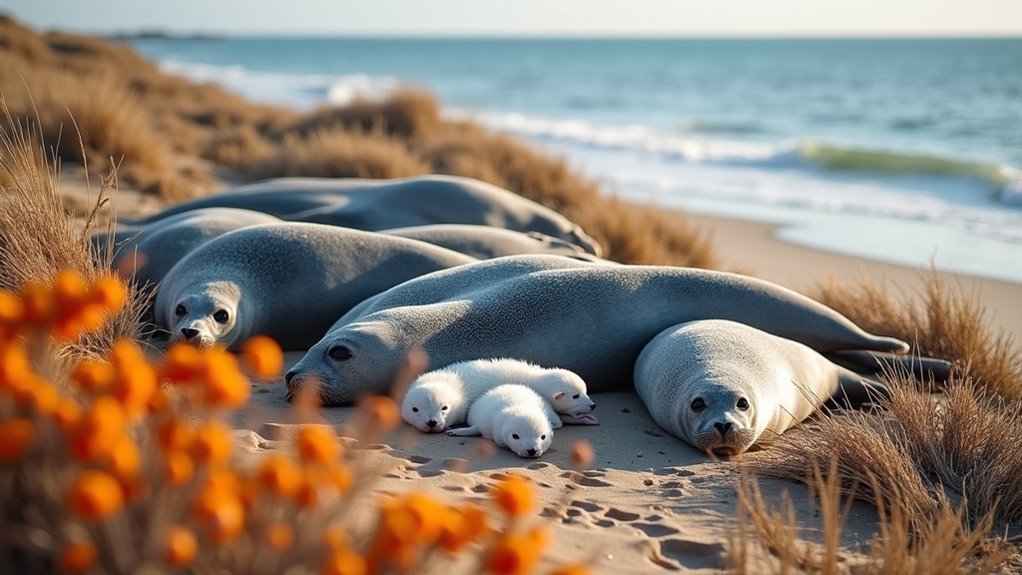
When you’re planning your seal-watching adventure in Winterton, timing your visit during peak pupping season from November to early February will give you the best chance to see thousands of adorable seal pups. You’ll witness incredible activity as over 3,000 pups are born along the Norfolk coast during this magical winter period.
The breeding season transforms beaches into amazing wildlife nurseries where you can safely watch from designated viewing areas. This remarkable growth stems from the first colony established at nearby Horsey in 2002, which has led to the current seal population boom across the region.
Plan your trip between October and March for the most seal sightings, but remember that beach access is restricted during the 12-week breeding season from November to January. This protection guarantees mums and babies stay safe while you still get fantastic views from the dunes and special viewing platforms.
Choose the Right Car Park and Understand Parking Costs at Winterton Beach
Once you’ve picked your perfect seal-watching dates, you’ll need to sort out parking at Winterton Beach. The main car park sits on top of dunes at the end of Beach Road, offering great seal views with binoculars before you even walk down to the beach.
Expect to pay around £7-£8 for all-day parking, though prices vary slightly. The nearby Coastwatch car park costs £5 per day and sits next to Dunes Cafe. Both only accept cash, so bring coins!
The car park opens at 8:30am and closes between 6-7pm depending on season. No motorhomes or coaches are allowed. The sandy dunes terrain makes this location particularly suitable for families and casual walkers planning to explore the seal watching route.
If you’re visiting nearby Horsey Gap too, remember their car park locks promptly at 4pm, so plan accordingly for your seal adventure!
Take the Scenic Winterton to Horsey Coastal Walk Along the Dunes
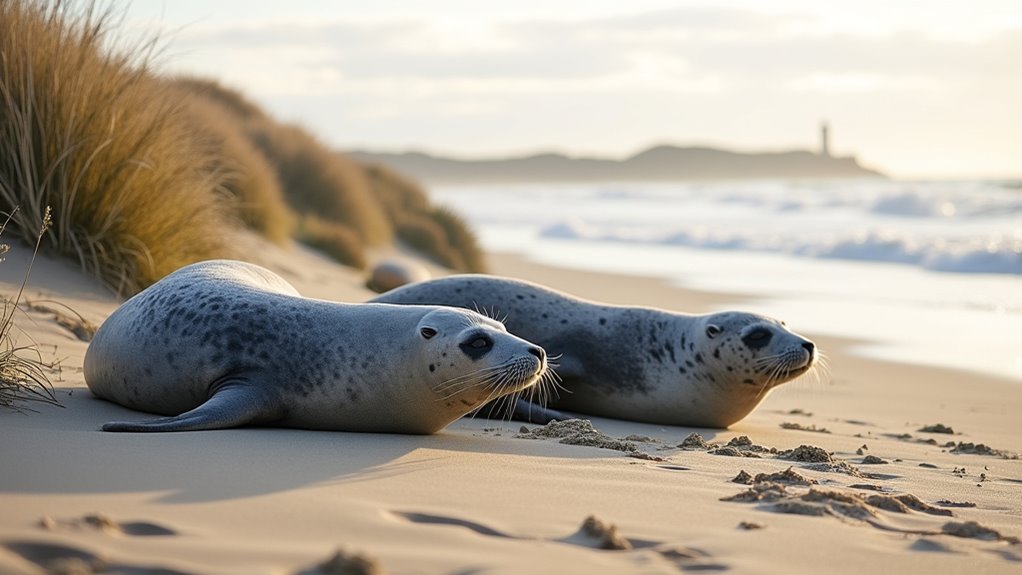
If you’re feeling adventurous after watching seals, the coastal walk between Winterton and Horsey offers some of Norfolk’s most stunning dune scenery. You’ll discover wide sandy beaches and rolling dunes that stretch for miles along the coast.
The terrain is easy to moderate, great for families with older children who can handle soft sand sections.
Choose the shorter 4.2-mile route to Horsey Gap if you’re walking with kids – it takes about 2.5 hours with stops. Follow the clearly marked footpaths through Winterton Dunes Nature Reserve, staying on designated tracks to protect fragile dune edges.
You’ll spot amazing wildlife including natterjack toads and overwintering birds. The full coastal route also passes the historic Brograve Drainage Mill ruins, adding a touch of Norfolk’s industrial heritage to your wildlife adventure. Best of all, this free walk provides elevated viewing points of the main seal colony near Horsey Gap without disturbing the animals.
Maintain Safe Distances and Respect Wildlife Protection Guidelines
Although seals may look adorable and approachable, you’ll need to stay at least 10-15 metres away to keep both you and the wildlife safe. Getting too close can make seals rush into the water, which wastes their energy and puts pups at risk of drowning since they’re not strong swimmers yet.
Always stick to marked paths and stay behind ropes or fences at Winterton – they’re there for good reasons! These barriers protect sensitive areas where seal families rest and nurse their babies. During the breeding season, volunteer wardens actively manage cordoned areas to ensure the seals remain undisturbed while raising their young.
If you’re bringing your dog, keep them on a lead at all times. Seals see dogs as dangerous predators and might attack to protect their young.
Never try to feed, touch, or take selfies with seals, and always give them clear escape routes to the sea.
Dress Appropriately for Exposed Coastal Conditions and Changing Weather
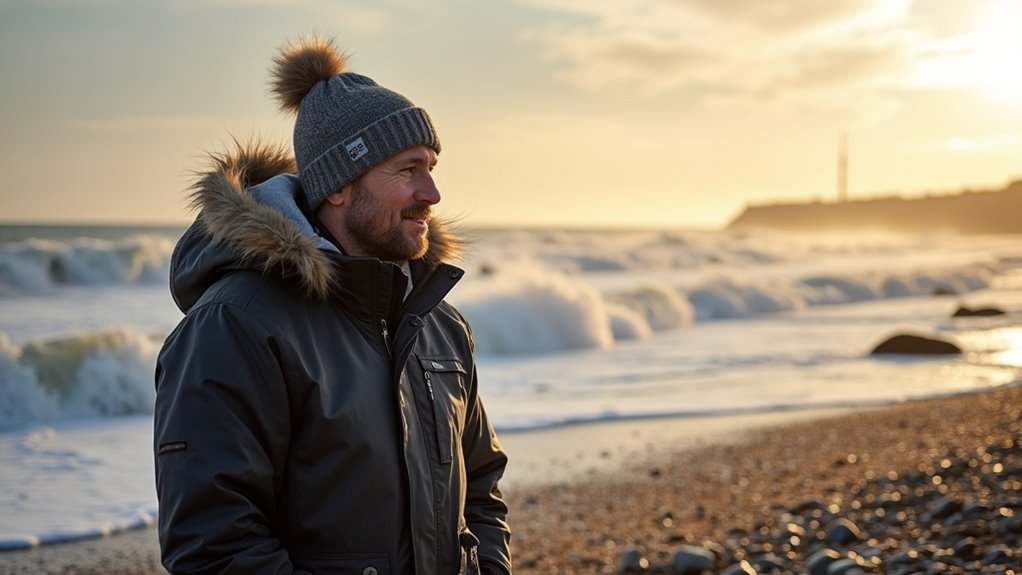
When winter winds whip across Winterton’s exposed coastline, you’ll need the right clothing to stay warm, dry, and comfortable during your seal-watching adventure. December temperatures drop to 6-8°C with winds reaching 47mph, so layering is essential.
Start with thermal underwear, add a fleece mid-layer, and top with a windproof jacket.
You’ll want waterproof trousers and sturdy hiking boots with deep treads for slippery coastal paths. Wool socks work better than cotton for keeping feet warm and dry. Don’t forget your head and neck – wear a thermal beanie and scarf to prevent heat loss.
Pack waterproof gloves and apply lip balm for extra protection. Check charity shops for affordable outdoor gear if you’re shopping on a budget. With December bringing approximately 7 rainy days, having reliable waterproof gear becomes even more crucial for your seal-watching expedition.
Bring Binoculars and Camera Equipment for Close-Up Views Without Disturbance
While staying at the recommended safe distance protects seals from stress, you’ll want binoculars and a camera with a zoom lens to see these amazing animals up close.
Choose 8x-10x binoculars that help you spot seals without getting too near. For cameras, a 200-400mm zoom lens captures great photos from the viewing areas.
Look for weather-sealed equipment that won’t break if sand or sea spray gets on it. You don’t need expensive gear – basic binoculars and a camera with good zoom work perfectly.
Turn off your camera’s flash and use quiet shutter mode so you won’t scare the seals. With over 2,500 grey seal pups born at Horsey Gap during the 2024-25 season, there will be plenty of opportunities for amazing photos.
Remember to stay behind the ropes and cordons. Your binoculars and zoom lens let you watch seal families safely while keeping these wonderful animals calm and happy.
Follow Proper Etiquette to Keep Seals Calm and Undisturbed
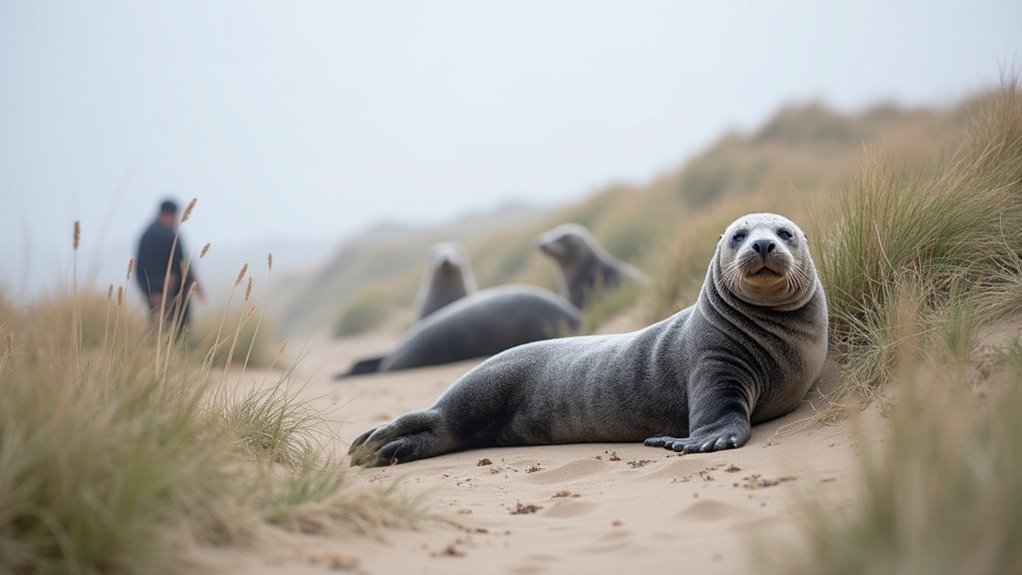
Since seals can move surprisingly fast when they feel threatened, you’ll need to follow strict rules that keep both you and the seals safe. Always stay at least 15 meters away from seals – that’s about three car lengths! Keep even further back during breeding season when mothers are protecting their babies.
Stick to marked paths and never cross barriers or fencing. These protect sensitive areas where seals rest and raise pups.
Keep your dog on a short lead at all times, and remember dogs aren’t allowed on beaches during pupping season. Remember that seals may bite if you approach too closely, so maintaining proper distance protects everyone involved.
Stay quiet and avoid sudden movements that might startle the seals. Listen carefully to volunteer wardens from Friends of Horsey Seals – they’re there to help everyone enjoy watching these amazing animals safely.
Visit Early Morning or Weekdays to Avoid Crowds and Enjoy Peaceful Viewing
Although thousands of visitors flock to Winterton-Horsey between November and January, you can enjoy a much quieter seal-watching experience by timing your visit carefully.
Arrive before 9-10 am to beat the crowds and secure better parking at Horsey Gap. You’ll avoid the congested car parks and long walks from overflow areas that happen later in the day.
Choose mid-week days outside school holidays when families aren’t visiting. December and early January weekends are the busiest times, so avoid these if possible.
Consider visiting during shoulder periods in late October or late January when you’ll still see plenty of seal pups but with fewer people around. During this time, you might witness mothers who come ashore 24 hours before giving birth, making your visit particularly memorable.
Early mornings offer peaceful soundscapes where you’ll hear mainly sea, wind, and seal calls rather than chattering crowds.
Support Local Conservation Efforts Through Friends of Horsey Seals
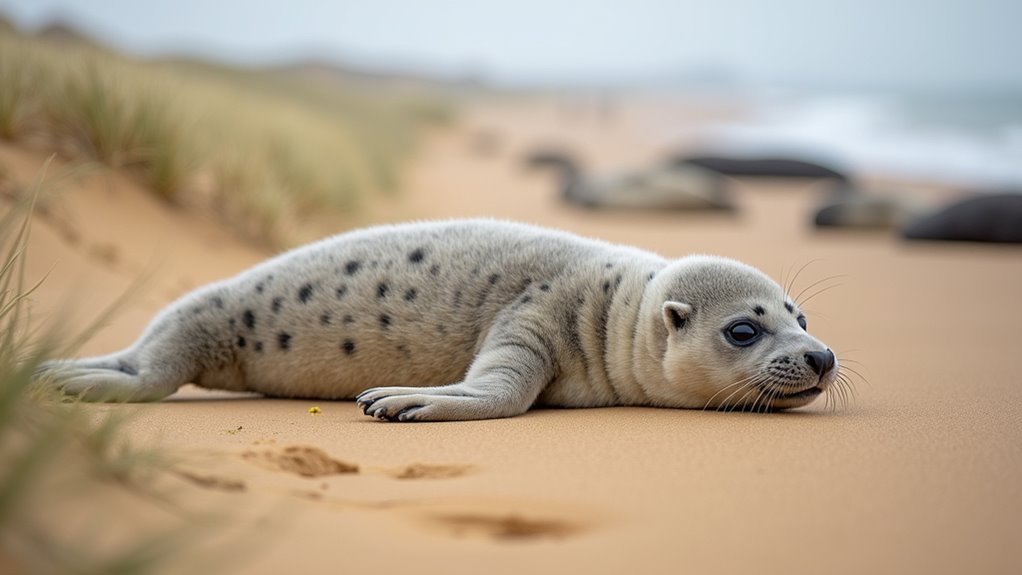
Your peaceful seal-watching experience becomes even more meaningful when you support the charity that makes it possible. Friends of Horsey Seals (FoHS) protects the grey seal colony at Winterton and Horsey through volunteer wardens who keep visitors at safe distances from seal families.
These helpful volunteers prevent pup abandonment by ensuring mums and babies aren’t separated by crowds.
You can help FoHS continue their important rescue work by making small donations through their website or becoming a family member. Your support funds their trained rescue team who save seals tangled in fishing nets and plastic waste. Britain is home to about 50% of the world’s Grey Seal population, making local conservation efforts particularly important for this globally rare species.
Even pocket money donations help provide the viewing areas and signs that make your seal-watching adventure safe and enjoyable while protecting these amazing animals.
Consider Staying Overnight in Local Accommodation for Multiple Viewing Opportunities
When you stay overnight near Winterton Beach, you’ll have multiple chances to spot seals without rushing back home the same day. You can take several dune walks daily from cosy accommodations like Sunny View bungalow, which sleeps six people and sits just minutes from the beach.
If you’re bringing pets, many properties welcome dogs for small extra fees. Hermanus Roundhouses offer pet-friendly units starting at £10 per pet. Most Winterton Cottages properties allow dogs too, and they’re allowed on the beach year-round.
Staying locally means you can visit both Winterton and nearby Horsey seal colonies during your trip. You’ll spot hundreds of seals and newborn pups during November visits. Multiple viewing opportunities make overnight stays worthwhile for dedicated seal watchers. Remember to keep dogs on leads near dunes during seal pupping season to protect both wildlife and your pets.
The Sum Up
You’ll have an amazing time watching seals at Winterton if you follow these simple tips! Remember to stay safe by keeping your distance from the seals and dressing warmly for the beach weather. Don’t forget to bring snacks and drinks to save money, and always stick with grown-ups. The seals are wild animals, so you mustn’t get too close. Have fun exploring this special place while protecting these wonderful creatures!