
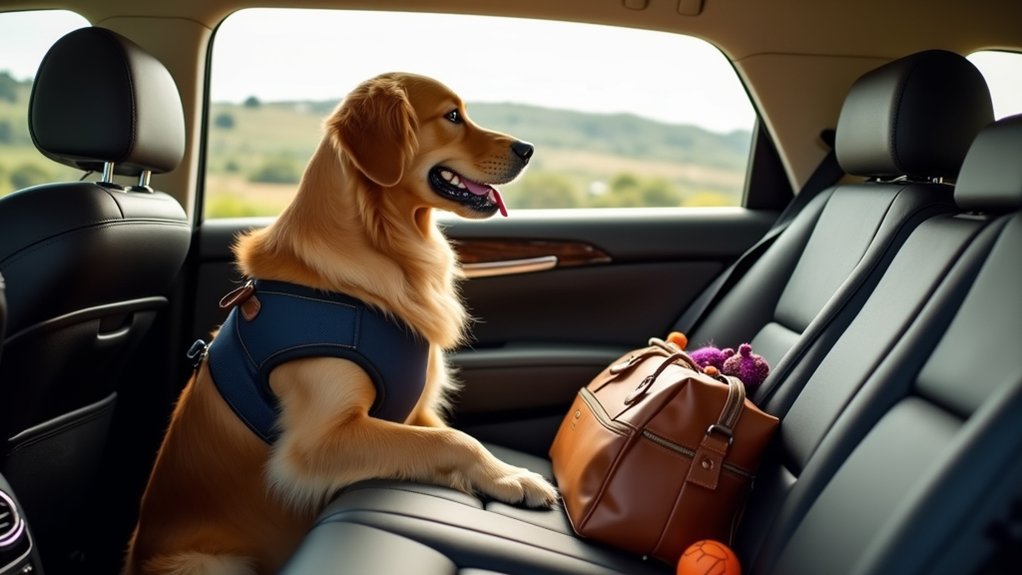
Before traveling with your dog, complete all necessary health documentation and CDC import forms, then invest in crash-tested safety harnesses for vehicle travel. Prevent motion sickness by withholding food 4-8 hours before departure and schedule regular breaks every 1-2 hours. Maintain your pet’s feeding routine, pack familiar comfort items, and research airline policies if flying. Book pet-friendly accommodations early since demand has increased 30% recently. These foundational strategies will transform your family vacation experience.
- Plan Ahead With Proper Documentation and Health Requirements
- Invest in Quality Safety Restraints for Vehicle Travel
- Prevent and Manage Motion Sickness During the Journey
- Maintain Your Dog’s Regular Routine Throughout the Trip
- Understand Airline Policies for Flying With Your Pet
- Pack Essential Supplies for Comfort and Emergencies
- Schedule Regular Breaks for Exercise and Relief
- Research Pet-Friendly Accommodations and Destinations
- Last Words
Plan Ahead With Proper Documentation and Health Requirements
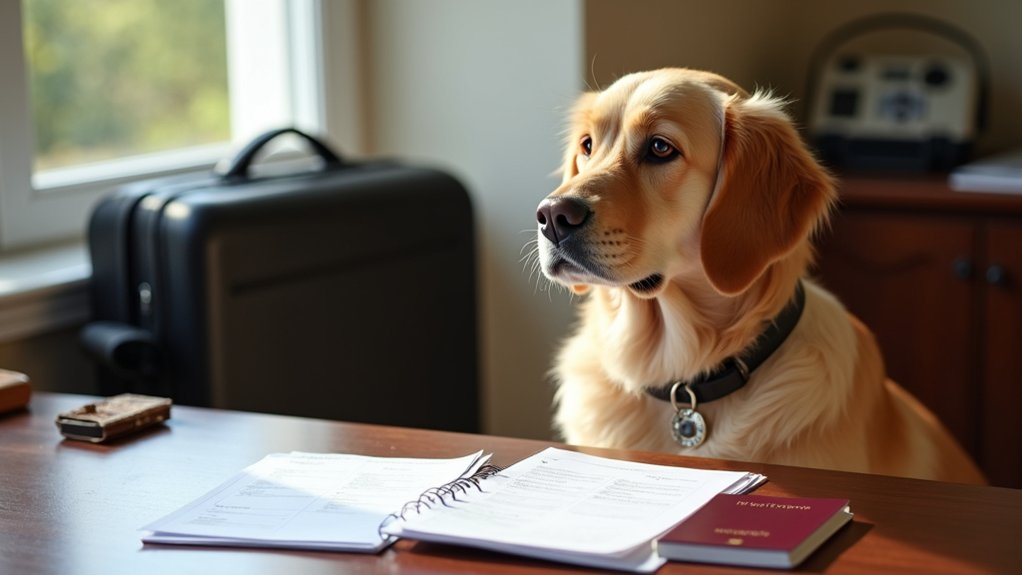
Before you book that flight with your furry companion, you’ll need to tackle a mountain of paperwork that’s become substantially more complex since August 2024. The CDC now requires import forms for all dogs entering the U.S., and you’ll need to show this receipt both at boarding and customs.
Your dog must be microchipped, at least six months old, and appear healthy.
If you’re coming from high-risk rabies countries, expect stricter requirements and limited entry airports. You’ll need USDA-endorsed vaccination certificates, and foreign-vaccinated dogs require government veterinarian endorsements.
Don’t forget state-specific requirements like Oregon’s Certificate of Veterinary Inspection. Contact a USDA-accredited veterinarian early—this process isn’t something you can rush. For domestic travel, dogs need to be at least 8 weeks old to qualify for in-cabin transport.
Invest in Quality Safety Restraints for Vehicle Travel
While airline travel gets most of the safety attention, your dog faces far greater risks during everyday car rides. An unrestrained 50-pound dog becomes a 2,000-pound projectile in a 25mph crash – that’s 40 times their body weight hurtling forward.
You’ll want crash-tested harnesses like the EzyDog Drive or Sleepypod Clickit Sport, both certified by recognized safety agencies. These harnesses work best for dogs weighing 25-75 pounds, spreading impact forces across your dog’s chest rather than their neck. Always position your dog in the back seat to keep them away from potentially dangerous front airbags.
Installation’s straightforward: thread your seat belt through the harness loops or use tether systems that connect to LATCH anchor points.
For larger dogs over 70 pounds, consider crash-tested crates like the Gunner G1, which show higher survival rates in high-speed collisions.
Prevent and Manage Motion Sickness During the Journey
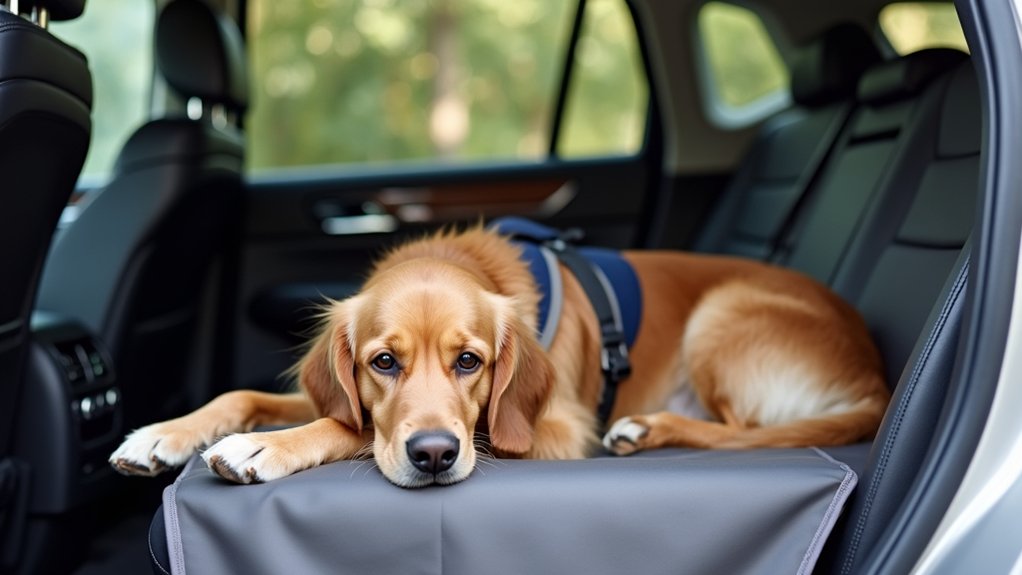
Just like humans, dogs can experience motion sickness that’ll turn your road trip into a miserable ordeal for everyone involved. You can prevent this by withholding food 4-8 hours before travel, though keep water available in spill-proof bowls.
Position your dog’s crate on the car’s middle floor where there’s less motion, facing forward with sides covered to block passing scenery.
Create a calming environment by cracking windows slightly for fresh air and playing soft music. Use calming spray 20 minutes before departure. Secure your dog with an approved seat belt and harness during rides for their safety and comfort.
For medication, give antihistamines like Dramamine 30 minutes prior, or ask your vet about Cerenia or meclizine.
Take breaks every 1-2 hours for walks and hydration, and choose straight routes over winding roads whenever possible.
Maintain Your Dog’s Regular Routine Throughout the Trip
Dogs thrive on predictability, so maintaining their familiar routine becomes your secret weapon for a stress-free trip. Pack your dog’s regular food for the entire journey to prevent digestive upset from sudden dietary changes. Stick to their usual feeding schedule and use familiar bowls—introduce portable collapsible ones a week before departure.
Keep exercise consistent with scheduled stops every few hours for walks, potty breaks, and hydration. Train your dog beforehand to relieve themselves on various surfaces like concrete and gravel. Maintain regular playtime and bring both favorite toys and new puzzle toys to prevent boredom.
Don’t forget comfort items like their favorite blanket or bed, and avoid leaving them alone in unfamiliar environments while keeping their sleep schedule intact. Continue your dog’s training routines consistently throughout the trip to prevent behavioral regression and maintain progress.
Understand Airline Policies for Flying With Your Pet
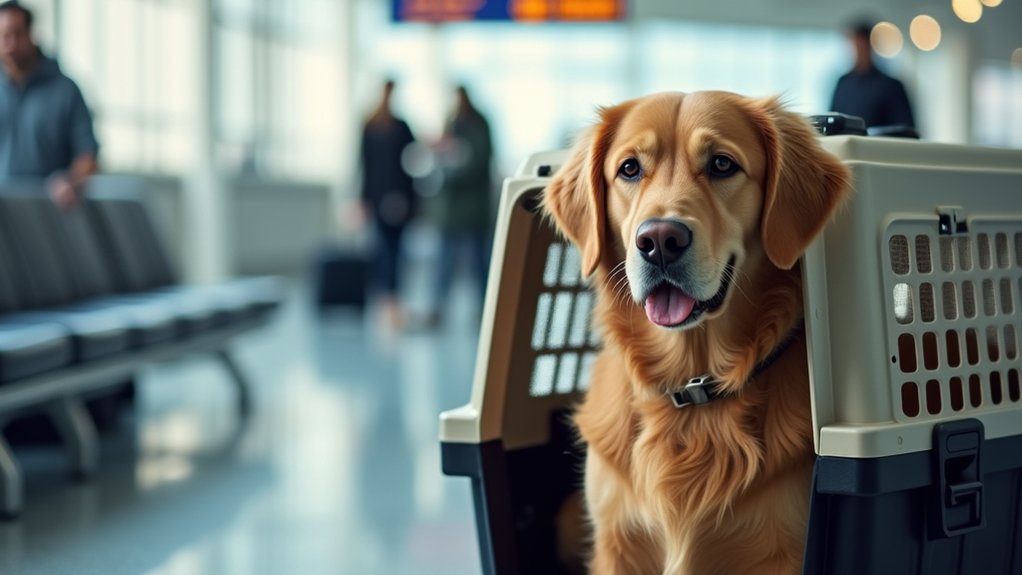
When your travel plans include flying, researching airline policies becomes just as important as packing your dog’s favorite toys. Each airline has different requirements that’ll affect your trip planning.
You’ll need a soft-sided carrier that fits under the seat—Delta recommends 18 x 11 x 11 inches, while Southwest allows up to 18.5″ x 13.5″ x 9.5″. Air Canada will require soft-sided carriers for all cabin pets starting June 1, 2025, as hard kennels will no longer be accepted.
Age requirements vary too: Delta requires dogs at least 10 weeks old for domestic flights, but 16 weeks for international travel.
Expect to pay between $50-$200 depending on your airline choice. Book early since most airlines limit pets per flight on a first-come, first-serve basis.
Don’t forget that service dogs fly free with proper documentation.
Pack Essential Supplies for Comfort and Emergencies
While airline policies get you to your destination, smart packing guarantees your dog stays comfortable and safe throughout the entire journey. Start with identification essentials: updated ID tags, microchip details, and recent photos.
Pack extra food in zip-lock bags, collapsible bowls, and treats for calming. Don’t forget familiar bedding, favorite toys, and something that smells like home to reduce anxiety.
Hygiene supplies matter too—bring abundant poop bags, grooming wipes, and microfiber towels for quick cleanups. Your emergency kit should include current medications, vaccination records, first aid basics, and weather protection like boots or rain jackets.
Pack backup collars and leashes, plus empty water bottles you’ll fill at airports. For car travel, ensure safety with a dog seatbelt that attaches to your pet’s harness or collar for secure transport. This preparation transforms stressful travel into manageable adventures for both you and your furry companion.
Schedule Regular Breaks for Exercise and Relief
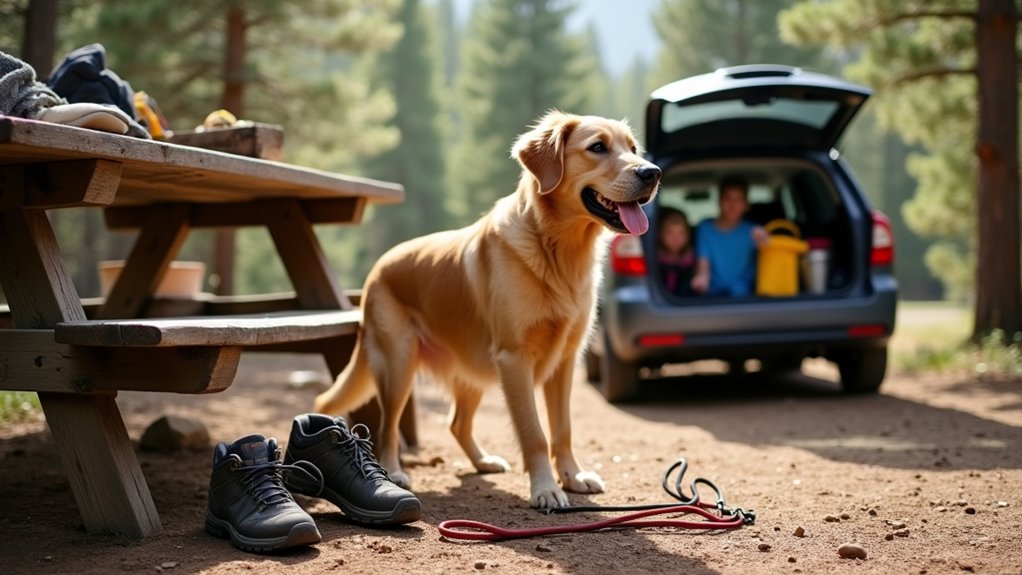
Just as you’d need bathroom breaks and leg stretches on a long journey, your dog requires regular stops every 2-4 hours during car trips to stay comfortable and healthy.
Since less than half of UK dog owners walk their dogs daily, with weekday walks averaging under 20 minutes, your furry friend will especially appreciate these extended holiday breaks.
Plan each stop with purpose—allow time for sniffing, exploring, and relieving themselves without rushing. Stay relaxed during these breaks, as your calm energy transfers directly to your dog. Dogs benefit from long walks, play, and attention as perceived happiness factors that contribute to their overall well-being during travel.
Tailor exercise intensity to your dog’s breed, age, and fitness level. Swimming offers excellent low-impact exercise if you’re near water.
These regular intervals prevent the 16% traveler difficulty of maintaining proper exercise schedules while strengthening your bond through uninterrupted quality time together.
Research Pet-Friendly Accommodations and Destinations
Beyond planning your travel route and stops, you’ll need to secure accommodations that welcome both you and your four-legged companion. The good news? Pet-friendly options are booming, with 27% of Airbnb listings and 25% of VRBO properties accepting pets.
You’ll find excellent opportunities in destinations like Dallas (79% pet-friendly rentals), Austin (77%), and surprisingly, New York City (72%).
Pet-friendly accommodations aren’t just available—they’re profitable investments that command 9% higher daily rates. Look for properties offering pet amenities like washing stations, dog runs, or fenced areas. Pet-friendly properties are more likely to be single-family homes rather than condos, giving your dog more space to roam.
Destinations such as Paradise Valley, Arizona, and Cape San Blas, Florida, lead with over 60% pet-friendly listings. Book early, as demand has increased 30% recently, and expect to pay premium rates for quality pet-friendly stays.
Last Words
You’ve got the roadmap for stress-free travel with your furry companion. Don’t let the planning overwhelm you—start with the basics like documentation and safety gear, then work through each tip at your own pace. Remember, your dog feeds off your energy, so stay calm and flexible when things don’t go perfectly. With proper preparation and realistic expectations, you’ll create amazing memories together that’ll last a lifetime.