
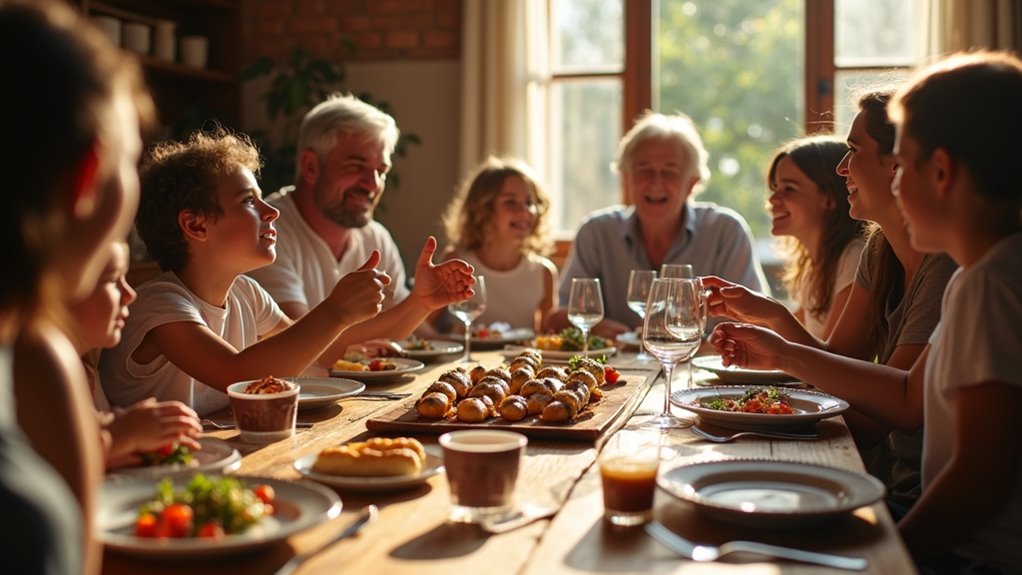
Master these twelve essential Portuguese phrases to transform your family vacation: “Olá, tudo bem?” (Hello, how’s everything?), “Obrigado/Obrigada” (Thank you), “Onde fica…?” (Where is…?), “Quanto custa?” (How much?), “Queria…” (I would like…), “Com licença” (Excuse me), “Não entendo” (I don’t understand), “Pode ajudar?” (Can you help?), “Estava delicioso” (It was delicious), “Tchau” (Bye), “Até logo” (See you later), and “Um abraço” (A hug). These phrases will help you navigate restaurants, ask for directions, and connect warmly with locals who’ll share their favorite regional specialties and hidden gems.
- Basic Greetings and Polite Expressions
- Meeting New People and Making Connections
- Finding Your Way Around Tourist Areas
- Locating Essential Facilities and Services
- Ordering Food and Drinks at Restaurants
- Asking About Prices and Making Purchases
- Getting Help When You Don’t Understand
- Emergency Phrases for Safety Situations
- Expressing Appreciation for Food and Experiences
- Understanding Regional Specialties and Local Culture
- Saying Goodbye Appropriately in Different Contexts
- Fun Slang Words Kids Will Love to Learn
- The Sum Up
Basic Greetings and Polite Expressions

When you’re traveling with family in Portugal or Brazil, mastering basic greetings sets the foundation for warm interactions with locals. Start with “olá” as your go-to hello for any situation, while “oi” works perfectly for casual encounters in Brazil.
Time-specific greetings show cultural awareness—use “bom dia” until noon, “boa tarde” from noon to 7 p.m., and “boa noite” afterward.
Combine greetings with “tudo bem?” (all good?) to show genuine interest in others. For formal situations, especially with older adults, try “como está?” (how are you?) or address women respectfully with “Senhora.”
Don’t forget essential thank-you phrases: men say “obrigado,” women say “obrigada,” and everyone responds with “de nada” (you’re welcome). When answering phone calls at your hotel or rental, expect to hear “alô” in Brazil but “está lá?” in Portugal.
These fundamentals ensure polite, confident communication throughout your family adventure.
Meeting New People and Making Connections
Mastering greetings opens doors, but forming genuine connections requires phrases that help you break the ice and join local conversations. Start with “Olá, tudo bem?” (Hello, how are you?) as your go-to casual opener, or simply “Oi” for a friendly hi.
When joining activities, try “Posso puxar uma cadeira?” (Can I pull up a chair?) or “Tá faltando gente?” (Are you short a player?) for beach games.
Add warmth by addressing people as “amigo/amiga” (friend) or “parceiro” (buddy). Respond enthusiastically with “Valeu” (thanks) instead of formal obrigado, and use “Partiu” (let’s go) when agreeing to hang out.
These phrases transform you from tourist to temporary local, making your family holiday more authentic and memorable. Don’t worry if you stumble over pronunciation initially—language mistakes often lead to laughter and can actually help build stronger connections with locals who appreciate your effort.
Finding Your Way Around Tourist Areas

After you’ve connected with locals, you’ll need to navigate Portugal’s bustling tourist zones with confidence. Start with essential location questions: “Onde fica o museu?” (Where is the museum?) or “Como chego à praça?” (How do I get to the square?).
When receiving directions, listen for key words like “direita” (right), “esquerda” (left), and “em frente” (straight ahead).
Use landmarks to your advantage—locals often reference churches, squares, and hotels as reference points.
Ask “É longe daqui?” (Is it far from here?) to gauge whether you can walk or need transport. Always begin your inquiries with a polite greeting like “bom dia” or “boa tarde” to foster better responses from locals.
Master phrases like “atravesse a praça” (cross the square) and “vire à direita no semáforo” (turn right at the traffic light).
These directional basics will keep your family oriented and moving smoothly between Portugal’s amazing attractions.
Locating Essential Facilities and Services
Where can you find a bathroom when your toddler suddenly announces an emergency? Master these essential location phrases to navigate any crisis. Ask “Onde fica a casa de banho?” or “Onde ficam os banheiros, por favor?” when bathroom hunting becomes urgent.
For accommodations, you’ll need “Onde fica o hotel mais próximo?” and “Vocês têm quartos disponíveis?”
Don’t forget to ask “Há Wi-Fi gratuito?” – because someone needs entertainment while you’re dealing with meltdowns.
Transportation phrases like “Onde fica o metro?” and “Onde está a estação de comboio?” keep your family moving.
At airports, locate the “balcão de check-in” and “esteira de bagagem.”
When emergencies strike, find the “farmácia” quickly. In urgent situations, communicate Preciso de ajuda to get immediate assistance from locals or authorities.
If you’re completely lost, try “Estou perdido/a. Pode me ajudar?” – locals typically help families with children.
Ordering Food and Drinks at Restaurants
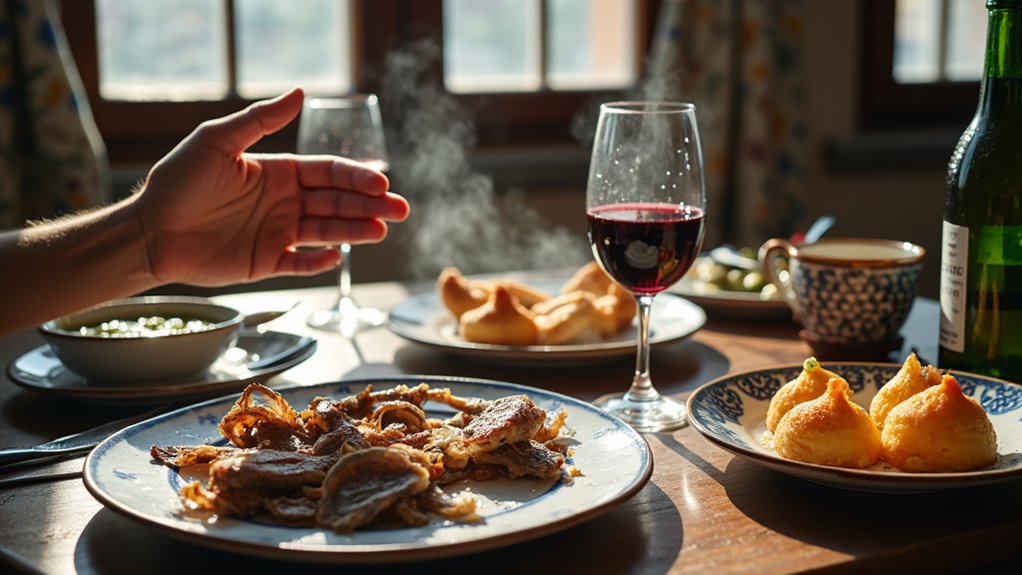
Use the polite “Queria…” structure when ordering: “Queria um prato de frango, por favor” or “Para beber, queria uma água.” If family members have dietary restrictions, ask “Vocês têm opções vegetarianas?” or “O prato tem álcool?” During the meal, request extras with “Pode trazer mais pão, por favor?” When you need recommendations from the server, say “o que você recomenda?” to discover the restaurant’s specialties. End gracefully with “É tudo, obrigado.”
Asking About Prices and Making Purchases
Don’t hesitate to negotiate! Say “Tem desconto?” or “É muito caro!” to potentially lower prices.
At checkout, ask “Posso pagar com cartão?” for card payments. Start your shopping conversations with “Quanto custa?” to check prices before making any purchasing decisions.
If you’re just browsing, simply say “Estou apenas olhando!”
Getting Help When You Don’t Understand

While you’re steering through shops and markets, you’ll inevitably encounter moments when Portuguese conversations move too quickly or become too complex to follow. Don’t panic—locals appreciate your effort and respond well to polite requests for help.
Start with “Com licença” (excuse me) before saying “Não entendo” (I don’t understand) or “Pode repetir, por favor?” (Can you repeat, please?). If speech is too fast, try “Mais devagar, por favor” (More slowly, please).
When you’re completely lost, “O meu português é muito fraco” (My Portuguese is very weak) signals your limitation and encourages patience.
For specific words or signs, ask “O que significa esta palavra?” (What does this word mean?) while pointing. Always close with “Obrigado” or “Obrigada”—gratitude goes far. If you need urgent assistance, use “Ajuda!” to get immediate attention from nearby people.
Emergency Phrases for Safety Situations
Though family holidays are meant to be relaxing, unexpected emergencies can arise when you least expect them. Knowing key Portuguese emergency phrases can be lifesaving when traveling with your family.
For immediate danger, shout “Socorro!” (Help!) to attract attention quickly. If you need urgent assistance, say “É uma emergência” (It’s an emergency) or “Preciso de ajuda imediatamente” (I need help immediately).
Medical emergencies require “Chame uma ambulância!” (Call an ambulance!) or “Necessito de assistência médica” (I need medical assistance). When feeling unwell, communicate “Eu não me sinto bem” (I don’t feel well) or if more serious, “Acho que vou desmaiar” (I think I’m going to faint).
For police help, use “Preciso da polícia” and for fires, “Preciso dos bombeiros” (I need firefighters).
If separated from family, say “Não consigo encontrar a minha família” (I can’t find my family).
Remember emergency numbers: 112 in Portugal, 190 for police in Brazil.
Expressing Appreciation for Food and Experiences

When you’re enjoying delicious Portuguese cuisine or memorable family experiences, expressing genuine appreciation will deepen your connections with locals and family members.
Start with “Estava delicioso” or “A comida estava deliciosa” to praise any meal.
For stronger enthusiasm, use “Que maravilha!” or “Que delícia!” when something impresses you.
Show proper gratitude with “Muito obrigado/obrigada” after special meals, or try “Obrigado pelo jantar” for dinner invitations.
When praising specific dishes, say “O prato estava fantástico” or “A carne estava no ponto” for perfectly cooked meat. If someone offers you extra food or special treats, you might hear them say “chama-lhe um figo” – a charming way of describing something as a delightful pleasure to share.
For memorable experiences, use “Foi um momento muito especial” or “Vou guardar esta memória com carinho.”
Sound local with “Está daqui!” – a colloquial way to say something’s absolutely delicious.
Understanding Regional Specialties and Local Culture
Once you’ve mastered expressing appreciation for the food you’re enjoying, you’ll want to understand what makes each dish special to the region you’re visiting.
In northern Portugal, you’ll encounter caldo verde from Minho and robust meat dishes from Trás-os-Montes like posta à Mirandesa.
Central regions offer Coimbra’s chanfana and Bairrada’s famous leitão roast pig.
Alentejo’s simplicity shines through açorda bread soup and porco preto from black pigs.
The Azores bring unique volcanic cooking with cozido das Furnas.
The southern Algarve region celebrates the Mediterranean coast with fresh seafood cataplanas and grilled sardines that showcase the Atlantic’s bounty.
Learning phrases like “Esta especialidade é típica desta região?” (Is this specialty typical of this region?) helps you connect with locals who’ll ardently share stories behind their traditional dishes, making your family’s cultural experience richer.
Saying Goodbye Appropriately in Different Contexts

After sharing memorable meals and cultural experiences, knowing how to say goodbye properly guarantees you leave positive impressions throughout Portugal. Use “Adeus” or “Tenha um bom dia” with hotel staff, tour guides, and restaurant servers for respectful formality.
With new friends or relaxed family moments, “Tchau” and “Até logo” work perfectly. Even with people you’ve just met, saying “Um abraço” creates a warm connection that reflects Portuguese hospitality.
You’ll hear older Portuguese people say “Vai com Deus” – respond warmly to this traditional blessing.
For phone calls and quick interactions, stick with “Até já” when you’ll reconnect soon, or “Tchau, obrigado” for brief service encounters.
Time-specific farewells like “Até amanhã” show you’re planning future connections.
Match the formality level to your relationship – casual with peers, respectful with elders, and professional with service providers.
Fun Slang Words Kids Will Love to Learn
“Giro/gira” describes cute things, “larica” means they’re super hungry, and “está-se bem” covers any “no worries” situation.
These expressions instantly make kids sound like locals. Learning slang gives children insider language confidence that encourages them to participate more actively in conversations.
The Sum Up
You’ve got the foundation for meaningful conversations with locals now. Don’t worry about perfect pronunciation – Portuguese speakers appreciate your effort and will help you along the way. Keep these phrases handy on your phone or write them down. The more you use them, the more confident you’ll become. Your family’s Portuguese adventure will be richer when you can connect with people in their own language, even with just these basics.