
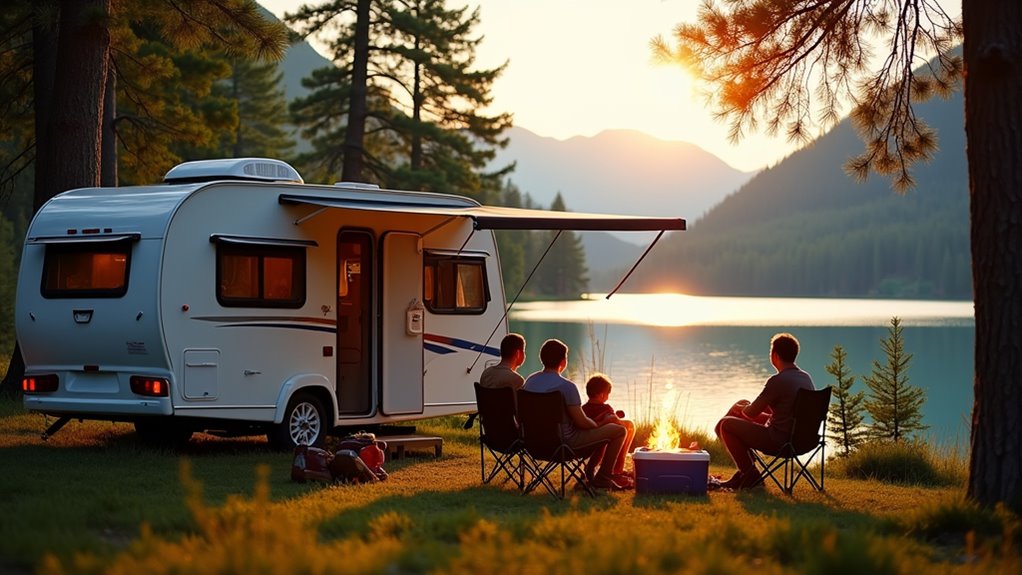
Family caravanning offers significant cost savings—up to 60% compared to traditional hotel travel—while creating stronger family bonds through shared outdoor experiences. You’ll need to plan 2-3 months ahead for peak seasons, consider your family’s unique needs, and prepare for everything from beach destinations to off-grid adventures. Modern RVs provide educational opportunities and multigenerational bonding that’s driving record participation among younger families, especially Canadians. Understanding these key factors will help you maximize your family’s caravanning success.
- RV Travel Popularity Has Surged Among Young Families
- Multigenerational Trips Are Becoming the New Family Vacation Standard
- Cost-Effectiveness Makes Caravanning an Attractive Alternative to Traditional Travel
- Beach Destinations and Family Visits Drive Most RV Trip Planning
- Kitchen-Equipped Accommodations Help Families Control Travel Expenses
- Outdoor Activities Define the Modern RV Experience
- Holiday RV Travel Numbers Show Significant Growth Year-Over-Year
- Involving Children in Trip Planning Creates More Adaptable Young Travelers
- Boondocking Appeals to Adventure-Seeking Family Groups
- Educational Benefits of RV Travel Extend Beyond Traditional Tourism
- Special Considerations for Families With Unique Travel Needs
- Canadian Families Are Embracing Camping Culture at Record Levels
- The Sum Up
RV Travel Popularity Has Surged Among Young Families
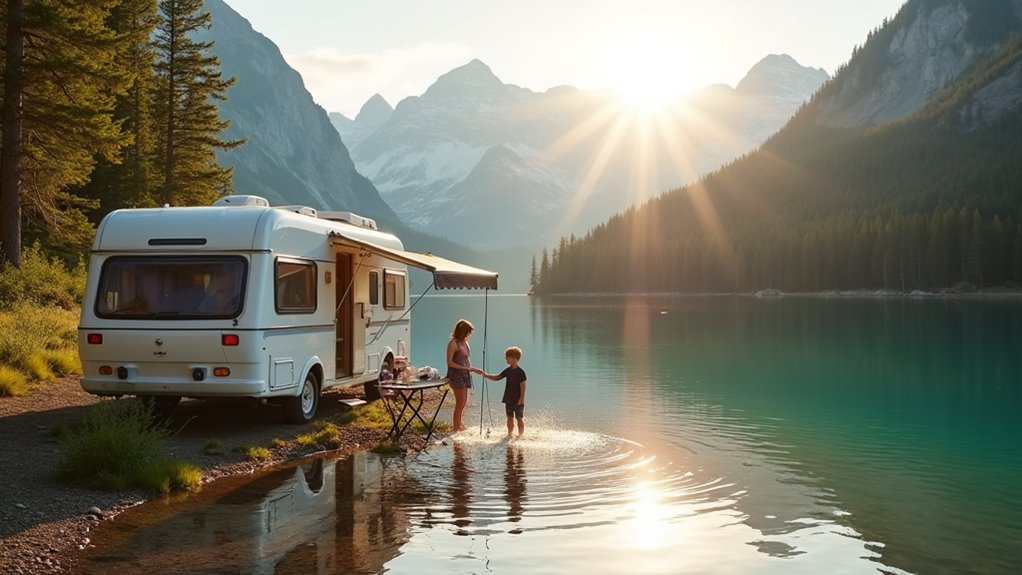
While RVing was once dominated by empty nesters and retirees, young families have dramatically reshaped the landscape of recreational vehicle ownership. You’ll find that the median age of RV owners has dropped from 53 to 49 in just four years, with families under 45 representing 27% of all owners.
If you’re among the 22% of owners aged 18-34, you’re part of a group that’s nearly tripled since 2015.
What’s driving this shift? Remote work flexibility and post-pandemic desires for outdoor bonding have made RVing irresistible.
You’ll discover that 68% of young families earn over $75,000, enabling purchases of modern, family-friendly gear. These families are committed to the lifestyle, with 84% planning to purchase another RV in the future.
With 93% of young families using their RVs as much or more than expected, you’re investing in proven family satisfaction.
Multigenerational Trips Are Becoming the New Family Vacation Standard
As remote work reshaped how families connect, multigenerational caravanning has emerged as the vacation format that brings everyone together safely under one roof—or several RV roofs parked side by side.
You’re part of a growing trend—47% of travelers chose multigenerational family trips in 2025, marking a 17% jump from 2024.
The numbers tell the story: 71% of grandparents have taken recent multigenerational trips, while 74% of parents embrace extended family vacations.
What’s driving this shift? Quality time ranks as the primary motivation for 89% of millennial and Gen Z parents.
Caravanning offers unique advantages for these complex family dynamics. You’ll find 71% of campers feel more connected during camping trips than other vacation types. The industry growth reflects this family-focused approach, with the car camping segment leading at USD 15.1 billion in 2025 and expected to reach USD 25.8 billion by 2035.
Static caravan bookings increased 30% year-over-year as families seek simpler experiences together.
Cost-Effectiveness Makes Caravanning an Attractive Alternative to Traditional Travel
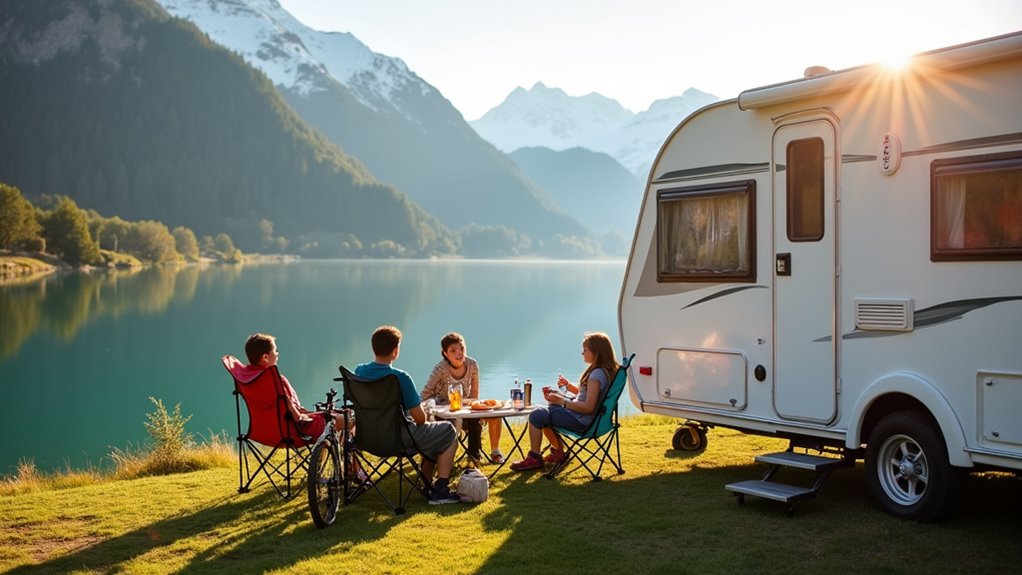
Beyond the emotional benefits of family bonding, caravanning delivers substantial financial advantages that make it increasingly attractive compared to traditional vacation methods.
You’ll save up to 60% on travel costs for a four-person family and 46% for couples compared to flying and staying in hotels. For example, a 14-day Dallas to Grand Canyon trip costs $5,627 in a Class C motorhome versus $8,801 for flights and hotels—that’s 37% savings.
Even with fuel price fluctuations, you’re protected from economic volatility. Gas prices would need to reach $21 per gallon before caravanning becomes more expensive than traditional travel.
Your daily costs average $242 including depreciation and maintenance, compared to $298 for non-RV trips, saving $160 nightly on accommodations alone. These cost savings remain consistent regardless of whether you’re planning a 3-day weekend getaway or an extended 14-day adventure.
Beach Destinations and Family Visits Drive Most RV Trip Planning
When you’re mapping out your next RV adventure, you’ll find that beach destinations and family visits top the priority list for most travelers like yourself. Sixty-two percent of families choose beach vacations as their primary trip type, with Florida’s Gulf Coast destinations like Clearwater and Rosemary Beach leading domestic choices.
Meanwhile, 61% prioritize visiting family and friends, making this the second most popular travel motivation.
You’ll want to plan two to three months ahead since summer and spring break create peak demand periods that affect RV availability and pricing. Multi-generational travel groups comprise 57% of planners, so consider spacious RV configurations if you’re traveling with grandparents and children. Many families are also turning to travel advisers to help navigate complex RV itineraries and multistop trips, reducing the stress of coordinating logistics for extended family groups.
With 92% of parents planning travel within twelve months, securing your preferred dates early guarantees better campground selection and competitive rates.
Kitchen-Equipped Accommodations Help Families Control Travel Expenses
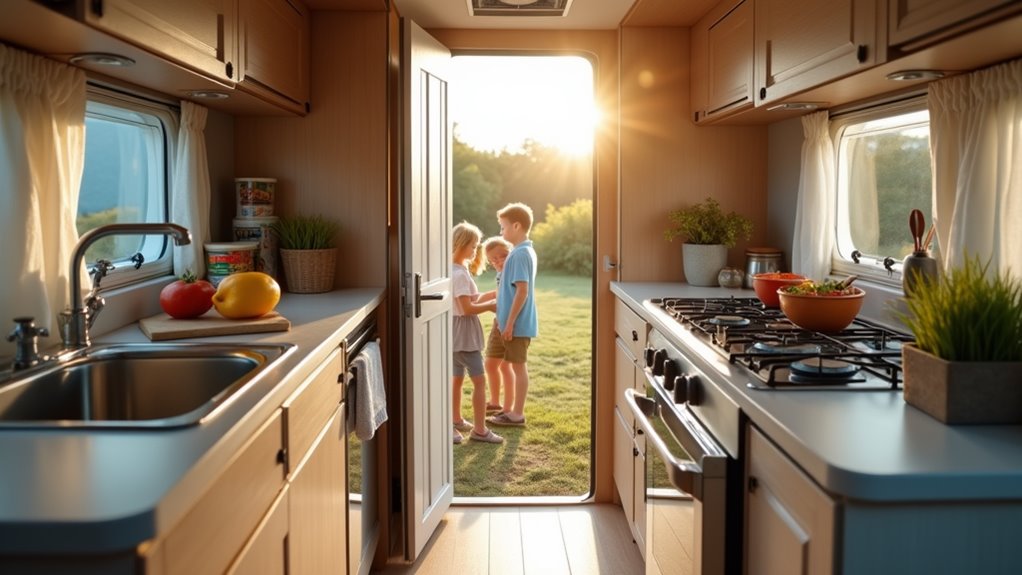
Since restaurant costs typically consume 30-50% of your travel budget, choosing RV accommodations with fully-equipped kitchens becomes one of your smartest financial moves. You’ll maintain complete control over grocery spending while preparing familiar meals your family enjoys.
Private campgrounds now offer rapid kitchen upgrades, with KOA adding deluxe cabin units featuring full cooking facilities.
RV camping, representing 43.33% of 2024 camping expenditures, supports kitchen-equipped units that minimize external food purchases. You’ll find electrified sites with waste stations supporting compact kitchen operations.
Digital nomads extending their stays save substantially through bulk cooking in on-site facilities. Remote work amenities are driving longer stays at campgrounds, creating more opportunities for families to maximize their kitchen savings.
The camp kitchen market’s projected $297.4 million growth by 2027 reflects increasing demand for expense-control tools.
Your longer camping stays paired with self-cooking capabilities dramatically reduce overall trip costs.
Outdoor Activities Define the Modern RV Experience
While traditional RV camping once centered around basic site hookups and campfire gatherings, today’s outdoor recreation demands have transformed parks into adventure hubs that cater to activity-driven travelers. You’ll find parks now offer equipment rentals like kayaks and ATVs, partnerships with local outfitters, and even craft breweries on-site.
Nearly half of campers use these experiences to support mental health through peaceful settings and fitness activities.
When planning your trip, consider parks with mobile apps that provide interactive maps, activity schedules, and direct staff communication. Solo travelers and families alike benefit from organized social activities and concierge services. Modern parks are increasingly adding glamping units like tiny homes and yurts to blend outdoor experiences with comfortable accommodations.
Remember that 47% of trip planners now choose RVs specifically for accessing national parks, festivals, and adventure destinations rather than just traditional camping.
Holiday RV Travel Numbers Show Significant Growth Year-Over-Year
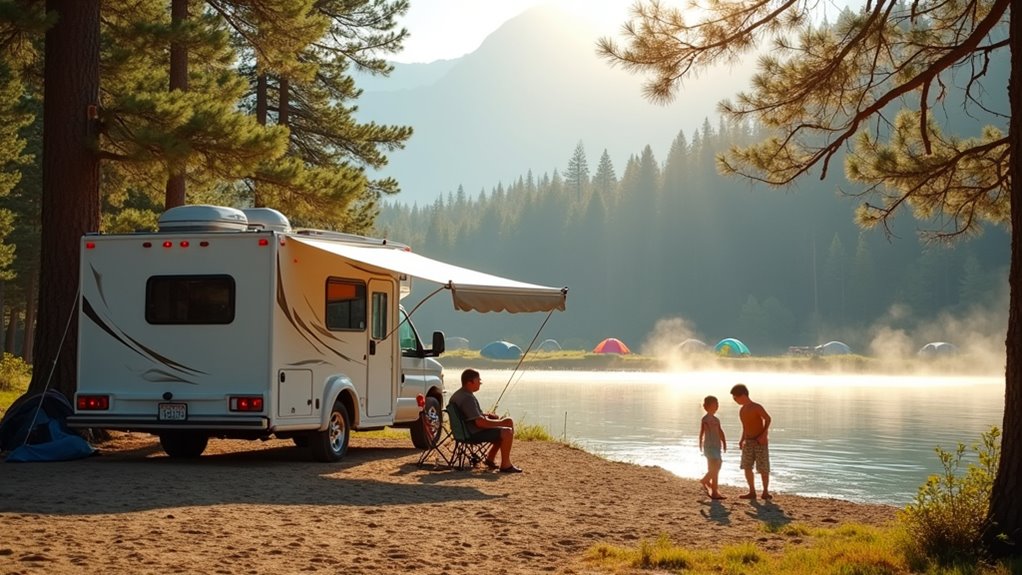
The numbers don’t lie—RV travel has experienced explosive growth that’s reshaping the entire outdoor recreation landscape. You’re witnessing a camping revolution, with the global market exploding from $38.9 billion in 2025 to a projected $64.8 billion by 2035.
In the United States alone, you’ll see growth from $11.8 billion to $19.3 billion over the same period.
What’s driving this surge? You’re part of a demographic shift where RV owners are getting younger—the median age dropped from 53 to 49 in just four years.
If you’re a family camper, you’re likely taking three or more trips annually, compared to just 23% of other campers. This increased frequency reflects how camping enhances relationships, with over 75% of family campers believing in its bonding benefits.
With 118 million families camping between 2020-2023, you’re joining an unprecedented outdoor movement that’s redefining how families vacation together.
Involving Children in Trip Planning Creates More Adaptable Young Travelers
When you include your children in planning your RV adventures, you’re doing more than just keeping them occupied—you’re building essential life skills that’ll serve them well beyond your family trips. Research shows 84% of parents notice their kids become more adaptable and open to new experiences through travel planning involvement.
Let your children research campgrounds, choose hiking trails, or pick family activities at each destination. While you’ll handle the logistics like booking sites, route planning, and budgeting, their input on experiences creates genuine excitement and investment in the journey.
This collaborative approach develops resilience and flexibility—crucial skills for young travelers. Plus, 61% of parents find that involving children in travel decisions enhances their social skills, making them more confident in new environments.
You’ll find your children become natural problem-solvers when plans change, weather shifts, or unexpected detours arise during your caravanning adventures.
Boondocking Appeals to Adventure-Seeking Family Groups
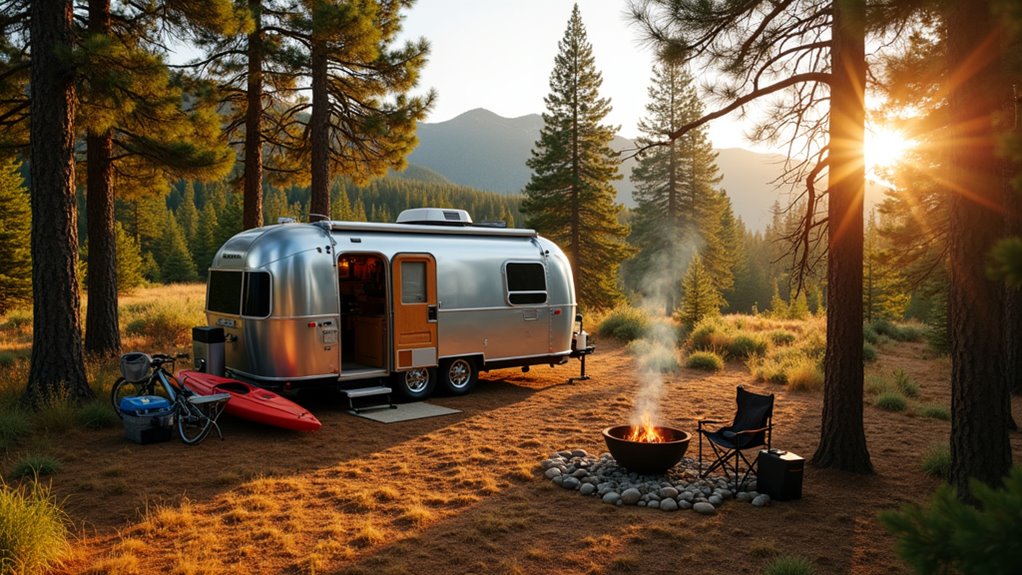
Adventure-seeking families are driving boondocking’s explosive growth, with off-grid camping doubling from 7% to 16% of all camping nights between 2021 and 2022. You’ll find that 54% of family campers take multiple trips annually, often choosing dispersed sites over traditional campgrounds for unique experiences.
Your family’s joining a movement where nearly half of all 2023 camping nights occurred outside formal campgrounds. With RV ownership reaching 15.2 million households, you’ve got the tools for successful boondocking adventures.
You’ll discover that younger families especially embrace this trend—Gen Z RVers plan five or more trips yearly, frequently seeking free boondocking locations. Men particularly favor this rugged, backcountry camping style, with 54% preferring wilderness experiences over amenity-rich campgrounds.
You’ll discover that family groups show strong continuation rates at 59%, making boondocking an ideal gateway to building lasting outdoor traditions while exploring remote, wild campsites together.
Educational Benefits of RV Travel Extend Beyond Traditional Tourism
Beyond the scenic routes and campfire memories, RV travel transforms your children into engaged learners who absorb lessons impossible to replicate in traditional classrooms. You’ll watch them develop hands-on understanding of geology while exploring national parks and dive deep into history at sites like Gettysburg through direct exploration.
Your family’s camping adventures naturally teach conservation and sustainability as you witness environmental impact firsthand. Navigation, budgeting, and meal planning cultivate resourcefulness while building problem-solving skills. When your kids observe wildlife in their natural habitats, they’re developing environmental awareness that textbooks can’t match.
The flexibility of tailored curriculum matches each child’s learning style, ensuring educational success. Critical thinking emerges from real challenges like tent setup and trail navigation, while natural settings stimulate creativity through unstructured outdoor play. This approach encourages a lifelong love of exploration and discovery that extends far beyond your family’s travel experiences.
Special Considerations for Families With Unique Travel Needs
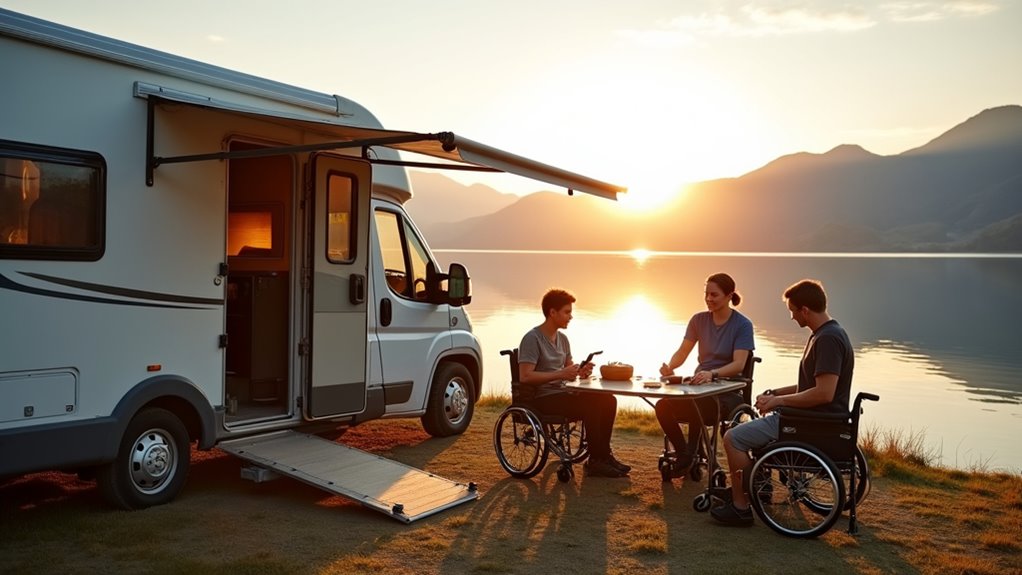
How do you guarantee your child with special needs experiences the joy of camping without compromising their safety or comfort? Start by practicing camping routines at home, then progress to backyard trials.
Create visual packing lists with photos of comfort items and show campground pictures beforehand to reduce anxiety.
Choose campgrounds near children’s hospitals with reliable amenities like KOAs. Verify assistance animal accommodations and accessibility features.
Pack FAA-approved car seats from Special Tomato or Convaid, extra medications, sensory toys, and medical documentation copies.
Install thin combination locks inside your RV for wanderers and keep flashlights nearby.
Consider purchasing an RV as your mobile sanctuary—it provides environmental control and familiarity.
Select sites with cooking facilities for allergy management and involve your entire family in planning discussions. Remember to maintain consistent sleep schedules during your travels to provide comfort amid new surroundings.
Canadian Families Are Embracing Camping Culture at Record Levels
While camping once appealed mainly to outdoor enthusiasts, it’s now becoming Canada’s favorite family activity with over 10 million households identifying as campers in 2024. You’re part of a massive shift where 65% of Canadian households now camp, with participation among families with children doubling recently.
The demographic changes are striking. If you’re under 35, you’re leading this trend—44% of today’s campers are your age, up from just 28% in 2014. Multi-generational trips are increasingly popular, with grandparents funding 76% of their children’s and 79% of grandchildren’s camping adventures. This growing diversity includes camping participation by people of color increasing by 54% over the last ten years.
Your camping investment pays off through better family well-being. Sixty percent of families report improved sleep and fresh air benefits, while 54% plan extended camping trips for 2025, prioritizing low-cost activities like campfires and hiking.
The Sum Up
You’ve got solid reasons to contemplate caravanning for your next family adventure. Whether you’re planning a beach getaway, visiting relatives, or seeking educational experiences off the beaten path, RV travel offers flexibility and cost savings that traditional vacations can’t match. Start small with a rental to test the waters, prioritize safety equipment, and don’t forget to involve the kids in trip planning—they’ll love being part of the adventure.