
You’ll find transformative family volunteer opportunities across Africa, from teaching English to 53-student classrooms in Tanzania to monitoring elephants in Zimbabwe’s protected reserves. Your family can build solar-powered facilities in Namibia’s desert villages, support refugee children in Ghana, or contribute to marine conservation research in Mozambique. These programs emphasize safety with secure lodge accommodations and follow established welfare standards. Each experience creates lasting memories while making genuine community impact through hands-on conservation and development work that benefits both participants and local populations.
- Teaching English and Supporting Education in Tanzanian Communities
- Wildlife Conservation and Animal Rescue in Multiple African Countries
- Transformational Learning Experience in Zambia’s South Luangwa Valley
- Hands-On Rhino and Elephant Conservation in Zimbabwe
- Desert Community Building Projects in Namibia
- Marine Conservation Adventures in Mozambique
- Supporting Refugee Children and Orphans in Ghana
- Healthcare and HIV Support Programs in Rural Tanzania
- Community Development Initiatives in Uganda
- Primate Conservation and Wildlife Protection in South Africa
- The Sum Up
Teaching English and Supporting Education in Tanzanian Communities
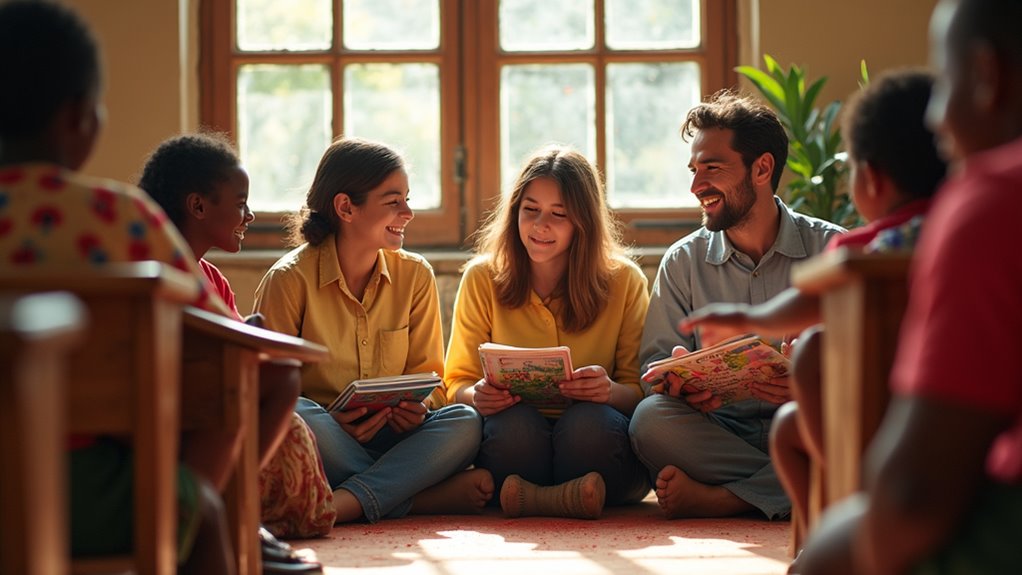
Why do Tanzanian students struggle to reach their full potential despite their enthusiasm to learn? You’ll discover overcrowded classrooms with 53 students per teacher, teaching methods focused on rote memorization, and secondary instruction conducted entirely in English—a language many students haven’t mastered.
When you volunteer in schools around Arusha or Zanzibar, you’re filling critical gaps. You’ll work 8:30am–1pm, focusing on weaker students who need conversational English practice. Local teachers often lack confidence speaking English, so your presence provides authentic language interaction that’s crucial for students’ future employment prospects, especially in Tanzania’s growing tourism industry.
Your family doesn’t need prior teaching experience—just creativity and enthusiasm. The minimum two-week commitment lets you witness real student growth while gaining meaningful cross-cultural exchange that’ll impact your perspective forever. You’ll work exclusively at privately run schools, as government-funded institutions are off-limits due to local legislation.
Wildlife Conservation and Animal Rescue in Multiple African Countries
How can your family contribute meaningfully to protecting Africa’s endangered wildlife while ensuring everyone’s safety in remote conservation areas? You’ll find family-friendly conservation programs across South Africa, Namibia, Tanzania, and Botswana that welcome children for wildlife tracking and habitat restoration work.
Your family can participate in elephant monitoring, game counts, and data collection while staying in secure lodge accommodations within protected reserves.
Choose ethical operators following SATSA welfare standards that emphasize observation over animal contact. Programs like Big Five monitoring in 10,000+ acre conservancies offer structured activities including alien plant removal and wetland management.
Rangers provide safety briefings and escort families during field work. These experiences teach children about human-wildlife conflict while contributing to long-term research databases protecting Africa’s 25% of global biodiversity. Many conservation organizations operate keystone protected areas that provide both conservation benefits and socioeconomic advantages to local communities.
Transformational Learning Experience in Zambia’s South Luangwa Valley
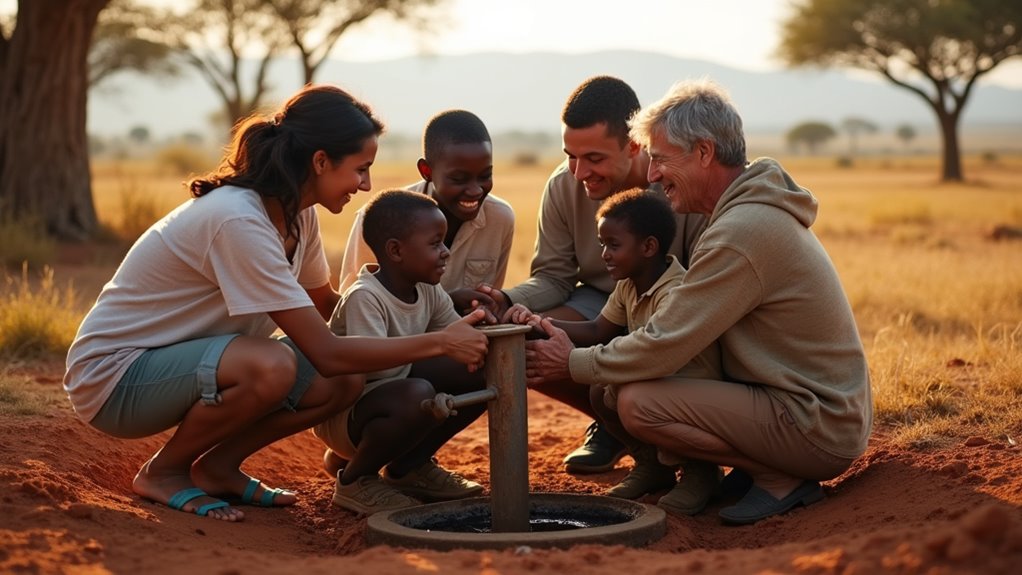
Beyond traditional game drives and lodge-based conservation work, South Luangwa National Park in Zambia offers your family an unparalleled walking safari experience that transforms children into junior naturalists and conservation advocates.
You’ll traverse the ancient rift valley’s diverse habitats—from riverine forests to mopane woodlands—while expert guides teach tracking techniques and animal behavior interpretation.
The Luangwa River’s oxbow lagoons create Africa’s highest hippo and crocodile densities, providing up-close lessons in predator-prey dynamics and water-wildlife interdependence.
Your children will witness geomorphology in action as seasonal flooding shapes floodplains and creates new lagoons.
Local community partnerships demonstrate real-world conservation challenges, from human-wildlife conflict to sustainable tourism models. The park’s vast 9,050 km² expanse provides ample space for families to explore different ecological zones while learning about wildlife habitat requirements.
Walking safaris require proper footwear and sun protection, but the immersive education transforms passive observers into passionate conservationists.
Hands-On Rhino and Elephant Conservation in Zimbabwe
While Zimbabwe’s elephant population has rebounded to become Africa’s second-largest at over 90,000 individuals, your family’s conservation volunteer work here offers direct involvement in protecting these giants and their rhino companions through hands-on monitoring and anti-poaching support.
You’ll track translocated elephants in Sapi Reserve following recent relocations, installing camera traps and recording behavioral data.
In Hwange National Park’s buffer zones, you’ll join ranger patrols equipped with digital communication systems, witnessing how anti-poaching efforts reduced elephant losses from 210 to just 29 annually. The park’s K9 units with specially trained Rottweilers, Labradors, and German Shepherds demonstrate their tracking capabilities during community shows that build local confidence in conservation efforts.
Your children can participate in community attitude conversion projects around Chizarira, where locals become conservation allies.
Safety protocols include ranger escorts and established patrol routes.
You’ll contribute to biodiversity monitoring across the KAZA Transfrontier Conservation Area, directly supporting elephant and rhino population assessments that guide Zimbabwe’s conservation strategies.
Desert Community Building Projects in Namibia
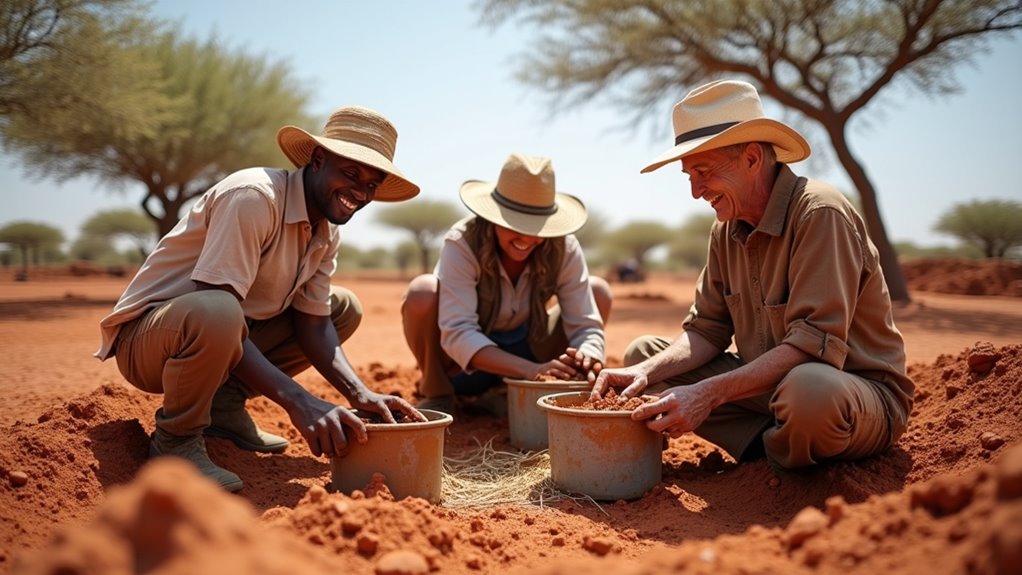
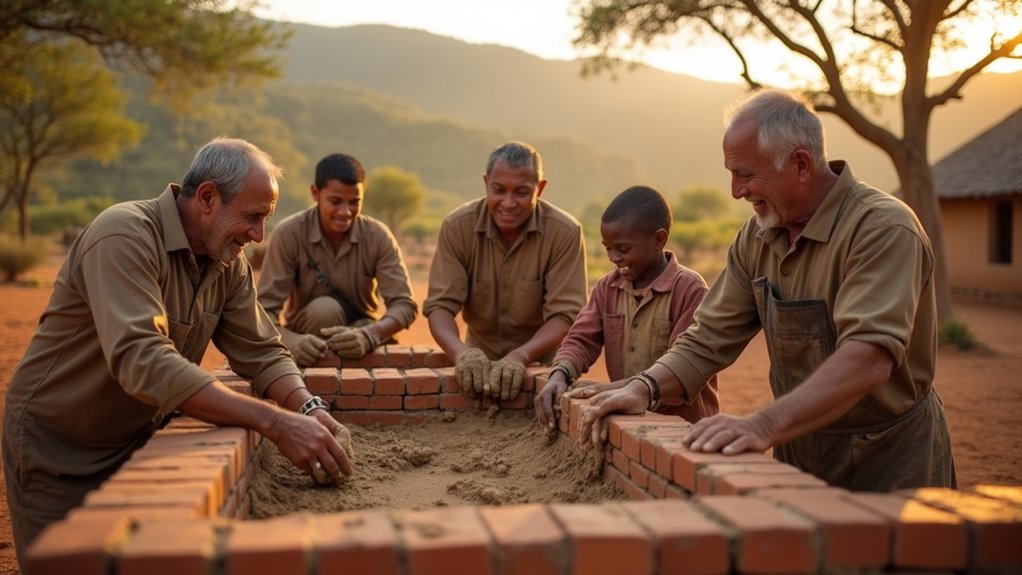
As your family joins community-driven construction projects in Namibia’s desert regions, you’ll contribute directly to sustainable infrastructure that transforms isolated villages into thriving conservation hubs. You’ll work alongside locals building solar-powered facilities and water-recycling stations that create lasting employment opportunities—projects like Maltahöhe’s laundry station generated 40 new jobs.
Your children will learn eco-building techniques while helping construct tourism facilities near the Namib Desert. These hands-on experiences teach practical skills in renewable energy installation and water conservation systems perfectly suited for arid conditions. The projects you’ll support are part of Namibia’s remarkable conservation success, where wildlife populations like elephants have tripled from around 7,600 in 1995 to approximately 23,600 today.
Safety protocols include staying hydrated in extreme heat and wearing protective gear during construction. You’ll gain invaluable skills in sustainable building while supporting Namibia’s communal conservancy model, which has contributed over N$13 billion to national income through community-based conservation efforts.
Marine Conservation Adventures in Mozambique
How often do you get the chance to snorkel alongside whale sharks while contributing to groundbreaking marine research? Mozambique’s Inhambane Province offers families this rare opportunity through marine conservation projects along its 2,450-kilometer coastline.
You’ll help researchers from the Marine Megafauna Foundation collect photo-ID data on manta rays and whale sharks while exploring coral reefs and seagrass beds.
Safety comes first—experienced guides ensure proper snorkeling techniques and maintain safe distances from marine megafauna.
Your family will contribute to citizen science databases that’ve produced 30+ peer-reviewed research papers.
The Bazaruto Seascape, designated as a Mission Blue Hope Spot, desperately needs expanded protection from destructive fishing practices. Children can participate in Ocean Guardians educational programs that connect local communities with ocean literacy and marine conservation awareness.
Pack reef-safe sunscreen and underwater cameras—you’re documenting species that’ll benefit from Mozambique’s ambitious 30×30 conservation initiative.
Supporting Refugee Children and Orphans in Ghana
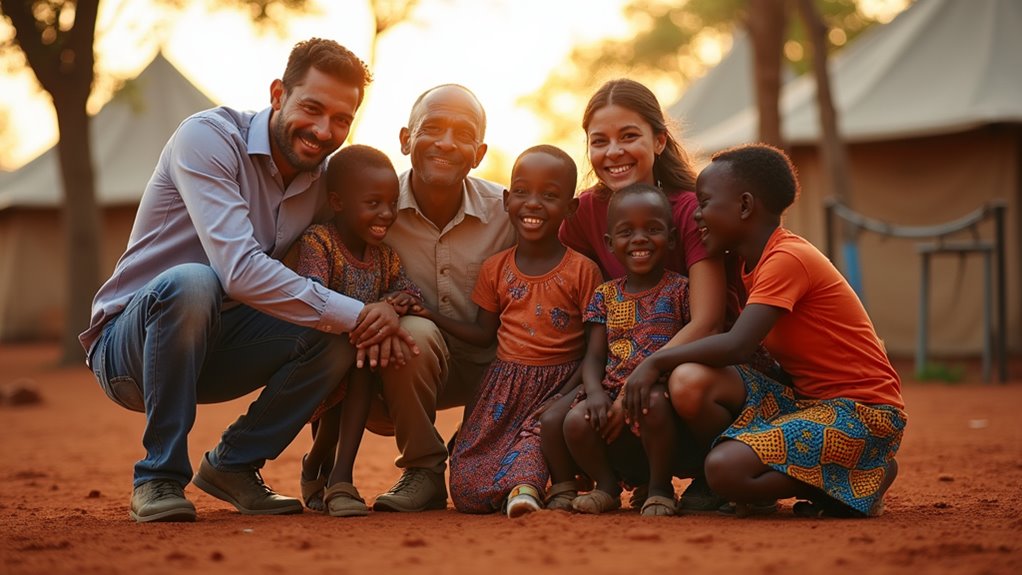
What transforms a typical family vacation into a life-changing experience that’ll reshape your children’s worldview forever? Supporting refugee children in Ghana offers your family profound purpose while creating lasting memories.
You’ll work alongside UNHCR partners in Upper East and Upper West regions, where 73% of school-age refugee children live after fleeing conflicts in Burkina Faso and Togo.
Your family can assist with educational programs, since 49% of refugee children lack schooling access.
You’ll help establish safe spaces for traumatized children and support birth registration initiatives that prevent statelessness. Women and girls in these communities face particular vulnerabilities, with gender-based violence representing a significant threat that your family’s support can help address through protective programming.
Safety protocols include partnering with established NGOs and following community-based protection guidelines.
Prepare your children for emotional encounters—many refugee kids face family separation and exploitation.
This experience teaches empathy while contributing to Ghana’s child protection systems through structured volunteer placements.
Healthcare and HIV Support Programs in Rural Tanzania
While your family explores Tanzania’s breathtaking landscapes, you’ll discover rural communities where healthcare challenges create meaningful volunteer opportunities. You’ll work alongside local healthcare workers addressing the dual burden of HIV and rising diabetes and hypertension cases.
With only 35% of rural areas having nearby health facilities, your family’s support becomes vital.
Your volunteer work might include assisting with medication distribution, since 47% of citizens went without treatment last year. You’ll help educate patients about self-care practices, particularly important since 75% work in informal sectors with limited healthcare access.
Safety protocols ensure your family works within established medical frameworks. Despite these challenges, you’ll witness how 68% appreciate the government’s ongoing efforts to improve basic health services throughout the country.
These programs connect you with Tanzania’s shift toward universal health coverage while supporting communities where absent medical personnel affects 48% of facilities.
Community Development Initiatives in Uganda
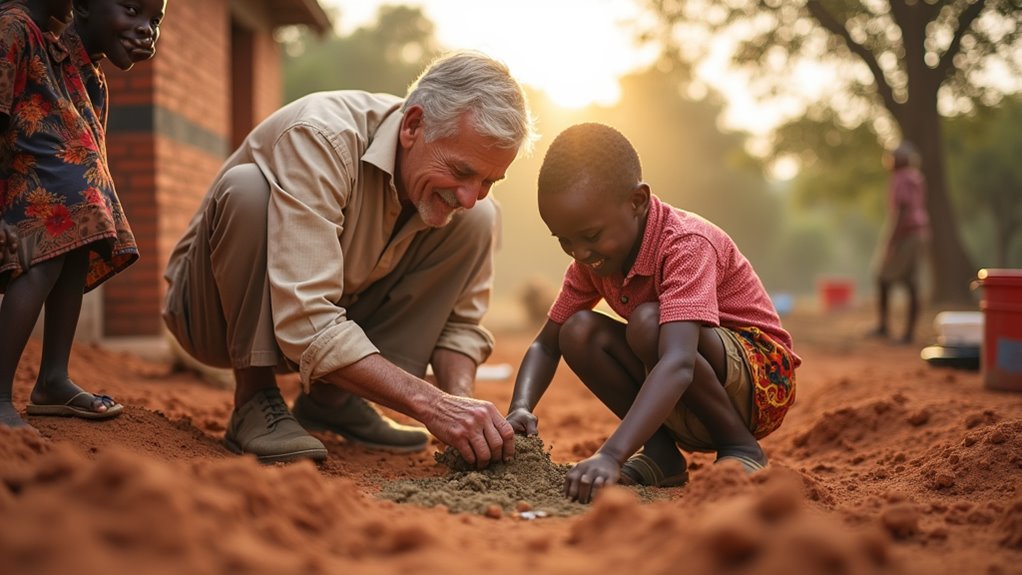
Beyond Uganda’s stunning national parks and vibrant culture, you’ll find communities where grassroots development work creates lasting change for entire families. Your family can engage with Parish Development Model initiatives, where local cooperatives receive funding to launch community enterprises.
You’ll witness firsthand how UGX 50 million investments transform villages through agricultural value chains and market access improvements.
Focus your efforts in Northern or Eastern regions, where poverty rates reach 34-39%. These areas offer meaningful volunteer opportunities in education, health, and infrastructure projects.
You’ll work alongside youth facing 39% unemployment, supporting vocational training and climate-smart agriculture programs. Since the model’s launch in 2022, over 10,589 cooperatives have been targeted to receive direct funding transfers nationwide.
Safety-wise, choose established organizations working within Uganda’s refugee-host community framework. These programs integrate development efforts, ensuring your family contributes to sustainable, locally-driven solutions rather than creating dependency.
Primate Conservation and Wildlife Protection in South Africa
From Uganda’s community-centered projects, you can shift your family’s conservation focus to South Africa’s primate protection programs, where endangered species face unprecedented threats. Your family can contribute to critical research as over 40% of primate species face extinction from habitat destruction and illegal hunting.
You’ll participate in wildlife inventories and data collection efforts that directly support the International Primatological Society’s conservation initiatives.
Safety remains paramount when working in fragmented ecosystems. Choose established programs that provide proper training and equipment.
Your children will learn firsthand about deforestation’s impact while contributing to action plans addressing bushmeat hunting. These hands-on experiences create lasting conservation awareness. Working alongside indigenous communities ensures your family’s volunteer efforts support local stewardship and traditional conservation knowledge.
With 64% of assessed primates threatened, your family’s volunteer work supports essential protection efforts for species that may face the first primate extinction this century.
The Sum Up
You’ll return home with stories that’ll last a lifetime, but remember—research programs thoroughly before committing. Check safety protocols, read recent reviews, and guarantee proper medical preparations. Don’t just pick the most exotic location; choose based on your family’s interests and abilities. These experiences will challenge you, but they’ll also show your children how they can make a real difference. Start planning early, and you’ll create memories that’ll shape your family’s perspective forever.