
You’ll find amazing family volunteering opportunities that combine meaningful conservation work with unforgettable adventures. Consider protecting sea turtle nests on Greek beaches, rehabilitating orangutans in Borneo’s rainforests, or joining marine cleanup initiatives in Costa Rica. These programs welcome children as young as 7-8, emphasize safety protocols, and offer flexible 1-4 week commitments. Most include educational components about wildlife biology and local cultures, with 93% of families reporting high satisfaction rates. Discover which destinations offer the perfect blend of impact and adventure for your family’s next meaningful getaway.
- Greece Turtle Conservation and Beach Protection
- Tanzania Community Development Projects
- Borneo Orangutan and Rainforest Conservation
- Costa Rica Sea Turtle Protection Program
- Thailand Elephant Sanctuary and Village Support
- Galapagos Wildlife Conservation Adventure
- Marine Conservation and Coastal Cleanup Initiatives
- Wildlife Rehabilitation and Habitat Restoration
- Educational Outreach and Environmental Awareness Programs
- Cultural Exchange and Sustainable Tourism Projects
- The Sum Up
Greece Turtle Conservation and Beach Protection
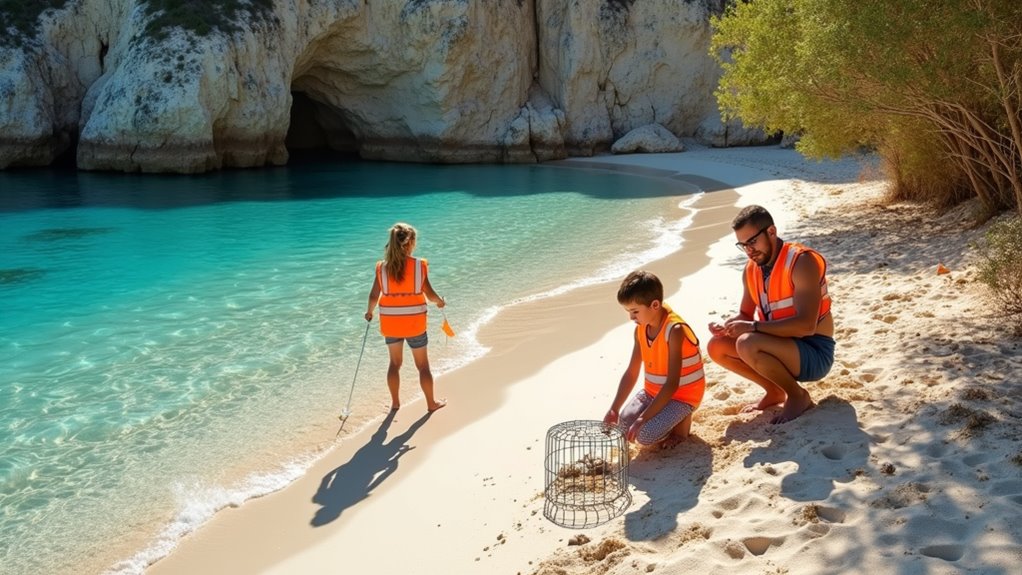
Greece’s pristine coastlines offer families an extraordinary opportunity to protect endangered sea turtles while creating unforgettable memories together. You’ll find exceptional programs on Kefalonia, Peloponnese, and Crete where your children can earn community service hours while making a real difference.
ARCHELON welcomes kids aged 8-18, while WorkingAbroad accepts children from age 7. Your family will conduct early morning beach surveys to locate and protect nests, monitor nighttime egg-laying, and participate in essential beach cleanups.
Remember, participants need basic fitness to walk 2km on sand and confident swimming skills for snorkeling activities up to 5m depth. The organization also provides educational tours that teach families about sea turtle biology, migration patterns, feeding habits, and reproduction cycles.
These beaches host 50% of Mediterranean loggerhead nests, making your contribution indispensable. Programs run June through September, perfectly timed for both nesting and hatching seasons.
Tanzania Community Development Projects
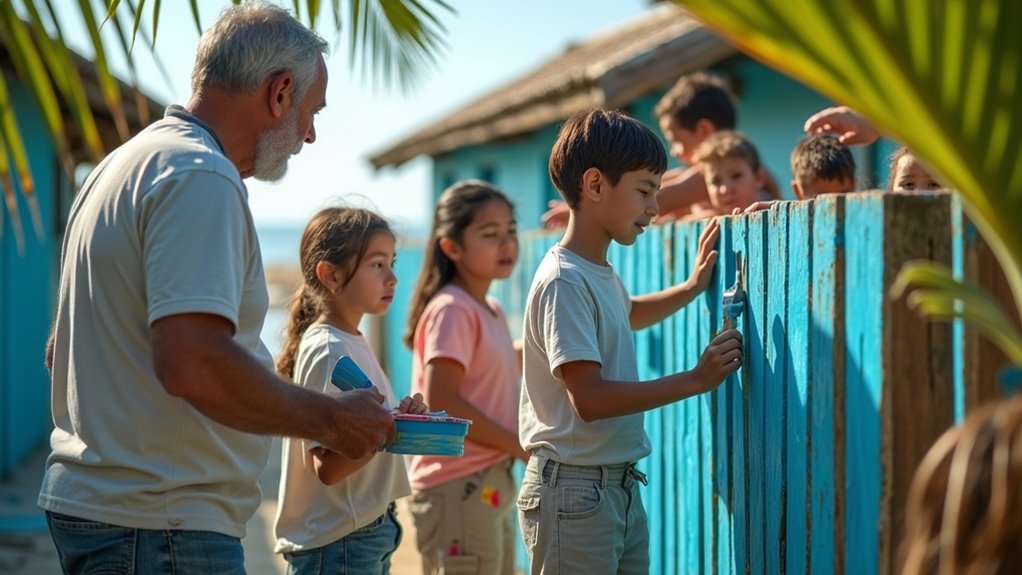
Tanzania’s vibrant communities in Arusha and surrounding regions offer families powerful hands-on experiences where your children can tackle real challenges alongside local residents. You’ll work together building rainwater harvesting systems, painting classrooms, and constructing playground equipment using locally sourced materials.
Your kids will thrive supporting overcrowded early childhood centers, teaching English and basic numeracy through small-group tutoring sessions.
Safety remains paramount—projects align with village leadership ensuring legitimate community needs are met. My friend’s family spent two weeks helping establish a women’s savings group while their teenagers assisted with after-school programs. The experience taught their children resourcefulness and global perspective. Programs operate with flexible schedules throughout the year, allowing families to plan their volunteer experience around school holidays and personal commitments.
Choose organizations prioritizing community-based programs over institutional care, ensuring your family’s efforts create lasting impact within existing family networks.
Borneo Orangutan and Rainforest Conservation
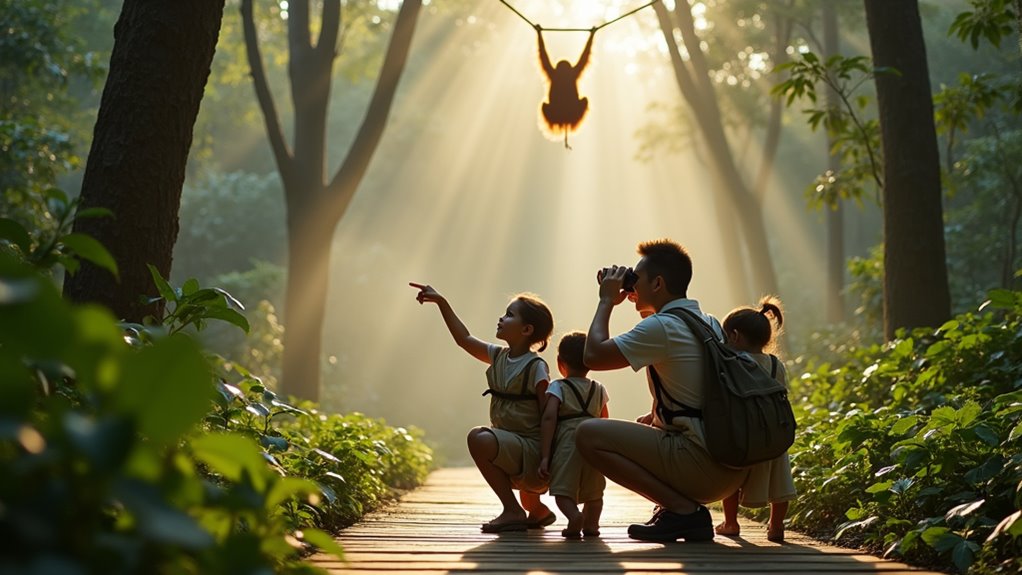
Where else can your family witness critically endangered orangutans swinging through ancient rainforest canopies while contributing directly to their survival? Borneo’s conservation programs in East and Central Kalimantan offer families hands-on experiences protecting these remarkable apes, whose populations have plummeted 80% since 1973.
Your family will plant trees in degraded forests, maintain nurseries, and monitor wildlife alongside local conservationists. These landscape-scale programs combine protected areas with community-managed forests, where 78% of orangutans live around villages. With orangutans’ slow reproduction rate – females only birthing every 8-10 years after maturing at 14-16 – every conservation effort becomes crucial for species survival.
I’ve seen children’s faces light up during orangutan encounters while learning about palm oil’s devastating impact. Safety protocols ensure families work in secure areas away from dangerous logging zones. Your efforts directly combat habitat loss threatening these critically endangered primates in their last stronghold.
Costa Rica Sea Turtle Protection Program
Since 1959, Costa Rica’s Tortuguero National Park has operated the Western Hemisphere’s most successful sea turtle conservation program, where your family can witness green, hawksbill, and leatherback turtles nesting on 21 miles of pristine black sand beaches.
You’ll join night patrols protecting nests from poachers while collecting crucial research data. Your children can safely observe turtle tagging and biometric measurements under expert supervision.
The program’s converted former poachers into research assistants, creating a heartwarming community transformation story.
Stay at the John H. Phipps Biological Field Station for an authentic research experience. You’ll help relocate vulnerable nests and monitor hatching success. The comprehensive monitoring includes fibropapilloma exams to assess turtle health and disease prevalence.
Since the program’s inception, volunteers have released over 192,000 sea turtles. This hands-on conservation work provides your family meaningful environmental education while contributing to reversing population declines.
Thailand Elephant Sanctuary and Village Support
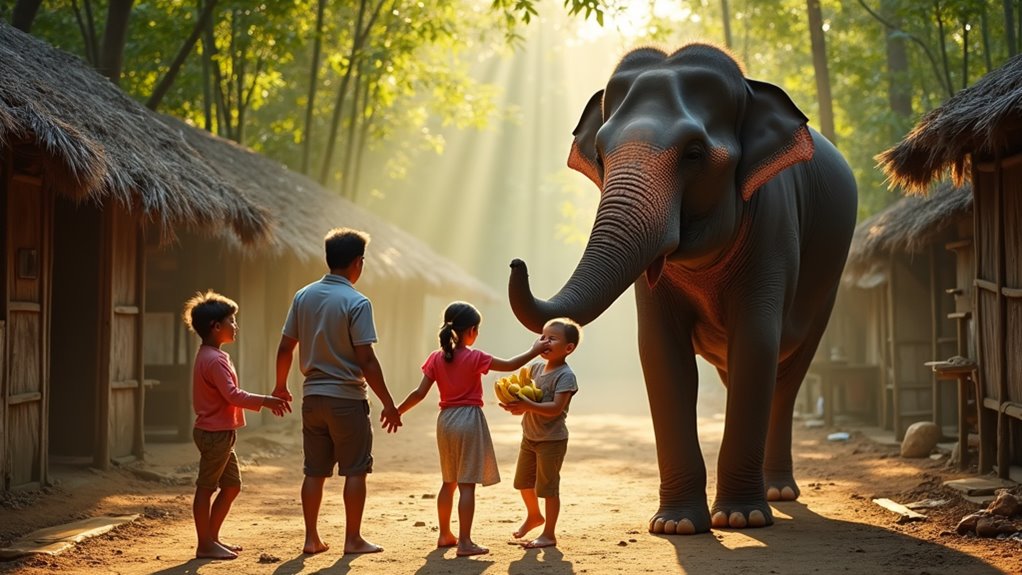
While your family can’t ride elephants at ethical sanctuaries in Thailand, you’ll discover something far more meaningful—caring for rescued Asian elephants who’ve escaped lives of logging, street begging, and entertainment.
Your teenagers (minimum age 14-18) will cut banana trees, prepare massive food portions, and clean enclosures across 20-40+ hectares of forested sanctuary land.
These programs combine elephant care with Karen village support, typically costing £525-550 for 5-7 days.
You’ll fund lifelong veterinary care while helping local communities through English teaching and light construction projects.
Expect structured 6:30am-5pm workdays in Thailand’s heat and humidity—it’s physically demanding but transforms how your family views wildlife conservation. The sanctuary provides career courses in partnership with conservation organizations to enhance your family’s future employment prospects in wildlife protection.
Your contribution directly sustains both elephant welfare and indigenous livelihoods.
Galapagos Wildlife Conservation Adventure
Although the Galapagos Islands sit 600 miles off Ecuador’s coast, your family’s conservation work here directly impacts global biodiversity—these volcanic islands shelter species found nowhere else on Earth.
You’ll care for giant tortoises at breeding centers and monitor sea turtle nests during January-May season—perfect timing for families with children 10+.
Based in Puerto Villamil on Isabela Island, your accommodation’s within the national park through official agreements.
I’ve watched families bond while removing invasive kikuyo plants and working in endemic plant nurseries.
Your teens can join social media conservation campaigns while younger kids focus on agriculture projects.
The program’s B Corporation certification ensures ethical operations, and local guides prioritize safety during day trips to North Seymour Island. Programs run from 2 to 12 weeks with flexible start dates every Monday to accommodate family schedules.
Two-week programs start at $1,430.
Marine Conservation and Coastal Cleanup Initiatives
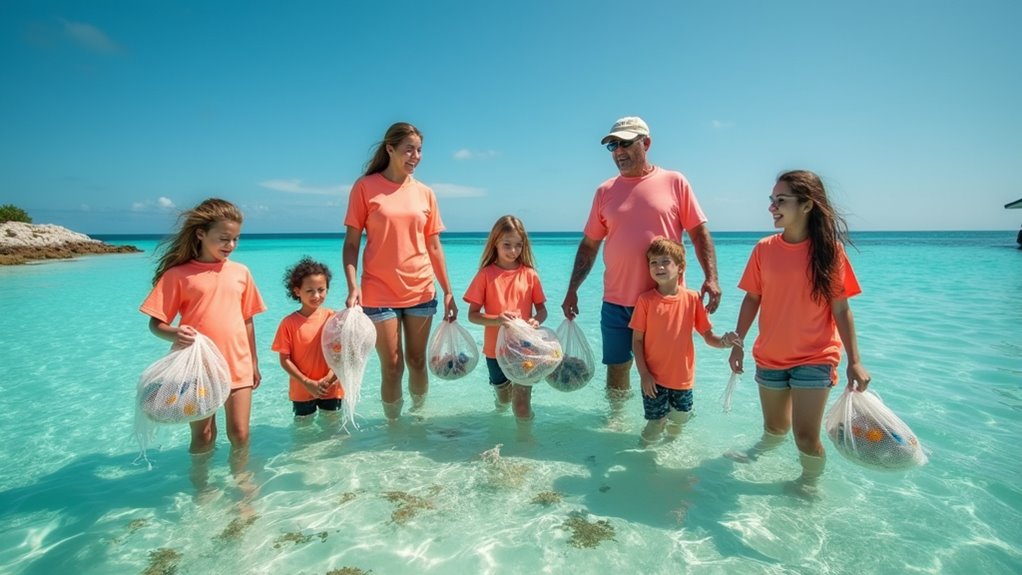
Where else can your family contribute to ocean health while creating memories that span generations? Marine conservation holidays offer hands-on opportunities to tackle the 11 million metric tons of plastic entering our oceans annually.
I’ve watched eight-year-olds beam with pride after removing hundreds of kilograms of debris from just one kilometer of coastline.
Beach cleanups require zero experience, making them perfect entry points for mixed-age groups. Your family can participate in standardized litter surveys that feed into global monitoring systems, directly supporting environmental agencies.
Many programs combine cleanup with sea turtle conservation, offering 2-24 week stays with flexible start dates.
Safety remains paramount—organizations cap groups at around 17 volunteers on small islands, ensuring proper supervision. Some conservation programs involve lionfish removal activities where families can help target invasive species that threaten local marine ecosystems.
Your children’s data contributions help identify over 400 individual whale sharks and support essential population studies.
Wildlife Rehabilitation and Habitat Restoration
When your twelve-year-old carefully prepares a specialized fruit blend for an orphaned toucan, they’re participating in one of conservation’s most direct forms of impact. Wildlife rehabilitation centers offer families hands-on experiences rescuing injured animals while maintaining strict safety protocols. You’ll clean enclosures, prepare diets, and provide behavioral enrichment under staff supervision, avoiding direct contact with dangerous species.
Beyond animal care, these programs typically include habitat restoration activities. Your family might plant native trees, remove invasive species, or maintain wildlife corridors that reconnect fragmented populations. Costa Rica’s centers are particularly valuable, protecting species representing 5% of global biodiversity. Daily work shifts are structured for 3-5 hours Monday through Thursday, making the schedule manageable for families while maintaining consistency for the animals.
Most programs require 1-4 week commitments, allowing your family to establish routines while minimizing stress on recovering animals through consistent volunteer presence.
Educational Outreach and Environmental Awareness Programs
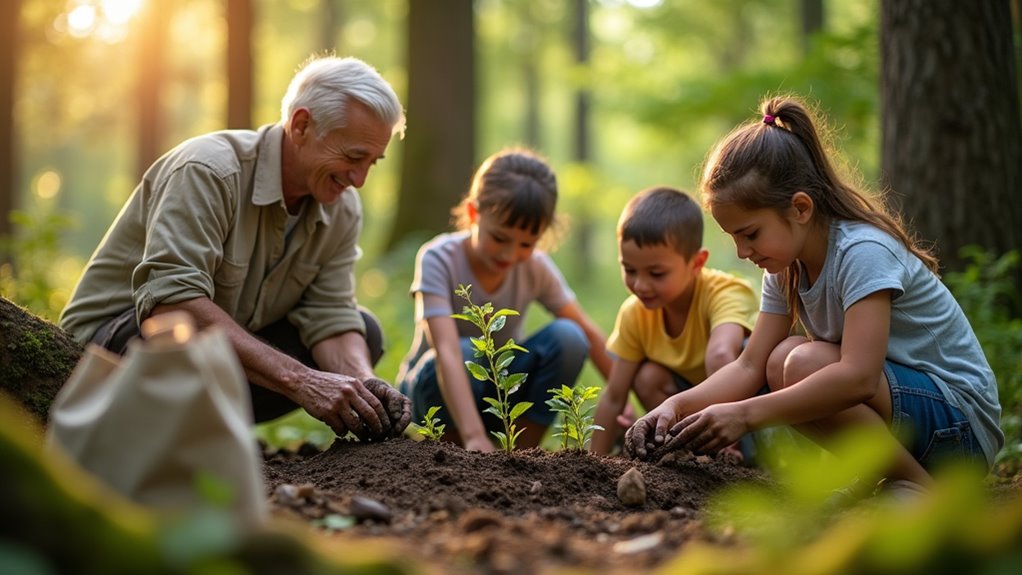
While your family teaches elementary students about local bird migration patterns, you’re creating environmental stewards who’ll carry conservation values into the next generation. These educational outreach programs combine hands-on learning with meaningful impact—my daughter discovered her love for marine biology during a beach cleanup that included water quality testing.
You’ll find flexible scheduling accommodates different family needs, with 47% of volunteers citing this as essential for participation. School partnerships often feature curriculum-linked activities like citizen science projects and ecosystem studies that reinforce classroom learning. Safety protocols ensure age-appropriate tasks for every family member.
These gateway experiences are powerful—93% of families want to participate again, and two-thirds of young volunteers report gaining clearer future direction through environmental stewardship activities. Families can engage in diverse activities like planting trees, trail cleaning, and habitat restoration that create meaningful bonds through shared outdoor experiences.
Cultural Exchange and Sustainable Tourism Projects
How does sharing a meal with a Nepalese family while learning to weave traditional baskets transform your children’s understanding of the world? Community-based homestays create authentic cultural exchanges that go far beyond tourist attractions.
You’ll find families across Asia, Latin America, and Africa opening their homes for 1-3 week stays that include shared meals, local festivals, and language practice sessions.
Choose programs that prioritize locally-led projects and follow strict child-safeguarding policies. Organizations like AFS connect nearly 500,000 families worldwide, ensuring safe experiences.
Look for “slow travel” models emphasizing longer stays over quick visits. These extended experiences create close personal connections that mirror successful cultural exchange programs, where 83% of participants develop meaningful bonds with their host families.
Your kids will gain lifelong intercultural bonds while supporting sustainable tourism. Host families report 76% value cultural learning most, while 62% of visiting children develop genuine curiosity about other cultures and languages.
The Sum Up
You’ll transform your family vacation into something meaningful by choosing any of these volunteer programs. I’ve seen families bond incredibly while protecting sea turtles in Costa Rica – kids who’d never left their screens suddenly became passionate conservationists. Remember to research safety protocols thoroughly and pack appropriate gear for each destination. Your children won’t just collect souvenirs; they’ll gain empathy, cultural awareness, and unforgettable memories while making a real difference in communities worldwide.