
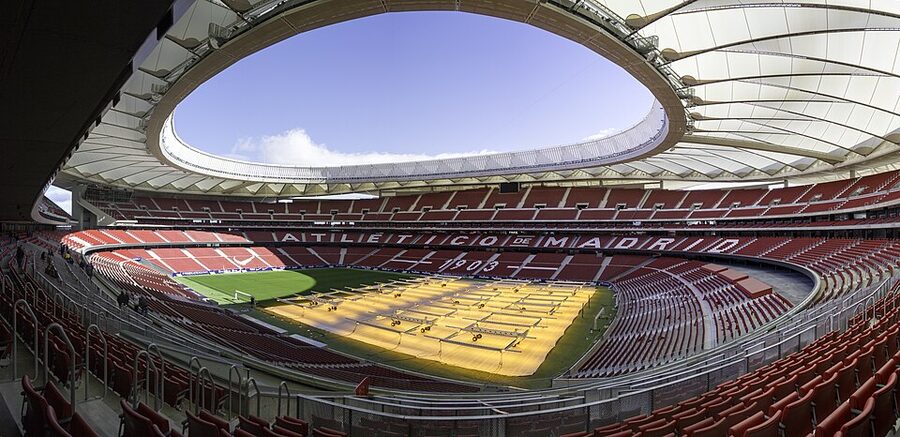
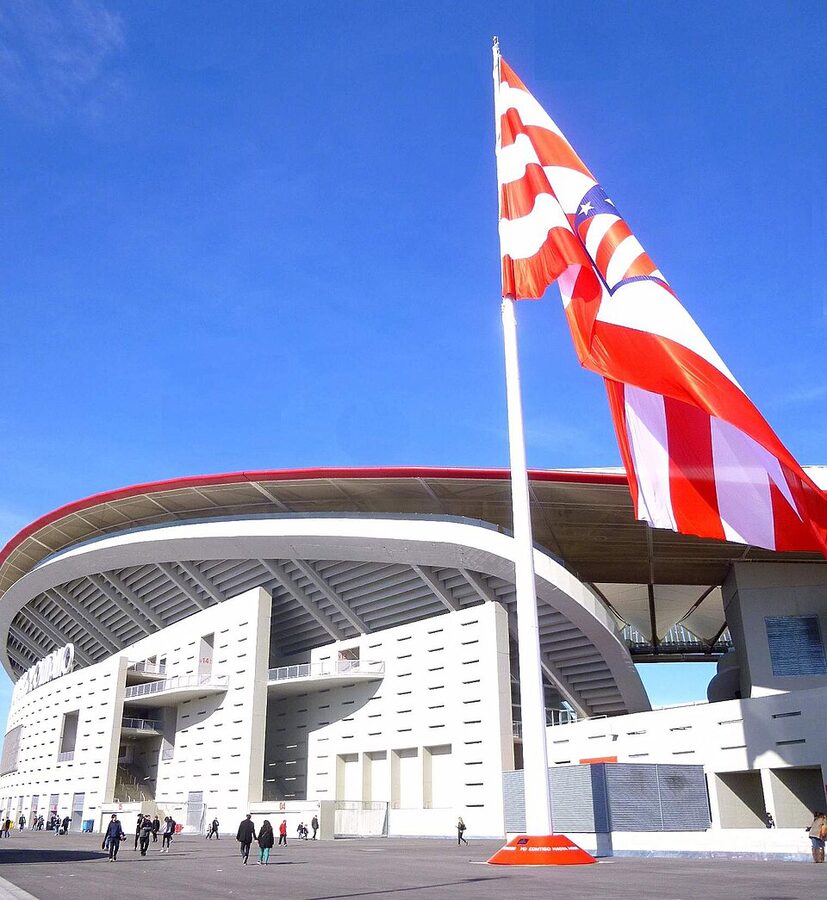
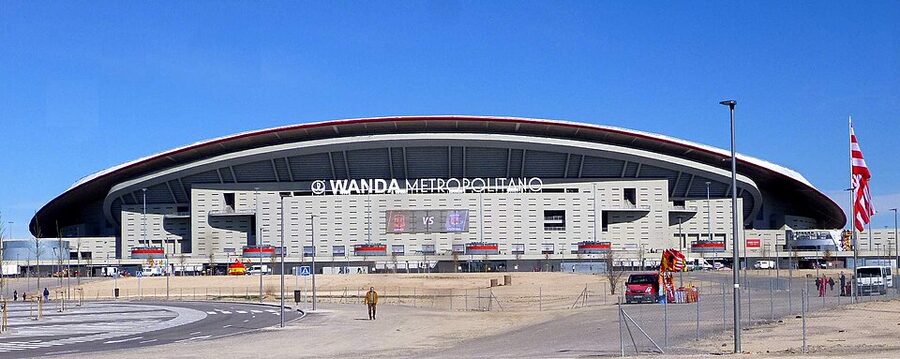
My son picked up a red-and-white scarf at Madrid airport and refused to take it off for six days. He doesn’t even particularly care about football — he just cares that his team, for one holiday, is Atlético. If you’ve got a kid going through that phase (or, let’s be honest, a grown-up going through that phase), the Metropolitano stadium tour in east Madrid is one of the better afternoons you can plan in the city.
In a Hurry? Our Family Picks
Best for most families: Metropolitano stadium entry with audio guide ($29) — self-paced, kids can skip the long bits, includes the Interactive Museum and VR stations.
If you’ve got a proper Atleti fan: Guided stadium tour ($52) — 90 minutes with a live guide, access to the tunnel and dugout, better stories.
Classic combo ticket: Stadium + Interactive Museum entry ($30) — simple Viator booking, same content as option 1 but sold as a combined ticket.
- In a Hurry? Our Family Picks
- What the tour is actually like with kids
- The bits kids actually like
- The bits you can probably skip
- Picking the right ticket: entry, guided, or match
- Our top picks to book
- 1. Metropolitano Stadium Entry with Interactive Museum —
- 2. Cívitas Metropolitano Guided Stadium Tour —
- 3. Stadium + Interactive Museum Admission —
- Getting there with kids
- Combining with other Madrid days
- What if you’re going to an actual match?
- The Interactive Museum: the actual highlight
- Age-by-age: who should do this tour
- Practical tips from our last visit
- A short history of Atlético (for the kids who ask)
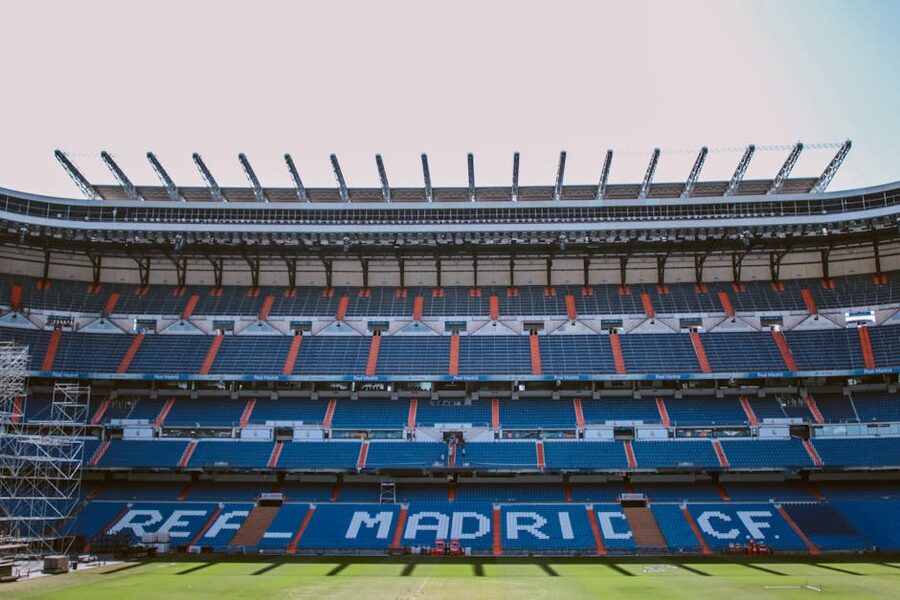
- How the tour compares to Bernabéu
- What else we’d pair with a stadium day
- What if it rains?
- Before you book, a short honest list
What the tour is actually like with kids
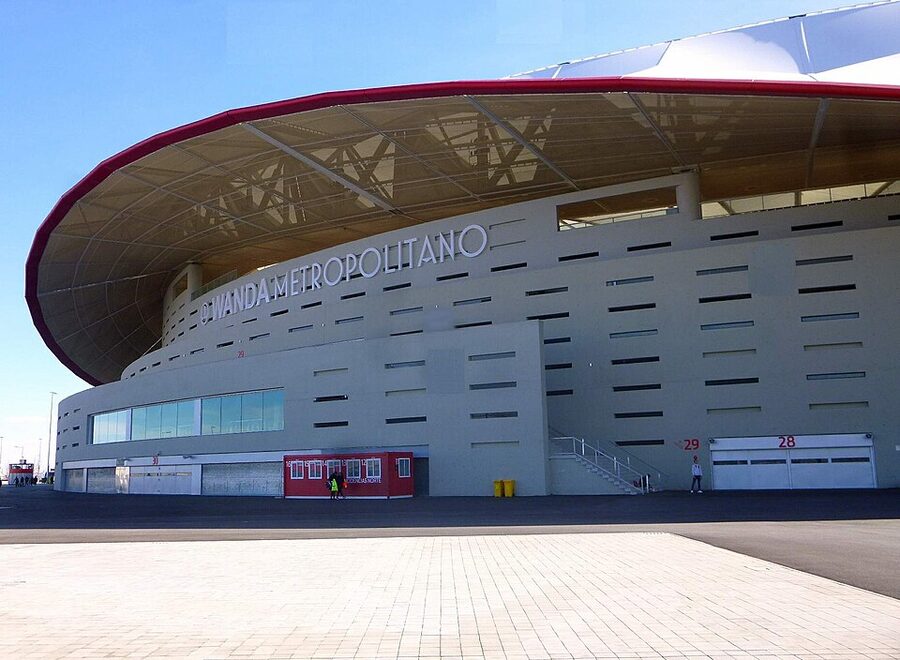
The name of the stadium has changed three times in the last seven years (I know, nobody can keep up). It opened as Wanda Metropolitano in 2017, was renamed Cívitas Metropolitano in 2022, and is currently branded Riyadh Air Metropolitano as of 2024. All three names point to the same stadium. The bookable tour is the same too — nothing about the experience changes when the sponsor does.

A few things to know before you book. This isn’t one of those stadium tours where you’re dragged round a scripted route for two hours. The standard entry ticket is a self-paced audio-guided visit (English, Spanish, and a handful of other languages) that you can do in anywhere between 60 minutes and two hours depending on how much your kids want to press every button in the museum. The guided version is fixed at 90 minutes and has a live guide — more structured, better if you’ve got a proper football fan and not just a kid along for the ride.
The bits kids actually like
Every stadium tour has the same ingredients — dressing room, pitch edge, press room, trophy room — and they all sound better than they are for a seven-year-old. Here’s what actually works at the Metropolitano:
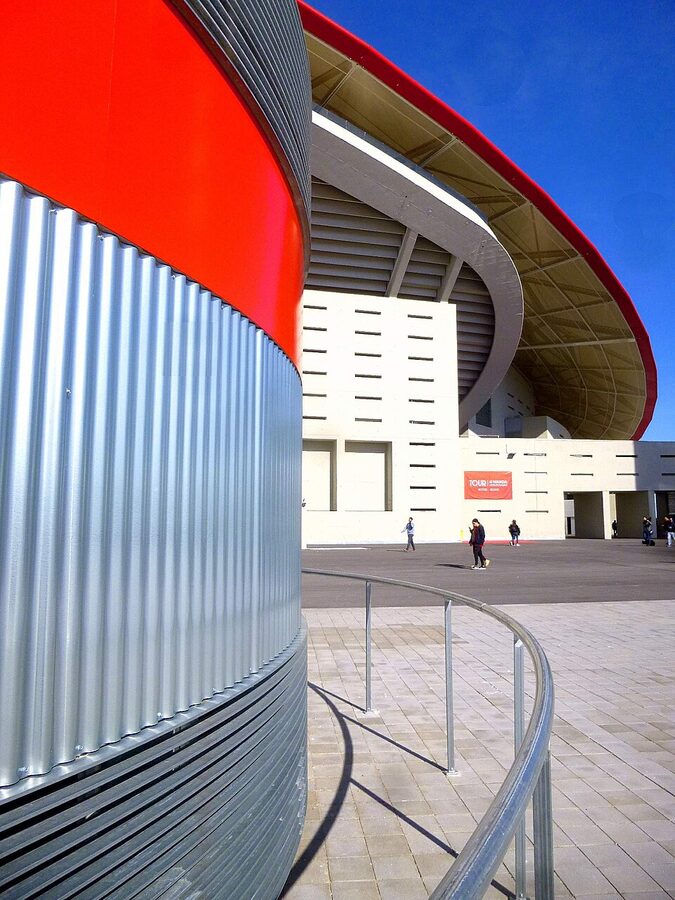
The Interactive Museum. This is the biggest surprise of the whole visit — it’s actually a proper hands-on museum, not a corridor of trophy cabinets. VR stations that let you “stand” next to Diego Simeone on the touchline. Touchscreen shoot-the-ball games. A wall you can press that lights up with goal celebrations. Our nine-year-old spent 40 minutes here and we had to drag him out.
The dressing room. You get to go into the actual Atlético dressing room — shirts hanging in players’ lockers, the big circular bench in the middle, the physio bed. Kids love seeing the names above the lockers. Morata, Griezmann, whoever’s current. Phone camera on, kids sit on the bench, done — one of the best photos of the trip.

The tunnel walk. You come out of the dressing room, walk down the short player tunnel, and step into the stand. This is the moment. Every single kid we watched stopped talking mid-sentence. Even toddlers get it. If you do nothing else at this stadium, get your child to walk the last 20 metres of that tunnel on their own — they will remember it.
The press conference room. There’s usually a photo opportunity where kids can sit at the top table with the Atlético backdrop behind them. The stewards sometimes have a microphone they’ll let you hold. Our two had a 10-minute “press conference” where one was a journalist and one was pretending to be a player. Free entertainment, no batteries required.
The trophy room. Skip this with anyone under six. Everyone else will get 5-10 minutes out of it — there’s a full La Liga title, European trophies, and the club’s older silverware going back to the 1930s.

The bits you can probably skip
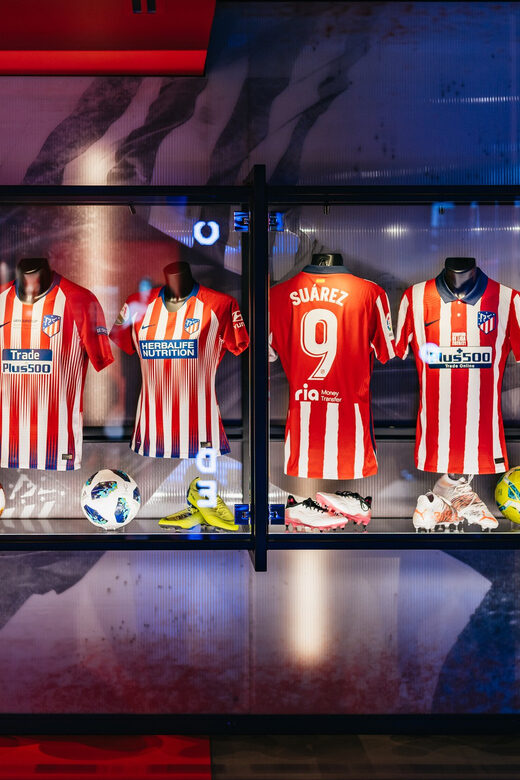
A few sections feel padded out. The corporate hospitality boxes — skip them unless your kid is weirdly into interior design. The long corridor of printed club history — a couple of photos is enough, you don’t need to read every panel. The kit room display — nice for serious fans, but a small child won’t care.
The self-paced format helps here — if the kids are getting twitchy in one section, you walk past. No guide watching you, no other people in your group to keep up with. For families with a range of attention spans, the audio-guide ticket is genuinely better than the guided tour.
Picking the right ticket: entry, guided, or match
Three very different options, three very different price points:
Stadium entry ticket ($29) — self-paced with an audio guide. Best for most families. Works with kids 5+. Lets you go as fast or as slow as you want. You get the dressing room, tunnel, pitch access, press room, and the Interactive Museum. This is what we’d book if we had the three of us going in for a couple of hours as part of a bigger Madrid day.
Guided stadium tour ($52) — 90 minutes with a live guide in a fixed group. The guide knows more than any audio clip will tell you, and kids who love football — the 9+ age group who can tell you who’s on loan where — will get a lot more out of this. Small groups, usually 10-15 people, and the guide tailors the stories to the audience.
Match ticket ($171+) — the real thing, an actual La Liga match. Expensive, unforgettable, and logistically complex with kids. If your child is properly into Atlético and you can swing the budget, this is the peak experience. But read the “match day with kids” section below before you book — it’s not a simple yes.
There’s also a Premium Tour with breakfast in Simeone’s box ($88) if you want the VIP version — smaller group, access to the manager’s private area, a decent breakfast included. Worth it only if your fan is over 10 and will understand what Simeone’s box actually is.
Our top picks to book
1. Metropolitano Stadium Entry with Interactive Museum — $29
The audio guide works in English and Spanish. Our full review of the stadium entry ticket digs into what the VR stations actually do — they’re genuinely good, not the usual throwaway VR you get at sports venues. Works with kids from about 5 upward. Buggy-friendly throughout; there are lifts to every level.
2. Cívitas Metropolitano Guided Stadium Tour — $52
The guided version of the tour includes everything in the standard entry plus extras — priority access through the tunnel, guide commentary in the dressing room, more time in the press room. The guided tour review has more on what’s different, and which start times tend to be quieter. Not great for under-7s — the fixed pace doesn’t work if someone needs a toilet break.
3. Stadium + Interactive Museum Admission — $30
If you use Viator and have their loyalty credits, this is the equivalent ticket. Covers the same self-paced stadium walk plus Interactive Museum entry. Our review of this version compares the two platforms — same content, tiny price difference, choose on convenience.
Getting there with kids
The Metropolitano is on the east edge of Madrid, near the airport. Two sensible options:
Metro Line 7 to Estadio Metropolitano. This is the easiest route and the station is literally at the stadium — exit the station, walk 2-3 minutes, you’re at the door. Line 7 runs from Pitis all the way through the city centre. From central Madrid (Gregorio Marañón or Avenida de América) it’s about 15-20 minutes. Step-free access throughout — buggies go in no problem.
Driving. Free parking at the stadium for tour visits (match days are different). About 25 minutes from central Madrid. Useful if you’re combining with a drive to Toledo or Alcalá — the stadium is on the same side of the city as most of the day-trip destinations.
Taxi or Uber. About €15-20 from central Madrid. Useful if you’ve got a buggy, a scooter, and a small child who cannot be persuaded onto another metro.
Combining with other Madrid days
If you’ve got a Madrid week planned, the stadium tour slots in nicely on a day where you also want to visit Toledo or head east. East Madrid is less tourist-dense than the centre, so it’s a good “escape the crowds” afternoon after you’ve done the Prado and Royal Palace heavy lifting. Our Bernabéu Stadium with kids guide is the natural comparison if you’re weighing up Real Madrid’s ground against Atlético’s — very different vibe, different logistics.
What if you’re going to an actual match?
Taking kids to a La Liga match is a bigger undertaking than the stadium tour. It’s brilliant, and it’s exhausting. Some things we’ve learned:
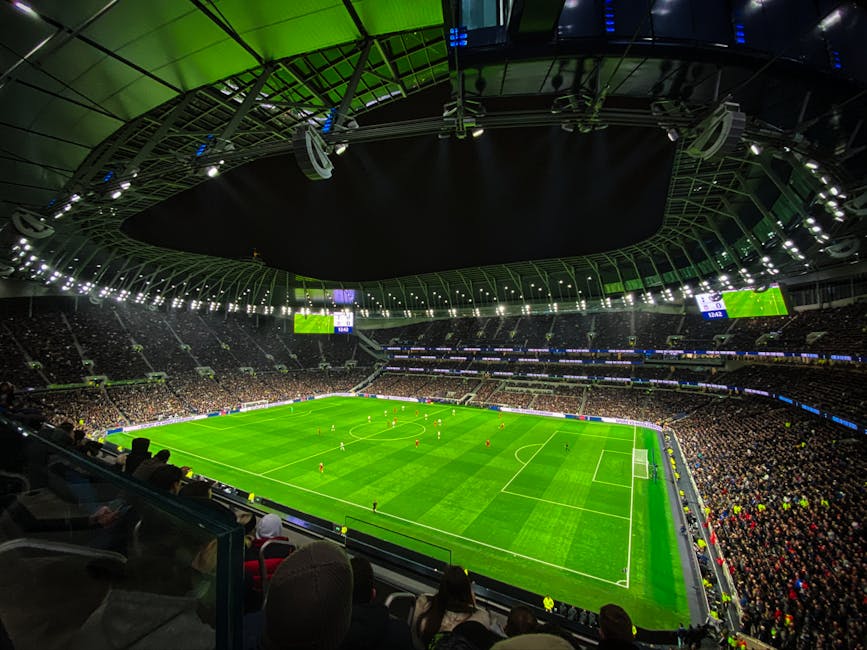
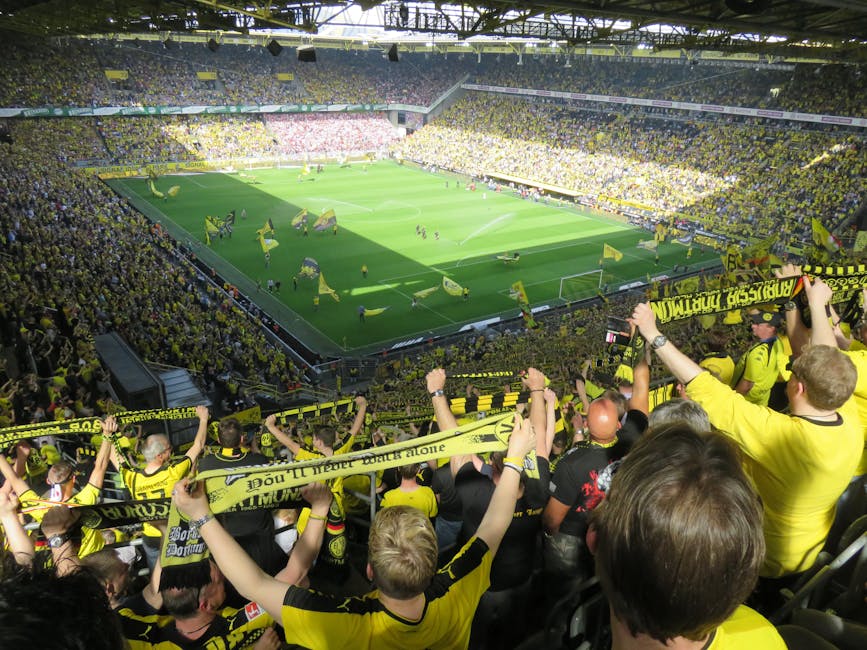
Pick your seats carefully. Atlético’s most atmospheric section is Fondo Sur (the south stand, where the ultras sit). Don’t sit there with kids. The singing is constant, the swearing is enthusiastic, and kids under 10 will get stressed. The sensible family zones are the side stands (Tribuna Principal and Preferencia) — quieter, more families, better view of the pitch.
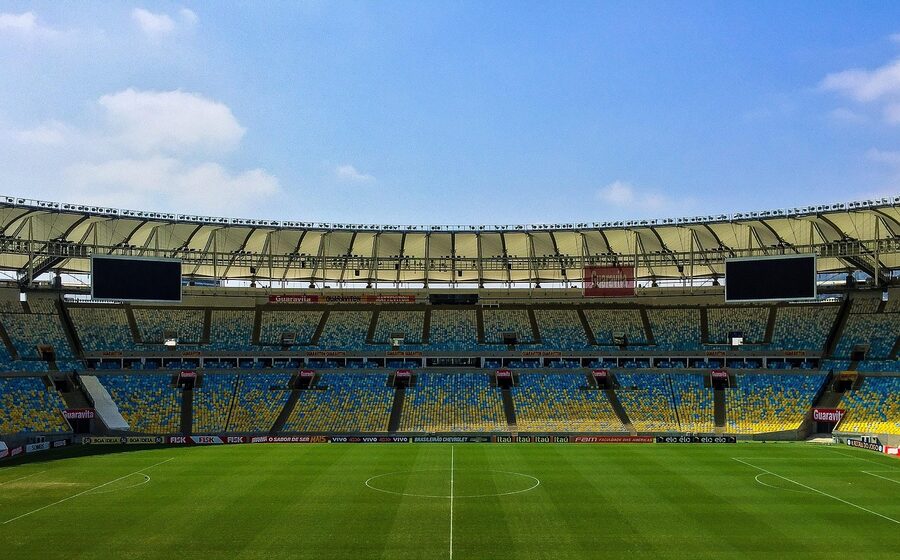
Spanish kick-off times are later than you expect. Weekend matches can be 9pm or even 10pm. If you’re travelling with young children, check the kick-off before you book — a 9pm kick-off on a school night is a lot for a six-year-old.
Food at matches. There are kiosks around the concourse selling standard stadium fare — bocadillos, pizza slices, crisps, churros. Nothing fancy, prices are about 50% above street prices. You can bring your own sealed snacks in. Water in plastic bottles is allowed (the caps will be removed at the gate, which is annoying but universal).
Getting out after a match. The metro gets very busy for about 30 minutes after the final whistle. With kids, hang back for 15-20 minutes — have a second drink in a stand café, let the crowds disperse, then head to the station. You’ll trade a 10-minute wait for a genuinely civilised journey home.
Match ticket vs stadium tour for first-time fans. Honestly, if your child is under 8 and has never been to a big football match, do the tour first, not the match. The tour lets them absorb the stadium, learn where things are, try on a shirt in the shop, watch a VR player run onto the pitch. A real match is overwhelming for a first-timer. Start with the tour, come back for the match next year.
The Interactive Museum: the actual highlight
I keep mentioning this because it’s legitimately good. Most stadium museums are trophy cabinets in a long corridor. Atlético’s is laid out more like a hands-on science museum — VR stations, touch screens, goal reaction games, a replica dugout you sit in and watch a crowd react to a goal you “scored”.
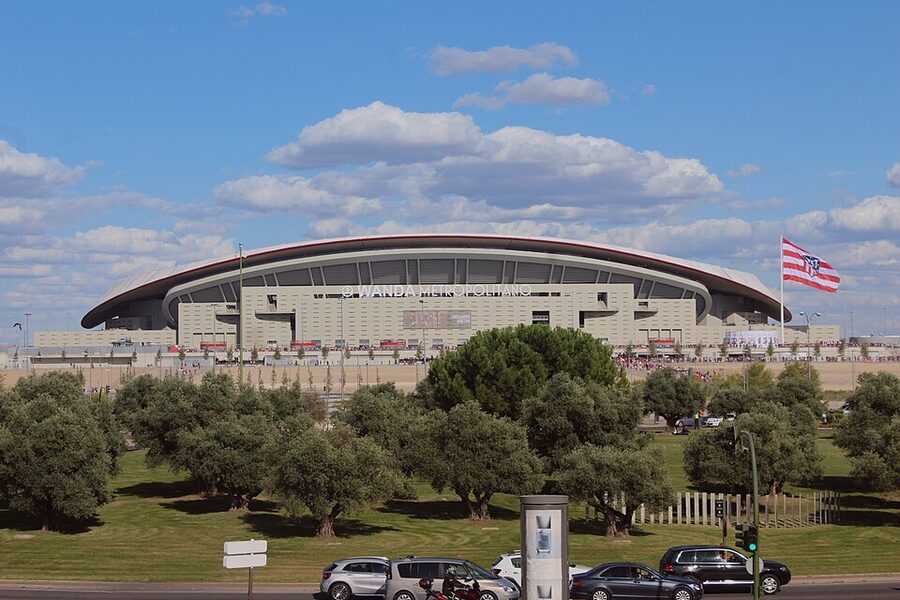
The best section for kids is the VR wall — a bank of stations where you can stand “next to” current Atleti players on the training pitch, or walk out of the tunnel in Simeone’s shoes. There are usually staff to help with the headsets; minimum age is 6 for the full VR, but younger kids can do the touch-screen versions.
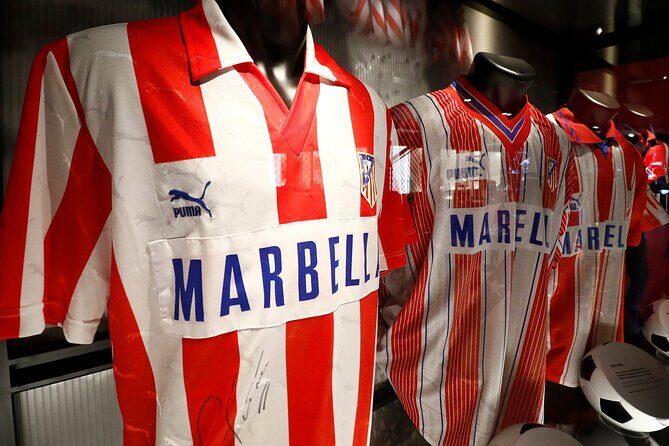
Older kids with a stats brain will love the trophies and historical shirts section. The club has been around since 1903 and has serious silverware from the 1960s onwards — two European finals, ten La Liga titles, plus the stuff Atleti are arguably better known for (cup wins, near-misses, and the “forever cursed by Real Madrid” narrative). If your teenager knows who Luis Aragonés or Fernando Torres are, they’ll spend a proper chunk of time here.

Age-by-age: who should do this tour
Under 5: probably skip it unless your child is unusually into football. They won’t really engage with the stadium, won’t understand the museum, and the best bits (VR, goal celebrations) have age minimums or go over their heads. Better to do the Royal Palace or the zoo at this age.
5-7: worth it if there’s a football fan in the family. The tunnel walk and the pitch view are the highlights. Keep the visit to about 90 minutes — much more and they lose interest.
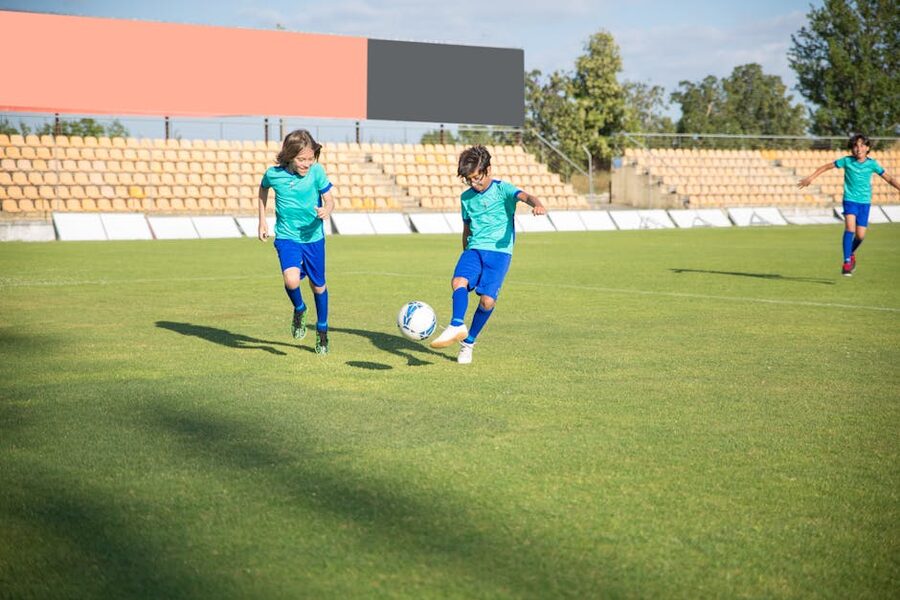
8-12: the sweet spot. VR, museum, tunnel, dressing room all land. Even kids who aren’t specifically Atlético fans find the stadium impressive.
Teens: full experience. They’ll want the guided tour, they’ll get the historical context, they’ll spend proper time in the museum. If your teen is an actual Atleti fan, consider adding a match ticket.
Practical tips from our last visit
Book online, not at the door. The queue at the ticket counter on a Saturday afternoon was about 30 minutes. Pre-booked tickets skip straight to the scan-and-enter lane. Difference of one whole tired-child-meltdown.
Allow 2-3 hours including travel. The tour itself takes 60-120 minutes, add 30 minutes for the metro there and back. If you’re adding the Interactive Museum (which you should), budget closer to 2.5 hours on-site.

Food inside is limited on non-match days. There’s a café in the museum area selling coffee, churros, and basic sandwiches. It’s fine but overpriced. We ate at Atleti Food & Drinks (the official food hall outside the stadium) before the tour — better range and not crazy money.
The shop. Budget for €15-30 if you’ve got a kid in an Atleti phase. A kid-sized scarf is about €12, a replica shirt (basic plain one) around €45, a name-print upgrade another €20. If your child is “I want everything”, warn them in advance about a spending limit before you walk in.
Toilets. Multiple, clean, baby-change in both the main concourse and the museum area. One of the better-equipped stadium facilities we’ve used in Spain.
Shoulder-season weekdays are empty. Weekdays outside school holidays the stadium is very quiet — sometimes we’ve walked the whole tour seeing maybe a dozen other people. Weekends in summer or around school holidays are much busier. If you can pick a Tuesday or Wednesday afternoon, do it.
A short history of Atlético (for the kids who ask)
Atlético de Madrid was founded in 1903 by three Basque students as a branch of Athletic Club Bilbao. The “Atlético” name and red-and-white kit both came from Bilbao, which is why the two clubs share colours to this day. The Madrid branch went independent in 1921 and has been its own club ever since.
The club spent most of the 20th century as the second club of Madrid (behind Real Madrid) — winning La Liga occasionally, losing European finals often, and cultivating what fans call “un sufrir” (a long suffering). They played for 40 years at the Vicente Calderón stadium on the river, from 1966 to 2017. When the Calderón was demolished, the club moved east to the Metropolitano, which was originally built for Madrid’s failed 2020 Olympic bid.

Modern Atlético are shaped by Diego Simeone, the Argentinian manager who took over in 2011 and turned the club from mid-table also-rans into genuine title contenders. Under Simeone they’ve won La Liga twice (2014, 2021), reached two Champions League finals (2014, 2016), and become known for a specific style — defensively disciplined, physically aggressive, emotionally intense. Kids whose parents know football will recognise “the Simeone era”. Even kids whose parents don’t will see Simeone on the dressing room wall and in the VR stations.
The rivalry with Real Madrid is called the Madrid Derby and it’s genuinely spicy. Not city-divided-like-Rome spicy, but close. If your kid ends up in an Atleti shirt and you spot someone in a white Real shirt in the museum, tell them to keep the banter friendly. Spanish football fans are mostly good-humoured but the rivalry is real.
How the tour compares to Bernabéu
If you’re in Madrid and weighing up whether to do Atlético’s tour, Real Madrid’s Bernabéu tour, or both — here’s the honest comparison.
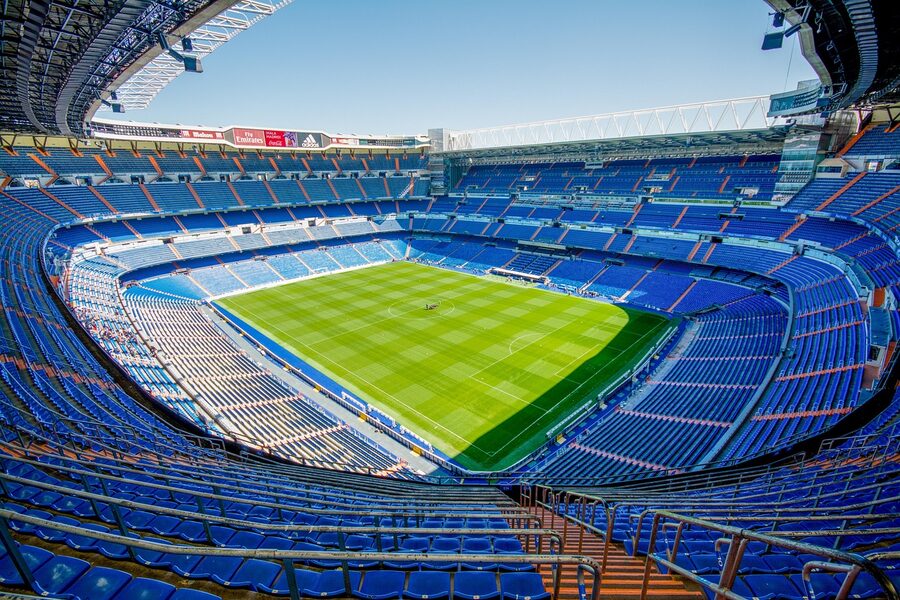
Bernabéu is more polished, more expensive (around €35 for standard entry), and has the more famous trophy cabinet. The stadium has had a €1bn renovation and has a retractable roof and a walkable 360° skywalk at the top. It’s the tourist-brochure option and it delivers on that.
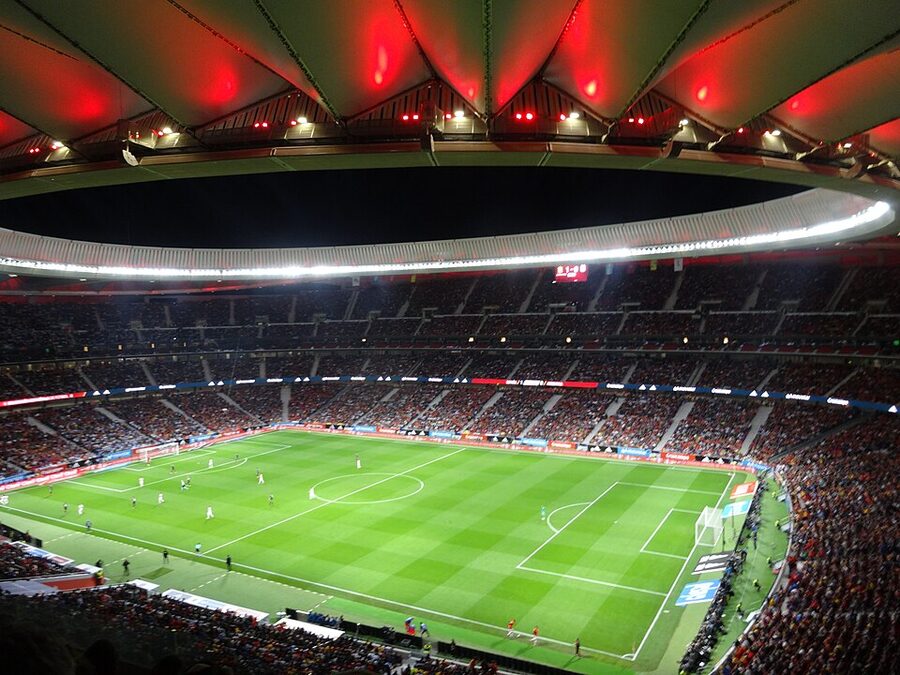
Metropolitano is cheaper, less crowded, and feels less commercial. The Interactive Museum is actually better than Bernabéu’s for hands-on kid content. The match-day atmosphere (if you end up at a game) is more intense at Atleti.
If you’ve only got time for one, pick based on which club your kid’s shirt will be. If there’s no shirt yet, pick Atleti — cheaper, less crowded, and the Interactive Museum alone justifies the trip. If your kid already has a Real Madrid obsession, do Bernabéu.
Plenty of football-mad families do both in the same trip. We did that once and regretted it; it was stadium overload. Maybe split across two Madrid visits if you’ve got the option.
What else we’d pair with a stadium day
After a stadium tour — regardless of which one — kids tend to want to run around outside. The park next to the Metropolitano isn’t much. Much better to hop back on the metro and head to the Royal Palace gardens or Retiro Park for an hour of unstructured play before dinner. Kids need an outdoor release after the concrete-and-stadium morning.
If you’re doing the stadium tour late morning and want a big afternoon with the kids, Madrid Zoo or Parque Warner are natural pairings — same city-edge energy, different kind of energy. Don’t do the stadium and a theme park on the same day though; it’s too much.
The other good pairing is a day trip. Toledo is a classic — medieval walls and castle the morning, Atleti tour in the afternoon if you get back in time. It’s a long day, so only attempt with kids 8+.
For the culture balance, our Prado with kids guide has age-appropriate ways to make the big museum work for children. A “morning at the Prado, afternoon at the stadium” day covers the two opposite ends of Madrid and works surprisingly well.
What if it rains?
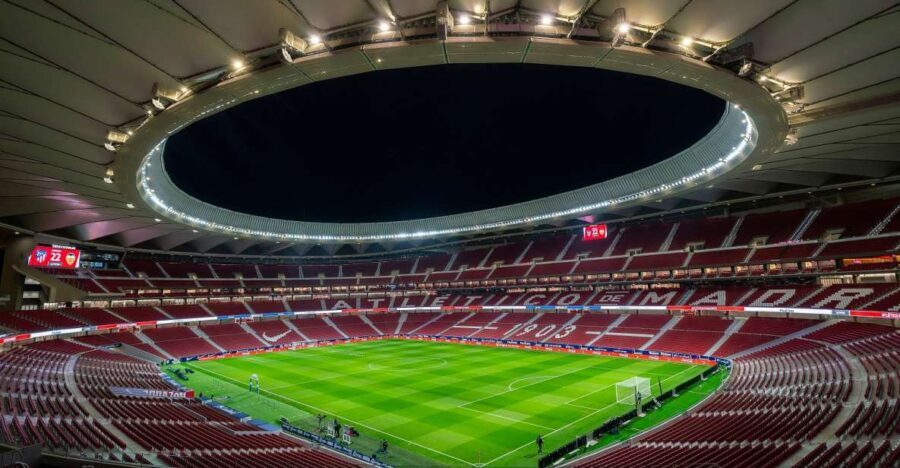
Good news: the tour is indoors-first. The stadium itself has a partial roof, the dressing rooms and museum are fully covered, and the tunnel and pitch-edge sections have overhead shelter. Unless it’s genuinely pouring, the visit isn’t affected much.
The only rain-vulnerable part is the walk from the metro — about 3 minutes from station exit to stadium gate. Bring one umbrella per adult or enough hoods to go round. Madrid gets short sharp showers rather than long rain, so “wait 20 minutes and go” often works.
Before you book, a short honest list
Skip the stadium tour if: your child is under 5 and not specifically into football. Spend the day in a park or the zoo instead.
Do the self-paced entry ticket if: you’ve got kids of mixed ages or attention spans. It’s the most flexible option and works for nearly every family.
Do the guided tour if: you’ve got one proper football fan (9+) and you want them to get the full experience with a real guide who can answer questions.
Do a match ticket if: your kid is 8+, in love with football, and you can handle a very late night in a noisy stadium. Read the match-day section above twice before you commit.

One last practical thing: the club’s loyalty for kids lasts. My son’s now 11 and the scarf he got at Madrid airport still lives in his drawer. A good football stadium visit sticks. If your kid is ready for it, this is a solid place to spend the afternoon.