
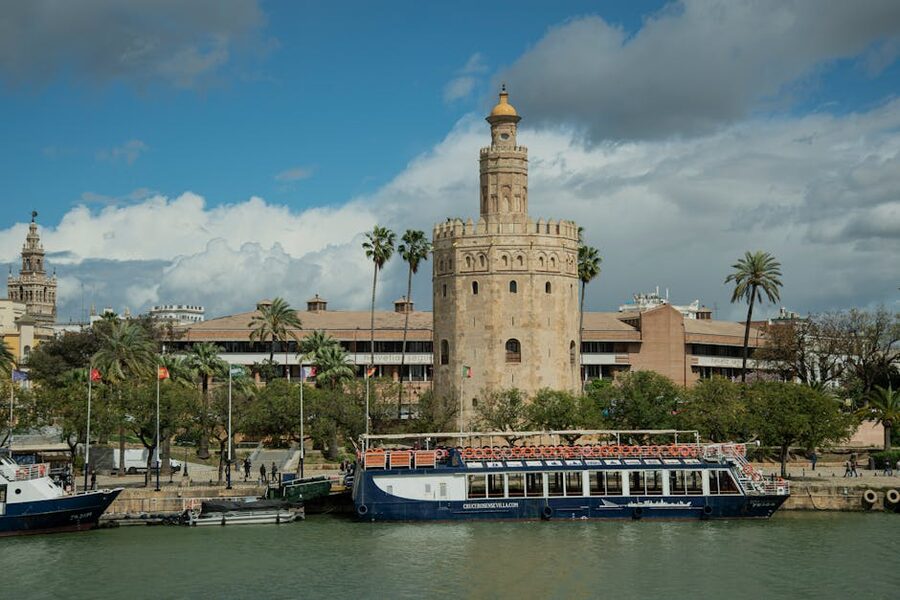
Our daughter declared the Guadalquivir river cruise “the best thing we did in Seville”. This was after the Alcázar, after the Cathedral, after a proper flamenco show. A one-hour boat ride for €19 beat everything else in her ranking, and honestly I think she had a point. For a hot Seville afternoon with two tired kids, an hour on a boat is unbeatable.
In a Hurry? Our Family Picks
Best budget option: 1-Hour Guadalquivir Eco Cruise ($19) — 10,000+ reviews, short enough for young kids, covers the main sights.
Highest-rated small-boat option: Guadalquivir River Boat Tour ($29) — 1-1.5 hours, smaller boats, 4.6 rating.
Cruise + food combo: Guadalquivir Boat Tour with Optional Lunch/Dinner ($29+) — 1.5-2.5 hours with food options, good for teen-age families.
- In a Hurry? Our Family Picks
- Why a river cruise works with kids
- What you actually see on the cruise
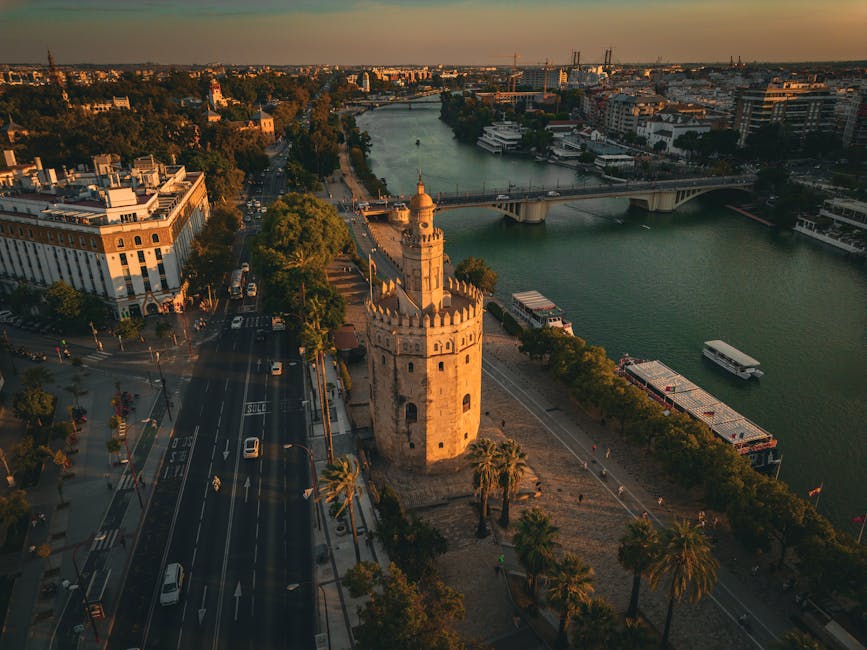
- Torre del Oro — the must-see
- Plaza de Toros de la Maestranza (bullring)
- The bridges — there are six of them
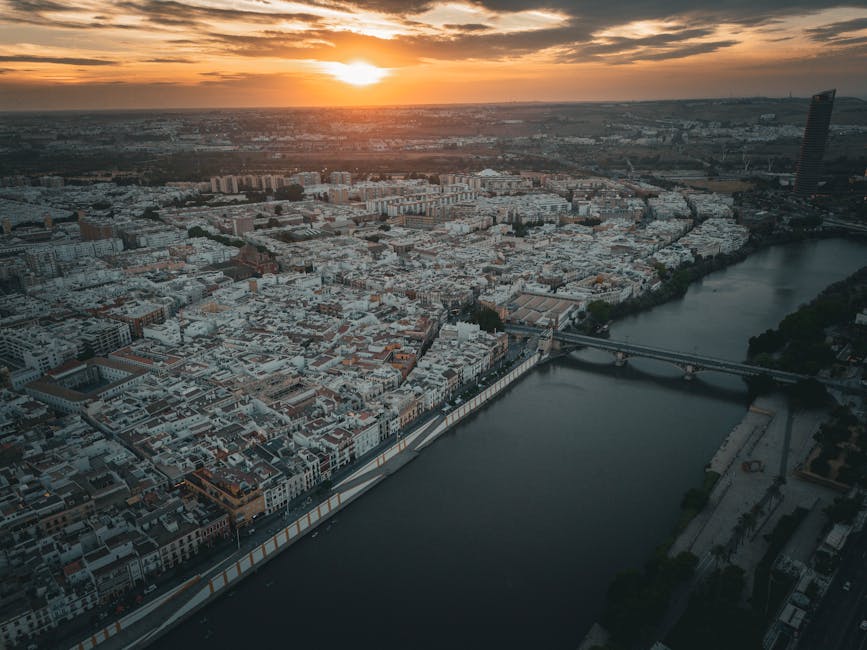
- Triana (across the river)
- Torre Sevilla and the modern skyline
- Our top picks to book
- 1. 1-Hour Guadalquivir River Sightseeing Eco Cruise —
- 2. Guadalquivir River Boat Tour (Small Boat) —
- 3. Guadalquivir Boat Tour with Optional Lunch or Dinner — +
- Getting there and timing
- Practical logistics
- Audio commentary — what it covers
- What else to do with a river day
- Other river experiences to know about
- Rowboats at Plaza de España
- Kayaking the Guadalquivir
- A short history of the Guadalquivir
- Age-by-age take
- What if it rains?
- Best time of year
- Before you book, an honest list
Why a river cruise works with kids
Most sightseeing with kids involves walking. Walking on cobbles. Walking in sun. Walking past people who are walking slower than you. A boat cruise fixes all of that — you sit down, you’re on water (so automatically cooler), and the views come to you.
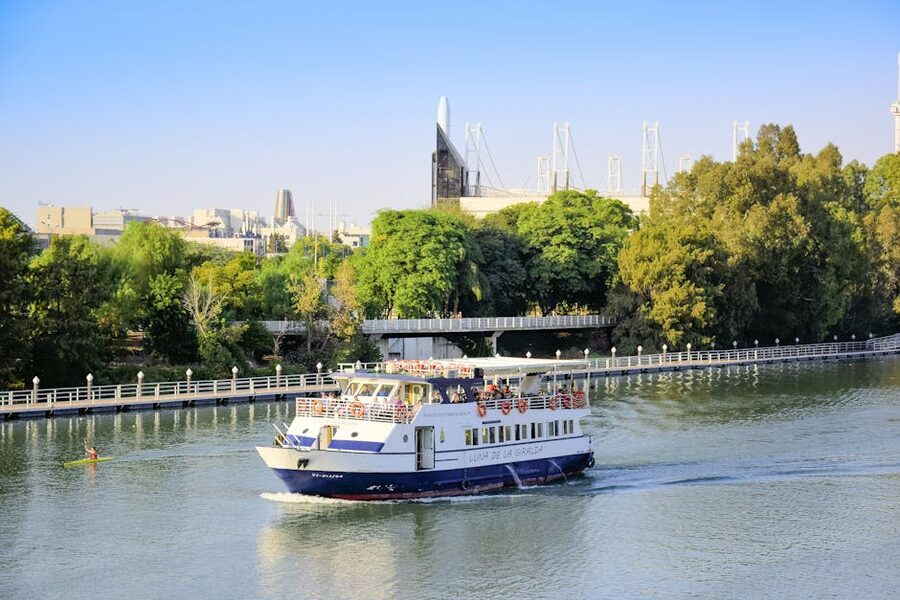
Three specific things that make it kid-friendly:
The one-hour length matches the attention span of most primary-age children. Long enough to cover ground, short enough that no one melts down.
The views from the river give you a completely different Seville — the back of the Alcázar gardens, the Triana bridges, the skyscraper architecture north of town, the whole riverfront strip of Los Remedios. It’s a “see the city from outside” experience.
The price is one of the lowest in Seville for any formal activity. €19 for 60 minutes of scheduled entertainment beats almost everything else on the tourist circuit.
What you actually see on the cruise
A standard 1-hour cruise does a loop: out downstream past Torre del Oro, past the Plaza de Toros, down to the San Telmo Bridge area, then back up and upstream under the Triana bridge, past Triana’s riverfront, up as far as the Puente del Alamillo (the modern suspension bridge from Expo 92), and back to the dock. You cover about 8 km of river in the hour.
Torre del Oro — the must-see
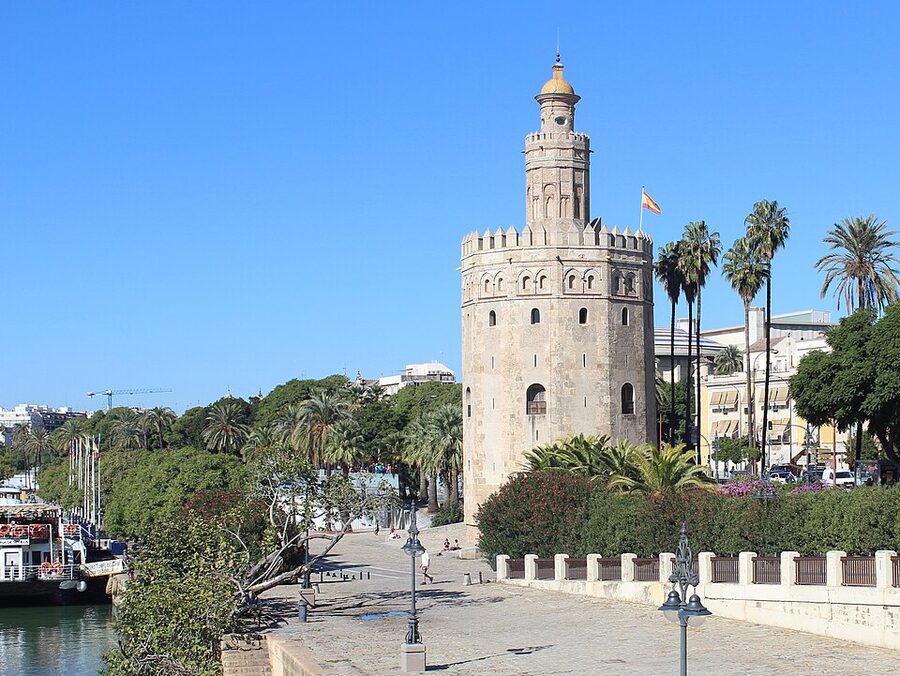
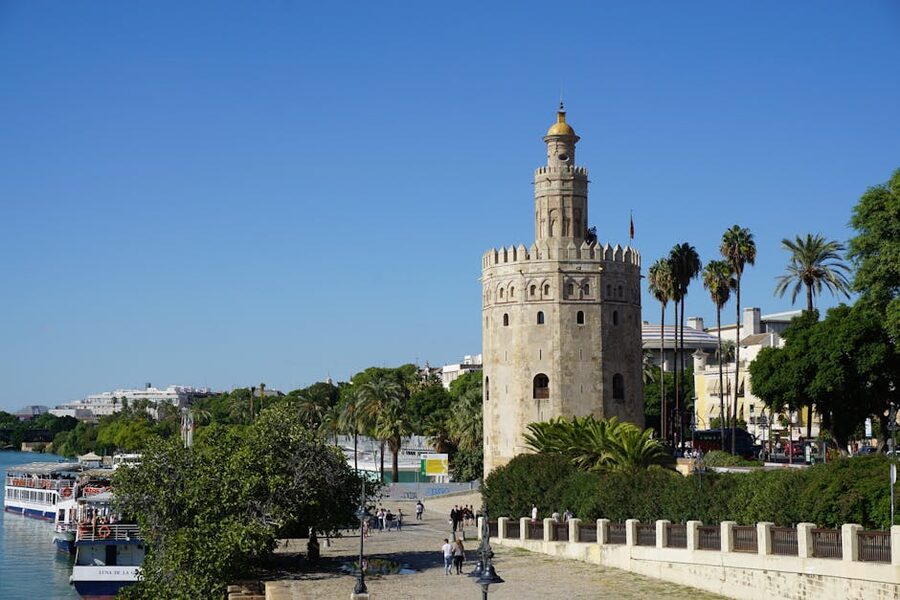
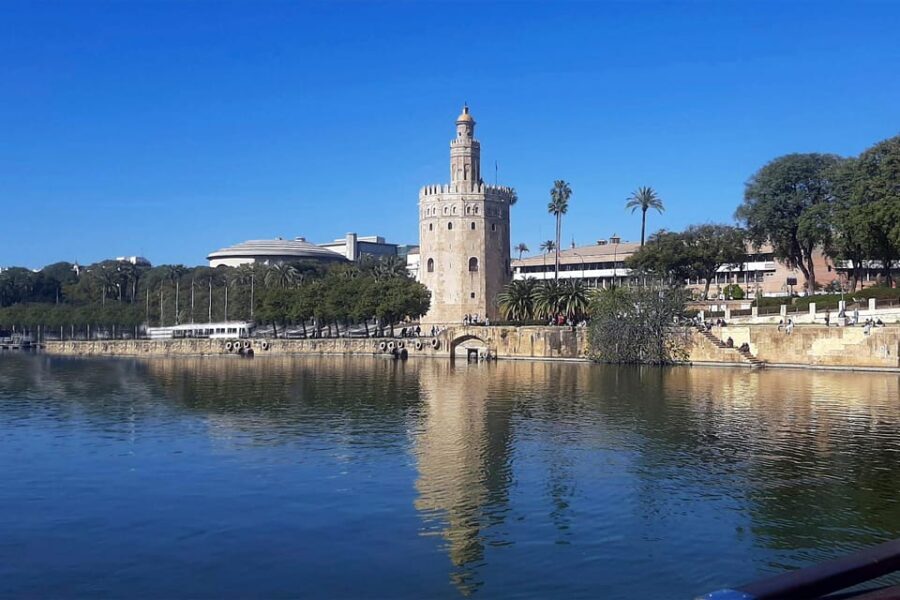
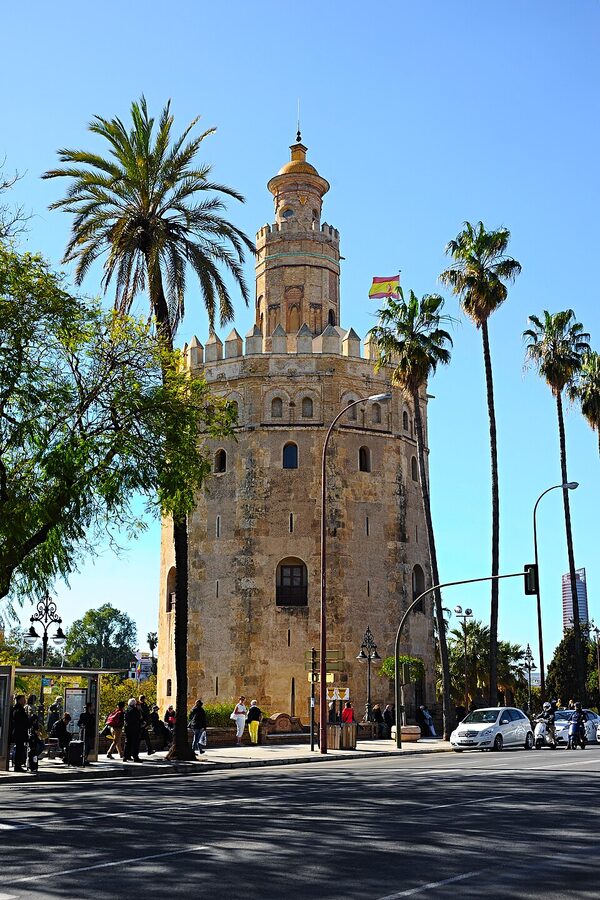
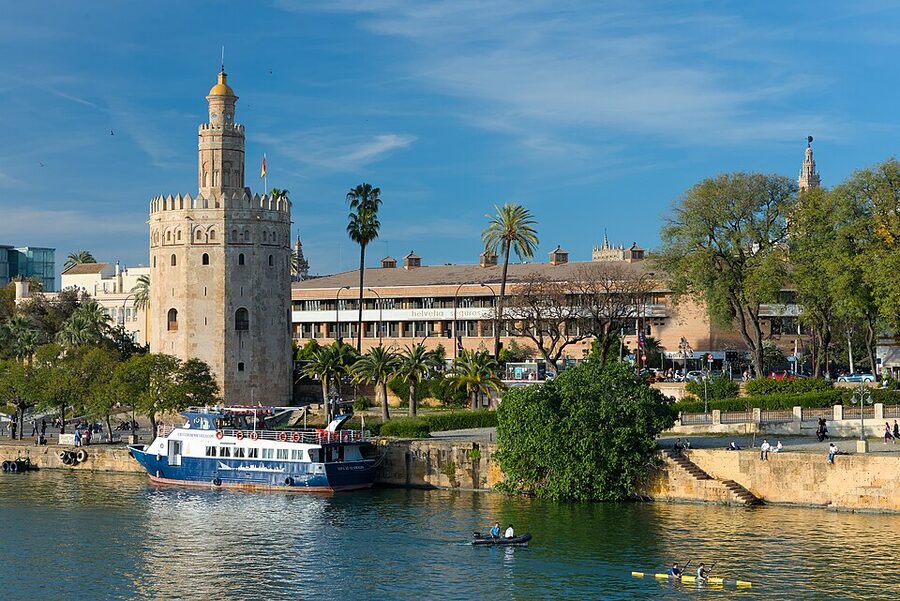
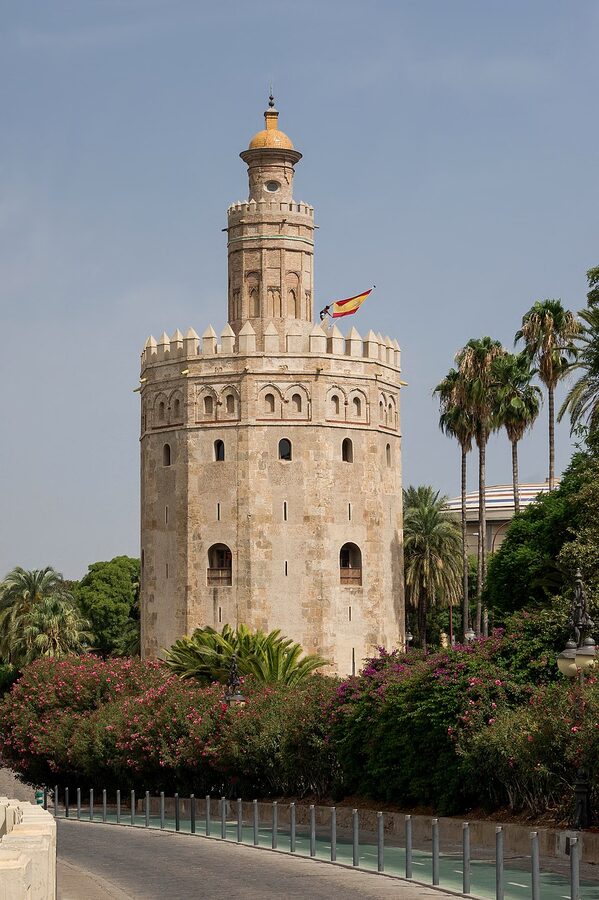
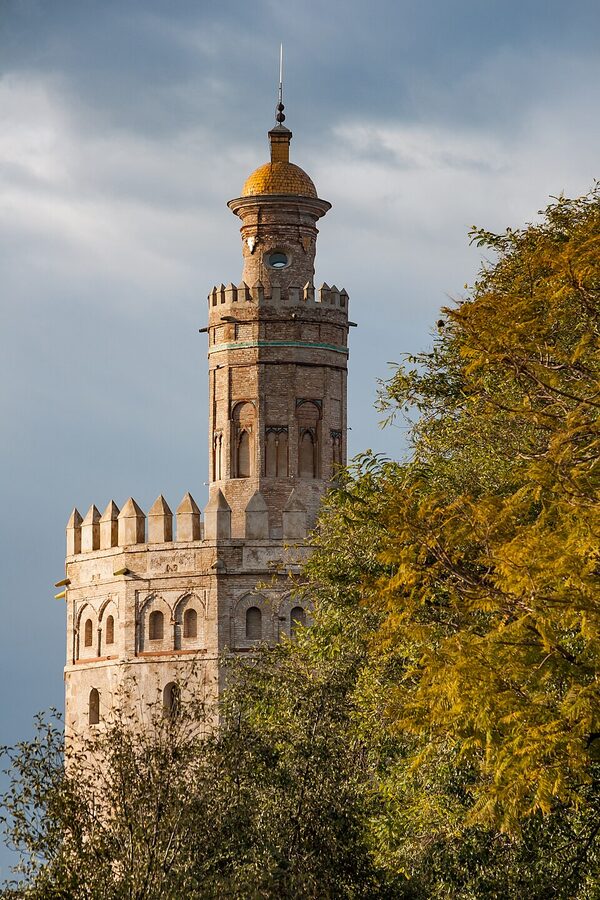
Right next to the cruise dock. The “Gold Tower” is 13th-century Almohad (Moorish) — built as part of the city walls to control river access. Legend says it was plated in gold tiles or covered in a chain linked to a matching tower on the other bank — both stories are probably myths, but both make good kid stories.
Today it houses a small naval museum and you can climb to the top of the tower (separately ticketed, €3 adults, €1.50 kids). If the river cruise leaves you wanting more tower, pair the two — but honestly, the cruise-only experience is plenty for most families.
Plaza de Toros de la Maestranza (bullring)
On the right as you head downstream. Seville’s 18th-century bullring — one of the oldest active bullrings in Spain. The commentary from the cruise boat is tactful about what bullfighting actually is; if your kids ask directly, answer honestly. Easier in Spain than most places because the debate is visible.
The bridges — there are six of them
You’ll pass under or by six bridges during the cruise:
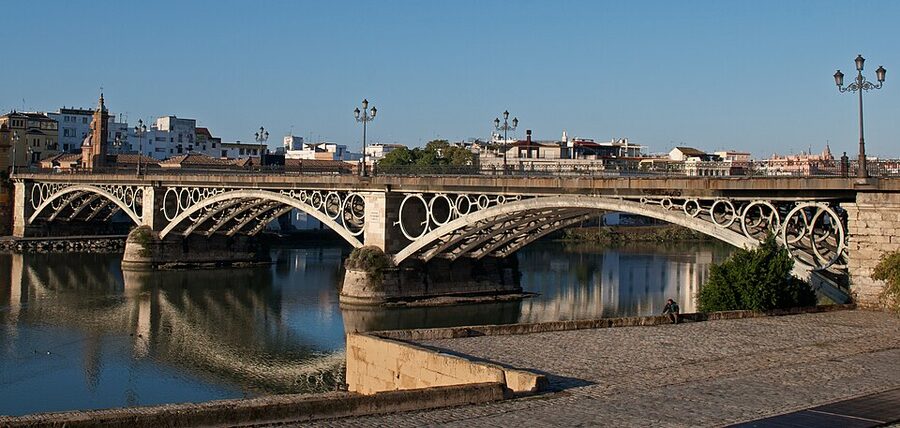
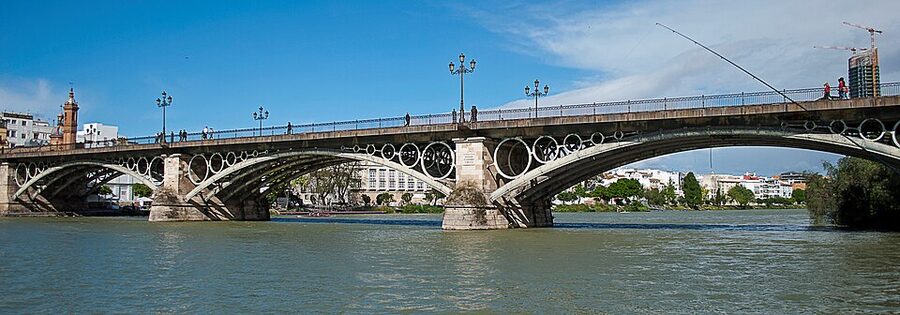
Puente de Isabel II / Puente de Triana (1852) — the oldest and most famous. Cast iron. Based on the Pont de Carrousel in Paris.
Puente San Telmo (1925) — the one closest to the cathedral and Alcázar.
Puente del Cachorro (1991) — modern tied-arch bridge.
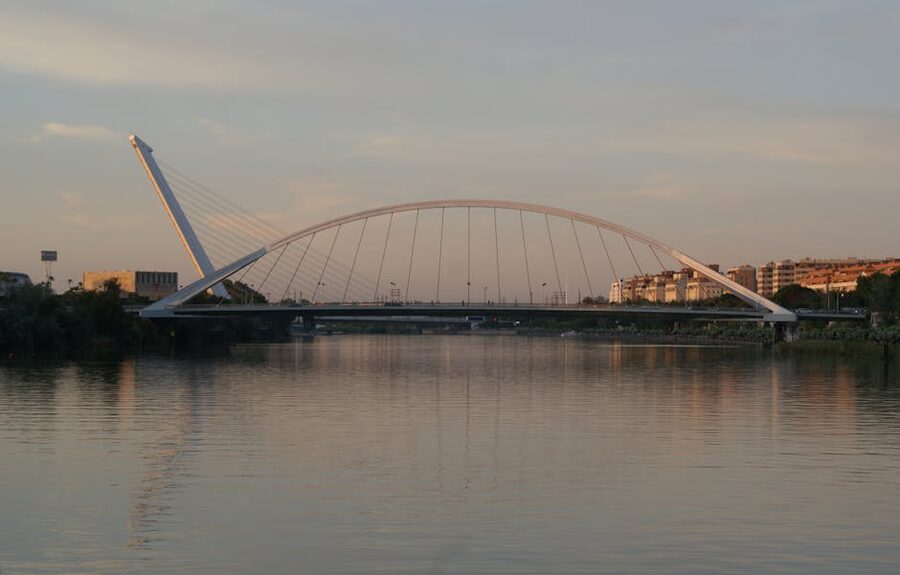
Puente del Alamillo (1992) — the famous Santiago Calatrava cable-stayed bridge built for Expo 92. Looks futuristic. Genuine engineering marvel.
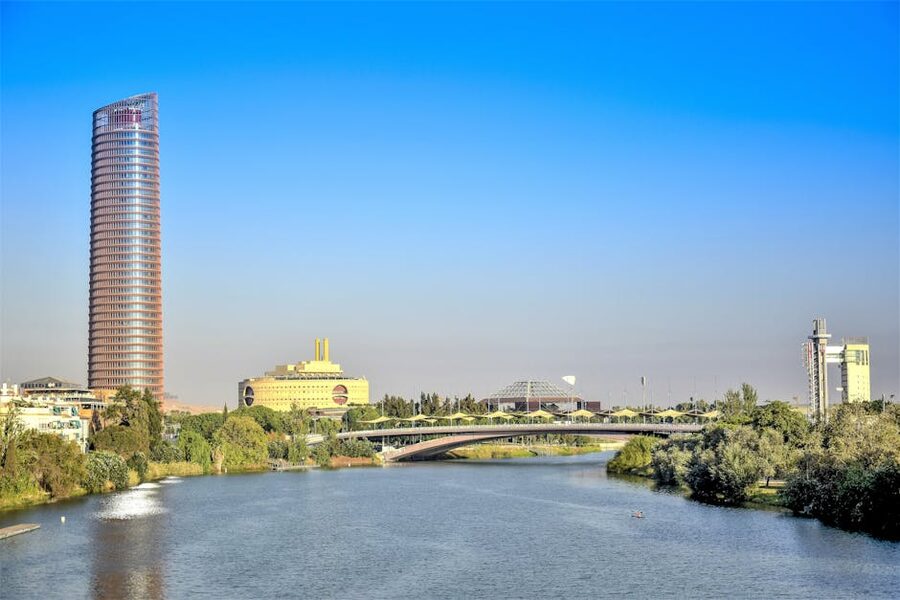
Puente de las Delicias (1993) — quieter, further downstream.
Puente de la Barqueta (1992) — another Expo 92 signature bridge, painted white, very photogenic.
Triana (across the river)
The old working-class neighbourhood across from central Seville. Traditionally home to Seville’s Romani (Gitano) community, ceramic workshops, and the birthplace of flamenco.
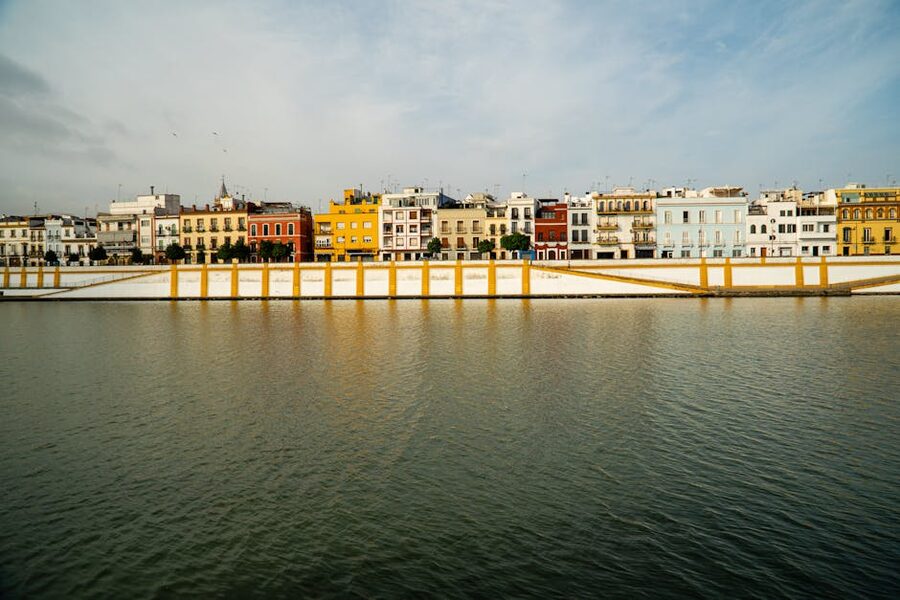
From the cruise you see the Calle Betis riverfront — a row of colourful houses facing the river, many now tapas bars. Best photo spot in Seville for that “holiday postcard” shot.
Torre Sevilla and the modern skyline
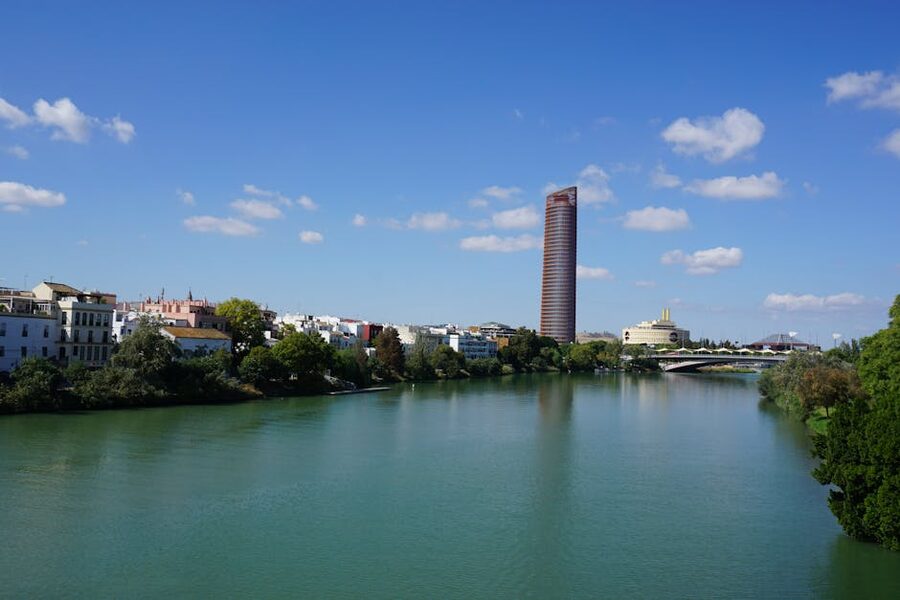
Past the old town, the cruise heads up toward modern Seville. The Torre Sevilla (also called Torre Pelli) is the city’s only skyscraper — 178m, opened 2015. Built for the Expo 92 area. Kids usually pick this out as “the tall one” and are surprised Seville has one at all.
Our top picks to book
1. 1-Hour Guadalquivir River Sightseeing Eco Cruise — $19
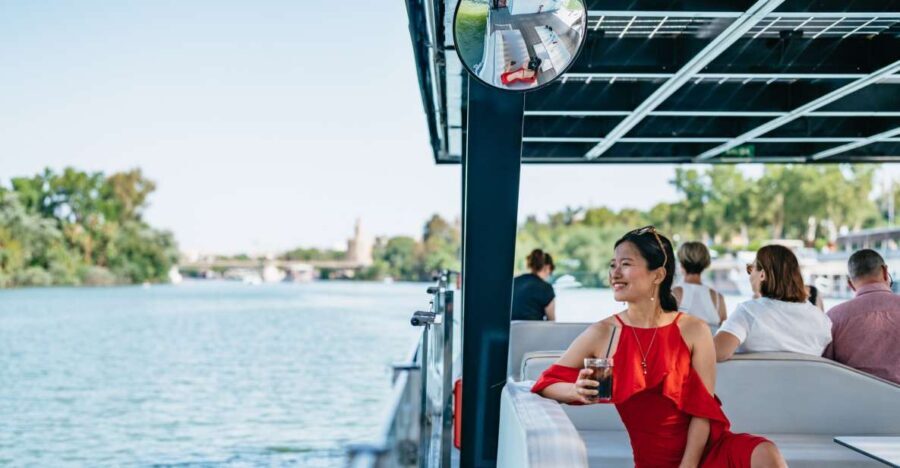
The default family booking. Boats leave from Torre del Oro pier every 30-40 minutes in high season. Audio commentary available in English, Spanish, French, German, Italian. Our full eco cruise review covers which departure times have the best light and what the “eco” part actually means (battery-electric propulsion since 2020). Works with any age from babies upwards. Buggies go on board; most boats have limited buggy space on the top deck.
2. Guadalquivir River Boat Tour (Small Boat) — $29
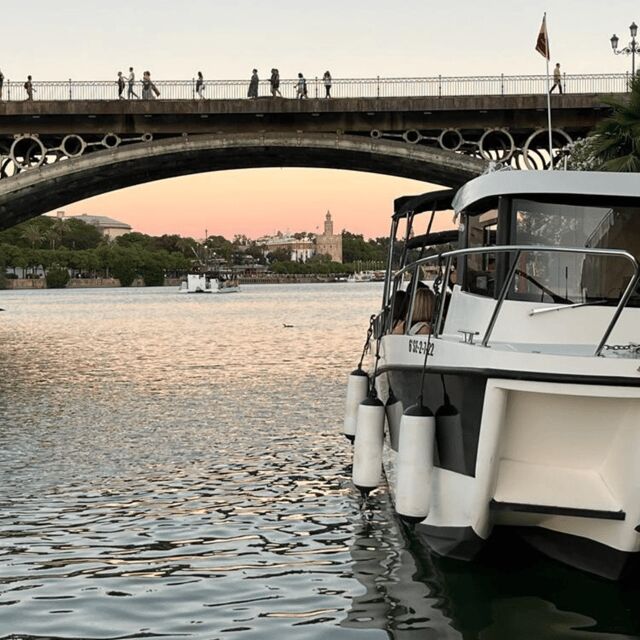
Smaller boat (30-40 passengers vs 100+ on the eco cruise), better guide interaction, slightly more money. Our small boat review compares this to the bigger eco cruise — mostly the same route but a much more personal feel. The guide tends to answer questions in real time rather than reading from a script. Good for 7+ kids who can focus on a guide. Under-7s will probably prefer the bigger boat where they can wander around.
3. Guadalquivir Boat Tour with Optional Lunch or Dinner — $29+
If you want to combine cruise and dinner in one booking, this is the option. Food ranges from tapas selection to full paella dinner; price varies by tier. Our review of the boat + dinner cruise is honest about the food (decent not spectacular) and timing — kids under 8 find the longer format challenging. 10+ is the right age for this one.
Getting there and timing
All cruises depart from the Torre del Oro pier on the east bank of the Guadalquivir, right below the tower. Walking distance from everywhere central — 5 minutes from the Cathedral, 7 minutes from the Alcázar, 10 minutes from Plaza Nueva.
Timing. Cruises run from about 11am to 9pm in summer, 11am to 6pm in winter. Three good time windows for families:
Late morning (11am-12pm) — cooler, less crowded. Best if you’re doing a cathedral or Alcázar visit in the same afternoon.
Late afternoon (5pm-6pm) — our favourite. You catch the golden-hour light and kids are usually peopled-out from the morning. Perfect transition into an early dinner.
Sunset slot (around 8:30pm in summer) — for families with older kids. Gorgeous light, but very busy and you’re out quite late.
Avoid midday (2pm-4pm in summer) — the sun is brutal even on the covered lower deck. Kids get hot and grumpy.
Practical logistics
Boarding. Arrive 10 minutes before departure. Seating is first-come-first-served — nothing assigned. Top deck fills first; bottom deck has shade and air-conditioning in summer.
What to bring. Sun hat (essential for top deck in summer), water bottle, snack bar if the kids are prone to needing one, a small cardigan for kids who get cold in breeze. No food on sale on the boat apart from the dinner cruise options.
Toilets. Yes, on-board. Small but functional. Baby-change facilities are limited.
Accessibility. The eco cruise boats have step-free access from the dock to the lower deck. Top deck has one flight of stairs. Wheelchair users generally fine on the lower deck only.
Buggies and strollers. Allowed on board. Limited buggy space on the top deck; you may need to fold and carry down to the main deck. Baby carriers easier.
Audio commentary — what it covers
The eco cruise uses multilingual audio from speakers on the boat. The guided boat uses a live English-speaking guide. Both cover roughly the same content:
- Torre del Oro history (Moorish, naval, gold legends)
- The bullring and Plaza de la Maestranza
- Triana neighbourhood and its ceramics/flamenco history
- The six bridges and their ages
- Expo 92 and the modern infrastructure
- Christopher Columbus’s voyages departing from the Guadalquivir
The commentary is aimed at adults but kids pick up the headlines easily. Point out specific things when the guide mentions them — “there’s the tower he’s talking about” — and kids stay engaged. Without the pointer, they’ll zone out in the first 10 minutes.
What else to do with a river day
A river cruise is a natural “active afternoon” filler. Pair it with something land-based either side:
Morning — Alcázar visit (9:30am-noon), lunch in Santa Cruz, cruise at 3pm. One of the best first-day-in-Seville flows.
Afternoon — Cathedral + Giralda in the morning, cruise at 5pm, sunset drinks in Triana, dinner, home. Our default second-day-in-Seville flow.
Evening — light day of wandering, cruise at 7:30pm, Triana tapas, then a 9pm flamenco show. Best for families with kids 9+.
Skip if: you’ve just done another city’s river cruise (Lisbon, Porto, Paris) in the same trip. Novelty matters.
Other river experiences to know about
Rowboats at Plaza de España
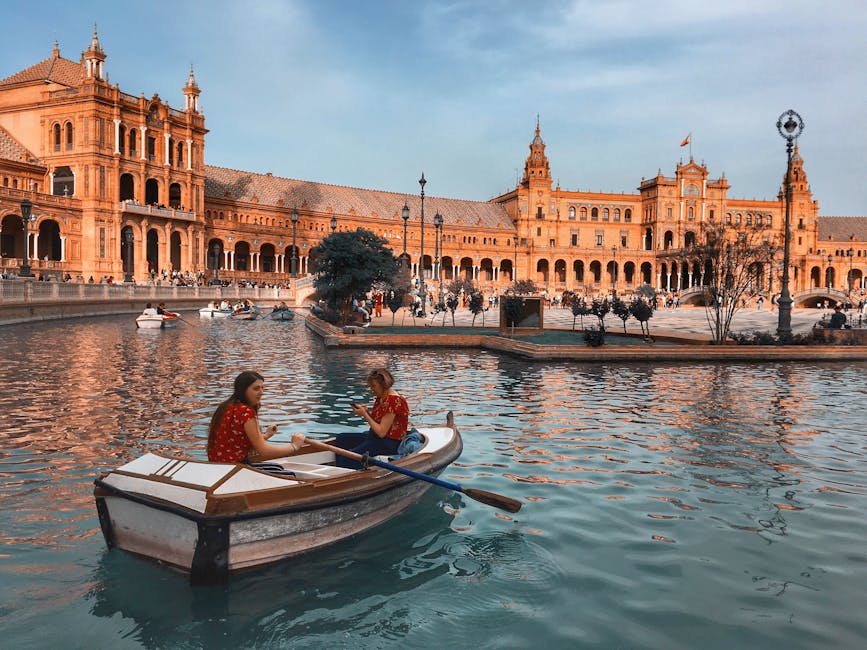
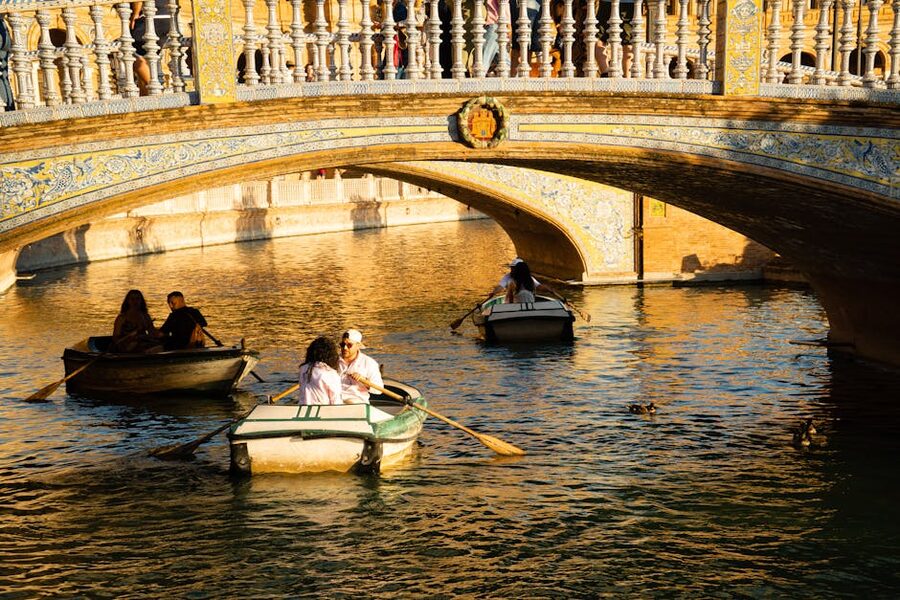
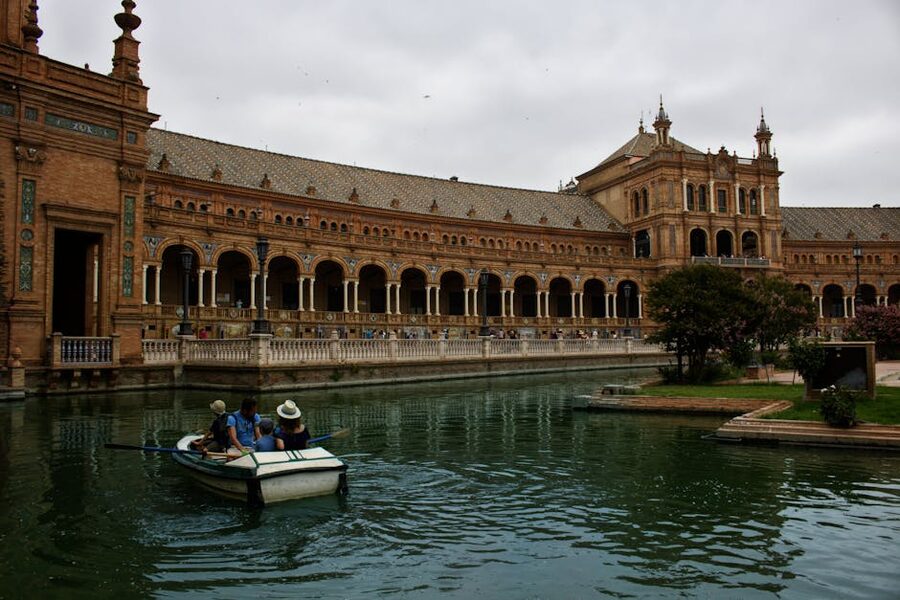
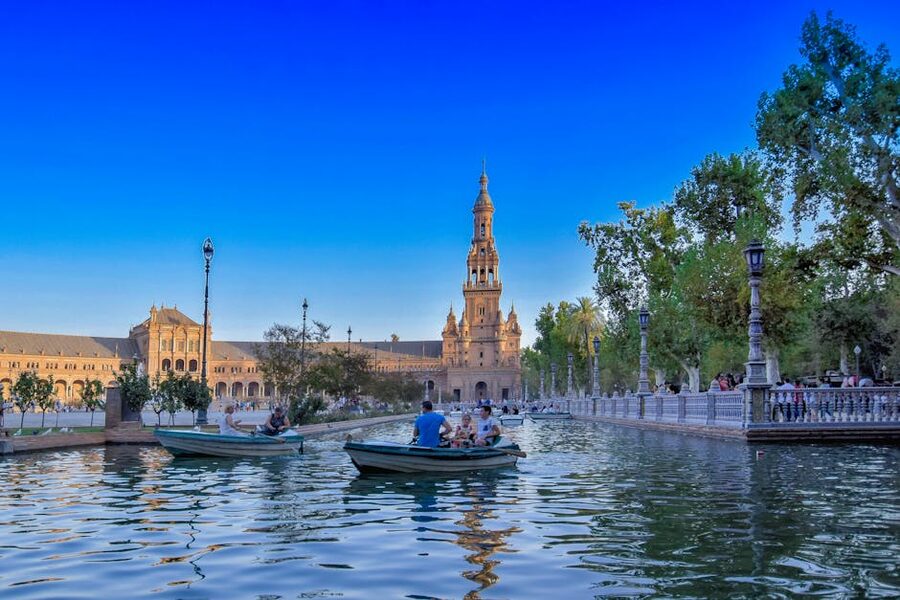
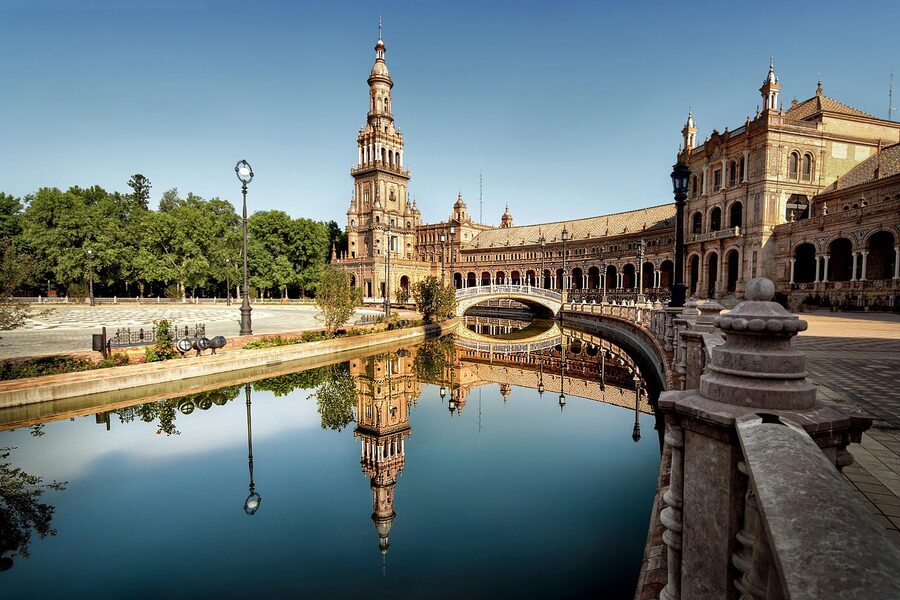
Not the same thing but worth knowing. Plaza de España has its own canal with rowing boats you can hire. €6 for 35 minutes. Kids love being in charge of steering. This is a 15-minute walk from the river cruise dock and works as a “do both” half day — river cruise for the scenery, rowboats for the activity.
Kayaking the Guadalquivir
For families with kids 10+ and some kayak experience, the Guadalquivir has a kayak rental option ($20, 2 hours). Boats launch from Triana. Not something we’d do with a first-time paddler or young kids — the Guadalquivir has gentle currents but tour cruise traffic can be heavy.
A short history of the Guadalquivir
The Guadalquivir is Spain’s fifth-longest river (657 km) and the only one fully within Spain that’s navigable to a major inland city. It rises in the Sierra de Cazorla in Jaén province and flows west-south-west through Córdoba, Seville, and out to the Atlantic at Sanlúcar de Barrameda.
The name is Arabic: al-wadi al-kabir — “the big river”. The Romans called it Baetis (giving “Baetica” as the name of the old Roman province). The river has been Seville’s economic lifeblood since Phoenician times — the city sits at the farthest navigable point for ocean-going ships, which made it the natural Atlantic port for Spain’s New World trade from 1503 to 1717.
The Casa de la Contratación (House of Trade) in Seville controlled all Spanish trade with the Americas during those two centuries — every gold shipment, every immigration record, every trade contract passed through. This is why Seville’s Cathedral is so rich and why Columbus is buried there. When the trading monopoly moved to Cádiz in 1717, Seville declined; it only recovered in the late 20th century with Expo 92 and modern infrastructure.
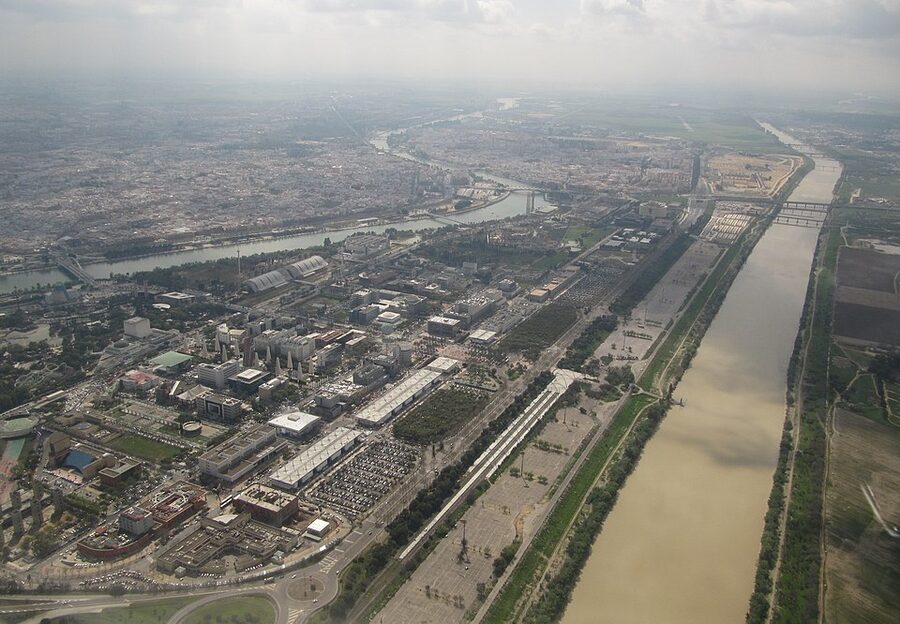
Expo 92 transformed the Seville riverfront — six new bridges, a new island (Isla de la Cartuja), and the modern skyline you see north of town. The cruise passes through this area and guides usually spend a good five minutes on Expo 92 history. It’s worth listening to — this is why Seville went from dying port city to modern tourist destination in one generation.
Age-by-age take
Under 3: the shorter eco cruise works; bring a carrier rather than buggy. Babies often sleep through the cruise (the gentle motion helps). Don’t take to the top deck if there’s a strong breeze.
3-6: sweet spot. One hour is right, the sights are varied enough to keep attention, and there’s a toilet on-board. Sunscreen and sun hat are mandatory.
7-10: engaged with the commentary if you help them spot the landmarks. Good age for the small-boat tour where a live guide can answer questions.
11-14: full experience. Can handle longer cruises, the history content lands, and the Expo 92 engineering stuff is genuinely interesting to kids this age.
Teens: might find the 1-hour format slow. Sunset cruise or the longer dinner cruise works better — the extended format lets them engage properly.
What if it rains?
Cruises run in light rain — the lower deck is covered. Heavy rain or storms cause cancellations; you’ll get a refund or reschedule. Check the forecast the morning of your booking. Seville doesn’t rain often, so this is rarely an issue.
If the cruise is cancelled and you’ve got a rainy day to fill, the Cathedral and Alcázar are both indoor options — though most of their gardens and courtyards are uncovered.
Best time of year
Spring (March-May): perfect cruise weather, everything green, orange blossom on the city. Our top pick.
Autumn (September-November): still warm, softer light, fewer tourists. Also excellent.
Summer (June-August): hot during the day but the sunset cruise comes into its own. Avoid 2pm-5pm slots in July-August.
Winter (December-February): cool but runs daily. Coat needed on top deck. Cruises often feel more intimate; less crowded.
Before you book, an honest list
Book the 1-hour eco cruise if: your kids are 3-10 or you want the simplest, cheapest option. This is the default.
Book the small-boat tour if: you want a more personal guide and your kids are 7+.
Book the dinner cruise if: you’ve got teenagers, a decent food budget, and you want to combine dinner and sightseeing.
Skip if: you’ve done a river cruise in another city this trip, or weather is genuinely dreadful.
Pair with: Alcázar morning or Cathedral afternoon. Don’t stack with a flamenco show on the same day; too much for kids.
One last tip: bring a small pair of binoculars if you have them. The top deck passes a lot of detail — bridge plaques, tower carvings, Triana ceramic signs — that kids can spot with binoculars and miss without. €10 kit for 1 hour of added engagement.
Buy the ticket online the night before, arrive 10 minutes early, grab the top deck front row, top up sunscreen. Best €19 we’ve spent in Seville.