
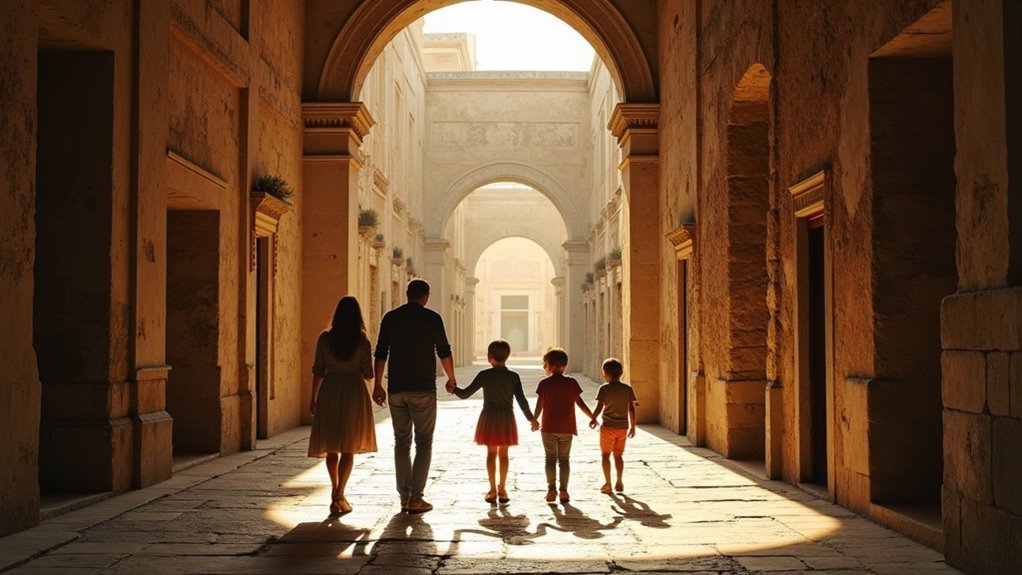
You’ll capture amazing family photos at Herculaneum’s Villa of the Papyri with its stunning seaside terraces and bronze fountain statues. Don’t miss the colorful Neptune and Amphitrite mosaic wall that’s survived 2,000 years, or the ancient Doric temple columns perfect for framing shots. Kids will love exploring the preserved Roman streets with original stone gutters and the fascinating heated bath complexes. The volcanic landscape backdrop makes every photo dramatic and unforgettable. Discover what makes each spot truly special for your family adventure.
- Villa of the Papyri’s Grand Entrance and Garden Courtyard
- House of Neptune and Amphitrite’s Stunning Mosaic Wall
- Doric Temple Columns for Perfect Architectural Framing
- Villa Oplontis Fresco Galleries With Vibrant Roman Art
- Ancient Roman Street Intersections With Preserved Stone Gutters
- Villa Interior Chambers Showcasing Daily Life Preservation
- Heated Bath Complex Rooms With Engineering Marvels
- Seaside Villa Terraces Overlooking the Bay of Naples
- Sacred Area Temple Ruins Against Volcanic Landscape
- Carbonized Wooden Artifacts in Protected Display Areas
- The Sum Up
Villa of the Papyri’s Grand Entrance and Garden Courtyard
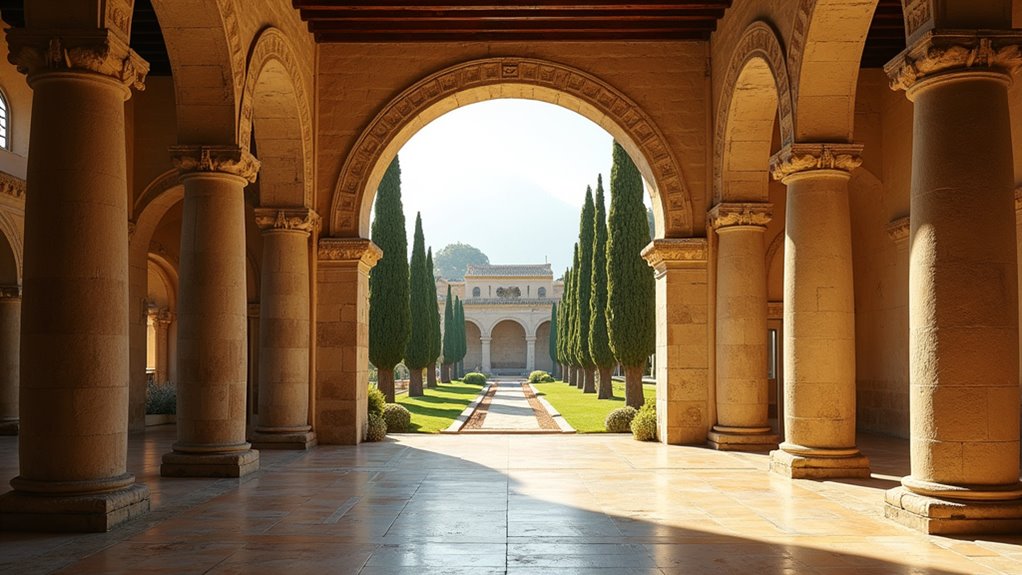
When you step through the Villa of the Papyri’s magnificent entrance, you’ll discover one of ancient Rome’s most spectacular homes stretching over 200 meters along what was once Herculaneum’s beautiful coastline.
The columned portico opens into a grand atrium that’ll make your kids gasp with wonder. Here, eleven bronze fountain statues of playful Satyrs and cute Amorini once poured water from pitchers and dolphin mouths—perfect for imaginative storytelling while you snap photos.
The atrium’s polychrome mosaic floors create stunning Instagram backdrops, especially where sunlight streams through ancient openings.
Your family can explore multiple terraced levels that once overlooked the sparkling Gulf of Naples. The villa’s impressive seafront pavilion showcased the incredible wealth of its ancient owners. Don’t miss the traditional Roman layout connecting different house sections—it’s like walking through history’s most luxurious mansion!
House of Neptune and Amphitrite’s Stunning Mosaic Wall
Just a short walk from the Villa of the Papyri, you’ll find the House of Neptune and Amphitrite, where one of Rome’s most dazzling wall mosaics awaits your camera. This incredible artwork features Neptune holding his trident alongside Amphitrite, crafted from thousands of tiny colored glass pieces called tesserae.
The vibrant blues, greens, and reds have survived nearly 2,000 years, making it perfect for photos.
Position yourself in the courtyard where the mosaic decorates the eastern wall. The homeowners strategically placed it here so visitors could admire it from the street.
Notice the shell and pumice border that frames the sea gods, plus the marble dining area below. Your kids will love spotting Neptune’s famous trident and the wave patterns surrounding these mythological figures. The house also contains a remarkably well-preserved wine shop that offers a fascinating glimpse into ancient Roman commercial life.
Doric Temple Columns for Perfect Architectural Framing
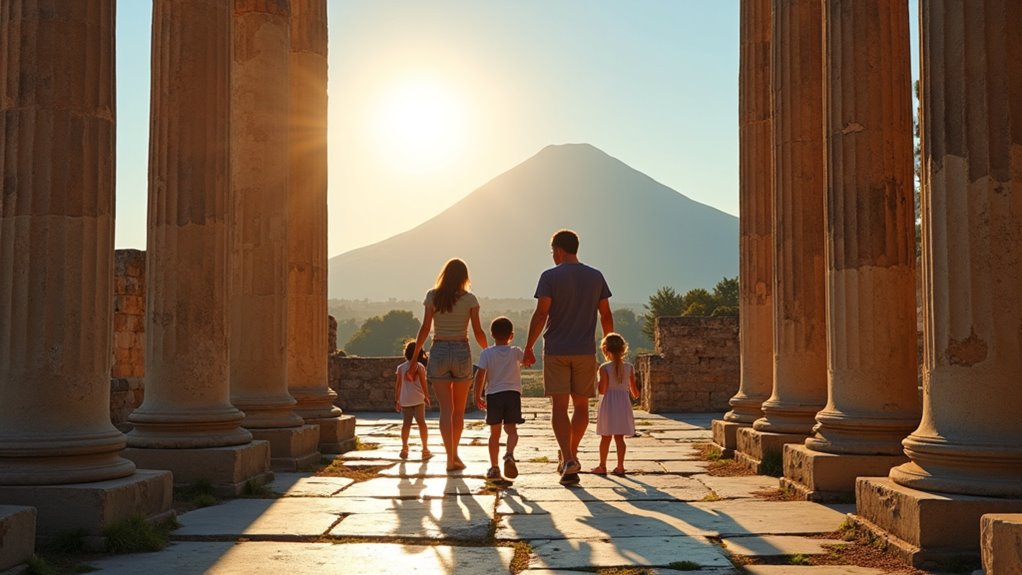
The ancient Doric Temple’s limestone columns create the perfect frame for your family photos against Herculaneum’s dramatic backdrop. Dating to 550 BCE, these sturdy fluted columns offer clean architectural lines that’ll make your Instagram posts stand out.
You’ll find the temple positioned on a spur overlooking the bay, providing elevated views that combine ancient ruins with stunning scenery.
The columns’ symmetrical design works beautifully for centered compositions, while the detailed entablature adds textured interest without overwhelming your shots. Visit during golden hour when shadows create dramatic contrasts between the limestone and sky.
The wide peripteral layout gives you plenty of space for group photos, and the nearby Antiquarium displays colorful terracotta pieces that add educational value to your family’s archaeological adventure. The temple’s multi-colored terracotta roofing once adorned this ancient structure, showcasing the vibrant decorative elements that reflected Greek Doric style adapted to local Campanian traditions.
Villa Oplontis Fresco Galleries With Vibrant Roman Art
Moving beyond Herculaneum’s stone columns, Villa Oplontis dazzles visitors with some of the most spectacular Roman frescoes you’ll ever see. This luxurious seaside villa, buried by Mount Vesuvius in AD 79, showcases vibrant paintings that’ll make your Instagram feed pop with ancient Roman glamour.
You’ll discover fake architectural elements painted so realistically they create amazing 3D effects – perfect for creative photo angles. The garden peristyle features red backgrounds with golden panels showing trees, fountains, and birds that look incredibly lifelike.
Don’t miss the calidarium’s mythological scenes or the triclinium’s landscape details with fig baskets.
The colors remain vivid after nearly 2,000 years, offering superior photo opportunities compared to other Roman sites. The villa’s terraces once provided panoramic views of the Bay of Naples, making it an ideal location for Roman elite leisure and banquets. Plan one hour here for stunning family shots.
Ancient Roman Street Intersections With Preserved Stone Gutters
While Villa Oplontis showcases stunning frescoes, Herculaneum’s ancient street intersections reveal equally enthralling Roman engineering that’ll transform your photography game.
You’ll discover the magnificent Decumanus Maximus, the main east-west street recently reopened after twenty years of restoration. Your kids will love exploring where cardi (north-south streets) meet decumani (east-west streets), creating the classic Roman grid that divided the city into blocks called insulae.
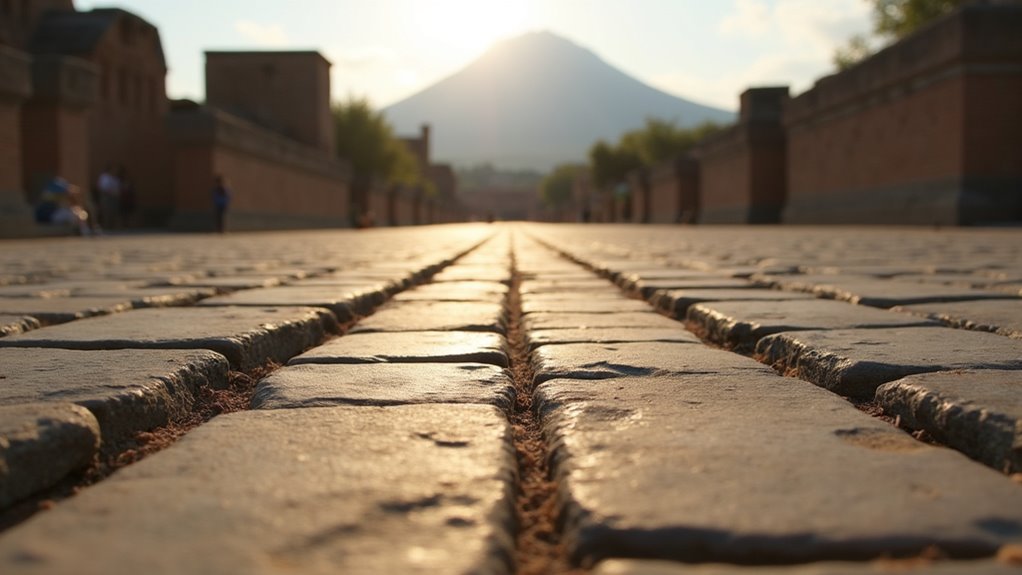
The stone gutters and drainage systems remain remarkably intact, buried under twenty meters of volcanic material that preserved everything perfectly. You’ll capture Instagram-worthy shots of original paving stones showing ancient wheel ruts where Roman carts once traveled.
The intersections offer stunning views of stabilized ancient buildings with their original Roman drainage systems still functioning today. Unlike its more famous neighbor, Herculaneum was a smaller, wealthier Roman town that attracted affluent residents before Vesuvius’s devastating eruption.
Villa Interior Chambers Showcasing Daily Life Preservation
Beyond ancient streets and drainage systems, Herculaneum’s villa interiors offer you an extraordinary glimpse into Roman daily life frozen in time. You’ll discover preserved wooden furniture, including children’s beds and sliding doors that showcase ancient craftsmanship.
The House of the Bronze Hermes displays stunning third-style frescoes around its central rainwater pool, while the Villa of the Papyri reveals intricate mosaics alongside marble statues.
Don’t miss the House of the Cloth’s entrance mosaic featuring towers and walls – it’s perfect for photos! Your kids will love seeing carbonized bread loaves still sitting in ancient ovens. The tufaceous material that buried the city under 50-60 feet created unique preservation conditions that protected these organic materials from decay.
These villa chambers preserve everything from painted ceilings to timber-frame walls, creating Instagram-worthy shots that bring Roman family life to vivid reality.
Heated Bath Complex Rooms With Engineering Marvels
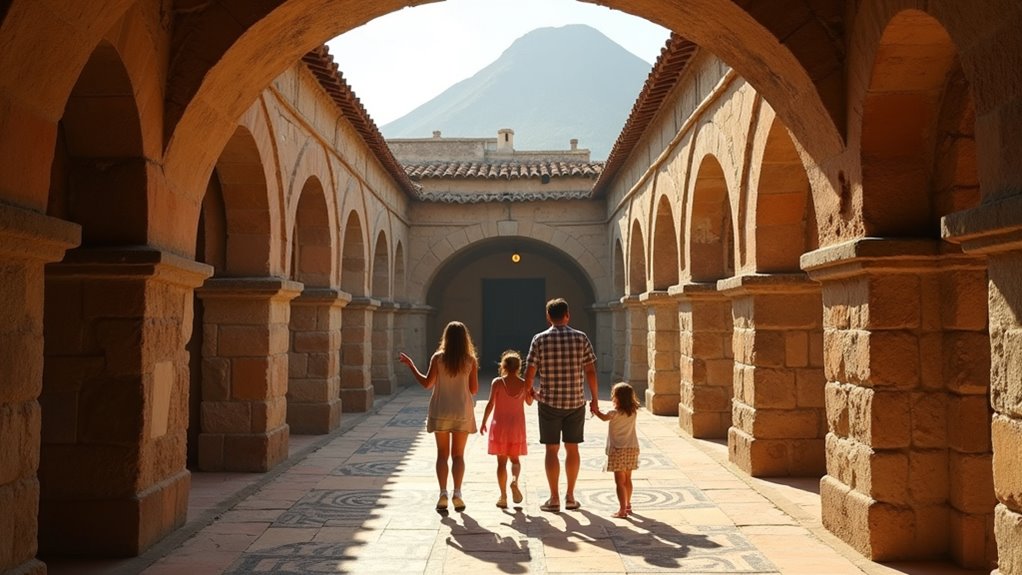
When you step into Herculaneum’s heated bath complex, you’ll witness one of Rome’s most brilliant engineering achievements that’ll absolutely blow your mind! Your kids will be amazed by the frigidarium’s cool pools, the tepidarium’s warm chambers, and the caldarium’s steaming hot waters reaching 122°F.
Look down at the raised floors – beneath them, the hypocaust system circulated hot air from furnaces through clever pillar networks that heated entire rooms! You’ll spot intricate mosaics covering walls and floors, plus bronze fixtures that once delivered perfectly temperature-controlled water.
The waterproof cement lining still protects these 2,000-year-old structures. Don’t miss photographing the sophisticated drainage systems and heating channels that showcase Roman innovation at its finest. These magnificent structures evolved from Greek gymnasium traditions, where Romans adapted and expanded upon earlier bathing practices to create their own architectural marvels.
Seaside Villa Terraces Overlooking the Bay of Naples
As you approach Herculaneum’s most spectacular villa, you’ll discover the Villa of the Papyri’s breathtaking terraced levels that once commanded unobstructed views of the sparkling Bay of Naples! This ancient luxury mansion stretched 245 meters along the coastline, featuring four dramatic terraces cascading down toward the sea.
Your family can explore the excavated lower floors where colorful frescoes still decorate the sea-facing walls, creating perfect photo opportunities against the volcanic backdrop.
The villa’s swimming pools and columned porticoes frame Instagram-ready shots of ancient Roman luxury. Kids will love spotting the fountain figures of satyrs and cherubs around the atrium, while parents capture panoramic vistas from the terraces. The site also housed an impressive collection of at least 80 high-quality sculptures, many of which have been relocated to museums but some remains can still be appreciated on-site.
These preserved seaside levels showcase how wealthy Romans lived with style, offering your family unforgettable glimpses into imperial-era coastal living.
Sacred Area Temple Ruins Against Volcanic Landscape
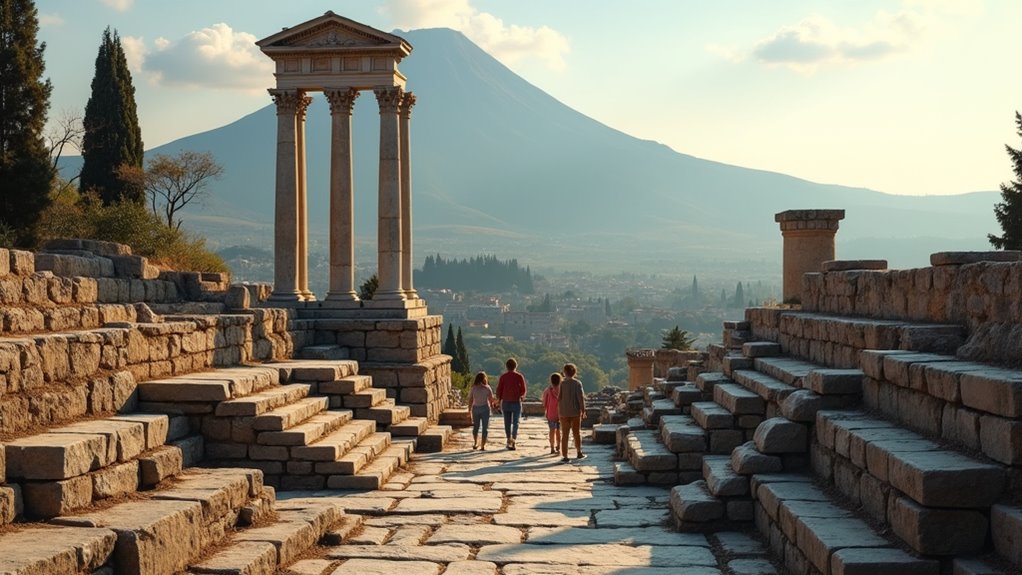
While the Villa of the Papyri showcases private luxury, Herculaneum’s Sacred Area reveals how Romans honored their gods in spectacular style! You’ll discover two ancient chapels where craftsmen and merchants once worshipped Vulcan, Neptune, Mercury, and Minerva—gods who protected their trades and livelihoods.
Your kids will love exploring the white mosaic floors bordered by striking black bands. Don’t miss the incredible reliefs showing these four powerful deities, carved in late first century BC with artistic styles copying ancient Greek vases. When photographing these detailed carvings, ensure your camera URLs don’t contain double escape sequences that might prevent your images from uploading to social media platforms.
The temples sit dramatically on what was once the ancient shoreline of the Gulf of Naples. This Instagram-perfect spot combines stunning volcanic mountain views with remarkably preserved Roman religious architecture, making it ideal for family photos that capture both natural beauty and ancient history!
Carbonized Wooden Artifacts in Protected Display Areas
The world’s most extraordinary wooden treasures await you inside Herculaneum’s Materia exhibition, where Mount Vesuvius accidentally created the planet’s best time capsule! You’ll discover carbonized wooden cradles, tables, and shrines that survived nearly 2,000 years thanks to volcanic ash sealing out oxygen.
These aren’t just fragments – they’re complete furniture pieces with intricate ivory decorations and bronze fittings that’ll amaze your kids.
The specially designed display cases let you see how Romans actually lived, from baby cradles to dining tables. Interactive videos replace boring text, making it perfect for young explorers.
Your family will witness authentic Roman woodworking techniques that confirm everything historians read in ancient texts. The exhibition runs at the historic Royal Palace of Portici, originally built as the Bourbon royal family’s summer residence near the archaeological park. It’s like stepping into a Roman home frozen in time!
The Sum Up
You’ll create amazing family memories exploring these incredible Herculaneum spots! Don’t forget to bring your camera’s extra batteries and comfortable walking shoes. You’ll want to visit early in the morning when the lighting’s perfect and crowds are smaller. Remember to let your kids touch the ancient stones where it’s allowed – they’ll love connecting with history! These Instagram-worthy locations will give you stunning photos and help your family discover how Romans really lived centuries ago.