
You’ll create magical memories by preparing stockings for La Befana’s January 5th visit, attending special Epiphany mass on January 6th, and adding the Three Wise Men to your nativity scene. Mark your door with blessed chalk and Magi initials for protection, explore vibrant markets in Rome’s Piazza Navona, and watch Venice’s costumed Regata Della Befane boat race. Experience ancient bonfire ceremonies where effigies burn, visit Urbania‘s spectacular Befana festival, and share the legend’s meaning with your children. These time-honored traditions offer deeper connections to Italian culture and spirituality.
- Attend Special Epiphany Mass and Religious Processions
- Add the Three Wise Men to Your Family Nativity Scene
- Prepare Stockings for La Befana’s Night Visit
- Mark Your Door With Blessed Chalk and Magi Initials
- Explore Vibrant Epiphany Markets and Street Festivals
- Bake Traditional Regional Sweets Together
- Watch the Regata Della Befane Boat Race in Venice
- Participate in the Burning of the Old Woman Ceremony
- Visit Urbania for the Ultimate Befana Festival Experience
- Share the Legend and Meaning Behind La Befana
- The Sum Up
Attend Special Epiphany Mass and Religious Processions
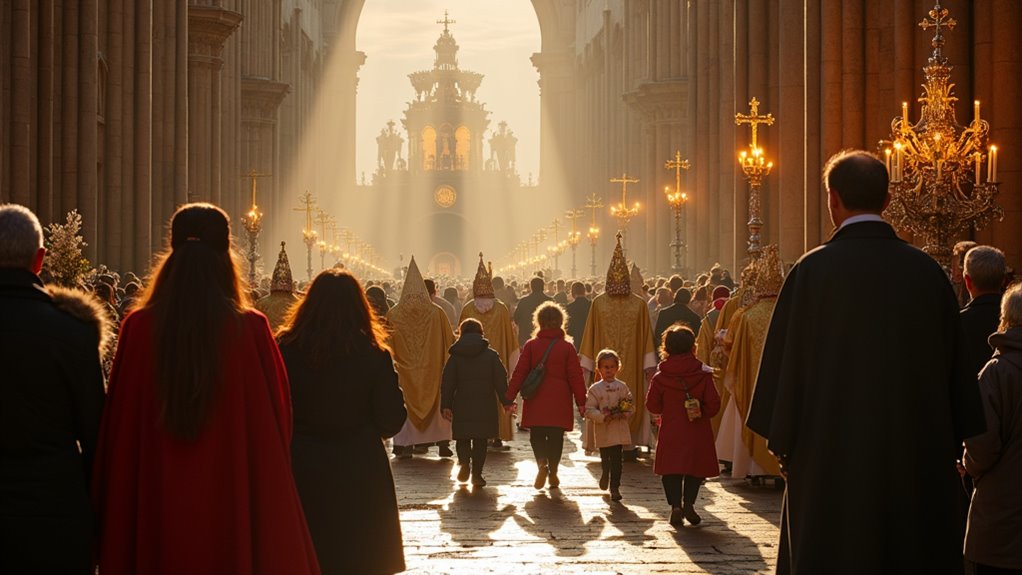
When January 6th arrives in Italy, you’ll witness a profound blend of faith and tradition as communities gather for special Epiphany Mass celebrations that mark both the end of Christmas and honor the Magi’s visit to the Christ Child. Churches throughout the country host these meaningful services, featuring gospel readings about the three wise men and often including enchanting nativity plays that bring the biblical story to life.
You’ll find elaborate processions in major cities like Florence, where the famous Cavalcata dei Magi transforms streets into Renaissance theater with participants wearing period costumes. In Rome, witness the spectacular parade from Vatican to Piazza Navona, complete with biblical characters.
Even coastal Taranto offers unique sea processions, where fishermen carry statues to bless the waters in touching maritime tradition. These celebrations beautifully complement the beloved La Befana folklore, as the kind gift-giving witch continues her annual search for the Christ Child while delivering presents to children throughout Italy.
Add the Three Wise Men to Your Family Nativity Scene
As the Epiphany Mass bells fade into silence, you’ll continue the sacred tradition by ceremoniously placing the three Wise Men—Caspar, Melchior, and Balthasar—into your family’s presepe, completing the nativity scene that Saint Francis of Assisi first envisioned in 1223.
Position these Re Magi along winding pathways leading to the holy family, symbolizing your soul’s journey toward Christian faith’s light. Their gifts of gold, frankincense, and myrrh represent recognition of Jesus as King.
Create landscape elements like bridges and wells around them, following Neapolitan tradition. Include shepherds—sleeping Benino representing unawareness, and the wondering shepherd gazing in awe. Many of these handcrafted figurines are made from regional red terracotta clay using traditional methods passed down through generations of Italian artisans.
You’ll keep this completed scene until February 2, allowing the pathway symbolism to inspire your family’s spiritual reflection throughout the Epiphany season.
Prepare Stockings for La Befana’s Night Visit
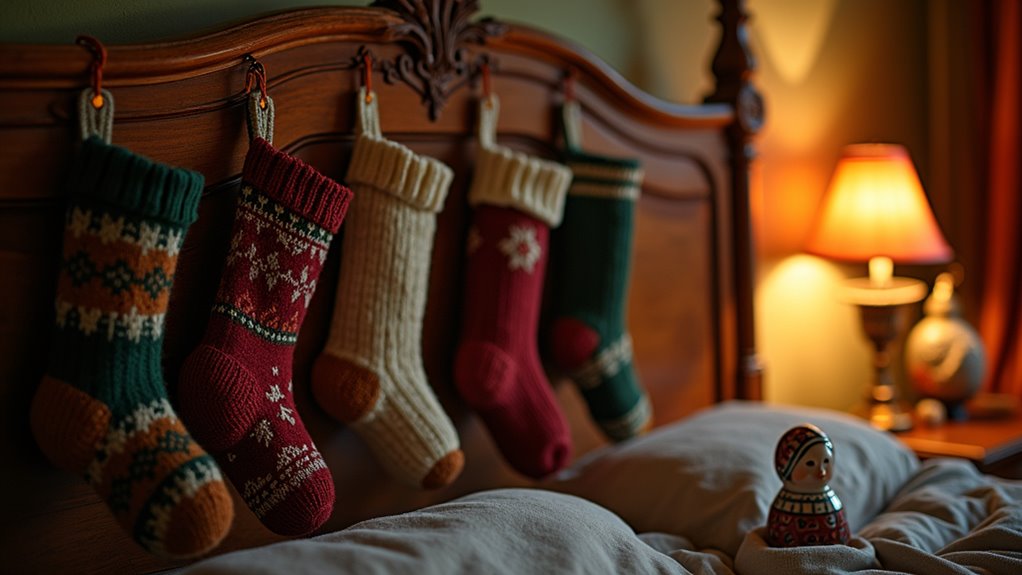
After your nativity scene stands complete with the Magi, it’s time to prepare for La Befana’s magical night visit on January 5th. You’ll want to hang stockings near your fireplace, windows, or children’s beds before they sleep.
This beloved Italian folklore tells of an old woman flying on her broomstick, entering through chimneys to fill stockings with treats.
Good children receive candies, chocolates, and dried fruit, while naughty ones find coal—often sweetened rock candy.
Consider making DIY stockings from felt or recycled sweaters, adding personalized embroidery for a special touch. You might also include small Cornicello charms as protective gifts that symbolize good luck and ward off evil spirits.
In Tuscany, families place befanini biscuits on mantels instead.
Regional variations include garlic for misbehaved children, making this tradition both magical and memorable for your family’s Epiphany celebration.
Mark Your Door With Blessed Chalk and Magi Initials
Once La Befana has filled the stockings and departed on her broomstick, you’ll want to continue your Epiphany celebration with another cherished Italian tradition—marking your doorway with blessed chalk.
Head to church on January 6th where your priest will bless chalk during the special Epiphany ceremony. Bring this sacred chalk home and let the father of your household inscribe your door frame with the year and the three Magi’s initials: 20+C+M+B+25.
These letters represent Caspar, Melchior, and Balthasar, though they also mean “Christus mansionem benedicat”—may Christ bless this house. Mark the inside of your doorway, connecting each symbol with small crosses.
This ancient practice protects your family throughout the year, invoking the wise men’s intercession for health and spiritual wellness. The tradition reflects the feast’s emphasis on Christ’s manifestation to the world, particularly through the Magi’s visit in Western Christian tradition.
Explore Vibrant Epiphany Markets and Street Festivals
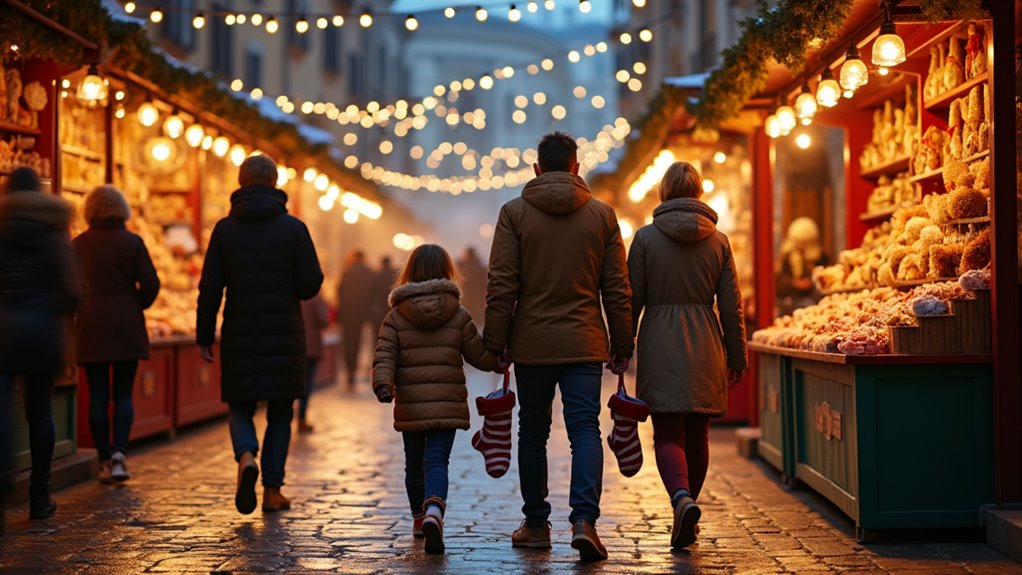
While blessed chalk still marks your doorframe from the morning’s ceremony, Italy’s most spectacular Epiphany markets and street festivals are just beginning to reach their crescendo.
Head to Rome’s Piazza Navona, where stalls overflow with traditional befanini cookies and La Befana decorations until January 6th. You’ll witness Befana herself flying across Bernini’s baroque masterpiece at noon, distributing sweets to delighted children.
For an unforgettable experience, visit Urbania’s four-day Befana Village in Marche. You’ll find 4,000 stockings adorning the historic center and watch breathtaking aerial descents from bell towers. The town produces 420 kilograms of sweets for 30,000 visitors annually. Urbania is considered La Befana’s official home, hosting festivals from January 2-6 with parades and special activities.
Bologna’s “Procession of the Magi” features 150 costumed figures parading to Piazza Maggiore, while Florence transforms its ancient streets into festive performance spaces.
Bake Traditional Regional Sweets Together
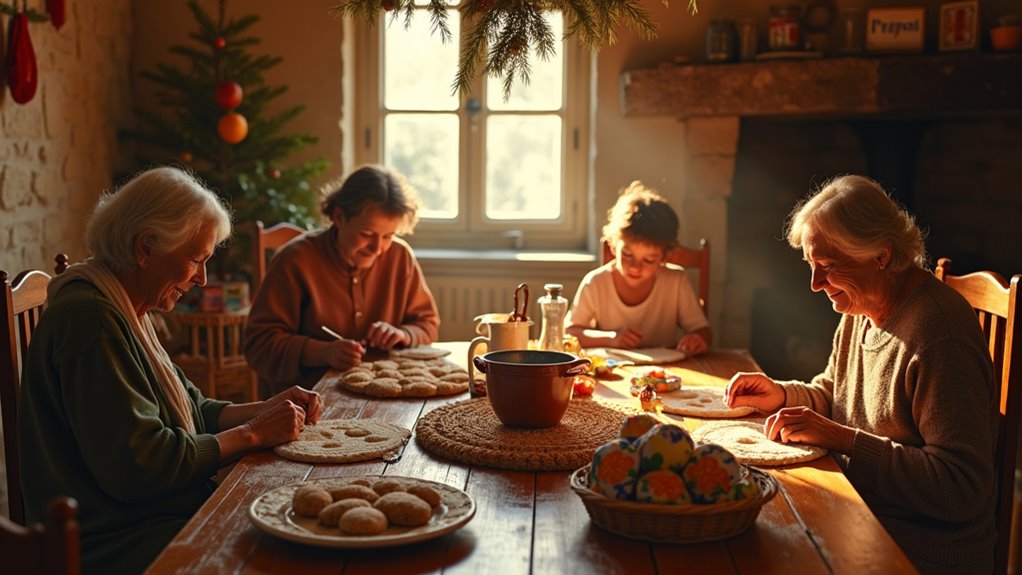
As the last echoes of street festival laughter fade from Italy’s piazzas, your kitchen becomes the perfect stage for creating authentic Epiphany magic through time-honored regional baking traditions.
Start with Florence’s beloved Schiacciata alla Fiorentina—beat eggs and sugar until fluffy, fold in orange zest and flour, then bake this spongy cake at 180°C for 25-30 minutes.
Your children will love shaping colorful Befanini biscuits into stars and Befana hats, decorating them with rainbow sprinkles.
For adventurous bakers, try making Carbone della Befana—whip egg whites with black food coloring to create “coal” candy that hardens into playful chunks.
These sweets symbolize the end of Christmas holidays, bringing a bittersweet joy to families as they prepare for the return to everyday life.
Each recipe connects your family to centuries of Italian tradition, transforming simple ingredients into edible stories that celebrate La Befana’s generous spirit.
Watch the Regata Della Befane Boat Race in Venice
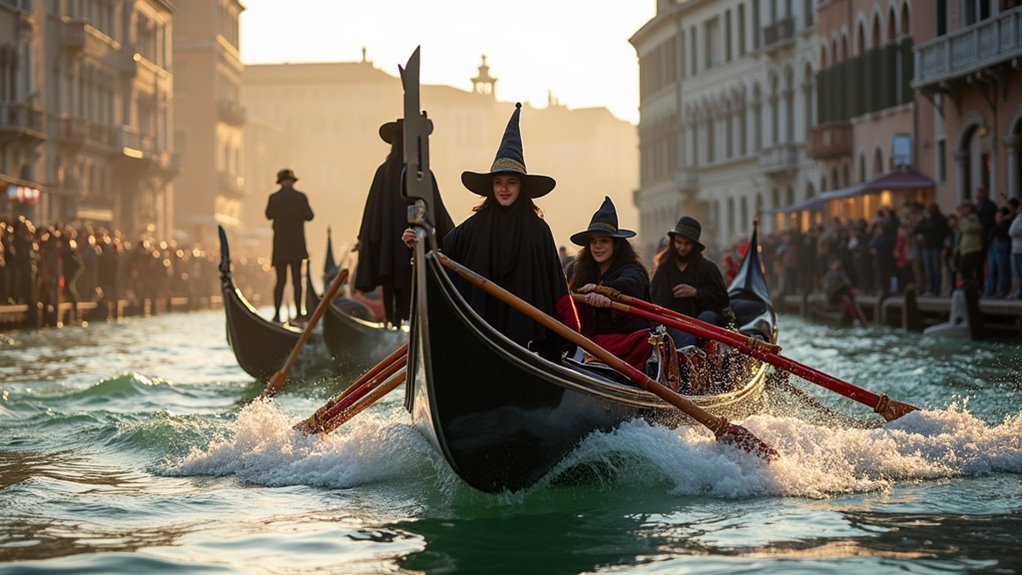
When January 6th arrives in Venice, you’ll witness one of Italy’s most delightfully eccentric Epiphany celebrations as costumed rowers transform the Grand Canal into a stage for pure theatrical magic.
The Regata Della Befane features male Venetian rowers hilariously dressed as La Befana, the beloved folklore figure who delivers sweets to children. You’ll see them racing traditional boats like gondolini and batèle from San Tomà to the iconic Rialto Bridge.
Position yourself along canal banks or bridges early for prime viewing spots. The colorful costumes flutter dramatically against Venice’s winter backdrop while hundreds of spectators cheer. The event is organized by the Società di Canottieri Bucintoro, a prestigious rowing club founded in 1882.
This whimsical event perfectly blends centuries-old maritime traditions with folklore humor, offering your family an authentic glimpse into Venice’s lesser-known cultural celebrations beyond the summer tourist crowds.
Participate in the Burning of the Old Woman Ceremony
Gathering around crackling bonfires on Epiphany Eve, you’ll witness Italy’s most mystical winter tradition as communities across the Northeast burn elaborate dummies representing the old year’s hardships.
Known as Panevin or “brusa la vecia,” this ancient ritual transforms villages into theaters of renewal where families pile branches high and crown them with old woman effigies.
You’ll taste traditional pinsa cake with fennel seeds while sipping mulled wine as flames dance skyward. Watch the smoke carefully—locals believe westward drift signals scarcity while eastward promises abundance.
Your children will be mesmerized as the puppet burns, symbolically sweeping away problems like Befana’s magical broom. This pre-Christian purification ceremony, later adopted by the Church, offers profound connection to Italy’s deepest seasonal traditions. At larger celebrations like Padova’s Prato della Valle, firefighters manage the safety of these spectacular community gatherings.
Visit Urbania for the Ultimate Befana Festival Experience
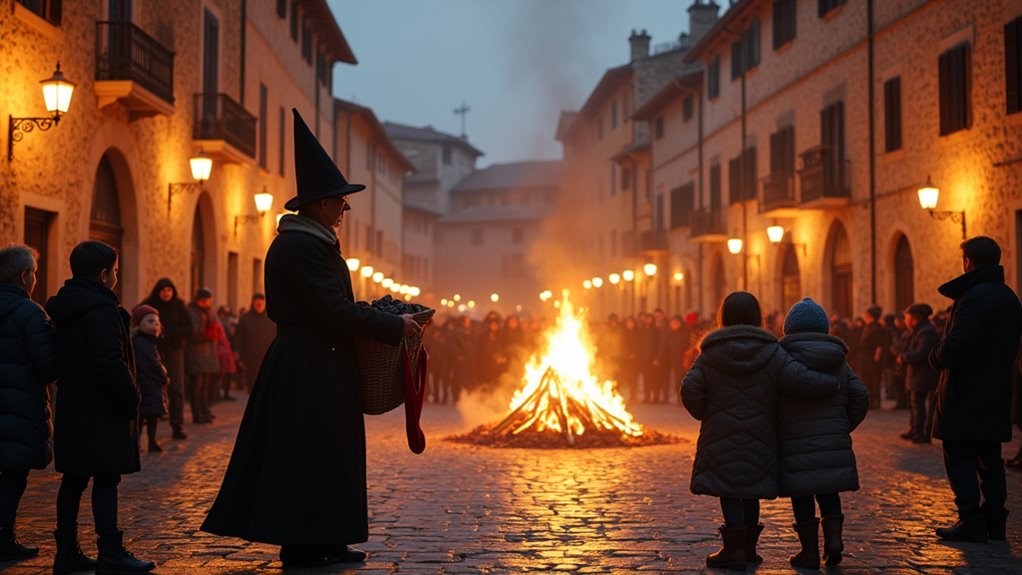
Beyond the mystical bonfires that mark Epiphany traditions across Italy’s countryside, the medieval town of Urbania transforms into the nation’s most spectacular Befana celebration. You’ll witness the breathtaking moment when Befana descends 36 metres from the Bell Tower, accompanied by dazzling lights and projections that’ll leave your family mesmerized.
Plan your visit during January 3-6, 2026, when 4,000 stockings drape the historic centre and the world’s longest stocking—over 70 metres—parades through cobblestone streets. Your children will delight in puppet shows, magic demonstrations, and catching sweets as Befana flies overhead on her broomstick. The festival welcomes families with free entry for children under 10 years old, making it an accessible celebration for all.
Don’t miss Casa della Befana, where you’ll learn traditional coal-making and weaving. Feast on Acqualagna truffles and local wines while exploring the Ducal Palace’s exhibitions during this enchanting four-day celebration.
Share the Legend and Meaning Behind La Befana
While your children hang their stockings and anticipate Befana’s arrival, understanding her legendary origins will deepen your family’s appreciation for this beloved Italian tradition.
Share with your kids how La Befana was invited by the Three Wise Men to visit baby Jesus, but she declined because she was too busy with housework.
When she changed her mind, she couldn’t find the manger and has been searching ever since, leaving gifts for children hoping one might be the Christ Child.
Explain how this elderly, kind-hearted witch carries treats for good children and coal for naughty ones.
Her story beautifully blends ancient Roman customs with Christian beliefs, symbolizing regret, redemption, and hope while marking the joyful end of Christmas season celebrations. The name “Befana” itself comes from Epifania, the Italian word for Epiphany, connecting her directly to this important Christian feast day.
The Sum Up
You’ve discovered nine magical ways to celebrate Italian Epiphany traditions with your loved ones. Whether you’re hanging stockings for La Befana, marking your door with blessed chalk, or planning a trip to Venice’s boat races, these customs will create unforgettable family memories. Don’t just read about them—choose one or two traditions that speak to your heart and make them part of your family’s own Epiphany celebration this year.