
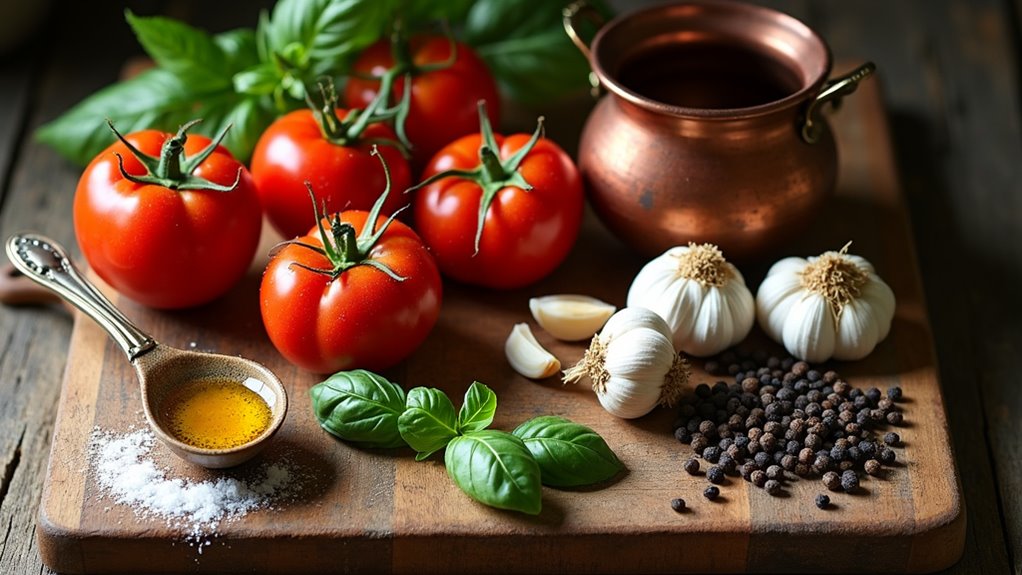
You’ll create restaurant-quality tomato sauce by selecting San Marzano tomatoes and hand-peeling them after blanching. Start with cold-pressed olive oil and garlic, sautéing gently to avoid bitterness. Season early with salt, then simmer low and slow for 60-90 minutes until the sauce coats a spoon and oil separates. Add fresh basil at the end to preserve its aroma. My nonna always said patience makes the difference—these traditional techniques will release flavors you never knew existed.
- Choose the Right Tomatoes for Maximum Flavor
- Master the Art of Proper Tomato Preparation
- Perfect Your Garlic and Olive Oil Foundation
- Balance Flavors With Traditional Seasoning Techniques
- Understand the Low and Slow Simmering Method
- Time Your Fresh Herb Additions for Optimal Aroma
- Know When Your Sauce Has Reached Perfect Consistency
- Store and Preserve Your Sauce the Italian Way
- The Sum Up
Choose the Right Tomatoes for Maximum Flavor
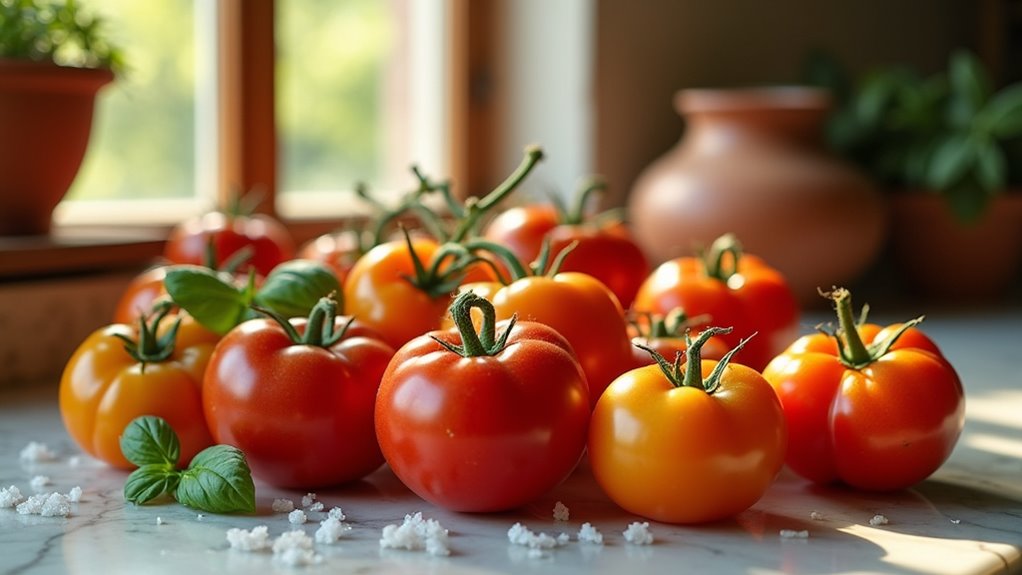
When you’re standing in the grocery store aisle staring at dozens of tomato options, remember that authentic Italian sauce starts with San Marzano tomatoes. These golden gems from Naples pack unbeatable sweetness without added sugar, thanks to that potassium-rich volcanic soil. Look for “Pomodoro San Marzano dell’Agro Sarnese Nocerino D.O.P.” on the label—it’s your guarantee of authenticity. Brands like Sclafani, Rega, and Strianese won’t disappoint.
Can’t find them? Don’t panic. Roma tomatoes or Costoluto Fiorentino varieties work beautifully too. Even high-quality Mutti or Cirio canned tomatoes create delicious sauce. The secret isn’t perfection—it’s choosing plum varieties with fewer seeds, thicker consistency, and natural sweetness that’ll make your nonna proud. Remember that all-natural ingredients are essential for creating the depth and complexity that artificial additives simply cannot replicate.
Master the Art of Proper Tomato Preparation
Since you’ve selected the perfect tomatoes, proper preparation becomes your gateway to restaurant-quality sauce that’ll have your family begging for the recipe.
Start by heating water to a gentle simmer, then score an X on each tomato’s bottom before blanching for 45-60 seconds. Use a slotted spoon to transfer them to cool water—this prevents bruising while making peeling effortless.
Cut each peeled tomato in half and remove those seeds and white cores by hand. Trust me, this step prevents watery, bitter sauce that’ll disappoint everyone.
Quarter the halves for easier handling.
Now choose your texture: hand-chop for chunky authenticity, use a potato masher for medium consistency, or pulse in a food processor for smoothness. Your preparation method determines everything.
For the most authentic results, opt for pulpy plum tomatoes which provide the ideal density that Italian nonnas have relied on for generations.
Perfect Your Garlic and Olive Oil Foundation
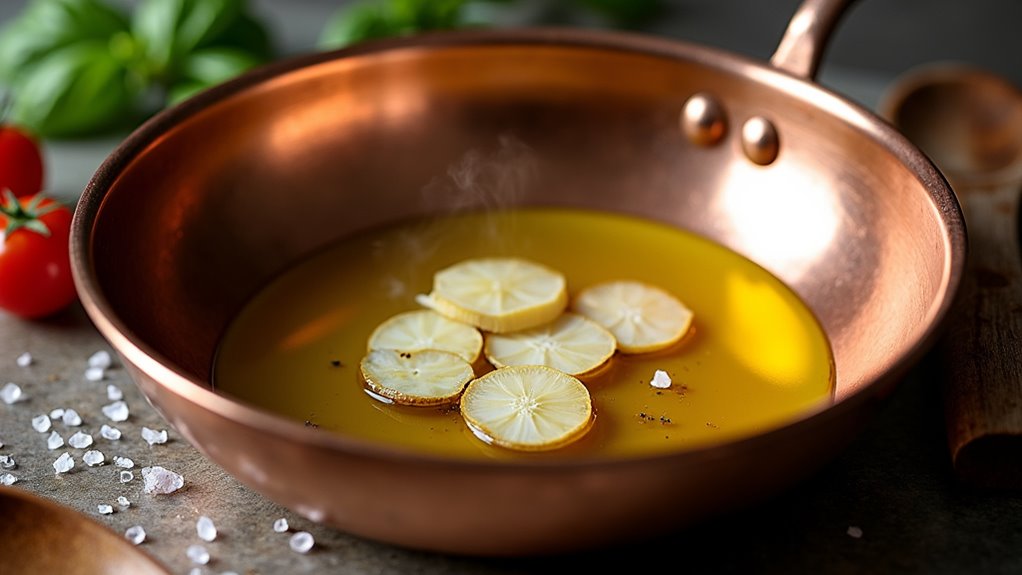
Your beautifully prepared tomatoes won’t reach their full potential without the perfect garlic and olive oil foundation—the aromatic base that separates mediocre sauce from the kind that makes your kitchen smell like a Roman trattoria.
Start with 6-8 finely chopped garlic cloves and cold-pressed extra virgin olive oil. Here’s the essential part: add both to your pan at room temperature, then warm them together gently. Never toss garlic into hot oil—you’ll get bitter, burned bits instead of golden perfection.
Sauté for 50-60 seconds, stirring constantly until the garlic turns golden and releases its fragrance. The oil’s fruity bitterness will mellow, creating that signature emulsion base. For the ultimate sauce consistency, save some pasta cooking water to help bind everything together when you’re ready to serve.
Use 3-4 tablespoons for traditional slow-cooked versions, less for quicker preparations.
Balance Flavors With Traditional Seasoning Techniques
While your garlic and oil foundation provides the aromatic backbone, mastering traditional Italian seasoning techniques transforms good sauce into the kind that’ll have your family gathering in the kitchen before you’ve even called them to dinner.
Start by adding salt early—about half a teaspoon with your soffritto to season those aromatic vegetables without browning your onions. Don’t forget black pepper at the same ratio.
When you introduce tomatoes, add another pinch of salt to enhance their natural flavors during simmering.
Counter tomato acidity with a touch of sugar, or try simmering a Parmesan rind for umami depth. For even better acidity control, simmer a peeled carrot in the sauce to naturally absorb excess acidity, then remove and discard it after cooking. Save fresh basil and oregano for the final minutes—you’ll preserve their bright aromas.
Always taste and adjust seasonings after your sauce has simmered.
Understand the Low and Slow Simmering Method
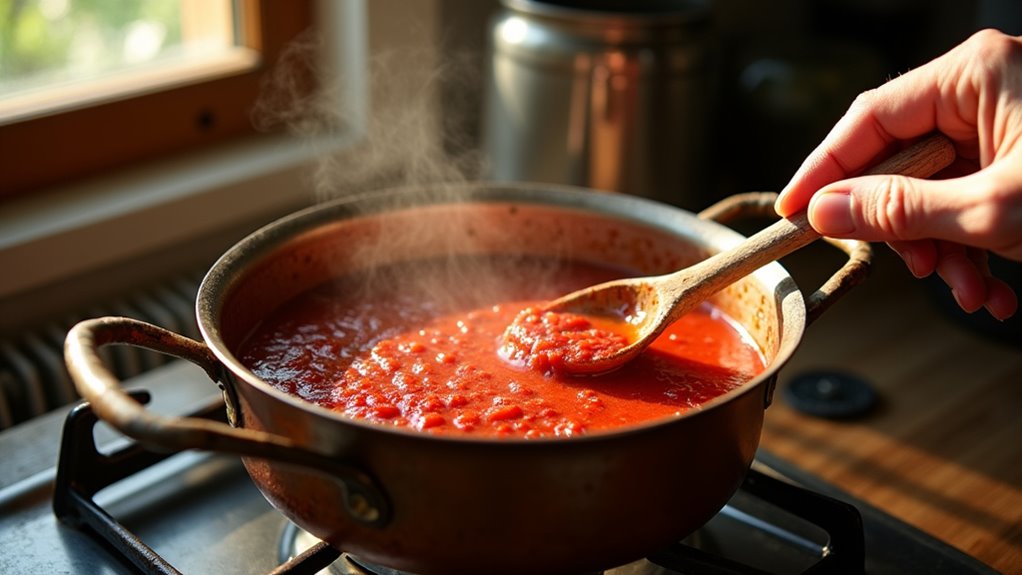
Once you’ve built your flavor foundation, the real magic happens during the gentle, patient simmering that separates truly authentic Italian sauce from the rushed versions. Start by covering your chopped tomatoes and simmering on your stove’s lowest setting for 60 minutes. You’ll want just gentle bubbling—no vigorous boiling that’ll scorch your precious ingredients.
After an hour, remove the lid and continue simmering for another 30 minutes. This uncovered phase concentrates those tomato sugars while thickening the sauce naturally. For even deeper flavor development, some traditional cooks simmer their sauces overnight to achieve extraordinary richness.
You’ll know it’s ready when the oil separates from the tomatoes—that’s your visual cue that the flavors have married perfectly. This 90-minute journey transforms simple ingredients into liquid gold that’d make any Nonna proud.
Time Your Fresh Herb Additions for Optimal Aroma
After your sauce reaches that perfect consistency with the oil beautifully separated from the tomatoes, you’ll want to resist the urge to toss in your fresh herbs right away. Traditional Italian nonnas knew this secret – fresh basil and oregano must wait until the very end of cooking to preserve their vibrant aroma and prevent bitter, burnt flavours.
Turn off your heat completely before stirring in a handful of freshly chopped basil and two teaspoons of fresh oregano. This timing locks in those essential oils that make your kitchen smell like a Roman trattoria.
My Italian grandmother always said, “Herbs are like children – they don’t like too much heat!” Hand-chopped basil releases more fragrance than machine-chopped, creating that mouth-watering scent that signals authentic Italian comfort. Keep any extra sauce in the freezer for future use, allowing you to add vegetables or customize the flavor profile later.
Know When Your Sauce Has Reached Perfect Consistency
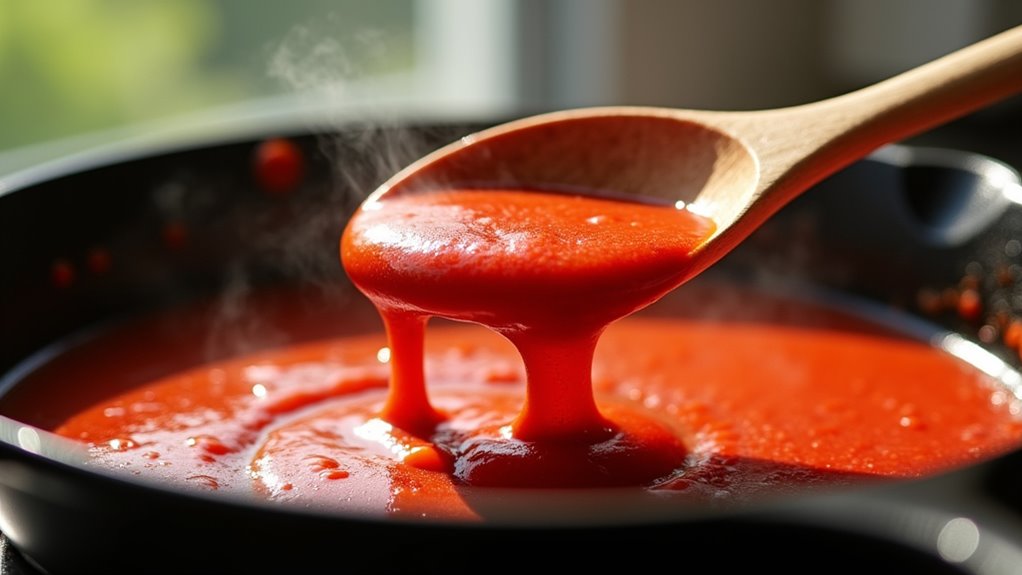
When your wooden spoon slices through the sauce and leaves a clear trail that slowly fills back in, you’re getting close to perfection. Watch for that telltale coating on your spoon’s back—it shouldn’t slide off immediately like water.
You’ll notice the bubbling slows from vigorous to lazy, and the color transforms from bright red to deep, rich crimson.
My nonna always said timing matters more than recipes. Quick sauces need 8-10 minutes, while traditional Sicilian styles require 15-20 minutes after adding tomatoes. Remember that excessive boiling can introduce unwanted bitterness to your sauce.
Fresh tomato sauces benefit from longer 40-60 minute simmers. The oil will separate slightly, creating a beautiful sheen across the surface.
Don’t rush this process—gentle simmering preserves that perfect density you’re after.
Store and Preserve Your Sauce the Italian Way
Since my nonna taught me that sauce-making doesn’t end at the stovetop, I’ll share her time-tested methods for preserving that perfect batch you’ve just created.
First, let your sauce cool to room temperature before storing. For short-term storage, use airtight glass jars and refrigerate for up to a week. My nonna’s secret? She’d add a thin layer of olive oil on top, creating a natural seal that keeps flavors fresh.
For longer preservation, try her traditional jarring method. Sanitize your jars, fill with hot sauce leaving headspace, add lemon juice for acidity, then process in a boiling water bath. These sealed treasures will capture summer’s tomato essence for 8-12 months in your pantry. If you have extra sauce that won’t fit in your pantry jars, you can freeze excess sauce for 3-4 months of storage.
The Sum Up
You’ve now got the foundation for sauce that’ll transport your family straight to Italy’s kitchens. Don’t worry if your first batch isn’t perfect—my nonna always said it takes three tries to master any recipe. Trust your nose, taste as you go, and remember that the best ingredient is patience. Your kids will remember these Sunday sauce aromas forever, and you’ll have created something truly special from scratch.