
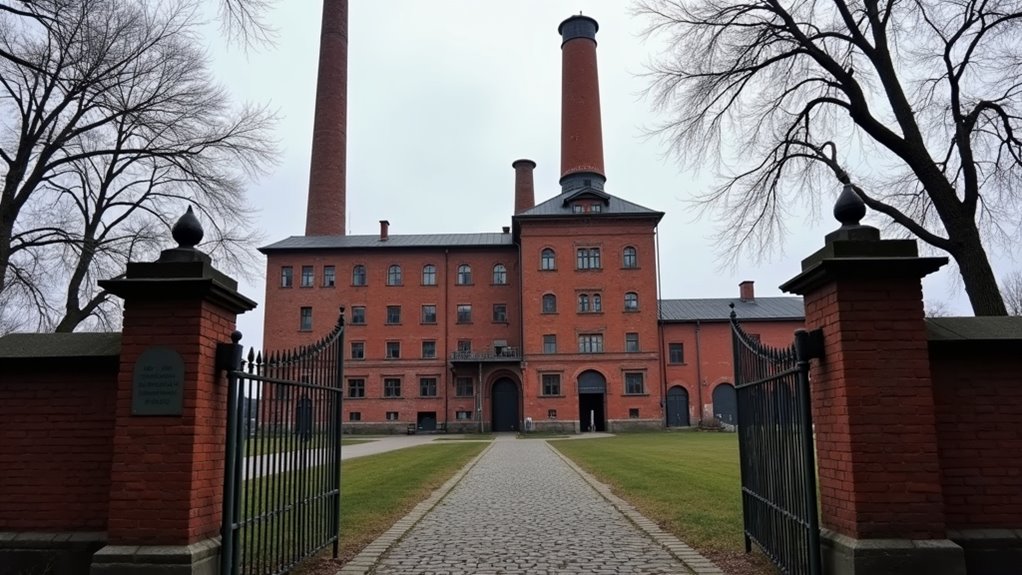
Before visiting Schindler’s Factory in Krakow, you’ll need to book tickets online in advance since it’s incredibly popular. The museum’s called “Krakow – Occupation 1939-1945” and tells the story of how Oskar Schindler saved over 1,200 Jewish workers during WWII. You can reach it by taking trams 3, 9, 19, 24, or 50 to Plac Bohaterów Getta, then walking eight minutes. There’s so much more fascinating history waiting to unfold.
- The Factory’s Jewish Origins Before Nazi Occupation
- Oskar Schindler: From War Profiteer to Savior
- How the Factory Became a Safe Haven for Jewish Workers
- The Sub-Camp That Offered Better Living Conditions
- The Famous List and Relocation to Czechoslovakia
- What You’ll See in the “Krakow – Occupation 1939-1945” Exhibition
- Interactive Features and Historical Reconstructions
- Location Details and Museum Information
- The Lasting Impact of Spielberg’s Film on Tourism
- The Sum Up
The Factory’s Jewish Origins Before Nazi Occupation
You’ll find it interesting that these men created a successful business making pots, spoons, and metal goods for everyday families. Their factory operated smoothly for two years before World War II began.
When you visit today’s museum, remember that Jewish businessmen originally owned this space. The three founders were Michał Gutman, Izrael Kahn, and Wolf Luzer Glajtman who established the enterprise in 1937. Unfortunately, German forces seized their factory in autumn 1939, taking away everything these entrepreneurs had built.
Oskar Schindler: From War Profiteer to Savior
How does someone transform from a Nazi spy into one of history’s most famous rescuers? You’ll discover Oskar Schindler’s complex story wasn’t simple heroism. He started as a Nazi Party member who spied for Germany and took over Jewish businesses for profit.
Initially, he hired Jewish workers because they were cheaper, making huge profits from his enamelware factory.
However, witnessing brutal treatment in the nearby Płaszów camp changed everything. Schindler began bribing SS officers with luxury items to protect his workers. He falsified records, claiming Jews had essential skills to prevent deportations. The camp itself was built on the grounds of a Jewish cemetery, adding to the horror of the conditions his workers faced.
How the Factory Became a Safe Haven for Jewish Workers
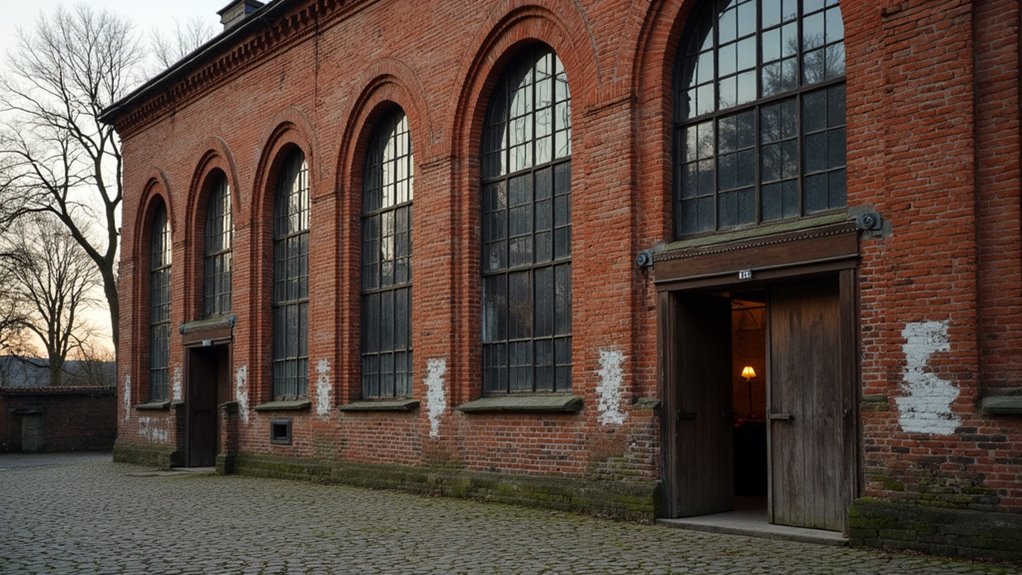
While Schindler’s personal transformation was remarkable, his factory’s evolution into a protective sanctuary required careful strategic planning. You’ll discover that Schindler cleverly positioned his Deutsche Emaillewaren-Fabrik as essential war production, manufacturing enamelware and ammunition shells. This gave workers protected status under German law, reducing their deportation risk.
The factory grew from 150 to 1,100 Jewish workers by 1944. Schindler created a separate sub-camp at Zabłocie with barracks, keeping workers away from the brutal main Płaszów camp. He paid fees to the SS for each worker, making their survival economically valuable.
Workers received better food portions than other camps, plus aid from Polish employees who smuggled supplies. Employment lists became protection documents, and the factory’s reputation as “the place to survive” attracted many seeking safety. Schindler strategically used bribes and arguments to maintain control over the camp environment and reduce direct SS oversight of his workers.
The Sub-Camp That Offered Better Living Conditions
After the Kraków ghetto’s liquidation in March 1943, Schindler established a sub-camp called Zabłocie right next to his enamel factory. You’ll learn that this sub-camp housed up to 1,450 Jewish prisoners by summer 1944.
Unlike the horrific main Płaszów camp, Zabłocie offered much better living conditions. Prisoners enjoyed cleaner barracks, better food, and access to basic medical care. They didn’t have to march kilometers daily between camps, which reduced exhaustion and abuse.
Being away from Płaszów’s commandant Amon Göth meant fewer random killings and punishments. The sub-camp even protected elderly people and children, which was unusual for Nazi facilities. The factory itself produced both civilian and military items, including enamelware and ammunition shells for the war effort.
When you visit, you’ll understand how this location became a genuine refuge during the Holocaust.
The Famous List and Relocation to Czechoslovakia
When Soviet forces began advancing toward Krakow in fall 1944, Schindler made a bold decision that would save over 1,200 lives. He compiled his famous list of Jewish workers and relocated his entire factory operation to Brünnlitz in Czechoslovakia, near his hometown.
You’ll learn that this wasn’t easy—it cost him 200,000 Reichsmarks, with half going to bribes for German officials. He chose Brünnlitz strategically because mountains made it difficult for bombers to target.
The workers on Schindler’s list were transported to this new location, where they remained relatively safe until Russian forces liberated the camp in 1945. This final “List A” became the most famous document of rescue during the Holocaust.
During the relocation, Schindler drew upon his intelligence connections as an Abwehr agent to facilitate the complex transfer and maintain protection for his workers.
What You’ll See in the “Krakow – Occupation 1939-1945” Exhibition
As you enter the museum’s main exhibition, you’ll discover that this isn’t just about Schindler’s story—it’s a complete journey through Kraków during World War II. You’ll walk through 45 rooms that show how the city changed from a vibrant, multicultural place to a city under Nazi control.
The exhibition uses real objects, photos, and sounds to help you understand what daily life was like. You’ll see recreated apartments, shops, and streets that show how people lived during the occupation.
The museum explains how Jewish and Polish residents faced different restrictions and dangers.
You’ll learn about the Kraków Ghetto, where thousands of Jewish people were forced to live in terrible conditions, and see how ordinary people made difficult choices to survive. One of the most striking features is Schindler’s office, which has been preserved exactly as it was during the war, complete with original furniture and documents.
Interactive Features and Historical Reconstructions
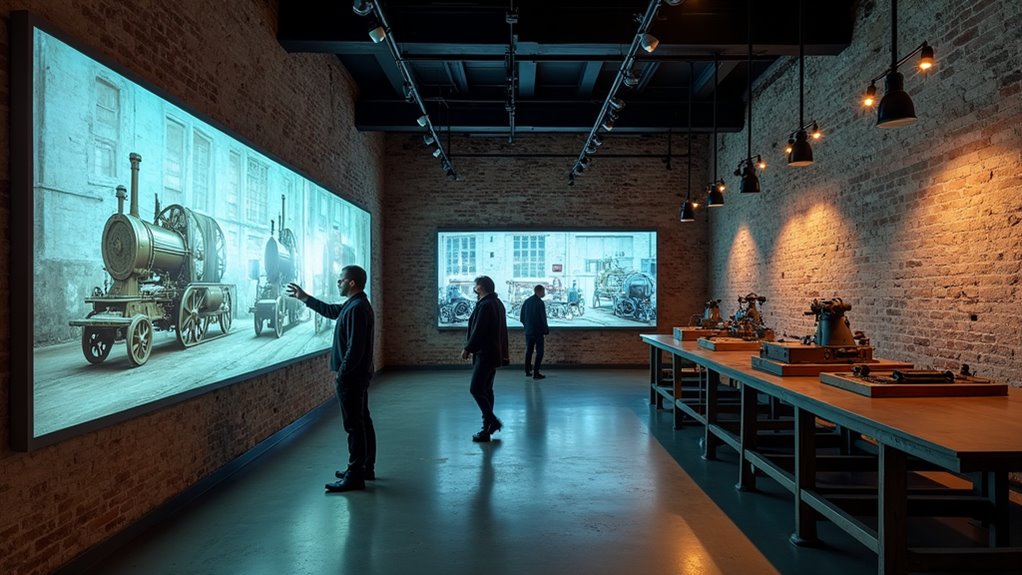
While traditional museums display artifacts behind glass cases, Schindler’s Factory brings history to life through hands-on experiences and incredibly detailed reconstructions. You’ll walk through 45 exhibition rooms featuring full-scale recreated city streets with cobblestones and period shopfronts that make you feel like you’re in 1940s Krakow.
Interactive touchscreens let you explore survivor testimonies and meet Schindler’s workers virtually. As you move through spaces, motion sensors trigger realistic soundscapes including air raid sirens and street noise.
You’ll experience reconstructed apartments showing how families lived during the occupation, complete with rationed household goods and authentic newspapers. The museum also displays original photographs and documents that provide authentic glimpses into daily life during the Nazi occupation.
The centerpiece features Schindler’s preserved office and a memorial installation displaying names of over 1,000 people he saved, creating an unforgettable educational journey.
Location Details and Museum Information
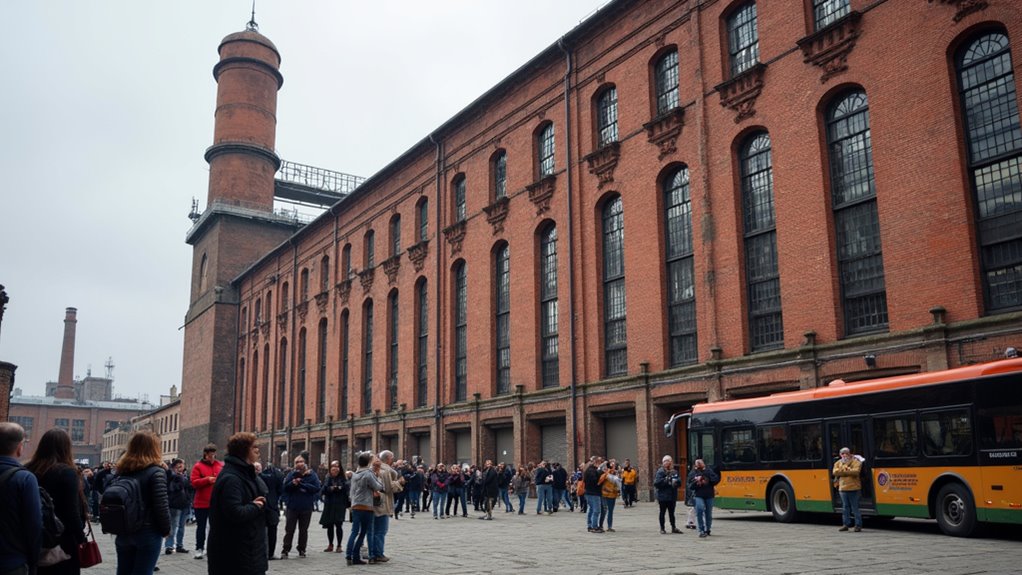
Located in the Zabłocie district of Podgórze, Schindler’s Factory sits at ul. Lipowa 4, about 2.5 kilometers southeast of Krakow’s main square. This post-industrial area now buzzes with galleries, cafes, and museums, making it perfect for exploring.
You’ll find the museum just a 5-minute walk from MOCAK (Museum of Contemporary Art) and 15 minutes from the historic Kazimierz district.
Getting there’s easy using public transport – take trams 3, 9, 19, 24, or 50 to Plac Bohaterów Getta stop, then walk 8 minutes.
The museum operates with seasonal hours, so check their website before visiting. Free admission is available on Mondays, though you’ll need to prebook tickets on the museum website due to limited availability.
You’ll definitely need to book tickets ahead since it’s incredibly popular. Contact them at +48 12 257-10-17 for information.
The Lasting Impact of Spielberg’s Film on Tourism
When Steven Spielberg’s “Schindler’s List” hit theaters in 1993, it didn’t just win Academy Awards—it transformed Krakow into one of the world’s most visited historical destinations. You’ll notice this impact everywhere during your visit.
The film put Krakow on the global map, changing it from a post-communist city into a major tourist hub. Today, you can join “Schindler’s List tours” that take you to filming locations and historical sites.
The movie sparked interest in Płaszów concentration camp, which was previously neglected. Interestingly, some scenes were actually shot in the nearby Liban quarry, which has caused confusion between the actual historical site and the cinematic recreation. Now Krakow welcomes over 13 million visitors annually, with many coming specifically because of the film.
You’ll find Schindler-themed attractions are part of 28 museums and historical sites marketed to international visitors like you.
The Sum Up
You’ll discover amazing history when you visit Schindler’s Factory! Remember to book your tickets early since it’s super popular. Bring comfortable shoes because you’ll do lots of walking through the exhibits. Don’t forget your camera for the interactive displays – they’re really cool! Most importantly, you’ll learn about brave people who helped save lives during a difficult time. It’s an experience you’ll never forget and will teach you important lessons about kindness.